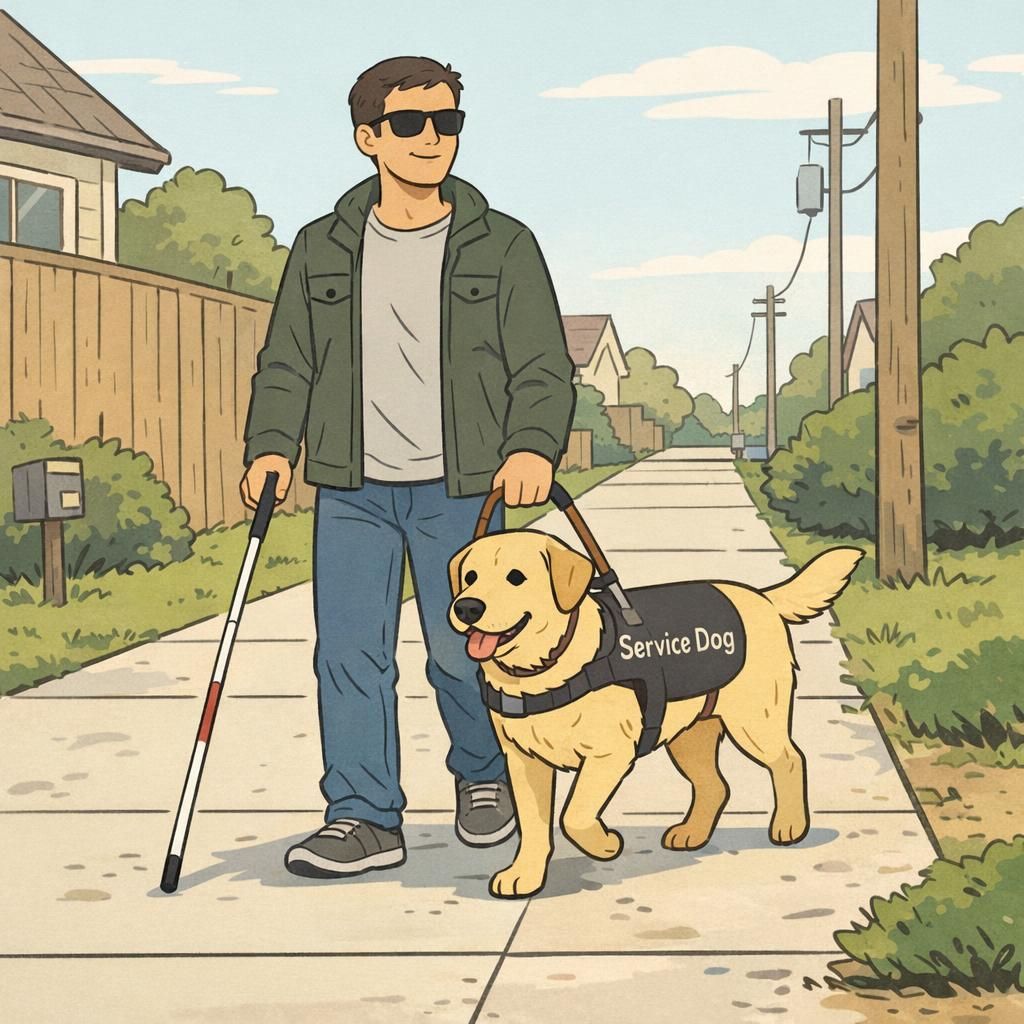
A guide dog (sometimes called a seeing eye dog or blind assistance dog) is a working service animal trained to help a person who is blind or has low vision travel more safely and independently. That can include navigating around obstacles, stopping at curbs and steps, and helping their handler move through crowded or unfamiliar spaces with more confidence.
Because guide dog teams are visible in public, everyday errands can come with extra attention. People may ask questions, try to pet the dog, or—often with good intentions—pause a handler to “double-check” whether the dog is allowed in a particular space. Those moments can add friction, especially when you’re simply trying to get through a doorway, catch a train, or order a coffee.
Many guide dog handlers choose to register for a simple reason: it makes day-to-day life more organized. Registration materials—like an ID card, certificate, or a digital profile—can create quick recognition and smoother conversations, especially in unfamiliar environments.
Registration is often treated as a practical tool in a real-world toolkit. When you’re navigating a crowded lobby, responding to a staff member who is unsure what they’re allowed to ask, or moving through a location with high employee turnover, having consistent identification can reduce repeated explanations.
“ "I don’t want a long conversation at the door. Having consistent ID lets me keep things friendly, brief, and focused on getting where I need to go." – Guide dog handler”
In the U.S., public access rights and responsibilities for service animals are addressed under the Americans with Disabilities Act (ADA). If you want to review the official framework in plain language, the ADA’s service animal guidance is a helpful starting point: source.
In everyday terms, the goal is predictable expectations for everyone: the handler can access public spaces with their working animal, and businesses can maintain safe, professional environments. In many situations, respectful communication keeps interactions short and smooth—especially when staff focus on practical details rather than personal ones.
It’s also worth remembering that rules can vary by location and setting, and different environments (airports, housing offices, event venues) may have different processes. Many handlers like having easy-to-share information available so conversations don’t become stressful or time-consuming.
Some teams also carry small, polite printed resources to help clarify common questions in the moment. If you like the idea of a quick, non-confrontational way to explain the basics, ADA law handout cards for quick, polite explanations can be an easy addition to a wallet, bag, or travel pouch.
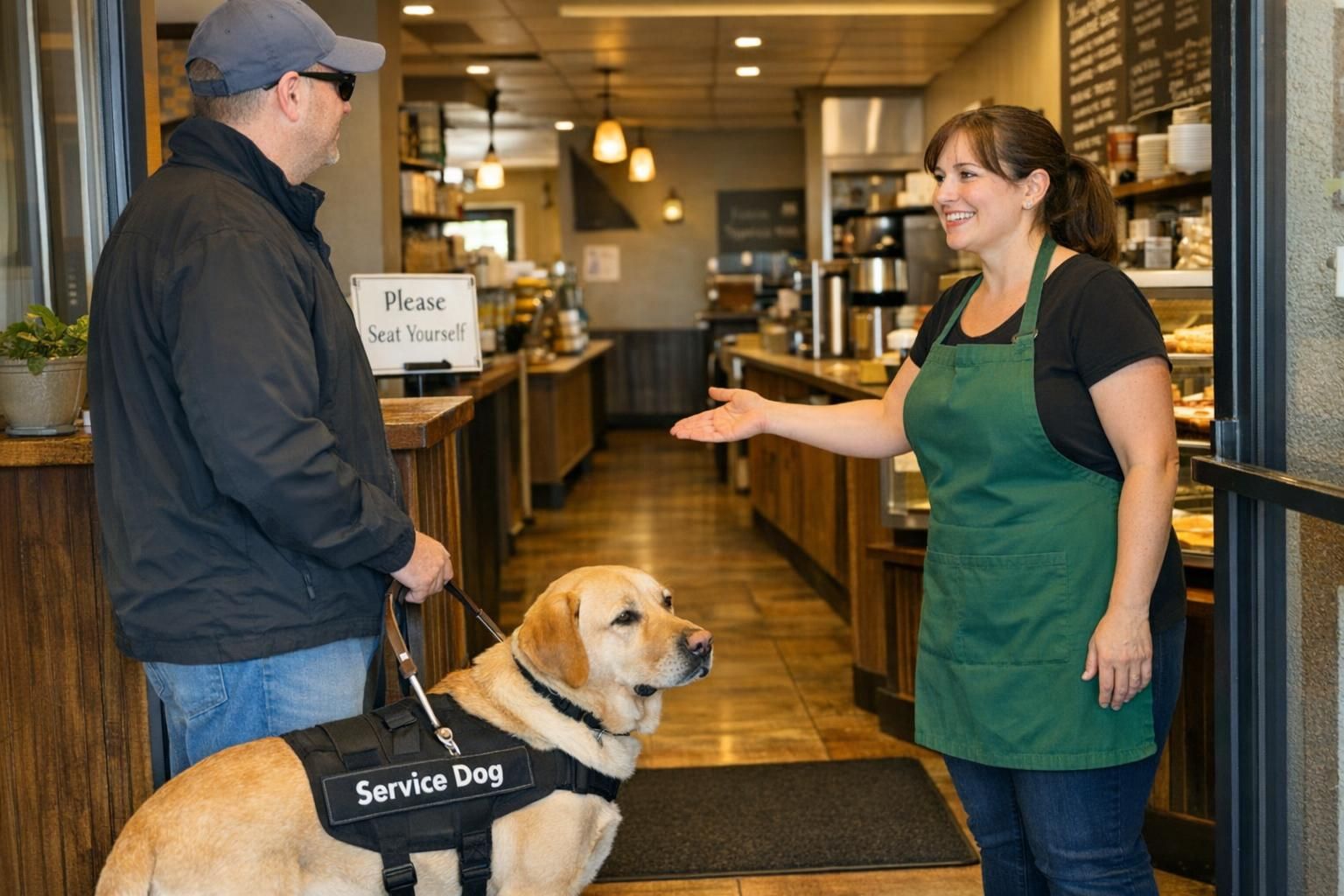
Guide dog teams often move through the world at a different pace than the people around them. When you’re navigating safely—listening for traffic, maintaining orientation, and managing foot traffic—extra questions can be more than just an inconvenience. They can interrupt focus.
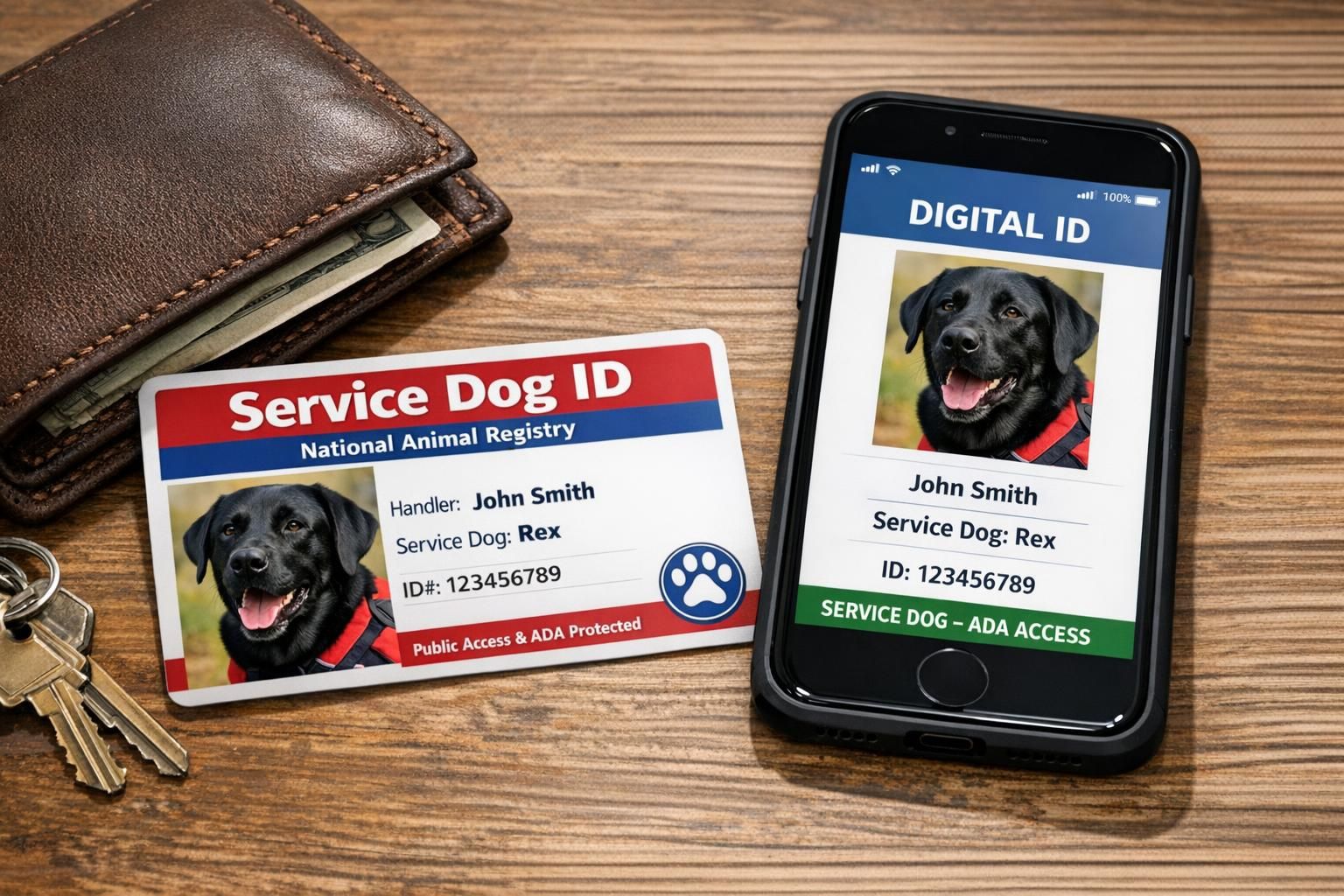
That’s where registration-related materials can help. Many handlers appreciate having an ID card, certificate, digital profile, and a unique registration number available as a consistent set of details they can share when needed. The point isn’t to create a complicated process; it’s to streamline the moments that tend to repeat.
If you want a simple, all-in-one set of materials that’s designed for everyday use, a starter registration package for everyday identification is a common choice for handlers who want clarity without extra fuss.
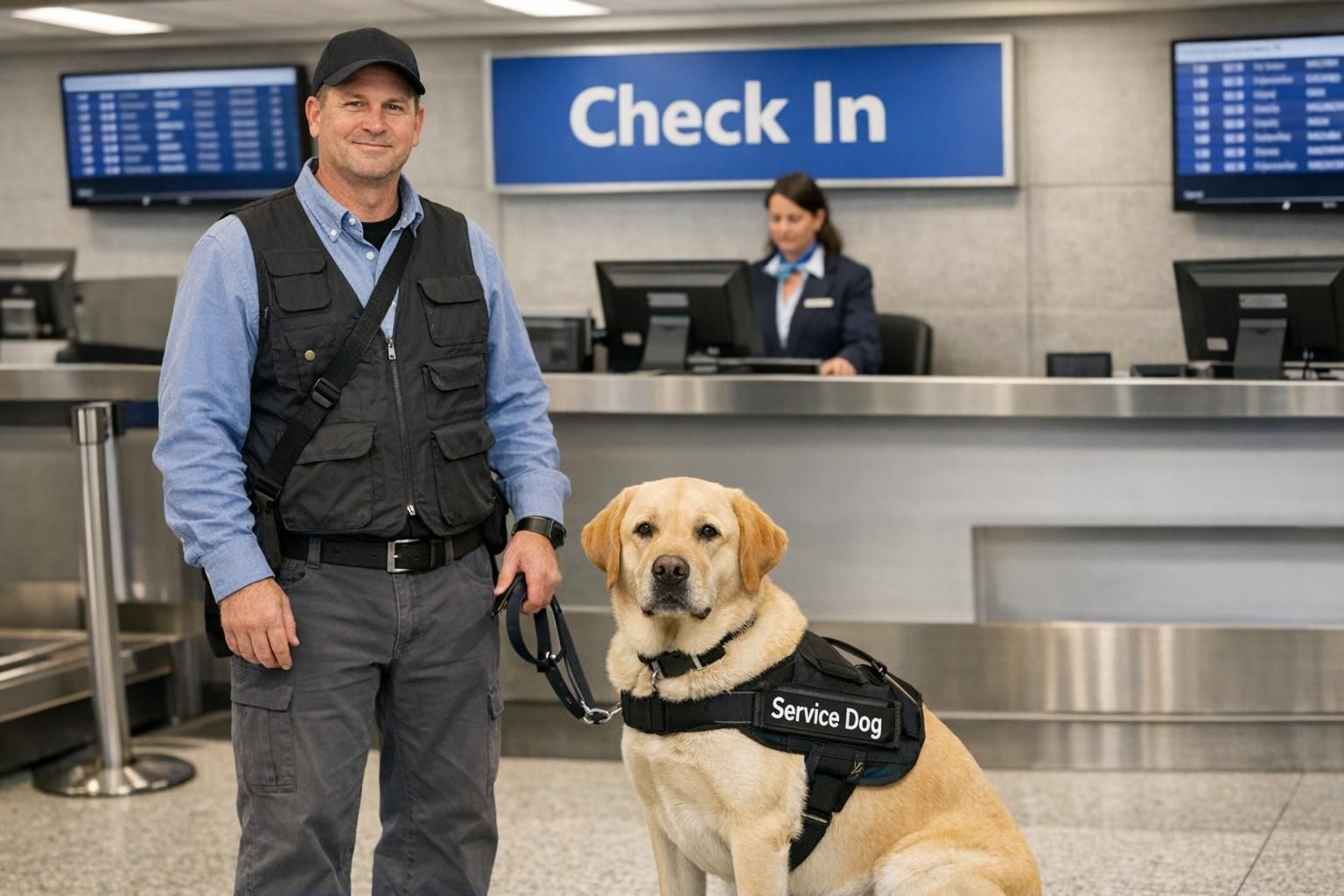
Travel can be one of the most question-heavy parts of life with a guide dog—especially if you’re moving between places where staff handle different policies every day. Even when everyone is trying to be helpful, the same conversation can repeat at multiple points: check-in, security, boarding areas, hotel lobbies, and rideshare pickup zones.
Being prepared doesn’t have to mean over-preparing. Many handlers find it helpful to keep a single “travel pocket” (physical or digital) with the same core info each time. Clear identification can reduce back-and-forth and help you move through transitions with fewer interruptions.
For a deeper look at organizing your trip, travel planning tips for service dog teams can help you think through the common pinch points before you leave.
If you want a travel-focused set that keeps everything consistent and easy to show when you’re on the move, a travel-ready registration package is designed for those high-traffic moments where time and clarity matter.
Moving is paperwork-heavy for everyone. For guide dog handlers, it can also involve new building staff, new routines, and new points of contact—leasing agents, property managers, front-desk teams, maintenance staff, or HOA representatives. When information is shared inconsistently, it can lead to avoidable back-and-forth.
Many handlers prefer to keep service dog details organized and ready to share in a straightforward, consistent way. A clear, professional set of registration materials can help you communicate the basics quickly, especially when you’re juggling move-in dates, elevators, keys, and building access all at once.
If housing transitions are a frequent part of your routine—or you simply want a tidy, consistent set of materials for residential conversations—a housing-focused registration package can help keep your information in one reliable place.
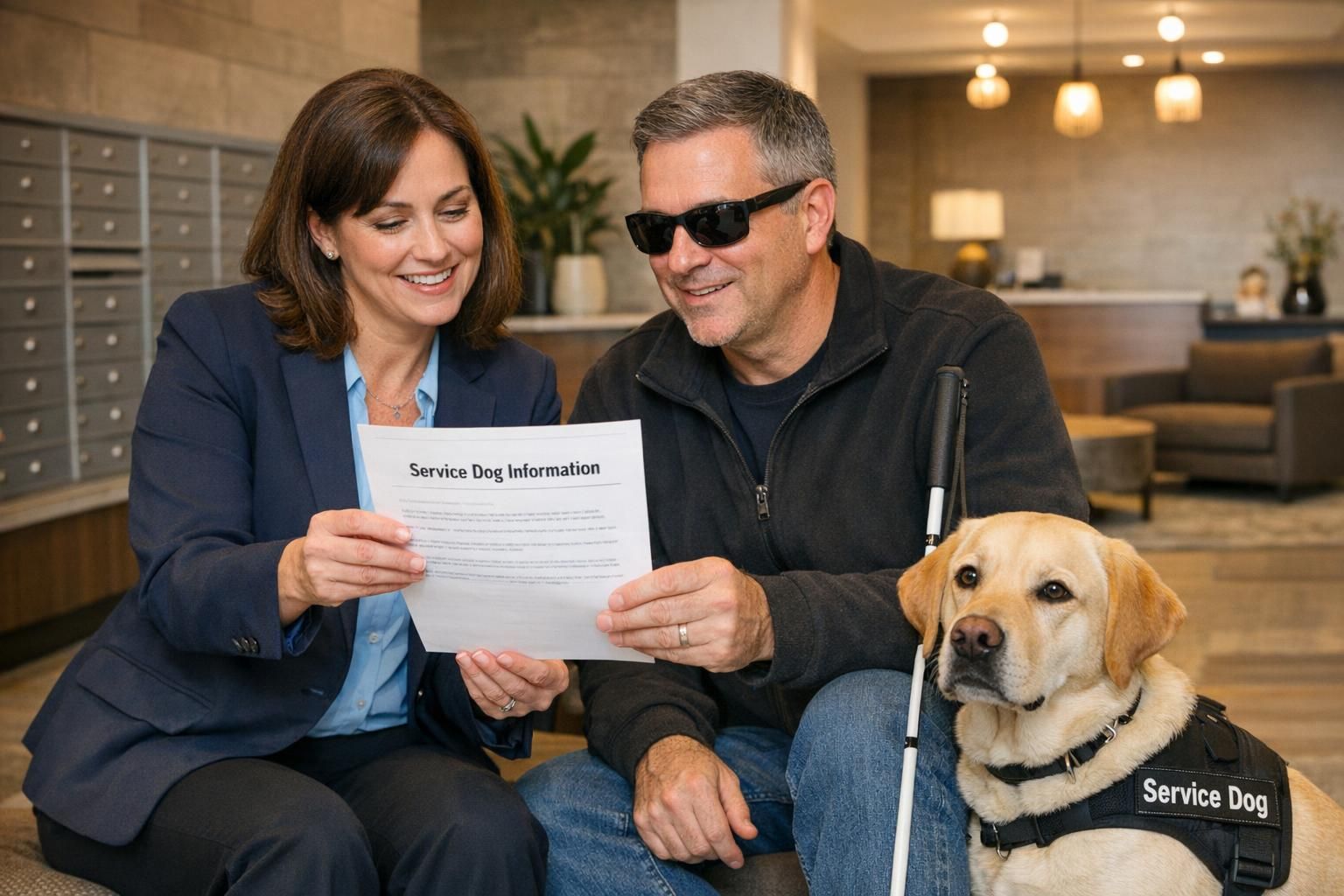
In everyday conversation, people often use a few different labels—sometimes interchangeably—when they see a working dog in public. That can create confusion, especially in fast-moving situations like entry lines or lobbies.
A guide dog is a type of service dog trained to assist someone who is blind or has low vision. Because the term “service dog” is widely recognized by staff in public spaces, many handlers find it helpful when identification clearly reflects that the dog is working in a service role.
You may also hear the term “emotional support animal” (ESA). In many public-facing situations, staff are trying to quickly understand whether an animal is working or is present as a pet. Clear labeling helps reduce misunderstandings in the moment and keeps the interaction focused on access, safety, and respect.
Different routines call for different tools. Some handlers prefer a simple printed card they can hand over briefly. Others want a digital option they can pull up instantly on a phone. Many teams like having both, plus a registry profile that keeps everything consistent in one place.
If you like the idea of having a physical ID plus a matching digital page that’s easy to access on the go, a customizable printed service dog ID with a matching digital page offers a balanced approach for everyday life.
If you’re considering registering your guide dog, it helps to keep the process simple and focused on organization. Most handlers who register are looking for practical benefits: consistent identification, a convenient way to share key details, and a smoother routine in public-facing situations.
Even with the best preparation, you’ll still encounter curious questions. The difference is how those moments feel: with a plan and organized materials, many handlers find they can keep the interaction short, polite, and predictable.
“ "The most helpful thing is having everything ready before I need it. When I can show consistent ID quickly, the moment stays calm and I can keep my attention where it belongs—on safe travel." – Service dog handler”
If you prefer something you can access instantly without digging through a bag or wallet, an instant-access digital service dog ID can be a simple way to keep key information at your fingertips.
Your trusted source for service animal registration. Get professional ID cards, digital profiles, and smart NFC tags to keep your service animal safe and recognized.
© National Animal Registry — All rights reserved.