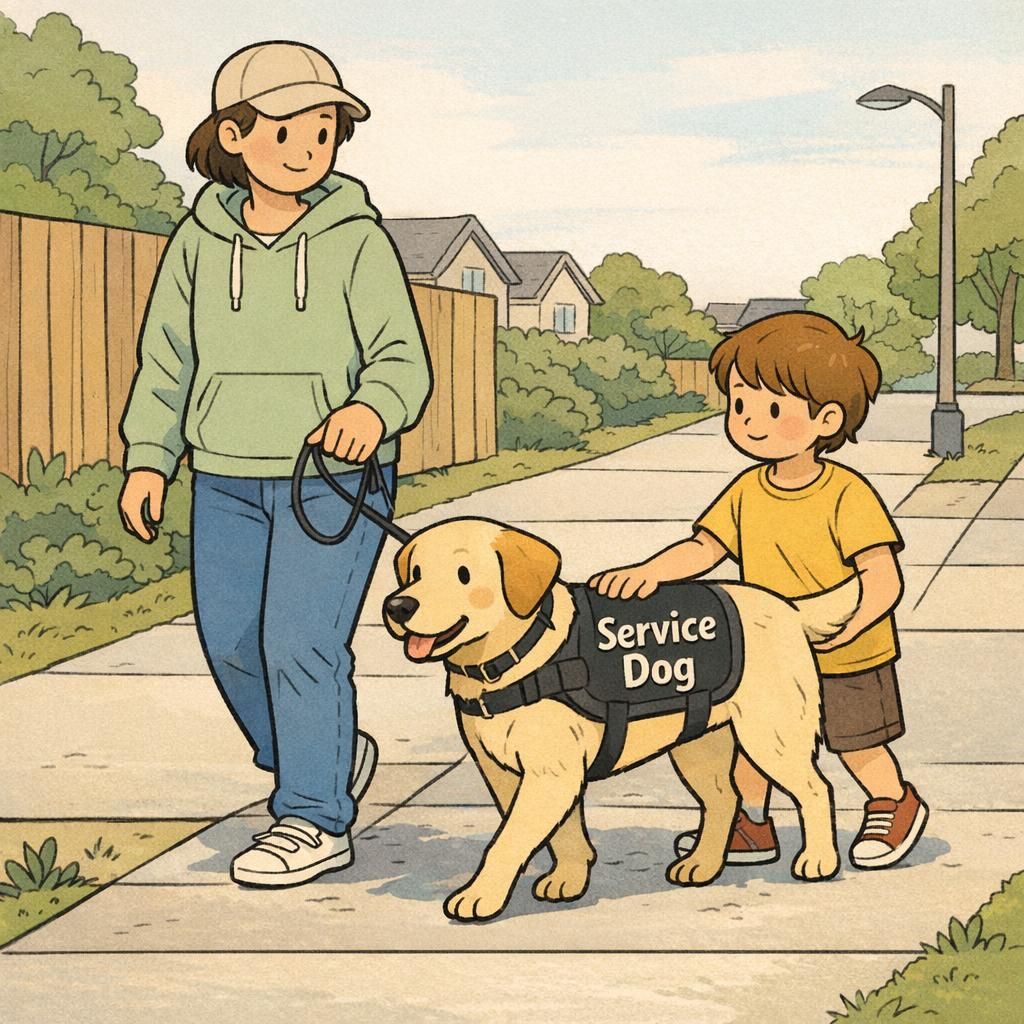
A service dog is a dog trained to perform specific tasks that assist a person with a disability. The key is that the dog’s help is active and task-based—meaning the dog does something trained and reliable that reduces the impact of a disability in everyday life.
For children, a companion service dog can support daily routines in ways that feel practical and grounding. Some kids need help navigating sensory overload in busy environments; others benefit from predictable task support during transitions, therapy appointments, or community outings. When the dog’s tasks are consistent, families often find it easier to build routines around school mornings, errands, and social situations.
Families also hear terms like “support animal” or “comfort animal.” Those animals may provide calming presence and emotional comfort, which can be meaningful. The difference is that a service dog is trained to take specific actions (tasks) that directly help with a disability-related need. Understanding the distinction helps parents choose the path that best fits their child’s daily life and the environments they move through.
When a child goes out in public with a service dog, families often want to know what to expect in everyday places—like grocery stores, restaurants, community events, and other public-facing spaces. In general, staff may notice the dog and ask questions, especially if they are trying to follow rules while keeping the environment comfortable for everyone.
It helps to know that public entities are generally limited to two questions: whether the dog is required because of a disability, and what work or task the dog has been trained to perform. This can reduce anxiety for parents because it provides a predictable script for real-life interactions. source
For families with a child handler, it can be helpful for the parent (or supervising adult) to take the lead in conversations. A short, steady response is often enough. You don’t need to share private medical details; focusing on the dog’s trained work keeps the interaction respectful and quick.
Many families also like having a simple way to share basic information when someone is confused or asks for clarification. One practical tool is wallet-size ADA law handout cards for quick, calm conversations, which can support polite, low-stress communication during everyday outings.
Families often choose to register a child’s service dog for practical, everyday reasons. While life with a service dog can be empowering, it can also involve frequent questions—especially when a child is the handler or when multiple caregivers (parents, grandparents, babysitters) share responsibilities.
Registration can be a simple way to create consistent identification and keep key details organized. Many parents appreciate having a professional-looking ID they can carry, a clear service dog type header, and a record they can reference quickly when planning school routines, outings, or travel.
“ "Having our child’s service dog information organized in one place helped us feel calmer on busy days. It wasn’t about proving anything—it was about being prepared." – Parent of a service dog handler”
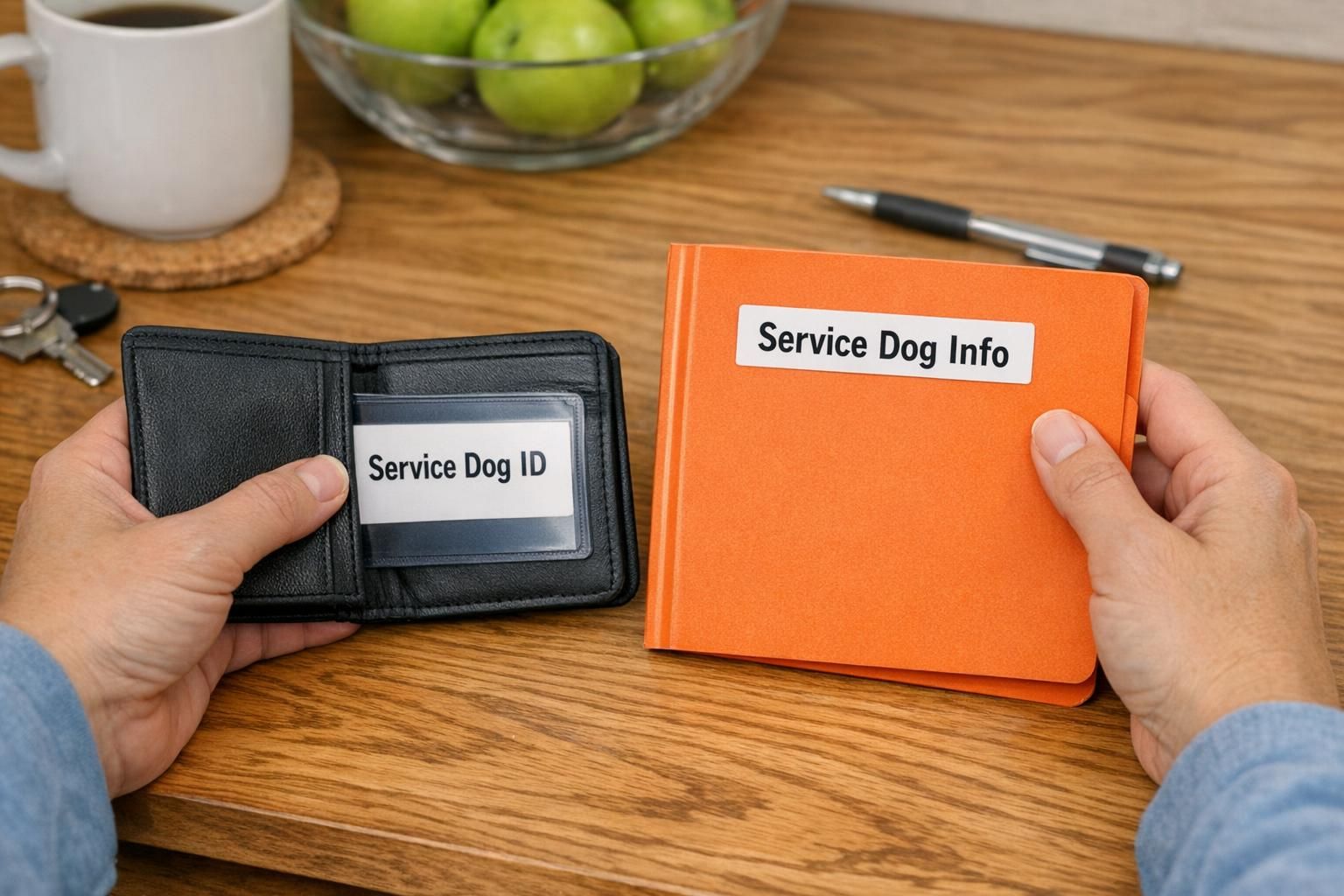
Registering with National Animal Registry is designed to be straightforward for families. A simple approach can be especially helpful when you’re already juggling school schedules, therapy appointments, and the daily work of supporting your child.
Many families begin with a starter registration package with printed ID and a digital profile because it covers the basics in a parent-friendly way—useful for school days, errands, and everyday identification.
Every family’s routine is different, so it helps to think about where you’ll use identification most: school mornings, therapy sessions, community outings, or travel. Digital access can be convenient when you always have your phone, while a printed PVC ID can be faster when you’re managing a child, a leash, and a busy environment.
Many parents prefer having both because kids’ support teams are rarely just one person. If a relative, caregiver, or babysitter takes the child to an activity, a consistent ID format can help them communicate clearly and calmly—especially if the parent isn’t present to answer questions.
If you want a clear, standardized format, consider a customizable printed ID with a matching digital page, which many families find helpful for consistency across school, errands, and appointments.
School and childcare settings are often where families need the most planning. The goal is usually the same: reduce confusion, set expectations early, and make daily routines predictable for the child, the staff, and the dog.
For outings connected to school—field trips, after-school activities, or busy campus events—predictability helps. You may find a practical guide for planning smooth, predictable outings with a service dog useful when you’re mapping out timing, breaks, and the child’s support needs.
“ "Once the staff understood our drop-off routine and where our dog settles, the whole morning became calmer—especially for our child." – Parent”
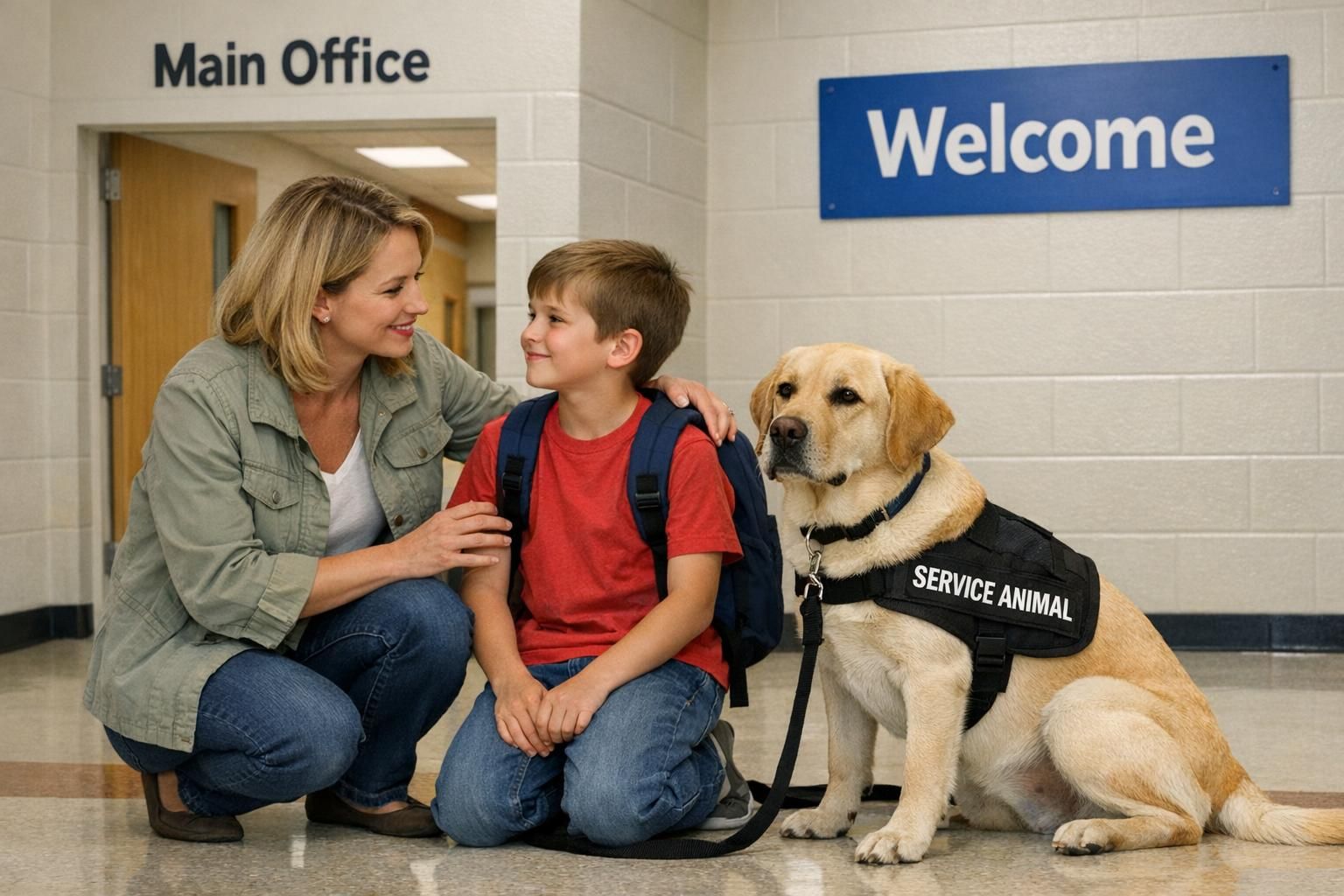
A child companion service dog is most successful in public when the dog is calm, under control, and prepared for the distractions of real life. Families don’t need perfection—what matters is a steady foundation that supports safe, predictable behavior in everyday spaces.
If other adults supervise your child (grandparents, family friends, respite care, babysitters), do a quick “handling walkthrough.” Show them how your child holds the leash (or how the adult should hold it), what commands you use, how to create space when someone approaches, and what to do if the child becomes overwhelmed.
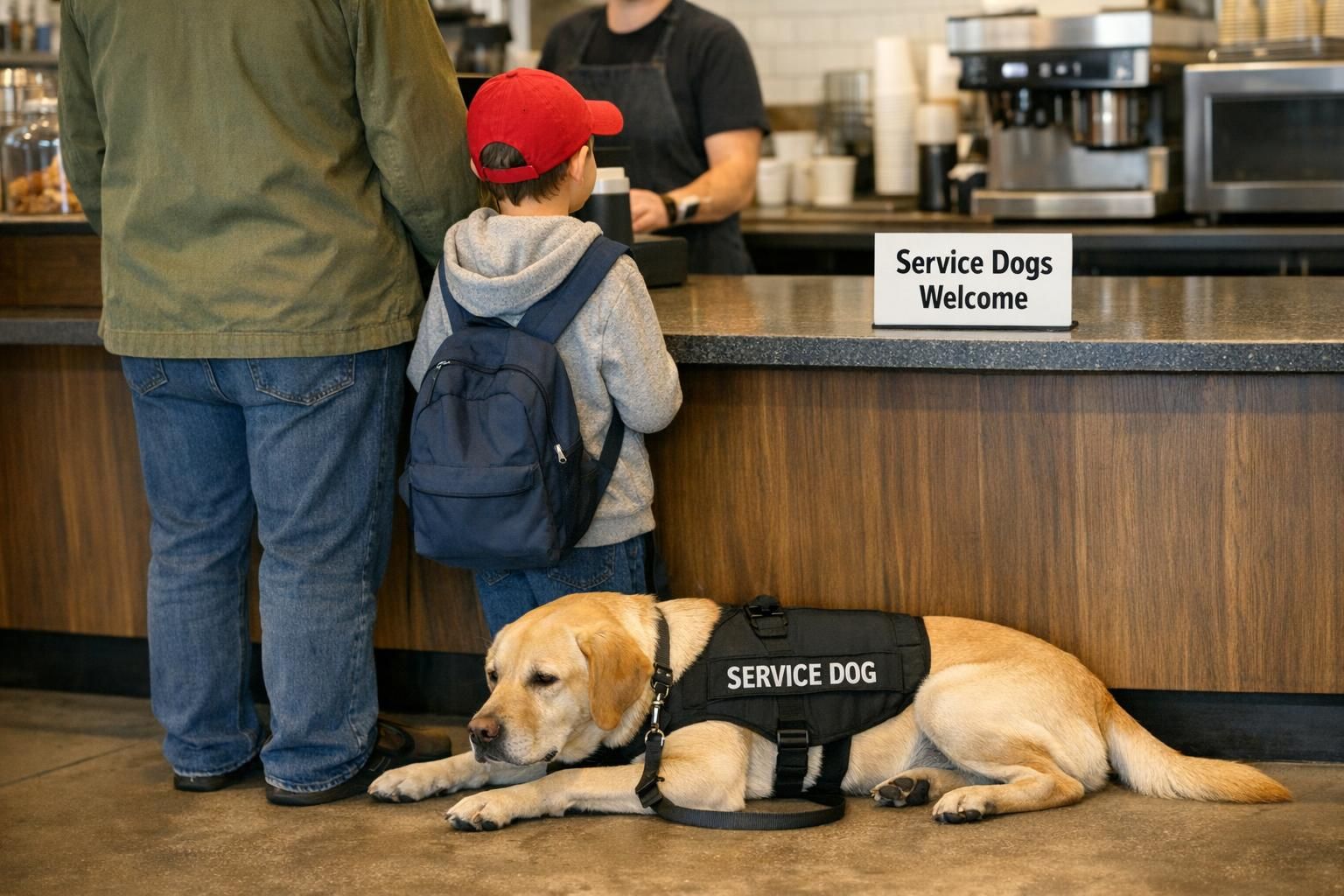
Even with a working service dog, local animal rules still matter. Most cities and counties have basic requirements related to vaccinations, licensing, and general animal control policies. Staying current helps protect your dog, your child, and the community—and it can make day-to-day interactions smoother if questions ever come up.
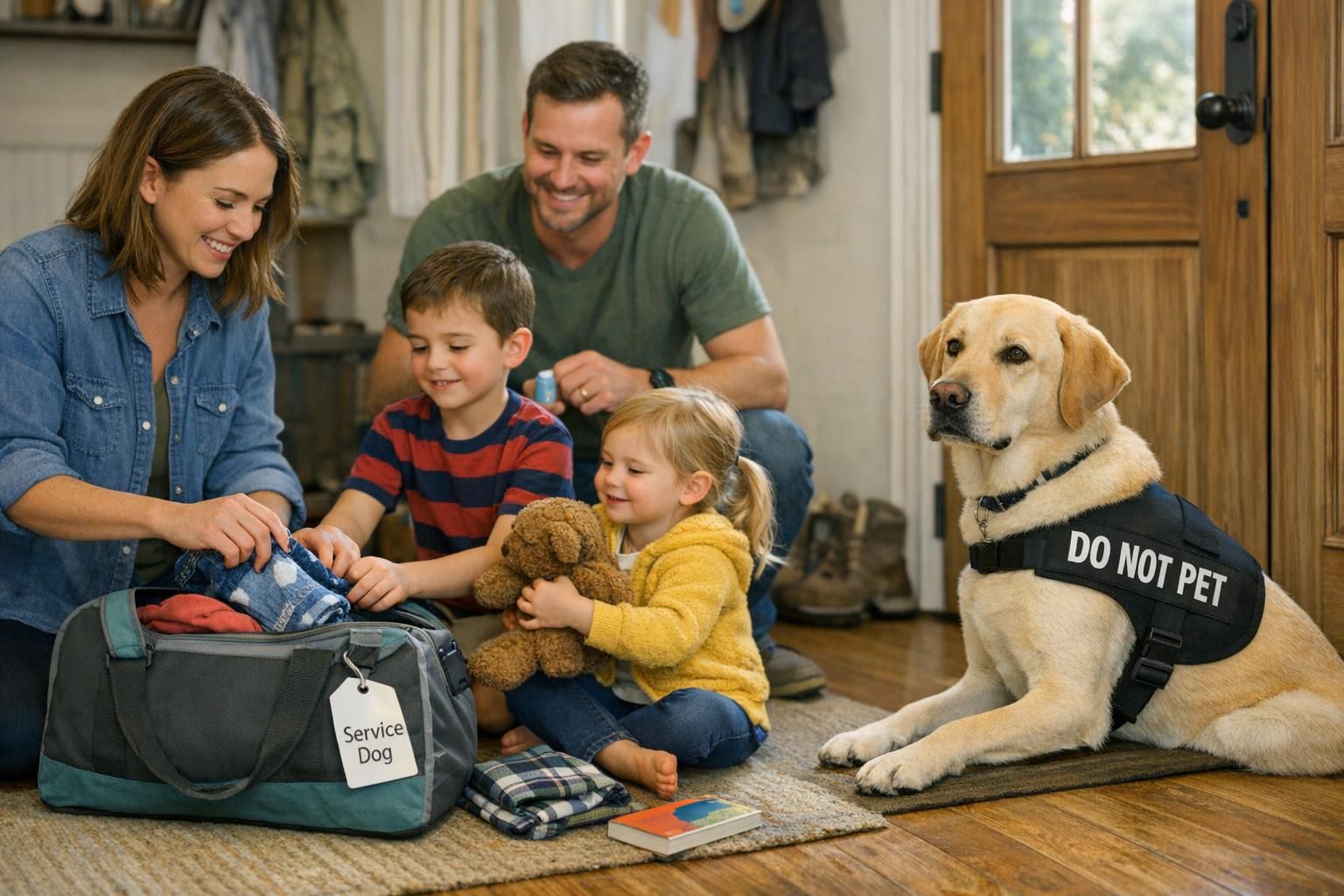
Travel days and overnights can be a big deal for kids—and for service dogs, too. A simple packing system helps the child feel secure and helps caregivers follow the same routine your dog is used to at home.
For families who travel or have frequent sleepovers with relatives, a travel-ready approach can make the whole experience feel more organized. Many parents like having a digital profile they can pull up quickly and a consistent set of identification items that stay in the travel bag.
If you want an all-in-one option for trips, consider a travel-focused registration package with IDs, QR tag, and ADA materials to help keep important details accessible when you’re away from home.
Most families have the parent or supervising adult carry the primary ID, especially for younger children. If your child is old enough to manage their own small wallet, you can also keep a backup card with them while you keep the main ID on hand.
Stay calm and keep it brief. You can answer the two basic questions (that the dog is required because of a disability, and what tasks the dog is trained to perform) without sharing private details. If it helps, a consistent ID format or a short handout can keep the interaction polite and quick while you focus on your child.
Yes. Many families update contact details, photos, or caregiver information as routines change. It’s a good idea to review information after a move, a new school year, or any change in emergency contacts.
Create a simple “service dog routine sheet” and review it with everyone on the support team. Decide who holds the leash, what commands are used, where the dog settles during activities, and what to do if the child becomes overwhelmed. Consistency across adults is one of the fastest ways to reduce stress for both the child and the dog.
“ "We treat our service dog plan like a team playbook—same commands, same routines, and the same way we explain things when we’re out. It makes a difference." – Parent”
Your trusted source for service animal registration. Get professional ID cards, digital profiles, and smart NFC tags to keep your service animal safe and recognized.
© National Animal Registry — All rights reserved.