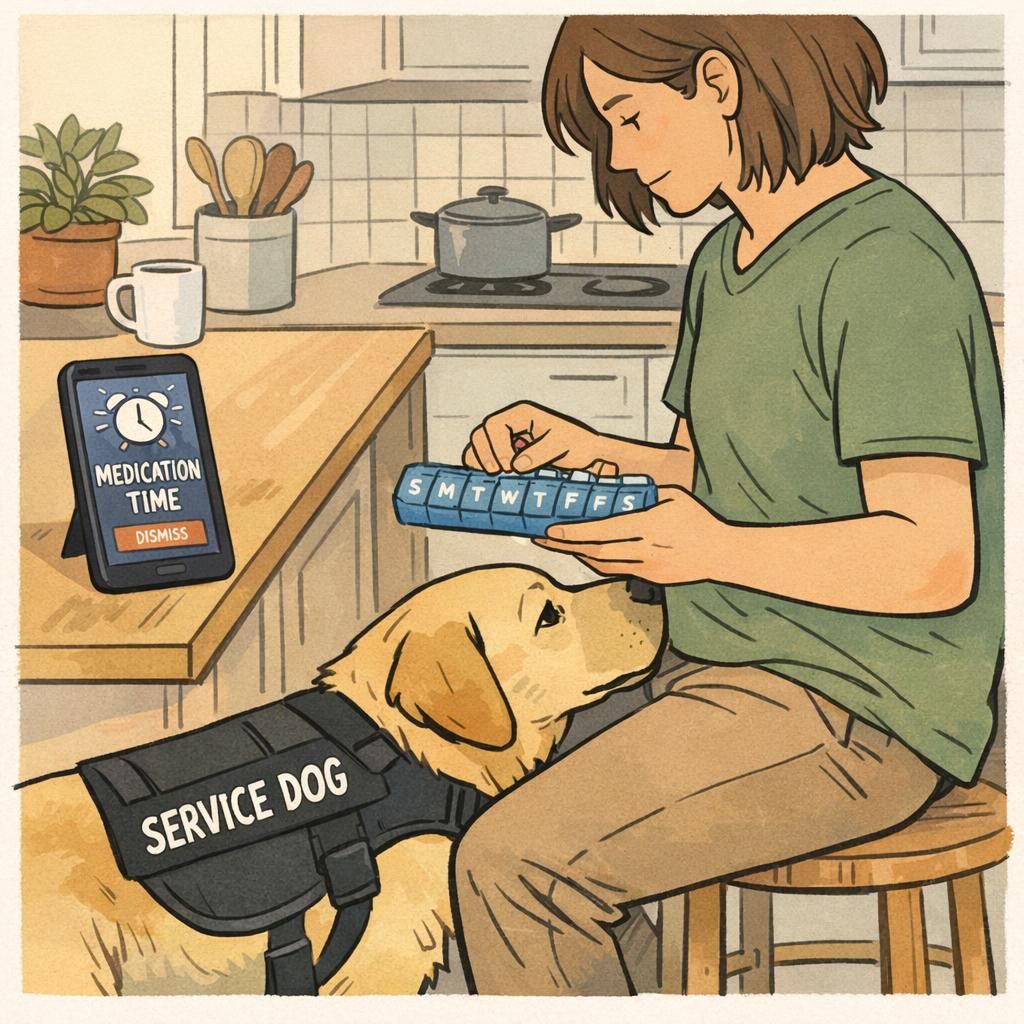
A medication reminder dog is a task-trained helper that prompts a handler to take medication on time. The goal is simple but important: make it easier to follow a treatment plan consistently, especially on busy or stressful days when time can blur and routines can slip.
Many people think of service work as highly visible tasks, but medication reminders are often quiet, practical supports that improve safety and independence. A well-trained reminder can reduce missed doses, lower anxiety around “Did I take it?”, and help a handler stay on track without needing another person to supervise their schedule.
It helps to choose the category that matches what your dog actually does day to day. In real life, the differences usually come down to two things: whether the dog performs trained tasks related to a disability, and where you need support (public places, housing, travel, work, and more).
A service dog is trained to do specific tasks that help with a disability. For medication routines, that might mean nudging you at set times, retrieving a pill organizer, bringing a bag with supplies, or performing a trained alert that interrupts distraction or dissociation so you can complete the medication step.
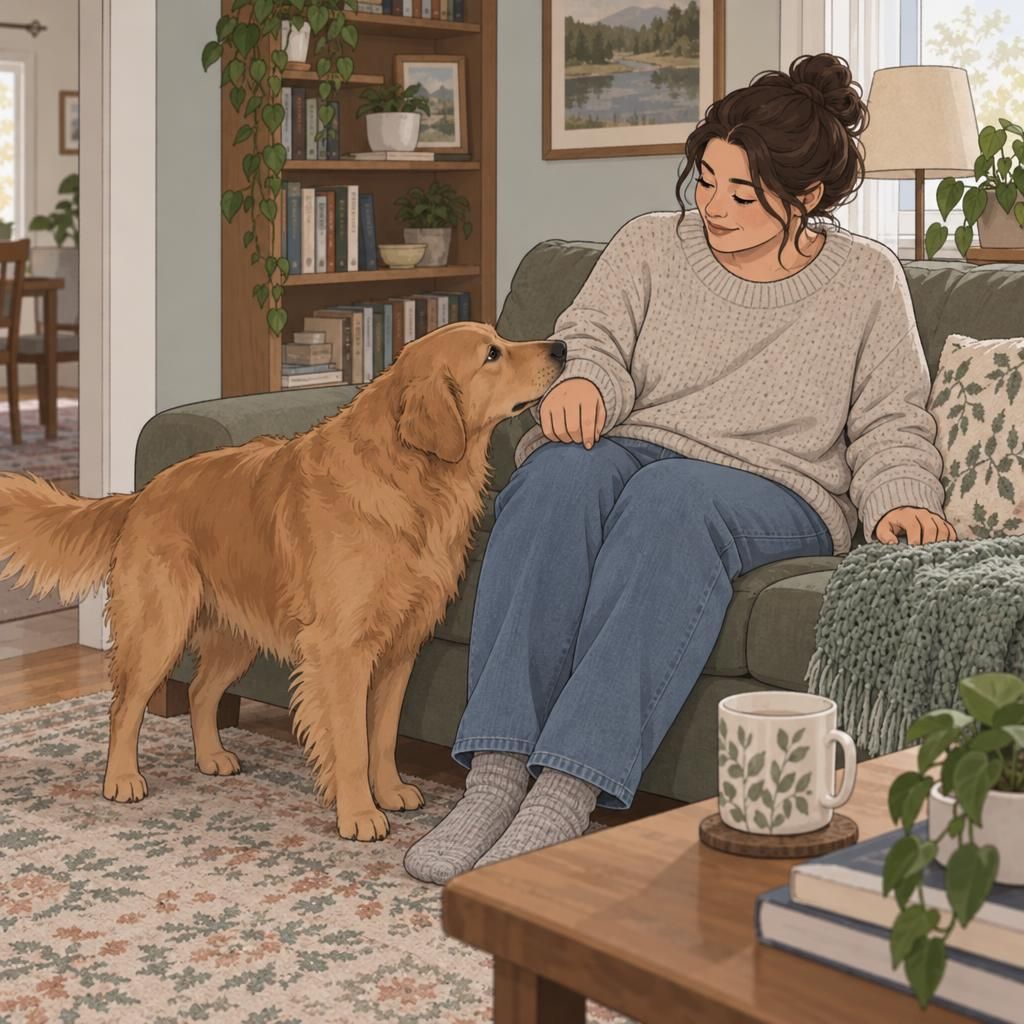
A support dog (often called an emotional support animal, or ESA) primarily supports emotional well-being through companionship. A support dog may be incredibly helpful for comfort, grounding, and daily stability, even if it is not trained to perform a specific disability-related task like a timed medication reminder.
A companion animal is a pet that brings happiness and routine to everyday life. Many companions naturally encourage healthy habits (like getting up and moving), but they aren’t working animals and typically aren’t expected to perform trained assistance tasks.
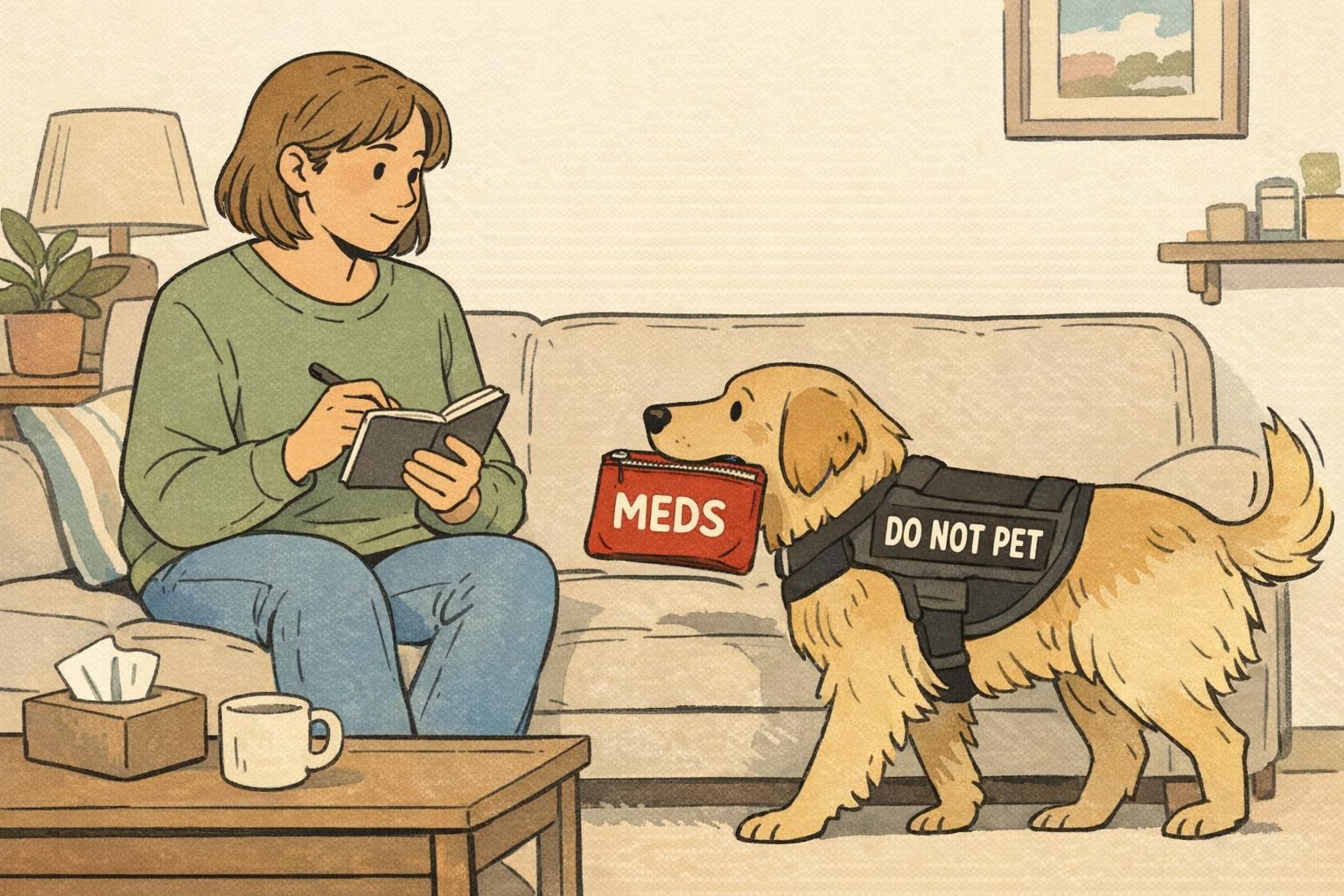
Medication reminder tasks work best when they’re consistent, easy to recognize, and designed around your real routine. Training typically focuses on creating a clear “reminder cue” (what tells the dog it’s time to help) and a clear “reminder behavior” (what the dog does to get your attention).
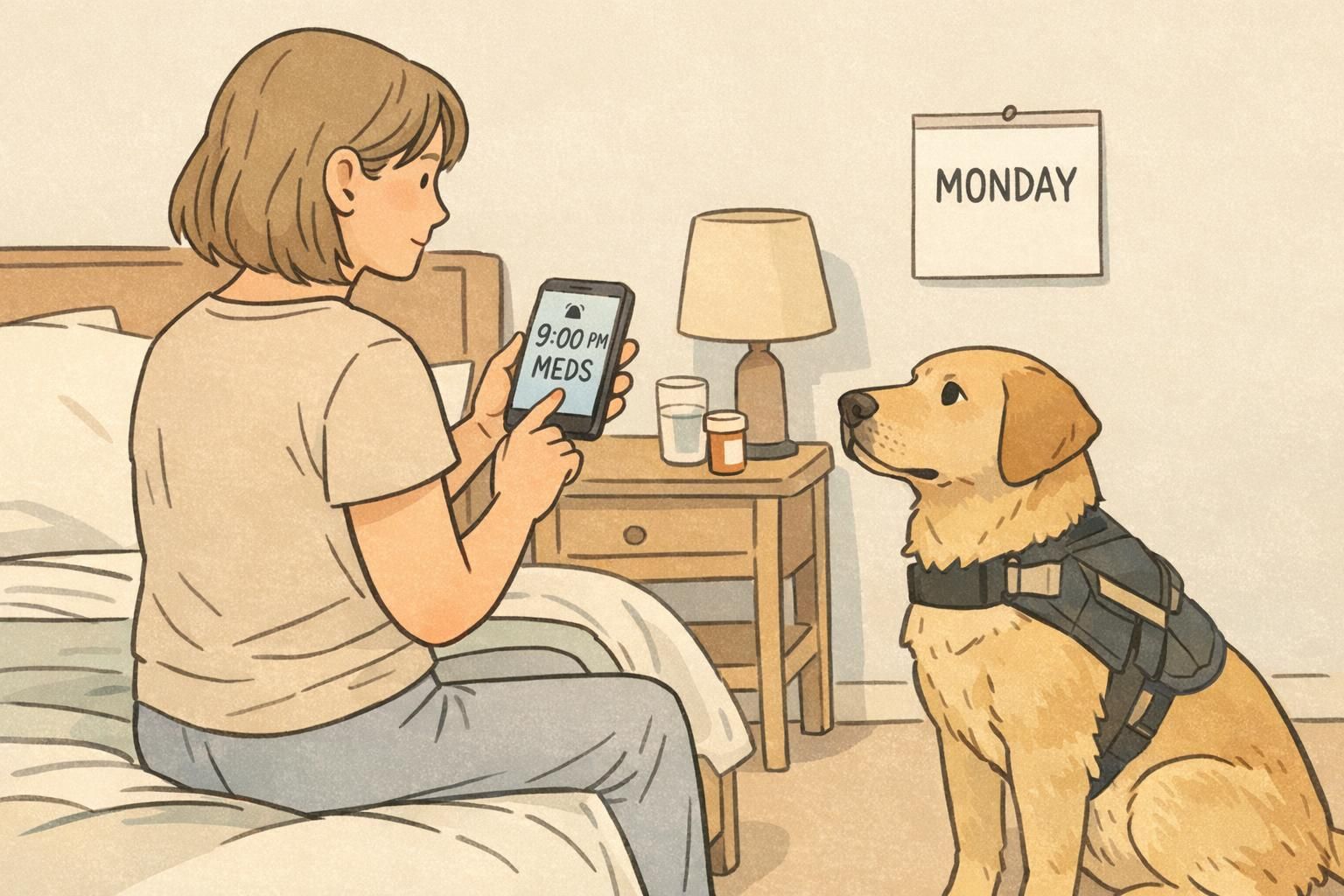
Many handlers use tools like phone alarms or smart speakers as the dog’s cue. Over time, the dog learns: when that sound happens, it’s time to perform the reminder behavior. Then the behavior is reinforced—meaning it’s rewarded—so the dog stays motivated and reliable.
“ "The best reminder is the one you can’t ignore—but it should still feel calm, predictable, and respectful. A gentle nudge paired with a consistent alarm can be a powerful routine-builder." – Service dog trainer perspective”
Reinforcement is what keeps reminders strong over time. Many teams use small treats, praise, or a brief play break after the medication routine is complete. Some handlers also reinforce “check-in” behaviors (eye contact or a sit) so the reminder is clear even in a busy environment.
In everyday life, public access questions usually come up in places like cafes, stores, appointment offices, and hotels. Knowing the basics helps you advocate for yourself calmly and keep interactions smooth.
Under the ADA, a service animal is generally a dog that is trained to perform tasks for a person with a disability. That task-training is the key idea: a medication reminder behavior can qualify as a trained task when it’s directly related to the handler’s disability needs and performed reliably.
When a business is unsure, they can typically ask only two questions: (1) whether the dog is required because of a disability, and (2) what work or task the dog has been trained to perform. Businesses do not require registration papers or an ID for public access under the ADA guidance. source
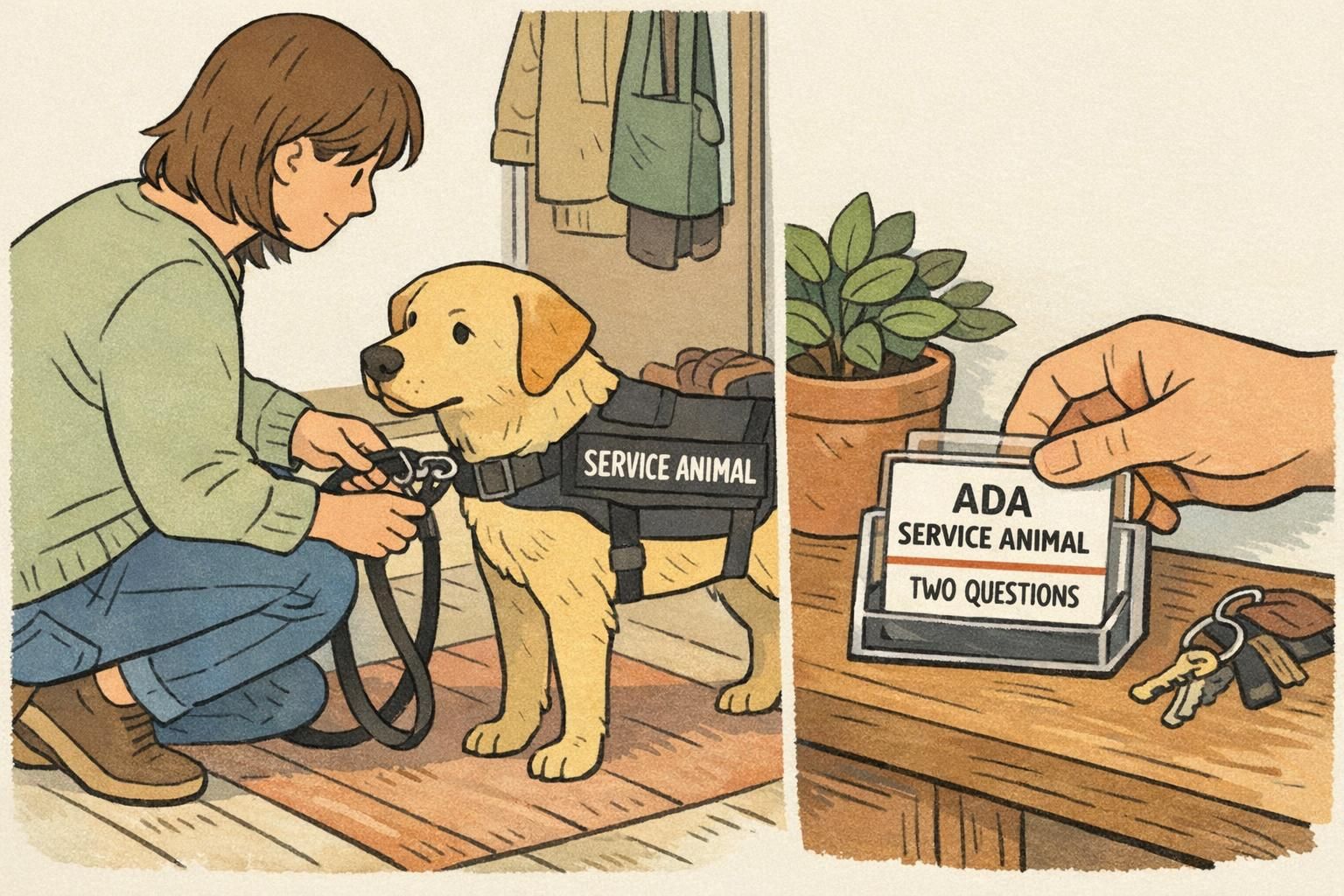
Even when it isn’t required for everyday public access, many handlers choose to register a medication reminder dog to make daily situations simpler. Optional registration, IDs, and certificates can provide clear identification at a glance and reduce misunderstandings—especially in fast-moving environments where you’d rather not have a long conversation.
Registration can also help you keep your dog’s information consistent in one place for your own records. That can be useful for planning ahead, organizing travel details, or having a clear summary ready when you need to discuss your working dog in housing or other settings.
If you’re looking for a simple, handler-friendly way to keep everything organized, consider a starter registration package for everyday identification so your information stays consistent and easy to access when you need it.
Medication routines don’t pause when life gets busy. Travel days, new environments, and crowded venues can make it harder to remember doses—exactly when a reminder task is most valuable. Planning ahead helps your dog work comfortably and helps you stay focused on your schedule.
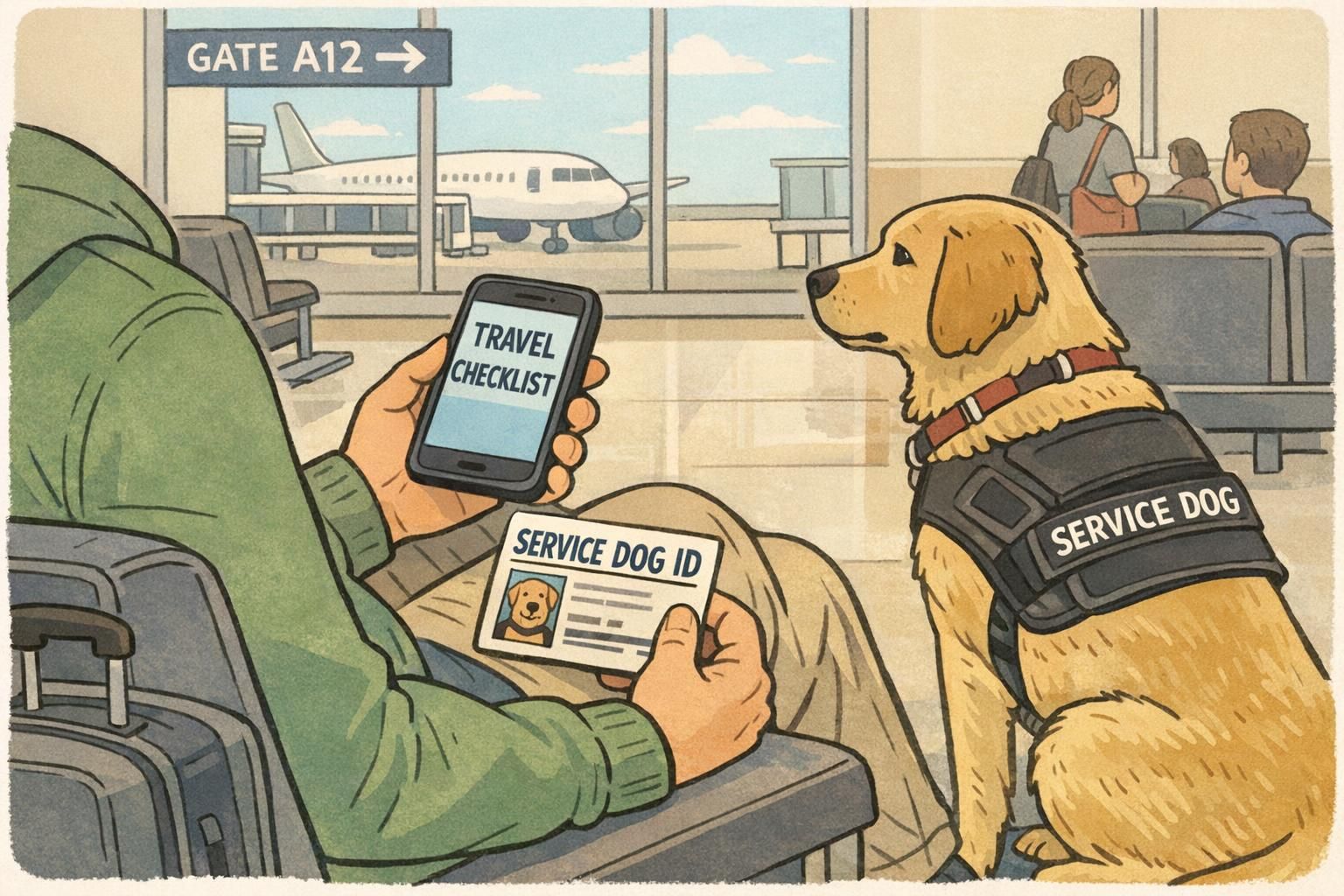
At airports and on travel days, keep your medication plan simple: alarms set, supplies accessible, and a backup option in case your phone battery dies. Hotels can introduce new distractions, so it’s helpful to rehearse the reminder routine in a new room: place the pill organizer in a consistent spot and do a short practice repetition to “reset” the pattern.
In apartment communities, leasing offices may have questions. Staying organized and calm goes a long way: keep key details handy, use clear language about your dog’s working role, and communicate early rather than during a last-minute move-in rush.
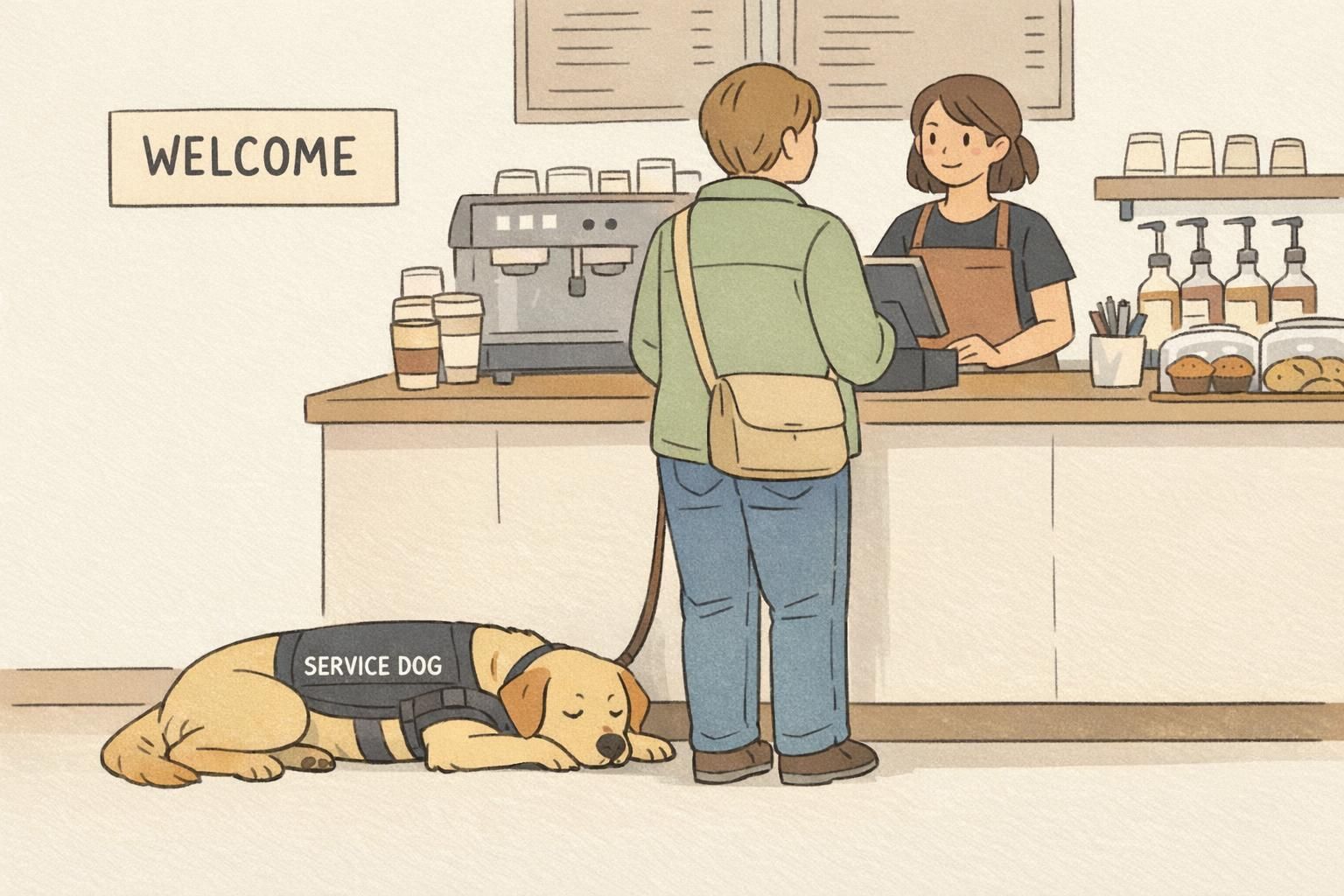
In busy public places—like malls, events, and cafés—your priority is safe handling: keep your dog close, reward calm focus, and protect your reminder routine from interruptions. If your reminder involves a nudge or retrieval, practice it in different environments so it stays reliable when there’s noise and movement.
For more planning ideas, review travel tips for service dog teams to reduce stress and keep your routine steady while you’re on the go.
Some handlers also keep small printed resources available for respectful, quick communication in the moment. ADA law handout cards for quick, respectful communication can be a practical option when you want to keep conversations brief and focused.
Clear identification works best when it’s consistent and easy to understand at a glance. A good registration profile and ID layout should help someone quickly recognize: this dog is working, this is the handler’s dog, and this is the general type of task support the dog provides.
When your printed ID and digital profile match, it reduces friction. People tend to respond better to clear, calm information than to long explanations—especially in environments where staff are juggling multiple responsibilities.
If you want an ID format that pairs a printed card with an online profile, a customizable printed service dog ID with a matching digital profile can make it easier to keep your details consistent and accessible.
The best medication reminder system is the one you can follow on your hardest days. Start simple, then add complexity only if it truly helps. Many handlers find that pairing a dog’s reminder task with a tool like a phone alarm creates a dependable “two-layer” system.
In many everyday public settings under ADA guidance, businesses do not require registration papers or an ID for a service dog. What matters is that the dog is trained to perform a disability-related task and is under control. If you want the detailed ADA FAQ language, you can review it here: source. Many handlers still choose optional registration and ID tools because they can make real-world interactions smoother and reduce confusion.
Use one clear sentence that focuses on the trained task. Example: “My dog is trained to remind me to take my medication on schedule.” You don’t need to share your diagnosis or private medical details—just the task the dog performs.
Medication reminders are often subtle, so misunderstandings can happen. Calmly restate the task in plain language, keep your dog close and well-behaved, and continue your routine. Clear identification (like a vest or ID) can also help reduce repeated questions.
Yes. Many teams build reminders around the handler’s real day—morning meds, mid-day doses, bedtime routines, or “with food” schedules. The most effective reminders are the ones you can practice consistently and reinforce regularly.
Consider keeping a digital version of your dog’s identification information available on your phone so it’s easy to reference when you’re traveling or managing appointments. An instant-access digital service dog ID can be a convenient option for quick reference and organization.
Your trusted source for service animal registration. Get professional ID cards, digital profiles, and smart NFC tags to keep your service animal safe and recognized.
© National Animal Registry — All rights reserved.