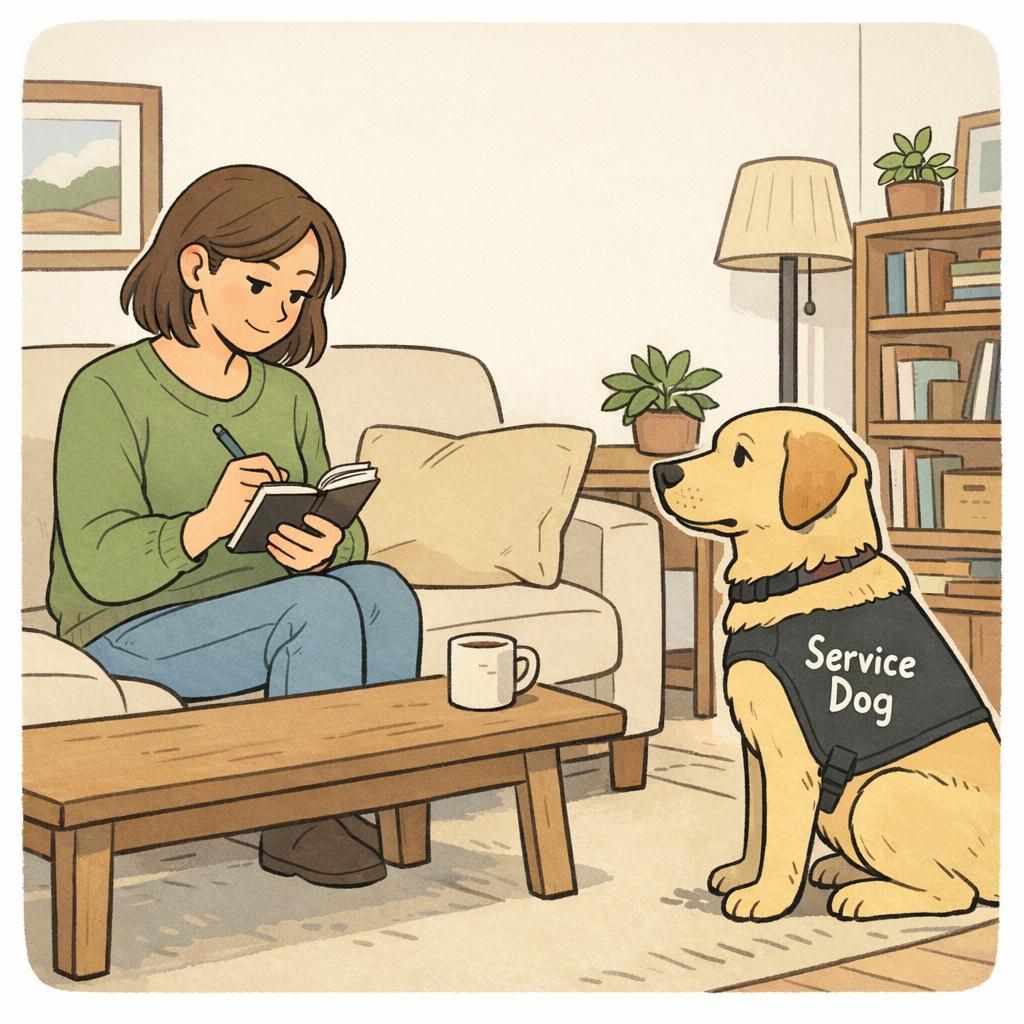
Most handlers don’t “recognize a task” all at once. It’s something you notice over time, in real life: a situation happens, your dog does a trained behavior, and the result helps you function more safely, more independently, or with less interruption from your disability.
In plain terms, recognizing a task usually means spotting a consistent pattern. A cue happens (sometimes from you, sometimes from the environment), your dog responds with a specific behavior, and that behavior leads to a practical benefit—like helping you regulate, retrieve an item you can’t safely reach, or navigate a space with fewer risks.
This clarity matters for everyday life. When you can clearly explain what your dog does, you can also explain what support you rely on—without having to share private medical information. It also helps you reinforce the right behaviors in training, because you know which actions are truly helping and which are simply good manners or general helpfulness.
Many service dog teams use two practical “paths” to support: tasks and work. People often use these words interchangeably, but it can be helpful to separate them when you’re trying to figure out what your dog is responding to.
Tasks are typically cue-based and deliberate: you ask for a behavior (with a word, gesture, or routine prompt), and your dog performs it. Work is often a trained response to non-intentional cues—changes in your body, your behavior, or the environment that your dog has learned to notice and respond to.
Tracking the trigger is one of the simplest ways owners recognize which is happening in the moment. Did you intentionally ask? Or did something shift—your breathing, your pace, the crowd density, a hazard in the walkway—and your dog responded without being asked?
This “cue-based analysis” approach is a practical way to understand what your dog is truly trained to respond to, and why the behavior shows up when it does. For a deeper breakdown of how cues can be intentional or non-intentional, see this source.
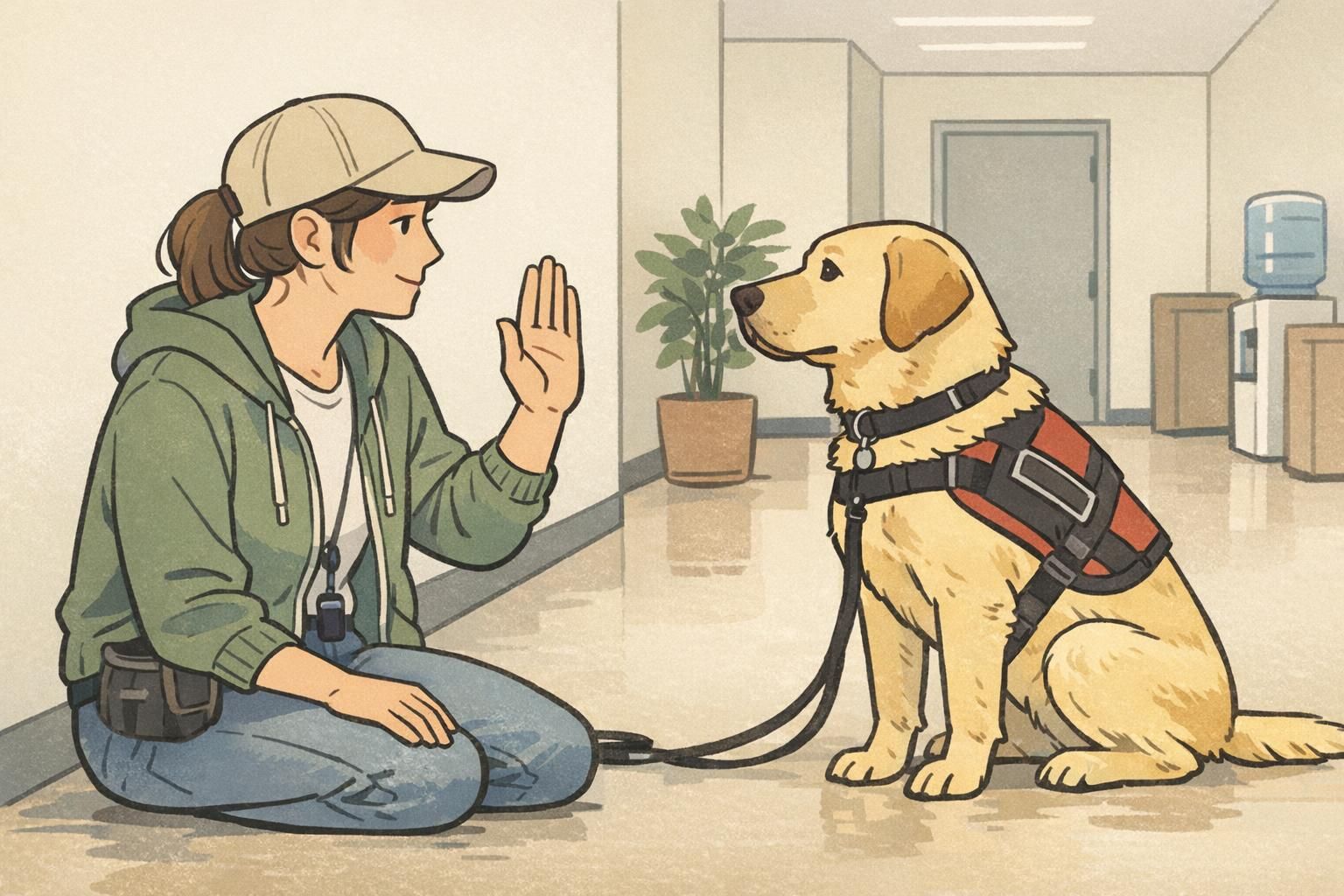
Intentional cues are the most straightforward to recognize because they’re deliberate and repeatable. You give a cue, your dog performs a defined behavior, and you can usually point to a clear “start” and “finish” of the task.
Common intentional cues include verbal commands (like “retrieve”), hand signals, or consistent routine prompts (like tapping your leg before a “heel” reposition, or pausing at a doorway to cue a “find the exit” behavior). Over time, these prompts become part of a predictable system between you and your dog.
Handlers often find intentional tasks easier to describe in everyday conversations because the behaviors are specific and observable. Instead of a vague description like “my dog helps with anxiety,” a clearer task-based description might sound like “my dog retrieves my medication bag when I cue ‘bring’” or “my dog guides me to the nearest exit when I cue ‘exit.’”
Some of the most valuable support looks “automatic” from the outside. That doesn’t mean it’s random. It usually means the dog has been trained and reinforced to respond to non-intentional cues—signals you don’t necessarily mean to give.
These cues can come from the handler (your body, your movement, your voice) or from the world (a hazard, a crowded space, a sudden change in environment). Owners often recognize this kind of work by asking: “What did my dog notice that I didn’t intentionally signal?”
Handler-based cues can include changes in breathing, pacing, muscle tension, voice tone, or specific repetitive behaviors that show up before a symptom becomes intense. World-based cues can include a dropped object that creates a slip risk, a person approaching too quickly, or an obstacle that blocks safe movement.
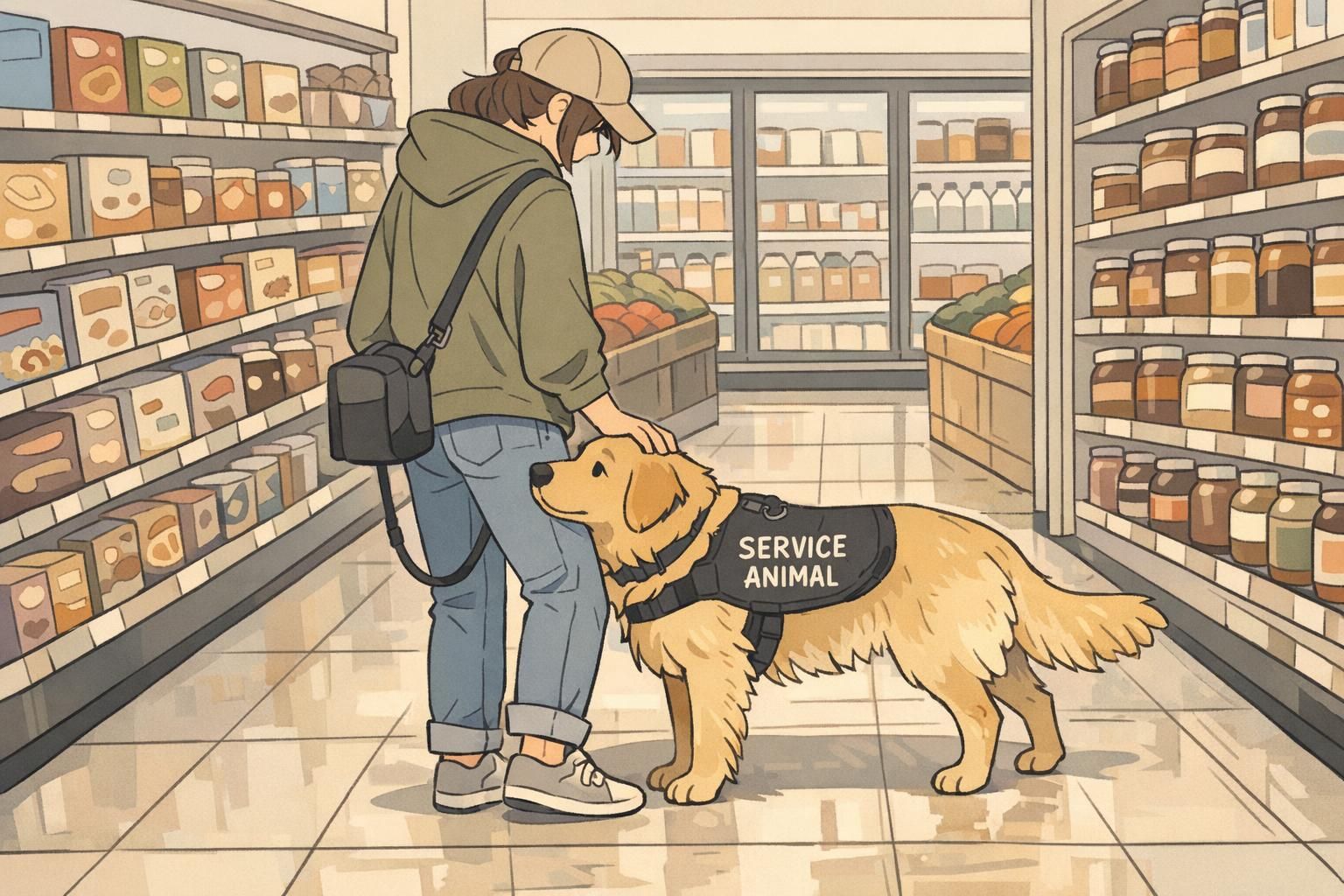
In daily life, it helps to focus on what you can see: the trigger, the behavior, and the benefit. Below are grounded examples that owners commonly use to understand what they’re seeing in the moment.
“ "Once I started paying attention to the pattern—what happened right before the nudge, and what it prevented—I realized my dog wasn’t being ‘needy.’ He was doing exactly what we trained: interrupting and keeping me safer." – Service dog handler”
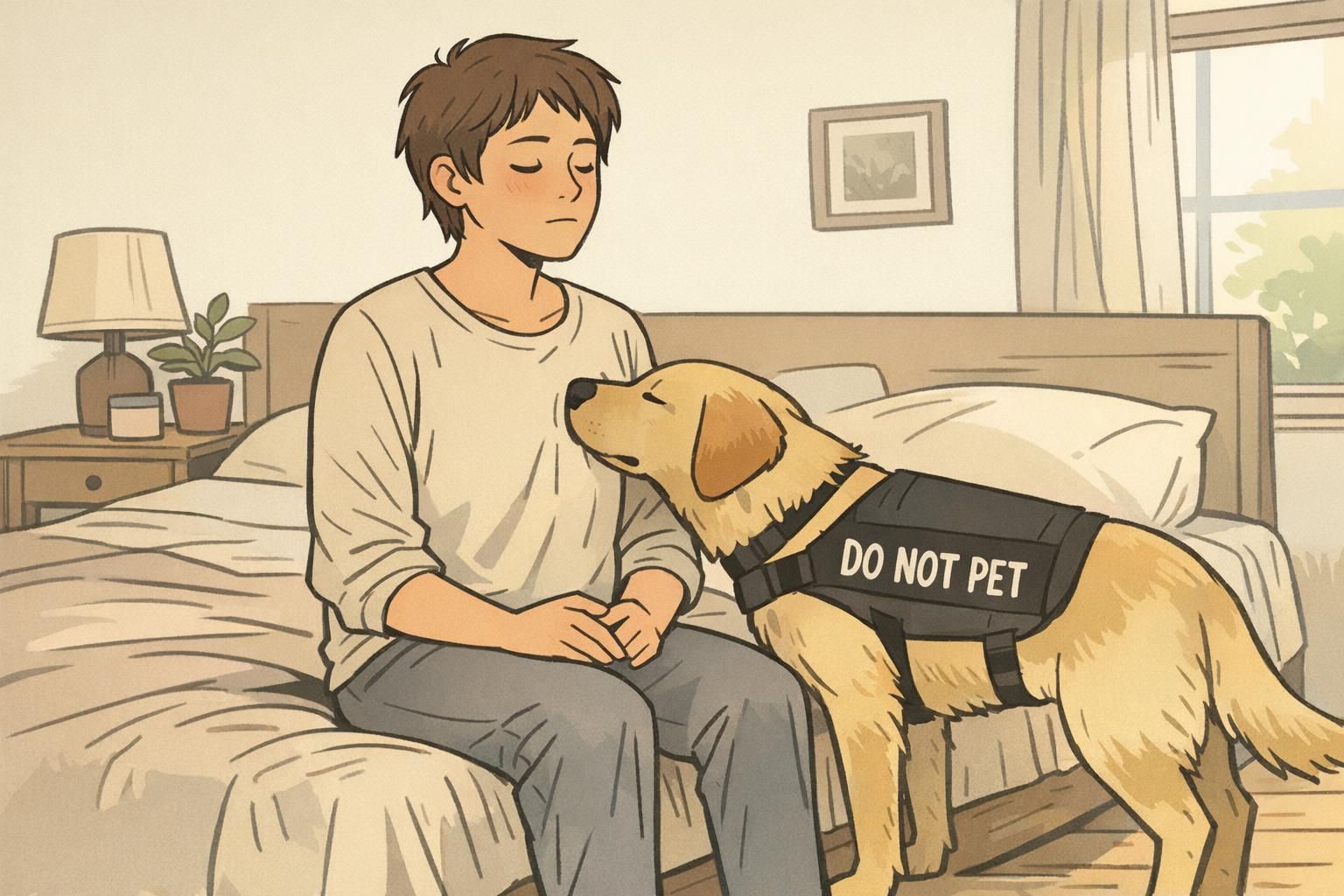
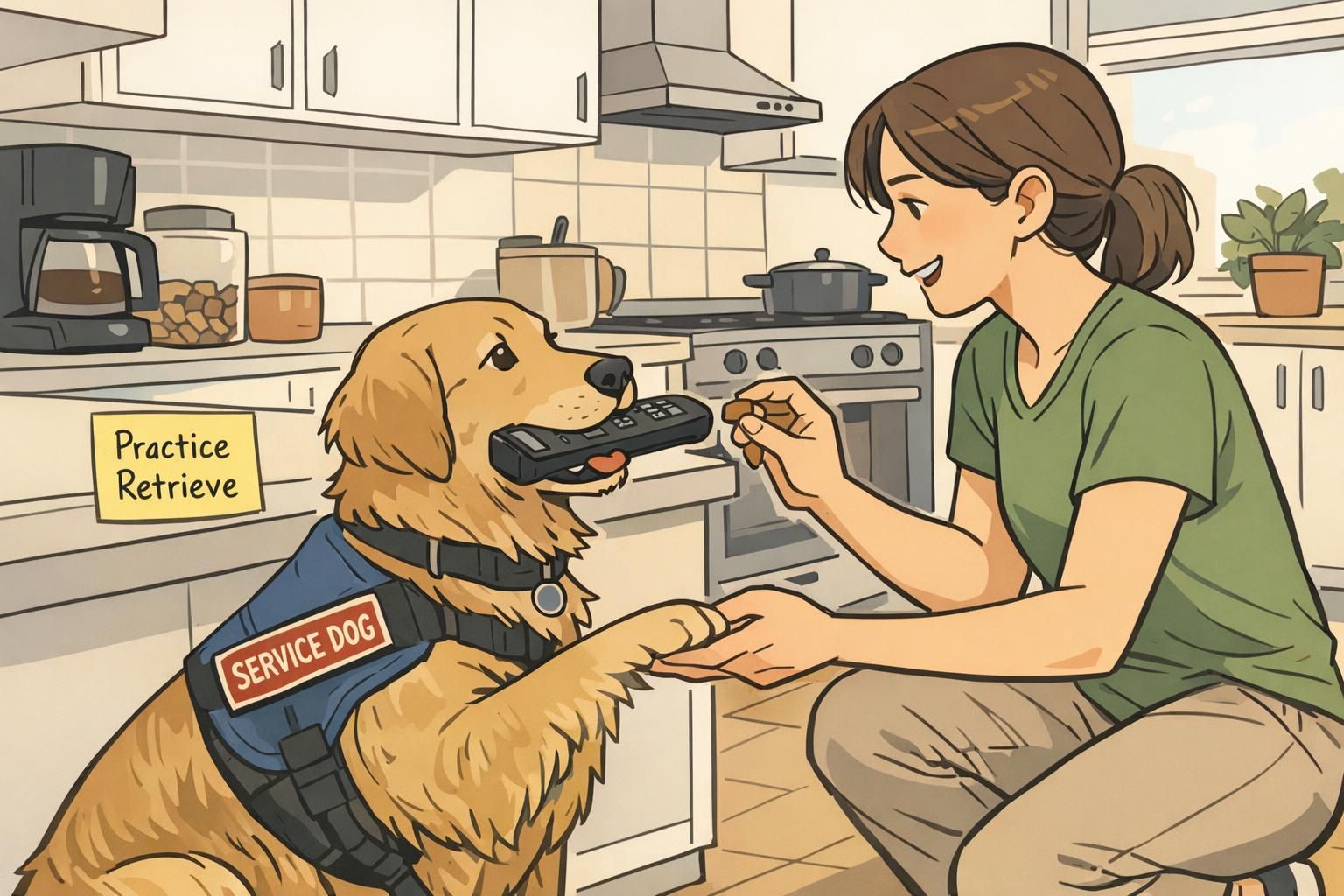
Tasks become recognizable because they’re trained to be consistent. Many teams build tasks through positive reinforcement and step-by-step shaping: rewarding small pieces of the behavior until the full task is reliable.
After a task is learned at home, it’s usually practiced in new places and around distractions so the dog can generalize the behavior. A retrieve, for example, isn’t truly useful if it only works in the living room. Training expands the skill so it works at the front door, at a friend’s house, or in a store—while still looking like the same task.
Owners often recognize that a behavior is “real task-level reliable” when it shows up the same way across settings: the same alert behavior, the same delivery to hand, the same block position, the same follow-through until the handler responds. Consistency is what turns a helpful trick into a dependable support tool.
When you’re trying to understand your dog’s support, you don’t need complicated tools. A simple, repeatable tracking habit can help you confirm what’s happening, improve training clarity, and make it easier to explain your dog’s work in day-to-day conversations.
It can happen. If the behavior is safe, appropriate, and genuinely helpful, you can choose to shape it into a consistent, trained response by rewarding it at the right moments and adding a clear cue (or reinforcing the non-intentional cue pattern). If it’s disruptive or unreliable, redirect and focus on the tasks you want most.
Good behavior is generally about manners (staying calm, not pulling, ignoring distractions). A task is tied to a cue and produces a functional benefit related to your disability—something that changes your safety, access, or ability to manage daily life.
Questions can come up in public, especially in busy places. Having a calm, prepared way to describe your dog’s tasks can reduce stress and prevent misunderstandings. The most effective approach is to focus on function rather than personal medical details.
A professional-sounding explanation is usually short and specific. For example: “My dog is trained to alert me to a medical episode and guide me to a safe place,” or “My dog retrieves items and helps me maintain balance during transitions.” You’re describing what the dog does, not your diagnosis.
Some handlers also like having a simple, consistent way to share basic information when conversations feel tense or repetitive. Tools like ADA law handout cards for quick, calm explanations can make it easier to communicate without feeling put on the spot.
“ "I don’t explain my health. I explain my dog’s job. That simple switch makes public interactions so much easier." – Service dog handler”
Once you can clearly recognize and describe your dog’s trained behaviors, many everyday interactions get simpler—especially when you pair that clarity with consistent identification. While not an extra hurdle, a registry profile and ID can be a practical way to stay organized and feel prepared in routine situations.
Handlers often choose registration and IDs for day-to-day convenience: having an ID card and certificate on hand can streamline conversations, help keep your records consistent, and reduce friction during housing communications, travel planning, or other public-facing moments where you want a quick, professional way to present your service dog as part of your routine.
If you want a straightforward way to keep everything together, many handlers start with a starter registration package for everyday identification.
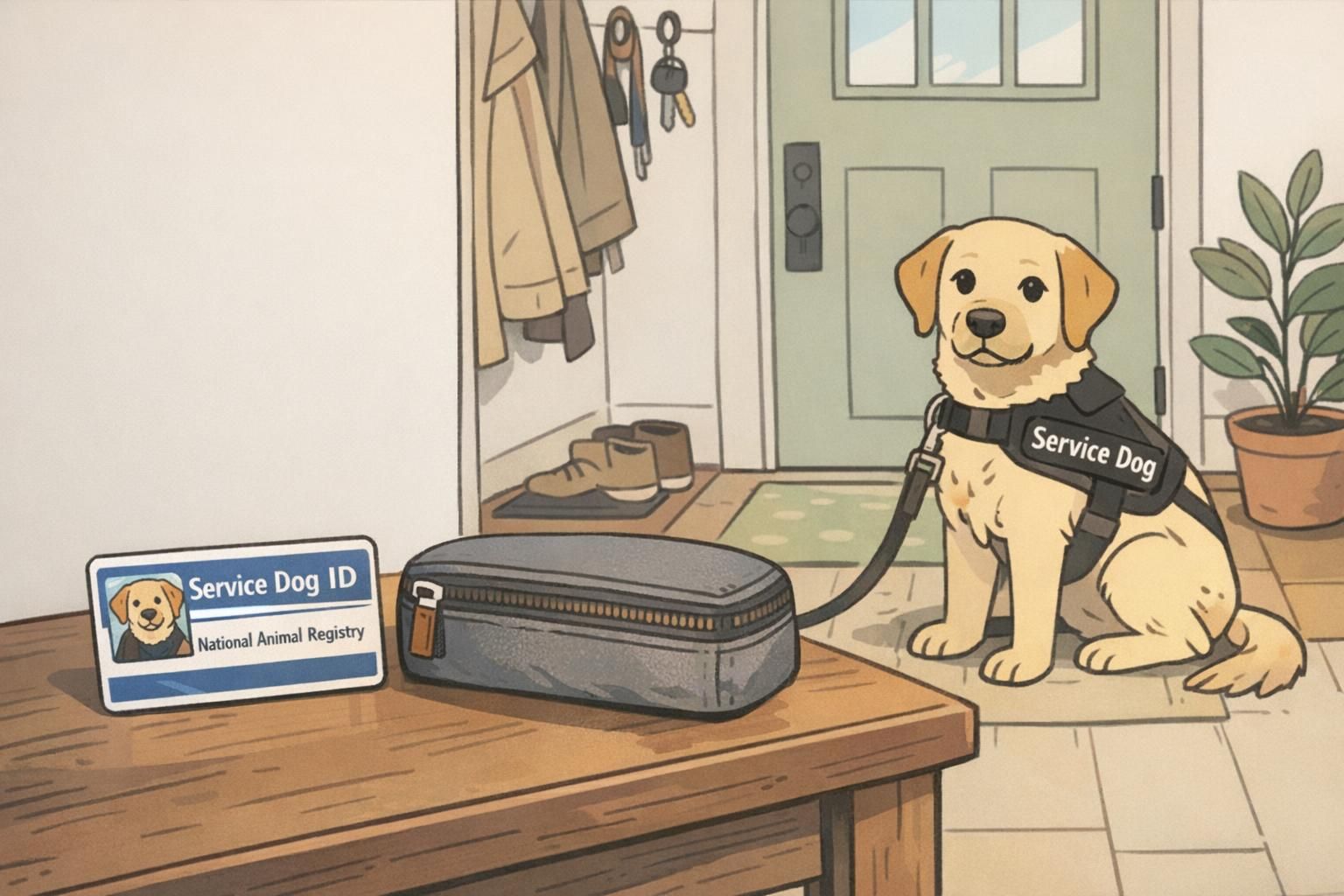
Travel is one of the fastest ways to discover what your dog’s tasks look like under pressure: new layouts, different sounds, changed routines, and longer days. When you recognize your dog’s tasks clearly, you can plan around them—building predictable breaks, knowing which skills you’ll rely on most, and reducing surprises.
A simple travel-ready summary can make a big difference. It’s not about sharing personal medical details; it’s about being able to quickly list your dog’s trained behaviors, typical triggers, and what helps you stay safe and functional in unfamiliar environments. For more practical tips, see traveling with a service dog.
Some handlers also like travel-focused identification tools that keep key materials in one place. If that would help your routine, consider a travel-ready service dog registration package to support confident planning and smoother day-to-day travel interactions.
Your trusted source for service animal registration. Get professional ID cards, digital profiles, and smart NFC tags to keep your service animal safe and recognized.
© National Animal Registry — All rights reserved.