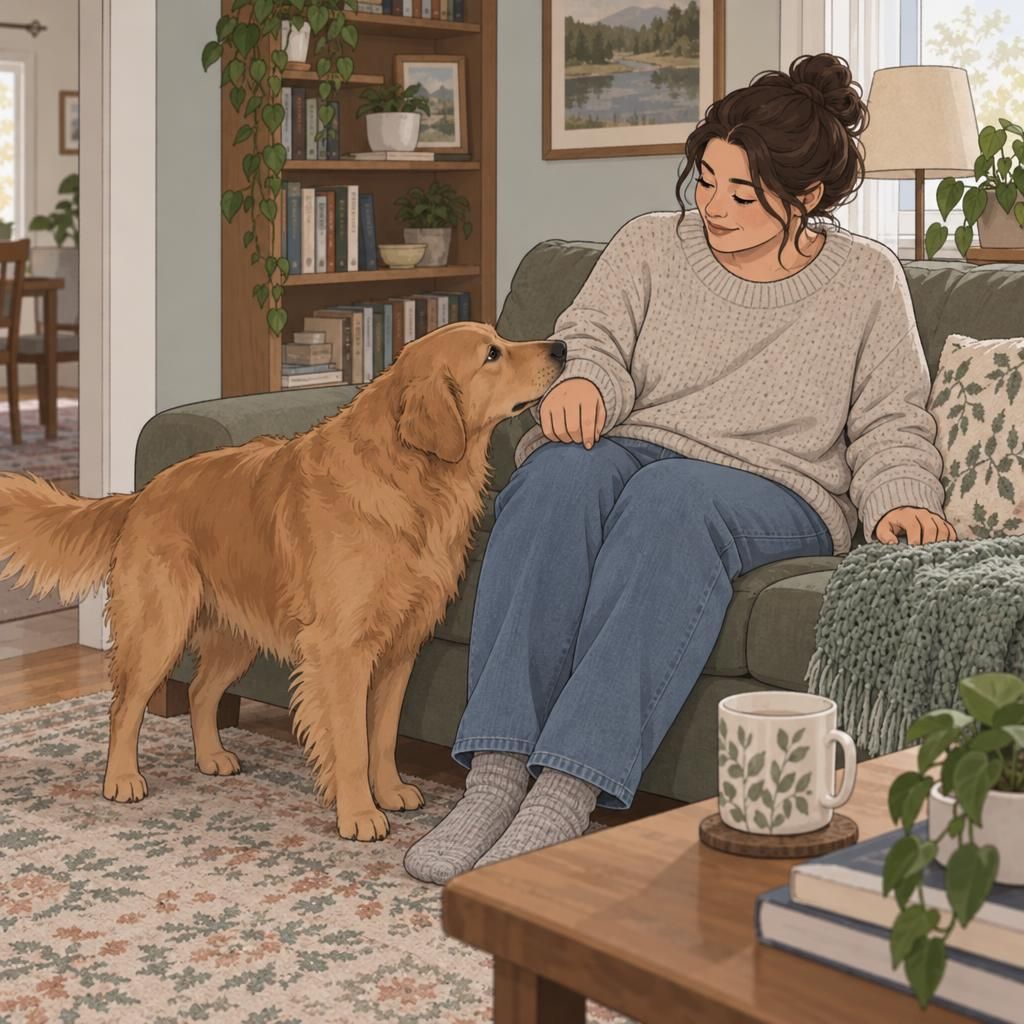
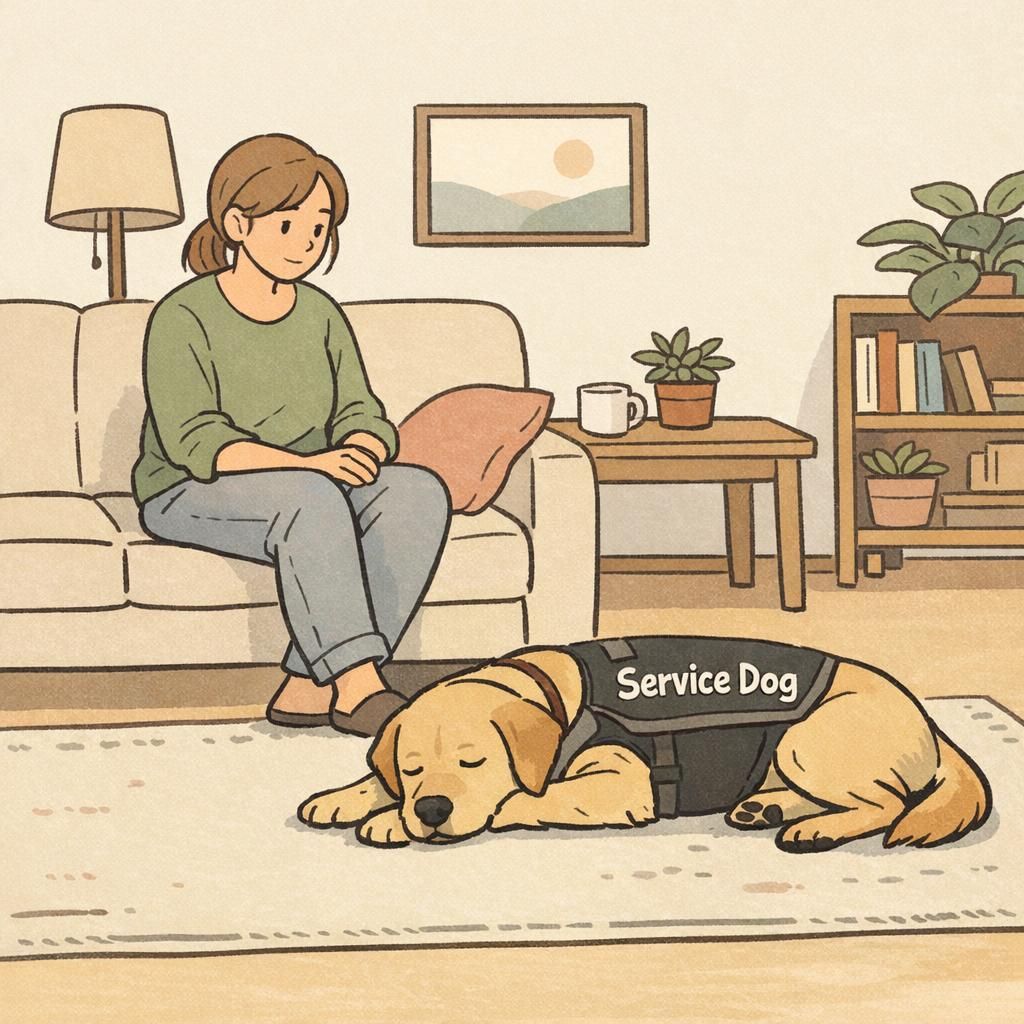
A service dog (also called a service animal or assistance dog) can be much more than a comforting presence. For many people living with disabilities, a service dog is a trained partner who helps with practical, repeatable tasks that make day-to-day life safer and more manageable—at home, at work, and out in public.
The real impact often shows up in ordinary moments: staying steady while walking to the mailbox, finding the confidence to shop alone, catching a medical issue early, or getting through a crowded room without panic. And because every handler’s needs are different, service dog task work is typically shaped around the person’s real routine—not an “ideal” routine.
In the stories below, you’ll see several common ways service dogs support their handlers: mobility assistance, medical response, PTSD-related task work, and guide work in high-stakes situations. You’ll also see something that’s hard to quantify but easy to recognize—steadiness. A dog who is consistent can help a handler feel more consistent, too.
Some service dog tasks are quietly routine—helping a handler complete the same steps every day. Others can be genuinely life-saving when a medical event hits without warning. Sterling and Thomas’s story shows how those two realities can overlap in a single household.
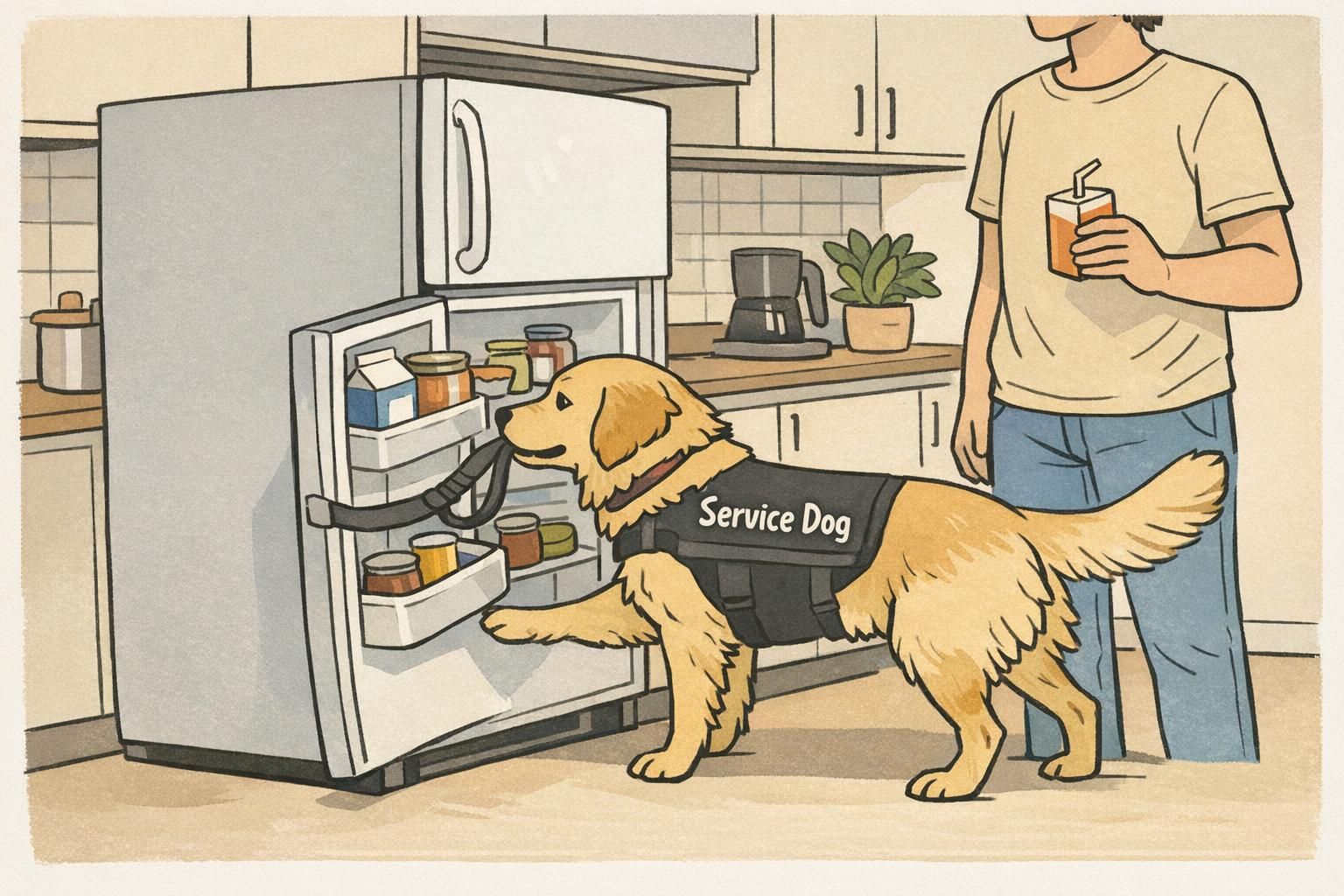
Thomas lives with MS-related balance challenges and Type 1 Diabetes. Sterling supports him in multiple ways: assisting with balance when stability is shaky, responding to insulin pump alarms, and retrieving items Thomas may struggle to reach quickly. That can mean bringing testing supplies, opening the refrigerator, or delivering something as specific as orange juice when blood sugar drops.
On paper, each task may sound straightforward. In real life, it’s the timing that matters. A dog who reliably responds to an alarm or quickly brings supplies can help shorten the gap between “something’s wrong” and “I can handle this.” And for a person dealing with multiple conditions, that reliability can reduce stress before it ever builds into a crisis. For the specific examples of Sterling’s task work supporting MS balance needs and diabetes-related responses, see this source.
“ "When symptoms stack up, the smallest delays can feel enormous. A service dog helps turn ‘I hope I can’ into ‘I know I can.’" – Service dog handler”
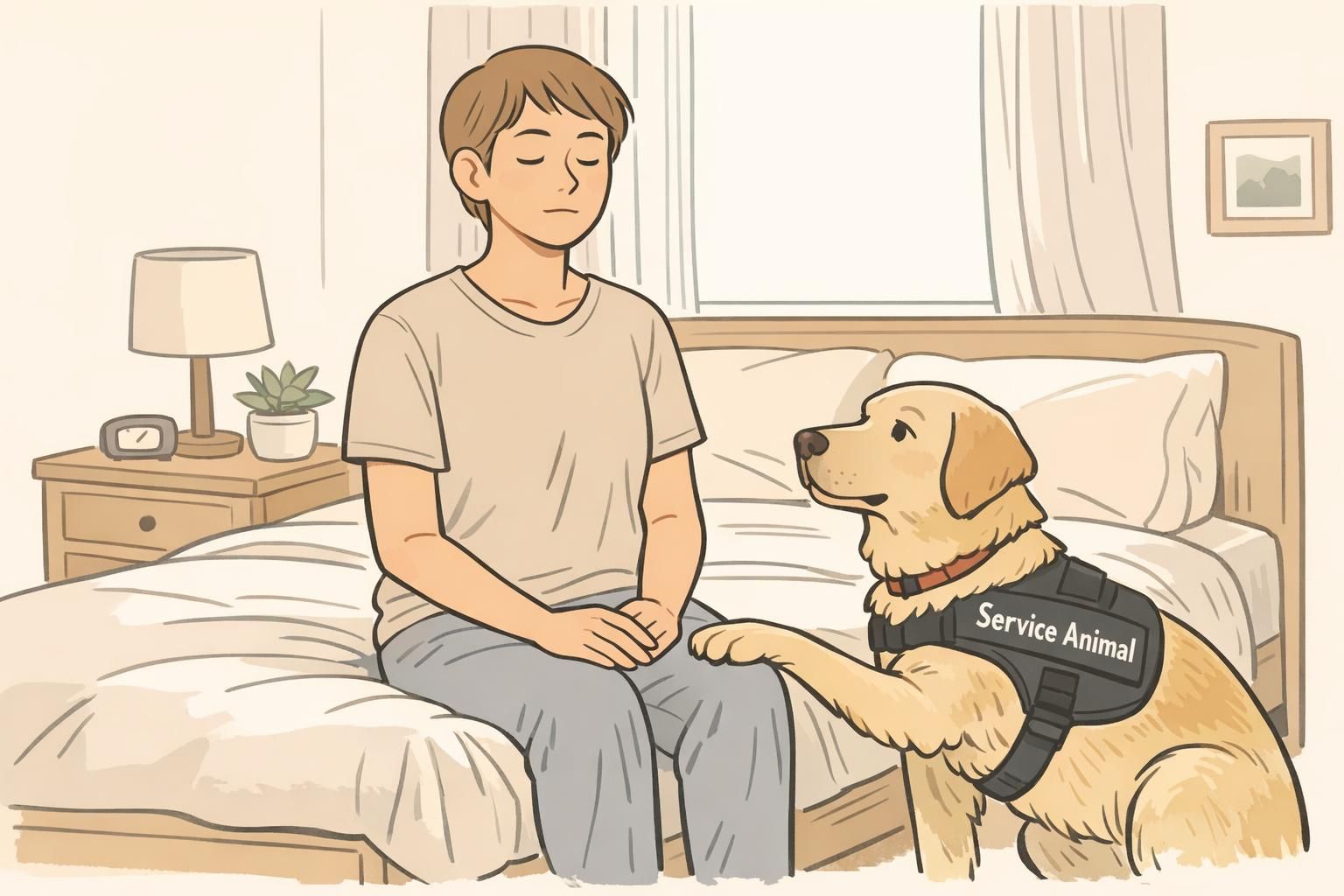
PTSD-related service dog work often focuses on “in the moment” support—interrupting a nightmare, grounding a handler during anxiety, or creating enough predictability that the person can re-enter daily life with more independence.
For Marine veteran Tony, Dozer helped by interrupting nightmares and reducing anxiety in group settings. That kind of task work can look simple from the outside: a nudge, a paw touch, a firm presence at the handler’s side. But for the handler, it can be the difference between staying stuck in a trigger and returning to the present.
Over time, this support can change what “normal” feels like. Many handlers describe a service dog as a bridge back to independence—helping them grocery shop, attend appointments, or live on their own more confidently. The dog isn’t replacing coping skills; the dog is helping the handler use those skills when stress would otherwise overwhelm them.
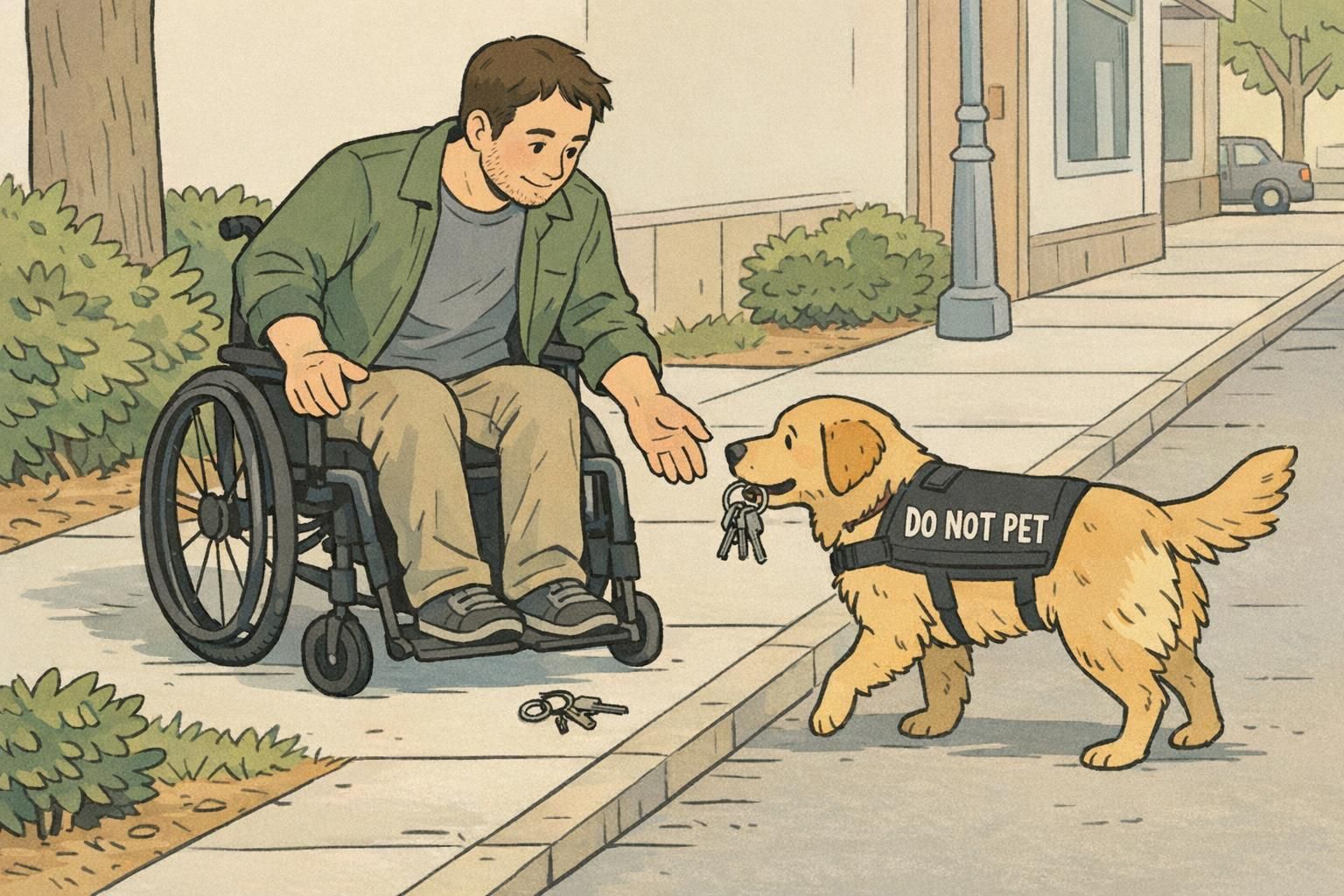
After a life-changing accident, it’s common for daily tasks to be rebuilt from the ground up. That process can be exhausting—and emotionally heavy—because “small” obstacles show up constantly: a dropped phone, keys on the floor, a light item just out of reach.
Baldwin supports Alex by retrieving dropped items and assisting with practical needs that make a home (and a day) run more smoothly. What’s powerful about retrieval work is that it turns a frequent frustration into a solved problem. Instead of needing to call for help or risk a fall, the handler can cue their dog and keep moving.
These repeated wins add up. When you can handle the little moments, you conserve energy for the bigger ones—work, relationships, rehabilitation, and goals that go beyond the basics. Many handlers also describe a renewed sense of motivation: each successful task is a reminder that independence is still possible, even if it looks different than before.
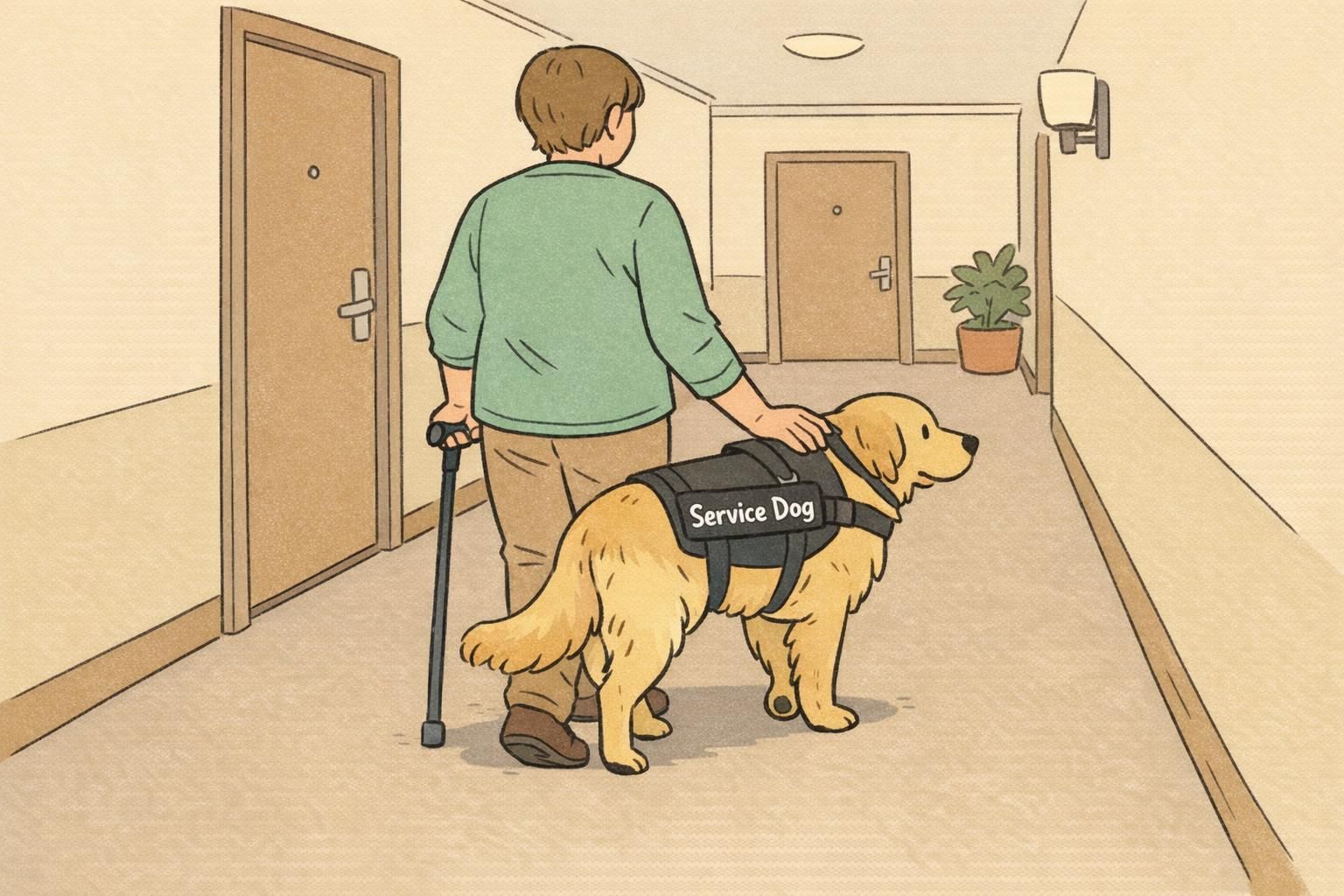
For handlers living with rheumatoid arthritis, daily routines can be shaped by pain, stiffness, and fatigue—especially when joints flare or balance feels unsteady. In those moments, fall prevention is not just about avoiding injury; it’s about staying confident enough to keep participating in life.
Jasper helps Jane reduce falls, retrieve items, open doors, and provide steady walking support. Mobility support often looks like a blend of safety and pacing. When a dog helps you avoid unnecessary bending, bracing, or repeated trips across a room, you save energy and reduce strain. That conservation can mean the difference between finishing the day upright—or being forced to stop early.
Just as importantly, Jasper’s support can reduce the mental load that comes with mobility concerns. When you trust your partner, you can focus outward—on errands, conversation, and the world around you—instead of constantly scanning for hazards.
Some service dog stories are remembered because they show what training, trust, and composure look like under extreme pressure. Guide dog Roselle and her handler, Michael Hingson, are widely known for evacuating the World Trade Center on 9/11—descending many flights of stairs and navigating chaos while staying focused on one goal: getting out safely.
While most guide work happens in everyday settings—street crossings, doorways, obstacles—this story highlights the deeper foundation underneath: calm decision-making in real-world conditions. A guide dog is trained to work through distractions, remain responsive to the handler, and keep moving even when the environment is unpredictable.
For many readers, the takeaway isn’t that every day will be dramatic. It’s that the partnership is built for real life. Service dogs are not only performing tasks; they’re performing tasks in places that are busy, loud, and sometimes stressful—because that’s where independence truly matters.
“ "A working dog’s greatest strength is consistency. In the most ordinary moments—and the most extraordinary ones—that consistency becomes safety." – Service dog trainer”
Across different disabilities and lifestyles, certain service dog tasks come up again and again because they solve frequent, high-impact problems. The exact tasks a dog performs depend on the handler’s needs, environment, and daily routine. What matters most is that the task work is individualized and reliable.
No. Two handlers can have the same diagnosis and still need different task work. Service dog tasks are most effective when they match the handler’s real routines and challenges.
Yes. Many service dogs perform a combination of mobility, retrieval, medical response, and psychiatric-related tasks, depending on what supports the handler best.
Going out in public with a service dog should be routine, but real life can include questions, confusion, or awkward moments—especially in places where staff rarely interact with working animals. A calm approach and simple, respectful communication can reduce friction and keep the focus where it belongs: on your day.
It also helps to remember that laws and policies can vary by location and context. When you’re prepared to explain what you need without escalating the situation, you create more opportunities for smooth, quick resolution.
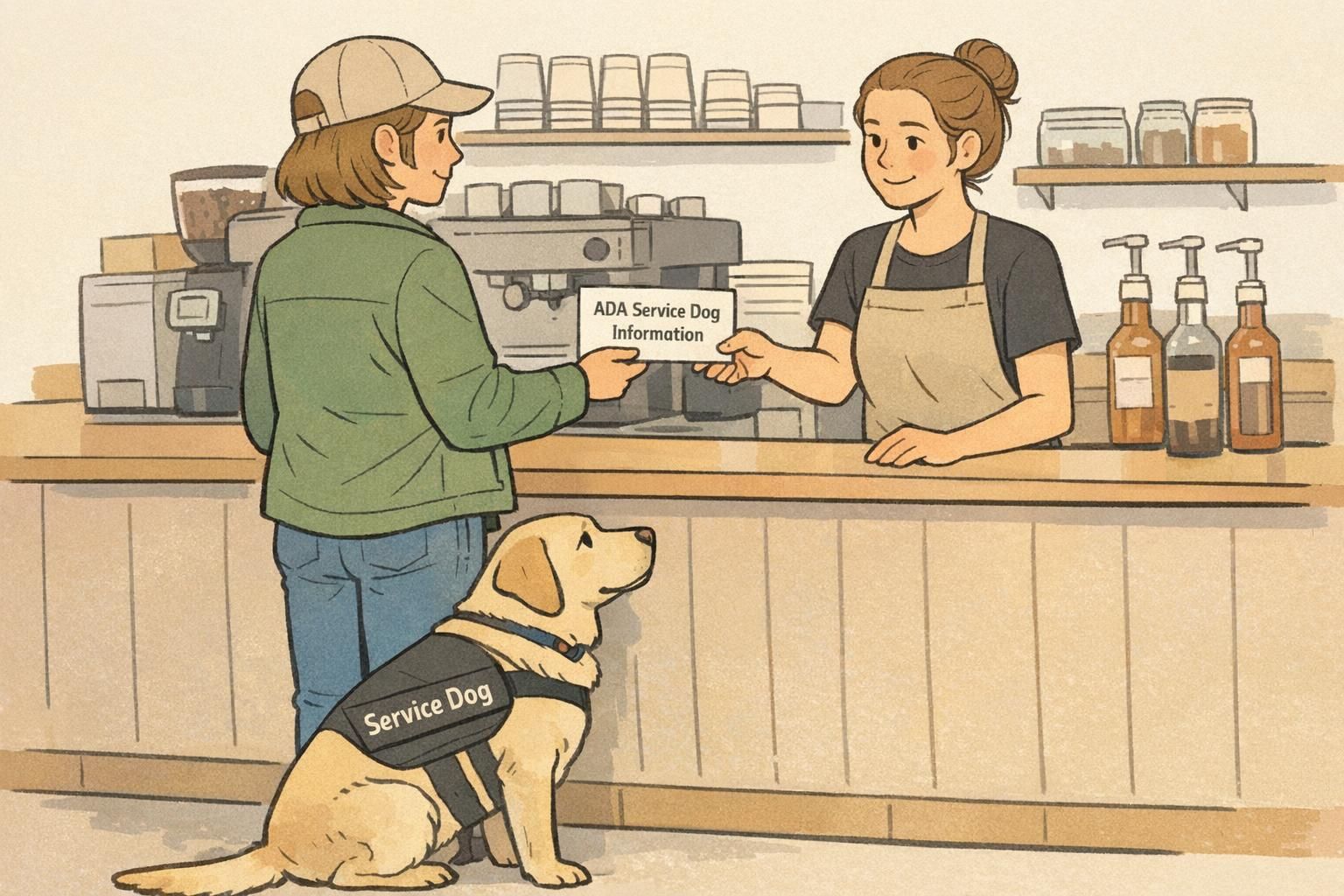
Many handlers choose to carry ADA law handout cards for calm, clear conversations so everyday interactions can stay polite, brief, and consistent—especially when a quick explanation helps everyone move on.
Even when a handler is fully focused on training, routines, and task work, day-to-day life still involves paperwork moments: housing conversations, travel planning, pet-restricted spaces, and situations where someone simply wants reassurance that the dog is working.
That’s why many handlers choose registration and service dog IDs as a practical way to keep key information organized and easy to present. These tools can help reduce misunderstandings and create a more consistent experience across common situations—without turning every interaction into a debate.
For many teams, the benefit is less about “proving” anything and more about convenience: having an ID card, a digital profile, and a unique registration number in one place can make routines feel smoother and more professional. If you want an all-in-one option, consider a starter registration package for everyday identification.
Travel with a service dog is often very doable—but it’s easier when you plan around real needs: bathroom breaks, water, task reliability under distraction, and the extra time it takes to move through busy spaces. A good routine helps the dog stay comfortable and helps you stay confident.
If you want a deeper checklist and routine ideas, visit travel tips for life with a service dog.
Some handlers also prefer a travel-focused set of materials they can keep together, especially for busier trips. A convenient option is a travel-ready service dog registration package designed to help you stay organized and ready for common travel interactions.
Sterling helping Thomas respond to medical needs, Dozer grounding Tony through PTSD triggers, Baldwin retrieving items to rebuild Alex’s independence, Jasper supporting Jane’s stability, and Roselle guiding Michael Hingson through a historic emergency all point to the same core truth: service dogs change what’s possible.
The shared themes are clear—greater independence, improved safety, calmer routines, and a deeper sense of connection. Service dog work often looks quiet from the outside, but it’s built on repetition, trust, and teamwork. And for many handlers, that teamwork becomes a foundation for living more fully.
If you’re considering a service dog—or already working with one—take a moment to think about which kinds of support would matter most in your daily life. The more you can define the moments that are hardest for you, the easier it becomes to build routines, task work, and practical tools that help you move through the world with fewer barriers.
Your trusted source for service animal registration. Get professional ID cards, digital profiles, and smart NFC tags to keep your service animal safe and recognized.
© National Animal Registry — All rights reserved.