
PTSD doesn’t only show up during “big” moments. It can appear in the middle of a grocery run, when a car backfires, during a crowded hallway, or right when you’re trying to fall asleep. For many people, a PTSD service dog becomes a steady partner in those everyday situations—providing trained support that helps symptoms feel less overwhelming and daily life more manageable.
A service dog isn’t just comforting to have around (though companionship matters). The difference is practical, trained intervention: a dog that knows what to do when your nervous system goes into overdrive, and can help you return to the present safely and more quickly.
PTSD service dogs are trained for specific tasks that directly support a handler’s disability-related needs. These tasks often focus on grounding, interrupting escalation, creating a feeling of safety, and supporting routines that keep symptoms from building.
The “right” tasks vary by person. One handler may need help at night with sleep disruptions and nightmares, while another needs support in crowds or during sudden panic. What connects them is function: trained behaviors that help a person navigate daily life with more stability.
No. Small, reliable actions—like a consistent touch cue, leaning in, or guiding you to a quiet corner—can make a meaningful difference because they happen in real time, right when symptoms start.
Yes. Many handlers find a service dog complements existing treatment by making coping skills easier to access during escalation, and by providing a steady, trained routine in everyday settings.
For Gherri Black, consistent support matters most in the moments that are easy to underestimate: homework time, transitions, and the hours after the lights go out. That’s where Chunk’s steady presence becomes more than “being there.” It becomes a predictable plan.
Chunk is described as sensing distress early and leaning in for calming contact—an intentional behavior that helps Gherri re-ground. A close “touch” behavior can be especially effective for teens and adults alike: it’s simple, direct, and doesn’t require finding words in the middle of anxiety.
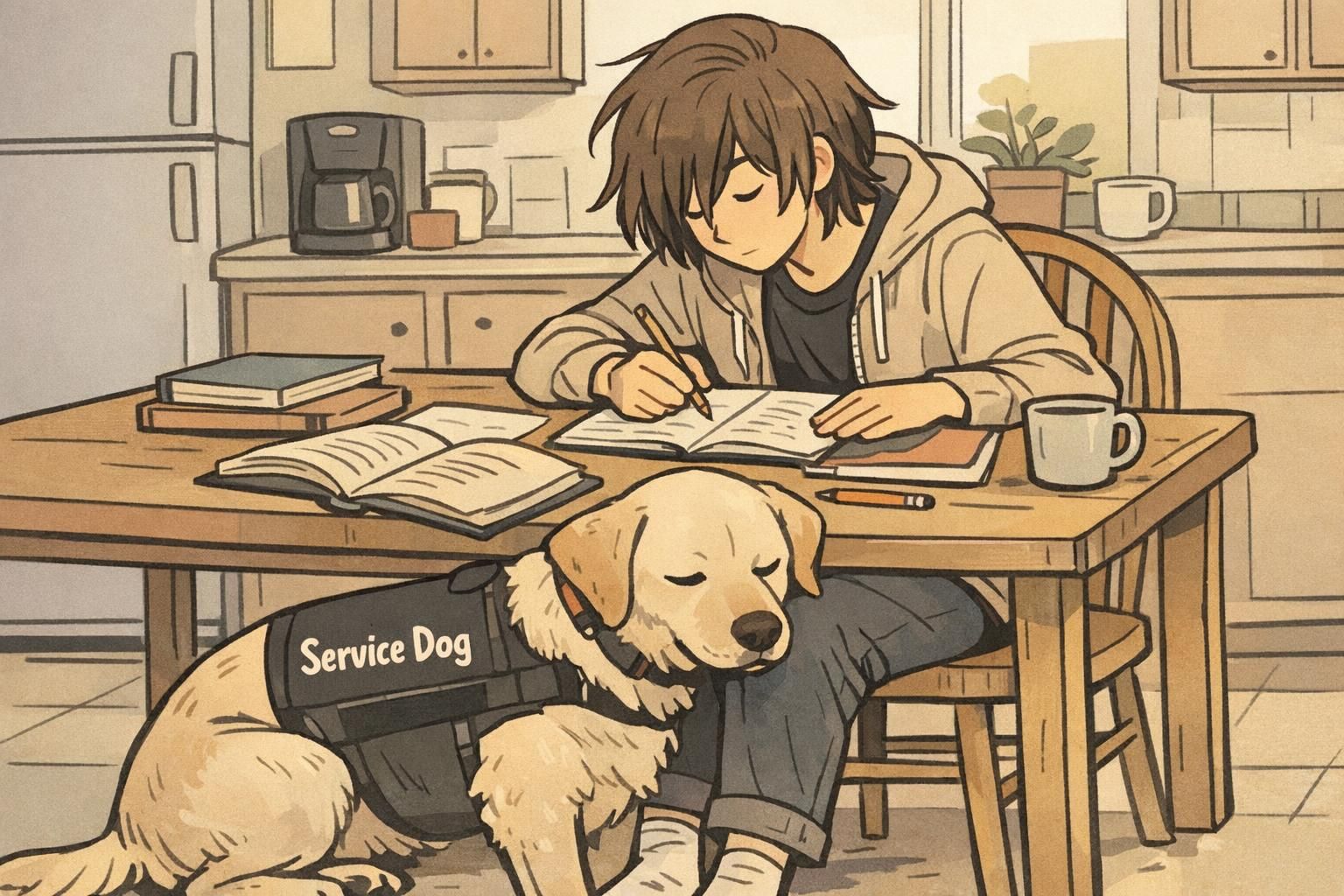
Bedtime routines also matter for PTSD. When nighttime panic and nightmares are part of the picture, predictability can reduce the “what if” that fuels dread at the end of the day. Chunk reinforces that routine by staying close, maintaining calm behavior, and responding to distress signals with trained contact and presence.
The practical outcomes are what stand out: reduced nighttime panic, fewer nightmares, and a steadier sense that tomorrow is doable. For a teen, that kind of consistent support can mean getting through school, keeping commitments, and continuing forward even when symptoms show up.
“ "The biggest difference wasn’t one single moment—it was the routine. When things started to feel scary, Chunk already knew what to do, and I didn’t have to figure it out alone." – PTSD service dog handler”
Renè Toney’s story highlights a crucial point about panic: the earlier you interrupt it, the easier it can be to manage. Jackson is described as noticing the early signs of a panic attack before Renè does, then staying close and providing grounding pressure through the episode—steady, trained support that helps Renè ride out the wave more safely.
That early interruption can create a small but powerful window: enough time to sit down, focus on breathing, use coping skills, or move to a quieter space. When symptoms escalate quickly, a service dog’s consistent presence can be the anchor that keeps the situation from becoming overwhelming.
Read more about Jackson and Renè’s experience here: source.
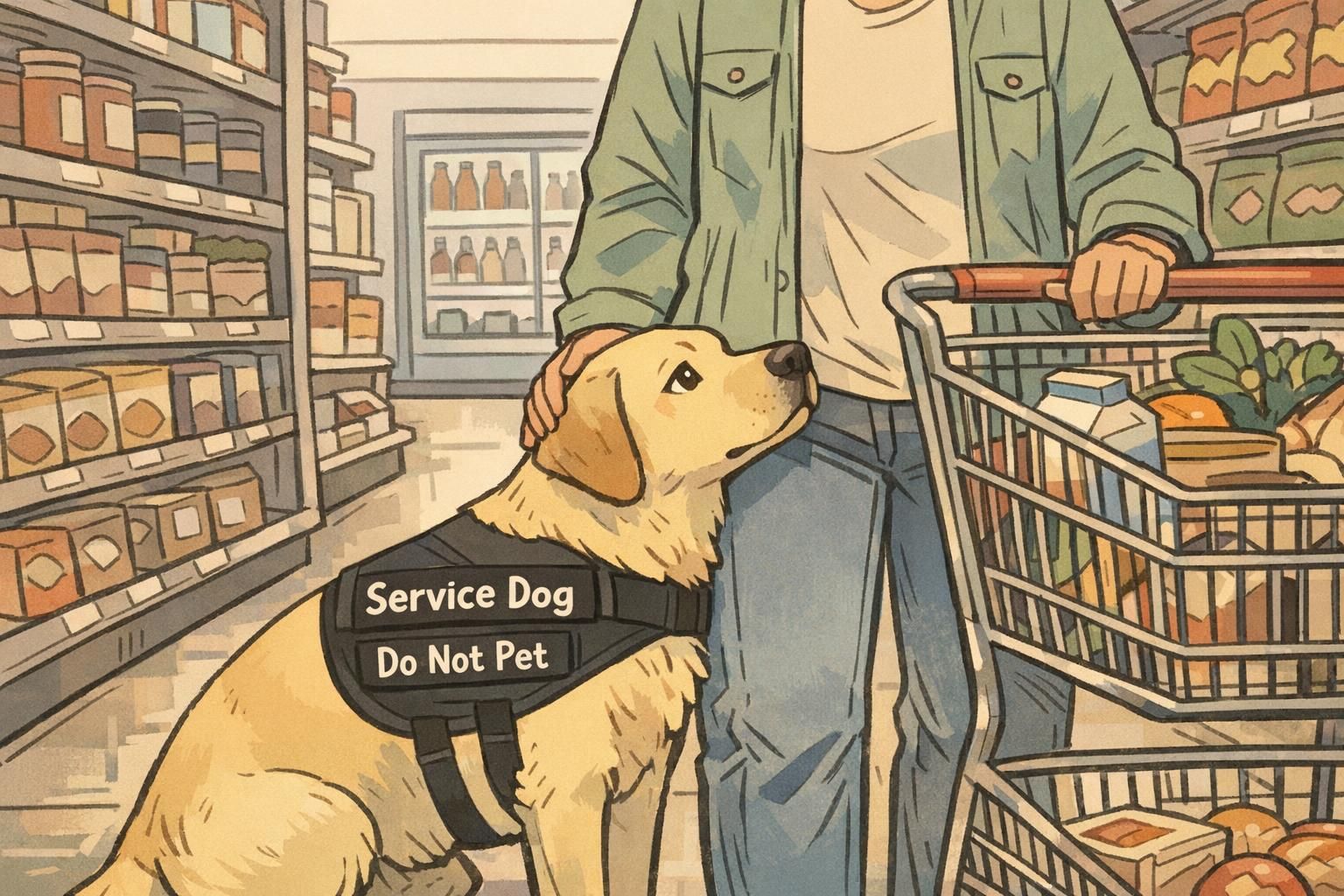
Public life can be one of the toughest parts of PTSD—especially when symptoms are invisible. For Jason, Lucas supports something that’s hard to measure but easy to feel: safety and confidence while traveling, navigating busy spaces, and staying connected to the community.
A dependable service dog can make it easier to step into situations that might otherwise feel impossible. The dog’s calm behavior, trained positioning, and steady attention help create a buffer against hypervigilance. Just as importantly, the partnership can reduce the burden of constant explanation. When a dog is clearly working, it can signal to others that support is in place—without the handler having to share personal details.
Not every support animal is task-trained—and that doesn’t mean the support is “less real.” Matthew Goschke’s experience with Eli shows how an emotional support animal (ESA) can play a meaningful role in mental health routines, motivation, and day-to-day momentum.
Support animals often help in practical, life-shaping ways: getting out of bed, sticking to a schedule, taking regular walks, and feeling less isolated. That kind of steady companionship can make it easier to keep moving, even on days when symptoms drain your energy.
A dog becomes a service dog when they are trained to perform specific tasks that support disability-related needs. If your dog primarily helps through companionship, they may be a better fit as an emotional support animal.
Some of the most successful support partners start in shelters. With the right temperament, careful matching, and consistent training, a rescued dog can become a stable, purpose-driven companion—often thriving when given clear structure and a meaningful role.
There isn’t one single path. Some teams work with reputable organizations that train and place dogs. Others train independently, sometimes with guidance from a trainer for specific skills. The best path is the one that prioritizes safety, consistency, humane handling, and the handler’s real daily needs.
Even when your dog is well-trained, day-to-day outings can come with questions. The goal isn’t to “win” conversations—it’s to keep them short, calm, and respectful so you can move on with your day.
Planning ahead helps. If crowds increase symptoms, choose off-peak hours. If certain entrances are quieter, use them. If you know you may need a break, identify a calm spot before you walk in. The fewer decisions you have to make while stressed, the better.
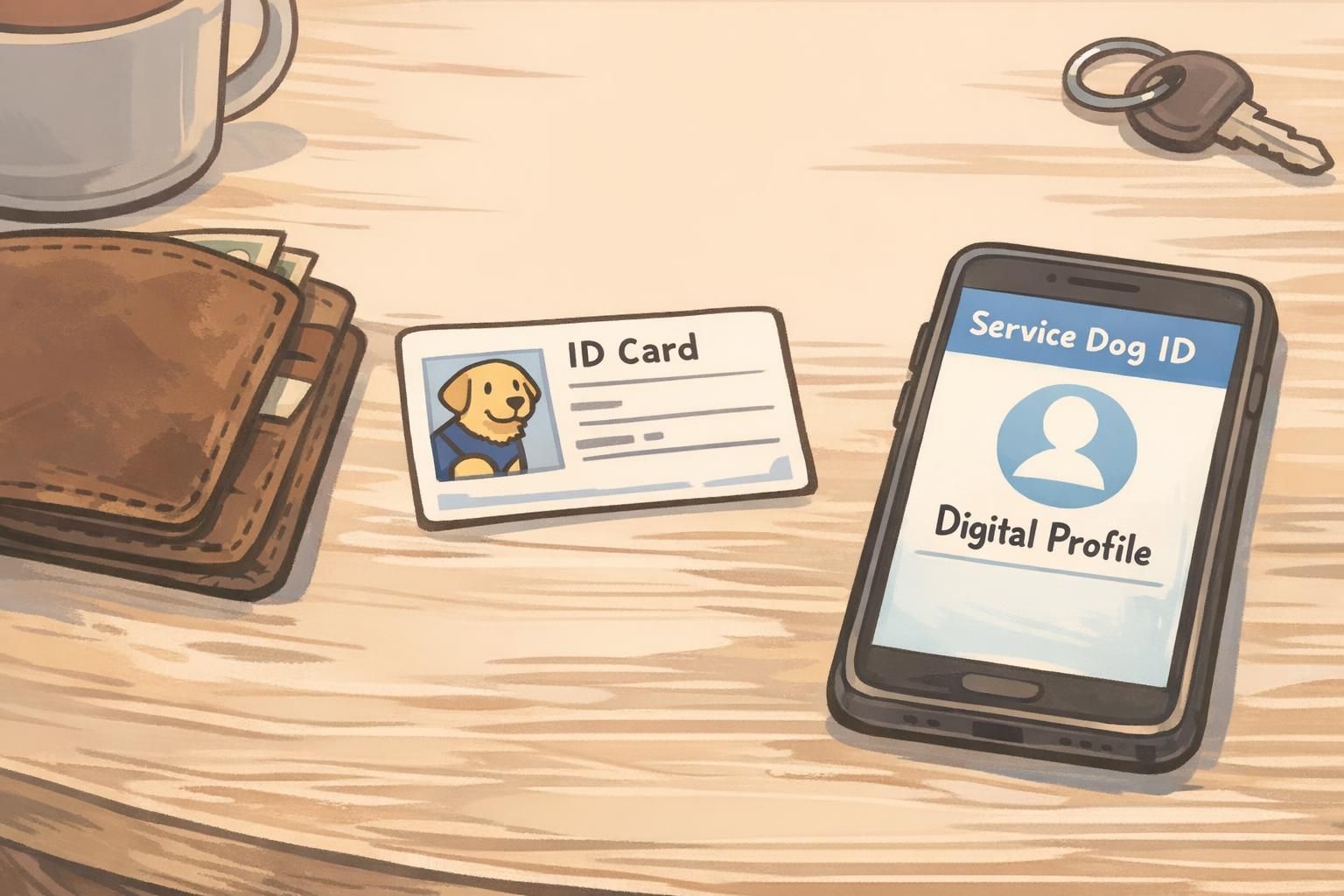
In real life, people often feel more comfortable when things look clear and organized. That’s where optional service dog registration, IDs, and certificates can be genuinely useful. They help keep details consistent, make routine conversations faster, and reduce the stress of being put on the spot—especially in busy environments like apartment offices, hotel check-ins, or travel counters.
Identification materials can also help you stay organized. When you have a single, reliable place to keep your dog’s information, it’s easier to answer basic questions without feeling flustered. For many handlers, that translates into more confidence and fewer disrupted outings.
Travel can amplify PTSD symptoms: unfamiliar environments, crowds, noise, and unpredictable schedules. With a service dog, planning becomes your best friend. The goal is to make the day as predictable as possible for both you and your dog—so your support system stays steady from the first step out the door to the moment you settle in.
If you’re looking for more in-depth tips, National Animal Registry’s guide on traveling with a service dog is a helpful resource for preparing ahead and reducing surprises.
Many handlers also prefer having travel-ready identification materials organized and easy to access. If that’s your style, a travel-ready service dog registration package can help streamline routine interactions and keep your dog’s information consistent while you’re on the move.
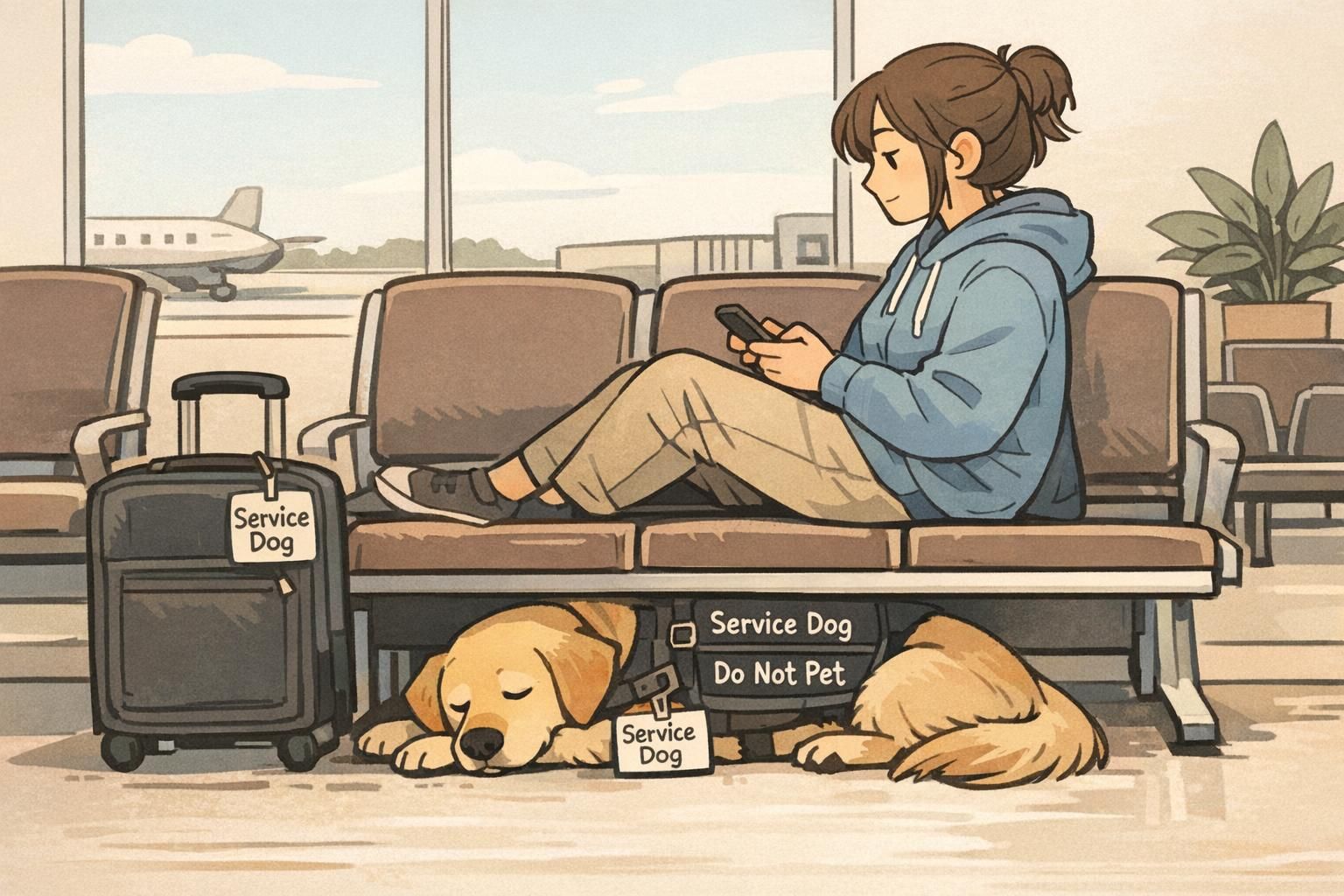
When PTSD symptoms are already demanding your attention, unexpected questions in public can feel like an extra hurdle. A small “grab-and-go” toolkit can reduce stress by making your communication simple and consistent—especially when you’d rather not explain personal details.
If you like having a clear, ready-to-share reference, ADA law handout cards can be a convenient way to keep interactions brief and polite—especially in busy settings where you’d rather hand someone a card than get pulled into a long conversation.
The best starting point is an honest look at your daily needs. Do you need trained tasks—like grounding pressure, panic interruption, nightmare wake-ups, or crowd spacing? Or do you need steady companionship and routine support that helps you stay motivated and regulated? Your answer helps guide whether a service dog, an emotional support animal, or another support option is the best fit right now.
If you’re considering a service dog, think beyond personality and focus on consistency. A dog with the right temperament for public settings, paired with a handler who can build reliable routines, is often the foundation of long-term success.
When you’re ready, organizing your dog’s profile and everyday identification can make public outings feel simpler and more predictable. Many handlers start with a starter service dog registration package to keep key details consistent and support calmer, smoother interactions in daily life.
Your trusted source for service animal registration. Get professional ID cards, digital profiles, and smart NFC tags to keep your service animal safe and recognized.
© National Animal Registry — All rights reserved.