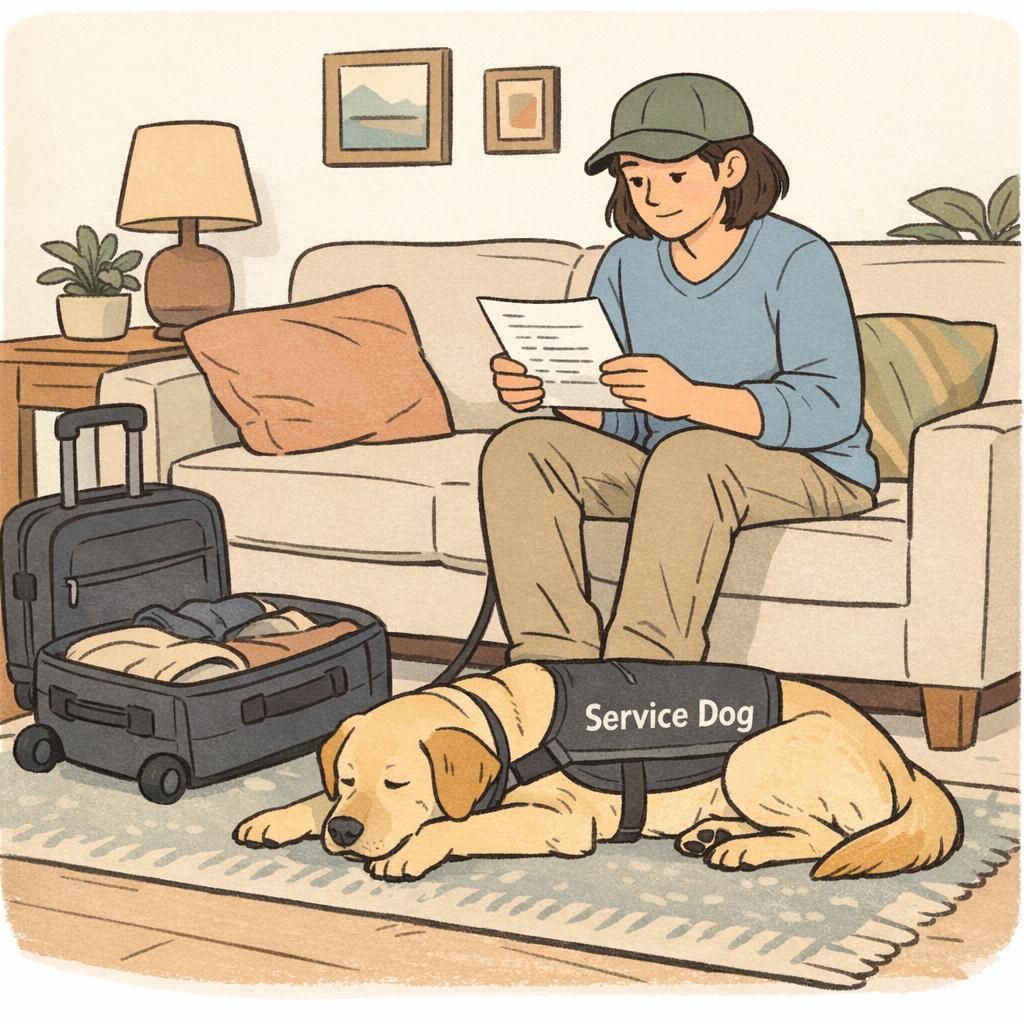
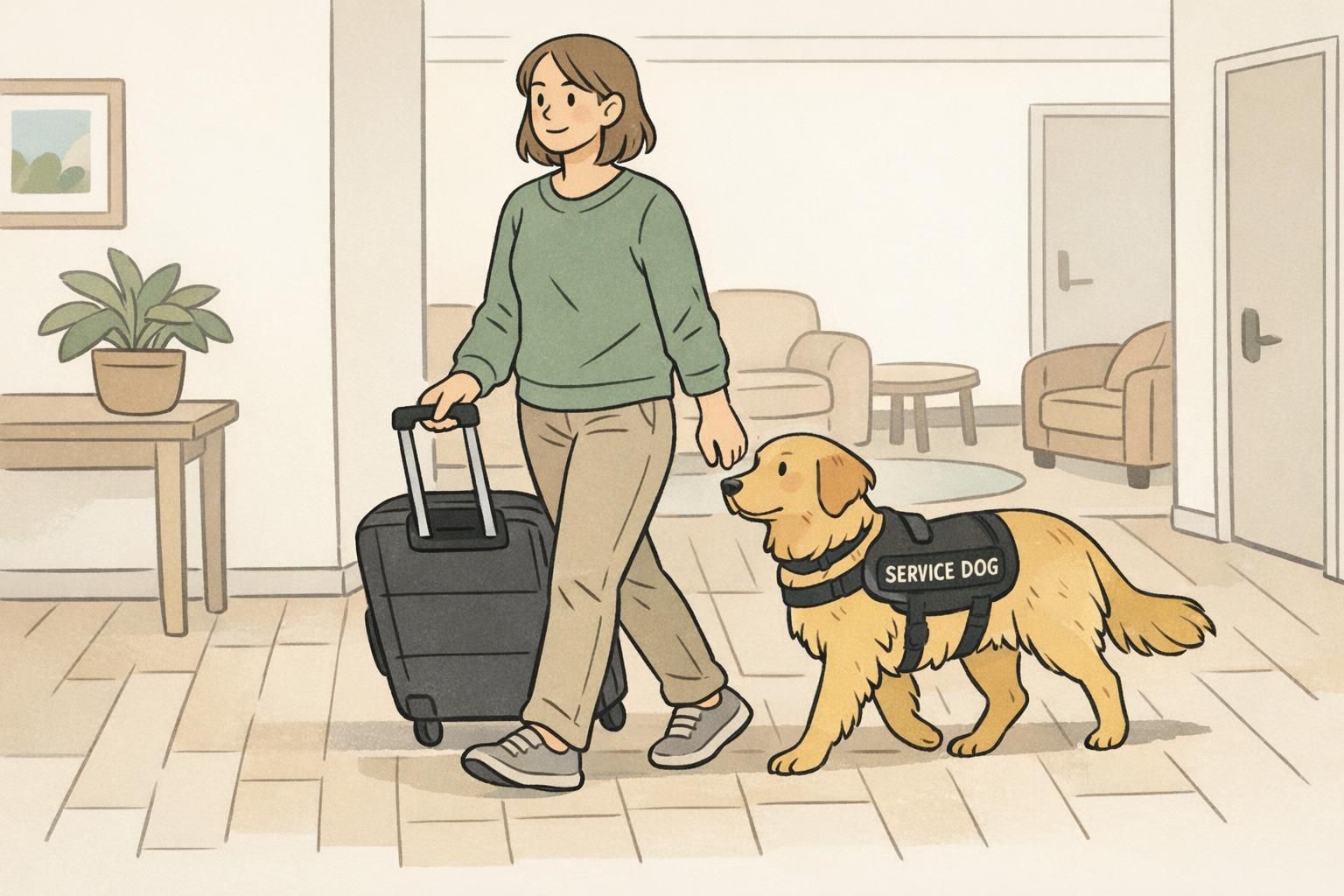
Flying with a service dog is more doable than many first-time handlers expect, but it helps to understand what airlines and airport staff generally look for: a dog that is calm in public, under the handler’s control, and able to travel safely without disrupting others.
In practical terms, that usually means your dog can walk through busy terminals without pulling, jumping, or vocalizing; can pause patiently in lines; and can settle quietly at the gate and onboard. On the aircraft, the expectation is typically that the service dog stays in your foot space and remains out of the aisle so crew and passengers can move safely.
Airline policies can vary in the details, especially when you’re dealing with partner airlines, multi-leg itineraries, or international routes. Reaching out early to the airline’s accessibility desk (or special assistance team) helps you confirm what they want you to submit, where to submit it, and what to expect at the airport.
Early planning is also how many handlers reduce last-minute stress. Instead of trying to solve surprises at check-in, you can build a simple timeline and move through it step by step.
Look for an “accessibility,” “special assistance,” or “disability services” contact. They can usually tell you exactly how to submit forms and what to expect at the airport for your route.
Yes. For codeshares and partner itineraries, confirm expectations for each operating carrier so you’re not caught off guard during a connection.
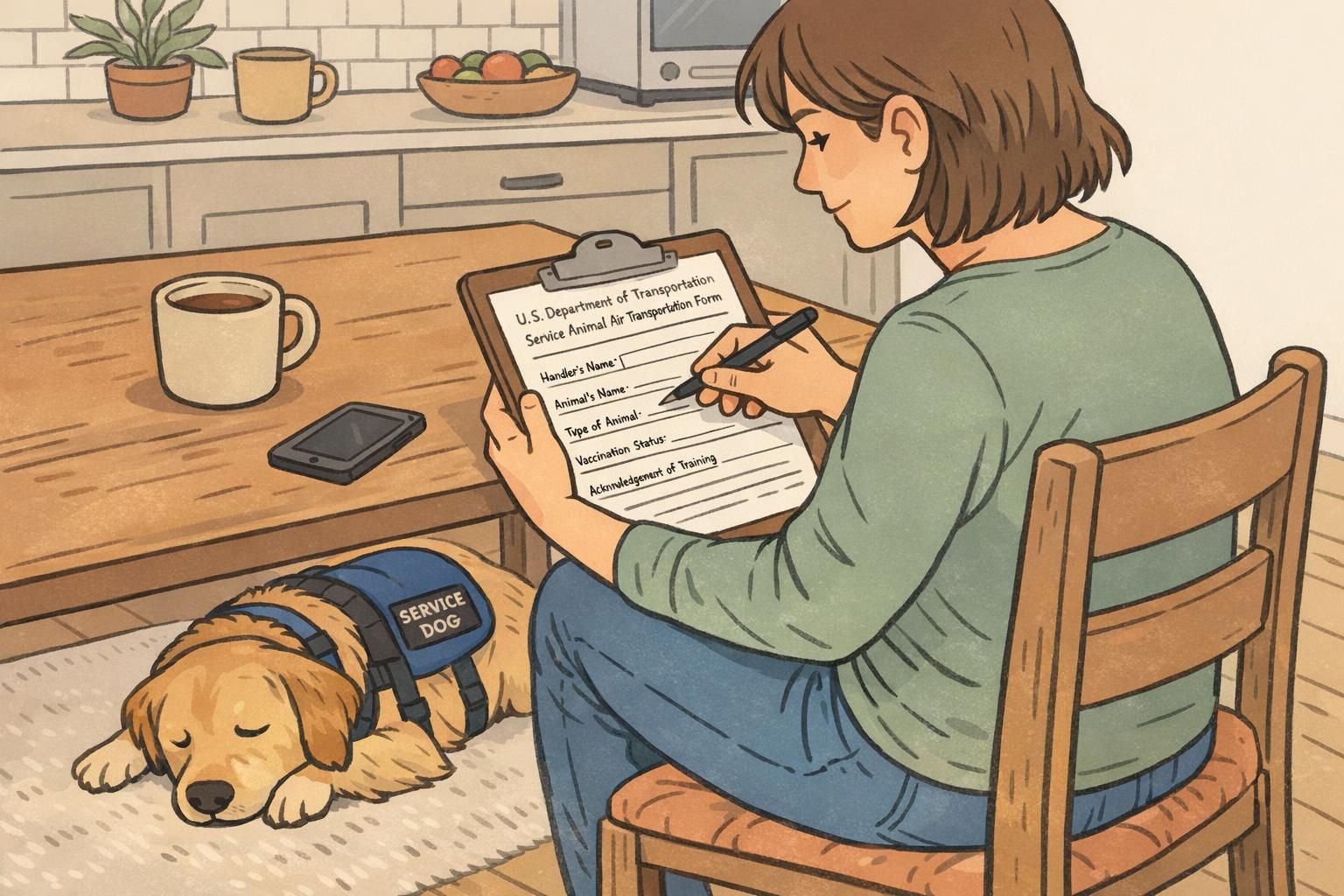
For flights that fall under U.S. Department of Transportation (DOT) rules, airlines use standardized service animal forms to understand your service dog’s health, behavior, and training assurances in a consistent way. Many airlines allow (or request) that you submit these forms in advance—often at least 48 hours before departure—so check-in and boarding go more smoothly.
The main document you’ll hear about is the DOT Service Animal Air Transportation Form. For longer travel days, some airlines also request an additional attestation related to your dog’s ability to either not relieve or to relieve in a sanitary way during the flight. The DOT explains the standardized forms and how airlines may request them in advance here: source.
A big part of “being ready to fly” is simple, practical readiness. Airlines commonly expect service dogs to be clean, free of strong odors, and under control in the airport and onboard. Some airlines also have minimum age expectations so very young puppies aren’t put into demanding travel situations.
Health requirements can also change based on where you’re going. Domestic trips are typically simpler than international travel, which may involve vaccination documentation, timelines, or country-specific entry rules. Planning early gives you time to handle destination requirements without scrambling.
“ "The best flights are the ones where I don’t have to improvise. A clean, comfortable dog and a small cleanup kit take a lot of pressure off." – Frequent flyer and service dog handler”
Many service-dog teams prepare for flying the same way they prepare for any new environment: gradual, positive exposure. Instead of throwing your dog into a high-stimulation airport experience all at once, you build comfort step by step so your dog learns, “I know this situation, and I can stay focused.”
Desensitization is especially helpful for airport-specific stressors—rolling suitcases, echoing announcements, tight lines, and sudden movement. Short, successful practice sessions can be more effective than long sessions that leave your dog mentally tired.
The physical mechanics of travel are often what feel most different to a dog: narrow pathways, objects that roll, and people who move quickly and unpredictably. Owners often practice these “transportation” moments at home and in local public spaces before ever stepping into an airport.
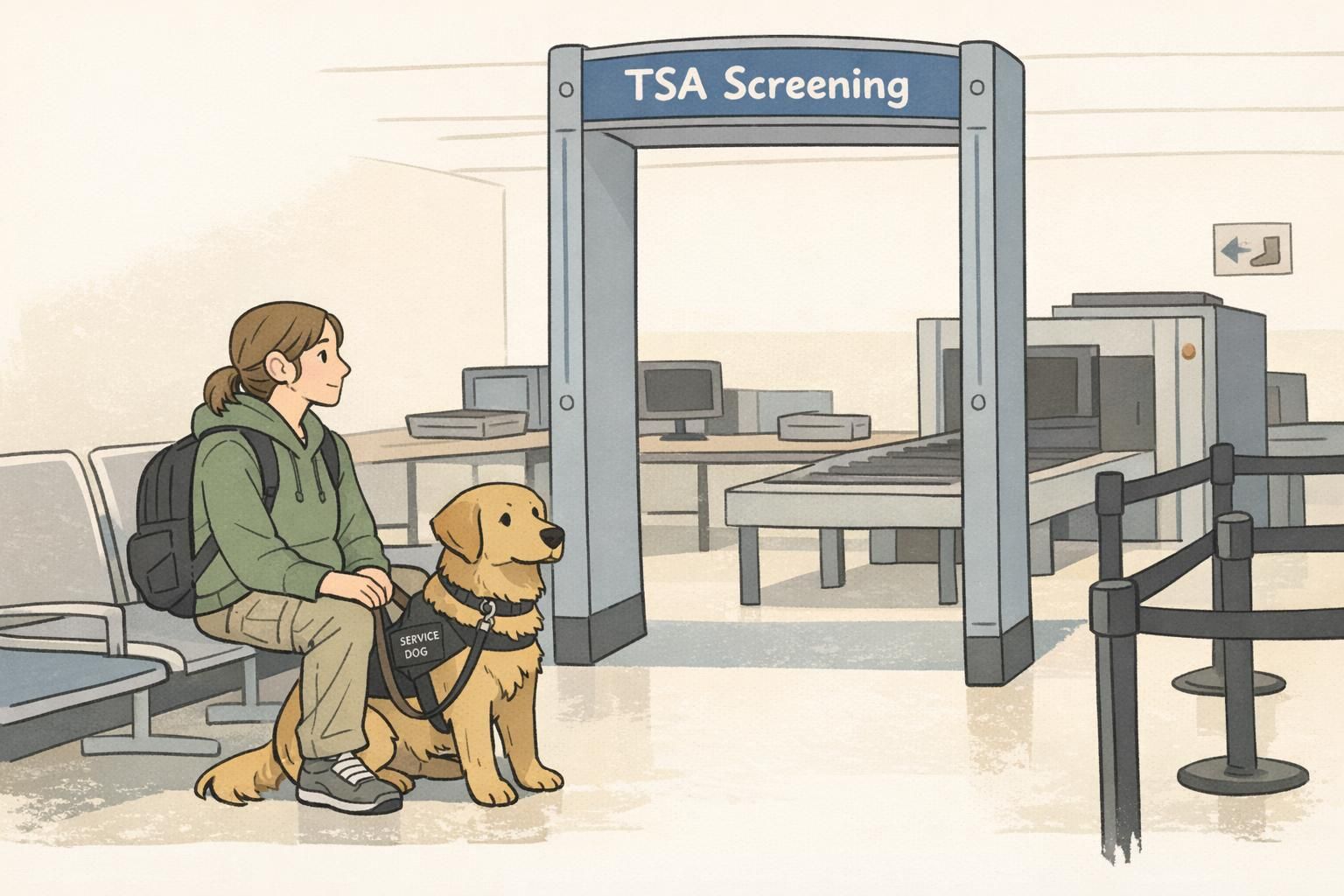
TSA screening can be one of the most challenging parts of the day because it combines noise, tight spacing, pauses, and sudden bursts of movement. There are also new textures and doorways—rubber mats, metal thresholds, and narrow entry points—that can feel strange to a dog who hasn’t practiced them.
Handlers often prepare by practicing calm waiting and focus in “line-like” situations: standing still, advancing a few steps, stopping again, and rewarding a relaxed, neutral posture. It can also help to practice gentle body handling (paws, shoulders, harness adjustments) so your dog stays comfortable if they need brief repositioning.
Some teams also do practice terminal visits using a gate pass when available, allowing the dog to experience real airport flow without the pressure of an actual travel day.
Airports are full of features that can surprise a dog: escalators, moving walkways, glossy floors, automatic doors, and echoing corridors. Many handlers make a plan ahead of time about what their dog will use and what they’ll avoid for safety and comfort.
For example, plenty of teams choose elevators over escalators to reduce paw and balance risks. If you do encounter escalators unexpectedly, it’s helpful to have a calm alternative route in mind (an elevator bank a little farther down the hall) rather than trying to “push through” a stressful moment.
Relief planning is another key airport skill. Even when a dog has excellent control, travel days are long and unpredictable. Knowing when you’ll offer water, when you’ll offer a relief break, and where relief areas are likely located can make the day easier for both of you.
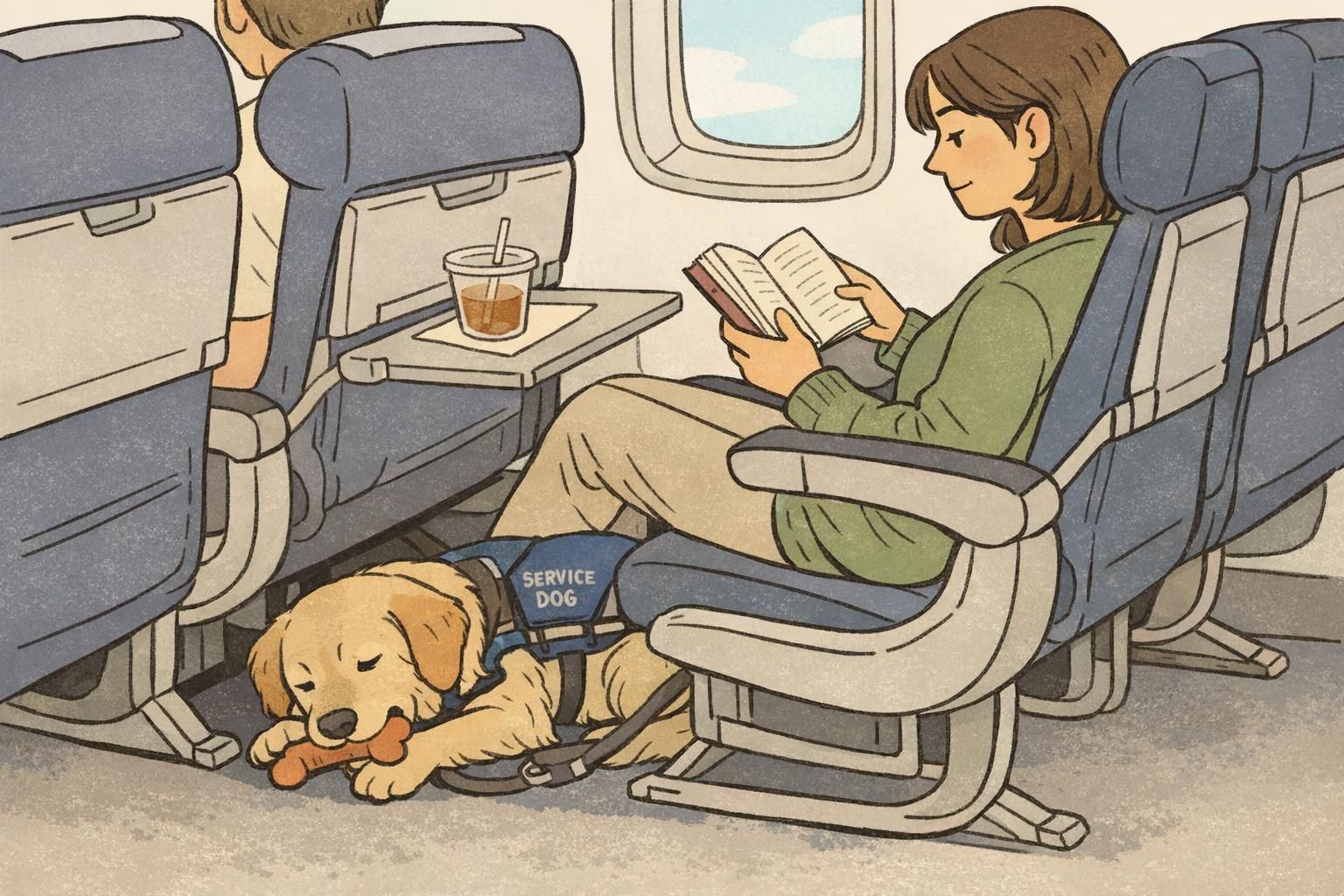
Once you board, your goal is simple: help your dog settle quickly and stay comfortably out of the way. Service dogs are generally expected to remain leashed or harnessed, remain under control at all times, and stay out of the aisle so the cabin remains safe for everyone.
Many handlers cue a familiar “place” or “down” and reinforce calm stillness once the dog is tucked into the foot space. A practiced settle can make takeoff and landing feel routine rather than intense.
For pressure changes during ascent and descent, some teams use a quiet, appropriate chew or toy (depending on the dog and airline practicality) to encourage swallowing and keep the dog relaxed. The best option is something low-odor, non-messy, and easy to manage in a tight space.
Overpacking can make airport movement harder, but underpacking can create stress if you’re stuck in a delay without basics. A simple, repeatable checklist helps you bring what you need without turning your carry-on into a full pet store.
While airline policies and the ADA framework do not require a vest or ID card in order for a trained service dog to work, many handlers choose clear identification anyway. The practical benefit is simple: it can reduce repeated questions and make everyday interactions feel calmer, especially in crowded, high-pressure environments like airports.
Optional tools like registration, IDs, and helpful reference materials can also give you a consistent, organized way to present information when someone asks what they need to know. Many teams appreciate having these items ready—not as a requirement, but as a convenience and confidence booster.
“ "Clear identification doesn’t replace training, but it can make the day smoother. I’d rather prevent confusion than manage it when we’re already stressed." – Service dog handler”
On travel day, the best strategy is usually a calm pace. When you arrive early and build in small breaks, you’re less likely to rush—which helps your dog stay regulated and focused.
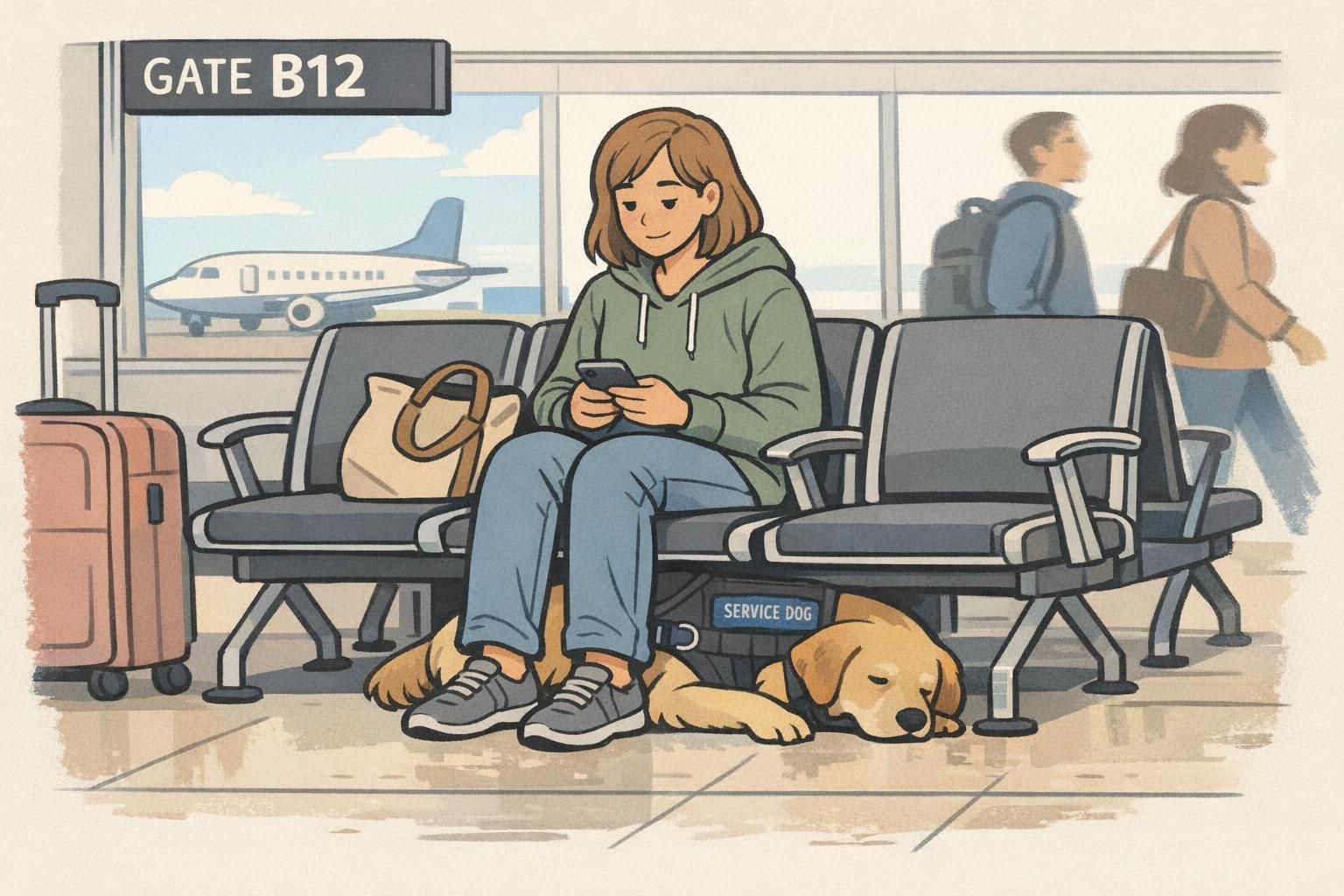
Even well-prepared teams can run into hard moments. The key is to respond early and calmly, without adding pressure. If your dog gets overstimulated, start by increasing distance from the stressor and returning to basic cues your dog knows well.
Unexpected delays can also change everything—especially water and relief timing. If you’re stuck at the gate longer than expected, look for a quieter spot nearby, offer a brief reset, and keep your dog’s job simple: calm, tucked positioning and focus on you.
Most teams find that calm, non-punitive support works best: create distance, simplify cues, and reinforce relaxation. Confidence builds over time with successful repetitions.
Staying calm and prepared helps. Having your documents organized and using clear identification (if you choose) can reduce back-and-forth and keep interactions brief and professional.
If you’re planning your first flight or looking to make travel days feel easier, learning from a structured, travel-focused resource can help you spot issues before they happen. For more tips on airport routines, boarding, and comfort strategies, explore our traveling with a service dog guide.
Many handlers like to carry optional, practical tools that reduce friction during travel—especially when they’re moving through busy public spaces and want communication to stay calm and simple. A travel-focused registration package can help keep documentation organized and provide clear identification, and wallet cards that summarize ADA-related basics can be useful for quick, respectful conversations when questions come up.
If you’d like an all-in-one option designed for travel organization and clarity, consider this service dog travel registration package.
“ "Anything that keeps me organized on travel day helps—especially when I’m tired, the terminal is loud, and I want to keep my dog focused." – Handler who travels frequently”
Your trusted source for service animal registration. Get professional ID cards, digital profiles, and smart NFC tags to keep your service animal safe and recognized.
© National Animal Registry — All rights reserved.