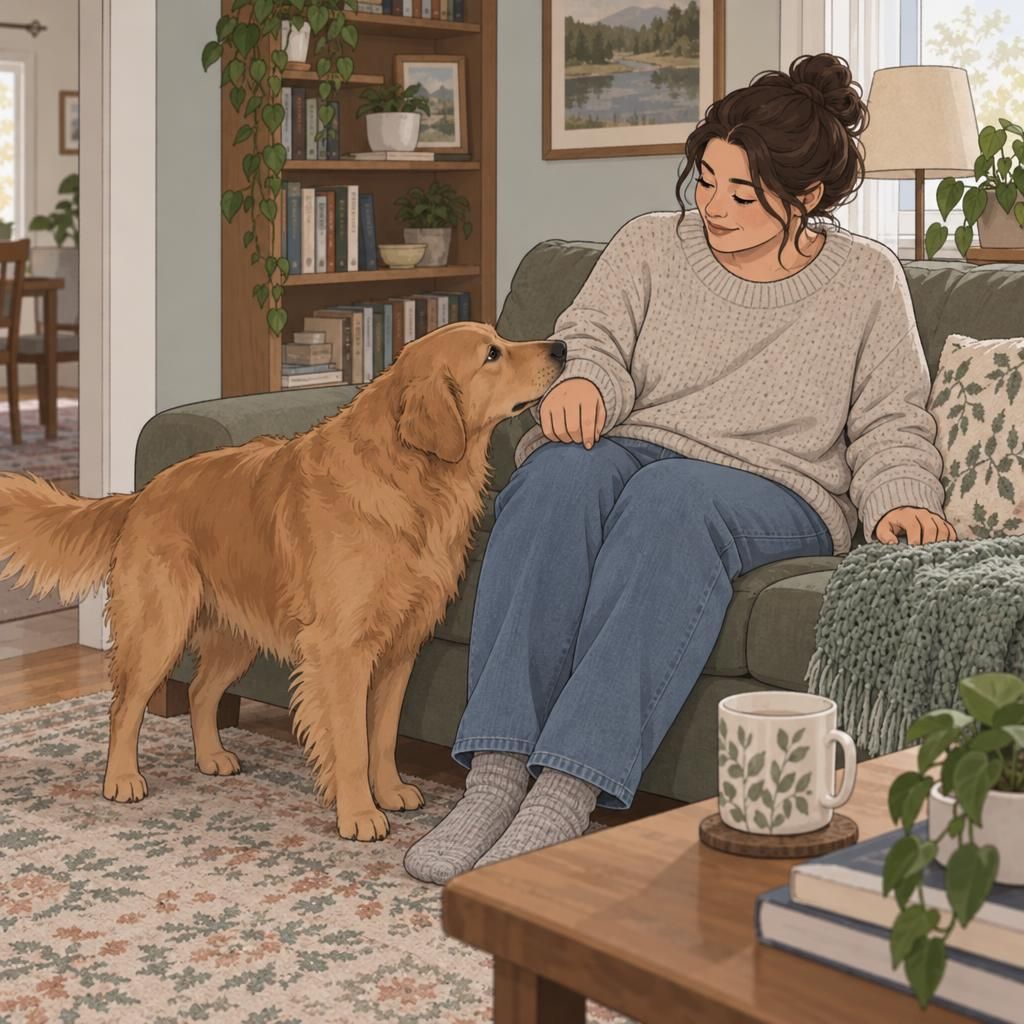
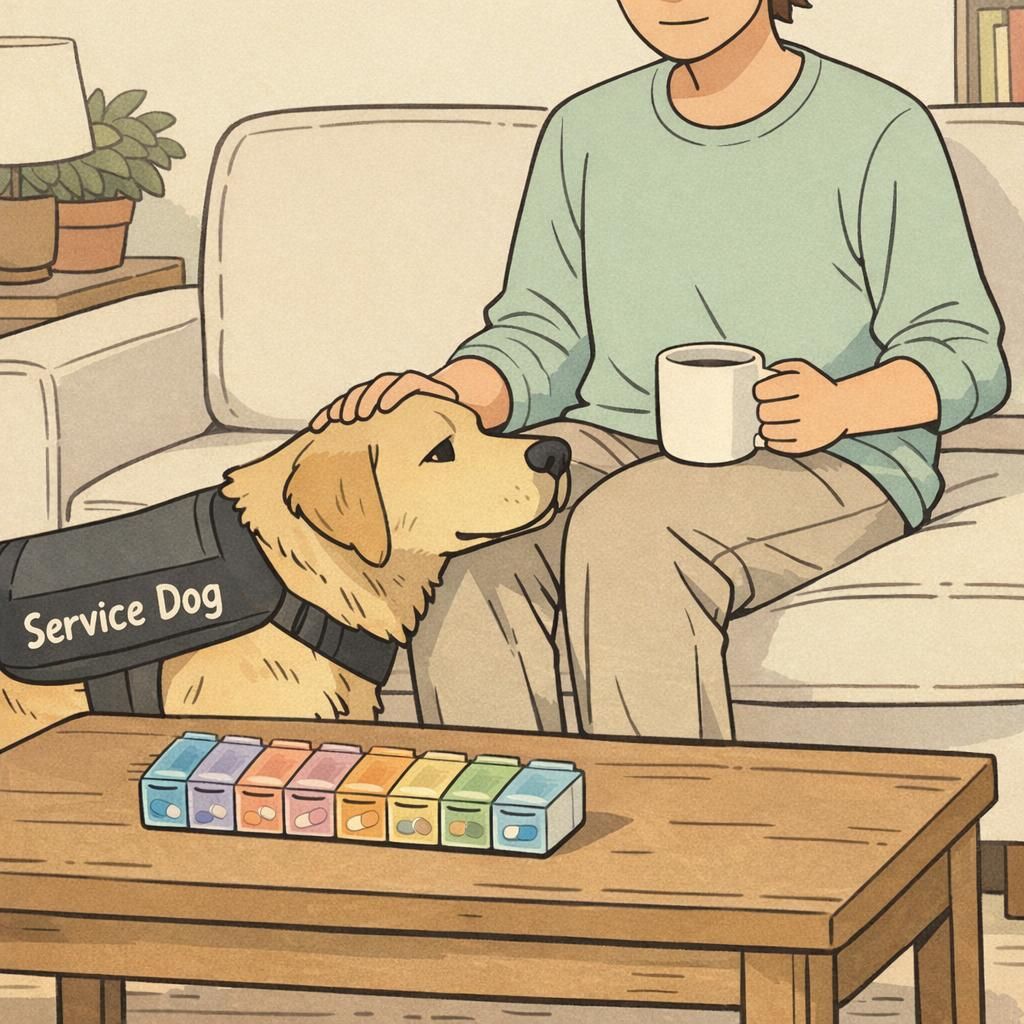
A medication reminder dog is a task-trained service dog that helps a handler follow a consistent medication schedule. Instead of simply being “company,” the dog learns specific behaviors that prompt the person to take a medication dose at set times—often tied to a daily routine like breakfast, after work, or bedtime.
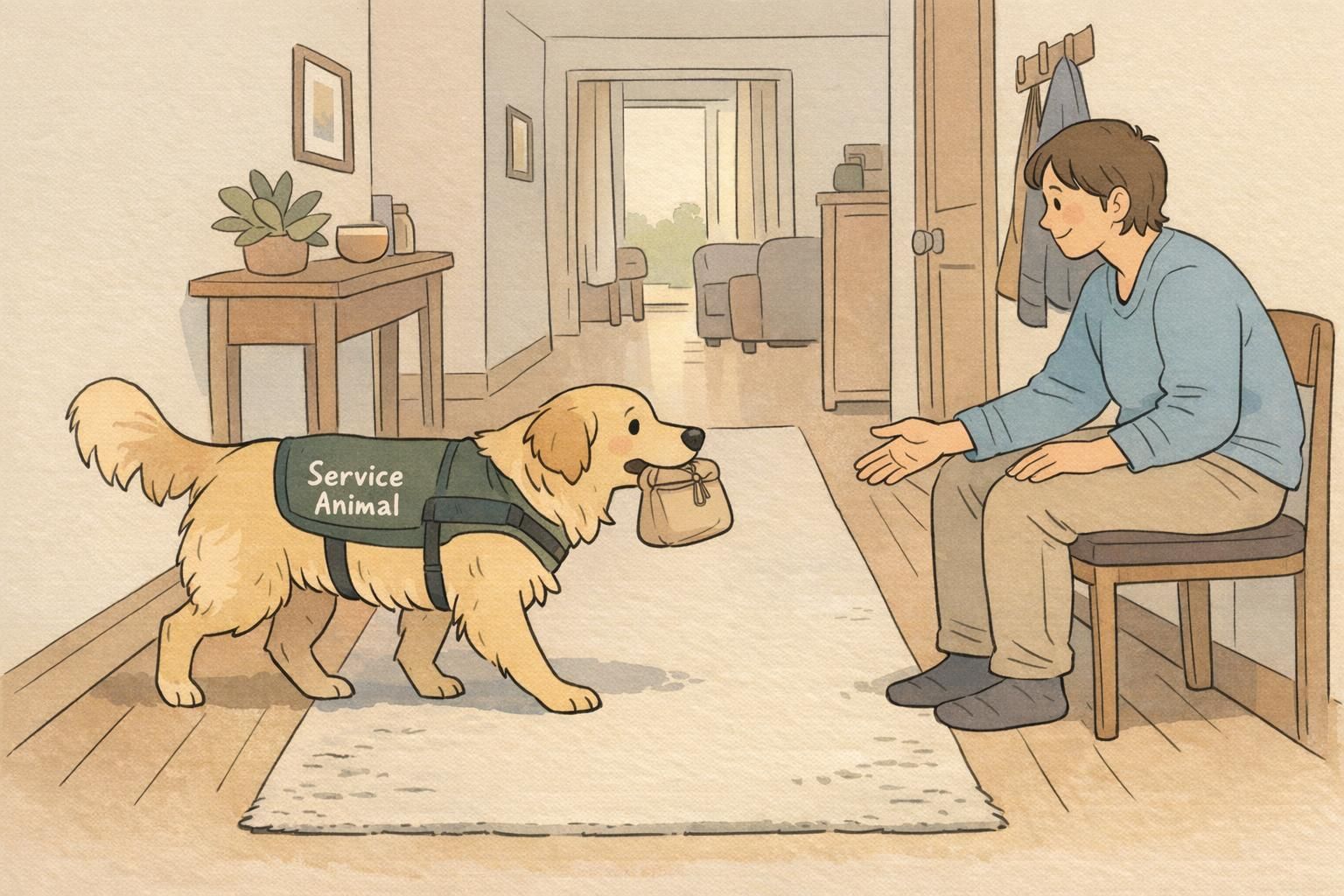
Depending on the handler’s needs, a medication reminder dog may also be trained to retrieve medication items (like a pill pouch or organizer) or bring an assistive item (like a phone) so the handler can confirm instructions or call for help. The core goal is practical: fewer missed doses, less mental load, and a daily rhythm that’s easier to maintain when symptoms, fatigue, pain, or stress make routines harder.
Most medication reminder behaviors are intentionally noticeable. The dog isn’t meant to be disruptive or attention-seeking; the dog is trained to be persistent enough that the handler actually responds. Common reminders include a gentle nudge to the leg, a paw touch, a nose bump to the hand, or standing in the handler’s path until the next step happens.
These “hard to ignore” cues are effective because they cut through distraction, brain fog, or momentary avoidance. For many people, remembering isn’t just about hearing an alarm—it’s about transitioning into action. A dog can bridge that gap by prompting the routine and staying engaged until the handler completes it.
In everyday use, reminders are often paired with predictable household patterns. For example, the dog may alert after the handler sits down for breakfast, when the coffee finishes, or during a bedtime wind-down. When the reminder is linked to a reliable routine, it feels less like an interruption and more like a natural step in the day.
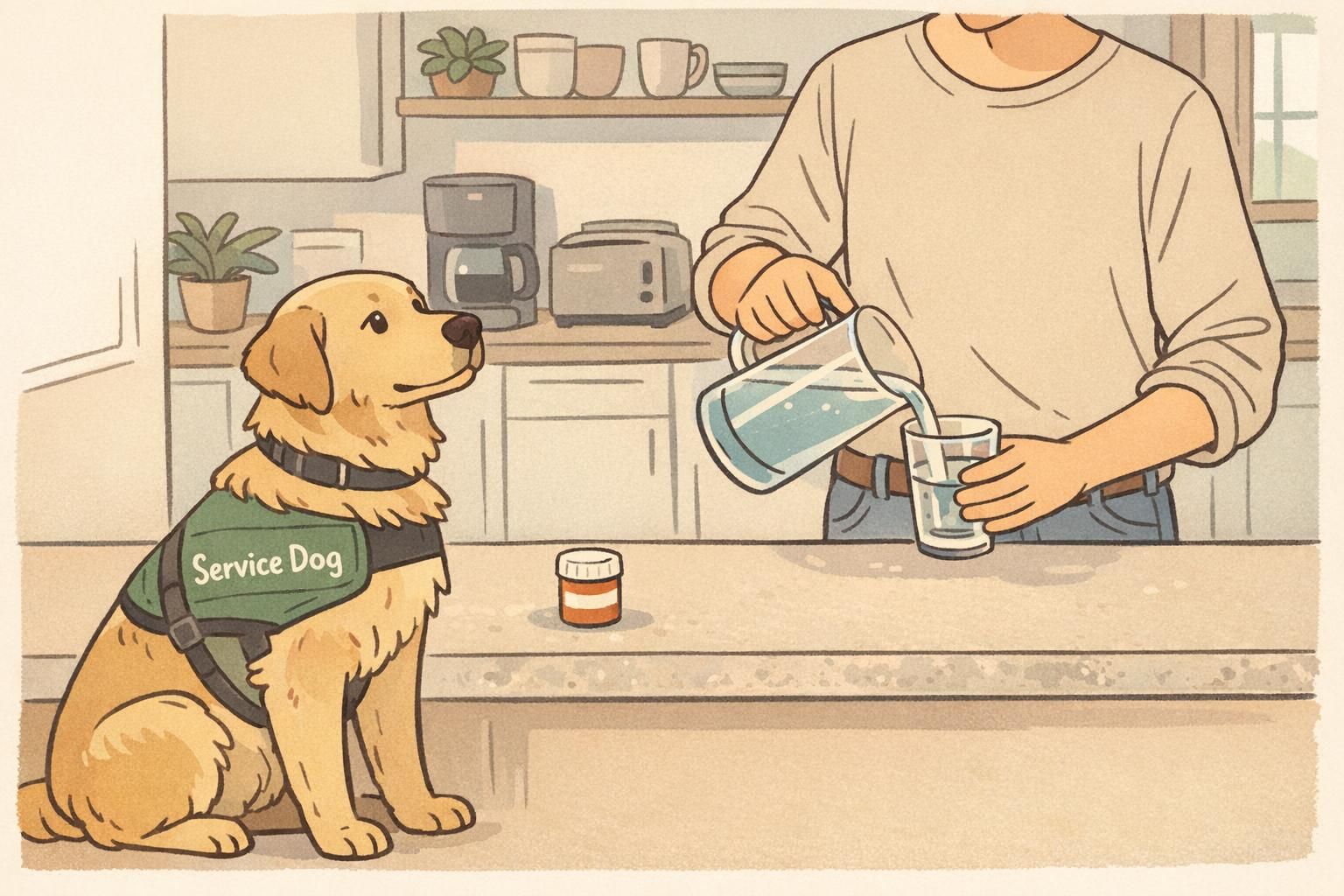
Medication support tasks often fall into two categories: time-based reminders and item retrieval. Some handlers only need one of these. Others benefit most from a dog that can do both—especially when symptoms are unpredictable or energy levels change throughout the week.
Time-based reminders focus on prompting the handler at the right moment. Retrieval tasks focus on bringing what the handler needs to complete the routine. Together, they create a smoother chain from “It’s time” to “It’s done.” Practical examples of trained nudging, pawing, and fetching medication-related items are commonly demonstrated in service dog task work, including reminders paired to routines and bringing the needed pouch or container source.
Medication reminder service dogs can be helpful for many people whose health depends on consistent dosing or regular checks. The need isn’t always dramatic—it’s often practical. If missing a dose creates symptom flares, destabilizes mood, increases pain, or triggers setbacks, a reliable reminder system can make daily life noticeably easier.
Handlers with psychiatric disabilities sometimes find routines especially difficult to maintain during stressful periods. A dog’s consistent prompt can provide structure and “forward motion” when motivation is low, attention is scattered, or the day feels overwhelming. Others benefit from reminders connected to chronic condition management, where timing and consistency matter.
“ "On days when my symptoms spike, my dog’s reminder keeps me from skipping steps I know I’ll regret later. It’s like having a steady routine partner." – Service dog handler”
Consistency is a big part of stable health routines. When a dog delivers the same clear cue every day, it can reduce missed doses and minimize the stress of constantly trying to remember what comes next. For many handlers, that reduced worry alone is a meaningful quality-of-life improvement.
Medication reminder support can also create a calmer daily pace. Instead of reacting to a forgotten dose (and the anxiety that follows), the handler moves through a predictable sequence. Over time, many people feel more confident leaving home, traveling, or handling busy days because their routine has a built-in backstop.
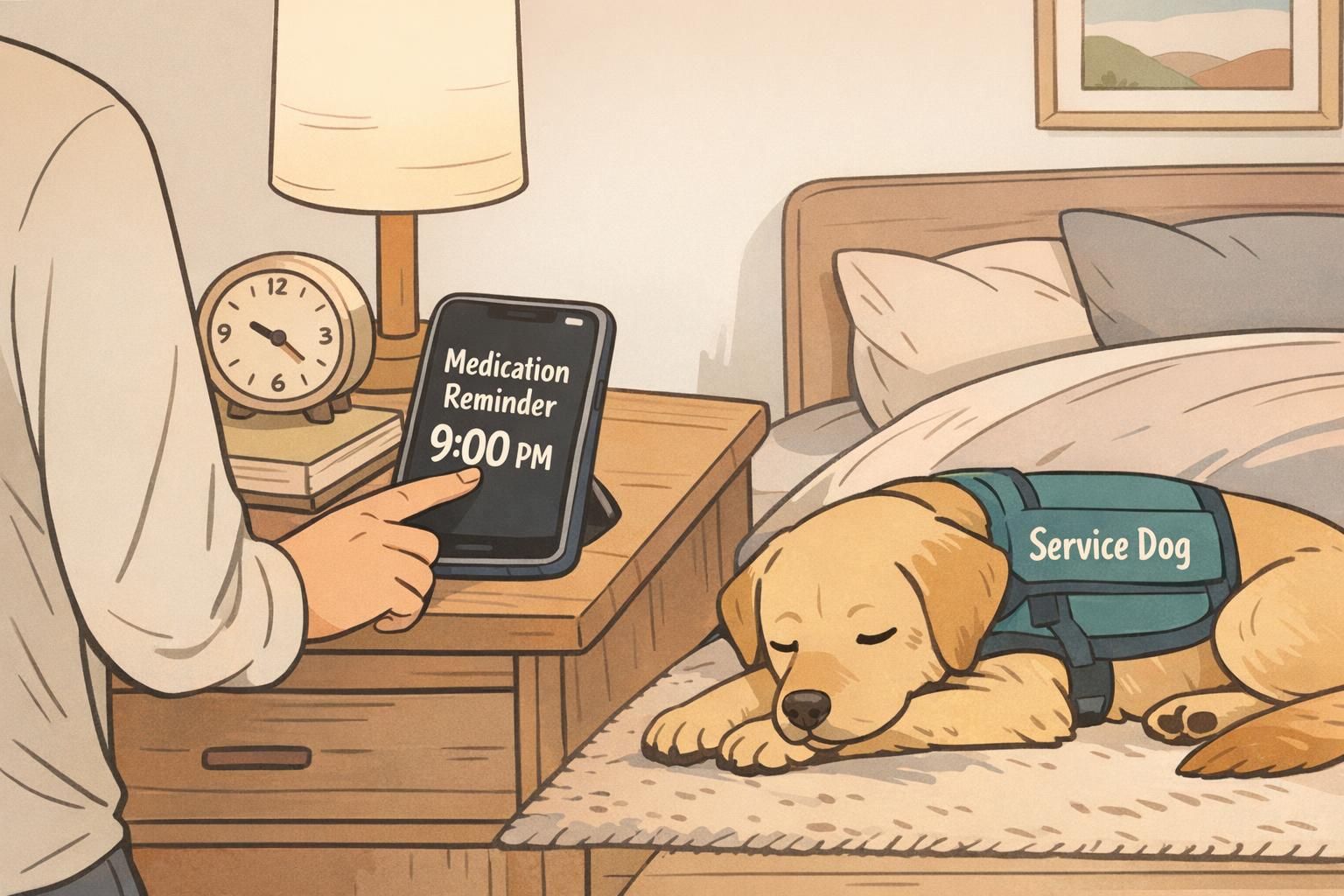
Medication reminder behaviors are typically shaped through consistent cues, repetition, and reinforcement. A handler might start by teaching a specific alert behavior (like a nudge to the knee), then pairing it with a schedule or routine marker. Over time, the dog learns: when X happens, perform Y behavior, then receive a reward once the handler completes the medication step.
In early stages, many handlers use backup tools like phone alarms or smart reminders while the habit is being built. That isn’t a failure—it’s a success strategy. A layered approach can make the routine more reliable while the dog’s task becomes more consistent.
People often use “service dog,” “support dog,” and “companion animal” interchangeably in everyday conversation, but they describe different roles. Understanding the terms can help you choose the best fit for your needs—especially if your main goal is help with routines like medication schedules.
The best choice depends on what kind of help you want. If you need a dog to consistently perform trained tasks that directly support a disability-related routine, a service dog role may be the most practical. If your primary need is emotional comfort that helps you stay grounded and consistent, a support role may be a better fit. Many people also benefit from a companion animal’s natural routine-building effect, like encouraging consistent sleep and activity.
Life with a working dog often includes everyday conversations—at store entrances, in lobbies, during appointments, or while traveling. Public access rules and expectations can vary by location and setting, and it’s helpful to approach interactions with calm, practical communication so you can stay focused on your health and routine.
Many handlers find it useful to have a short, consistent way to explain their dog’s role. The goal is not to overshare personal health information—it’s to keep interactions brief and respectful so you can move on with your day.
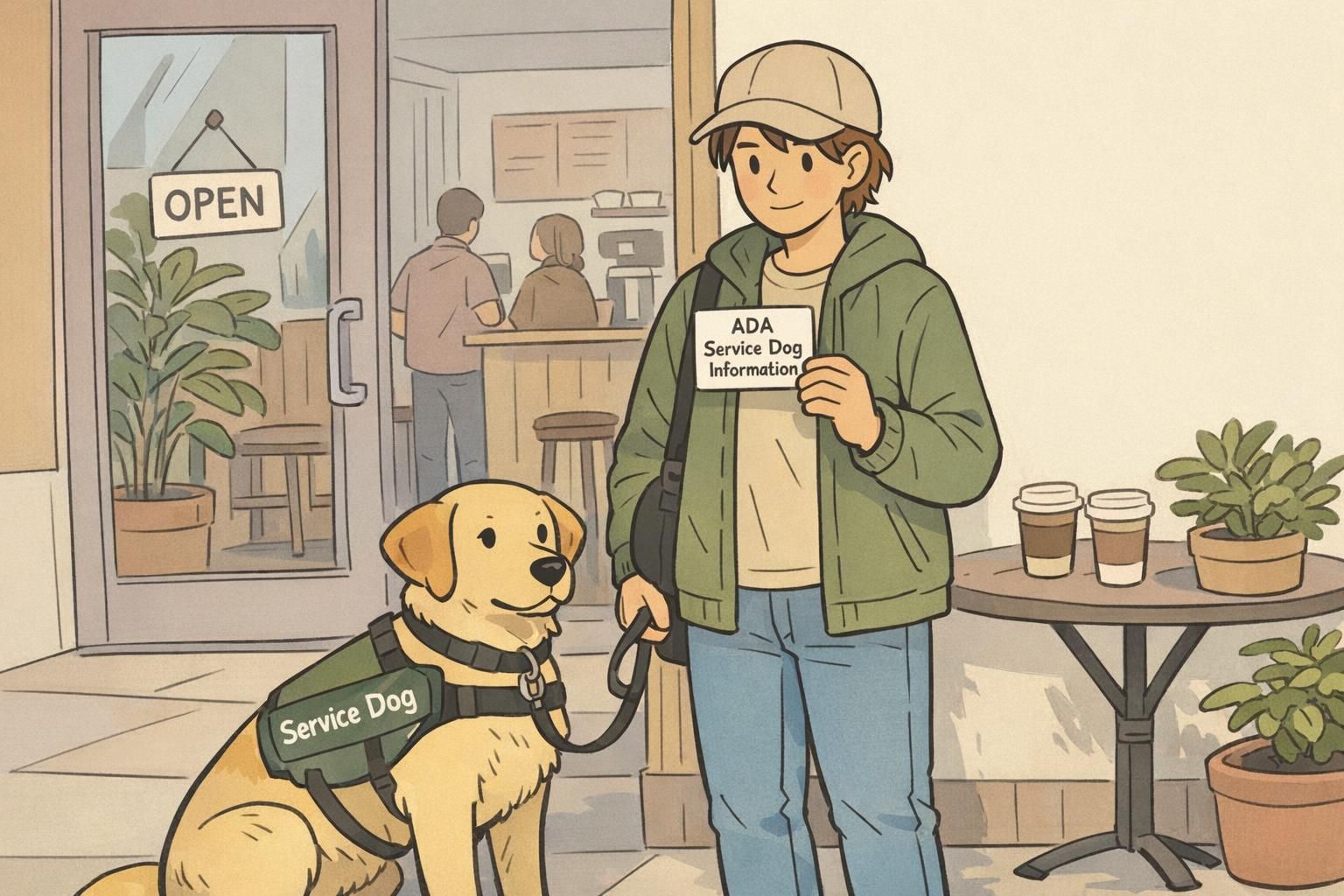
In day-to-day life, clear identification can make routines smoother—especially when you’re focused on health tasks like staying on schedule with medication. Optional registration, ID cards, and certificates can provide a simple, consistent way to identify your animal and reduce repeated explanations in common situations like housing conversations, travel planning, or routine outings.
Many handlers like having documentation available quickly—on a phone or as a printed card—so the focus stays on getting where you need to go, not on extended back-and-forth. Think of it as a convenience tool: a practical layer of organization that supports peace of mind.
Travel is one of the quickest ways to disrupt a medication routine. Time-zone changes, delayed flights, long car rides, and unfamiliar environments can all throw off both timing and follow-through. Planning ahead helps you keep your routine stable—and helps your dog stay regulated and ready to work.
It can help to map your medication schedule to the travel day in advance and decide how you’ll handle the first 24–48 hours in a new time zone. Many handlers also keep a backup reminder (like a phone alarm) active during travel days so the routine doesn’t depend on one single cue.
For more planning tips, see traveling with a service dog.
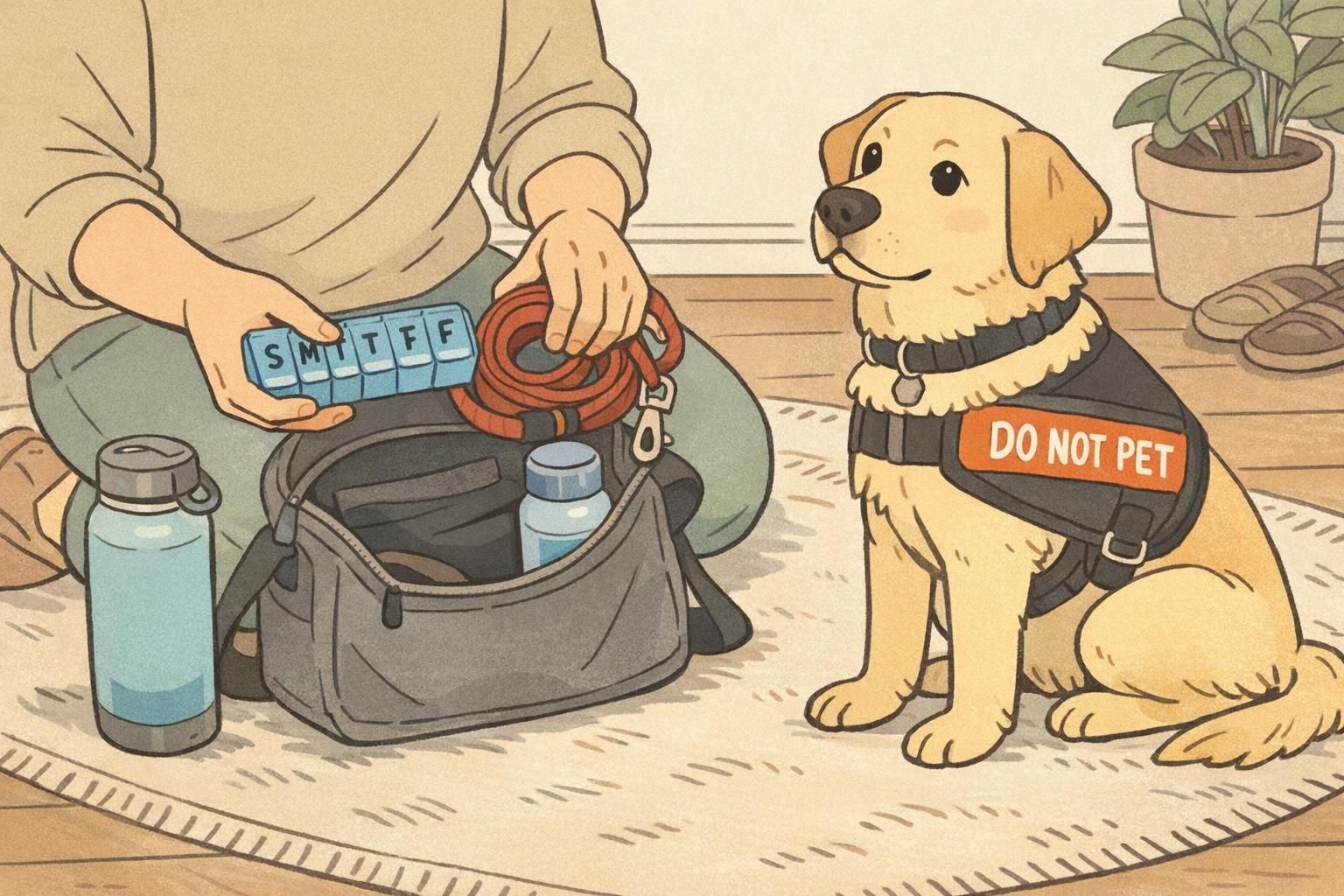
A reliable routine often comes down to simple, easy-to-access tools. Many handlers create a “grab-and-go” setup so they can manage medication schedules and public interactions without stress—especially on busy days when brain fog or fatigue makes planning harder.
If you want convenient everyday identification that’s easy to access, many handlers choose a starter service dog registration package to keep key details organized and ready when needed.
Common tasks include persistent reminders (nudging, pawing, or positioning to prompt action), guiding you toward a medication location, and retrieving items like a pill pouch, medication container, water bottle, phone, or other routine-related supplies. Tasks are usually customized to what makes your routine easiest to complete.
An alarm signals “it’s time,” but it can be easy to silence or ignore when you’re distracted, overwhelmed, or tired. A trained dog can provide an interactive prompt and continue the cue until you complete the next step, which can be especially helpful when follow-through is the hardest part.
Many handlers build reminders into broader health routines, such as checking glucose on a schedule, bringing a kit, or prompting a planned step during symptom changes. The exact tasks depend on what supports your daily function and how your routine is set up.
You can still build a reliable routine by anchoring reminders to repeatable events (waking up, meals, bedtime) instead of exact times, or by using a backup alarm during irregular weeks. Consistency in the alert behavior—and a consistent response from you—helps the dog understand what to do even when life changes.
No. They’re a practical support tool that helps you follow your plan more consistently. If you’re making medication changes, it’s always best to follow your prescriber’s guidance, while using your dog’s reminders to support the routine you and your provider decide on.
Keep the process simple: store meds in a consistent place, reinforce the alert-response pattern, and refresh training if you notice reminders slipping. Many handlers also keep a backup reminder method available for travel, illness, or major schedule disruptions.
Your trusted source for service animal registration. Get professional ID cards, digital profiles, and smart NFC tags to keep your service animal safe and recognized.
© National Animal Registry — All rights reserved.