
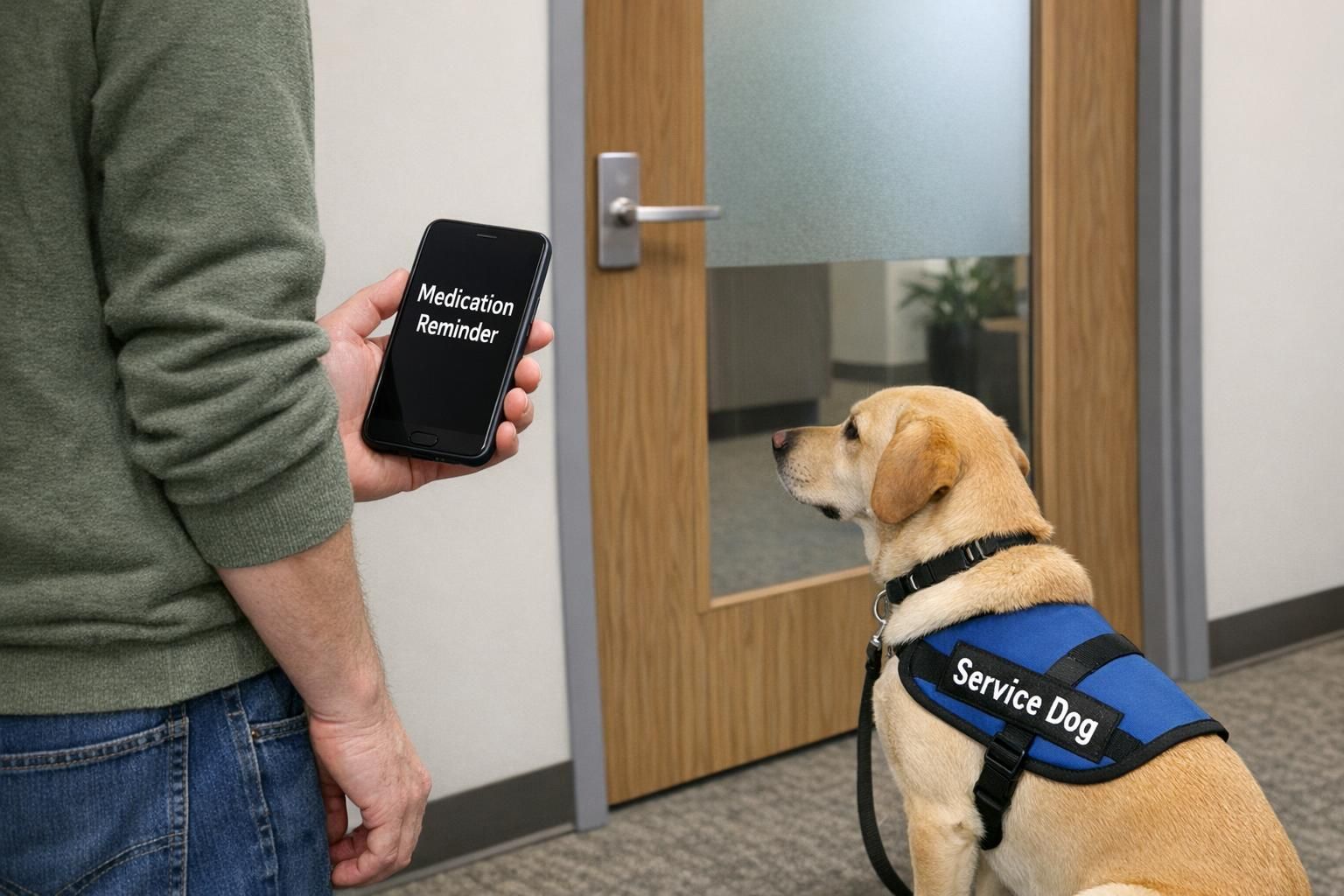
A medication reminder dog is trained to help a handler follow a medication schedule—especially on days when time disappears into meetings, customer lines, shift handoffs, or travel. In plain terms, the dog performs a specific, repeatable behavior at a planned time or in response to a cue so the handler doesn’t miss or delay a dose.
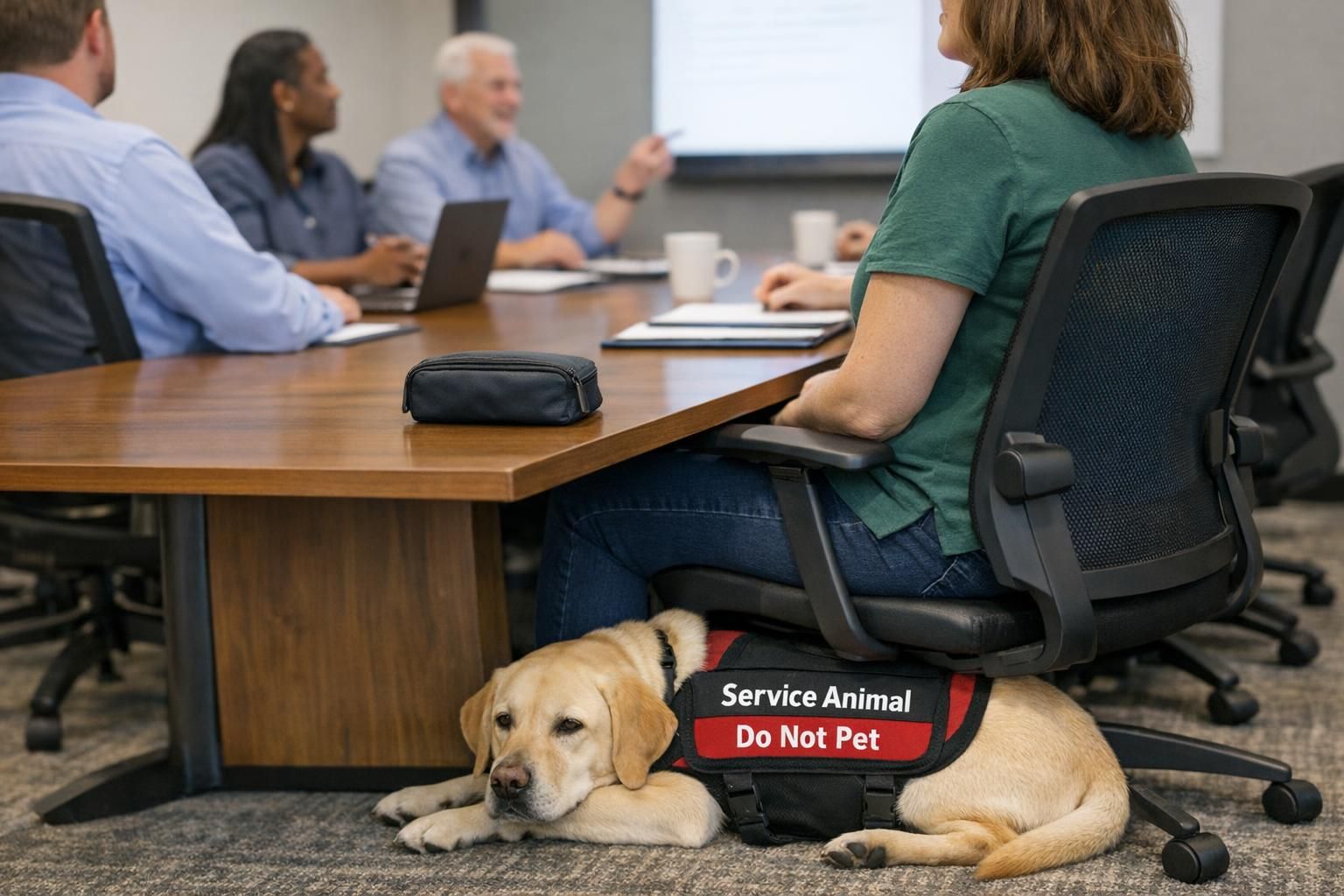
In a real workday, reminders usually look simple and professional. The dog might gently nudge a leg, place a paw on a knee, or stare and hold position until the handler acknowledges the cue. Some dogs are trained to retrieve a small medication pouch, bring a bag from under a desk, or lead the handler to a consistent storage spot (like a drawer, backpack, or locker). The goal is not to create a scene—it’s to deliver a reliable “tap on the shoulder” that fits into normal workplace flow.
It’s also important to keep expectations realistic. A service dog can help prompt the routine, but it doesn’t replace medical guidance or guarantee perfect adherence every day. Most handlers combine the dog’s reminder behavior with practical tools—like a pill organizer or a phone alarm—so there’s a reliable backup during especially hectic shifts.
“ "My dog’s reminder is subtle—a nudge under my desk. It’s enough to break my focus and make me check my pill case without interrupting anyone else." – Office administrator and service dog handler”
Medication reminders don’t look the same in every workplace. The best approach depends on noise level, how customer-facing the role is, and whether the handler can step away briefly without disrupting safety or service. With a little planning, reminders can fit smoothly into most work environments.
Handlers who do best at work tend to think through the “what ifs” ahead of time: What if a meeting runs long? What if the floor gets busy? What if a manager needs you on the register unexpectedly? Planning a couple of acceptable options (take medication right before the rush, or immediately after) helps reduce stress for everyone.
People use the terms “service dog,” “support dog,” and “companion animal” in everyday conversation, but they can mean different things in practical settings like work. Choosing the right fit starts with one question: Do you need your dog to perform specific trained tasks that directly support a disability-related need, or do you benefit primarily from comfort and emotional support through presence and companionship?
In general terms, a service dog is trained to do specific tasks—like medication reminders—that help the handler function day to day. A support dog (often discussed as an emotional support animal) may provide meaningful comfort and stability through companionship, which can be incredibly valuable, especially at home or in certain permitted settings. A companion animal is primarily a pet, even when the bond is deeply supportive.
If you’re trying to understand how these categories are commonly distinguished, SAMHSA offers a clear, neutral overview of service animals versus emotional support animals that many people find helpful in workplace contexts. See source.
In real life, clear identification and consistent documentation can make conversations simpler—especially when you’re moving between buildings, departments, or travel schedules. Having your information organized can reduce repeated explanations and help you communicate confidently.
A medication reminder dog works best when the handler’s routine supports the reminder. Think of the dog as part of a system: the dog provides the prompt, and the handler has a simple, fast way to follow through—without scrambling or drawing attention.
Privacy and professionalism matter, and you can plan for both. If you prefer not to discuss medication publicly, consider stepping to a break area, using a small pouch that looks like a standard personal item, and keeping water available. Over time, coworkers typically view the dog’s behavior as simply part of your normal work rhythm.
Clear, respectful communication can prevent most workplace friction. Many handlers find it helpful to set expectations early: what the dog does, what boundaries are important, and how to ask questions in a way that doesn’t interrupt work.
“ "I keep it simple: ‘Please ignore her—she’s working.’ Most people appreciate the clarity and move on." – Retail supervisor and service dog handler”
If you want an easy, professional tool for quick conversations, many handlers keep ADA law handout cards for quick, polite workplace conversations on hand. They can be especially useful in customer-facing roles or busy offices where you don’t have time to explain repeatedly.
Try a short, consistent line: “Please don’t pet or talk to her—she’s working.” If needed, add: “It can cause me to miss an important alert.”
A polite boundary works well: “Thank you, but please don’t feed her—she’s on a routine so she can work safely.”
In general, the ADA recognizes service animals (typically dogs) that are trained to do specific tasks for a person with a disability. In workplace settings, the conversation often happens through a reasonable accommodation process—meaning the employer and employee discuss how to support the employee’s needs while keeping the workplace safe and effective.
How this looks day to day can vary by employer, role, and location. Some workplaces have a formal HR process. Others handle it through a manager and a facilities or security team. In many cases, the most successful outcomes come from being prepared, calm, and practical: explain how the dog will behave, where the dog will rest, and how breaks will be handled.
It can also help to think ahead about potential sticking points—like shared food areas, tight aisles, or emergency procedures—so you can propose solutions. When you arrive with a plan, it’s easier for managers and coworkers to feel confident that the workflow will stay smooth.
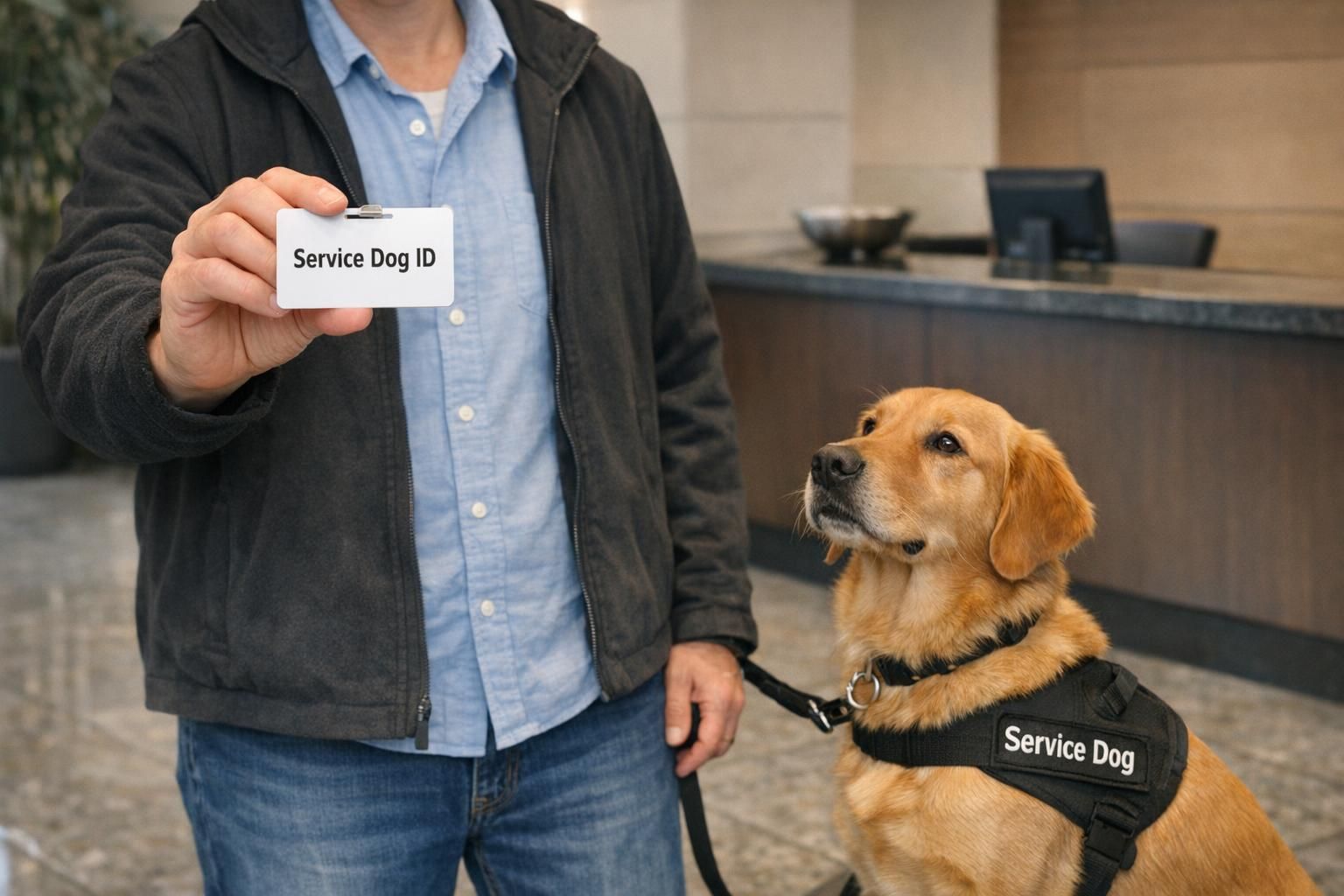
Even when your routine is solid, everyday interactions can still pop up: building security asks questions, a new coworker is unsure of boundaries, or you’re moving between offices and need a consistent way to present your information. That’s why many handlers choose optional registration and an ID card—because it creates a simple, professional-looking way to communicate.
A printed ID card and a digital profile can be especially convenient when you’re in motion: checking in with HR, entering a secured building, or coordinating access with a client site. Instead of repeating the same explanation, you can share consistent details that help people understand your dog is working and how to interact appropriately.
If you’re looking for a straightforward option that many teams use day to day, consider a starter registration package for everyday identification.
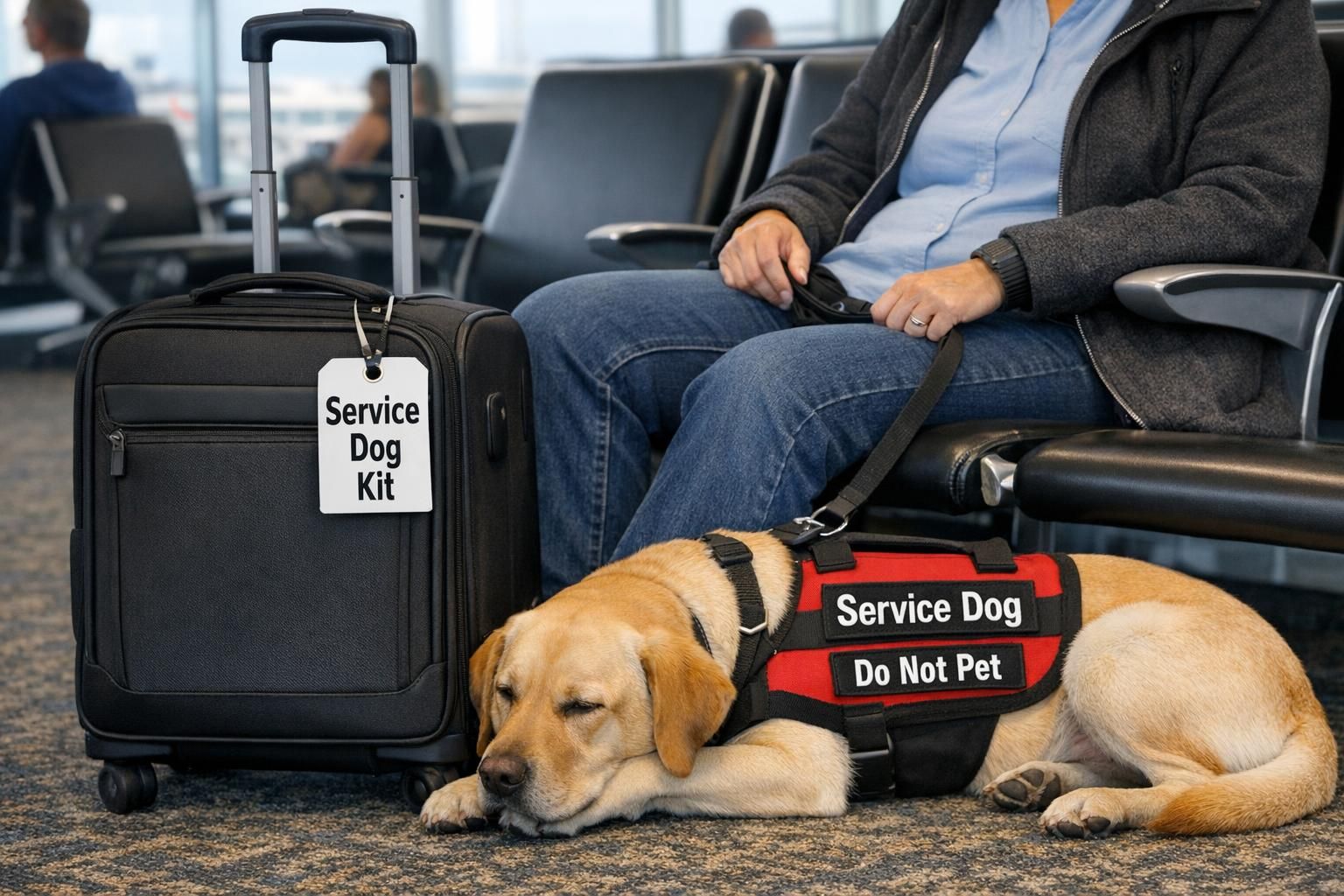
Work travel can be one of the biggest tests of a medication routine. Time zones, early flights, conference schedules, and long days can blur normal timing—exactly when a reminder task becomes most valuable. The key is to plan for change, not fight it.
Many handlers keep the routine consistent by linking medication to dependable events: after breakfast, after clearing airport security, or after arriving at the hotel. If time zones shift, they adjust reminders gradually or use a scheduled plan (often coordinated with their medical guidance) while keeping the dog’s cue aligned with the new schedule.
For more practical tips and planning ideas, see traveling with a service dog. And if you want a documentation bundle designed for busy itineraries, many handlers choose a travel-ready service dog package for work trips so they can keep key information organized and accessible.
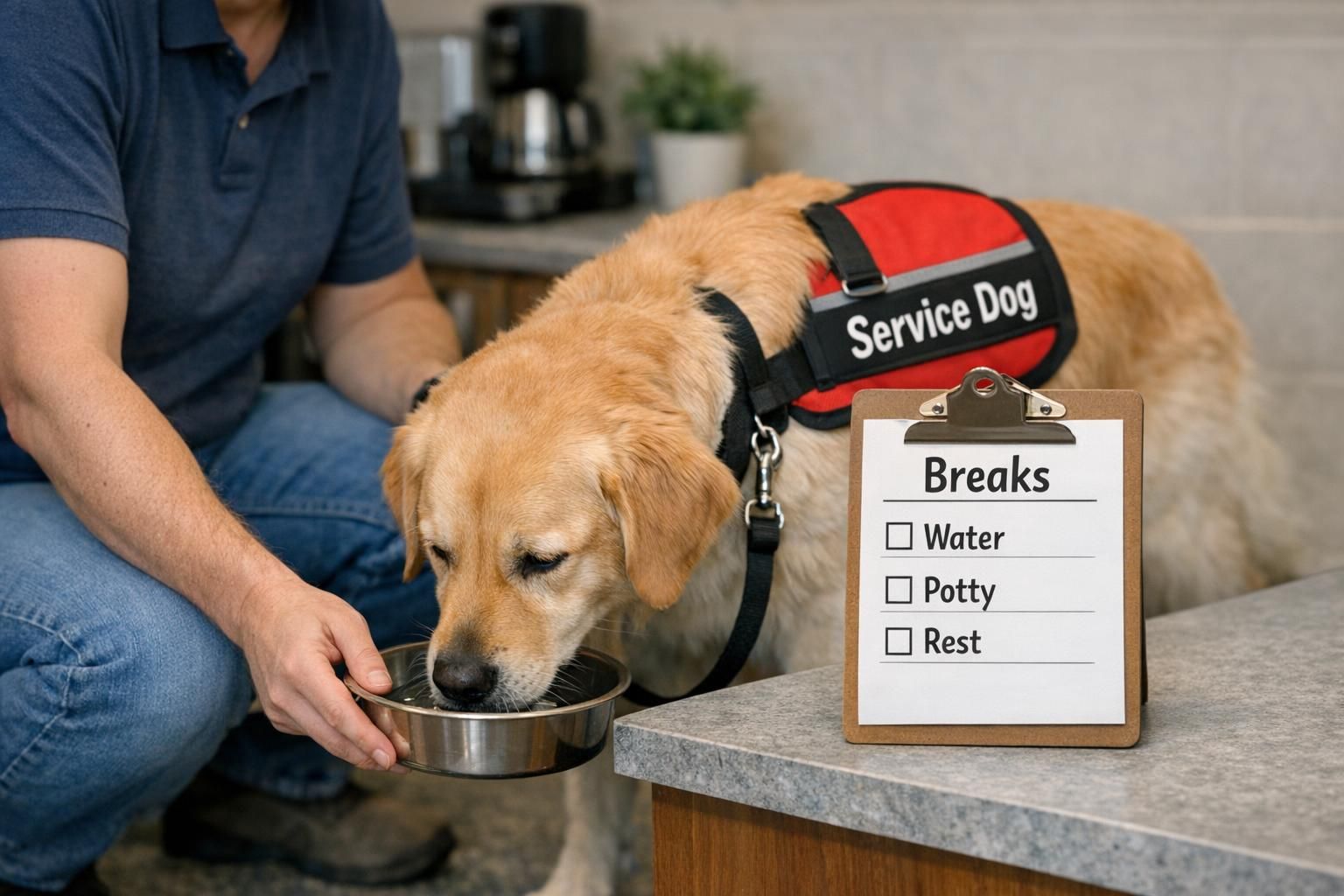
A medication reminder dog can only work well if the dog’s basic needs are met throughout the day. Workplace success is really “team” success: the handler’s routine supports the dog, and the dog’s steady behavior supports the handler.
Most teams benefit from a predictable daily rhythm that includes potty breaks, water, and a quiet rest period. A dog that’s constantly alert with no reset time may become restless or distracted—especially in loud, crowded, or high-traffic environments.
Even the best routines get disrupted: an urgent project, unexpected overtime, a teammate calling out, or a meeting that runs long. The most confident teams plan for these moments in advance so the dog’s reminder remains helpful instead of stressful.
One practical strategy is to decide ahead of time what “good enough” looks like on chaotic days. Maybe the reminder still happens at the normal time, but you take the medication at the nearest safe pause. Or maybe you switch to an alternate anchor (like “after the meeting ends”) for that day only.
“ "When overtime hits, I rely on a backup phone alert and a second pouch in my backpack. The dog still reminds me—but I’m not stuck if the day doesn’t go as planned." – Hospital technician and service dog handler”
If you’re preparing for a first day, a new job, or a change in schedule, a quick checklist can help you feel grounded. The goal is a safe, respectful, productive workplace—where your dog’s reminder task supports your health without disrupting your team.
With thoughtful training, a practical handler routine, and respectful communication, medication reminders can fit naturally into a wide range of jobs. Over time, most teams find that the reminder becomes just another normal part of the workday—quiet, steady, and supportive.
Your trusted source for service animal registration. Get professional ID cards, digital profiles, and smart NFC tags to keep your service animal safe and recognized.
© National Animal Registry — All rights reserved.