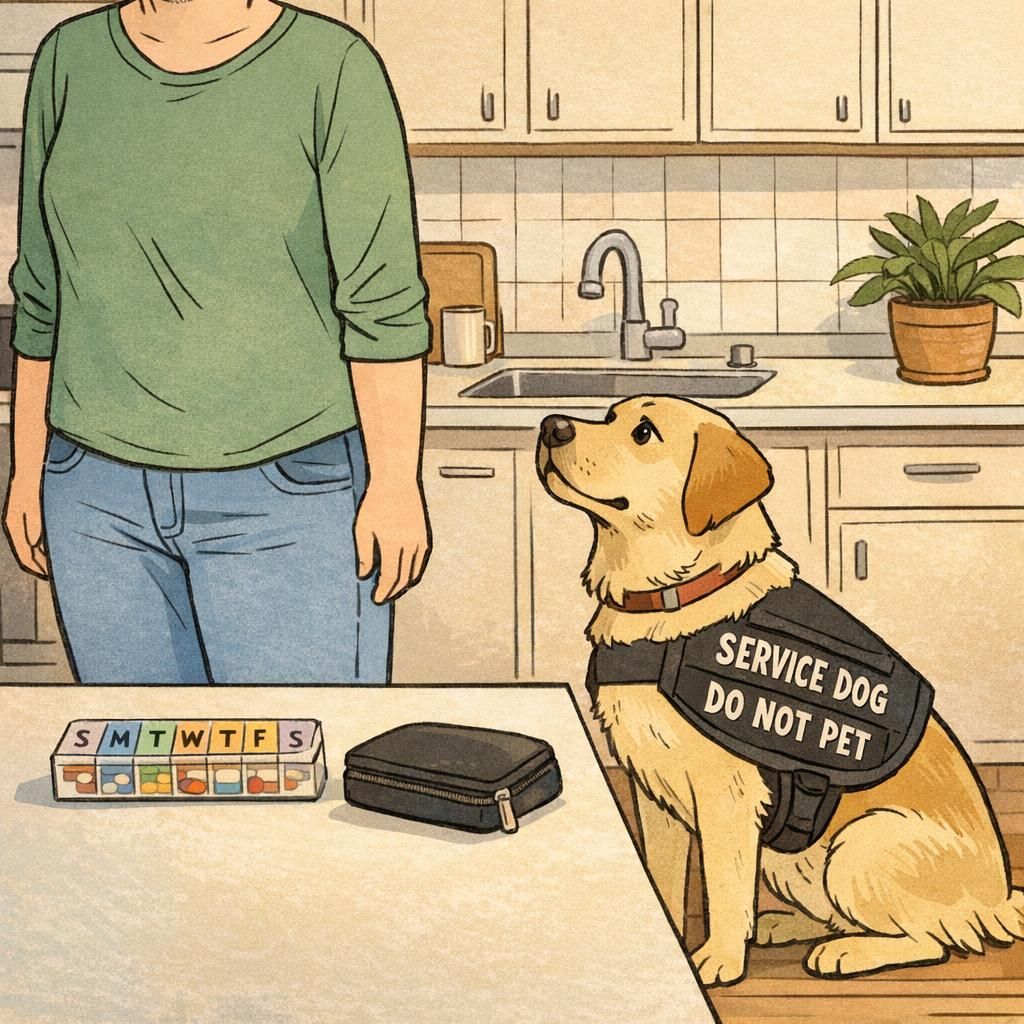
A medication reminder dog is typically trained to help a handler stick to a consistent medication routine by performing clear, repeatable tasks—most often a timed alert (like a nudge, paw tap, or persistent “check-in” behavior) and, in some cases, a controlled retrieval of a designated medication pouch or kit. The goal isn’t just “remembering,” but creating a reliable pattern that’s hard to ignore during busy, stressful, or symptom-heavy moments. Many teams plan these tasks carefully so the dog supports the routine without ever having unsupervised access to medications (source).
People who benefit from medication reminder tasks can include handlers managing psychiatric support routines (such as depression, anxiety, or PTSD schedules), migraine response plans, diabetes-related daily routines (where medication timing and consistency matters), and ADHD routines where time blindness or distractions can lead to missed doses. Some handlers also pair reminders with other trained behaviors like guiding them to a designated “med station,” prompting them to sit and complete a checklist, or interrupting hyperfocus so they can take care of essentials.
Because this work often happens in public—at work, school, appointments, or while traveling—many handlers also like having simple everyday identification available. If that’s helpful for your routine, consider a customizable service dog ID card for everyday identification so you can keep key details consistent and easy to access.
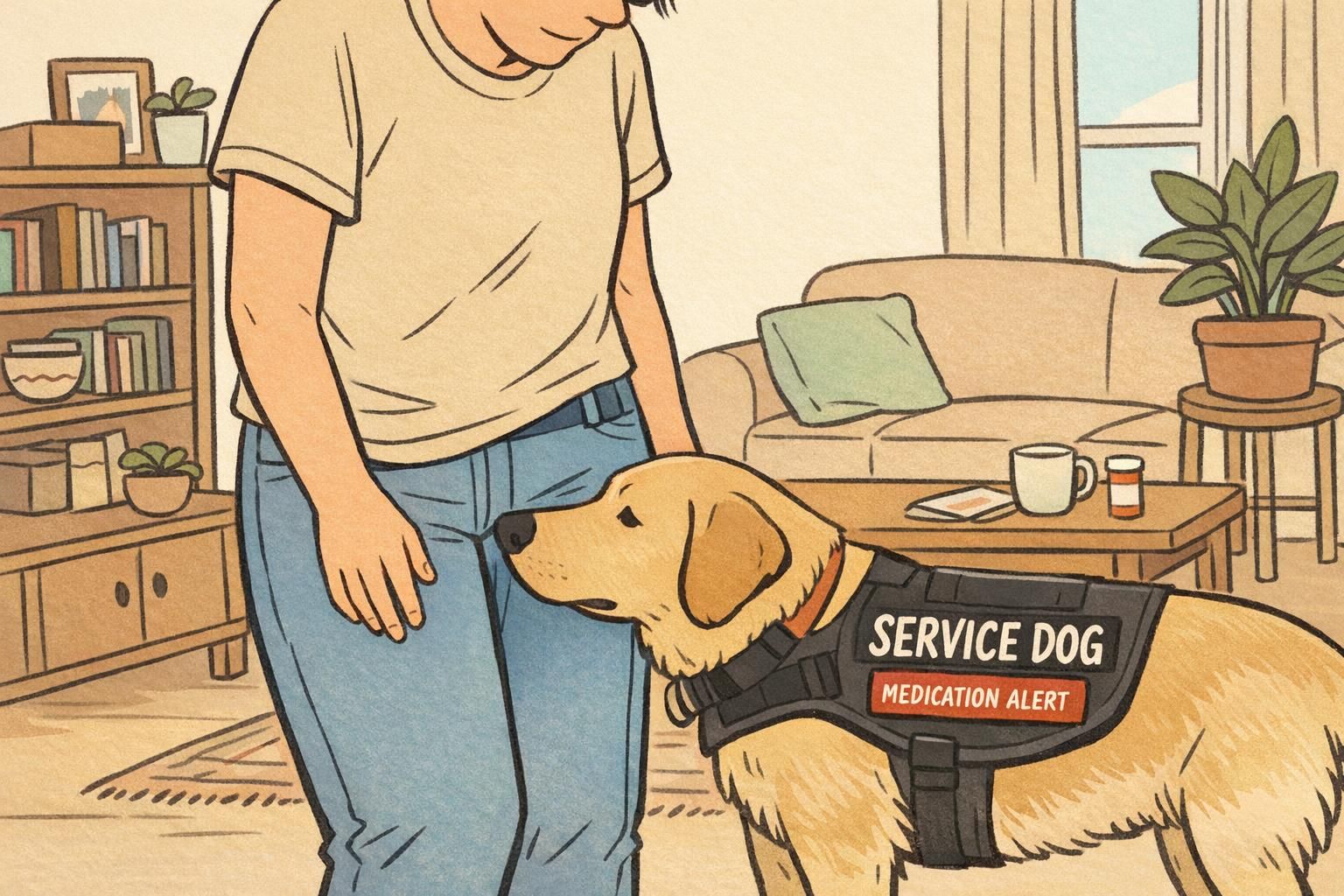
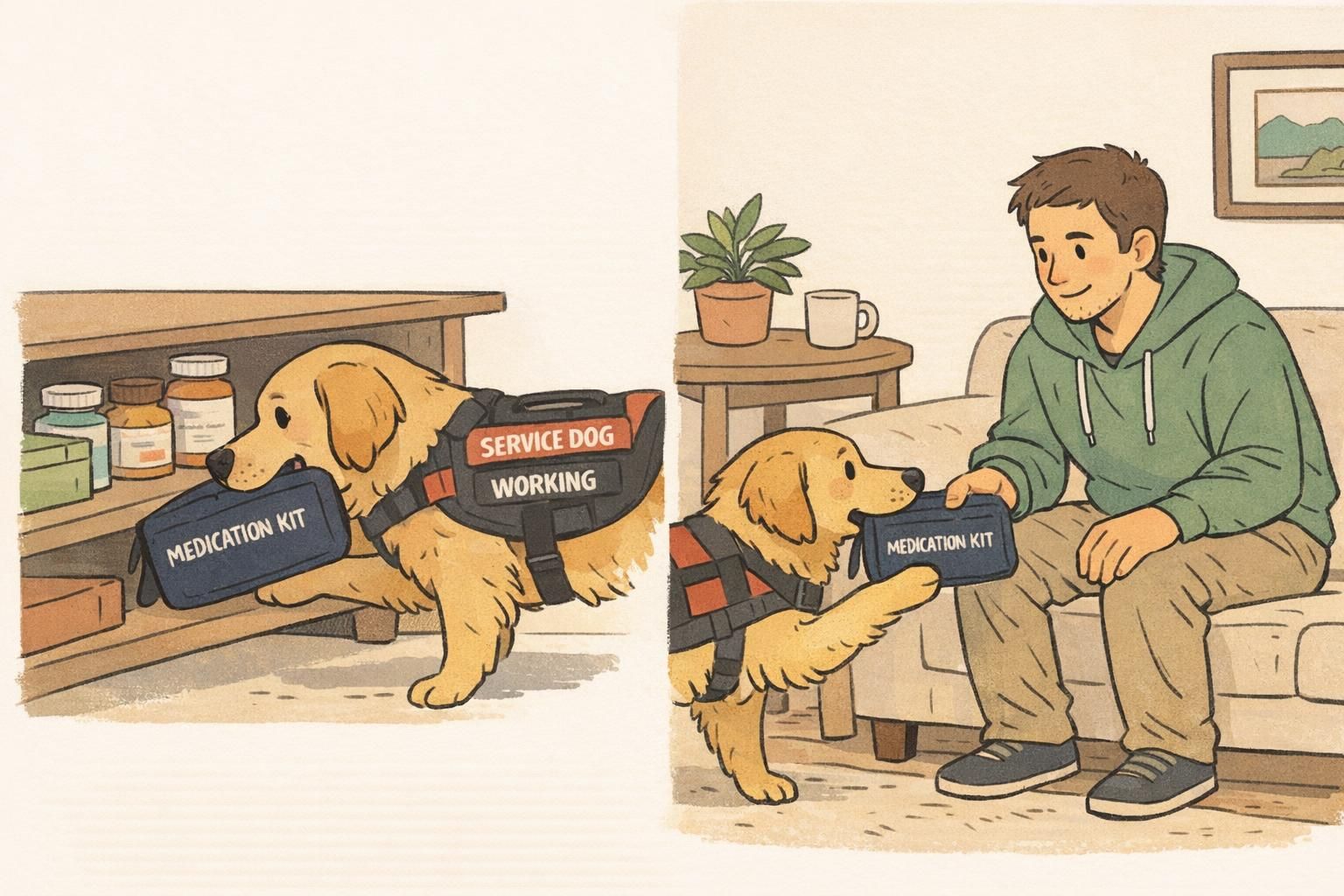
Medication reminder work should always be designed around safety. The dog should never be able to “self-access” medications, open bottles, chew packaging, or roam freely with pills. Retrieval—if included—should be limited to a secured pouch, a closed container, or a designated kit that you control. This protects your dog from accidental ingestion and protects you from mix-ups.
If you ever need to explain public access basics calmly—especially when you’re focused on health tasks—having a simple, respectful script can help. Many handlers keep ADA law handout cards for calm, clear communication in public on hand so conversations stay brief and low-stress.
For medication reminder work, your dog’s vest or harness is less about “looking official” and more about function: comfort for daily wear, stability for movement, and clear identification that helps reduce distractions. A well-fitted setup also makes training and public routines more consistent—your dog learns, “When this gear is on, I’m working.”
Some teams prefer to keep identification consistent across settings (home practice, errands, appointments). If you want a convenient set of materials for everyday use, a starter registration package for clear service dog identification can make it easier to stay organized and confident when you’re out.
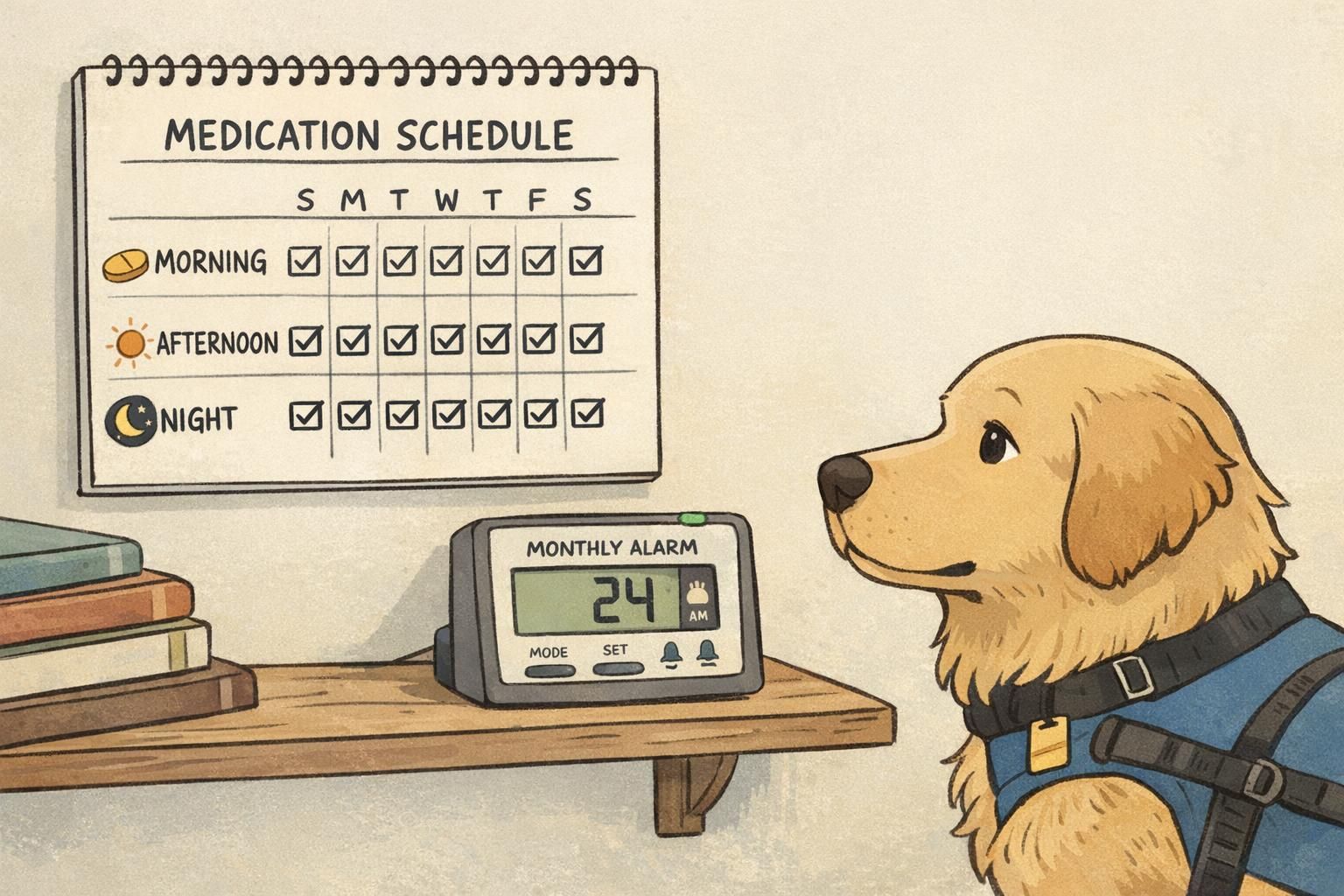
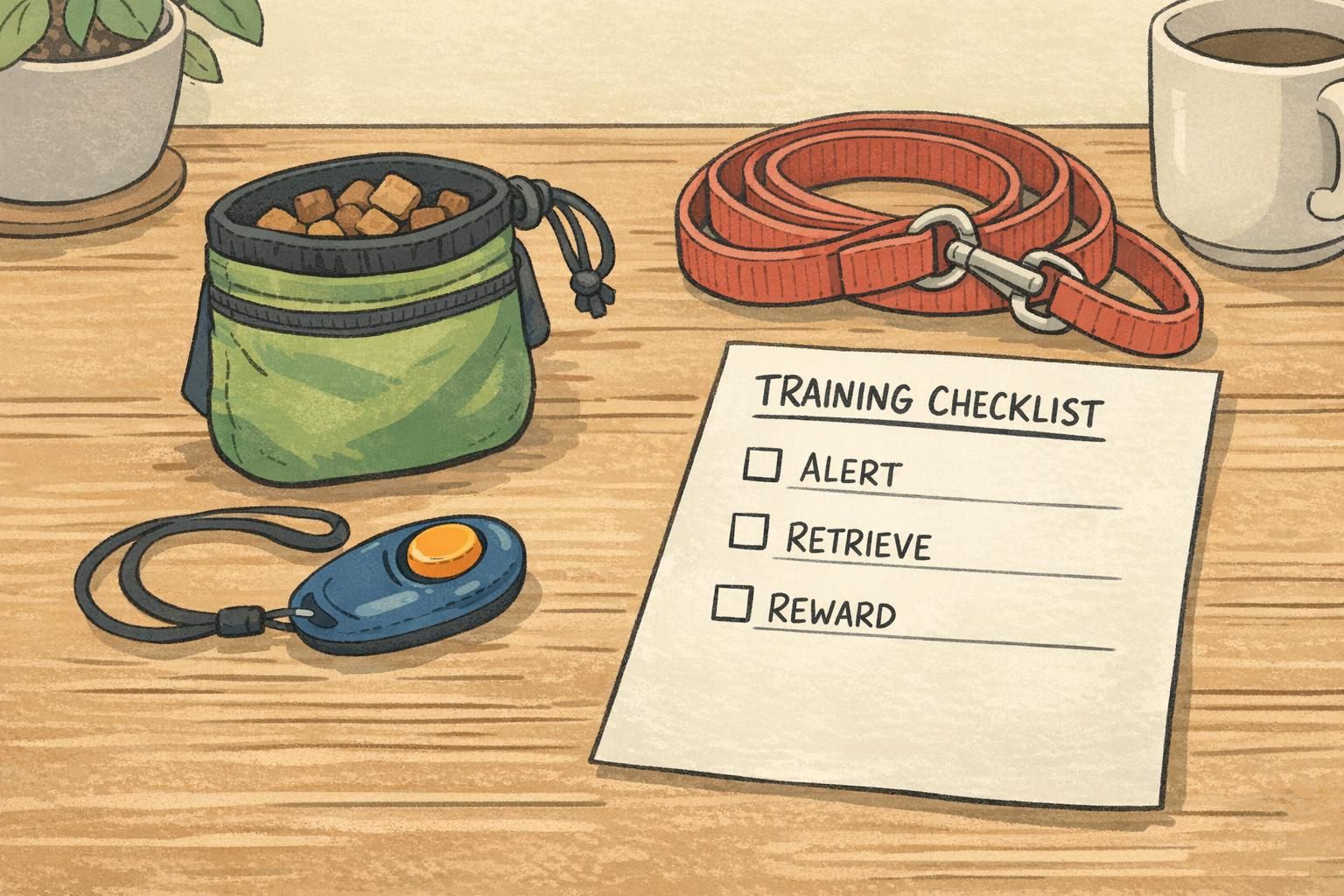
Medication reminder work is usually built around two skills: (1) a clear alert behavior at the right time, and (2) optional controlled retrieval of a designated pouch or kit. The gear you choose should support clean communication, fast reinforcement, and safe practice in different environments.
A clicker can be helpful (but is optional) because it marks the exact moment your dog performs the correct behavior—like making contact with your leg for an alert or delivering a pouch into your hand. High-value treats matter, especially when you’re training around everyday distractions like phones, doorbells, or other people in the home.
The easiest way to improve reliability—both for you and your dog—is to make the medication routine visually simple and physically consistent. When your “med station” looks the same every day, it’s easier to notice if something is off, and it’s easier for your dog’s alert to predictably lead to the next step.
Choose organization tools that reduce errors first, then think about what your dog can work with safely. If you want retrieval, the dog should interact only with the closed pouch/kit—not loose bottles or open organizers.
Most teams avoid that. A pill organizer can spill if dropped, and it can be tempting for a dog to mouth or chew. A safer approach is having the dog retrieve a closed medication pouch/kit, then you handle the organizer directly.
Pick one consistent, safe location (like a low shelf or a specific drawer) that works for training and routine. The key is that your dog can access the pouch only as part of training or on cue—medications themselves should remain secured and supervised.
Even an excellent medication reminder dog works best as part of a layered system. Pairing your dog’s trained alert with a backup reminder reduces missed doses during unusual days—travel, illness, schedule changes, or extra distractions. This can also support caregivers who help manage routines without turning medication time into a complicated process.
When you’re away from home, quick access to your dog’s identification can make day-to-day interactions smoother. Some handlers like a digital service dog ID for quick access when you are out so key details are available from a phone whenever needed.
Medication reminder teams often spend time in public places—pharmacies, clinics, workplaces, transit, and busy sidewalks. A compact first-aid setup helps you handle minor issues quickly and keep your dog comfortable so they can stay focused on work.
“ "A tiny first-aid kit is one of those things you don’t think about until you need it. When you’re relying on your dog for a health routine, being prepared keeps small problems from turning into big disruptions."”
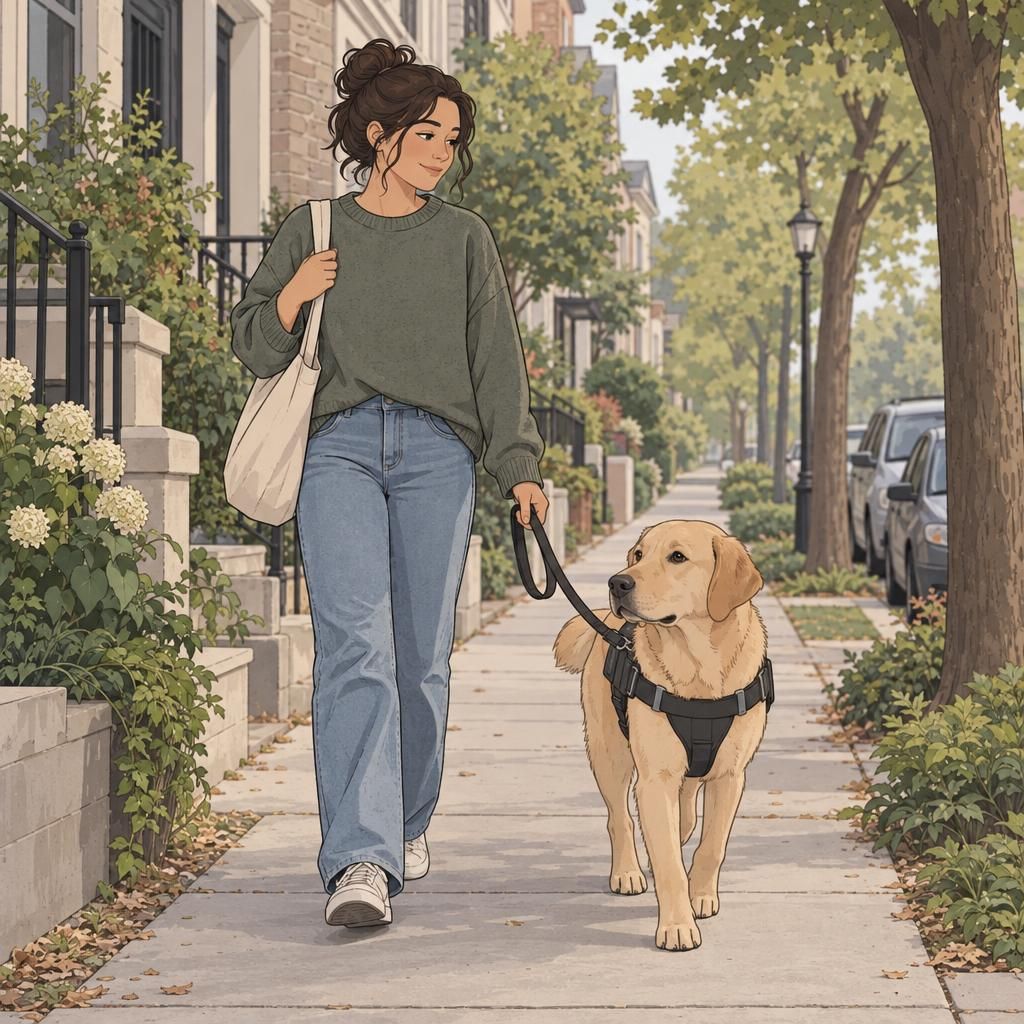
Medication schedules don’t pause when life gets busy—errands still need to happen, appointments still matter, and travel can’t always be avoided. A travel-ready routine helps your dog stay focused, helps you stay consistent with medication timing, and reduces friction in everyday interactions.
Clear identification and calm, brief communication are especially helpful when you’re entering new places. It can also help to keep your essentials “always packed,” so you’re not scrambling at the door and forgetting something important.
If you’re planning a trip, it helps to think through timing changes, lodging routines, and how you’ll protect your medication schedule on the road. See travel planning tips for handlers with a service dog for practical ideas you can adapt to your routine.
For handlers who want everything in one place for trips—especially when entering unfamiliar environments—a travel registration package designed for handlers on the move can help you stay organized and consistent while you focus on your health routine.
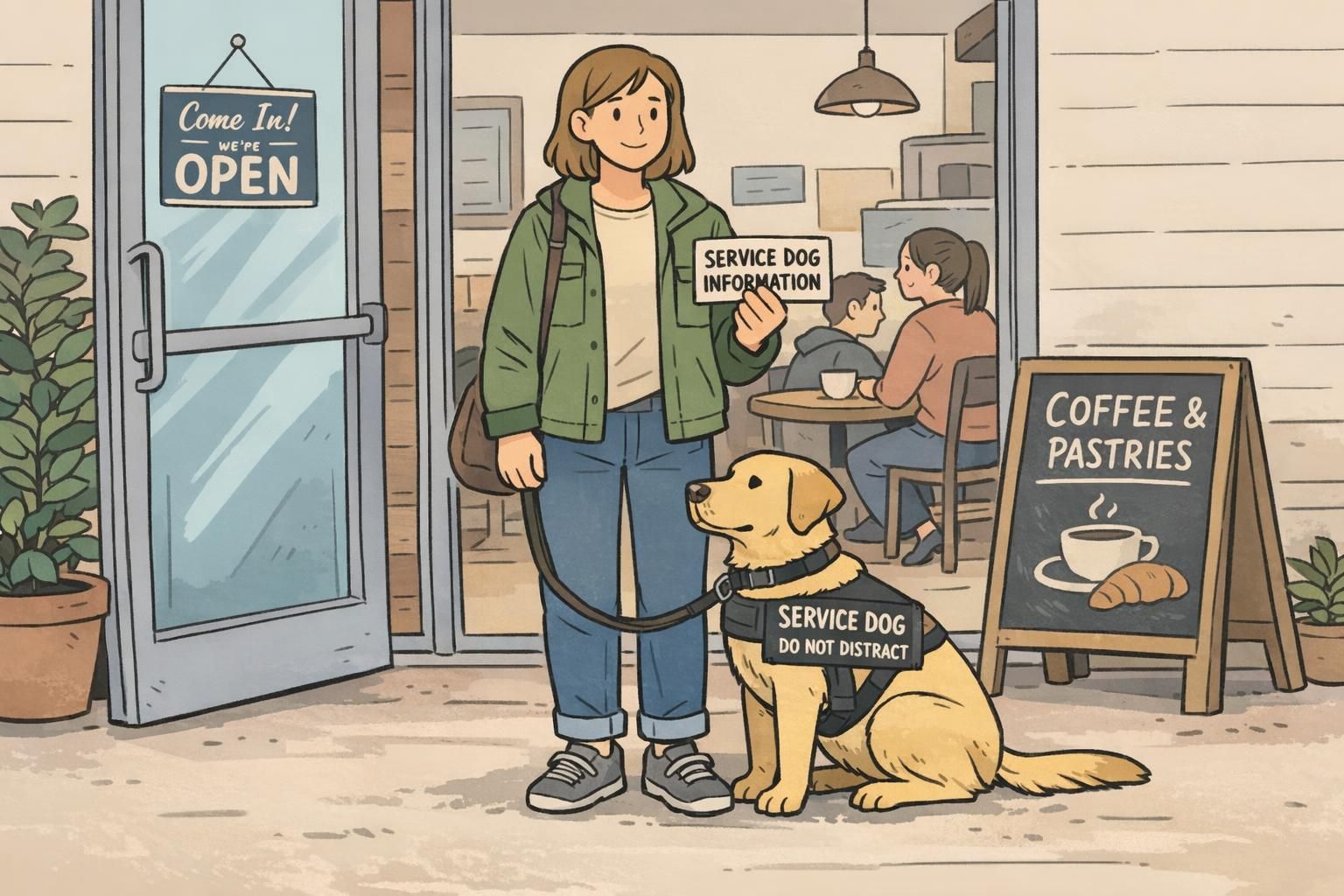
The most effective setup is the one that matches your real life. If your morning is hectic, your system should be quick. If you travel often, your kit should be easy to restock. And if your dog’s task work is primarily timed nudges (not retrieval), your gear should support that without adding extra steps.
With the right gear and a steady routine, medication reminder work can feel less like a daily struggle and more like a calm, reliable habit—supported by a dog who knows exactly how to help.
Your trusted source for service animal registration. Get professional ID cards, digital profiles, and smart NFC tags to keep your service animal safe and recognized.
© National Animal Registry — All rights reserved.