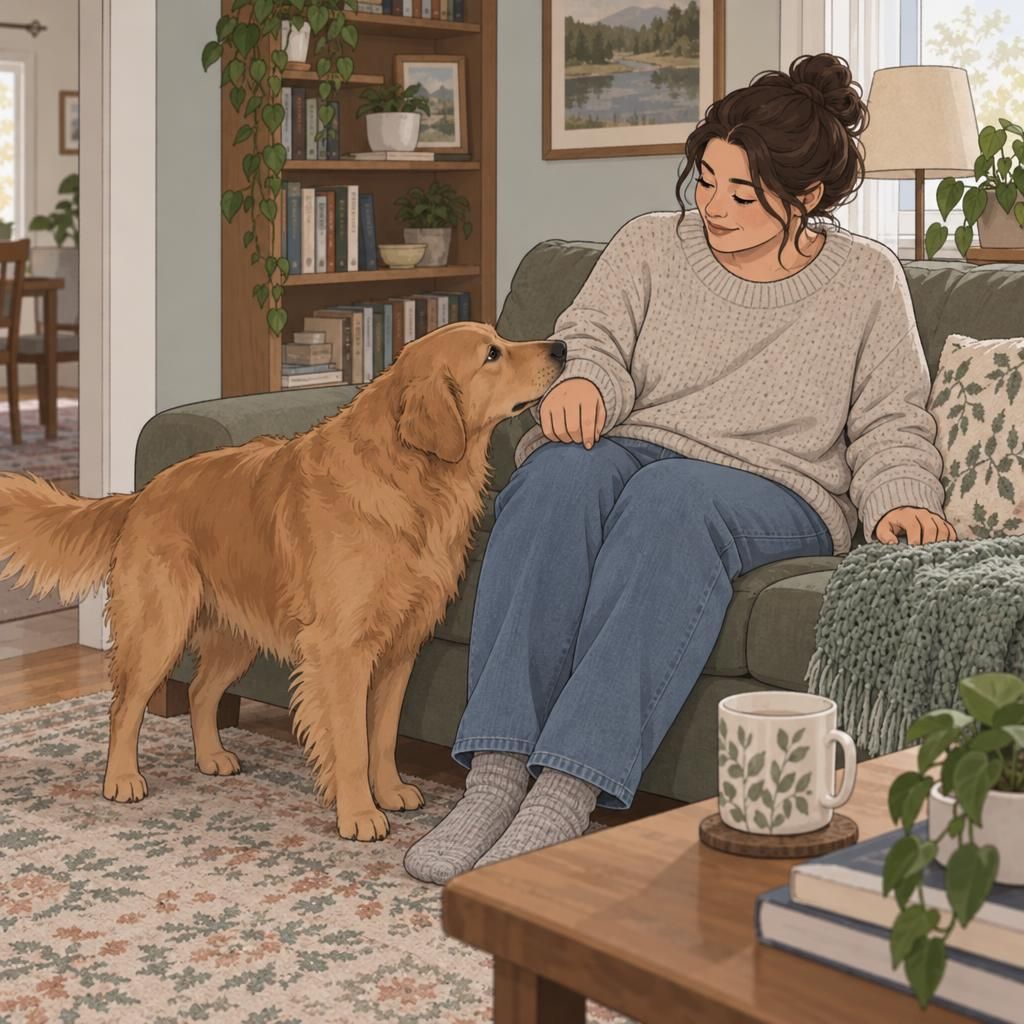
People often imagine life with a service dog as a constant stream of impressive moments: perfectly timed alerts, flawless public behavior, and a handler who never struggles again. Real everyday life is both simpler—and more meaningful—than that.
A service dog is a trained assistance dog who performs specific tasks that help mitigate a person’s disability. That might mean retrieving items, providing balance support, helping a handler move through a busy environment safely, or assisting with daily routines that would otherwise cost a lot of energy. In public, the dog isn’t “along for the ride” like a pet. They’re working.
At the same time, a service dog is still a living partner. They have needs, moods, preferences, and occasional off days. They may feel a little distracted in a brand-new place, have a slower morning after a big day, or need extra reassurance during loud, crowded errands. Daily life includes both the work the dog does for you and the care you provide to keep them healthy, comfortable, and steady.
So what does "everyday" actually look like? It’s home routines (potty, feeding, grooming), practical outings (grocery store, pharmacy, school, work), medical appointments, and lots of small moments where a trained task saves your body or your mind from doing one more hard thing. Over time, those small moments add up to more freedom and a calmer, safer day.
Many handlers describe a service dog as a “daily difference-maker,” not because life becomes perfect, but because life becomes more manageable. Owners often report increased independence, fewer energy crashes, and a steadier emotional baseline—especially when disability symptoms fluctuate day to day.
For someone with mobility limitations or balance challenges, a dog that can retrieve dropped items or assist with positioning can reduce bending, bracing, and repeated strain. For someone living with PTSD, depression, or chronic illness, a predictable partner can bring structure to routines and help the handler stay grounded. Even when the dog’s task looks “small,” the outcome can be huge: more confidence leaving the house, fewer falls or near-falls, and more energy left for family, work, and hobbies.
Owners also talk about the quieter benefits: not having to ask a stranger for help, avoiding repeated trips across the house, or getting through a full errand run without feeling depleted. Over time, those changes can shift a person’s entire relationship with their day.
Some examples owners commonly share:
• Traveling solo again—because the dog can retrieve essentials, help keep the handler oriented and calm, and provide practical support during transitions.
• Returning to work or school—because the dog helps the handler conserve energy and manage daily barriers.
• Saving energy for family time—because fewer “little tasks” pile up into pain or exhaustion by the end of the day.
The companionship matters too, but experienced handlers often emphasize this point: companionship is the bonus. The core value is reliable disability-mitigating task support that helps a person function more safely and consistently.
“ "The biggest change wasn’t one dramatic moment. It was realizing I wasn’t spending my whole day recovering from basic tasks anymore." – Service dog handler”
They’re different roles. A service dog is trained to perform disability-mitigating tasks. An ESA provides comfort through companionship, but does not perform trained tasks in the same way. Both can be valuable—just for different needs and settings.
Many people find a service dog helpful for conditions that vary day to day, including chronic illness and mental health conditions. What matters is that the dog’s trained tasks genuinely help mitigate disability-related challenges in daily life.
Most successful service-dog teams rely on something that sounds almost boring: a consistent routine. Structure helps the dog stay calm and reliable, and it helps the handler plan around symptoms, fatigue, and time constraints.
Here’s what a typical day can look like. Every team’s schedule differs, but the rhythm is similar.
Morning
The day usually starts with a potty break and a little movement—enough to help the dog feel settled and ready to focus. Many handlers also do a quick body check: eyes, ears, paws, and coat. This isn’t about perfection; it’s about catching discomfort early.
Gear-up and commute
Before leaving home, a working dog may gear up (depending on the handler’s preferences and environment). The handler often does a quick “focus” reset—simple cues like a check-in, a short heel, or a calm sit—to set expectations before stepping into a busier world.
Errands, work, school, appointments
This is where the dog’s real value shows up in small, repeated ways: retrieving a dropped card, guiding the handler through a tight space, creating a little buffer in line, or helping the handler conserve physical and mental energy. The best public access looks uneventful: the dog is steady, responsive, and unobtrusive.
Decompression breaks
Even highly trained dogs need breaks. A few minutes to drink water, stretch, sniff briefly in an appropriate spot, or just settle quietly can prevent stress from building up. Handlers often plan these breaks the way they’d plan medication or rest.
Evening care and health checks
After a working day, many teams shift into “home mode.” That might include brushing, checking paws, or wiping down after wet weather. This is also a good time to watch for subtle signs of soreness or stress.
Short training sessions
Training is often sprinkled throughout the day—quick reviews that keep skills sharp without overwhelming the dog. A few minutes of practice here and there can be more effective than one long session, especially when life is busy.
Night routine
The day ends with another potty break, water, and a calm wind-down. Many handlers find that a predictable bedtime routine helps their dog settle faster and sleep better—especially after a stimulating day out.
Service dog tasks can look ordinary to an onlooker—until you realize how much they change a handler’s safety, pain level, and stamina. Many tasks are about preventing a problem before it happens: avoiding a fall, avoiding overexertion, or reducing symptom triggers.
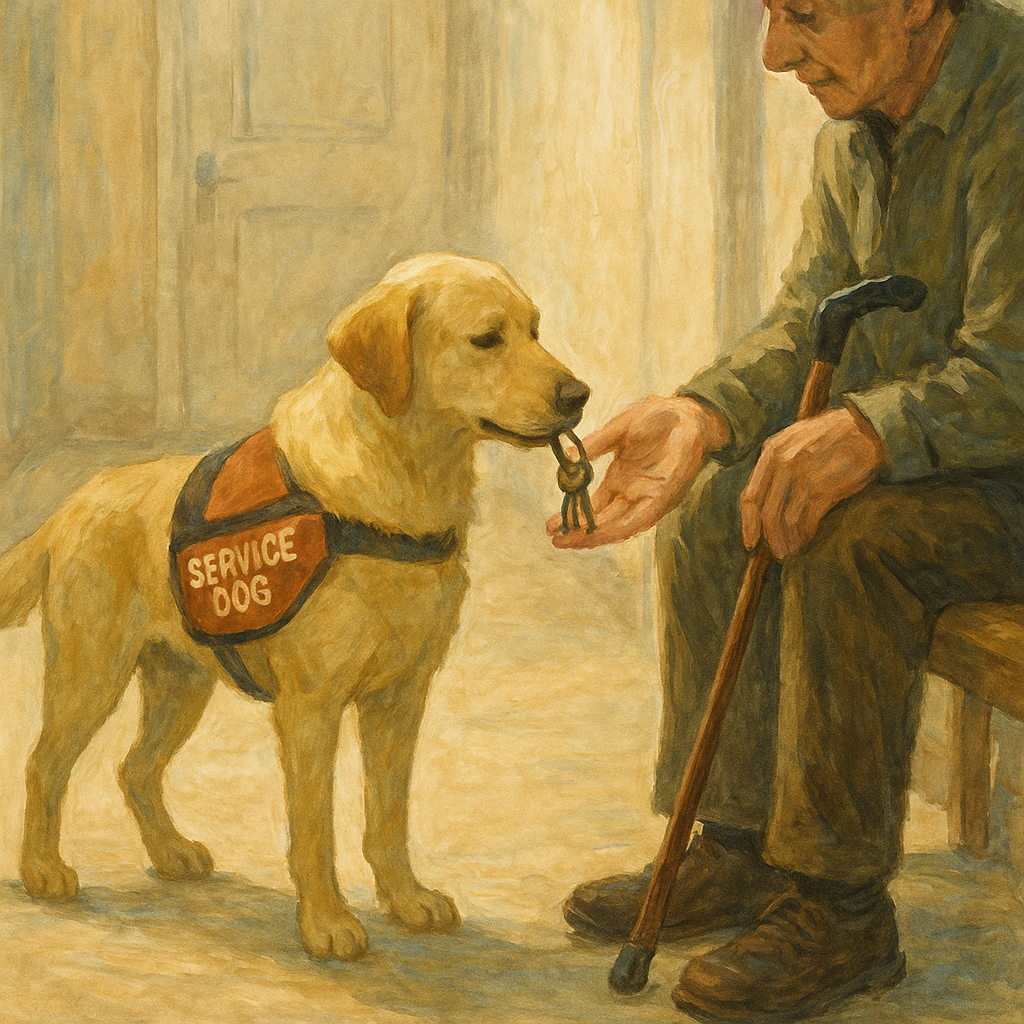
Retrieving essentials (keys, phone, wallet, medication)
Retrieval is one of the most recognized service dog tasks, and for good reason. Dropping an item isn’t just inconvenient for many handlers—it can mean pain, dizziness, imbalance, or a risk of falling. A dog that can pick up and deliver items on cue can save the handler from repeating a difficult movement dozens of times per week.
Mobility and balance support
Some service dogs assist with balance by helping a handler stabilize during transitions, such as standing up, stepping off a curb, or moving through a crowded space. Teams may also use positioning support to create space or reduce jostling that can trigger discomfort.
Household assistance
At home, the dog can help with practical tasks like opening doors or drawers, bringing items from another room, turning lights on or off, or pushing a door shut. These tasks don’t just save time. They reduce cumulative strain—especially for handlers with chronic pain, fatigue, or limited range of motion.
Why small tasks matter
Many handlers describe their disability as a “budget.” Every bend, reach, or extra step costs something—pain, fatigue, anxiety, or risk. When a service dog handles the small things, the handler can spend their limited energy on work, school, parenting, or simply enjoying life.
A working service dog is often compared to an athlete—not because they’re constantly running, but because their body and mind have a job to do. That job requires conditioning, recovery, and preventative care.
Daily exercise is a key part of keeping a service dog settled and capable. Many handlers build in at least 30 minutes of exercise a day (sometimes more), adjusted for the dog’s breed, age, and workload. Exercise isn’t just physical—it’s also stress management. A dog who gets appropriate movement and enrichment is more likely to focus calmly in public.
Grooming is another foundational piece of “work readiness.” Depending on coat type, this can mean daily brushing or a few times per week, plus regular baths when needed. Many handlers also keep up with routine maintenance like teeth brushing, ear checks, and nail trims so the dog stays comfortable and less likely to develop problems that affect gait or focus.
Nutrition and weight monitoring matter too. Even small weight changes can impact joint health and endurance over time. A well-conditioned dog is more comfortable working, recovers faster, and is less likely to be distracted by physical discomfort.
Finally, routine veterinary care supports long-term reliability—because a dog can’t perform tasks well if they’re in pain or dealing with an undetected issue. Handlers often treat vet visits as part of the service dog’s “career care,” not an afterthought.
These everyday needs are widely recognized among service-dog teams, including the role of daily exercise and ongoing maintenance in helping both dogs and handlers conserve energy and function well in real life (source).
“ "If my dog isn’t comfortable, focused, and confident, I’m the one who feels it in every errand. Care is part of the partnership." – Service dog handler”
One of the biggest surprises for new handlers is that training doesn’t end once the dog is working in public. In real life, distractions change constantly: holiday crowds, new floor smells, noisy carts, people calling to the dog, a child running by, or a sudden medical appointment in a brand-new building.
That’s why many teams treat training as ongoing maintenance. Even 30 minutes a day—broken into short sessions—can help keep skills polished. This can include reviewing task cues (like retrievals), practicing calm public access manners, doing “brain games” to build focus, and problem-solving new environments.
Repetition builds reliability. A dog may “know” how to ignore food on the ground, but practicing that behavior regularly makes it more automatic when the handler is tired or symptomatic. The goal isn’t to chase perfection; it’s to create steadiness and trust.
Strong foundations matter, whether a dog learned skills through a program, a private trainer, owner-led training, or a blend. Many handlers find that consistent, realistic practice—using everyday settings like parking lots, quiet stores, and short errands—helps the dog generalize skills and remain confident.
This is also where teams build communication. The handler learns their dog’s early signs of stress or distraction, and the dog learns the handler’s pace and needs. Over time, training becomes less about drills and more about shared problem-solving.
Many teams benefit from daily refreshers—often around 30 minutes total, split into short sessions. The focus is maintaining manners, reinforcing tasks, and keeping the dog confident in new situations.
Even well-trained dogs can have off days. The best approach is to reduce demands, take a break, step outside, and keep the dog successful. Consistent routines and calm problem-solving usually improve future outings.
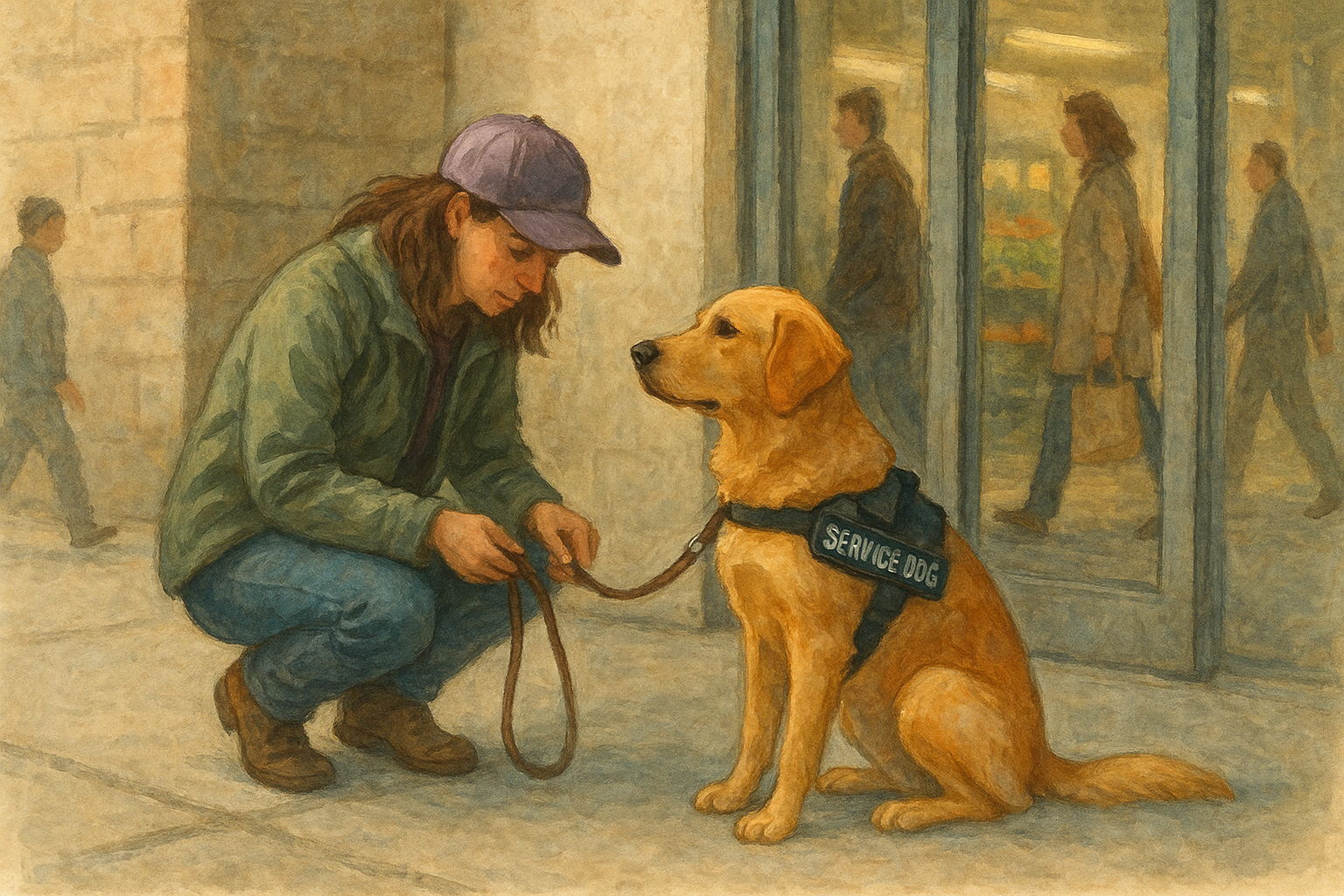
A service dog can change a handler’s independence—but it can also change how strangers behave around them. Many handlers report that public distractions are one of the most exhausting parts of working as a team.
Common distractions include:
• People talking to the dog in a high voice or making kissing noises
• Strangers reaching out to pet without asking
• Someone stepping into the dog’s space in line
• Children running up quickly
• Questions that feel personal or intrusive
Even when people mean well, these moments can interrupt task work and break the dog’s focus. They can also put the handler in the position of “managing the room” while also trying to complete normal errands.
Setting boundaries is not rude—it’s safety. Many handlers use short, calm scripts they can repeat without stress. The goal is to protect the dog’s concentration and keep interactions from escalating.
Helpful scripts you can practice ahead of time:
• “Please don’t pet—he’s working.”
• “Thanks for asking. Not right now, we’re on duty.”
• “She’s trained to focus on me. Please give us a little space.”
• “I appreciate it—please don’t distract her.”
There’s also the reality that access issues can happen. Some staff members may not understand service dog rules, or they may confuse service dogs with pets. Calm, simple education often works best, especially when you can keep your voice level and your dog settled.
When it feels appropriate and safe, some handlers choose to educate by briefly explaining a task (“He picks things up for me so I don’t fall”) or doing a quick demonstration like a retrieval. Other times, it’s better to keep it short and move on. You don’t owe strangers your medical history.
“ "I try to assume people mean well, but I still protect my dog’s focus. If he misses a cue because someone distracted him, that affects my safety." – Service dog handler”
When experienced handlers give advice to newcomers, it often sounds less like training tips and more like relationship tips.
Bond first, then polish
The strongest teams usually have a clear bond: trust, predictable routines, and a sense that the handler and dog are truly a unit. Bonding doesn’t have to be elaborate. It can be play sessions, relaxing together after work, or little rituals like a morning check-in.
Let the dog help—early and often
Many new handlers accidentally do too much themselves at first. They worry they’re asking “too much,” or they feel self-conscious. But a service dog’s purpose is to help. When you consistently use the dog’s trained tasks, you conserve energy and reduce strain. Over time, that consistency also strengthens the dog’s understanding of their job.
Managing guilt and reframing help
It’s common to feel guilt about needing assistance, especially if your disability isn’t visible. But using a service dog isn’t a shortcut—it’s a tool. A cane, a wheelchair, medication, and a service dog all serve the same goal: helping a person live safely and fully.
Many handlers say guilt fades as confidence grows. The first time you complete an errand without pain flaring, or you realize you still have energy at dinner time, it becomes easier to accept support as something you deserve.
That feeling is common. Many handlers start with smaller, lower-pressure outings and build up. Confidence usually grows as you see how much easier and safer daily tasks become with your dog’s help.
Consistency is the fastest route: shared routines, calm communication, and some off-duty time for play and relaxation. Bonding isn’t separate from working—it supports reliability.
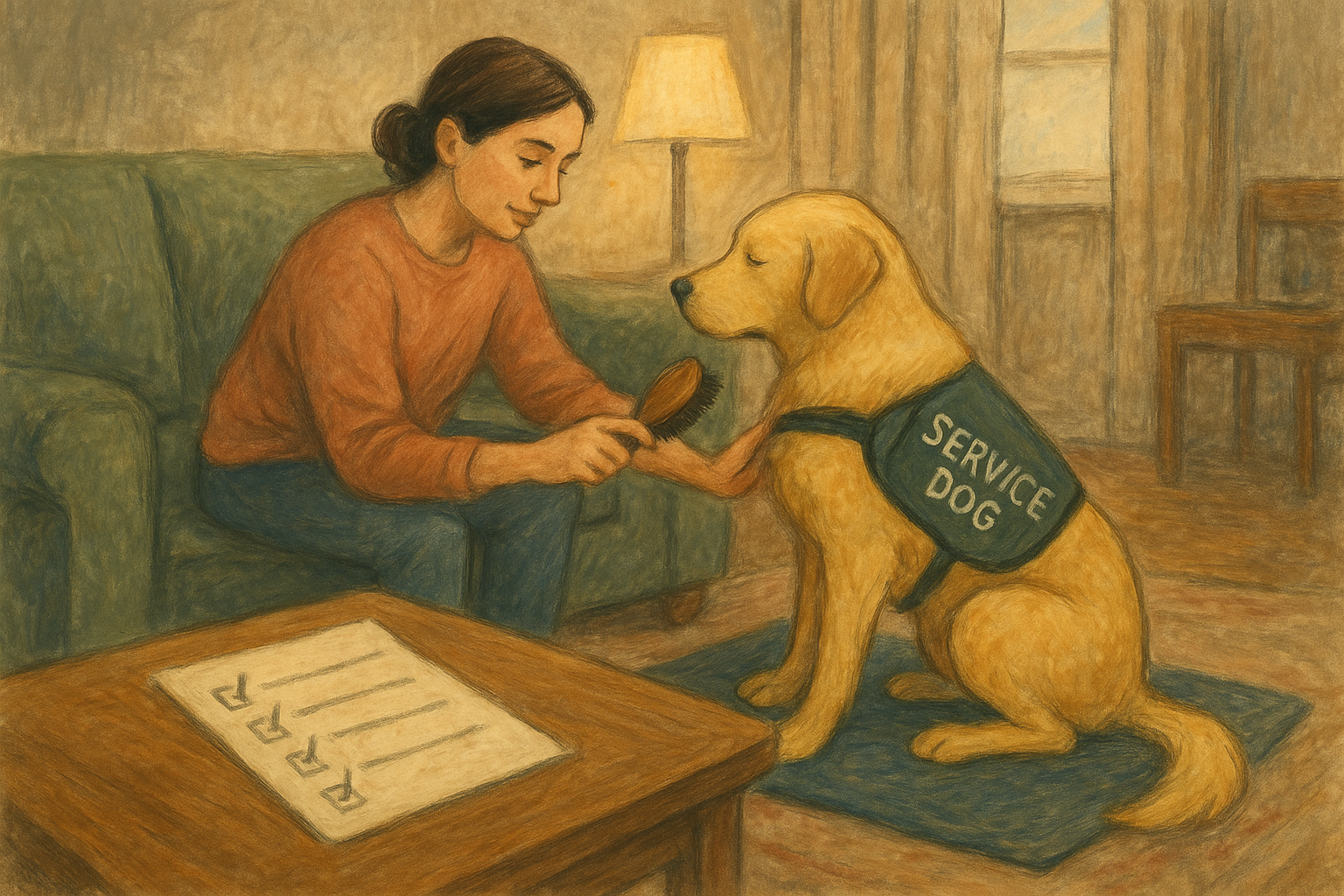
Smooth outings usually come down to preparation—and a communication style that keeps things calm. When your hands are full (literally or mentally), having a consistent packing routine can prevent small problems from becoming stressful.
Many handlers keep a “go bag” ready near the door. Even if you don’t use everything every time, having it available supports flexibility—especially if an appointment runs long or a store is unusually crowded.
Packing checklist for everyday outings
What you pack will depend on the dog and the day, but many teams include:
• Water and a portable bowl
• Cleanup bags and sanitizer
• A small towel (weather, muddy paws, unexpected messes)
• Training treats or kibble
• Backup leash/collar clip or simple backup gear
• Any dog-specific medications or wipes if needed
Planning for busy environments
If you know an environment will be crowded or noisy, plan decompression into your schedule. Park a little farther away so you have a calmer walk-in. Choose checkout lines with more space. Take a breath before entering—your dog reads your pace and tension.
Calm communication for questions and access conversations
You’ll likely get questions. Some handlers keep answers short to preserve privacy:
• “He’s a service dog.”
• “Thanks for understanding—he’s working.”
• “I’m not able to discuss my disability, but I appreciate your respect.”
If you want a simple tool to help educate without turning every outing into a debate, some handlers carry small handouts they can offer politely and move on. National Animal Registry offers ADA law handout cards that can help streamline those moments while keeping your focus on your errand and your dog.
“ "The more I prepared, the less I felt like I had to ‘power through.’ A calm plan keeps my dog calm too." – Service dog handler”
Travel can be one of the most rewarding parts of having a service dog—and one of the most demanding. Airports, hotels, family gatherings, and unfamiliar sidewalks change the usual routine and can increase distractions.
The best travel strategy is to make new environments feel predictable.
Schedule relief breaks like appointments
Before you even leave, map out likely potty and water opportunities. On travel days, handlers often plan more breaks than usual. A predictable relief schedule can prevent discomfort and help the dog settle faster.
Plan transitions, not just destinations
Airports and hotels are full of “in-between” moments: check-in lines, elevators, lobby crowds, security flow, and waiting areas. Many teams practice calm settling and focus cues specifically for these transitions.
Keep standards consistent
Travel can tempt people to relax structure—skipping training refreshers or allowing extra distractions. But consistent expectations often reduce stress for the dog. A familiar routine (even a short one) can help the dog understand, “This is still a working day.”
Add rest time on purpose
Big outings are tiring. Build in recovery time for both of you. A decompression walk, quiet time in the room, and a simple evening routine can prevent overstimulation and keep the next day smoother.
If you want additional guidance on planning travel logistics and routines, see our article on traveling with a service dog. For handlers who prefer having key materials in one place for confident travel experiences, National Animal Registry also offers a travel-focused service dog package.
Everyday life with a service dog is a balance. The responsibilities are real: daily exercise, consistent care, ongoing training, planning your outings, and managing public distractions. It’s not effortless support.
But for many handlers, the rewards are just as real—often life-changing. Owners describe feeling safer, more independent, and more capable of doing ordinary things without paying for them later in pain, fatigue, or emotional fallout. A service dog can make the world more accessible, one small task at a time.
If you’re building life with a service dog, aim for sustainability: a routine that protects the dog’s well-being, supports reliable task work, and gives you room to live. With patience and consistency, many teams find that what starts as “assistance” grows into something deeper—freedom, confidence, and a fuller day-to-day life.
Your trusted source for service animal registration. Get professional ID cards, digital profiles, and smart NFC tags to keep your service animal safe and recognized.
© National Animal Registry — All rights reserved.