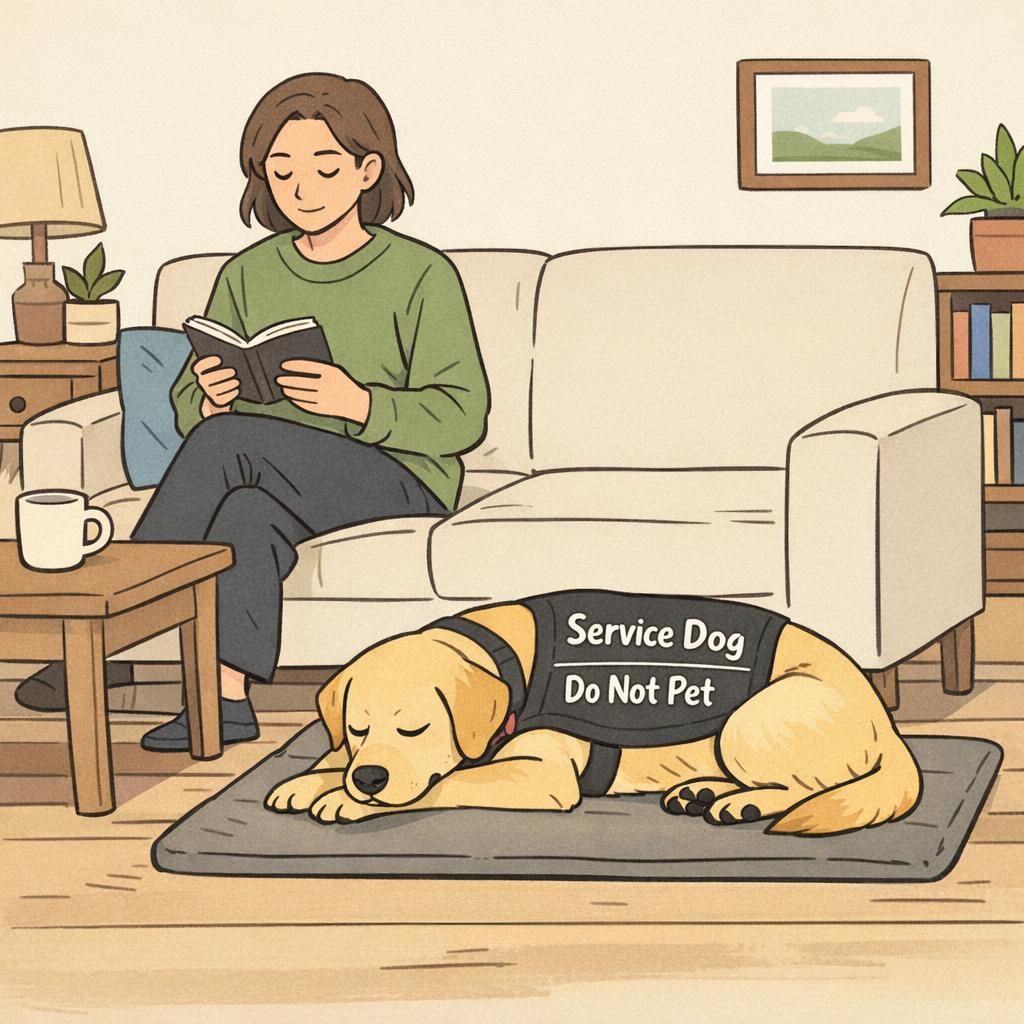
From the outside, a service dog team can look effortless: a calm dog at heel, a handler moving through the day with quiet confidence. In real life, that calm is the result of teamwork—daily routines, planning ahead, and constant communication between handler and dog.
Handlers often describe their service dog as life-changing, but not “set-it-and-forget-it.” A service dog is a working partner who also has needs: consistent care, breaks, and practice. The day-to-day experience is a blend of ordinary life (meals, errands, commuting) and small accommodations that help the team stay comfortable and effective.
Many handlers say the biggest change is how “possible” everyday life feels once they can rely on trained support in public. Things that used to require extra help—picking up groceries, attending medical appointments, taking public transportation, or walking through crowded spaces—often become more manageable with a service dog by their side.
In busy environments, some teams rely on tasks that create a buffer from strangers. For example, a dog may “block” by positioning their body to create space in a line, or “cover” behind the handler to reduce the stress of someone approaching from the rear. In unfamiliar places, a dog may guide the handler toward an exit, help the handler reorient after a stressful moment, or calmly maintain a steady heel that gives the handler a reliable focal point.
“ "Before my service dog, I planned my life around what I might not be able to handle. Now I plan around what we can do together." – Service dog handler”
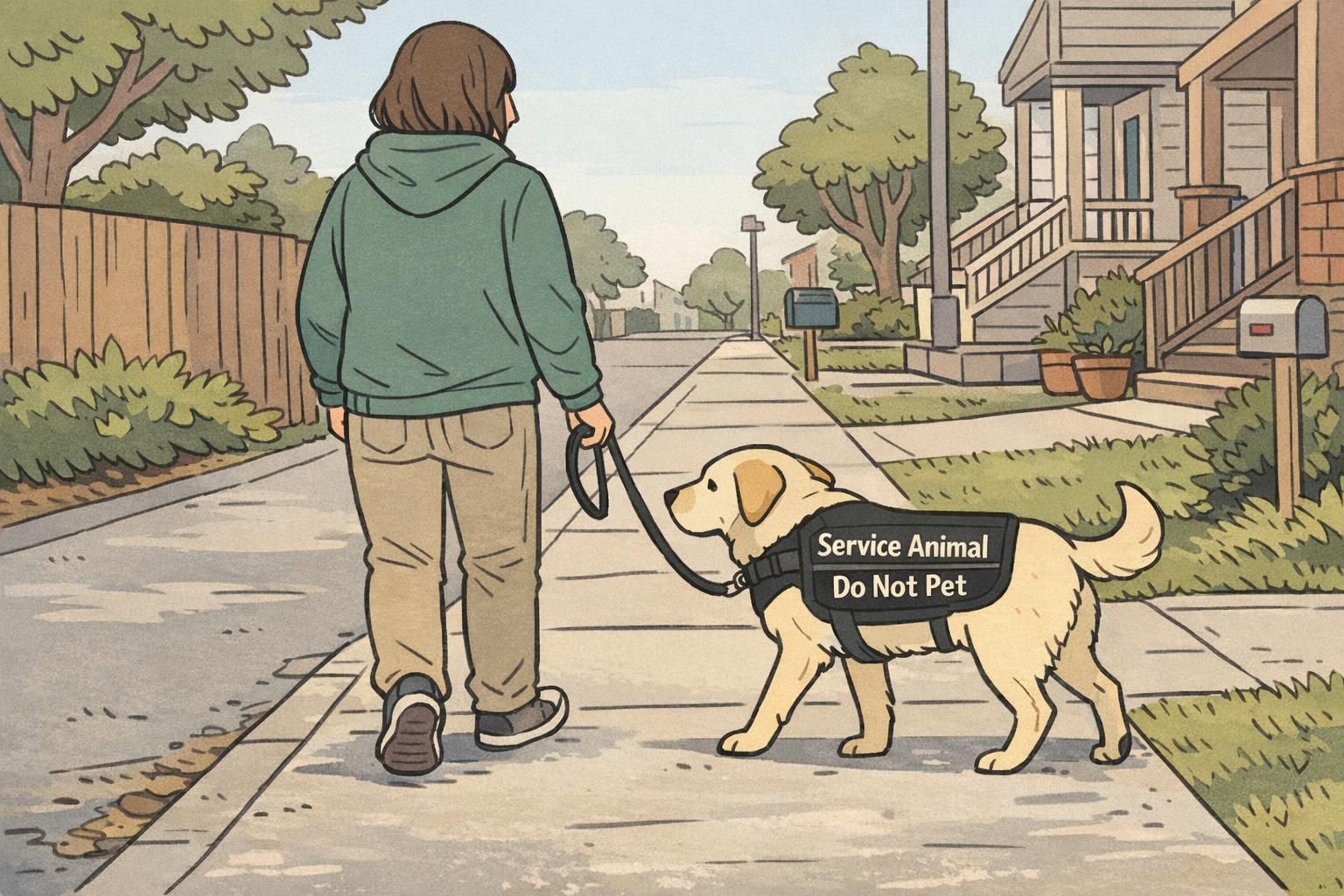
What makes a service dog truly impactful is task work—trained behaviors that directly help with a handler’s disability-related needs. The specific tasks vary widely by person, but handlers often describe the same theme: support that shows up at the exact moment it’s needed, without the handler having to ask someone else for help.
Mobility-related tasks may include retrieving dropped items, bringing a phone, opening doors, or helping with light switches. Psychiatric and neurodivergence-related support may include interrupting spiraling behaviors, alerting to rising panic, waking the handler from nightmares, or providing deep pressure therapy (DPT) to help the body settle. Safety tasks can include guiding to a safe location, finding a familiar person, or creating a physical boundary when the handler feels vulnerable.
No. Task work is individualized. Two handlers can have the same diagnosis and still rely on different tasks based on their lifestyle, environment, and what helps them function best.
Yes. Many teams rely on at-home tasks (like retrieval and routine support) and public-access tasks (like guiding to an exit, maintaining space, and interrupting symptoms in real time).
Handlers often talk about tasks first, but the emotional impact can be just as real. A service dog can be a steady presence during moments that would otherwise feel isolating—especially for people whose disability affects confidence, social interaction, or the ability to leave home.
Many teams describe their dog as both a working partner and a grounding anchor. The dog’s steady routine can encourage the handler to keep a schedule, eat regularly, go outside, and follow through on responsibilities. Over time, that consistency can make it easier to participate in work, school, and community life.
“ "It’s not that my service dog replaces people. It’s that I feel like I’m not facing everything by myself." – Service dog handler”
Even highly trained service dogs have off moments. They can be distracted, tired, or less focused when routines change or environments become intense. That doesn’t mean the dog is “bad” at their job—it means they’re a living being with limits, just like the person they support.
Handlers frequently emphasize that successful teams protect the dog’s wellbeing. That can mean building in water breaks, avoiding extreme heat or cold, planning decompression time after busy outings, and keeping expectations realistic. Ongoing practice matters, too: task skills and public manners stay strong when they’re refreshed regularly rather than only used during high-stress moments.
In lived experience, a major “behind the scenes” reality is the 24/7 commitment: feeding, exercise, bathroom breaks, grooming, vet care, training reinforcement, and downtime. Many handlers stress that the dog needs time to be a dog—play, rest, and simply exist without working. This balanced approach supports a healthier, more consistent partner over the long term, as described by experienced handlers and trainers in real-world reflections like this source.
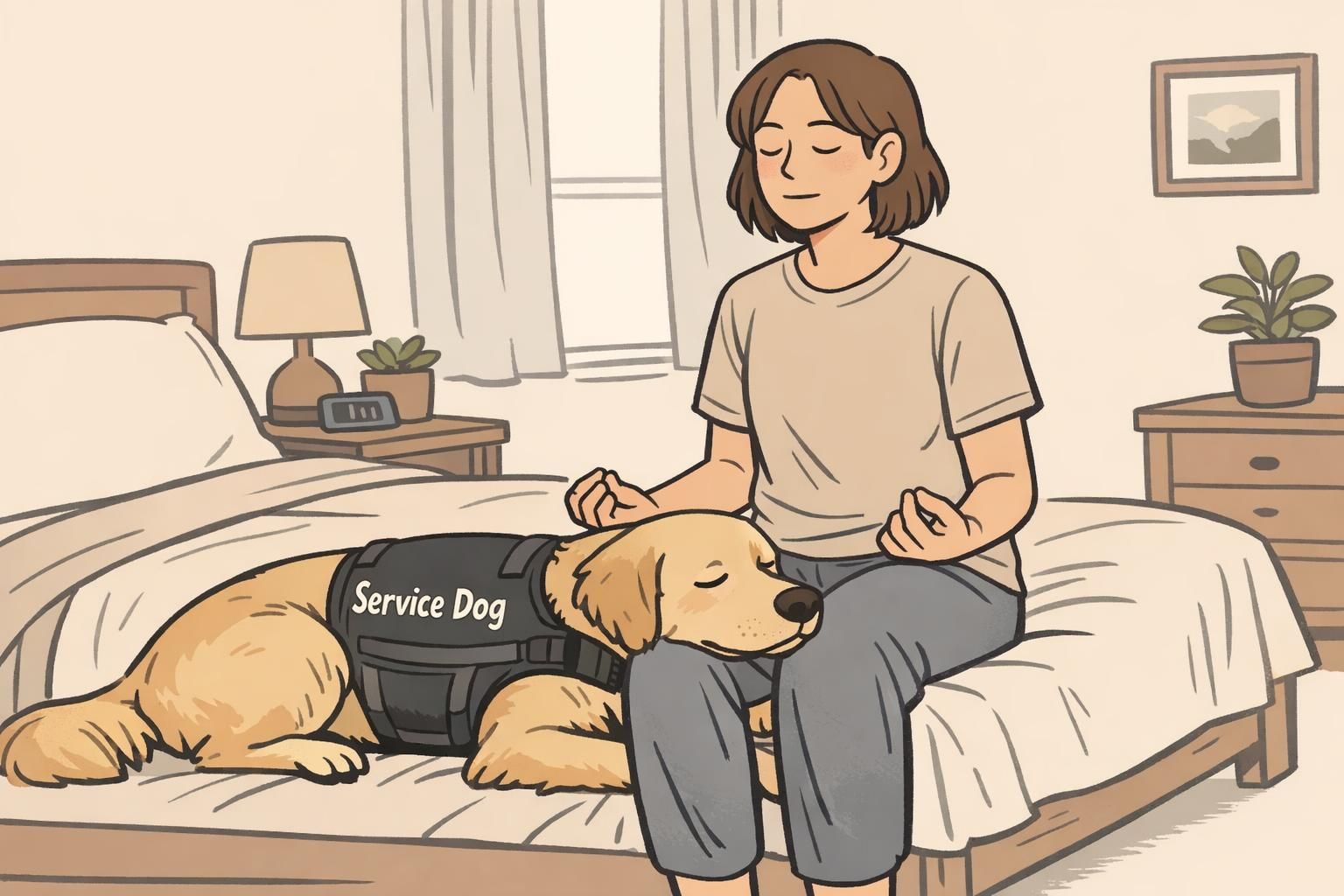
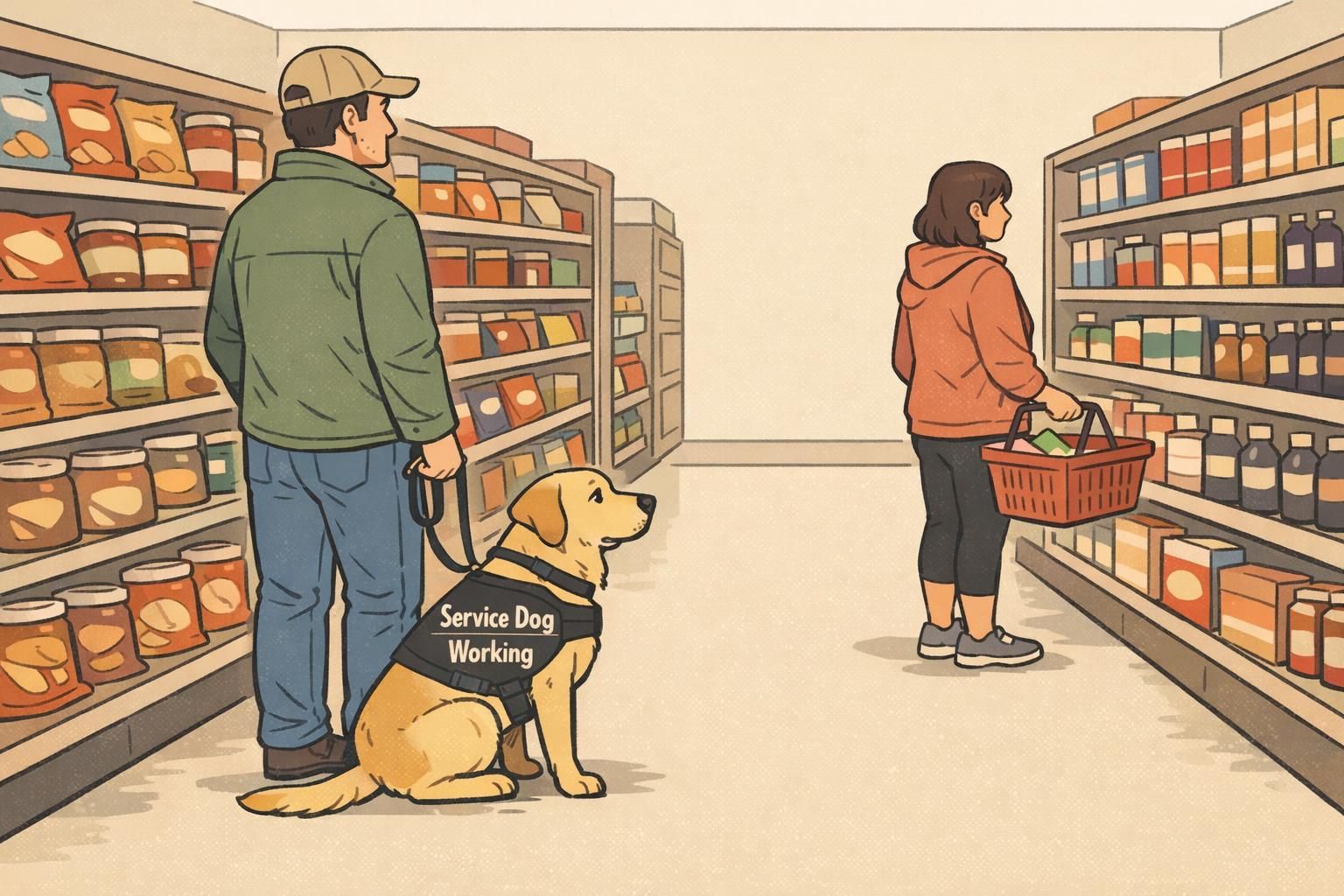
Public access is where many teams feel both the benefits and the friction. Handlers often report the same types of interruptions: prolonged staring, personal questions, someone trying to take a photo, or a stranger reaching out to pet the dog mid-task.
These moments can be more than “annoying.” If a dog is distracted at the wrong time, the handler can lose critical support. That’s why many handlers develop simple, consistent scripts that protect boundaries without escalating the situation.
Many handlers prioritize safety and de-escalation: create distance, reposition your dog, and involve staff or security if needed. A simple repeated phrase (“Please give us space—my dog is working.”) can be effective.
Yes. Friendly intentions can still interrupt task work. Saying no is a normal, responsible part of handling a service dog in public.
Service dog access rules and expectations can vary depending on your location and the setting. In everyday life, many handlers find that calm, practical communication prevents confusion before it becomes conflict—especially in busy places where staff are making quick decisions.
One simple tool many teams like to carry is a concise information card. It can reduce repeated explanations, keep conversations professional, and help a handler communicate clearly even during stressful moments. If you want an easy, ready-to-share option, consider ADA law handout cards for quick, respectful explanations.
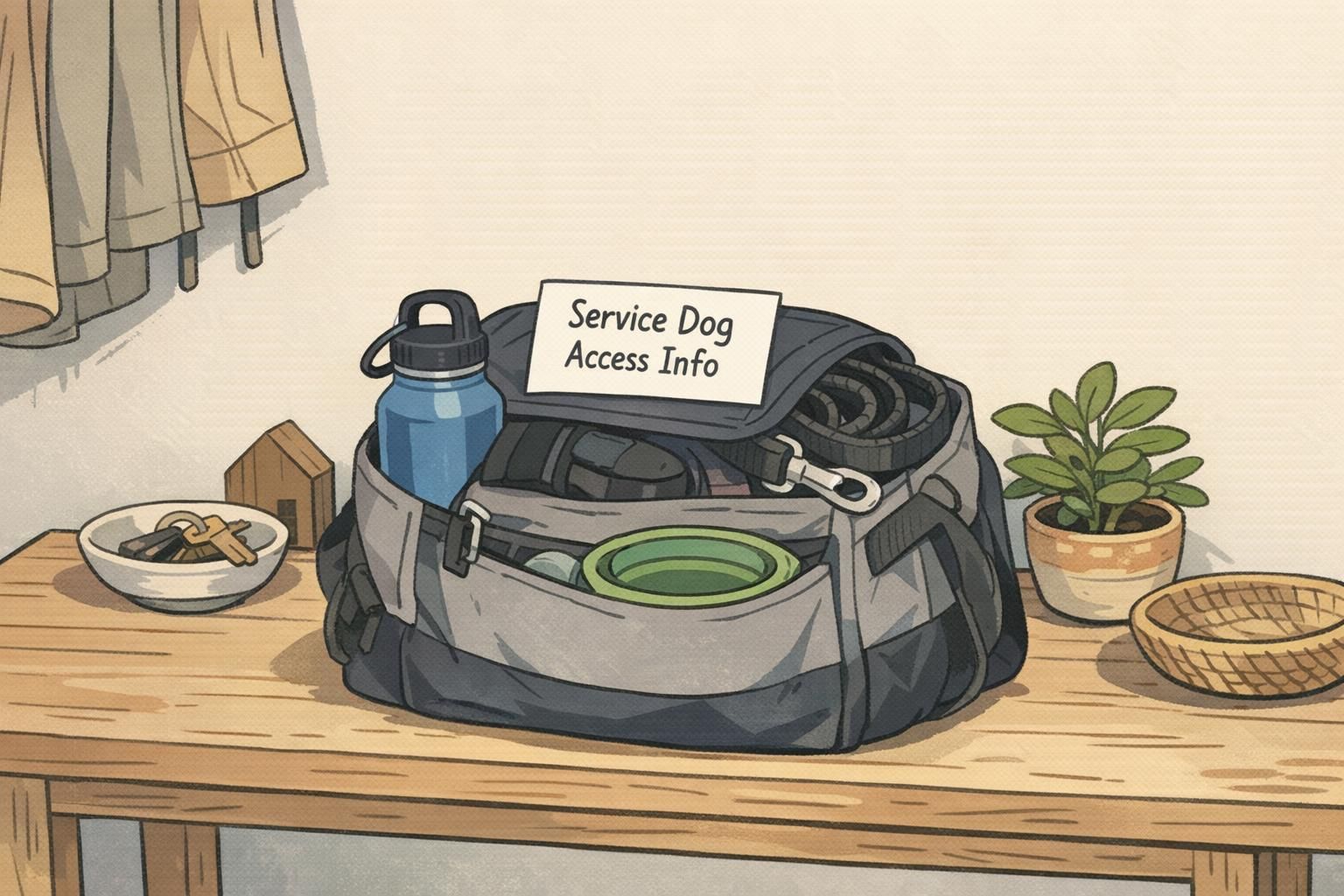
Many handlers will tell you the “secret” to a smooth day isn’t perfection—it’s routine. Consistent care helps a service dog feel secure, and short training refreshers keep skills sharp without turning life into a nonstop drill.
A strong routine often includes predictable feeding and potty schedules, regular grooming, and quick check-ins throughout the day to spot stress signals early (like excessive yawning, lip licking, trembling, scanning, or refusing treats). When a handler notices signs of overload, they may shorten the outing, find a quiet corner, or give the dog a break—small choices that protect long-term reliability.
In real life, many handlers choose to keep clear, consistent identification to make everyday interactions smoother—especially in situations like housing conversations, travel planning, or places where staff may not understand service dog etiquette. Having a consistent ID format can also help a handler feel more organized and confident when answering routine questions.
Some teams also prefer a digital profile they can reference quickly, keeping key details in one place for their own records and peace of mind. While not always required, these tools are often used as practical, professional ways to reduce confusion and keep the focus on a calm, respectful interaction.
If you’d like an all-in-one option designed for everyday identification and confidence, consider a starter registration package for everyday identification.
Many people find it reduces back-and-forth in day-to-day situations. It can help communication feel more straightforward and professional, particularly when someone is unfamiliar with service dog teams.
Yes. Many handlers use clear identification to minimize confusion and avoid having to repeat the same explanations, especially when they’re managing symptoms or stress.
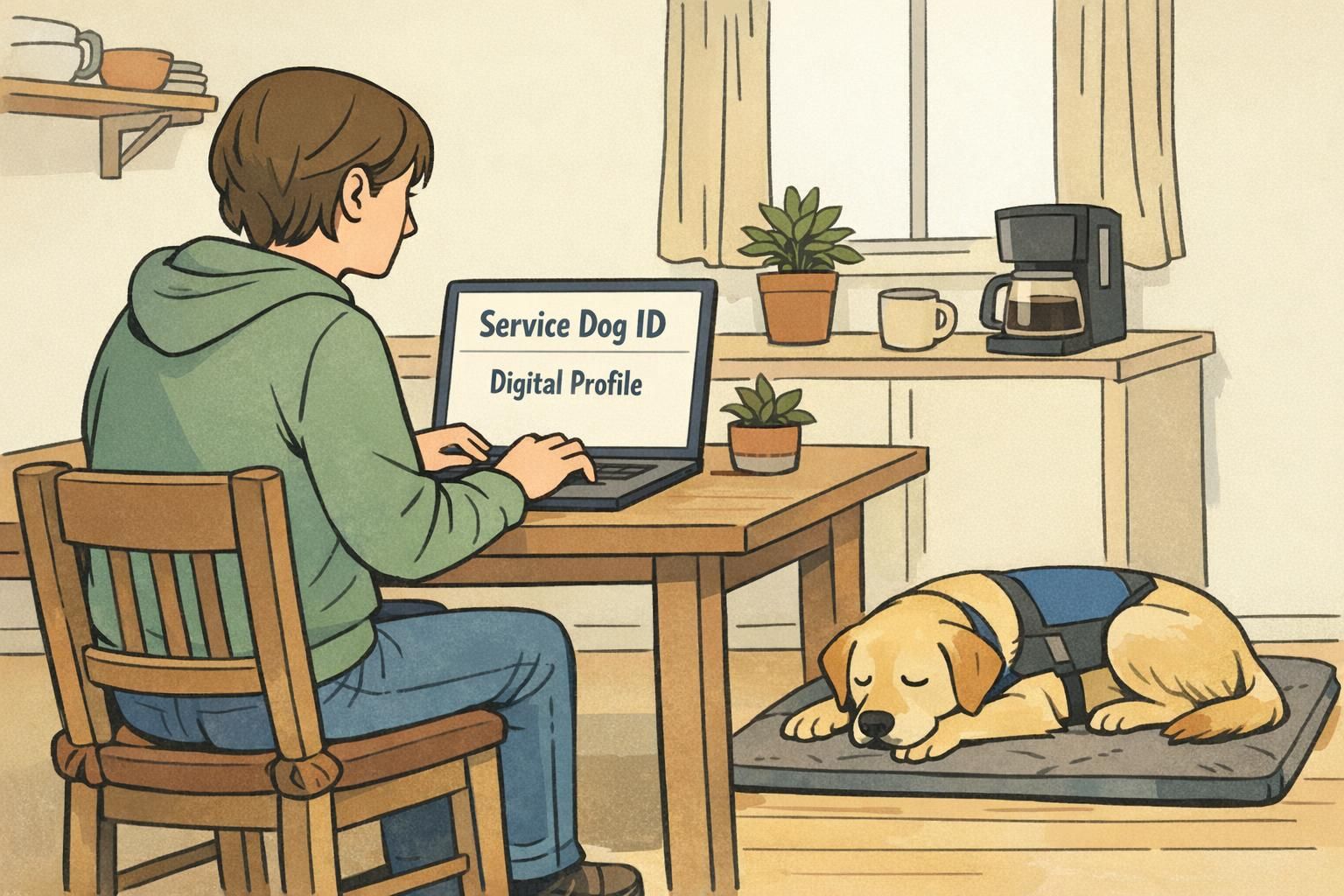
Travel can be one of the most empowering parts of having a service dog—and one of the most demanding. New smells, different floor textures, busy terminals, long waits, and tight schedules can test any team. Handlers often say the difference between “stressful” and “smooth” comes down to preparation.
Before a trip, many handlers map out potty breaks, locate relief areas, plan rest time, and pack gear in a way that’s easy to access quickly. Some teams also practice in busy environments ahead of time—short visits that build confidence without overwhelming the dog.
For a deeper guide to planning and what to expect, see traveling with a service dog.
If you want a travel-ready identification bundle designed to support clearer communication on the go, consider a travel-focused registration package for on-the-go convenience.
Real service dog life is built on small, steady moments: the dog choosing focus in a noisy store, the handler noticing stress signals early, the quiet teamwork that helps someone make it through a day that once felt impossible.
If more people understood a few basics, public outings would be easier for everyone. Most handlers aren’t looking for attention—they’re trying to move through the world safely and independently with a working partner.
“ "The best kind of support from the public is simple: give us space, let my dog work, and treat us like anyone else running errands." – Service dog handler”
Your trusted source for service animal registration. Get professional ID cards, digital profiles, and smart NFC tags to keep your service animal safe and recognized.
© National Animal Registry — All rights reserved.