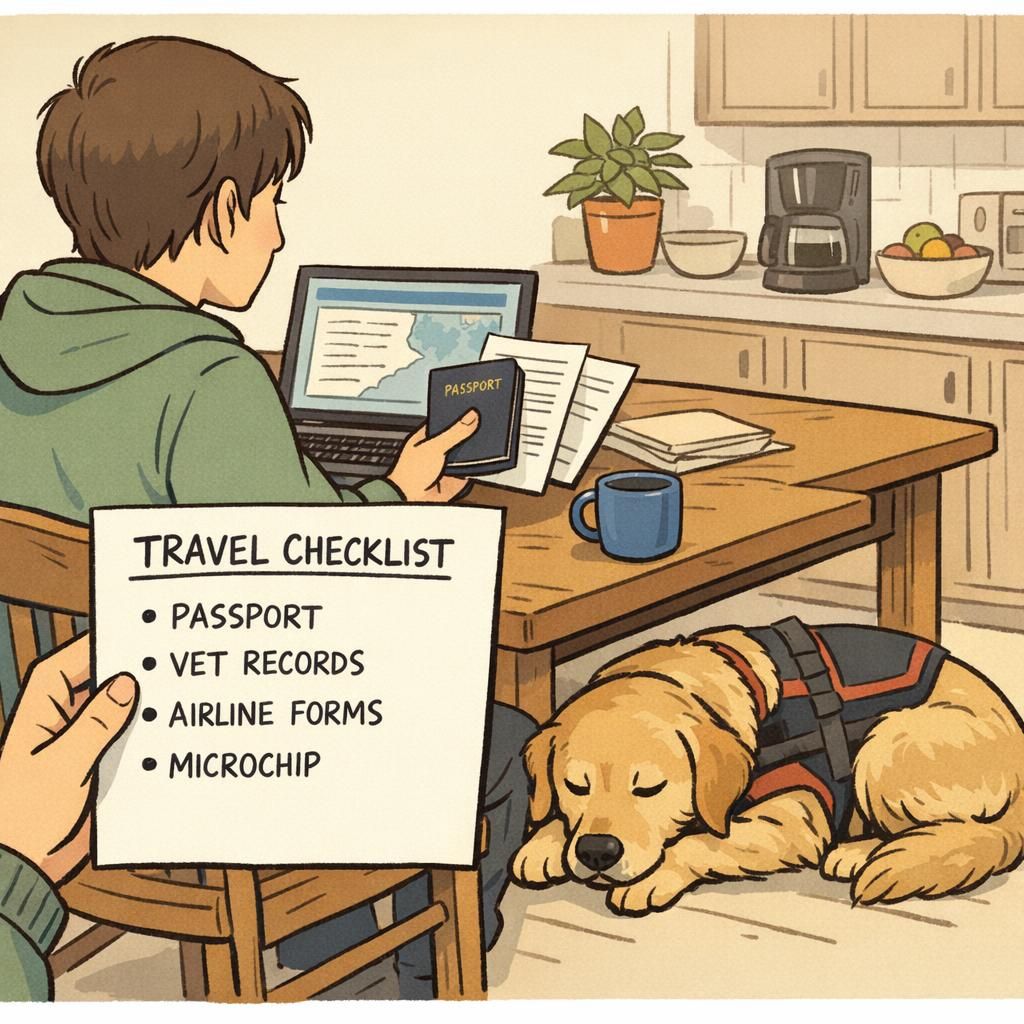
Domestic travel with a service dog can feel predictable once you’ve done it a few times: you know the airport flow, you understand what your airline expects, and you generally know what access looks like on the ground. International travel changes that equation because you’re not just traveling—you’re importing an animal into another country (and later bringing that animal back home).
Crossing borders adds extra layers of rules and logistics: government entry requirements, airline documentation tied to both airline policy and destination rules, and real-world access that may look very different from what you’re used to in the U.S. Even highly prepared teams can run into surprises—an unexpected document review at check-in, a transit airport that handles animals differently, or a hotel that’s unfamiliar with service dog norms.
One of the most common international travel pitfalls is assuming the rules you know at home will follow you everywhere. In reality, different parts of your trip may be governed by different authorities.
If you are flying to, from, or within the United States, U.S. Department of Transportation (DOT) service animal rules are typically the framework airlines use for the flight portion of the trip. But once you land, public access in your destination—hotels, restaurants, local transportation, and attractions—usually follows local laws and local business policies.
If international travel has a “make-or-break” category, it’s entry requirements. Countries set their own import rules, and those rules can be strict about timelines, document formats, and what happens if you arrive without compliant paperwork.
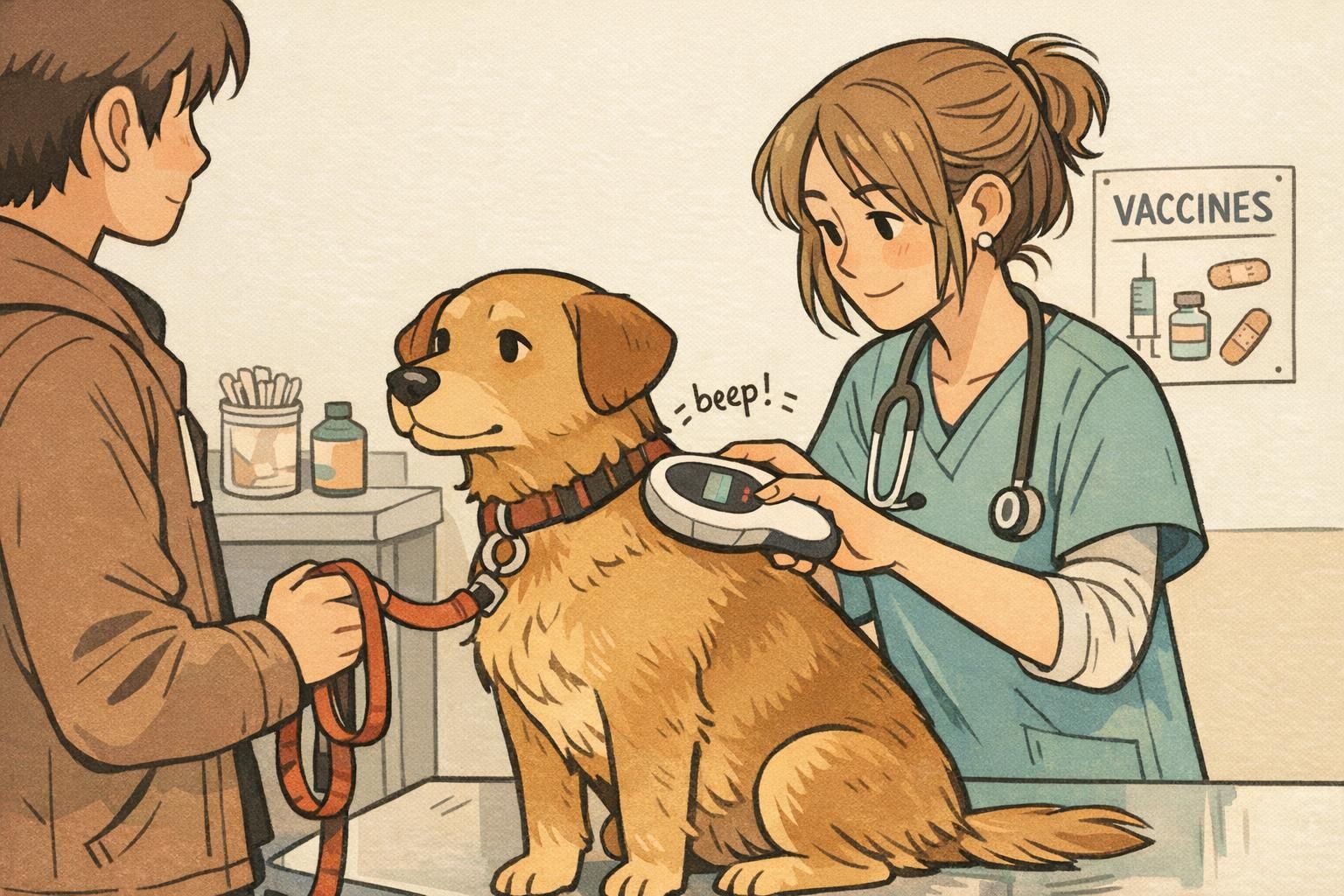
Many destinations require an ISO-compatible microchip, rabies vaccination that meets specific timing rules, parasite treatments within a defined window, and a health certificate issued close to departure. Some countries may also require a government endorsement step or additional testing, and a few destinations can impose quarantine if requirements aren’t met.
The key is starting early and keeping everything organized for inspection at multiple points: when you check in, when you transit, and when you arrive. International planning for pets and service animals also commonly includes country-specific preparation for vaccines, parasite prevention, and documentation, as well as other health and logistical considerations for traveling animals (source).
It’s easy to focus on getting into your destination country and forget that coming home can have its own requirements—even for service dogs. A smart international plan treats your return trip as a separate phase with its own checklist.
Before you fly home, confirm what you’ll need for U.S. re-entry and whether any requirements change based on where your dog has been or whether you have transit stops. If your itinerary changes mid-trip, re-check your plan. A quick reroute through a different country can affect what paperwork you’re asked to show or what questions you’ll need to answer on arrival.
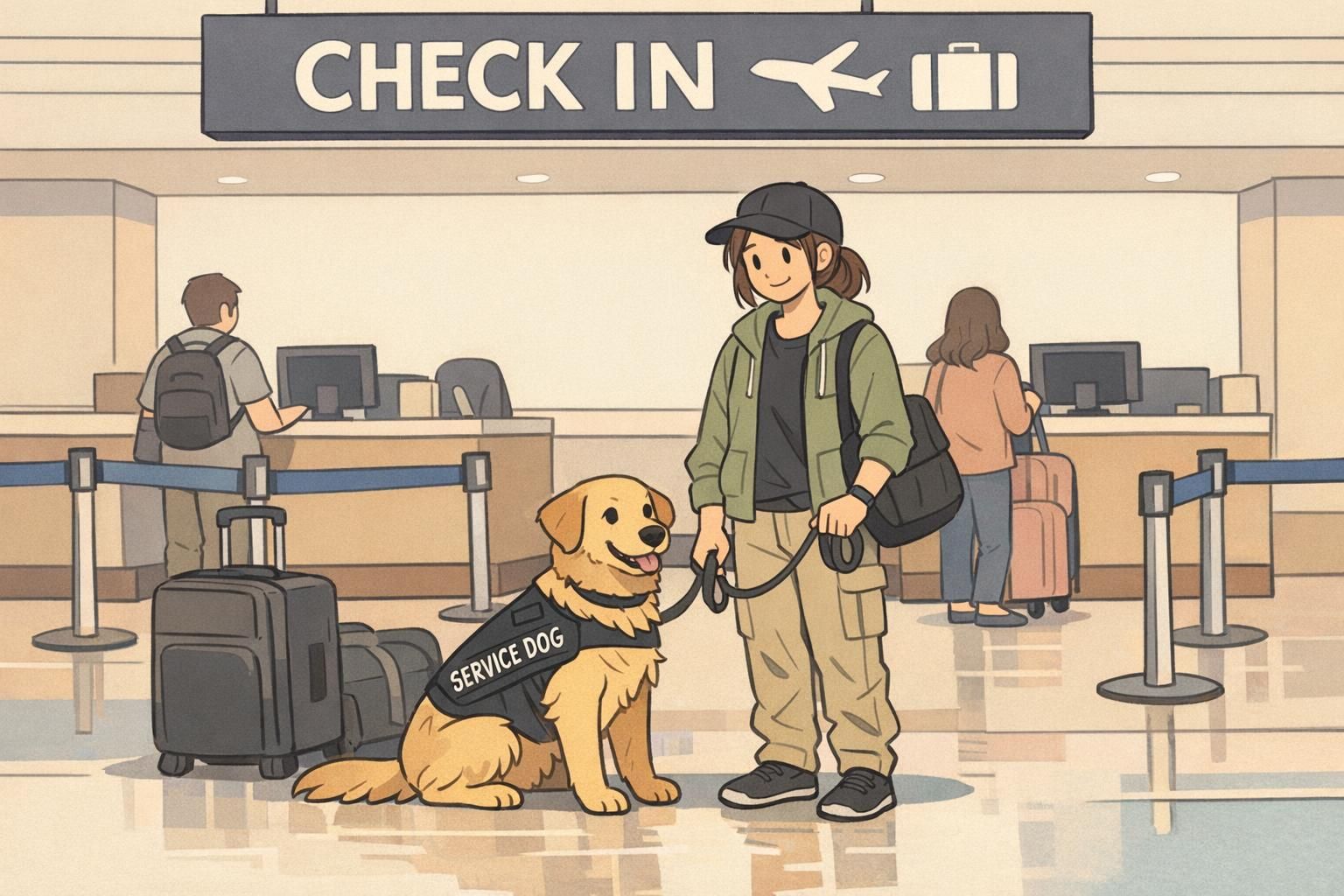
Airlines want a safe, predictable cabin environment. For service dog teams, that usually translates into clear communication, timely submission of forms, and a dog that remains under control in tight spaces—even when the airport is crowded or a connection is rushed.
On U.S.-connected itineraries, it’s common to see airlines ask for DOT service animal forms and to confirm behavior standards. For international destinations, airlines may also ask for documentation tied to foreign government entry requirements (like health certificates or vaccination records) because they can be held responsible for transporting an animal that doesn’t meet entry rules.
“ "The best travel days are the ones where I can hand over a clean set of documents without digging through my phone or bags. It keeps things calm—for me and for my dog." – Frequent international service dog handler”
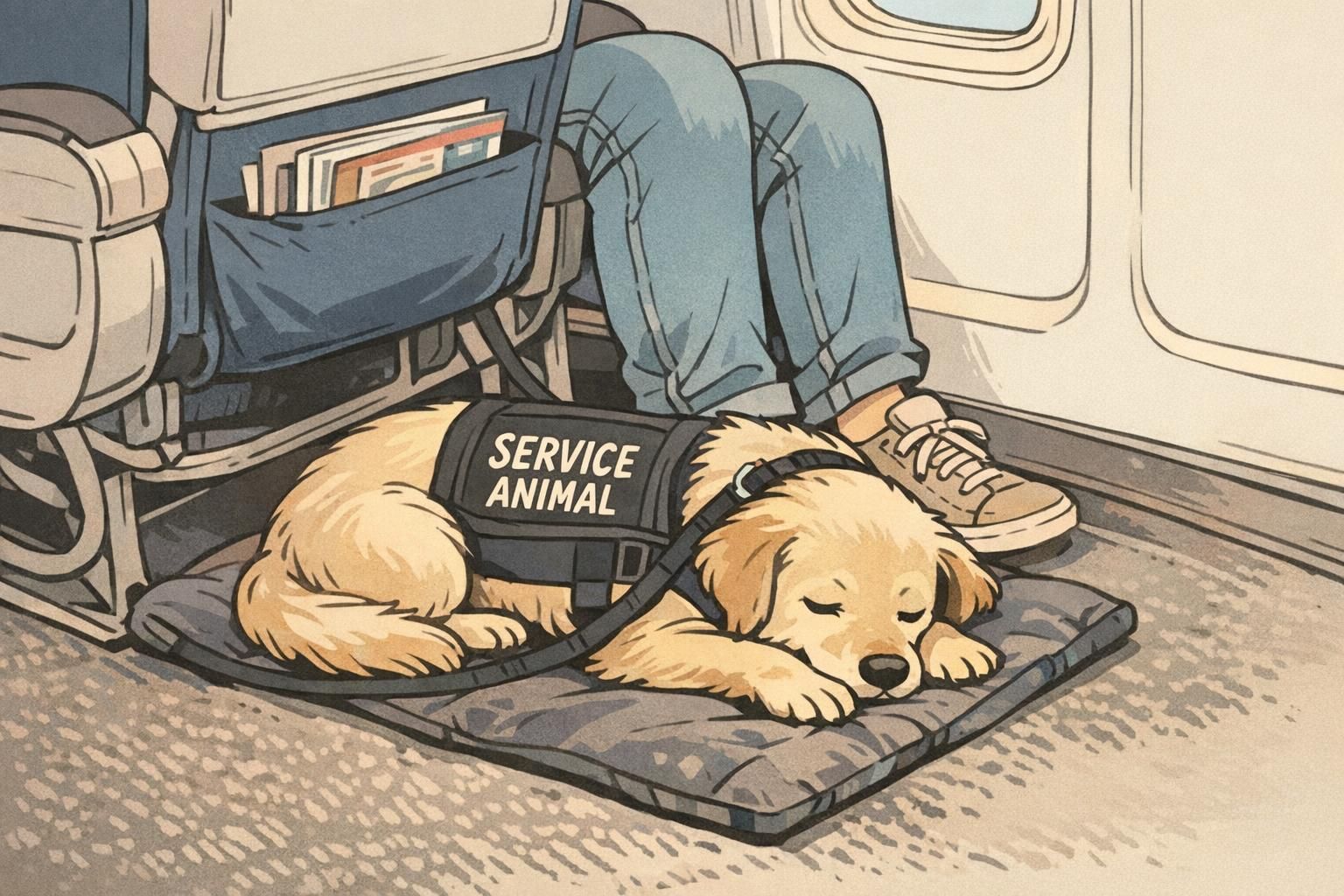
Long international itineraries can test even experienced teams. Eight-hour (or longer) flight segments, long immigration lines, and unfamiliar airports can stretch your dog’s routine. The goal is not perfection—it’s having a workable plan that keeps your dog comfortable, clean, and able to remain calm and non-disruptive.
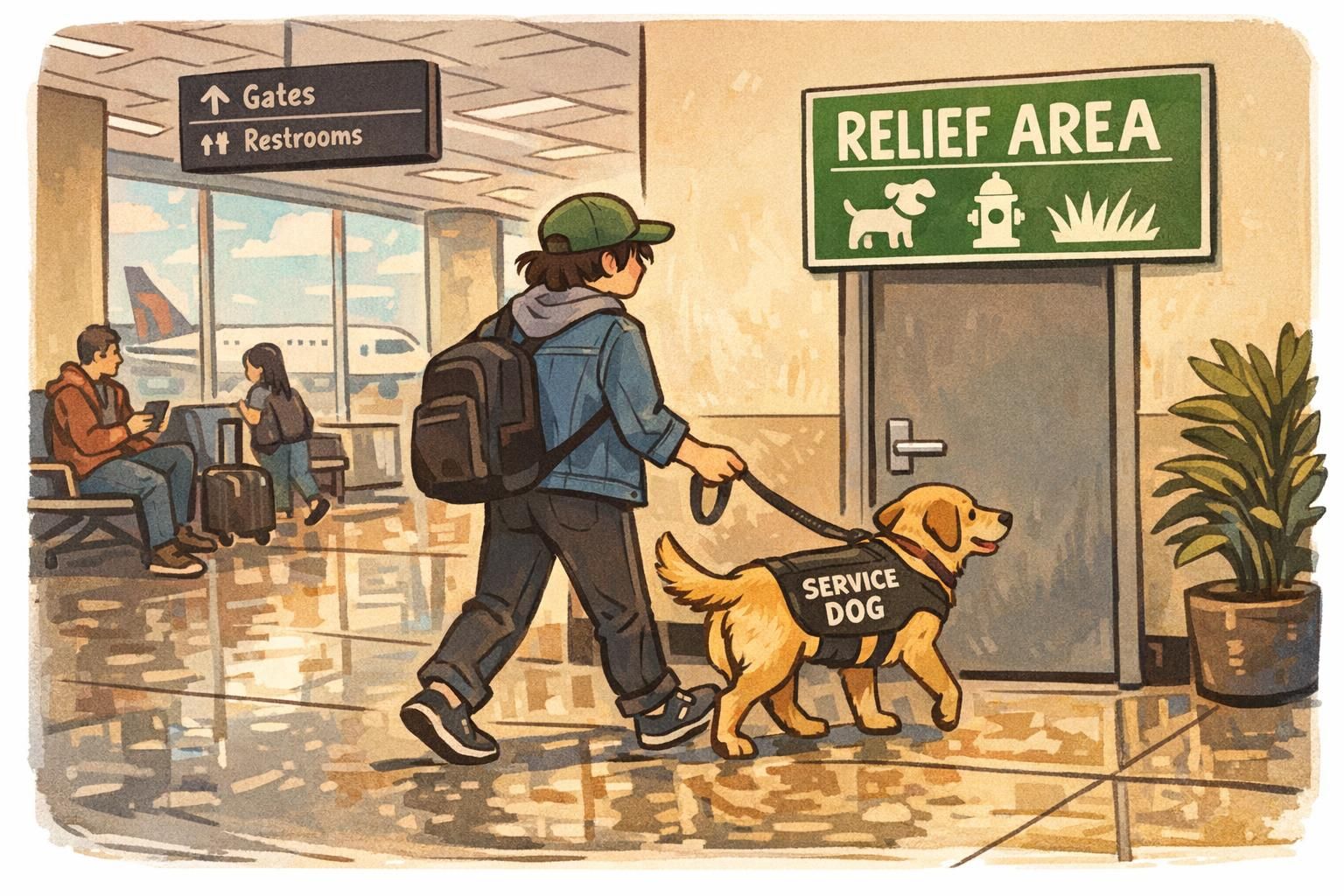
Relief logistics are a common stress point. Some airports have well-marked indoor relief rooms; others have limited options that are far from your gate or only outdoors (which may be hard during tight connections). Layovers are often your best chance to reset: a calm walk to a relief area, a small drink, and a quiet “settle” before the next segment.
Even in places where service dog protections exist, you may encounter misunderstandings, staff uncertainty, or inconsistent enforcement. That doesn’t mean your trip is doomed—it means your communication approach matters.
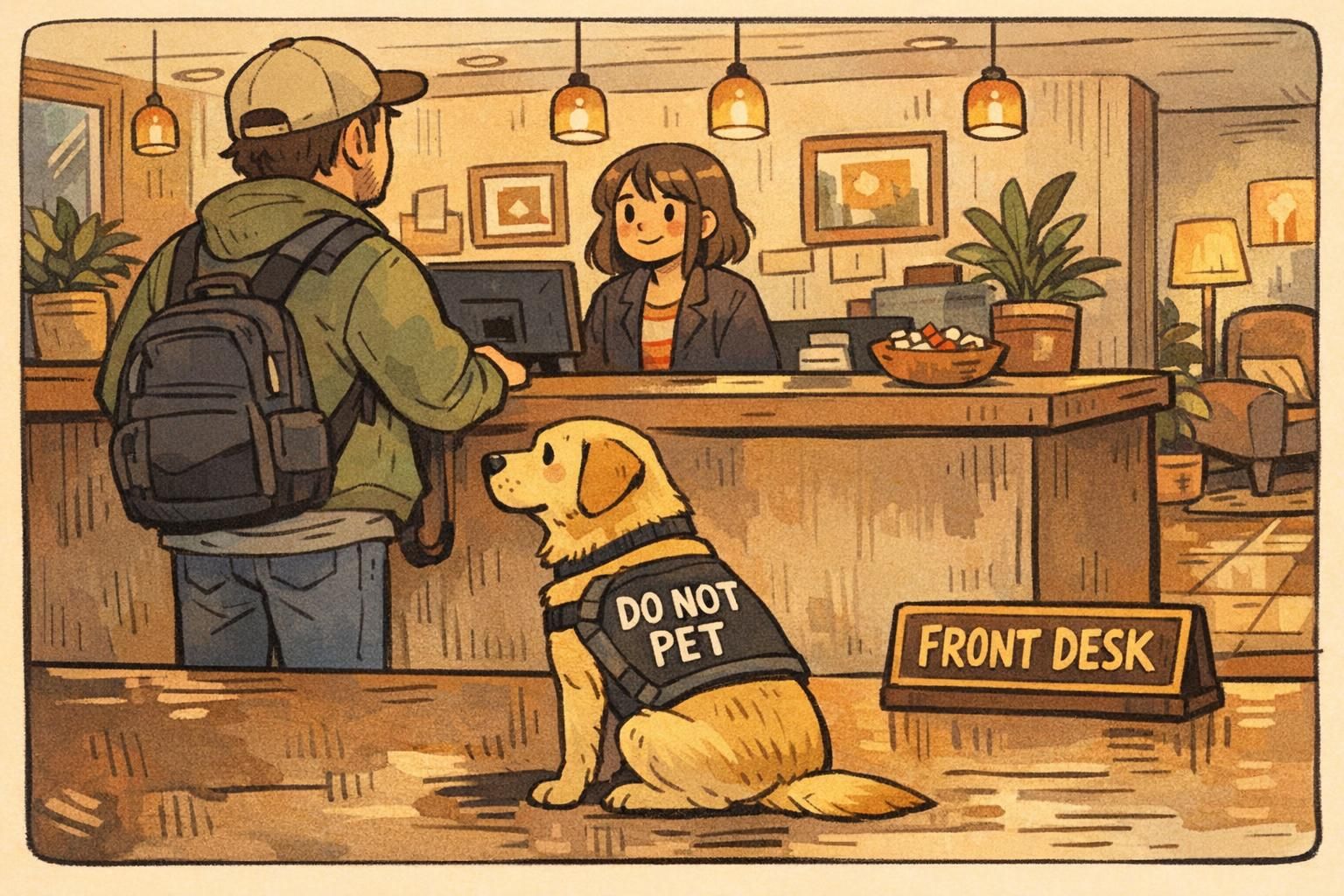
The most effective strategy is calm, practical, and respectful: assume confusion before conflict. A simple explanation of your dog’s role, paired with polite boundary-setting, can resolve many situations quickly. In busy environments like hotel check-in or taxi lines, clear identification can also reduce questions and make interactions smoother.
“ "When I keep my explanation short and professional, most people relax. They just want to know what to expect and that my dog will behave appropriately." – Service dog handler”
Cruises and multi-country trips can look convenient on paper, but they often multiply animal-entry complexity. With a cruise, you’re dealing with ship policies (often tied to foreign-flag rules), plus port-by-port requirements that can change the moment you step onto land.
A major pitfall is assuming that if your dog is allowed on the ship, your dog will automatically be allowed off the ship at every port. Some ports may have entry restrictions, limited inspection hours, or documentation requirements that don’t align with your schedule. In some cases, you may need to plan for days when you stay onboard or adjust excursions to dog-friendly options.
International travel is demanding. Your dog may face longer days, more time on hard surfaces, and more exposure to crowds and unfamiliar environments. Planning for health and welfare isn’t just “nice to have”—it supports good working behavior and helps your dog stay comfortable and confident.
Before you go, talk with your veterinarian about destination-specific prevention (such as parasites), climate concerns (heat, humidity, cold), and any known regional risks. Also think through practical comfort needs: paw protection for hot pavement, hydration strategies, and a plan for rest and decompression after long travel days.
International trips feel far more manageable when you run the same planning framework every time. The goal is to reduce last-minute scrambling and make it easy to advocate for your team with calm confidence.
“ "Preparation doesn’t eliminate every surprise, but it dramatically reduces stress. When I’m organized, my dog stays organized too." – International traveler with a service dog”
In real-world travel, speed and clarity matter. Optional tools like clear service dog identification, a digital profile you can pull up quickly, and neatly organized quick-reference materials can reduce confusion—especially in busy airports, hotel lobbies, and transportation queues.
Many handlers like having consistent, travel-ready identification they can use across different environments. It can help staff understand what to expect, reduce repetitive questions, and keep interactions focused on logistics rather than uncertainty.
If you want an all-in-one option designed for travel convenience, consider a travel-ready service dog identification package that keeps key details organized and easy to present when time is tight.
If you’re building your first international plan, it helps to refresh the basics first: packing routines, airport flow, hotel settling strategies, and day-to-day handling habits that keep your dog comfortable and focused.
For a broader overview you can use as a foundation (then layer international requirements on top), read a complete guide to traveling with a service dog.
International travel can bring high-pressure moments: a busy check-in counter, a hotel queue, a taxi line, or an attraction entrance with staff who are unsure what to do. Having a simple, professional explanation ready can keep the conversation calm and efficient.
Many handlers find it helpful to carry a small printed resource they can hand over rather than trying to explain everything verbally while managing luggage and a working dog. If you’d like a ready-to-share option, ADA service dog handout cards can make those quick conversations smoother.
“ "When it’s crowded and noisy, handing someone a simple card can de-escalate the moment. It keeps my focus on my dog and the next step." – Service dog handler”
Your trusted source for service animal registration. Get professional ID cards, digital profiles, and smart NFC tags to keep your service animal safe and recognized.
© National Animal Registry — All rights reserved.