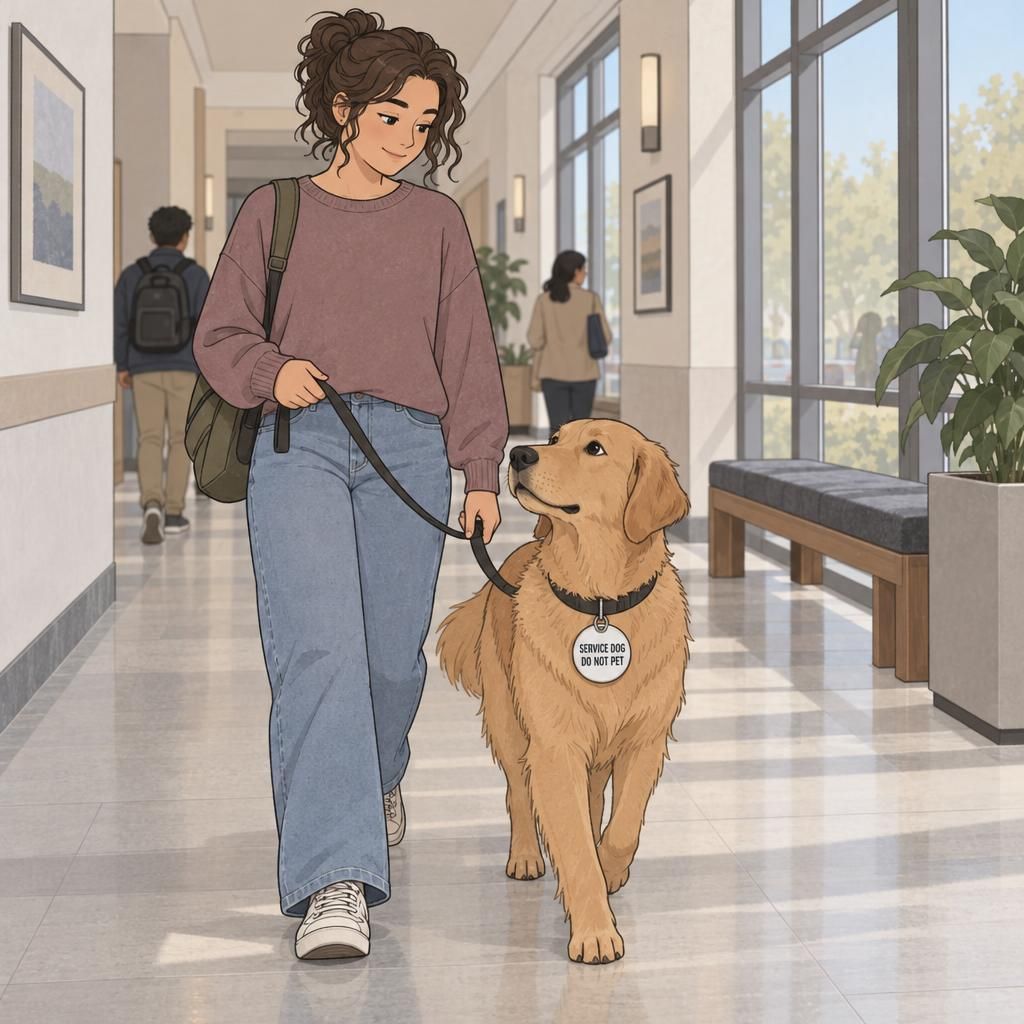
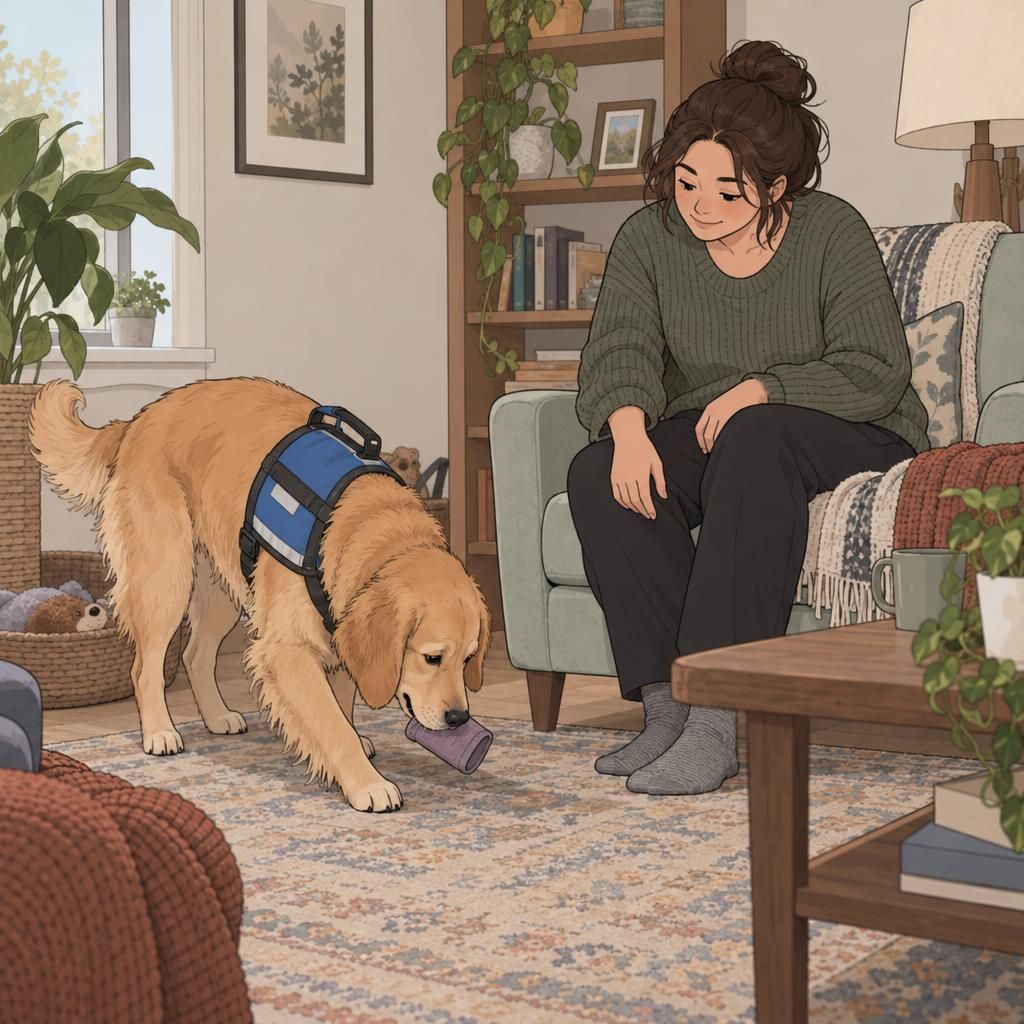
A meaningful service dog story does not have to begin with a dramatic rescue. It might begin with a dropped phone, a doorbell, or an afternoon outing that feels more manageable. These ordinary moments help readers understand what a trained dog does and why that work matters to the person they assist.
The strongest stories keep the handler’s goals and voice at the center. Rather than presenting the dog as a hero who changes everything, describe a partnership that supports particular choices: completing a household task, going somewhere independently, or participating in a favorite activity. Independence, confidence, and safety can look different for every person.
Sharing can also help others move beyond assumptions about disability and service dogs. Readers may better understand why a working dog needs space to focus or why a handler prefers help to be offered rather than assumed. Your story can educate without becoming a full account of your medical history.

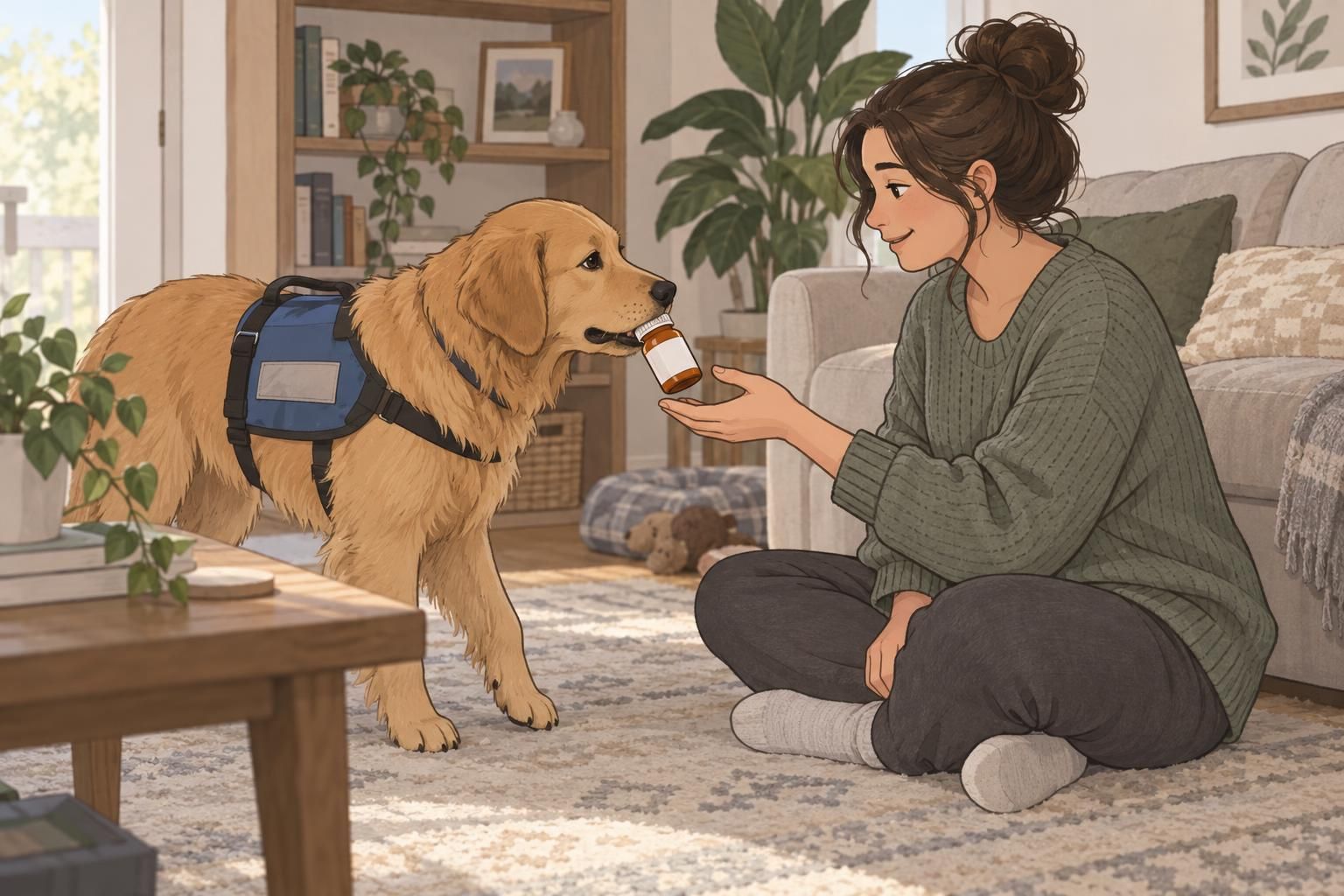
Service dogs perform trained tasks related to their handlers’ disabilities. Each dog’s work is individual, so a useful story explains the specific action rather than relying on a broad phrase such as “my dog helps me.” What does the dog notice, retrieve, or respond to, and how does that assistance fit into the handler’s day?
Choose examples that accurately reflect your own dog’s training. Describe what the dog actually does, not what readers might imagine from a label. For example, “My dog retrieves my phone when I cannot reach it” tells readers more than “My dog keeps me safe.” The concrete version makes the connection between the task and its practical value clear.
Once readers understand the task, explain what it makes more manageable. Retrieving clothing might support a getting-dressed routine. Picking up dropped laundry could make a household chore easier to finish. Bringing a needed item may help someone continue an activity instead of stopping to seek assistance.
The bigger change might involve shopping, traveling, exercising, or spending time with family. Be specific about the connection. In a hypothetical story, a handler might explain that having dropped items retrieved makes preparing for a family outing less disruptive. The meaningful result is not simply that the dog picks things up; it is that the handler can spend more attention on the outing.
Social connection and community participation can also be part of the picture. Research has described service-dog partnerships in relation to leisure activities and social participation, reflecting experiences reported by participants rather than guaranteed outcomes for every handler (source). Your experience might include joining an activity, enjoying time outdoors, or feeling more comfortable participating at your own pace.
There is no need to claim that every outing is easier or every interaction is positive. A story can acknowledge progress alongside limits. That balance makes the account more useful to readers whose own circumstances may be different.

You do not need a polished speech or a dramatic turning point. Start with one meaningful experience and build around five beats. This structure works for a short caption as well as a longer profile.
Draft in your own words before worrying about style. Details such as where you were, what happened, and what you did next usually communicate more than words like “amazing” or “life-changing.” If someone helps write your story, review the final version so it still sounds like you and reflects what you intended to share.
You decide how much personal information belongs in your story. You can explain a task without naming a diagnosis, describing treatment, or discussing a difficult experience. Before publishing, consider whether you would be comfortable with the same details reaching strangers, coworkers, or people outside your intended audience.
Ask permission before posting identifiable photos or personal details about other people. Check backgrounds for addresses, documents, medication labels, and other information you did not mean to share. If someone else is featured in the story, confirm that they are comfortable with both the image and its accompanying description.
An honest account can include the work behind the partnership: feeding, grooming, rest, training practice, planning, and adjustments when routines change. These details do not diminish the benefits. They show that a service dog is a living partner with needs, not a tool that is always available without preparation or care.

Choose a format that suits your energy, communication preferences, and audience. A written profile gives room for reflection. A captioned video can show a task in context. An audio story lets your voice carry the account, while a photo essay can build a narrative from a few everyday moments. Presentations and fundraising pages offer other ways to explain your experience.
Make the format easier for others to use. Add captions to video, offer a transcript for audio, and write meaningful image descriptions. Use clear headings and readable text. You do not need to demonstrate a task repeatedly or recreate a stressful situation to make your story compelling.
For stories involving outings or trips, include preparation when it helps explain the experience. Consult a guide to planning travel with a service dog, and check the requirements for your destination and transportation. Service-animal rules and procedures can vary by location and setting; one person’s experience is not a universal travel checklist.
Some handlers choose registration materials, certificates, or identification to organize information about their service animal and communicate more consistently in everyday situations. These materials can complement the practical preparation described in a story, particularly when a handler wants selected information gathered in one place.
One option is a customizable printed service dog ID with a digital profile. When choosing what to include, use accurate descriptions and consider which details you are comfortable sharing in print or online.
Present identification as a communication tool, not a substitute for understanding the rules that apply in a particular setting. In your story, distinguish the dog’s trained work from the materials you use to organize and share information. That distinction keeps the account clear while showing how different tools support your routine.
A strong ending returns to what matters to you. Perhaps your story is about completing a routine independently, participating in family life, or feeling better prepared for an outing. It might also offer a simple etiquette reminder: give working dogs space and ask before interacting.
You do not have to represent every handler or persuade everyone. Share one accurate experience in a way that feels comfortable and useful. By connecting a specific trained task to its meaning in your life, you can help readers understand service-dog partnerships with greater respect.
Your trusted source for service animal registration. Get professional ID cards, digital profiles, and smart NFC tags to keep your service animal safe and recognized.
© National Animal Registry — All rights reserved.