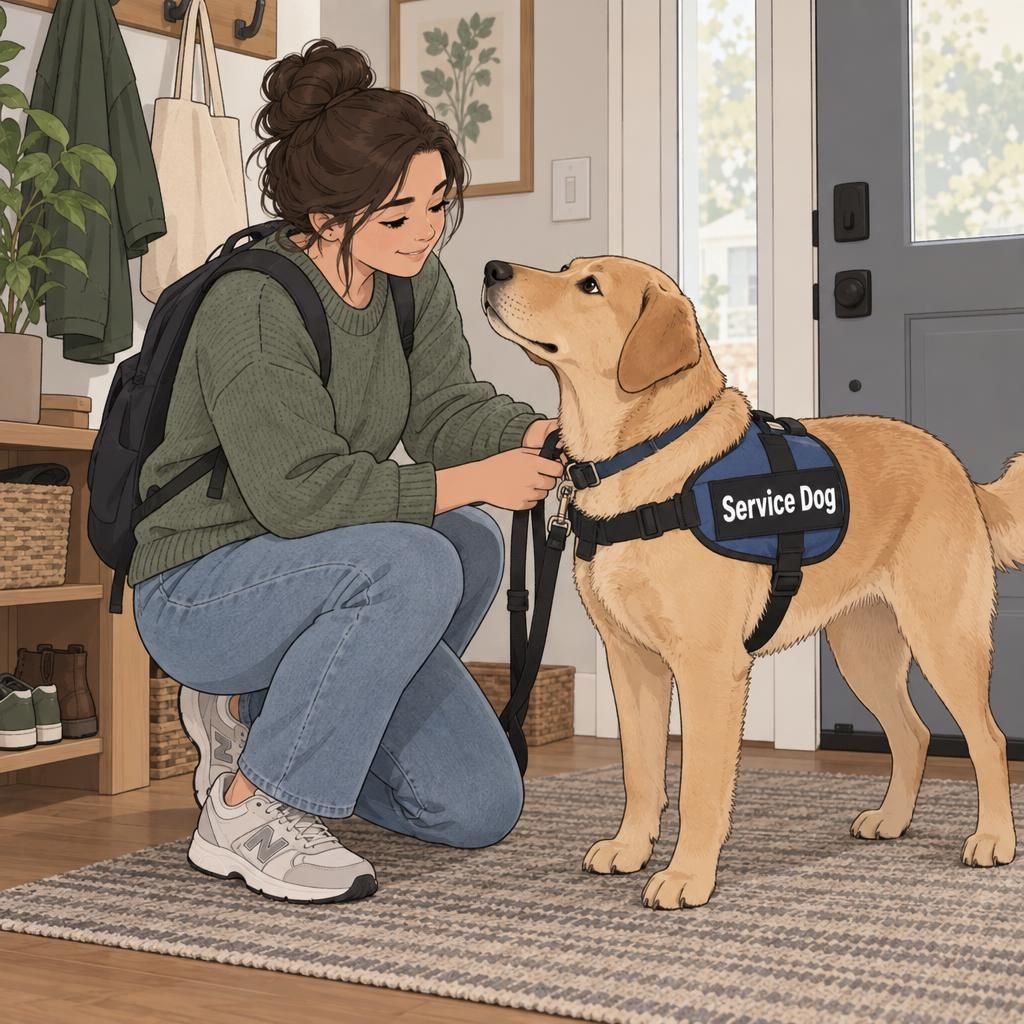
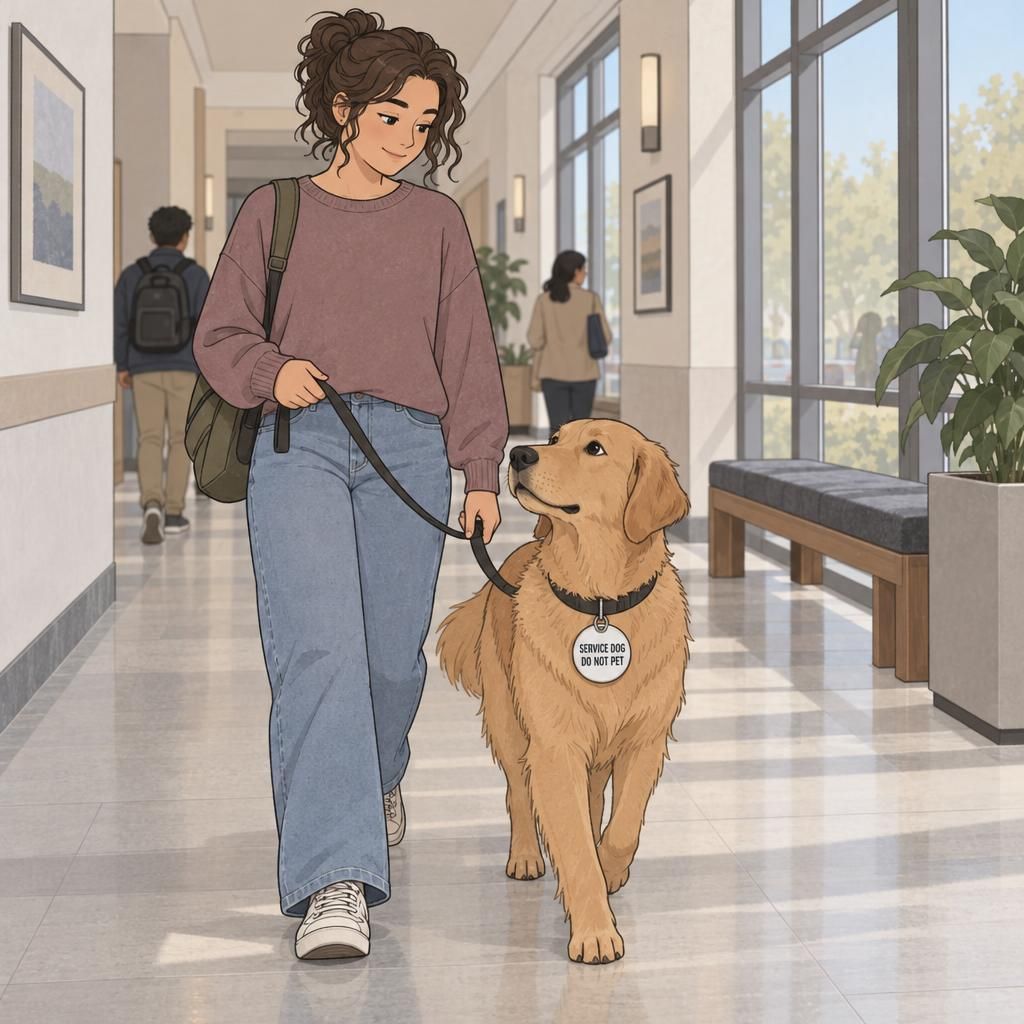
A personalized service dog tag can communicate something important before you need to say a word: your dog is working. Whether you are moving through a public space or going about your daily routine, a clear message can help people understand how to interact respectfully with your team.
Personalization is not about filling every available space. It is about choosing the details that serve you best. Some handlers want a straightforward role label, while others prefer an added reminder not to pet or distract their dog. Your wording should reflect your preferences, rather than an expectation that you must explain yourself to everyone nearby.
Think of the tag as a small communication tool with two possible jobs: identifying your dog’s working role and providing a way to reach you if you become separated. Keeping those purposes in mind makes it easier to choose useful wording without sharing private information.
The front of the tag is a good place for the message you want people to notice first. Short, familiar wording is easier to recognize at a glance than a long explanation, especially when your dog is moving or the tag is partly turned.
Choose one primary role label and, if helpful, one boundary message. You do not need several phrases that repeat the same idea. For example, “SERVICE DOG” above “DO NOT PET” gives readers a clear role and a clear request. If that feels like too much text for a small tag, prioritize readability rather than squeezing everything onto the front.
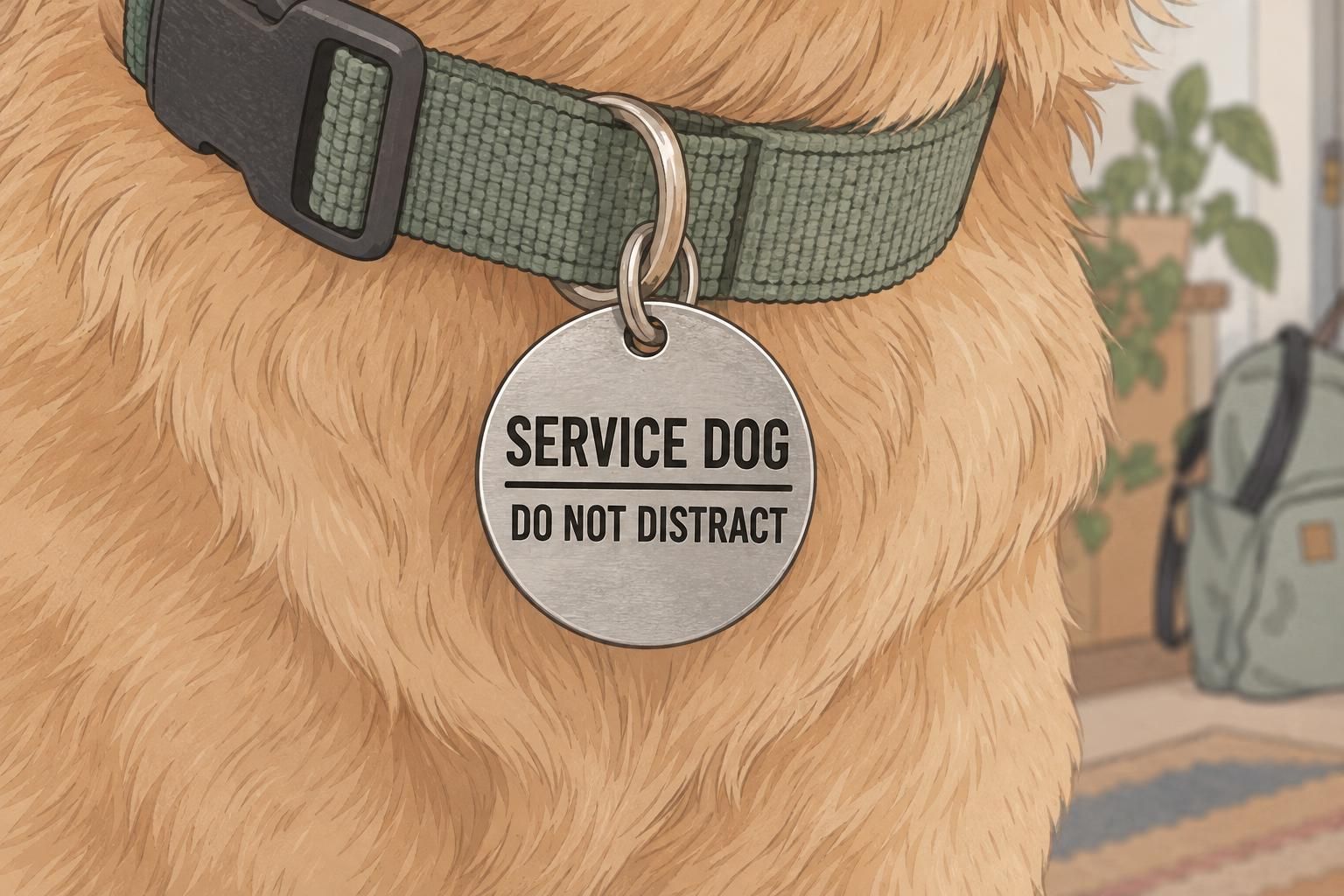
The back of the tag can hold practical contact details while leaving the front easy to read. Consider what someone would need to contact you if your dog were found without you. One current phone number may be enough; a second number can offer another way to reach a trusted person.
Including your dog’s name is a personal choice. Some handlers appreciate the familiar touch, while others prefer to leave it off so strangers have less encouragement to call to the dog or start an interaction. Either approach can work. Before ordering, check each digit carefully and confirm that any backup contact’s number is current.
A tag is visible to people around you, so it is worth treating every engraved detail as public information. You can communicate your dog’s working role and your interaction preferences without displaying a medical diagnosis or explaining your disability.
Leave out medical diagnoses, disability details, your home address, and other sensitive information. A simple role label and a contact number can provide useful guidance without turning the tag into a personal record. If you are deciding whether to add something, ask: does a stranger need this information to respect our space or help reconnect us?
Apply the same careful approach to both sides of the tag. Keeping the front discreet offers little privacy benefit if the back includes details you would rather not share.

A useful message needs a surface that can stand up to everyday wear. Durable materials such as stainless steel are worth considering, along with permanent engraving that keeps the wording clearly defined. Look at the finished lettering as carefully as you look at the tag’s overall appearance.
More room for text does not necessarily mean a better result. Adding a phrase may require every line to become smaller. Review the layout at its actual size, if possible, rather than relying only on an enlarged preview. If the main message is difficult to pick out, remove less important wording or move contact information to the back.
Attach the tag to your dog’s collar or harness rather than directly to a leash. This keeps the identification with the dog when the leash is removed or changed. Check that the attachment ring is properly closed and that the tag sits where its message can be seen.
Make a quick inspection part of your regular equipment routine. Look for a loosening ring, worn attachment points, or lettering that has become difficult to read. A sturdy tag still needs attention over time, and accurate wording matters just as much as its physical condition.
Consistency makes your preferences easier to understand. For example, if the tag says “DO NOT DISTRACT,” use compatible wording on other identification materials rather than a message that invites interaction.

Start with the message you want to communicate, then divide it between the front and back as needed. These sample layouts offer different balances of role identification, boundaries, and contact information. The slashes indicate line breaks or places where you could separate wording between sides.
Replace the placeholders with the details you choose to share. The first layout keeps the message especially brief. The second combines a working-role label with a boundary and contact instruction. The third includes a name, but you can leave that line out if you prefer not to invite personal interaction.
Optional identification resources can complement a tag and help keep information organized. For example, a customizable service dog ID card and digital profile can accompany your everyday identification setup. Keep shared details consistent, and apply the same privacy-minded approach when choosing what to include.
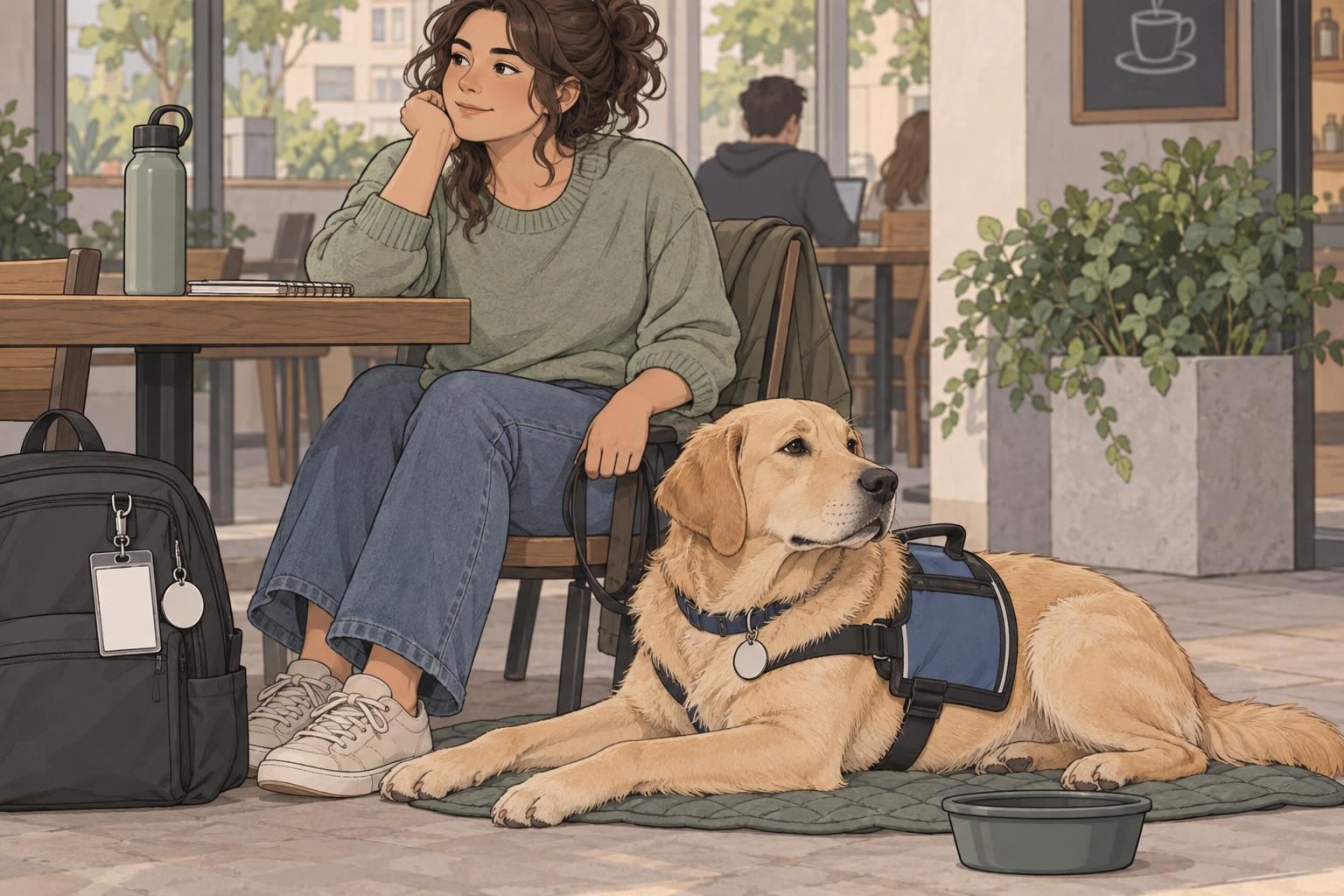
Under the Americans with Disabilities Act, service dogs are not required to wear special tags, vests, or ID cards for public access. These identification materials are optional communication tools, rather than a required part of a service dog’s appearance.
When it is not obvious that a dog is a service animal, businesses generally may ask two questions: whether the dog is required because of a disability, and what work or task the dog has been trained to perform. They may not ask about the person’s disability, require documentation, or demand a demonstration of the task. The ADA’s service animal guidance explains these rules: source.
Optional tags and identification materials can still be useful for everyday communication. Choose wording that supports your preferences, protects your privacy, and remains easy to read. A well-planned tag does not need to tell your whole story—it simply needs to communicate the details you want others to know.
Your trusted source for service animal registration. Get professional ID cards, digital profiles, and smart NFC tags to keep your service animal safe and recognized.
© National Animal Registry — All rights reserved.