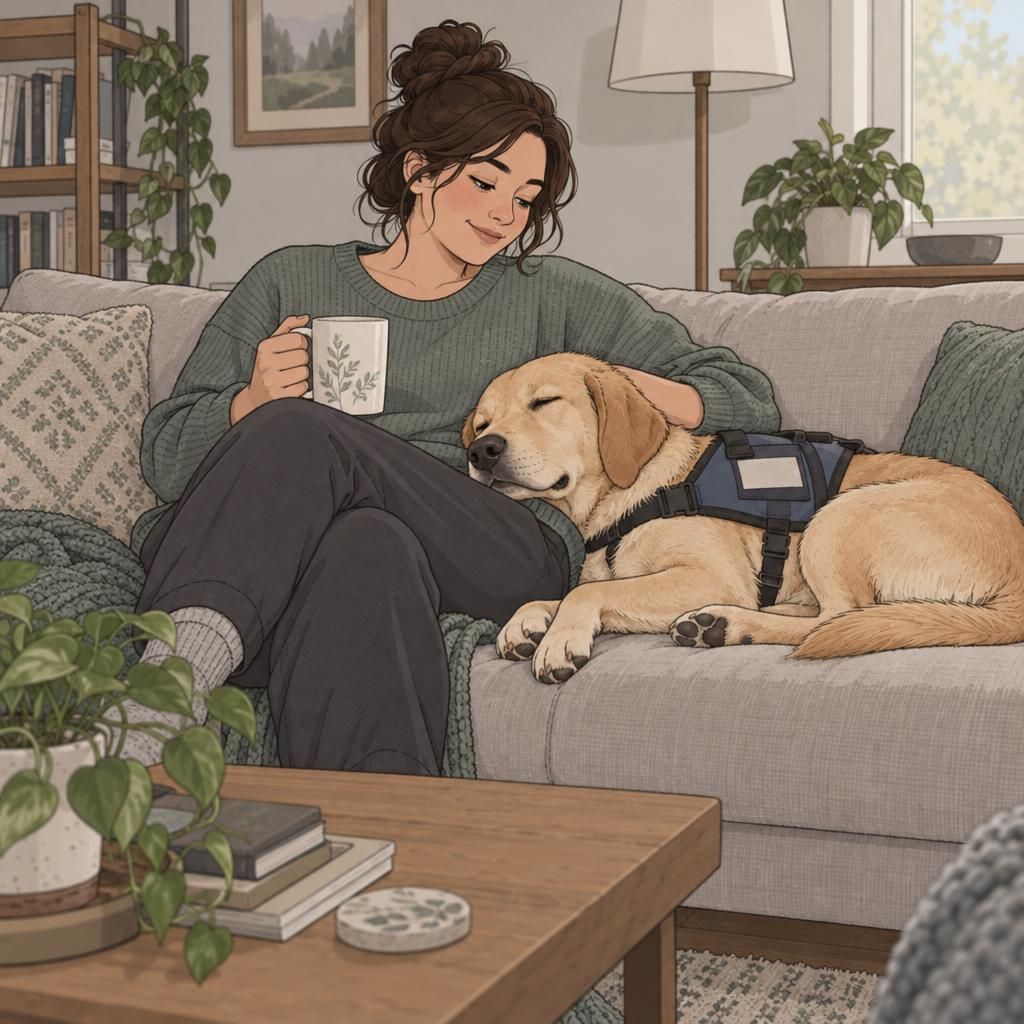
Living with disabling anxiety can make ordinary activities feel unpredictable or overwhelming. For some people, a psychiatric service dog provides practical assistance through tasks tailored to their disability-related needs. That help may make it easier to respond to symptoms, follow daily routines, and participate in activities that matter to them.
An anxiety service dog is a psychiatric service dog trained to perform specific work or tasks for a person with a disability. The important distinction is what the dog does: its assistance goes beyond being a reassuring companion. For example, a dog might learn to interrupt a particular pattern of distress or retrieve a phone when its handler needs support.
Under the Americans with Disabilities Act, a dog whose presence provides comfort alone is generally considered an emotional-support animal rather than a service dog. Emotional support can be valuable, but it differs from trained, disability-related task work. Having anxiety does not automatically mean someone needs a service dog; the right support depends on the person's limitations, preferences, and circumstances.
Anxiety does not look the same for everyone, so useful tasks vary between handlers. One person may need help reconnecting with their surroundings during dissociation, while another benefits from an interruption when panic begins. Task selection should focus on recognizable needs and responses the dog can perform dependably.
Reported psychiatric assistance dog tasks include tactile grounding, nudging to interrupt distress, deep-pressure stimulation, and positioning to help preserve personal space. These examples appear in research describing how handlers use assistance dogs, but they should not be read as a guarantee that every dog can perform every task or that every person will experience the same benefit (source).
A task should suit both the handler and the dog. Retrieving medication, for instance, helps make it accessible; the dog does not decide whether or how much medication someone should take.

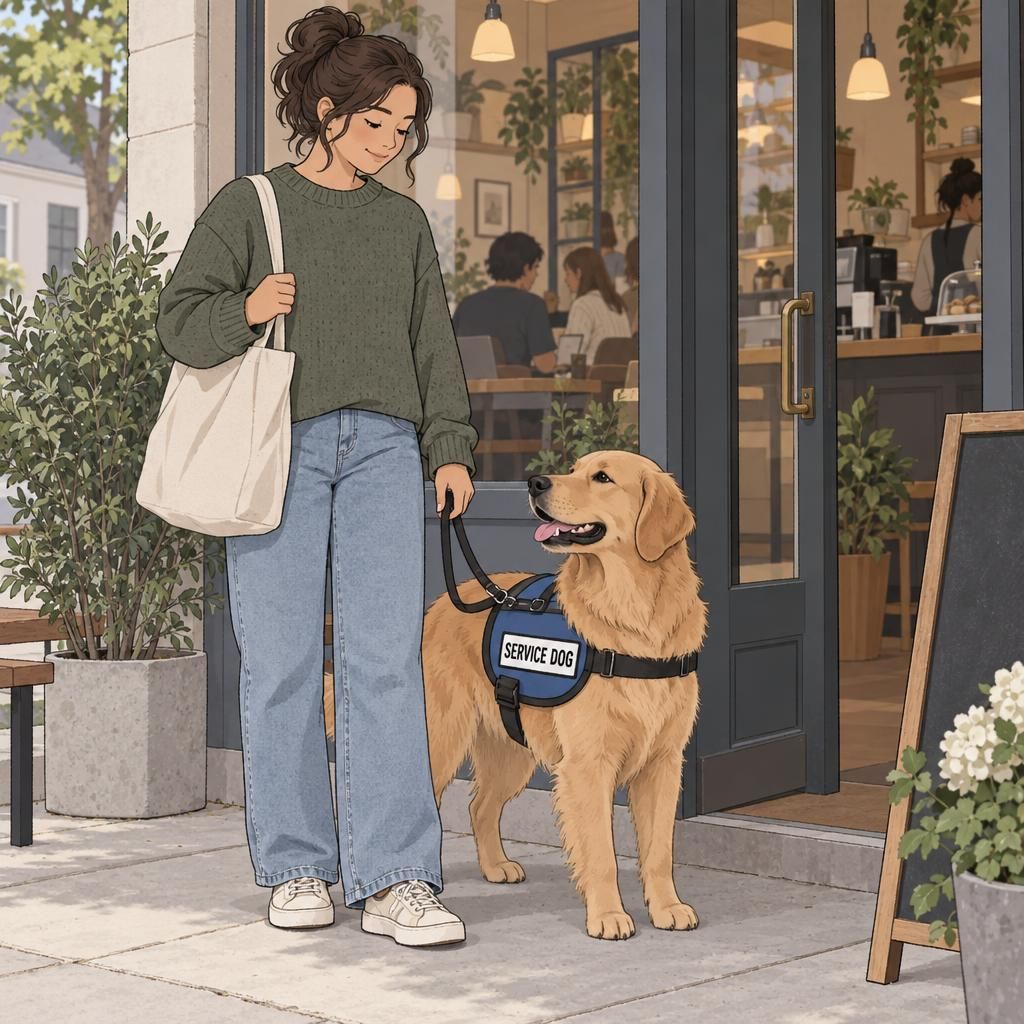
In a crowded setting, a service dog may be trained to stand in a particular position beside or behind its handler to help create personal space. This positioning should remain calm and controlled, without threatening other people or obstructing necessary passage. For some handlers, having a predictable task available makes waiting in line or navigating a busy environment more manageable.
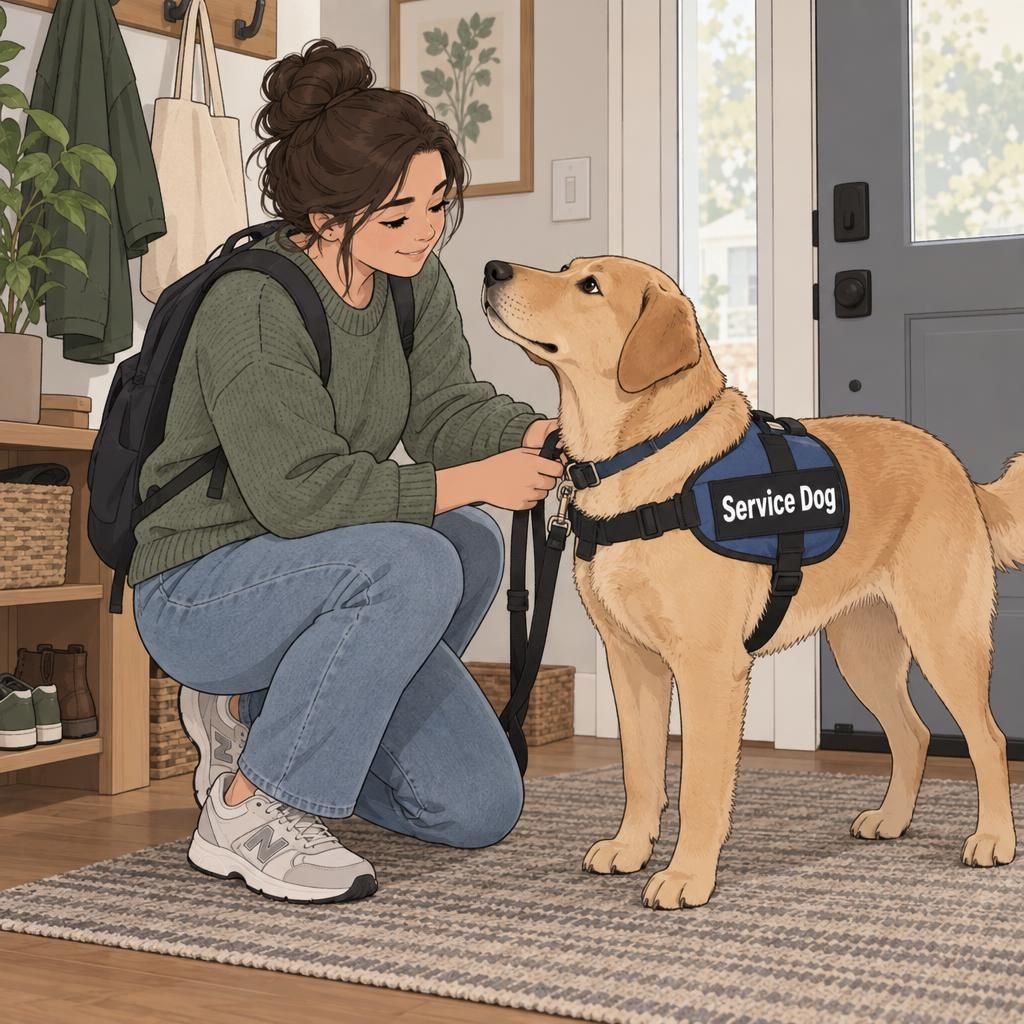
At home, support may involve retrieving a phone during distress or performing a grounding task during a difficult evening. A dog may also participate in a consistent nighttime routine. Depending on the person's needs, familiar routines and appropriate task work can make settling down feel less overwhelming.
Companionship, regular walks, and daily caregiving can be meaningful benefits alongside trained assistance. They may bring structure and opportunities to engage with the outside world. These benefits are distinct from service-dog tasks, even when both contribute to the handler's experience.
The goal is not to promise anxiety-free outings or uninterrupted sleep. It is to provide practical support that fits the individual. Progress might mean completing a short grocery trip, attending a community activity, or feeling better prepared to respond when symptoms arise.

Understanding access rules can help handlers prepare for everyday interactions. In the United States, the ADA generally allows service dogs to accompany their handlers in public areas of covered businesses and organizations. The dog must remain under control and housebroken. Specific exceptions can apply, and housing, air travel, and other settings may follow different rules.
When a dog's role is not obvious, staff in ADA-covered settings may generally ask whether the dog is required because of a disability and what work or task it has been trained to perform. A brief, accurate explanation of the task can make that conversation clearer without sharing private medical details.
Clear identification and organized information can also support communication. Some handlers carry wallet-sized service dog information cards as a convenient reference during routine interactions. These materials can help explain a handler's situation, while access eligibility remains tied to the applicable rules and the dog's role and behavior.
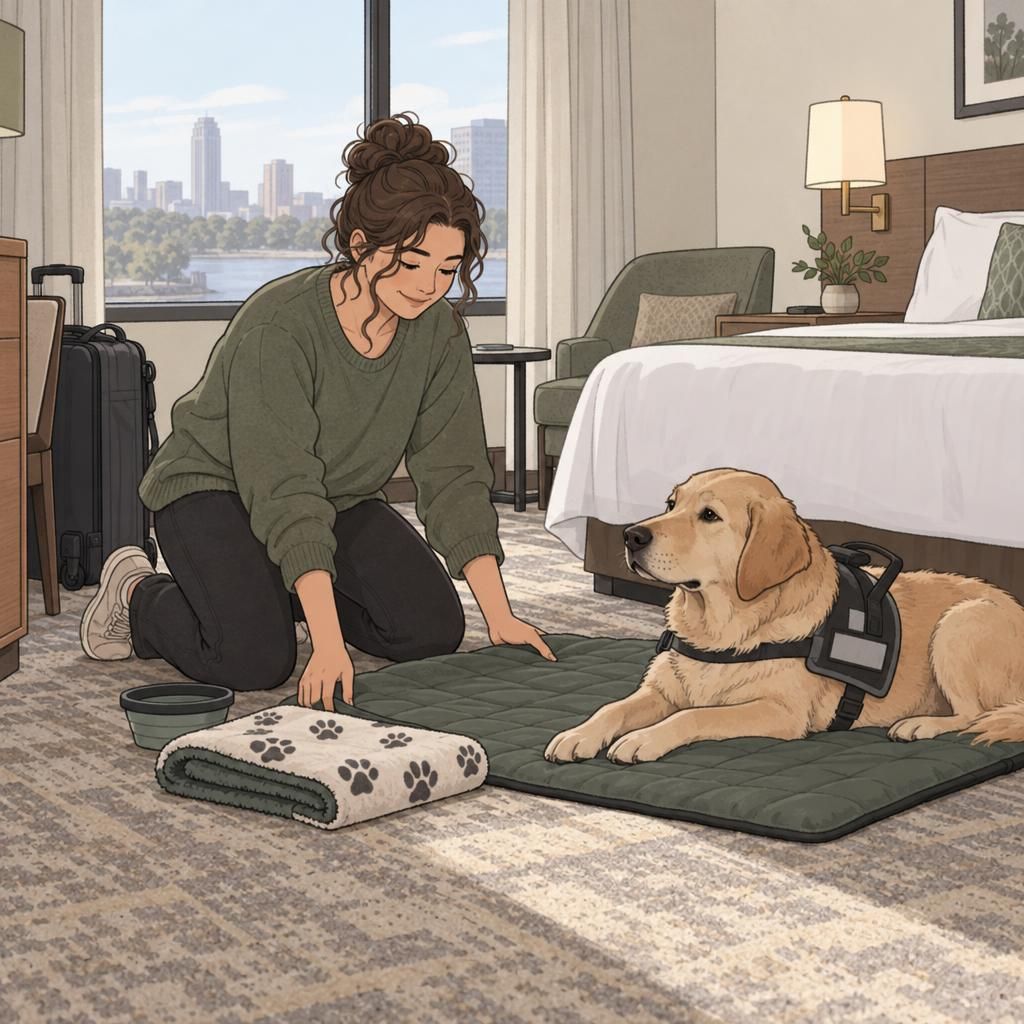
Before visiting an unfamiliar location or arranging transportation, check the requirements relevant to that plan. For a useful preparation starting point, explore planning ahead for service-dog travel. Preparing early leaves more time to address questions and organize any information a particular travel setting requires.
Keeping a dog's identifying information in one place can simplify day-to-day organization. A service animal ID, digital profile, or certificate gives handlers a consistent way to reference details and communicate the dog's role when they choose to share that information.
For handlers who prefer both printed and digital materials, a service dog registration package with an ID and certificate offers a practical organizational option. Different formats can be useful in different circumstances: a printed card is easy to carry, while a digital profile provides another way to keep information accessible.
Registration materials are an optional communication tool, separate from the dog's task training and the rules governing a particular setting. Handlers can use them alongside a clear explanation of their dog's work, rather than treating them as a substitute for understanding access requirements.

A suitable match involves more than affection or a calm first impression. Consider the tasks needed, the dog's temperament and physical suitability, and the handler's comfort managing a dog in public. Dependable assistance takes consistent practice, and not every dog will be comfortable with the demands of service work.
The handler's daily capacity matters, too. A dog needs care even when anxiety is difficult to manage. Planning for feeding, exercise, rest, grooming, and veterinary appointments helps protect the dog's well-being and makes the arrangement more sustainable.
A qualified mental-health professional can help explore how a service dog might fit into an individualized care plan. A reputable service-dog organization can discuss matching, task development, and realistic expectations. These conversations support an informed decision; they are not prerequisites for obtaining registration materials.

Research on psychiatric assistance dogs describes a range of reported uses, including tactile grounding, deep-pressure stimulation, interruption of distress, and personal-space blocking. These examples show how assistance can be tailored to different disability-related needs rather than following a single standard routine.
Reported benefits may include better sleep and greater participation in community life. However, reported experiences do not establish that every handler will improve or that a particular task causes a specific outcome. Differences in symptoms, task reliability, daily circumstances, and the handler-dog match can all shape the experience.
A psychiatric service dog is one form of support, not a replacement for individualized care. Therapy, prescribed treatment, coping strategies, and support from trusted people may remain important parts of a person's plan. It is helpful to consider both the assistance a dog can provide and the responsibility of caring for that dog.
For the right person and dog, the partnership can provide meaningful practical help. The strongest starting point is a clear understanding of the handler's needs, realistic expectations about task work, and a sustainable plan for the well-being of both partners.
Your trusted source for service animal registration. Get professional ID cards, digital profiles, and smart NFC tags to keep your service animal safe and recognized.
© National Animal Registry — All rights reserved.