When people think about service dogs, they often picture big, dramatic moments—guiding someone through a crowd or helping in an emergency. But for many handlers, the real value shows up in the ordinary parts of the day: the moments that used to take extra energy, extra planning, or extra help from someone else.
A service dog (also called a service animal or assistance dog) is trained to perform disability-related tasks that support a person’s daily functioning. Those tasks can be physical (like retrieving items or helping with stability), medical (like alerting to changes in the body), sensory (like sound alerts), or routine-based (like helping a handler stay grounded during stressful moments).
In this article, we’ll focus on practical, real-world examples: at-home routines, errands, mobility support, medical safety, and the social ease many handlers experience when they have a well-trained partner by their side.
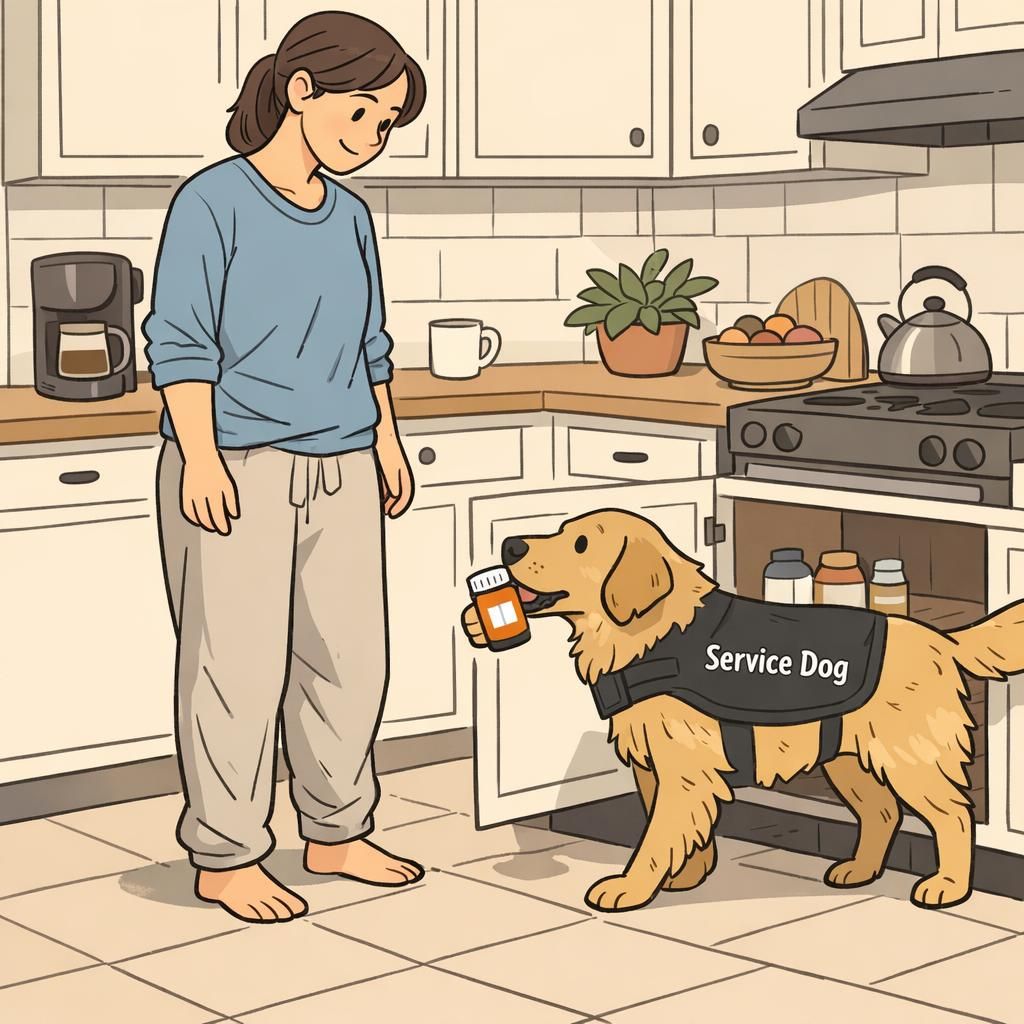
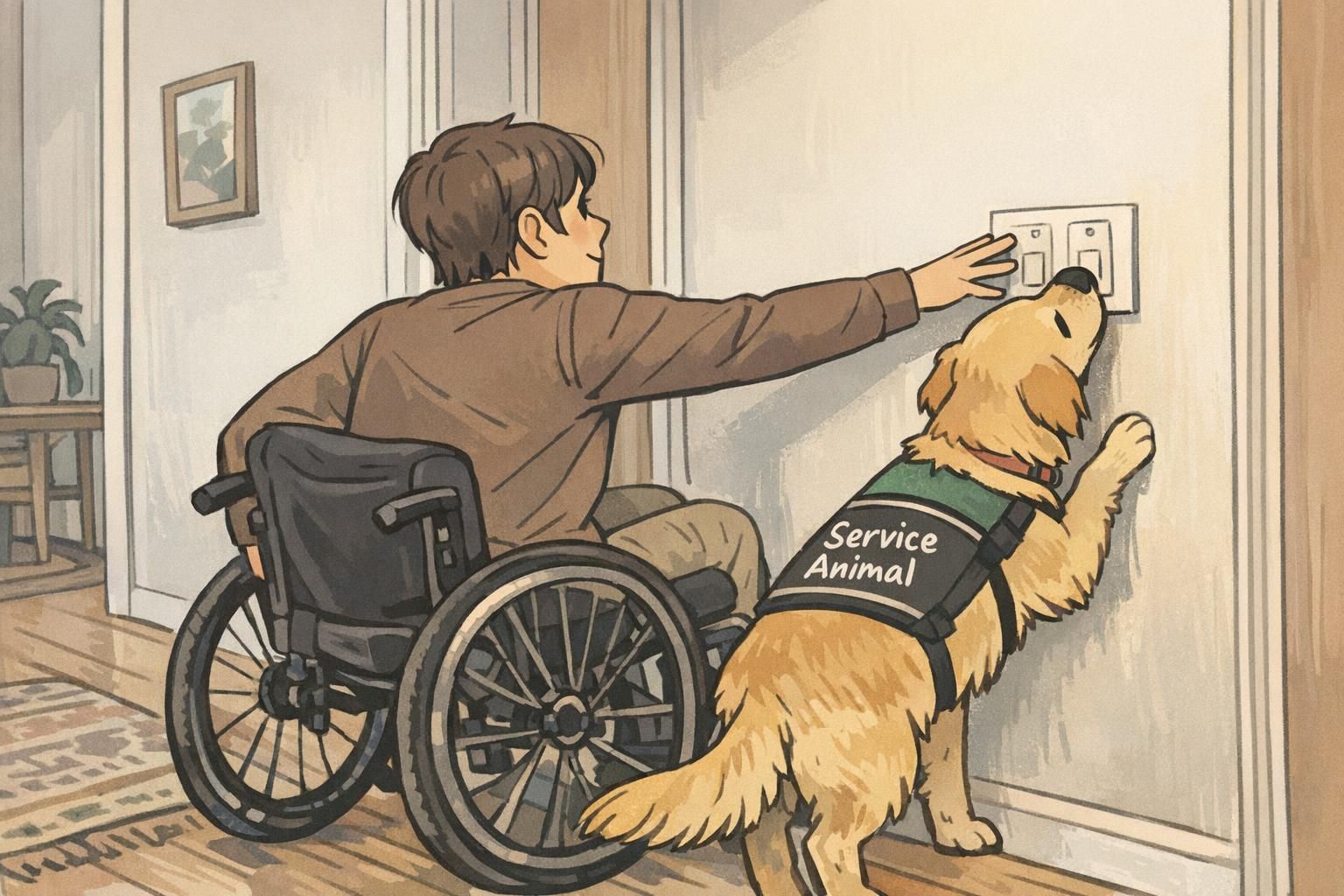
Home is where the “little things” happen all day long: picking up dropped keys, grabbing a phone charger, bringing medication, or helping with doors while hands are full. A service dog can be trained to assist with many of these tasks in a way that saves time and reduces strain.
These tasks can be especially meaningful for handlers managing limited mobility, chronic pain, fatigue, balance challenges, or conditions that make bending and reaching difficult. Even when each task seems minor on its own, the cumulative effect can be less interruption, less physical stress, and a calmer day.
“ "It’s not just one big task—it’s the ten little moments where I don’t have to stop, struggle, or ask for help. That’s what makes the day feel doable." – Service dog handler”
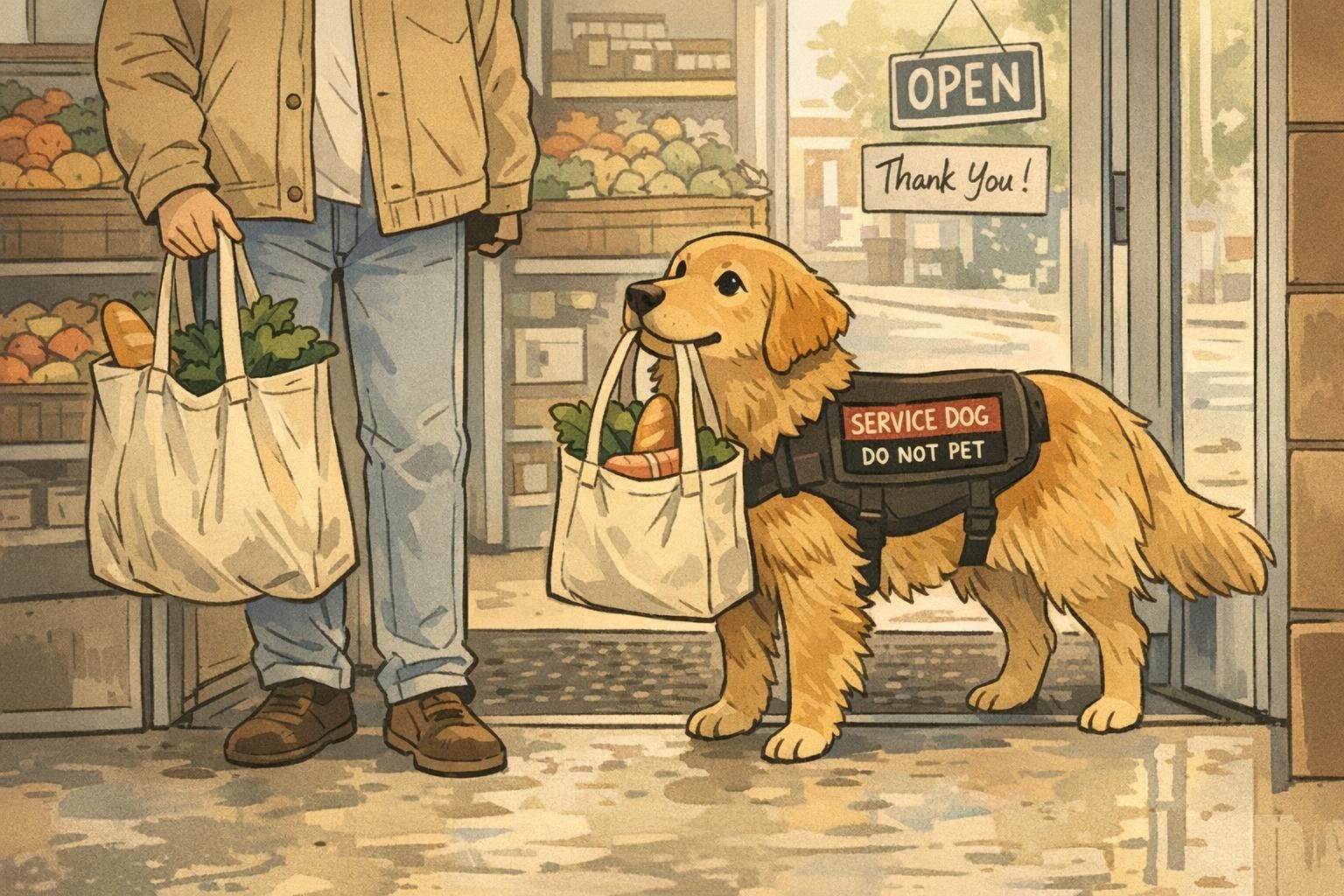
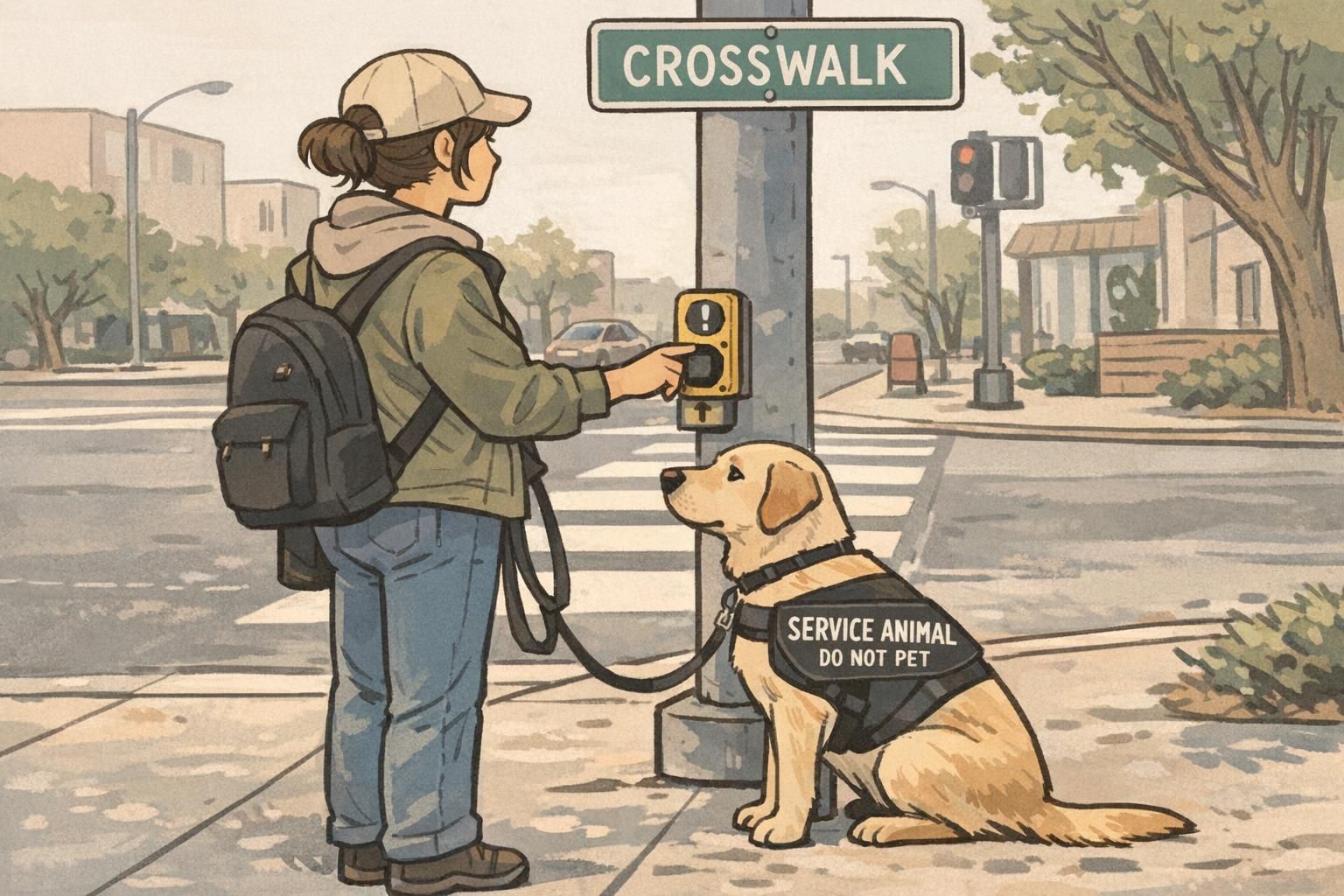
Errands and outings often involve uneven sidewalks, door thresholds, busy entryways, and distractions that can make movement feel unpredictable. Many service dogs provide mobility-related support that helps handlers navigate these everyday environments with less stress.
Depending on the handler’s needs and the dog’s training, a service dog may be able to offer steadying support, help a handler regain balance, or retrieve items that are dropped in public spaces—reducing the need to bend down or scramble in crowded areas.
Some of the most life-changing service dog work happens quietly—before a situation turns into an emergency. Medical alert service dogs may be trained to recognize specific changes and cue their handler to take action, such as checking a health metric, taking medication, sitting down, or moving to a safer location.
That extra time to respond can turn a dangerous moment into a manageable one. While every team is unique, handlers often describe feeling more prepared throughout the day because they’re not relying on guesswork alone.
Research has also suggested measurable everyday safety benefits in specific areas. For example, studies on diabetic alert dogs indicate they can help reduce the frequency of dangerous blood sugar episodes for some handlers, reinforcing the idea that a well-trained service dog can contribute to real-world risk reduction in daily life (source).
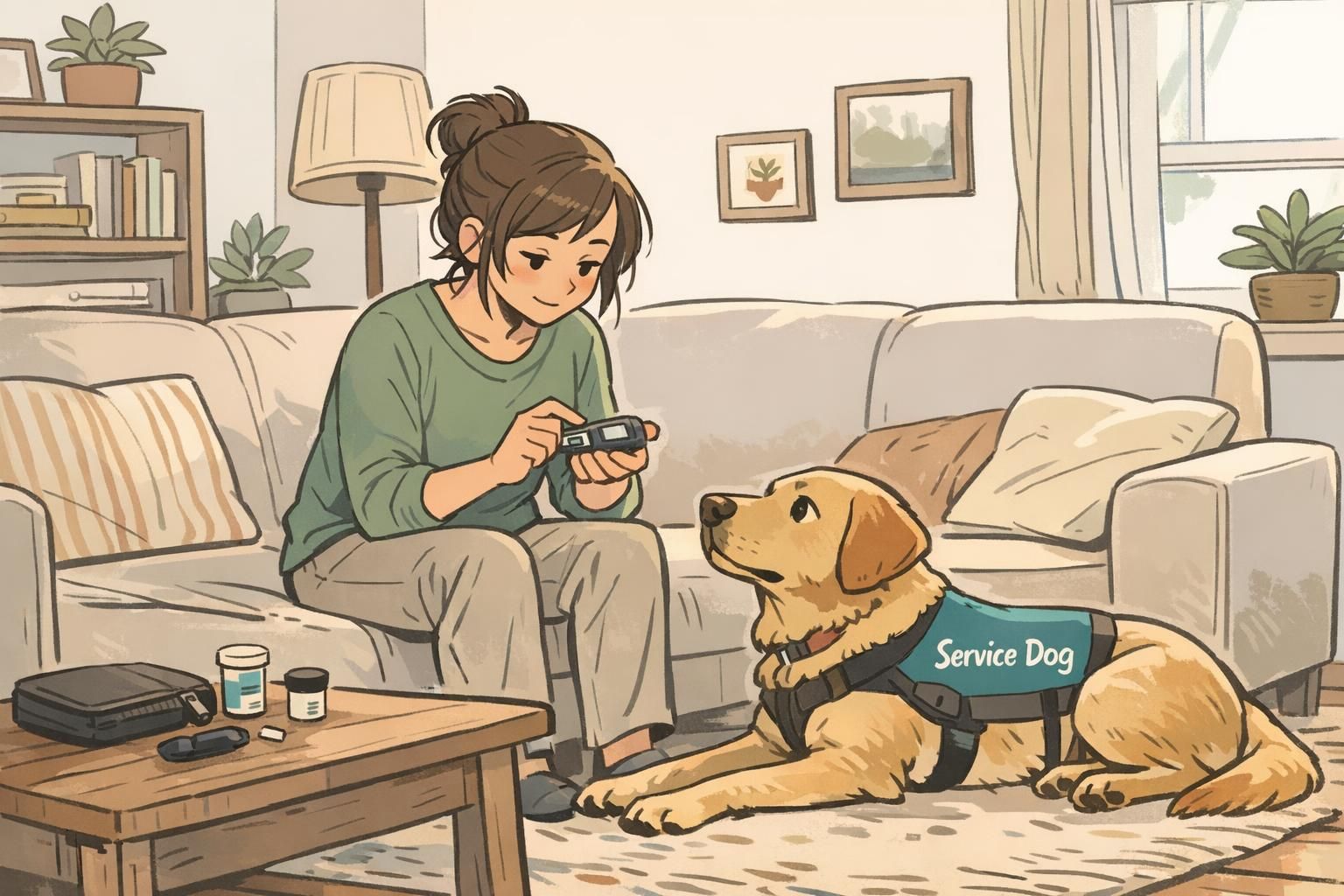
Most handlers use a service dog as an added layer of support. A dog’s trained alerts and response behaviors can complement (not replace) medical routines, devices, and guidance from healthcare professionals.
It can be as simple as a nudge, pawing, or trained behavior that prompts the handler to check their symptoms, sit down, get a snack, take medication, or alert someone nearby—before the situation escalates.
Daily life is full of important sounds: a knock at the door, a timer going off, someone calling your name, or an alarm. For handlers who are Deaf or hard of hearing, or for those who benefit from added environmental awareness, some service dogs are trained to alert to key sounds and guide attention to the source.
This kind of support can reduce stress at home (especially when you’re in another room) and make public spaces feel less overwhelming. Instead of constantly scanning for cues, the handler can rely on a trained partner to help prioritize what matters.
While service dogs are task-trained for disability-related support, many handlers also report meaningful day-to-day emotional benefits from working with a reliable partner. Predictable routines, grounding behaviors, and a steady presence can make stressful moments feel more manageable.
For some people, that shows up as fewer abandoned errands, shorter recovery time after stress, or more willingness to participate in daily activities. And in social settings, a service dog can create a sense of personal space and structure—helping the handler stay focused on what they need to do.
“ "My dog helps me keep a steady rhythm. When my day starts to spiral, having a routine we follow together brings me back down to earth." – Service dog handler”
Even when a service dog is impeccably trained, day-to-day life can include questions from the public, uncertainty from staff, or confusion in new environments. Many handlers find that clear, professional identification helps reduce misunderstandings and keeps interactions calmer and more straightforward.
Registration, IDs, and certificates are optional tools that many teams use for clarity and consistency—especially when planning public outings, discussing housing situations, or preparing for travel. For some handlers, having matching digital details and a printed ID also provides peace of mind: important information is organized and easy to reference when it’s needed.
A smoother day often comes down to preparation and consistency. The goal isn’t to eliminate every surprise—it’s to make routines easier to repeat, so both handler and dog can stay regulated and focused.
Laws and policies can vary by location and situation, so it helps to plan ahead for the places you’ll visit. When you’re prepared, you can stay focused on your day rather than getting pulled into long explanations.
Some handlers like carrying quick-reference information they can hand over without stress. wallet-sized ADA law handout cards for quick, calm communication can be an easy way to keep interactions brief and respectful when questions come up.
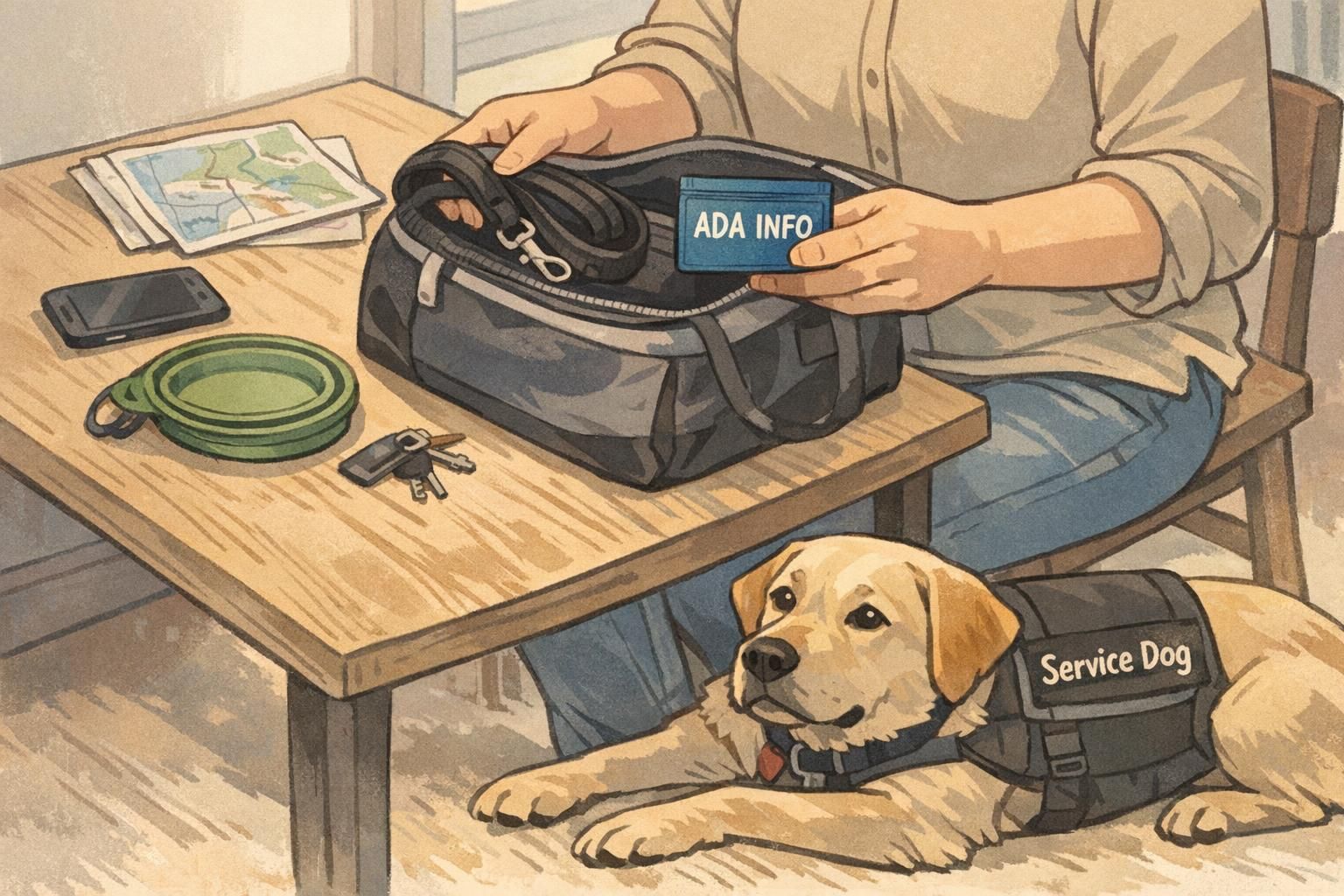
Travel is often easier when it feels like a portable version of home: familiar routines, predictable breaks, and organized essentials. For service dog teams, that can mean keeping gear consistent, planning rest stops, and making sure key details are easy to access if you need them.
Before a trip, many handlers find it helpful to think through the “whole day” logistics: where the dog will rest, how feeding and bathroom breaks will work, what the backup plan is if a location is crowded, and what information you want readily available.
If you’re building a travel routine, you may also like travel tips for planning smoother trips with your service dog, which can help you think through common questions and practical prep.
Many teams also prefer to travel with consistent identification that’s easy to show if someone asks for basic details in the moment. a starter registration package for everyday identification and confidence can help keep information organized and ready, so you can stay focused on the trip instead of the paperwork.
For many handlers, the easiest days are the ones with fewer loose ends. Keeping your service dog’s key details organized can reduce last-minute stress—whether you’re heading out for a quick errand or planning something more involved.
National Animal Registry’s identification options are designed to make everyday organization simpler by keeping key information consistent and easy to access in both digital and printed formats. If you want a straightforward way to pull everything together, a customizable printed service dog ID with matching digital profile can help you stay prepared for day-to-day life, housing conversations, and travel planning—without turning it into a complicated project.
Your trusted source for service animal registration. Get professional ID cards, digital profiles, and smart NFC tags to keep your service animal safe and recognized.
© National Animal Registry — All rights reserved.