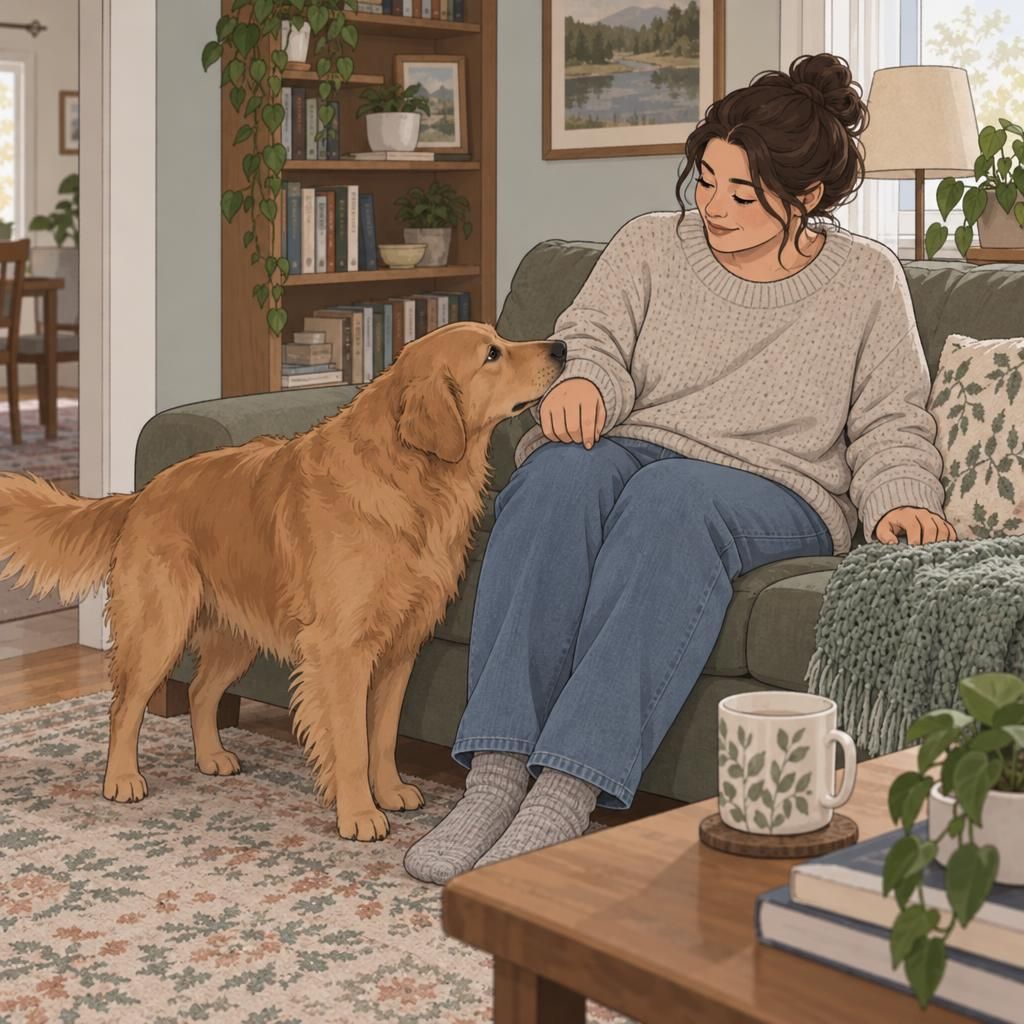
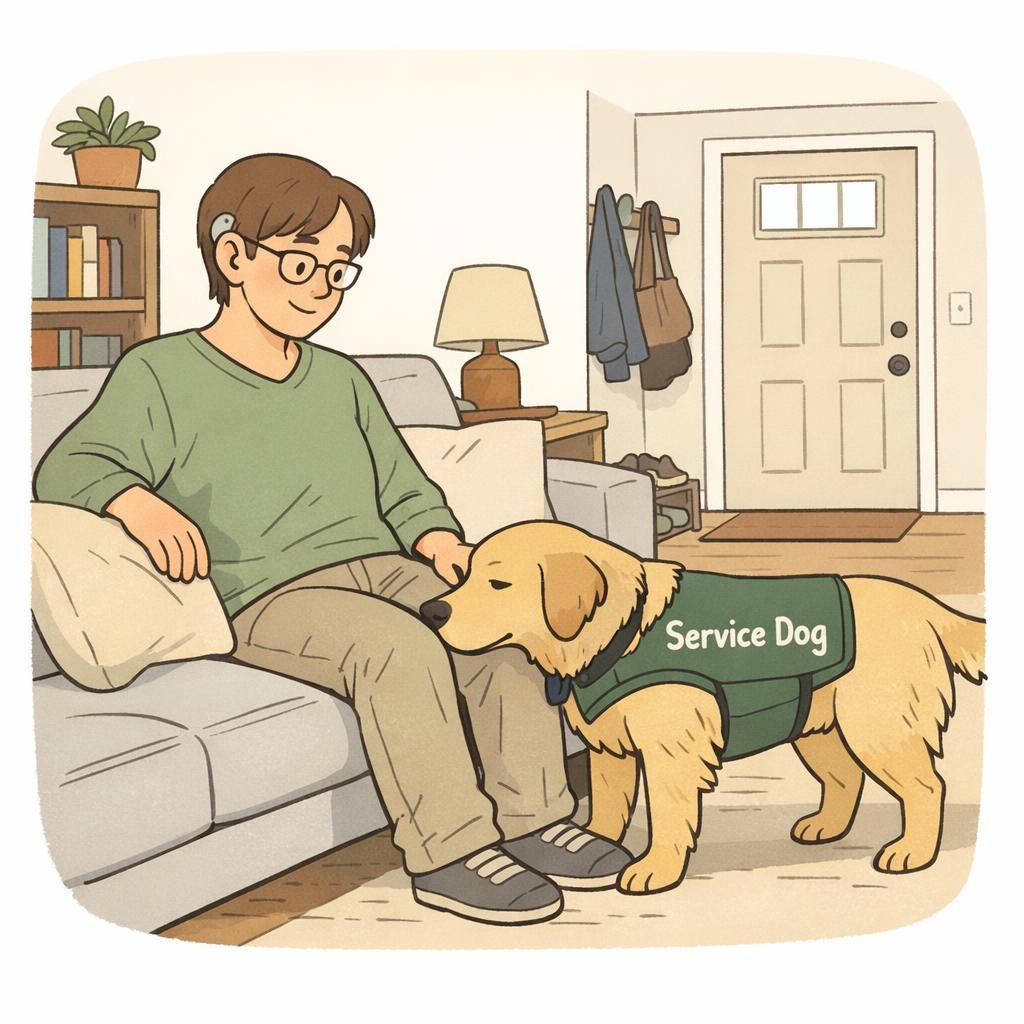
A hearing dog (also called a deaf assistance dog) is a type of service dog trained to help a deaf or hard-of-hearing handler notice important sounds and respond to them confidently. Instead of “fixing” hearing, the dog acts like a reliable bridge between sound and action—turning everyday noises into clear, repeatable cues the handler can use.
In day-to-day life, that might mean alerting to a door knock, a smoke alarm, a ringing phone, or someone calling the handler’s name. The goal is practical: reduce missed information, increase safety, and make routines smoother at home, at work, and out in public.
Many hearing dogs use a hallmark two-part sequence that fits naturally into everyday routines: first, a consistent physical alert (such as a nose nudge, paw touch, or gentle bump), and second, guiding the handler toward the sound source. This pattern keeps communication simple—one clear signal to get attention, followed by direction about where to look or move.
At home, the “guide” part might look like the dog leading the handler toward the front door after a knock, or toward the kitchen when a timer goes off. In public, it may be more subtle—like orienting the handler toward a person calling their name or toward an important environmental cue. This consistent alert-and-guide routine is widely described as a common behavior pattern for hearing dogs and how they function within daily household life (source).
Mornings are a great example of how a hearing dog can become part of a predictable rhythm. Many handlers rely on their dog to alert them to an alarm clock, a door knock, or a family member calling their name from another room. With repetition, the first few minutes of the day can feel less rushed and more structured.
A calm morning routine often includes a consistent “wake-up flow”: the dog alerts, the handler acknowledges the dog, and then the handler takes the next step (turn off the alarm, head to the door, check the house). Keeping this pattern steady helps the dog understand what counts as a meaningful sound and helps the handler build trust in the alert.
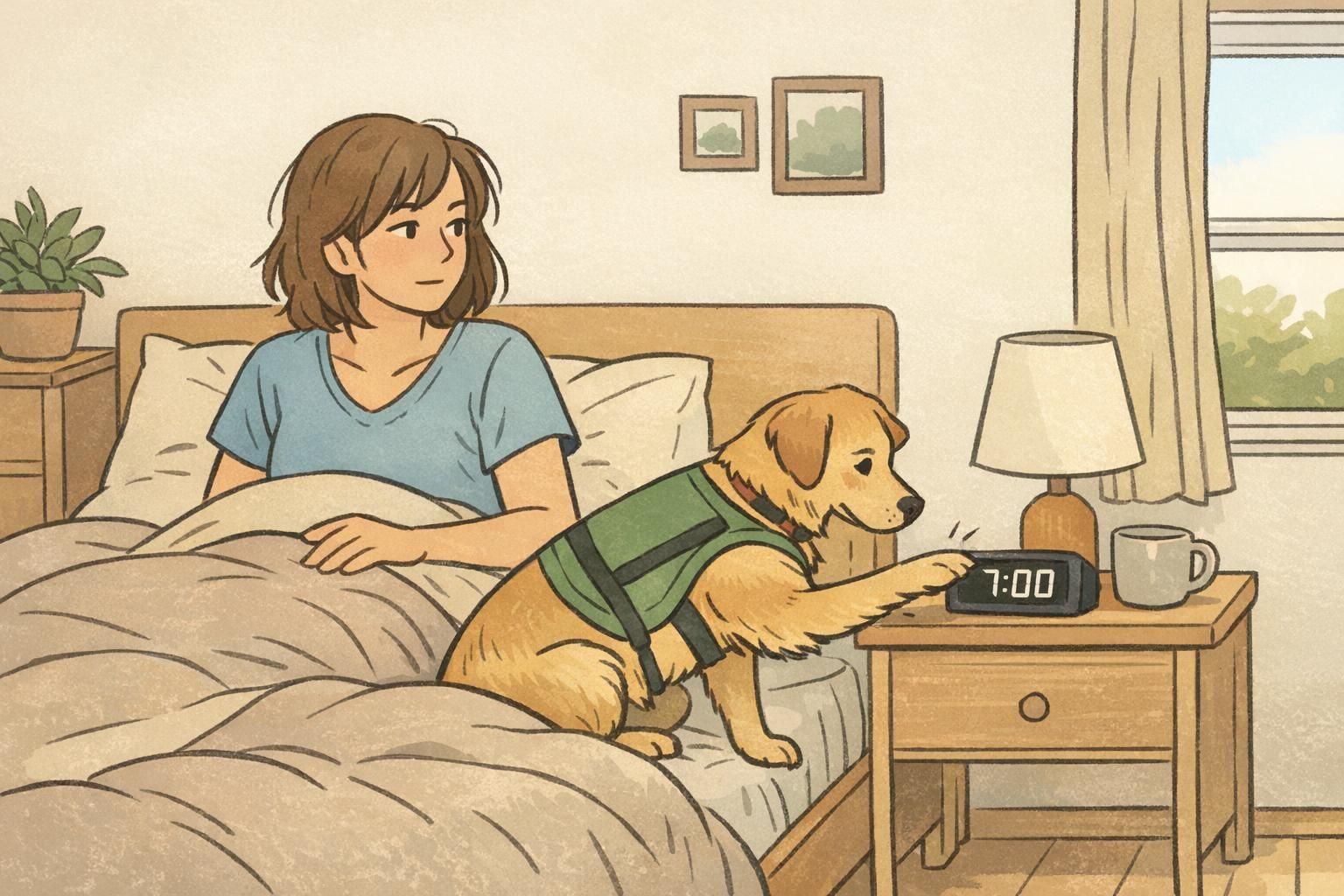
“ "Once our mornings followed the same pattern—alert, acknowledge, then act—I stopped feeling like I was starting the day already behind." – Hearing dog handler”
At home, life is full of small sounds that signal “do something now.” A hearing dog can help catch those cues so the day runs more smoothly—especially during tasks that pull attention away, like cooking, laundry, or working from home.
Common sounds hearing dogs may alert to include doorbells and knocks, oven or microwave timers, ringing phones, smoke alarms, a baby crying, or a family member calling from another room. The specific sounds vary by household, but the purpose stays the same: turn sound into an actionable moment.
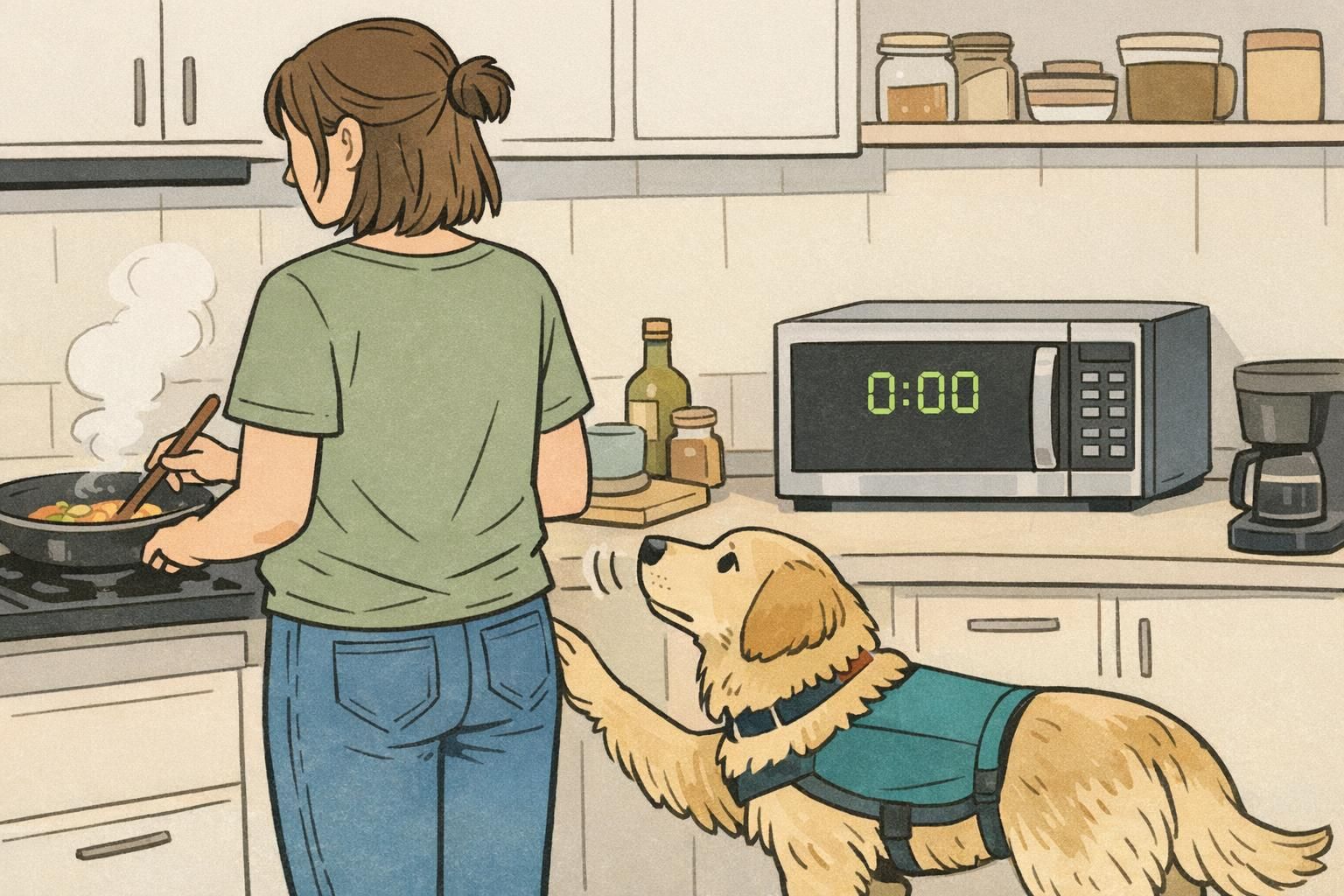
Outside the home, a hearing dog’s support can be just as valuable—especially in environments where you can’t rely on visual cues alone. In workplaces, the dog may alert to a colleague calling your name, a phone ringing in a shared space, or an alarm or notification sound tied to safety procedures.
In public settings, hearing dogs may also help with orientation and safety by alerting to things like an elevator ding, a name call from behind, or an approaching siren. These cues don’t require the dog to be “on” every second; the goal is calm, reliable communication when it matters.
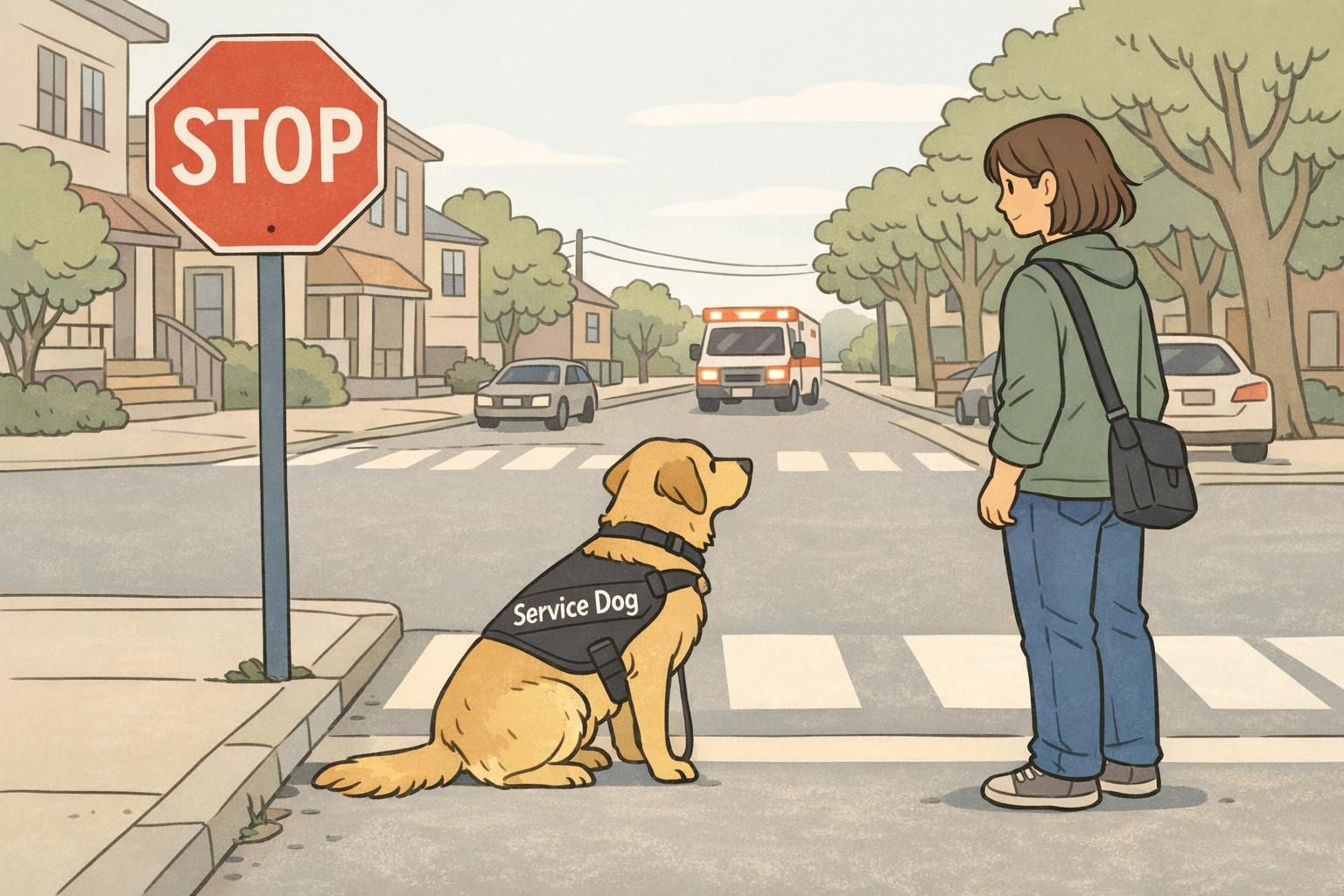
Typically, routines work best when the dog focuses on a planned set of meaningful sounds—like name calls, alarms, or safety-related cues—rather than trying to report everything happening around you.
In a busy household, hearing dogs often become a steady, reassuring presence. They can bond with the whole family while still staying focused on their handler’s needs—especially when everyone supports the same routine expectations.
Because hearing dogs work through repeated patterns, family dynamics matter. If multiple people accidentally reward the wrong moments (like exciting the dog when it’s trying to alert calmly), the routine can get messy. A few simple household agreements can protect the dog’s focus and prevent overwhelm.
“ "Our dog is part of the family, but the biggest improvement came when we treated alerts like a calm routine, not a big event." – Parent of a hearing dog handler”
While sound alerts are the core role, some hearing dogs also learn practical “life-smoothing” tasks that naturally fit into daily routines. These extras can reduce bending, searching, and unnecessary back-and-forth—small improvements that add up over time.
Depending on the team’s needs, these tasks might include retrieving dropped keys, carrying a small item from room to room, or helping the handler locate a person calling their name in a crowded place by guiding toward them. These skills complement sound alerts by reducing friction in the moment.
A hearing dog’s reliability is built through steady practice and a lifestyle that supports focus. Even when a routine is well established, gentle reinforcement keeps alerts crisp and confident—especially when schedules change or new environments introduce unfamiliar sounds.
Timing matters. When the dog alerts and you respond, a quick reward (praise, a treat, or a brief play moment) helps the dog connect the behavior to success. Just as important is rest: dogs work best when they have predictable downtime, daily exercise, and enrichment that lets them be a dog.
Treat it like useful information. Consider whether the day has been unusually busy, loud, or stressful, and build in rest and simpler routines. Many teams benefit from a reset day with extra downtime and easy wins.
Daily routines often include quick stops—running into a store, walking through an apartment lobby, checking in at a workplace, or interacting with neighbors and housing staff. In those moments, clear service dog identification can reduce repeated explanations and help interactions stay brief and respectful.
Many handlers choose optional registration and identification tools as a practical way to create clarity during routine outings. Having something consistent to show can support smoother communication, especially when you’re focused on your day and don’t want every errand to turn into a conversation.
If you want a simple way to keep that information organized and ready, consider using a clear, everyday service dog ID that matches your routine—something you can carry and reference when needed.
Even with a well-trained dog and a predictable routine, questions can come up in public. A prepared, calm response helps you stay in control of your time and keep your day moving. The goal isn’t to debate—it’s to communicate briefly, set boundaries, and continue your routine.
“ "Thanks for asking—this is my service dog. He helps me with hearing-related alerts so I can respond to important sounds. We’re going to keep moving, but I appreciate your understanding." – Example script”
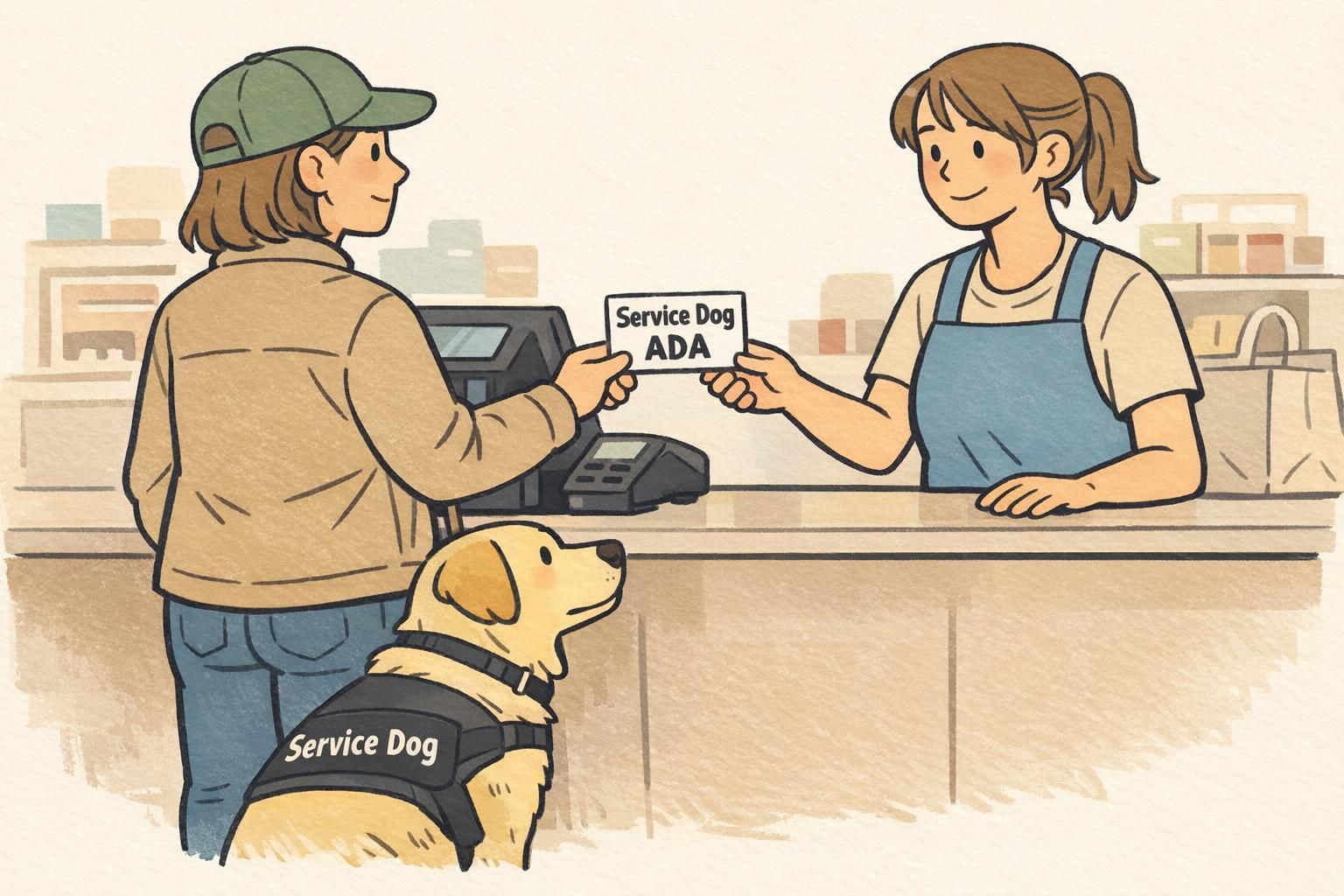
For extra convenience, some handlers keep ADA law handout cards for quick, polite conversations on hand. It’s a simple way to reduce friction when you’re trying to focus on errands, travel, or appointments.
Many handlers choose to keep details private and stick to a simple explanation of the dog’s function. A prepared script can help you stay polite while protecting your boundaries.
Travel can be exciting—but it also changes everything a hearing dog relies on: new layouts, unfamiliar sounds, different sleeping spaces, and altered schedules. Hotels, airports, family visits, and busy public areas can introduce alerts the dog hasn’t heard in context before, or background noise that makes it harder to decide what matters.
The most helpful approach is planning for routine stability within the change. Keep feeding and potty schedules as consistent as you can, practice a few key alerts in new environments, and build decompression breaks into travel days so your dog can reset.
For more ideas on pacing and preparation, see travel planning with a service dog and consider bringing organized materials that support confident check-ins and smoother transitions.
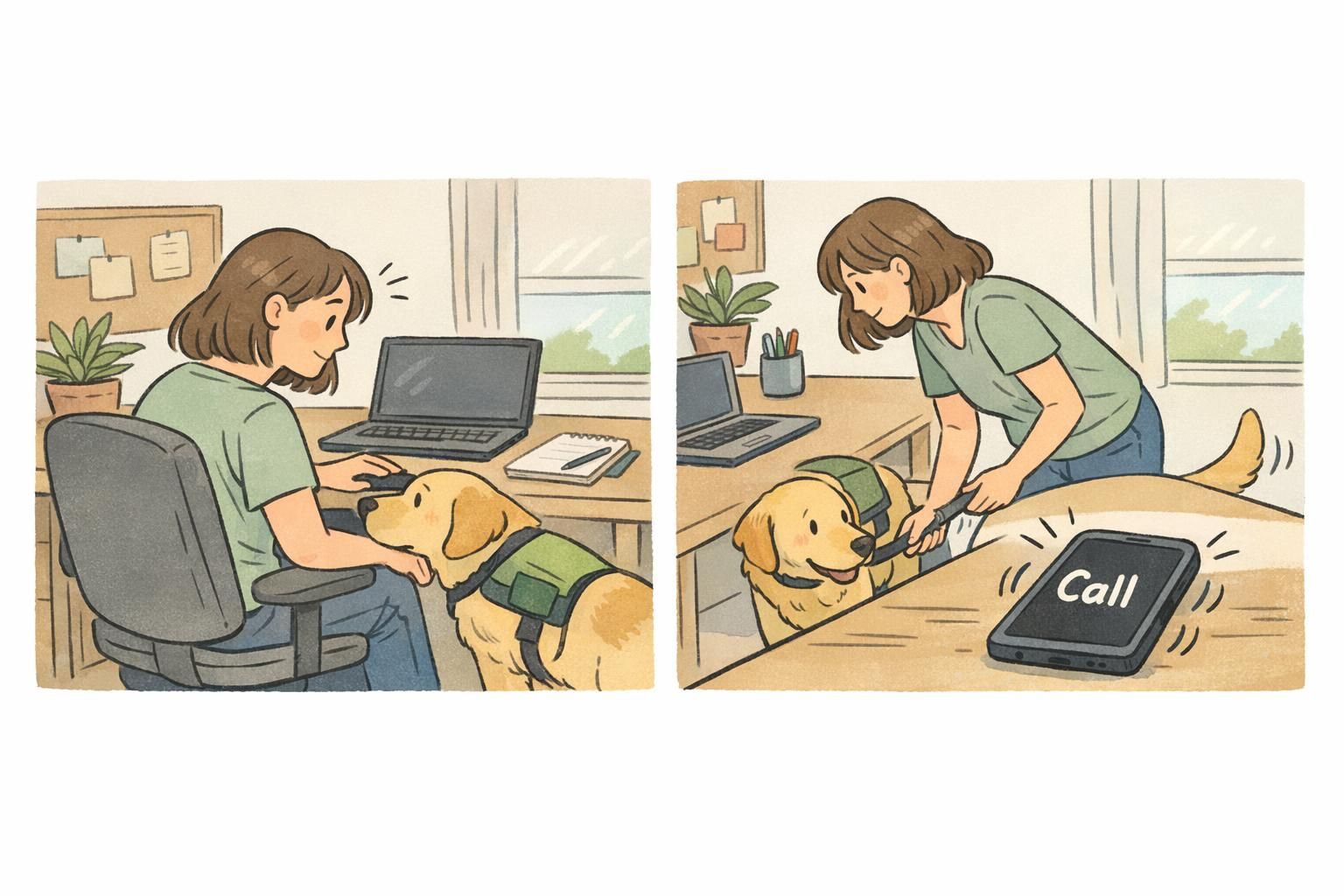
If you like having travel materials in one place, a travel-ready service dog registration package can make routine travel days feel more organized—especially when you’re navigating new environments and want quick, consistent ways to communicate.
Your trusted source for service animal registration. Get professional ID cards, digital profiles, and smart NFC tags to keep your service animal safe and recognized.
© National Animal Registry — All rights reserved.