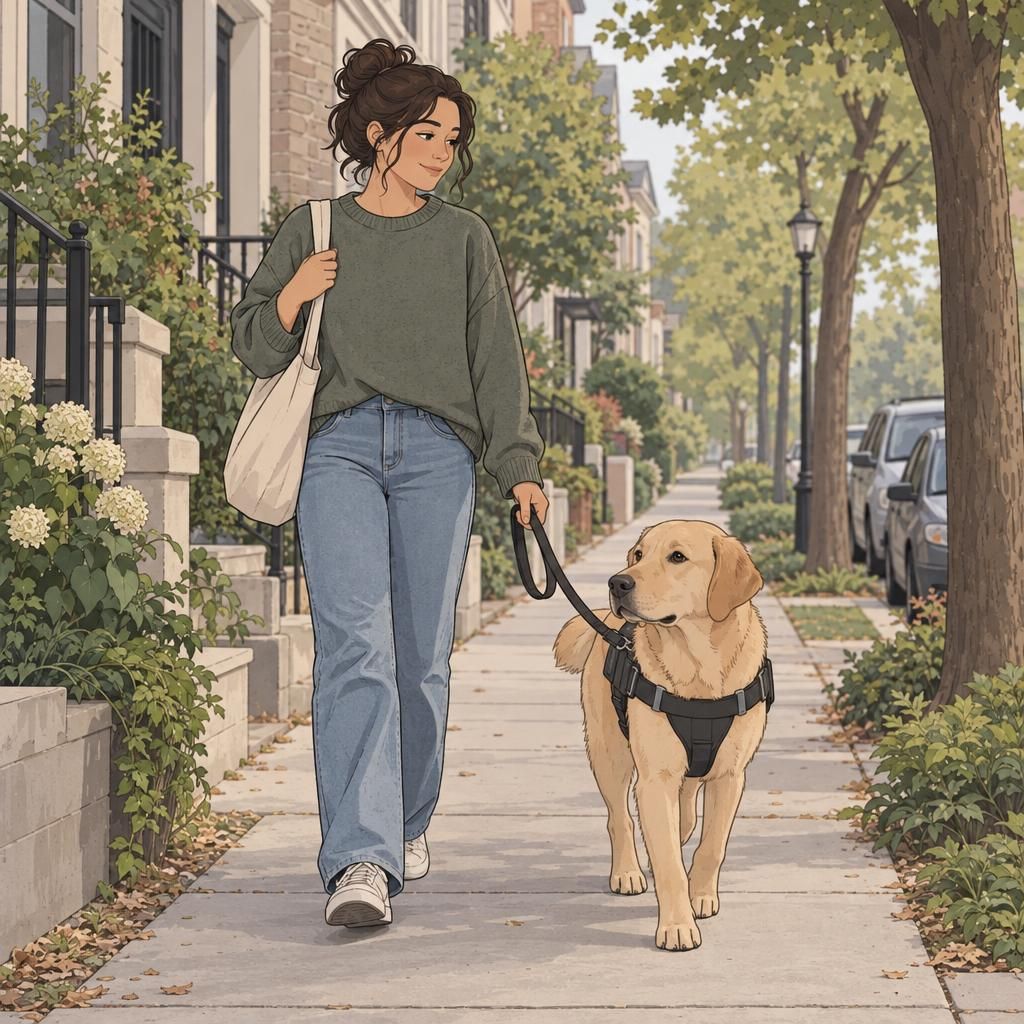
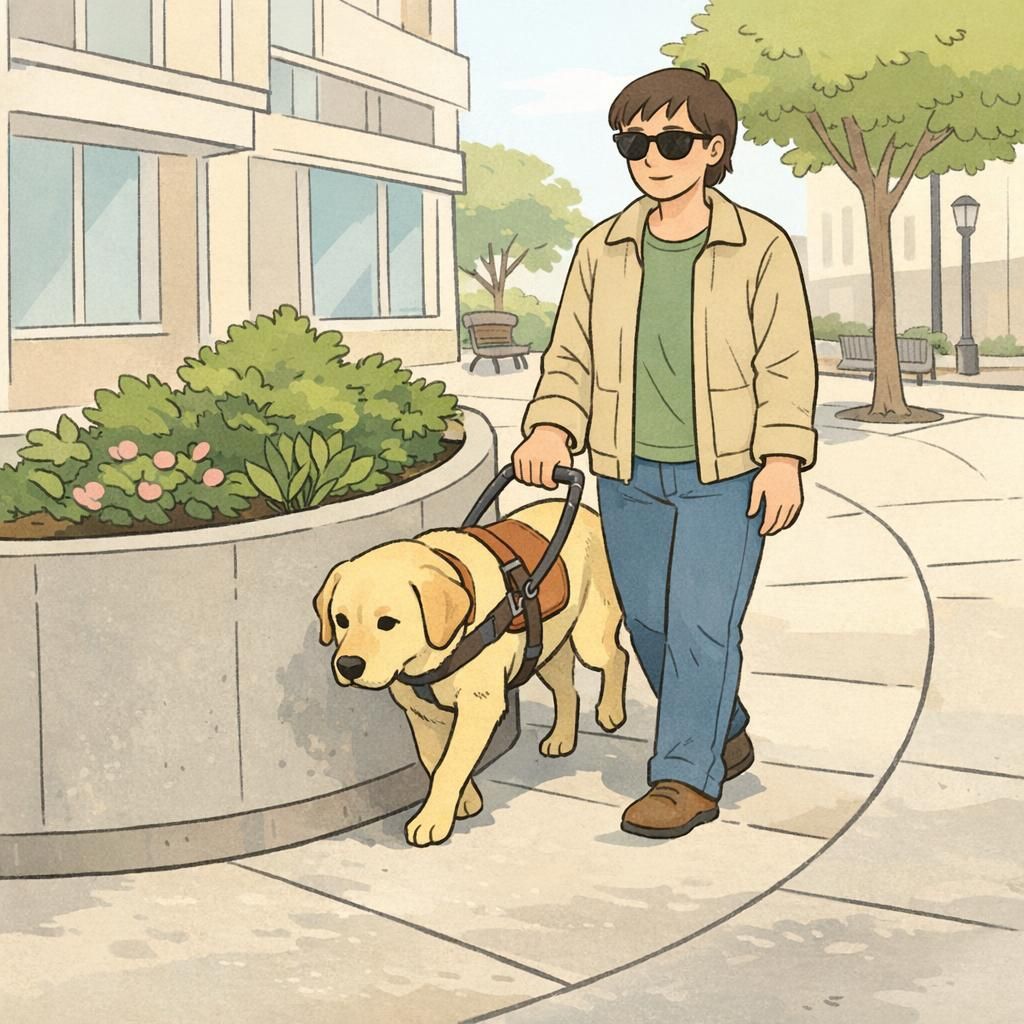
A guide dog (also called a seeing eye dog or blind assistance dog) is best understood as a mobility partner. The dog’s job is to make travel safer and smoother by helping the handler move through the world with fewer surprises—like obstacles, drop-offs, and blocked pathways. The handler’s job is to choose where to go, set the pace, and make the bigger decisions about the route.
This teamwork model matters because people sometimes assume the dog is “deciding” the destination. In real life, the handler is leading the plan: they know the goal (the bus stop, a specific store entrance, the elevator bank), and they guide the dog with consistent cues and handling. The guide dog supports that plan by providing safe, clear movement—stopping when needed, navigating around hazards, and maintaining a steady path.
Confident navigation in public starts long before a guide dog enters a crowded sidewalk or busy terminal. Early training foundations focus on calm, predictable behavior: responding to basic cues, staying focused around mild distractions, and walking with a steady rhythm beside a handler. These building blocks make later public access work feel familiar instead of overwhelming.
Many programs and trainers rely on positive reinforcement—rewarding the dog for the right choice at the right moment—and consistent routines that help the dog understand expectations. The goal isn’t to create a robot; it’s to develop a dog who can stay emotionally steady and responsive even when the environment changes.
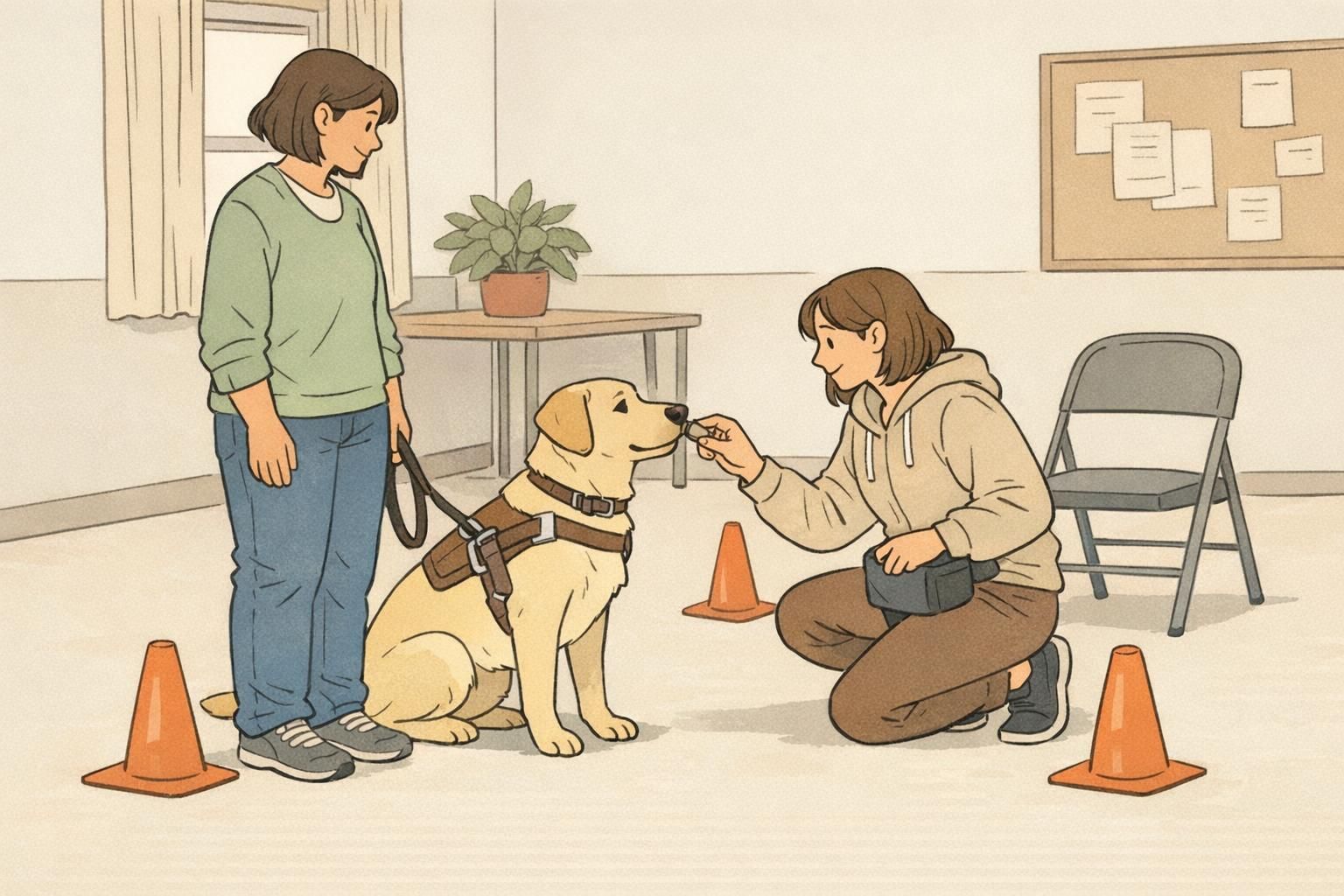
Once a dog has solid foundations, training becomes more realistic on purpose. This stage is often called “proofing,” meaning the dog practices the same skills in gradually harder situations. Instead of jumping from a quiet room to a packed store, the dog builds confidence step-by-step.
Distractions are introduced in layers: first a person walking past, then someone stopping to chat, then a rolling cart, then a sudden noise, then crowds moving unpredictably. Over time, the guide dog learns that the job stays the same no matter what’s happening nearby—keep the team moving safely and stay connected to the handler.
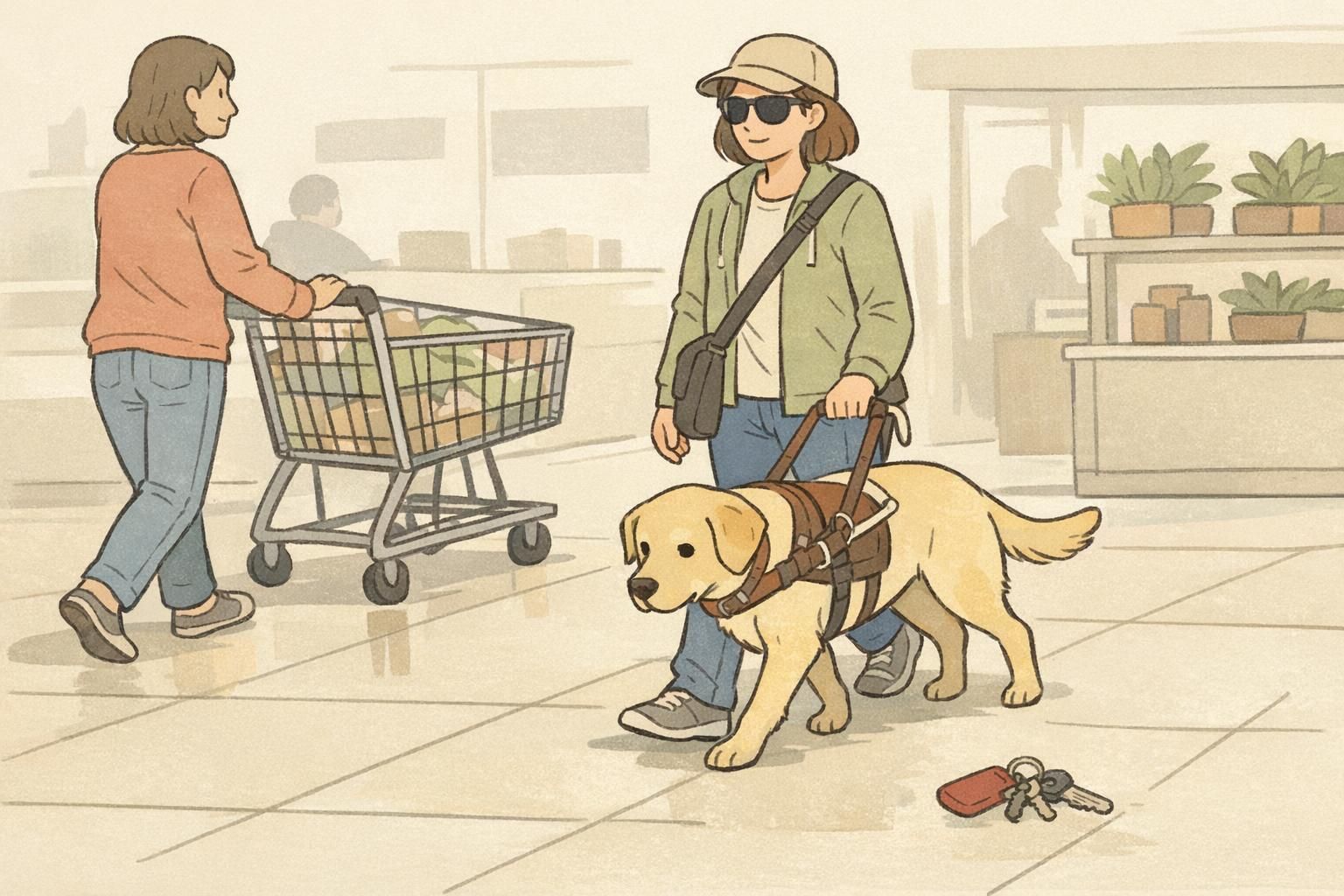
In public spaces, guide dogs rely on a practical set of navigation skills that show up in everyday life—errands, commuting, appointments, and unfamiliar buildings. These tasks are designed to reduce risk (like tripping hazards or drop-offs) and reduce mental load for the handler so they can focus on orientation, timing, and decision-making.
For example, on a typical errand, a handler might cue forward movement and then rely on the dog to keep them centered on the sidewalk, slow slightly near a busy doorway, and stop cleanly at a curb. In an unfamiliar building, the dog may help locate an entrance, weave around a lobby display, and maintain a straight path to a hallway—while the handler listens, counts doors, and confirms the destination.
Street crossings are one of the most important moments in guide work because they combine movement, timing, and real safety consequences. At an intersection, a guide dog can help the handler locate the curb edge and align the team for a straight crossing. The handler then listens to traffic flow and signal patterns (and may use other orientation strategies) to decide when it’s safe to proceed.
A critical safety concept in guide work is “intelligent disobedience.” This means the dog may refuse to move forward when a command would lead into danger. For instance, if the handler gives a forward cue but a car is turning unexpectedly, the dog may hold position rather than stepping off the curb. That pause can prevent serious injury and gives the handler an extra moment to reassess.
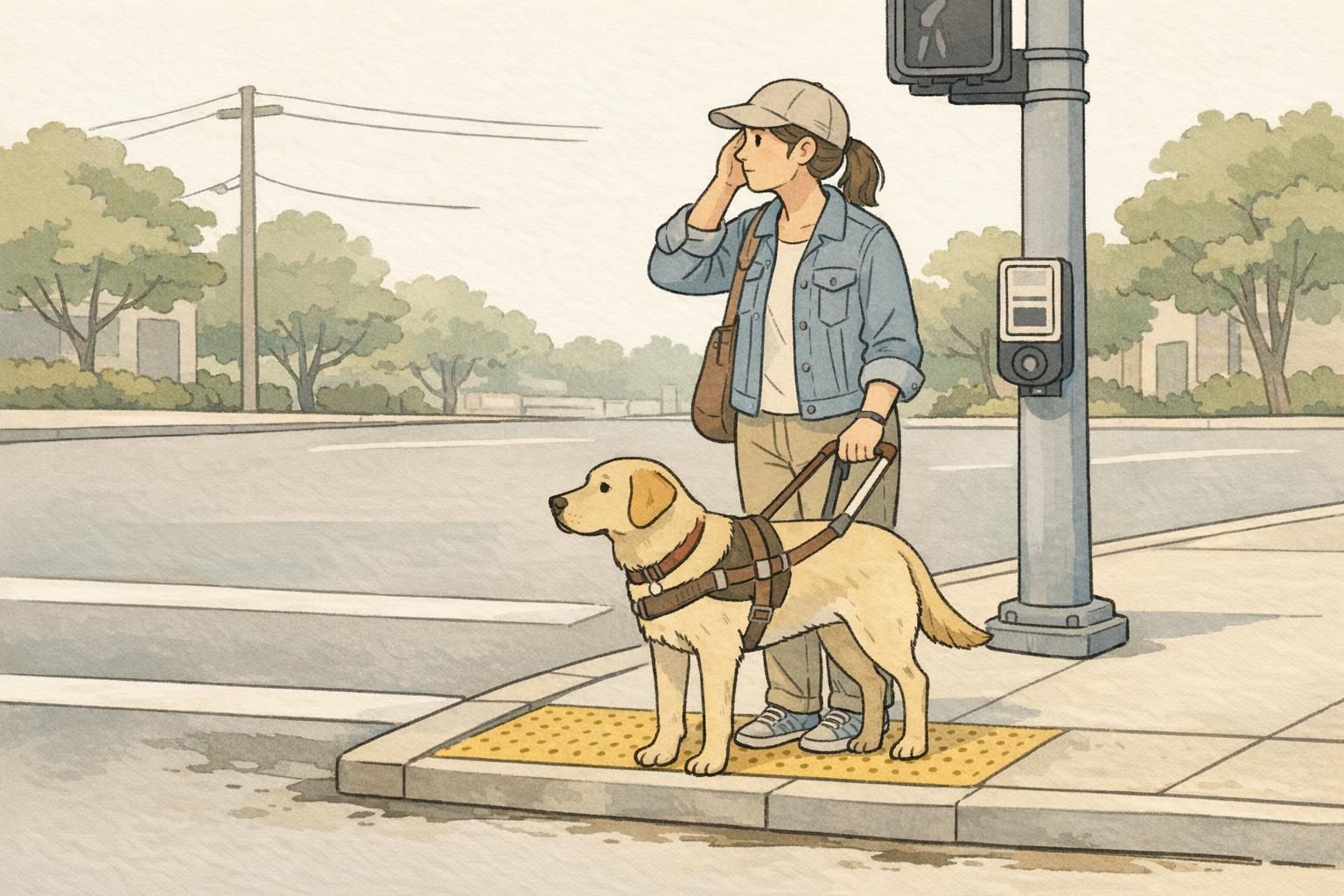
A guide dog can help with positioning, alignment, and safe movement patterns, but the handler is the one who decides when to cross. The dog supports safety by stopping at curbs and by refusing to move forward if something is clearly unsafe.
Because the goal is safety. Intelligent disobedience allows the dog to prevent a dangerous step forward, even if a forward cue is given.
Indoor public spaces add a different kind of complexity: tighter layouts, slippery flooring, crowded aisles, sudden stops, and people approaching from all directions. A guide dog team may need to navigate narrow store aisles, manage abrupt turns around endcaps, and pause in checkout lines without getting bumped by carts or baskets.
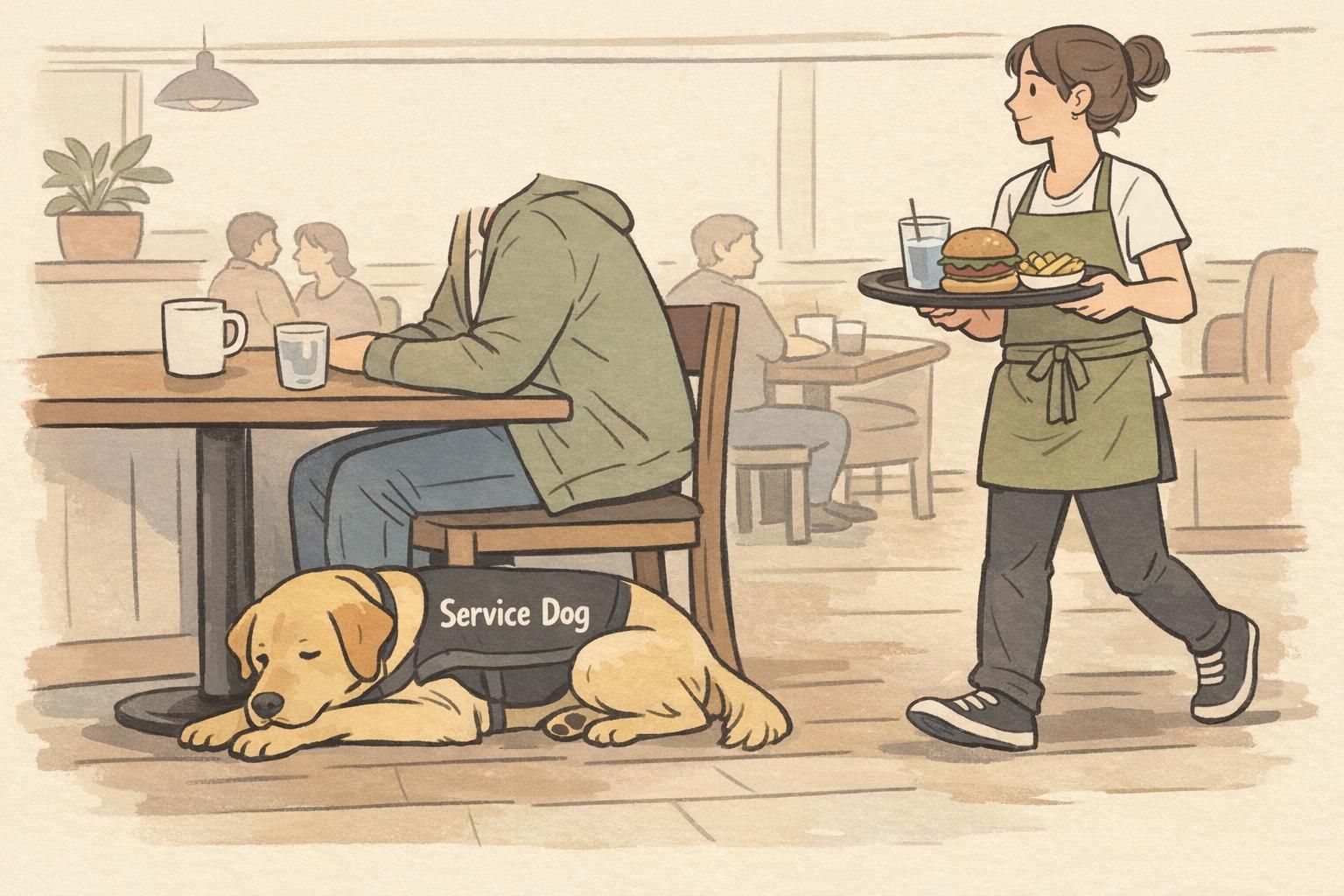
Restaurants can be especially challenging because space is limited and foot traffic is constant. The dog may need to “tuck” neatly under a table or close to the handler’s chair to keep aisles clear. Elevators and stairs also require calm, practiced routines—entering, turning, and exiting smoothly without crowding other passengers. Advanced guide work training commonly includes practice for busy sidewalks, elevators, stairs, slick floors, lines, and challenging crossings, along with safety behaviors like intelligent disobedience and navigating around barricades; see source.
Even with an excellent guide dog, unfamiliar spaces can feel like puzzles. Handlers often use systematic strategies to learn layouts and stay oriented, especially in buildings with multiple hallways, similar doorways, or open-plan designs.
One common approach is trailing: moving along a wall or stable edge to keep a consistent reference point. Another approach is using a grid pattern—making deliberate passes through an area to learn where obstacles, exits, and service counters are located. Throughout this process, the guide dog supports safe movement and obstacle avoidance, while the handler’s route planning and situational awareness remain central.
“ "When I’m in a new building, I’m not asking my dog to ‘figure it out’ alone. I’m building a mental map, and my dog keeps our movement safe while I decide the plan." – Guide dog handler”
Public access rules and norms can vary by location, and guide dog teams may occasionally encounter questions from staff or bystanders—especially in busy environments where employees are juggling many responsibilities. Often, the smoothest outcomes come from calm, clear communication and simple ways to provide context without turning the moment into an argument.
Having easy-to-share information ready can reduce misunderstandings and keep the focus where it belongs: on safe navigation and respectful access. Some handlers also prefer consistent identification (like vests, tags, or cards) because it helps strangers immediately recognize the dog is working and gives staff a quick way to understand what they’re looking at.
Many teams find it useful to carry ADA law handout cards for quick, calm communication so they can share straightforward information in a polite, low-pressure way when questions come up.
Even when a handler is fully comfortable managing their dog in public, the day-to-day reality is that other people may not immediately understand what they’re seeing. Optional service animal registration, IDs, and certificates can help some handlers feel more organized and prepared—especially for travel planning, housing conversations, or routine public interactions where quick clarity makes the moment easier.
These tools are often used as practical, confidence-building documentation. The benefit is less back-and-forth: you can present consistent information, keep your important details in one place, and move on with your day. For many teams, that predictability reduces stress and supports smoother routines.
If you want a convenient way to keep your information consistent, consider a starter registration package for everyday identification.
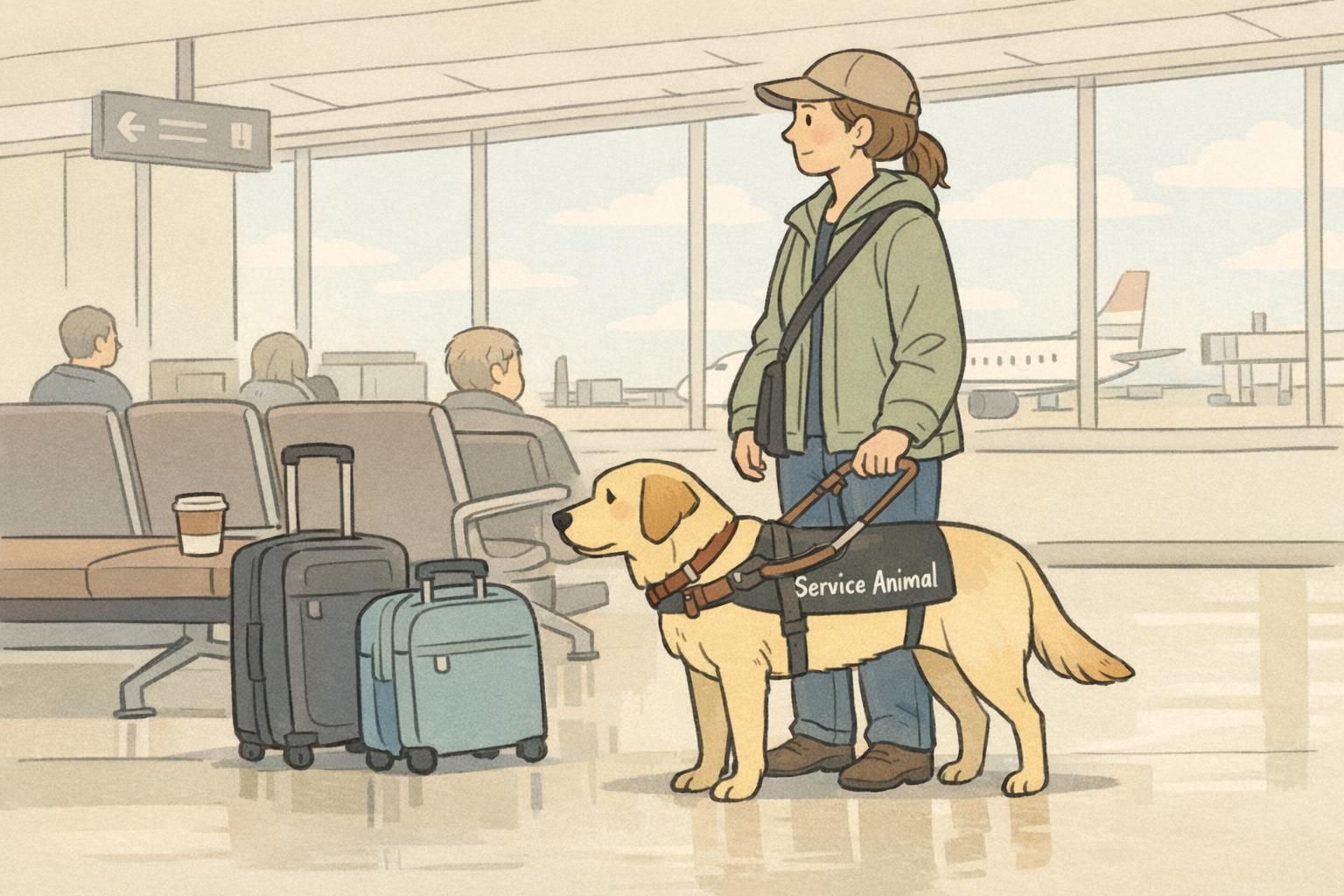
Airports, hotels, and transit hubs bring together nearly every navigation challenge at once: crowds that change direction quickly, rolling luggage, narrow seating rows, loud announcements, and long lines. The same core guide skills apply—straight lines, obstacle avoidance, curb/step work, and calm waiting—but the team often benefits from extra planning to conserve energy and avoid bottlenecks.
In an airport, a handler may plan routes that minimize tight turns (like choosing wider corridors) and build in time for relief breaks before security or boarding. In a hotel, the team might practice calm elevator entry/exit, navigate around lobby furniture, and locate a quiet corner to settle during check-in. Over time, these routines become familiar patterns the dog can rely on, even when the location changes.
For more practical travel planning ideas, see traveling with a service dog.
If you like having your key materials in one place for smoother travel days, a travel registration package for confident trips can be a helpful way to stay organized and ready for common questions on the go.
Your trusted source for service animal registration. Get professional ID cards, digital profiles, and smart NFC tags to keep your service animal safe and recognized.
© National Animal Registry — All rights reserved.