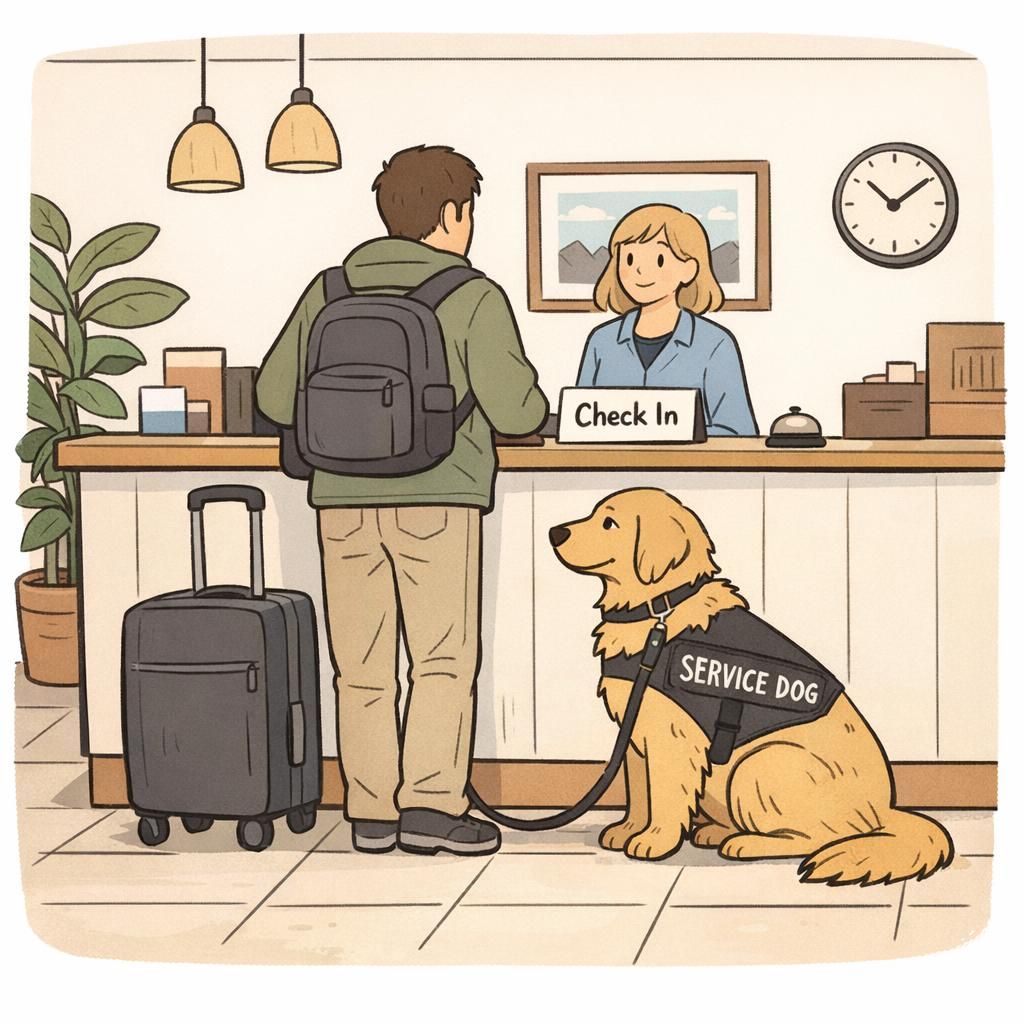
When a hotel or vacation rental says “no pets,” most travelers read it as a simple rule: don’t bring animals. In practice, that phrase usually targets animals kept as pets (like a companion dog or cat traveling for fun), not every type of assistance animal a guest might rely on.
It also helps to separate two different things: (1) what a property can control as part of its business policies, and (2) what may be protected by disability access laws in many places. Properties commonly restrict pet-related issues like where an animal can go, whether an animal can be left unattended, and what fees or deposits apply. But disability access rules in many jurisdictions treat service animals differently than pets, even when the listing or sign says “no pets.”
“Pet-friendly” doesn’t always mean “anything goes.” Many hotels welcome pets but still use clear limits to keep stays comfortable for everyone—especially guests with allergies, families with small children, and travelers who expect quiet at night.
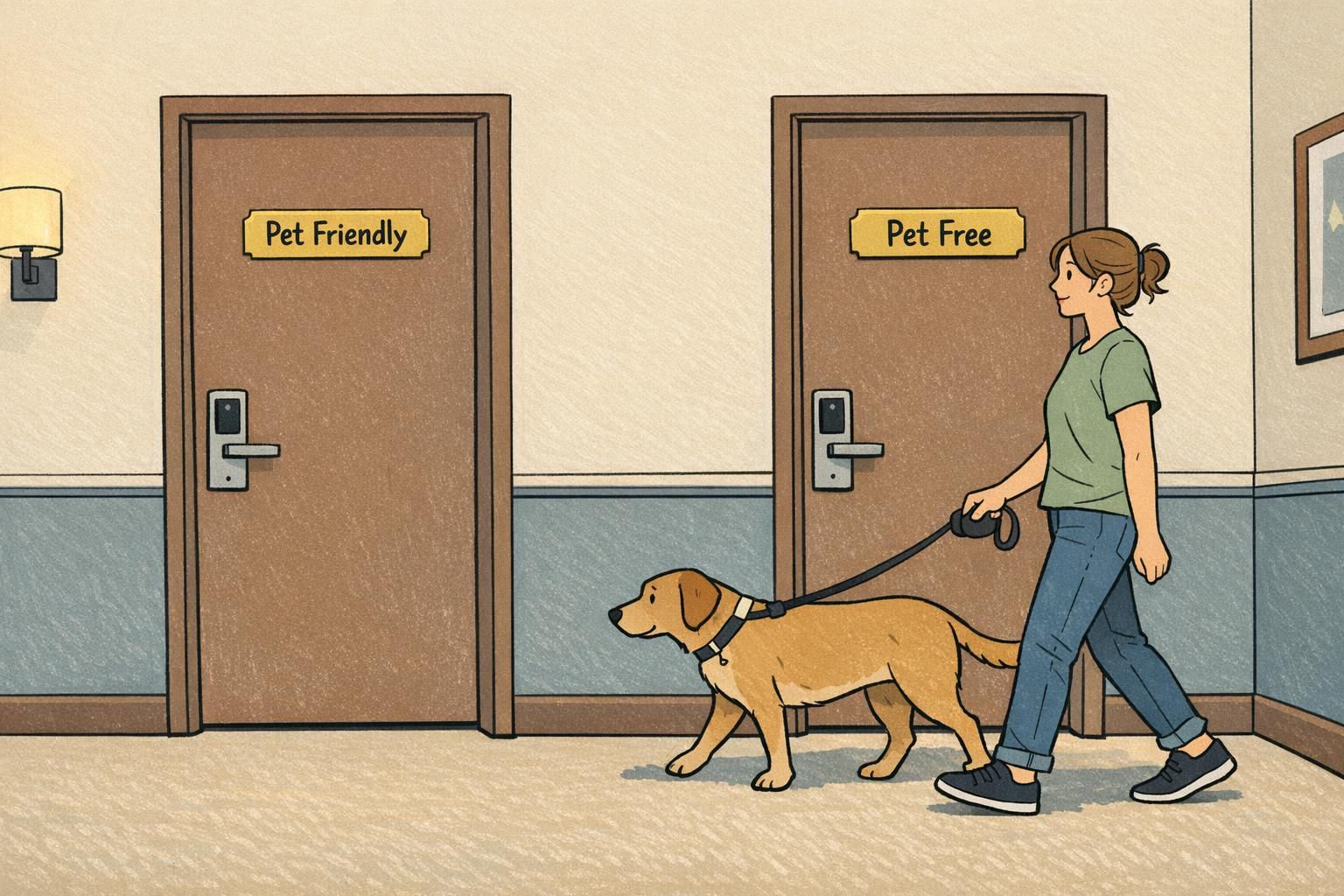
Common pet rules cover the basics (what animals are allowed) and the practical details (where they can go, how they should be handled in public spaces, and what happens if there’s disruption). Even in pet-friendly properties, you’ll often see boundaries around food-service areas, wellness spaces, and tightly shared areas.
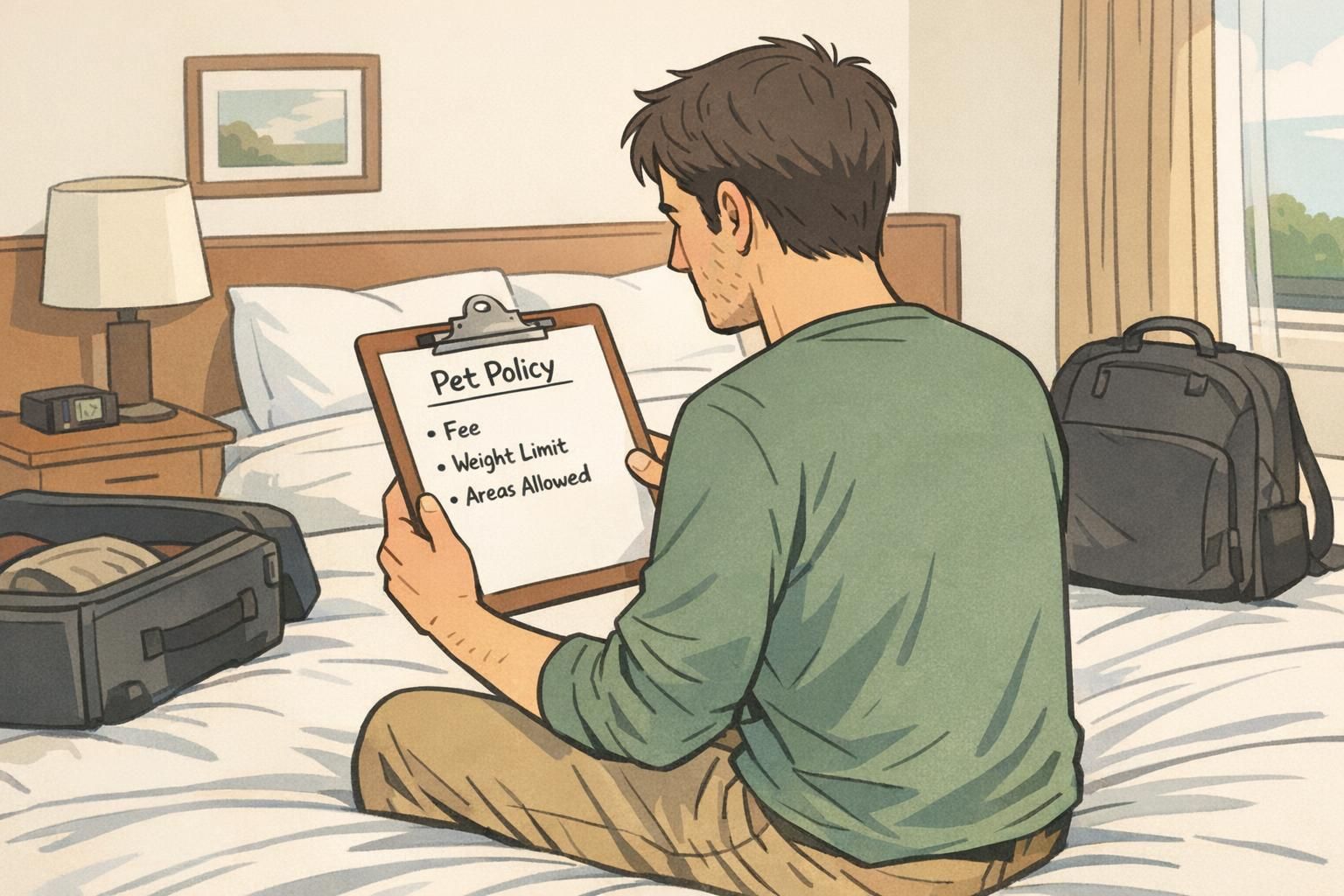
Hotels enforce pet policies in a few predictable ways: fees, deposits, and behavior standards. Understanding these terms before you arrive can save you money—and avoid a stressful check-in conversation.
Fee structures vary. Some hotels charge a nightly pet fee (which adds up on longer stays). Others charge a flat per-stay fee (which may feel more manageable for longer trips). Some require a refundable deposit that can be reduced if there’s damage or extra cleaning. Many properties also reserve the right to charge for actual damage, excessive cleaning, or rule violations.
Behavior standards matter just as much as money. Hotels typically expect animals to be under control in common areas, not disturb other guests, and not cause damage. Many properties also restrict leaving a pet unattended in the room, or they require a crate if you step out.
“ "The easiest stays are the ones where we ask about the fee, the relief area, and the unattended rule before we book. That one message prevents almost every surprise at check-in." – Frequent Traveler”
A common travel mistake is assuming that a hotel brand has one universal pet policy. In reality, policies can vary by location—even when the logo is the same—because individual properties may be franchised, operate in different buildings, or serve different types of guests.
One location might allow two dogs up to a certain weight with a flat fee, while another location in the same brand might allow only one dog, have a stricter weight cap, or add a higher nightly charge. City-center hotels sometimes have tighter rules due to limited space or local ordinances. Resorts may have different expectations because of outdoor amenities and higher cleaning costs.
Hotels are commonly treated as public accommodations under disability access rules in many places, which is why “no pets” language typically doesn’t apply to trained service animals in the same way it applies to pets. The practical takeaway for travelers is that a service animal is generally handled differently at check-in than a pet under a pet policy.
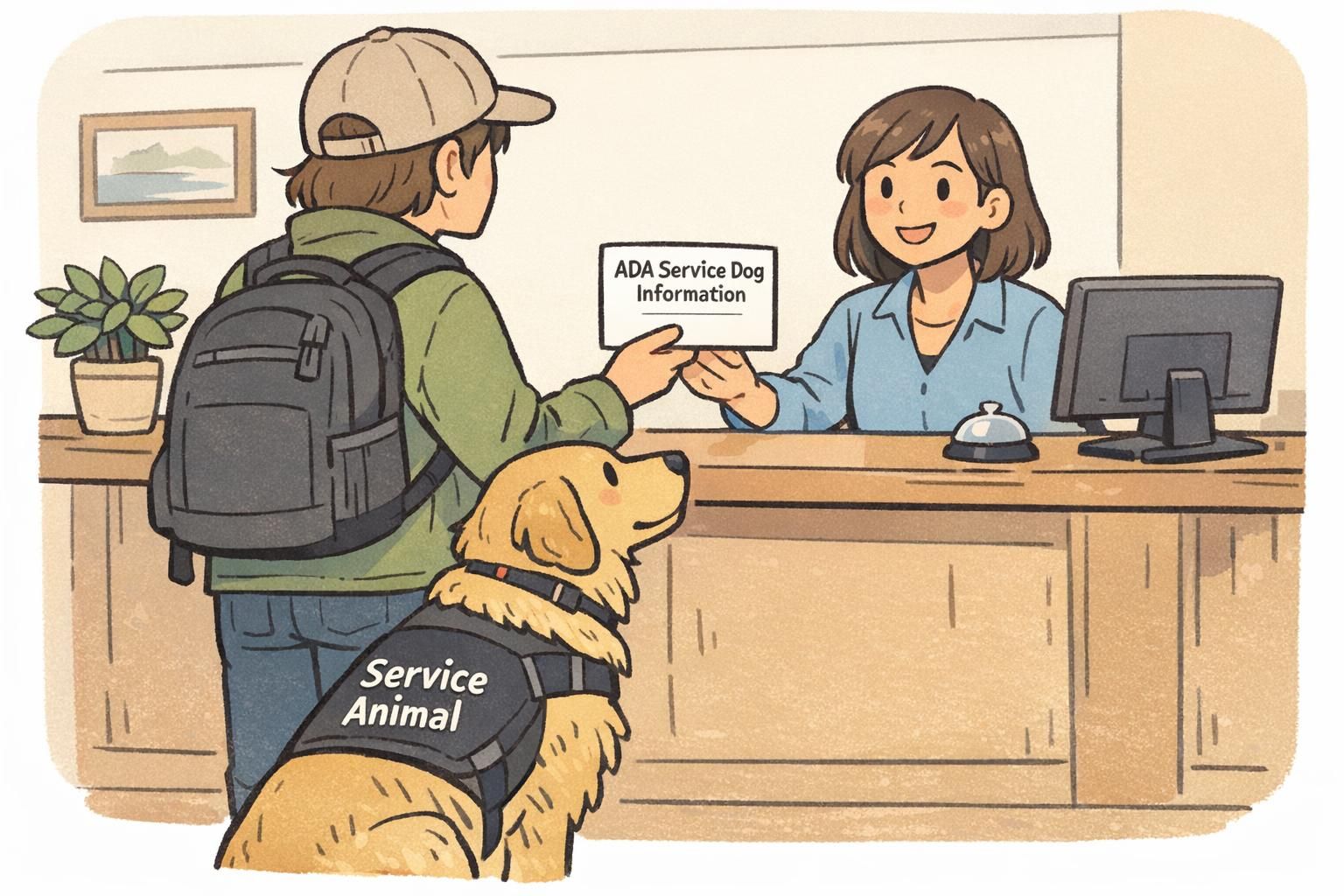
In plain terms, hotel staff usually focus on two things: whether the animal is a service animal required because of a disability, and whether the animal is under control. Staff commonly can ask limited, practical questions (such as whether the animal is required because of a disability and what work or tasks the animal is trained to perform). They generally should not treat a service animal like a pet for the purpose of pet fees, and they typically shouldn’t require “pet deposits” just because you have a service animal.
At the same time, service animals are still expected to meet behavior standards in shared spaces. If an animal is out of control or not housebroken, a property may address the behavior and, depending on the circumstances and local rules, may limit access. Calm communication at check-in can prevent misunderstandings and keep the focus on your stay—not on a debate in the lobby.
Many travelers find it helpful to carry simple educational materials that summarize service animal access rules in an easy, non-confrontational way. For example, ADA handout cards for simple, calm check-in conversations can make it easier to communicate clearly if a staff member seems unsure about the policy.
Airbnbs and similar short-term rentals can feel more personal than hotels—and that’s exactly why “no pets” can get complicated. Hosts often set house rules based on the realities of their space: shared hallways, neighbor concerns, cleaning schedules, or family allergies.
At the same time, platform policies and local laws may shape how service animals are handled. In many situations, a host’s preferences about pets don’t automatically control how service animals are treated, but outcomes can depend on where the rental is located, the type of listing (entire place vs. shared space), and the platform’s current policy language.
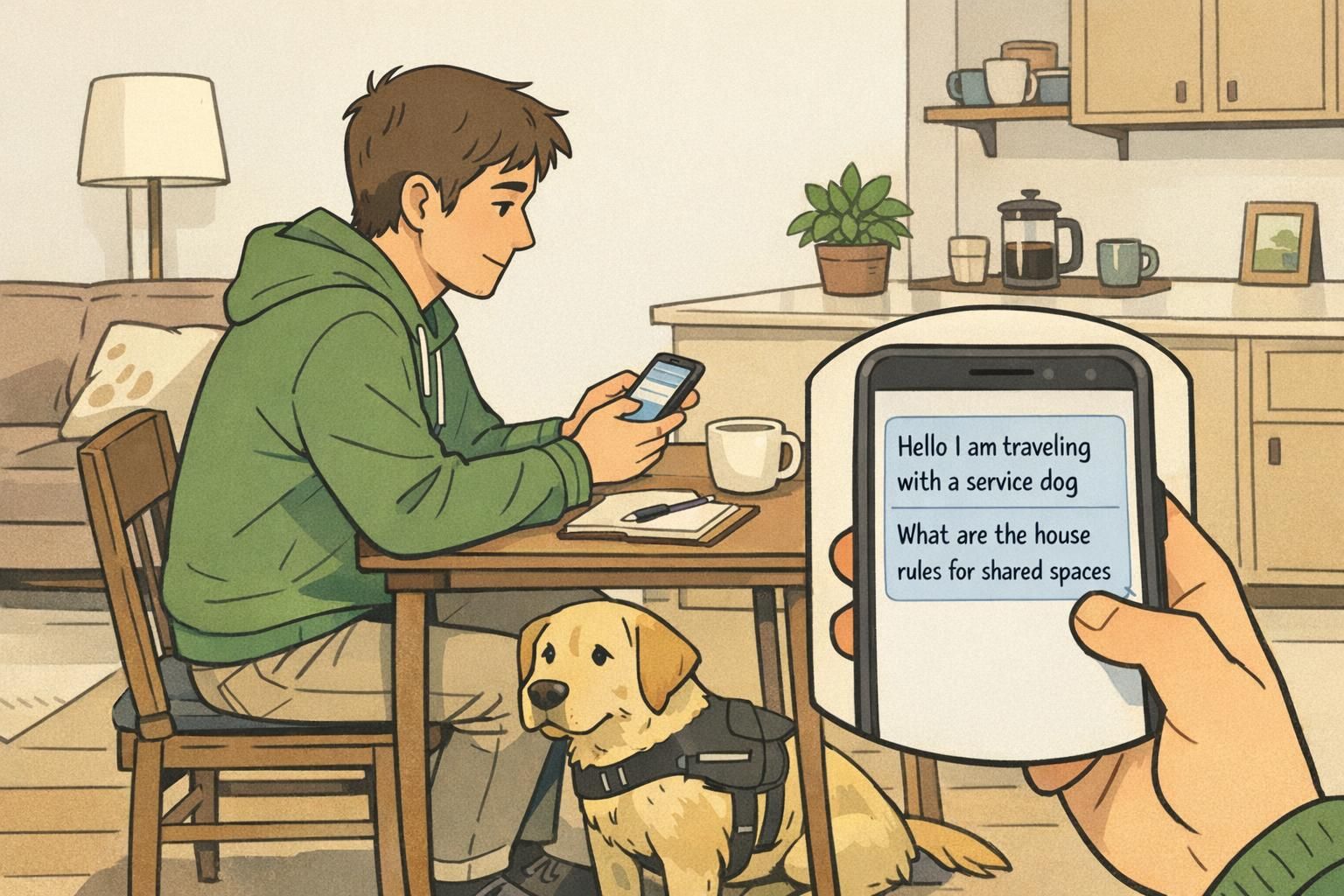
The best approach is proactive and respectful: confirm the key house rules in writing, clarify any shared-space expectations, and keep your messages brief and practical. This helps the host plan, helps you avoid surprises, and creates a written record of what was agreed.
Emotional support animals (ESAs) support a person’s well-being, but how they’re treated can depend heavily on the type of stay and the local rules where you’re traveling. Many jurisdictions draw a line between short-term lodging (like hotels and nightly rentals) and longer-term housing (like a lease), and that difference can affect what accommodations apply to ESAs.
For travelers, the practical point is to avoid assumptions. If you’re booking a short stay, the property may treat an ESA more like a pet under its pet policy, depending on applicable rules. For longer stays that function more like housing, different standards may apply in some locations.
No-pets policies aren’t always about disliking animals. They’re often a way to manage predictable issues that can affect other guests and the property itself.
Allergies are a major factor. Some properties try to maintain pet-free rooms or floors for allergy-sensitive travelers. Noise is another common concern—especially in buildings with thin walls or shared entryways. Cleanliness and cost also matter: deep cleaning, odor removal, and damage repairs can be expensive and time-consuming.
Understanding these motivations helps you plan in a way that reduces friction. If you show you’re thoughtful about cleanup, quiet hours, and respectful handling in shared areas, you’re more likely to have a smooth experience—whether you’re traveling with a pet, a service animal, or a support animal.
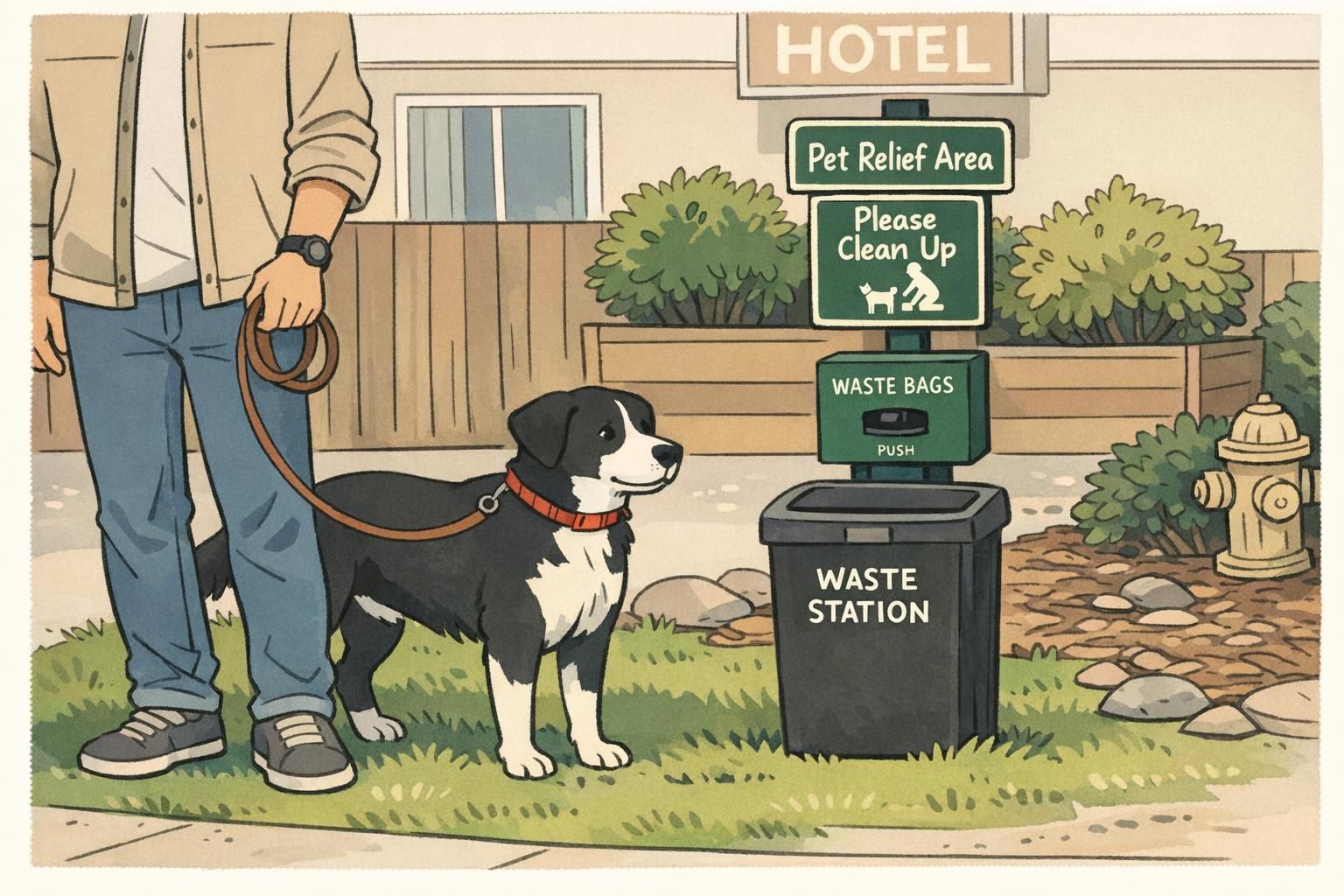
Most travel problems with animals aren’t caused by the animal—they’re caused by mismatched expectations. A quick checklist before you book (and again before you arrive) can prevent surprise fees, last-minute conflicts, or an awkward check-in.
Use the checklist below for hotels and short-term rentals. Even if you’ve stayed at the same brand before, confirm the specific property’s rules. And if you’re using a platform like Airbnb, keep everything in the message thread so you have clear documentation.
This is a simple message template you can copy and paste when booking:
“ "Hello! I’m planning a stay on [dates] and I’ll be traveling with an animal. Could you confirm your rules for: (1) any fees or deposits, (2) weight/number limits, (3) whether the animal may be left unattended (and if a crate is required), and (4) which areas of the property are allowed for the animal? Thank you!"”
Many common hotel pet-policy structures (including typical fees, restrictions, and expectations like whether a pet can be left unattended) are summarized in travel guidance like this source—but the most important step is always confirming the specific property’s rules before arrival.
Travel is fast-moving, and check-in desks are busy. When you’re tired from the road (or dealing with a last-minute room change), even small misunderstandings can feel bigger than they need to be.
That’s why many handlers and pet owners choose clear, professional identification tools that help communicate quickly and reduce confusion. While requirements can vary by location and situation, having a consistent way to present your animal’s information can keep the interaction focused on logistics—like where to walk, which entrance to use, and what the house rules are.
If you’re building a travel routine, it can also help to review practical travel tips ahead of time. National Animal Registry’s guide tips for traveling with a service dog covers helpful planning steps, from packing essentials to navigating common public-space moments.
For travelers who want an all-in-one option that’s easy to keep with luggage or attach to a leash bag, a travel-ready service dog registration package can be a practical way to keep key information organized and ready to share when needed.
Sometimes, yes. Hotels often group pet rooms to simplify cleaning and to keep pet-free inventory available for guests with allergies. If you have preferences (quiet room, near an exit, away from elevators), ask politely at check-in and see what’s available.
Yes. Fees and damage are separate issues. Many properties charge for actual damage, excessive cleaning, or repairs regardless of whether there’s a pet fee. The best protection is to keep the room tidy, follow relief routines, and report accidental issues immediately.
Allergies are real, and shared spaces can make this more sensitive. How this is handled can depend on the type of listing (shared vs. entire place), local rules, and platform policies. Keep communication respectful, ask for clarification about the space and entrances, and consider alternative listings if the setup is likely to create conflict.
Stay calm and keep it practical. Briefly explain you’re traveling with a service animal and focus on logistics (where to walk, which areas are appropriate). If needed, ask to speak with a manager. Having clear, professional information available can also help keep the conversation simple and non-confrontational.
Yes. Even when an animal is permitted, properties typically expect animals to be under control, housebroken, and not disruptive. Planning ahead (relief breaks, calm leash handling, and minimizing barking) helps protect your stay and everyone’s comfort.
Ask for clarification on the policy and calmly explain your situation. If the conversation is getting confusing, request that the staff member confirm with a supervisor or reference the property’s written policy. Keeping everything documented (reservation notes, messages, or emails) helps resolve misunderstandings quickly.
“ "The goal isn’t to ‘win’ a check-in conversation. It’s to arrive prepared, communicate clearly, and get settled without stress." – Hospitality Professional”
Your trusted source for service animal registration. Get professional ID cards, digital profiles, and smart NFC tags to keep your service animal safe and recognized.
© National Animal Registry — All rights reserved.