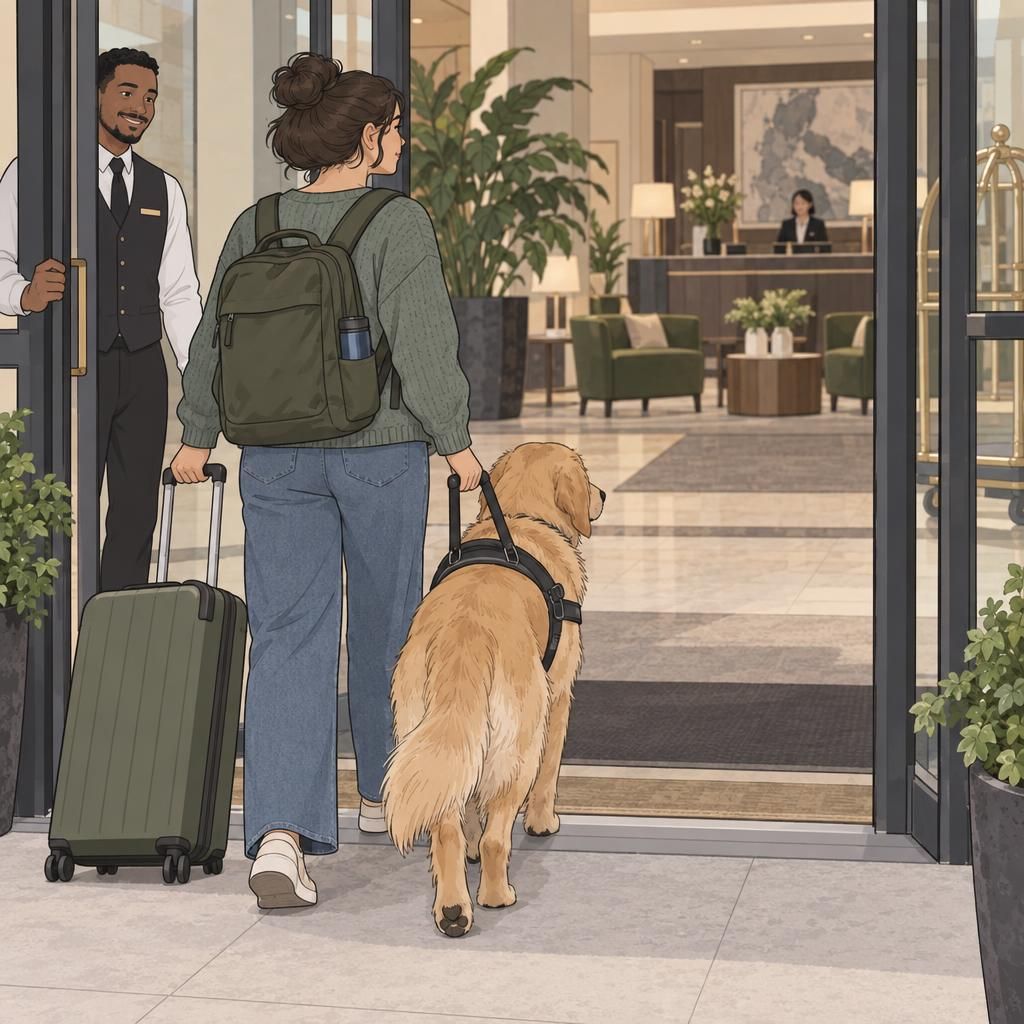
A comfortable hotel stay with your service dog starts with a few practical questions. Before booking, contact the property directly to discuss room options, nearby exits, and the easiest route to an appropriate outdoor relief area. The goal is to understand the layout and organize your stay—not to ask permission for access that U.S. disability law generally protects.
In the United States, a hotel generally must accommodate a service dog even when the property is not advertised as pet-friendly. It also cannot require you to stay in a specific pet room. Focus the conversation on the features that will make your visit easier, such as a convenient route outside or a room location that works well for your routine.
These conversations can reduce uncertainty, especially when you expect to arrive late or have a busy schedule. Confirm practical arrangements directly with the hotel rather than relying only on a booking website's pet-policy description.
Check-in is often easier when you have a short, clear explanation ready. Under U.S. Americans with Disabilities Act rules, when the need for a service animal is not obvious, staff may ask whether the dog is required because of a disability and what work or task the dog has been trained to perform. Your response can be brief and focused on those questions.
For example, you can explain that your dog is a service animal required because of a disability, then describe the actual trained task in everyday language. Keep the explanation accurate to your dog's work. You do not need to turn a routine check-in conversation into a detailed discussion of your medical history.
If a staff member begins explaining the hotel's pet policy, calmly clarify that you are traveling with a service dog. Keeping the conversation specific and courteous can help distinguish your access needs from an ordinary pet reservation.

Pack with your dog's usual routine in mind. Familiar food, bedding, and equipment can make a new room easier to navigate and help you avoid searching for essential supplies after a long travel day. Keep the items you will need immediately in an accessible bag rather than at the bottom of your luggage.
A service dog ID or registration materials can be useful communication tools, while wallet-sized service dog rights cards offer a convenient reference during questions about access. These items are optional and are not a condition of hotel access under federal ADA rules.
Keep helpful identification and reference materials together so they are easy to find if you choose to use them. Having your supplies organized lets you focus on your dog and the practical details of settling in.
Once you reach the room, allow time for your dog to become comfortable with the unfamiliar space. Set out water and place familiar bedding or a mat where your dog can rest near you without blocking your route through the room. A predictable resting spot can help establish a routine.
Coordinate housekeeping arrangements with the hotel early in your stay. Discuss a convenient time for room visits and how staff should approach the door. A “Do Not Disturb” sign can help communicate your preference, but direct coordination is useful when you need cleaning, towels, or other assistance.
If your dog already uses a crate comfortably, it may help organize the room during planned visits while you are present. There is no need to introduce unfamiliar equipment simply because you are traveling. Choose arrangements that support your dog's established habits, and keep your dog with you rather than relying on a sign or crate as a substitute for supervision.

Hotel lobbies, elevators, and hallways bring unfamiliar sounds and close encounters. Keep your service dog under control as you move through shared spaces. Use a leash, harness, or tether unless it would interfere with the dog's work or your disability prevents its use; in those situations, maintain control through other effective means.
Service dogs can generally accompany their handlers in hotel areas open to other guests. Move through these areas with attention to the space around you, keeping your dog close enough to avoid blocking walkways or becoming tangled with luggage. Address disruptive behavior promptly rather than allowing it to continue.
If an area becomes busy or distracting, pause and give yourself time to move through it comfortably. Maintaining your usual handling routine can make unfamiliar surroundings more manageable for both you and your dog.
Locate the outdoor relief area soon after arrival, ideally before your dog urgently needs it. Walk the route from your room so you know which exit to use and how long the trip takes. Carry waste bags every time, and build regular breaks into your schedule rather than waiting until the end of a busy day.
Plan meals, outings, and other activities around having your service dog accompany you. Do not assume that being comfortable in the room makes leaving the dog alone an appropriate arrangement. Coordinating housekeeping and taking breaks together can help you avoid situations where your dog would be left unattended.
For a broader look at organizing the journey, explore our guide to planning travel with a service dog. Thinking through the whole day—not just the time spent in the hotel—helps keep relief breaks and rest periods manageable.

If a question, room restriction, or fee seems inconsistent with U.S. ADA rules, start with a calm request for clarification. Explain the specific concern and ask to speak with a manager or accessibility coordinator if the front-desk conversation does not resolve it. A focused discussion is often more productive than debating every part of the hotel's pet policy.
Clear notes make it easier to explain the situation later without relying on memory. If you need further guidance, consider contacting the U.S. Department of Justice or a disability-rights organization. Keep your immediate needs in view while addressing the issue, including your dog's relief schedule and a comfortable place to pause.
For international travel, do not assume that U.S. hotel-access rules apply at your destination. Service-animal rules and travel requirements differ by country and may include documentation, vaccination, or transport requirements. Check current destination requirements with the relevant embassy or consulate before booking.
Confirm arrangements directly with the hotel as well. Ask about its service-animal procedures, room options, outdoor relief access, and any destination-specific requirements you need to address. Keep the hotel's responses with your travel information so you can refer to the agreed arrangements when you arrive.
Treat entry requirements, transportation arrangements, and the hotel stay as connected parts of the same plan. Checking each one early gives you time to prepare and reduces last-minute uncertainty. With familiar supplies, a clear daily routine, and practical communication, you and your service dog can approach your stay with greater confidence.
Your trusted source for service animal registration. Get professional ID cards, digital profiles, and smart NFC tags to keep your service animal safe and recognized.
© National Animal Registry — All rights reserved.