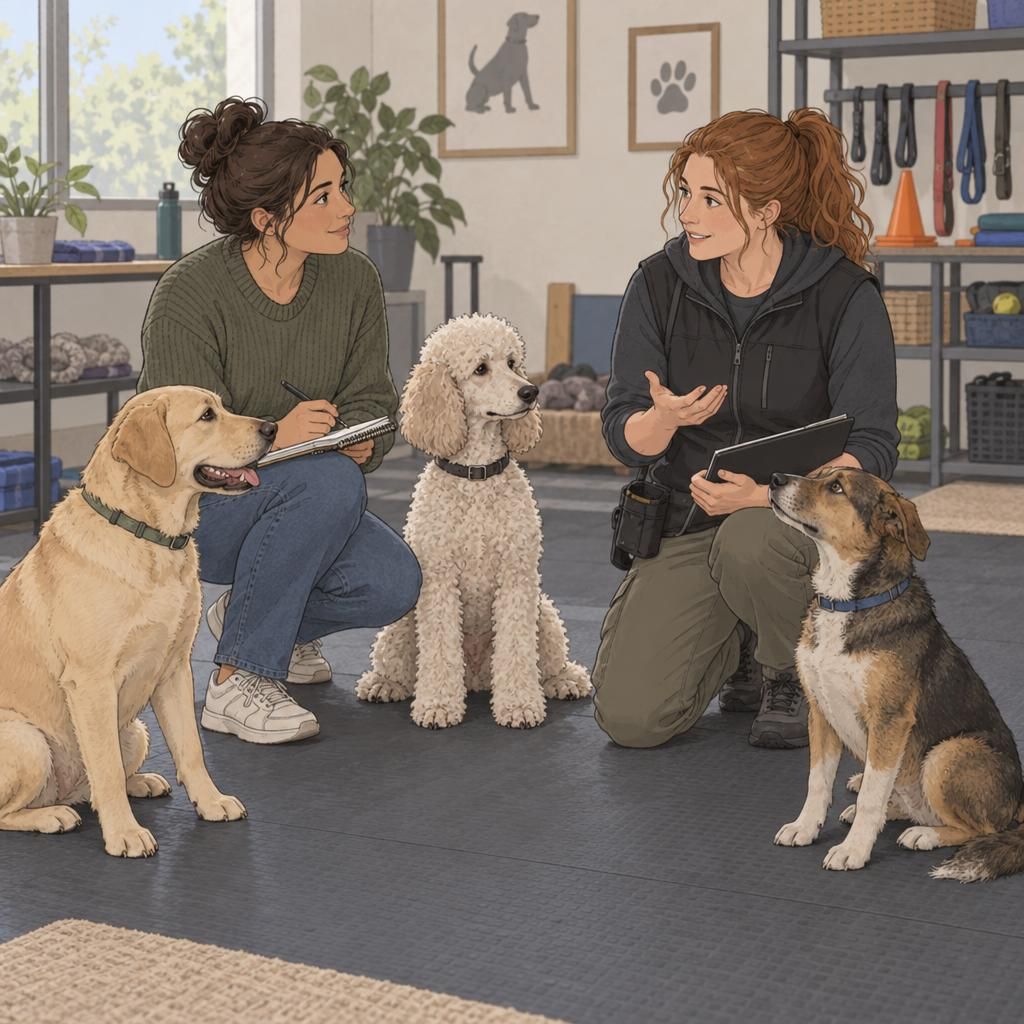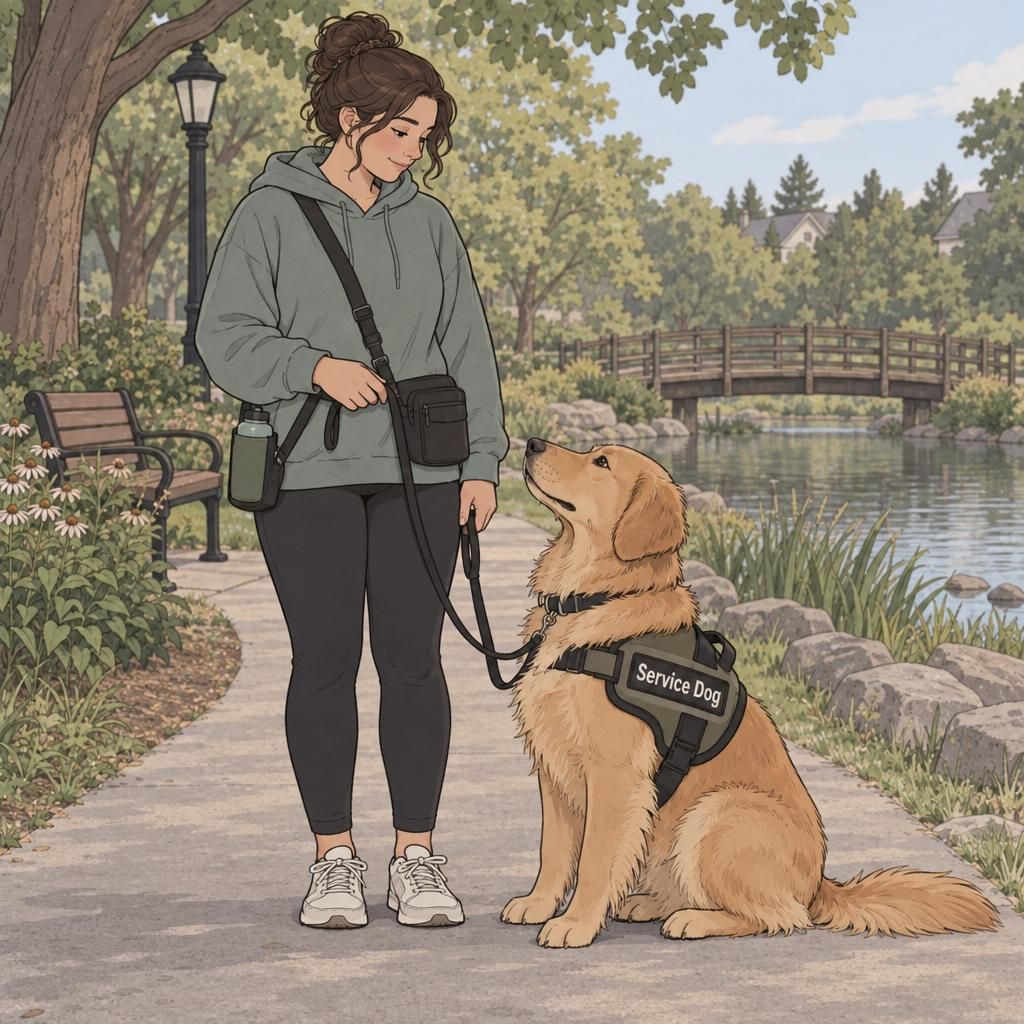
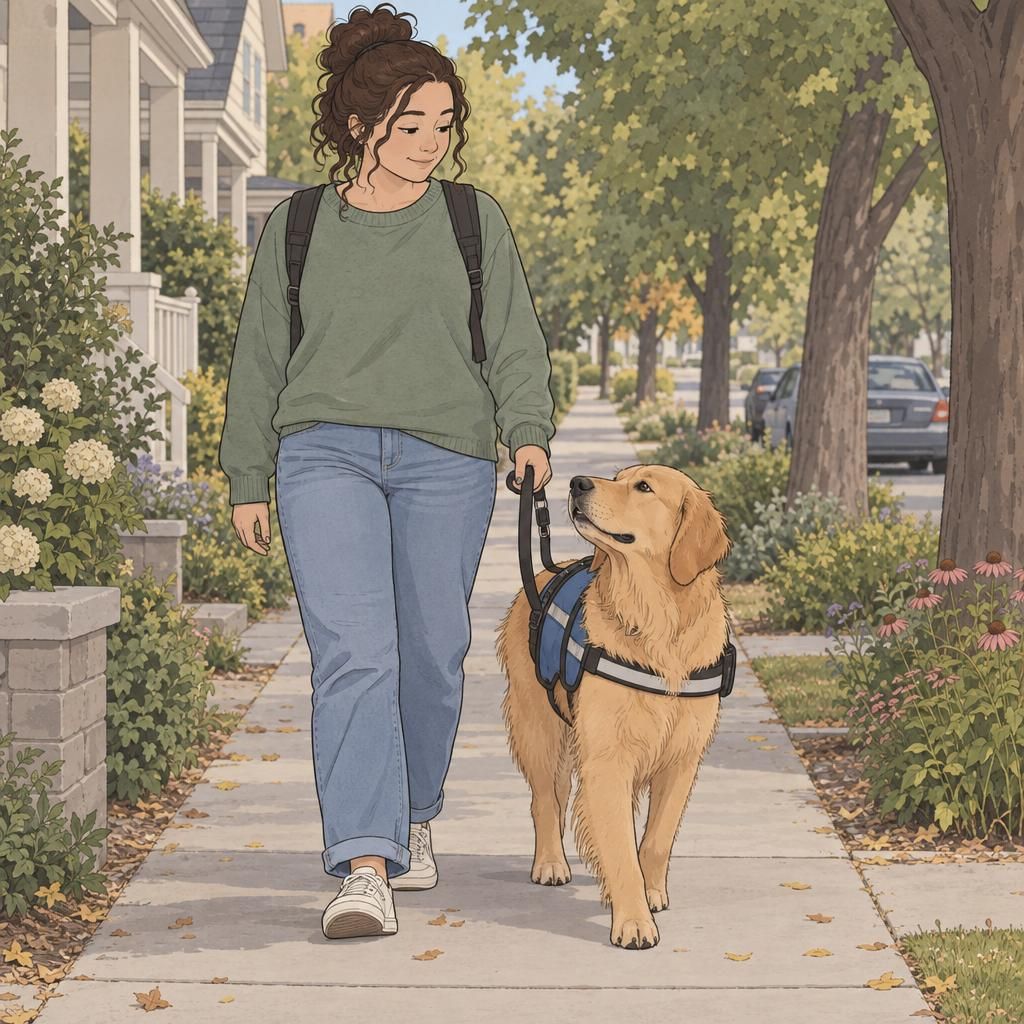
A service dog’s contribution is often easiest to understand through ordinary moments: noticing a change that needs attention, retrieving something out of reach, or helping a handler feel ready to enter a busy community space. These moments may look small from the outside. For the person relying on that assistance, they can make daily life safer and more manageable.
Service dogs are working partners whose individually trained tasks support disability-related needs. Depending on the handler, that work may involve medical alerts, mobility assistance, safety-related responses, or tasks that help manage psychiatric symptoms. The dog’s role is shaped by the person, rather than by a single checklist that fits everyone.
The accounts of Sterling, Beau, McGrew, Dozer, Rhapsody, and Trapper highlight this variety. Their stories describe different forms of teamwork, but they share a common theme: assistance that helps a person respond, participate, or move through the day with greater independence. These are individual experiences, not promises that every service dog will perform the same tasks or produce the same results.
Sterling’s story with Thomas Griffin illustrates how a service dog’s response can become part of managing complex health needs. Thomas’s account describes Sterling responding to symptoms related to multiple sclerosis and Type 1 diabetes. Those conditions present different challenges, making the partnership an example of assistance tailored to an individual rather than a diagnosis alone.
The reported glucose-related incident is best understood as a moment when Sterling’s response helped draw attention to a concern so Thomas could take action sooner. The information provided does not establish a glucose reading, a precise timeline, or the mechanism behind the response. It would therefore be misleading to describe the incident as proof that a dog can consistently predict every blood-sugar change.

The practical value lies in the response sequence: the dog signals, the handler pays attention, and the handler follows their established care plan. A service dog’s alert can support that process without replacing monitoring equipment, medication, or medical care. Sterling’s story highlights teamwork within everyday health management, not a substitute for it.
For Adrien, a child with autism who was prone to wandering, Beau’s reported safety intervention shows another kind of assistance. Wandering can create urgent concerns for a child and caregiver. In this account, Beau’s role centered on safety—a reminder that a service dog’s work may address a specific risk rather than a visible mobility limitation.
The account does not provide enough detail to reconstruct exactly how Beau intervened. The meaningful takeaway is that an individually trained response can fit into a broader safety plan. A dog’s assistance should complement caregiver supervision and other precautions, rather than be treated as a guarantee that wandering cannot happen.
McGrew’s practical assistance to Jeanie, who has muscular dystrophy, brings the focus to everyday independence. Tasks that require reaching, moving, or repeated effort can shape how someone organizes an entire day. Having a dog assist with an appropriate task can reduce the need to interrupt an activity or ask another person for help.

These are examples of task-based support, not a claim that Beau or McGrew performed every task listed. Both accounts show why the details of a handler’s needs matter more than broad assumptions about what service dogs do.
For veterans living with PTSD or other injuries, everyday participation can involve challenges that are not immediately visible. Sleep disruption, anxiety, and difficulty feeling secure may affect plans long before someone arrives at a store, appointment, or social gathering.
The stories of Dozer and Tony Charles, Rhapsody and April, and Trapper and Karen Steelman describe service-dog partnerships in this context. Taken together, the accounts report help with interrupting nightmares, easing anxiety, supporting a sense of security, and making community participation feel more manageable. These benefits should be understood as individual reports, rather than identical outcomes across all three partnerships.
An interruption during a nightmare can offer a point of reorientation. Assistance during an anxious moment may help a handler pause and respond. Feeling more secure can also make it easier to consider an outing that previously felt overwhelming. The value is not necessarily that symptoms disappear, but that the person has another form of support when symptoms affect daily life.

These partnerships also illustrate the difference between companionship and trained assistance. A meaningful bond can coexist with specific work that addresses disability-related needs. Neither the bond nor the dog’s tasks should be presented as a cure or as a replacement for a veteran’s wider care and support network.
Personal stories help explain what assistance feels like in daily life. Research adds a broader perspective. Purdue University reported better psychosocial health among study participants with physical disabilities who had received service dogs compared with participants who were still on a waitlist (source).
That comparison supports a careful conclusion: service-dog partnerships were associated with better psychosocial well-being in the group studied. It does not establish that every handler will have the same experience, that every benefit comes from one particular task, or that the findings automatically apply to every disability.
Well-being also depends on the environment around a partnership. Handlers may encounter access barriers, unwanted attention, or stigma. Even a well-prepared outing can become stressful when someone distracts the dog or makes assumptions about the handler’s disability.
Inclusion is not only about allowing someone into a space. It also means making participation comfortable and respectful once they are there.
Preparation can make everyday outings feel more organized. A consistent place for identification, relevant information, and essential supplies helps a handler avoid searching through bags or messages when attention is needed elsewhere. The goal is a practical routine that supports the partnership.

For longer journeys, planning ahead for service-dog travel can help handlers think through arrangements before departure. Laws and requirements can vary by location, setting, and type of travel, so check the rules that apply to the actual itinerary.
Registration materials and an ID can serve as optional tools for organized identification and clear communication. For handlers who prefer that approach, a service dog registration package with a printed ID and digital profile offers a way to keep identifying information together. These materials complement preparation; they do not replace the dog’s trained work or guarantee access in every setting.
When questions arise, a calm, concise explanation can help keep the interaction focused. Across these stories, the central lesson remains the same: service dogs make a difference through assistance matched to a person’s needs, supported by thoughtful preparation and a community willing to include them.
Your trusted source for service animal registration. Get professional ID cards, digital profiles, and smart NFC tags to keep your service animal safe and recognized.
© National Animal Registry — All rights reserved.