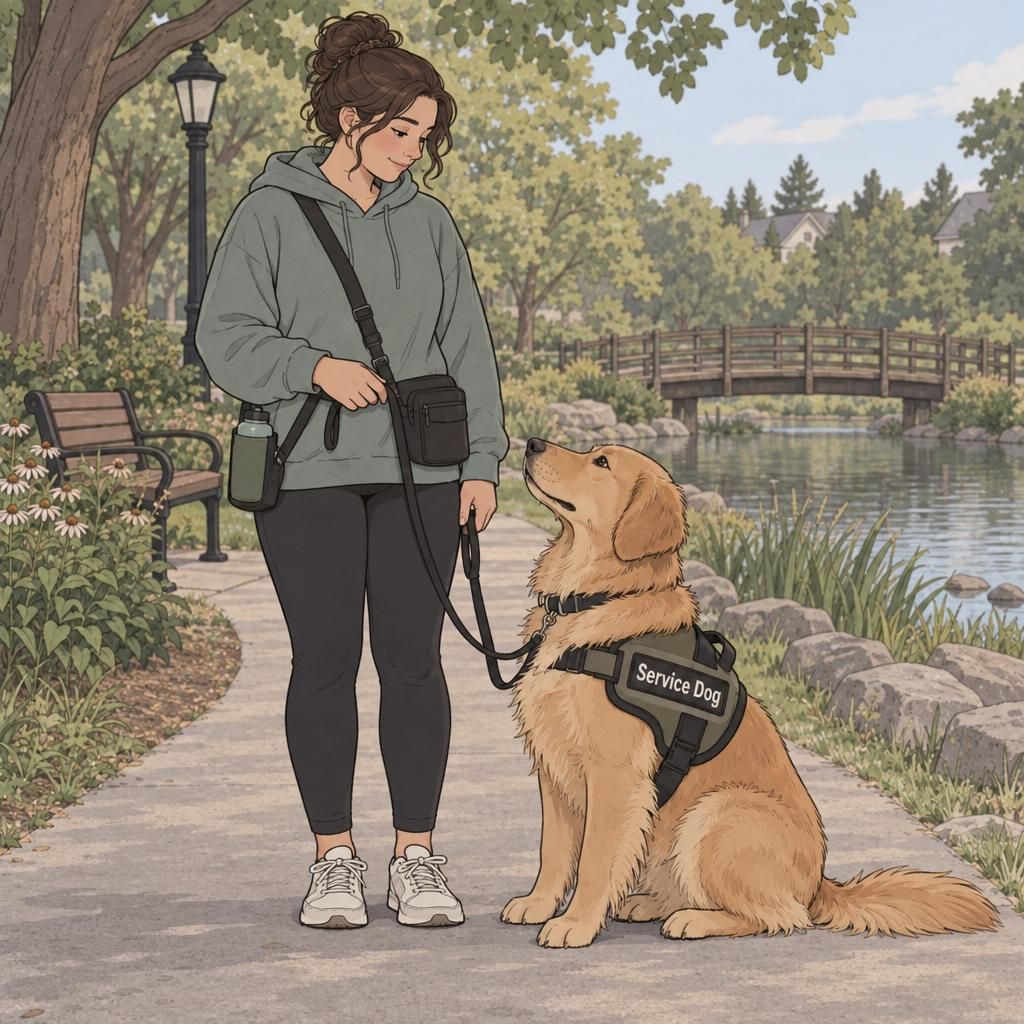

Choosing a service dog starts with a practical question: which dog can reliably perform the tasks you need while thriving in your everyday life? A favorite breed may be a starting point, but appearance and reputation cannot tell you whether an individual dog will become a dependable working partner.
The strongest choice brings together task fit, temperament, health, and a manageable care routine. Use the following steps to narrow your options, compare individual candidates, and build a realistic plan.
Before comparing breeds, make a prioritized list of disability-related tasks. Be specific about what the dog would do, where the task would happen, and how often you might need it. For psychiatric support, describe a trained action rather than companionship alone—for example, interrupting a particular behavior.

A service dog needs more than friendliness or quick learning. Look for calm confidence, comfort around unfamiliar people, interest in working with a handler, and the ability to settle when nothing is happening. A suitable candidate should be able to focus without needing constant entertainment.
Recovery matters, too. A dog may notice a dropped object or an unexpected sound; the important question is whether it can recover and return to work without prolonged distress. Observe the dog across several ordinary situations rather than relying on one impressive meeting.
Breed tendencies can help narrow a search, but they do not determine an individual dog’s suitability. Keep temperament and task fit at the center of your decision; this discussion of service-dog breed selection offers additional context: source.
Labrador Retrievers, Golden Retrievers, Labrador–Golden crosses, Standard Poodles, and German Shepherds can provide useful starting points. Each comes with care needs and individual variation. Compare adult dogs and family histories where possible, not just broad breed descriptions.
These are possibilities, not a ranking. Other breeds and mixed-breed dogs may also suit particular tasks. No breed, cross, pedigree, or working label guarantees a suitable service dog.

Picture an ordinary week with the dog, including your hardest days. Can you meet its exercise and enrichment needs during a flare-up? Can you manage grooming, feeding, toileting, and veterinary visits when your energy or mobility is limited? A workable backup-care plan is part of a sustainable partnership.
Consider adult size in your home, vehicle, and usual destinations. Think about shedding, grooming costs, climate, expected lifespan, and the long-term cost of food and health care. Meet adult dogs whenever possible: living with a mature dog can feel very different from meeting a puppy.
If travel is part of your routine, include it in breed selection rather than treating it as an afterthought. Our guide to planning travel with a service dog can help you think through preparations.
A promising temperament needs a sound health foundation. Ask about breed-appropriate health screening, available veterinary information, and the dog’s background. Where relevant, discuss joint, eye, cardiac, or inherited-condition screening with a veterinarian. Screening informs a decision, but it cannot promise lifelong health or working success.
Established service-dog programs may offer experience matching dogs to handlers. Working-line breeders with transparent health practices may provide useful information about relatives and previous dogs. However, a working-line label is not enough: intense drive or high energy may create demands that do not fit your daily life.
For any candidate, seek clear answers about social experiences, behavior in different settings, health history, and known challenges. An independent candidate assessment can add perspective. If information is limited, acknowledge that uncertainty rather than filling the gaps with assumptions.

An experienced service-dog trainer, program, or behavior professional can help turn your priorities into a practical comparison. Useful guidance considers both sides of the partnership: the dog’s abilities and needs, and your handling preferences, stamina, environment, and support network.
Professional input is useful guidance for making an informed choice, not a prerequisite for registration. National Animal Registry does not require proof, medical letters, or training documentation to register an animal.
Once a dog is part of your working plans, consider how you will organize its information and communicate its role during everyday interactions. Registration, an ID, or a certificate can be a practical, optional tool for keeping details consistent and supporting clearer conversations.
For handlers who want organized identification, a service dog registration package with a printed ID and digital profile offers a convenient way to keep identifying information together. Identification complements preparation; it does not replace the dog’s task training or readiness for a particular setting.
Build an outing routine around the dog’s needs: a suitable leash, water, toileting opportunities, and a plan for breaks. Check applicable destination rules in advance, since requirements can vary by location and setting.

Choose the best individual dog from a suitable working population, rather than choosing a favorite breed first and hoping the rest will fit. Start with your tasks, then compare temperament, health, daily care demands, and the guidance available to you.
Take time to ask questions and compare options. The goal is not to find a universally perfect service-dog breed. It is to build a healthy, sustainable partnership with an individual dog suited to your life.
Your trusted source for service animal registration. Get professional ID cards, digital profiles, and smart NFC tags to keep your service animal safe and recognized.
© National Animal Registry — All rights reserved.