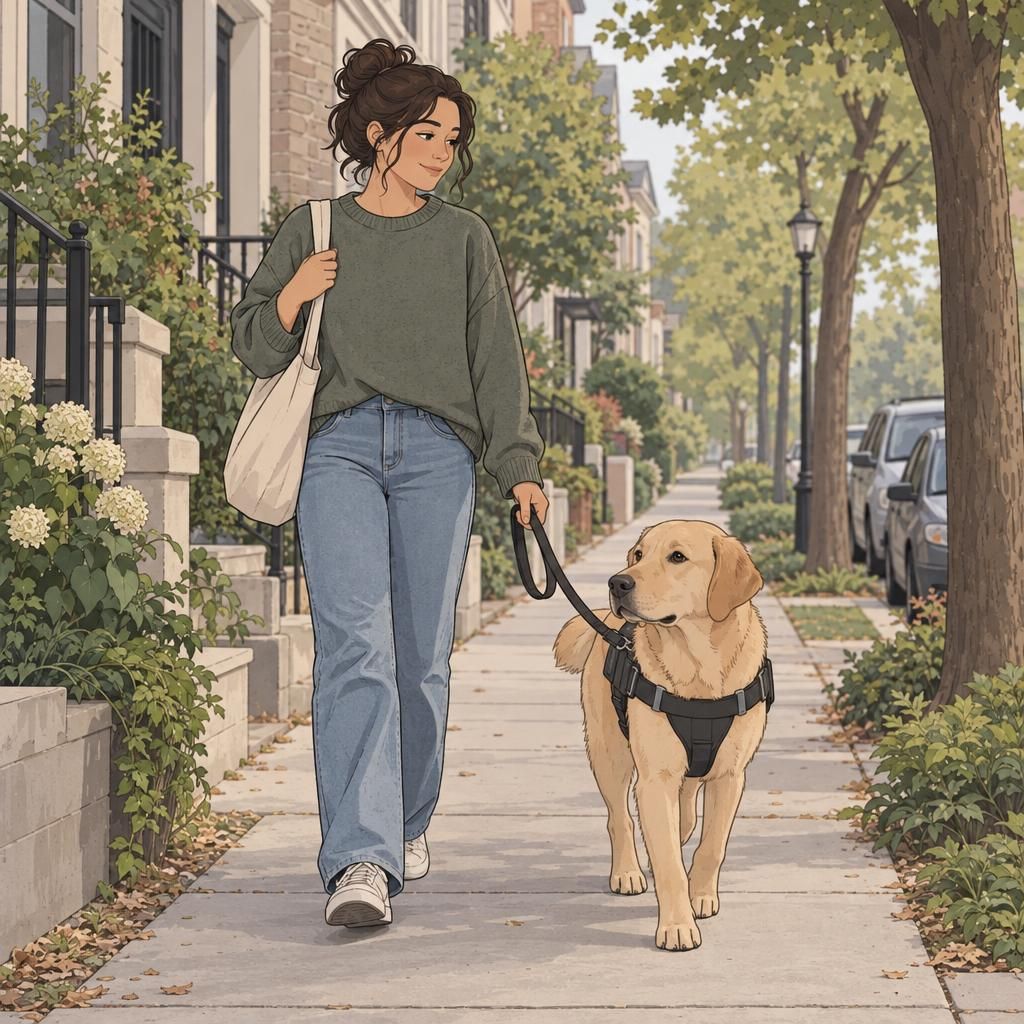
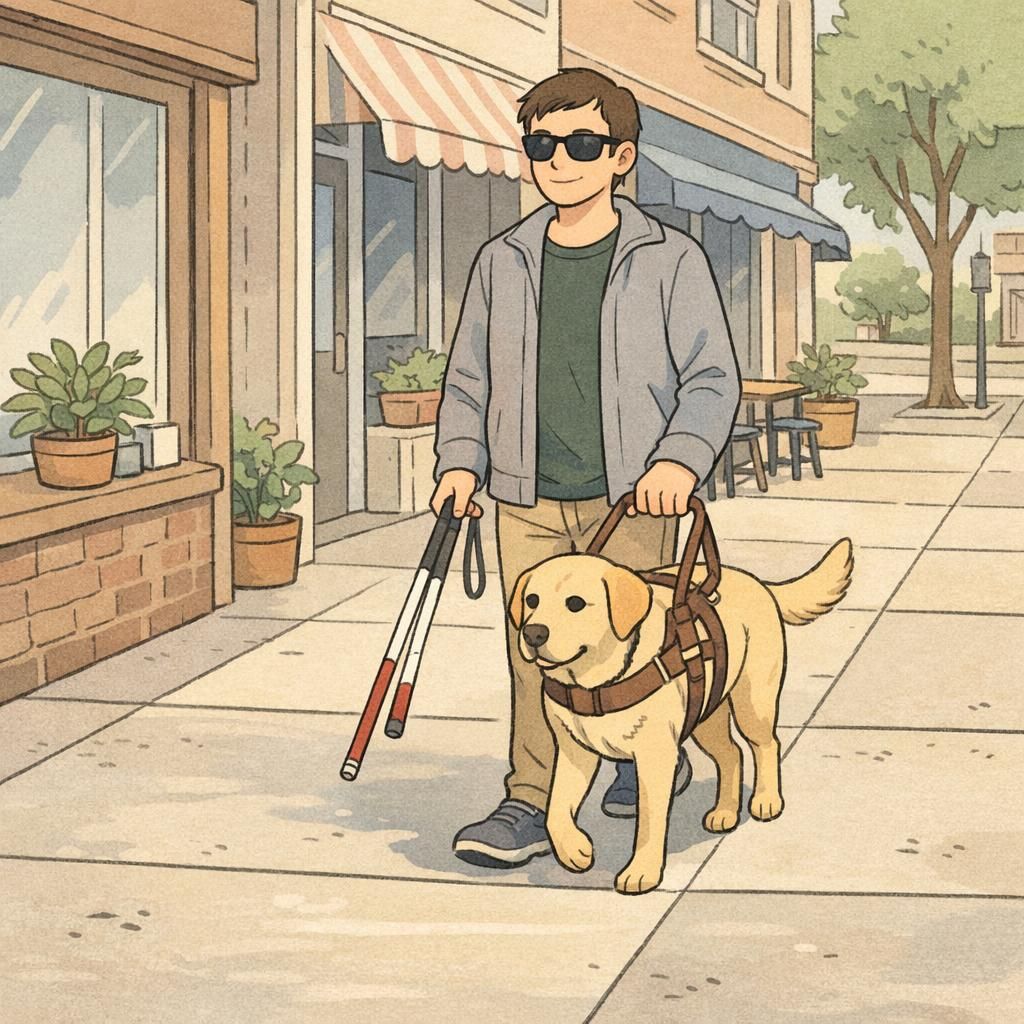
People often picture a guide dog as “a dog who leads.” Owners tend to describe something more specific: a moving partnership where two different intelligences share the same goal—safe, confident travel. The handler brings destination, judgment, and cues. The dog brings trained skills, steady focus, and the ability to interpret the environment in real time.
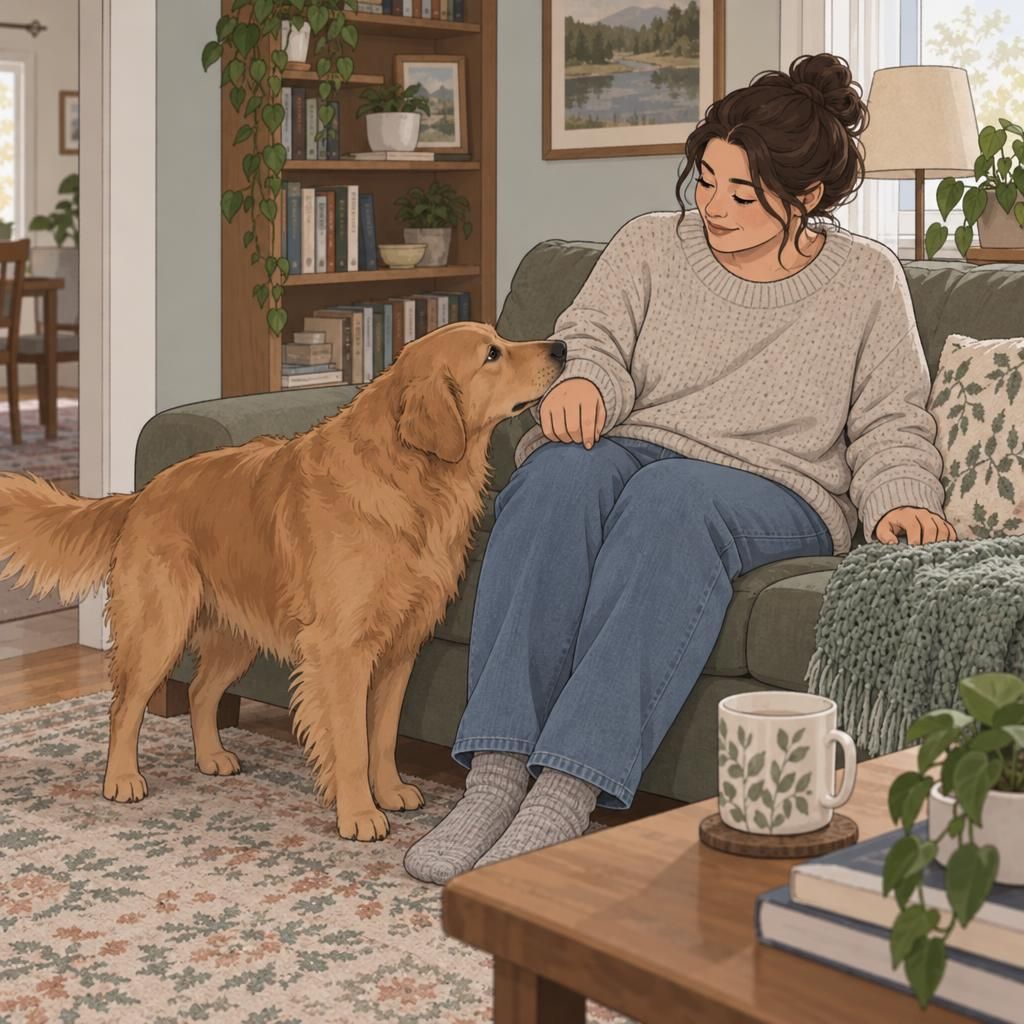
Day to day, it can feel surprisingly ordinary—and that’s part of the magic. A guide dog learns the rhythm of your morning: how you step out the door, which way you naturally angle your shoulders, when you pause to listen for traffic, and the pace that feels comfortable. Over time, that routine builds a quiet trust that shows up everywhere: getting to work on time, catching a familiar bus stop, or walking into a store without feeling like every obstacle is a new puzzle.
“ "It’s not just that my dog helps me get from point A to point B. It’s the feeling of moving through the world with fewer interruptions—like my attention can go back to my life, not just the sidewalk." – Guide dog handler”
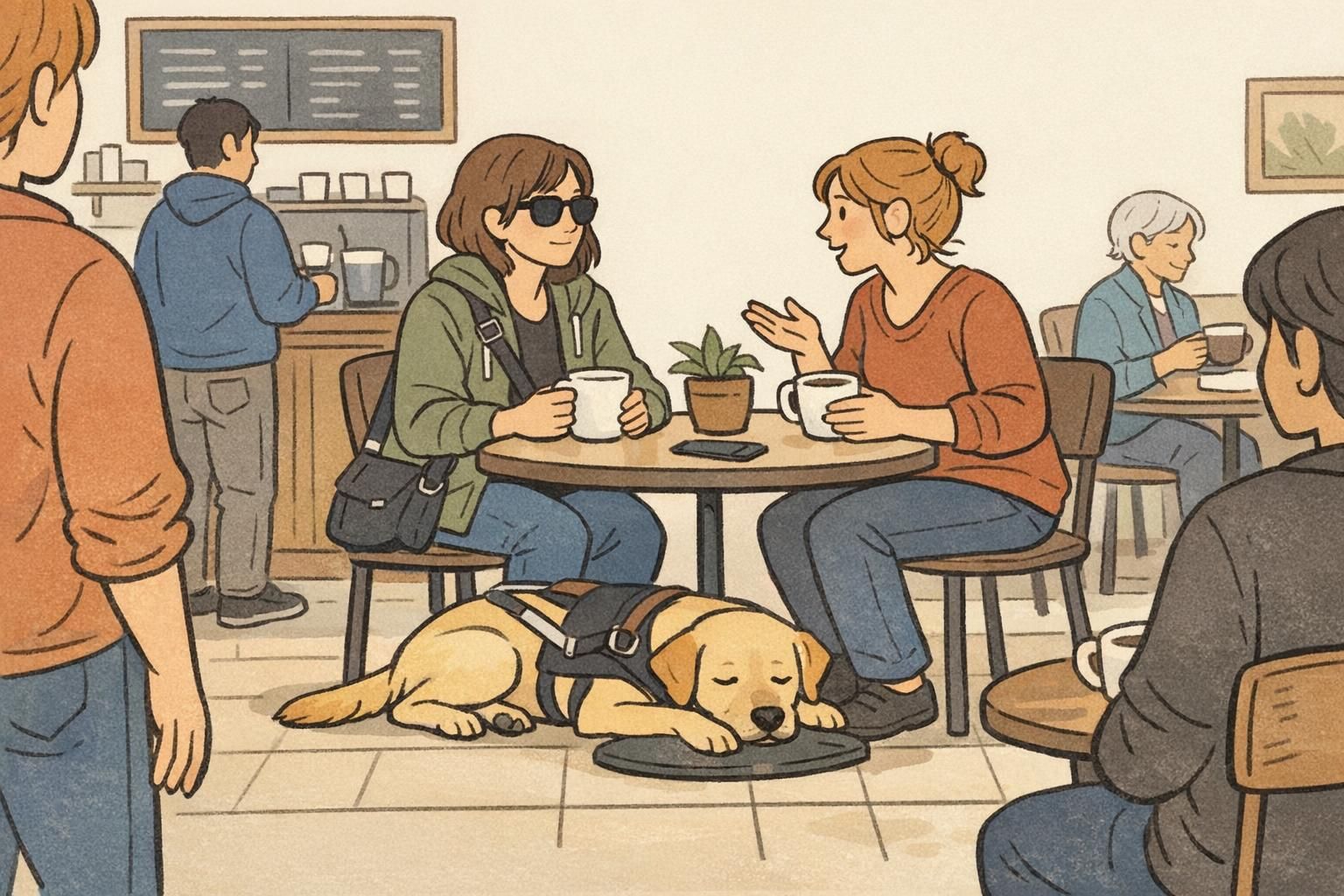
Handlers often say trust becomes real when the world gets messy: a confusing intersection, a crowded platform, a construction detour that changes a well-known route. In those moments, a guide dog’s decision-making can turn stress into forward motion—sometimes in a way that’s hard to appreciate until you look back and realize what could have happened.
High-impact moments aren’t always dramatic. Sometimes it’s a dog slowing slightly before a curb you didn’t expect, or pausing at a driveway where a silent car is rolling forward. Other times, it’s a dog choosing a safer line through a busy environment—steering wide around a hazard, stopping to reassess, and then continuing with purpose. Many guide dog users share stories of pivotal safety experiences, including being guided through complex traffic situations, and describe how those events deepen confidence in the partnership (source).
“ "The first time my dog refused a command because it wasn’t safe, I felt two things at once: frustrated, and then incredibly grateful. That was the day I understood we’re a team." – Guide dog owner”
Guide dog stories aren’t limited to commuting and shopping. Many teams describe their dogs as partners in an active life—helping them say “yes” to plans that once felt complicated. That might mean visiting a new neighborhood, attending events, or traveling to meet friends without needing to arrange extra assistance.
For some owners, adventure looks like mastering unfamiliar environments: hotel lobbies, busy airports, winding campus paths, or a festival crowd. For others, it’s the joy of outdoor challenges—navigating trailheads, stepping around roots and rocks, and maintaining a steady pace when the terrain changes. Even when a guide dog isn’t “reading a map,” the dog can support forward movement through consistent handling skills: slowing for hazards, choosing a clear path, and staying attentive despite distractions.
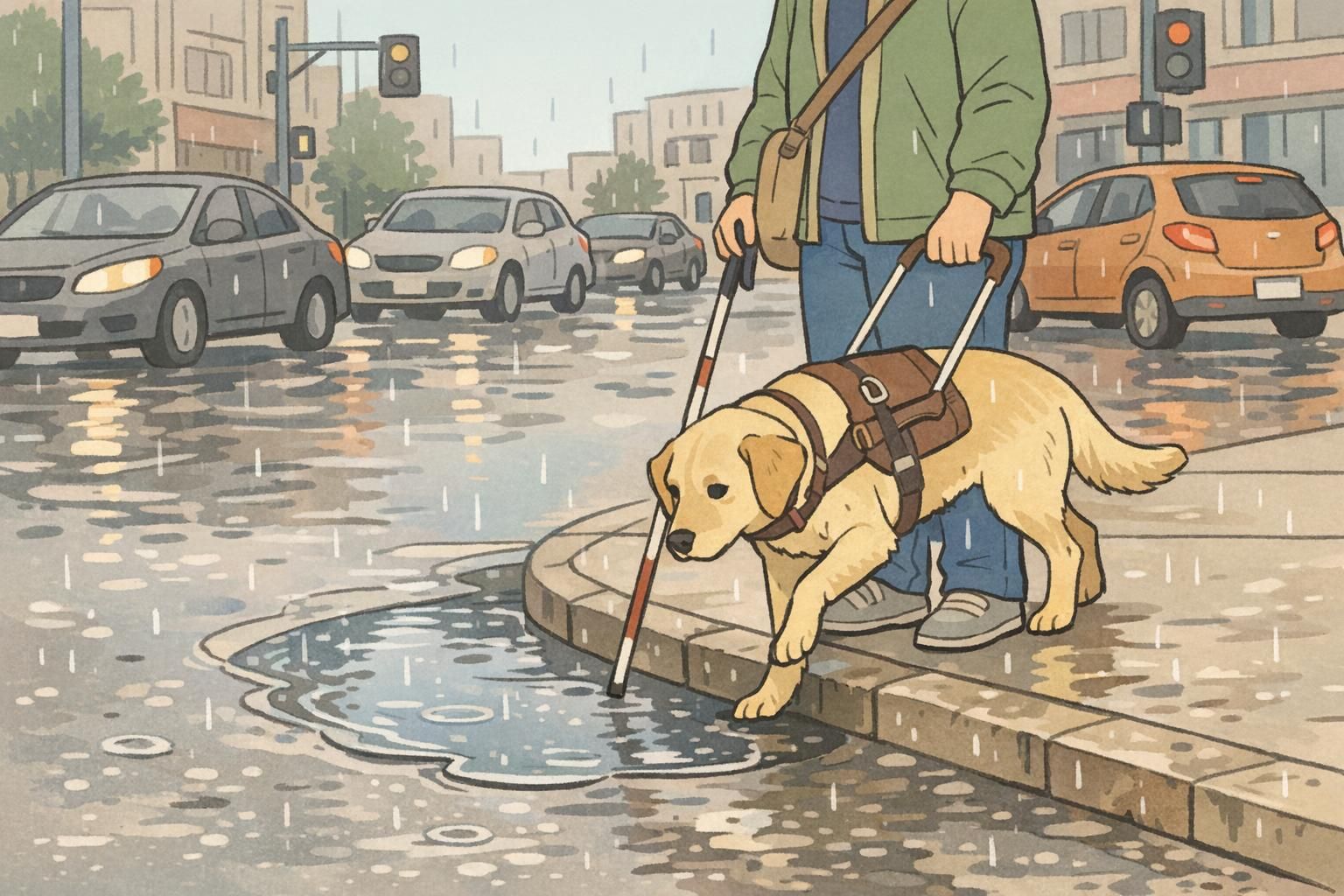
“ "My world got bigger in a practical way. Errands became quicker, yes—but the bigger change was realizing I could explore without bracing myself for constant friction." – Guide dog handler”
Even the most prepared handler can be surprised by the adjustment period. A new guide dog partnership asks for new timing: how quickly you give a cue, how you hold the harness, how you signal a turn, and how you interpret pauses. Early on, many handlers describe feeling like they’re “behind” the dog’s pace—especially when everything is new and public attention is intense.
Bonding can be immediate, but it doesn’t have to be. Some teams click in days. Others take weeks or months to feel truly synchronized. That doesn’t mean anyone is failing—it means you’re building a working relationship while also building a personal one. And like any relationship, it improves with repetition, clear communication, and a little patience on the hard days.
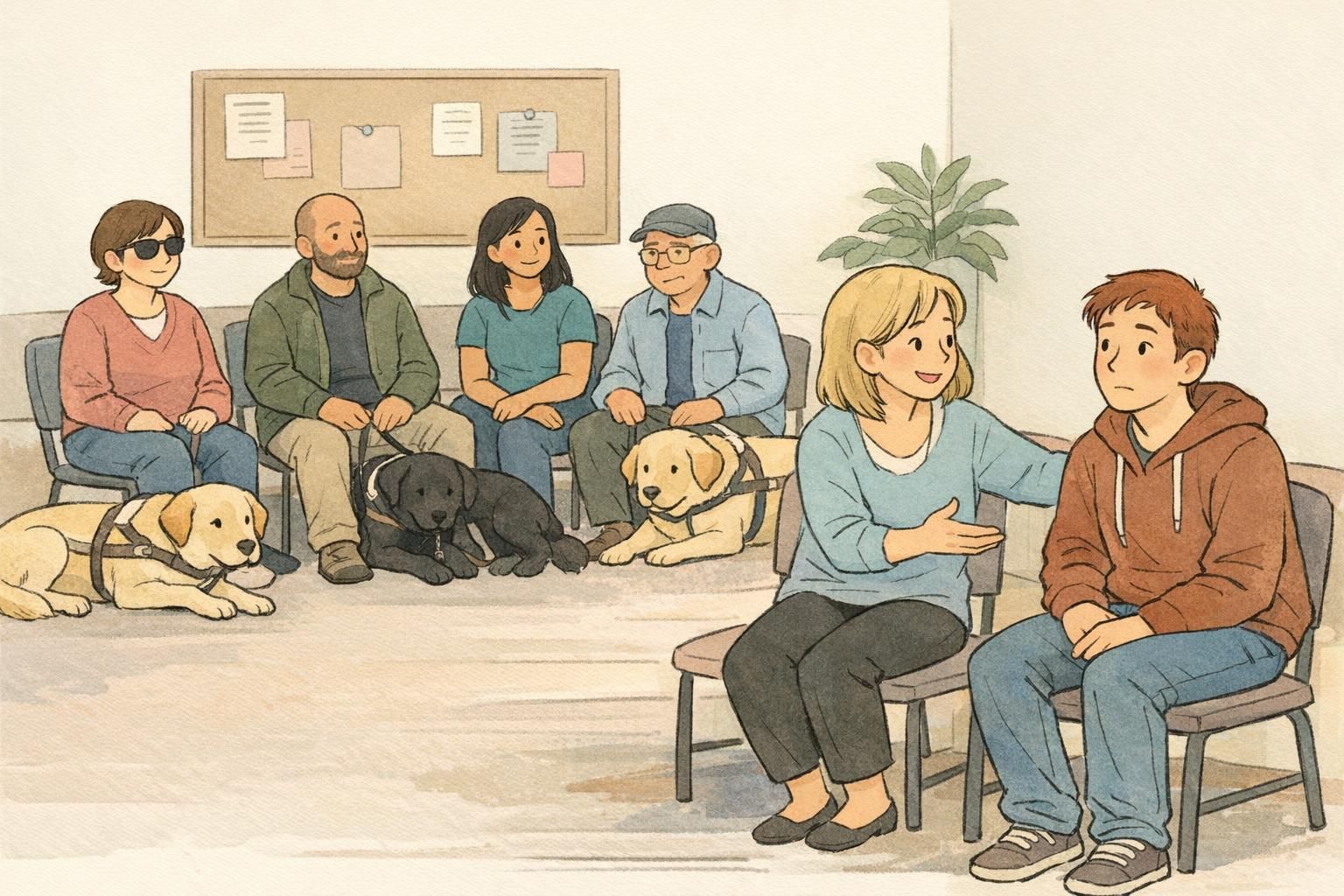
That’s normal for many teams. Focus on routine, consistent cues, and low-pressure successes. The relationship often strengthens as communication becomes predictable and both of you learn each other’s style.
Many use short, calm phrases and keep moving when possible. Planning a few “go-to” responses ahead of time can reduce stress and help you stay focused on your dog.
One of the most tender chapters in guide dog life is transition. Over time, even the best working dog slows down. Age, health changes, or stamina shifts can make once-easy routes feel harder. Handlers often describe mixed emotions: gratitude for years of partnership, concern for the dog’s comfort, and anxiety about what comes next.
Retirement is not just a logistics change—it’s a relationship change. The harness may come off more often. The dog may relax into a new role as a beloved companion. And the handler may rebuild mobility routines, whether that means refreshing cane skills, adjusting routes, or preparing to partner with a new guide dog in the future.
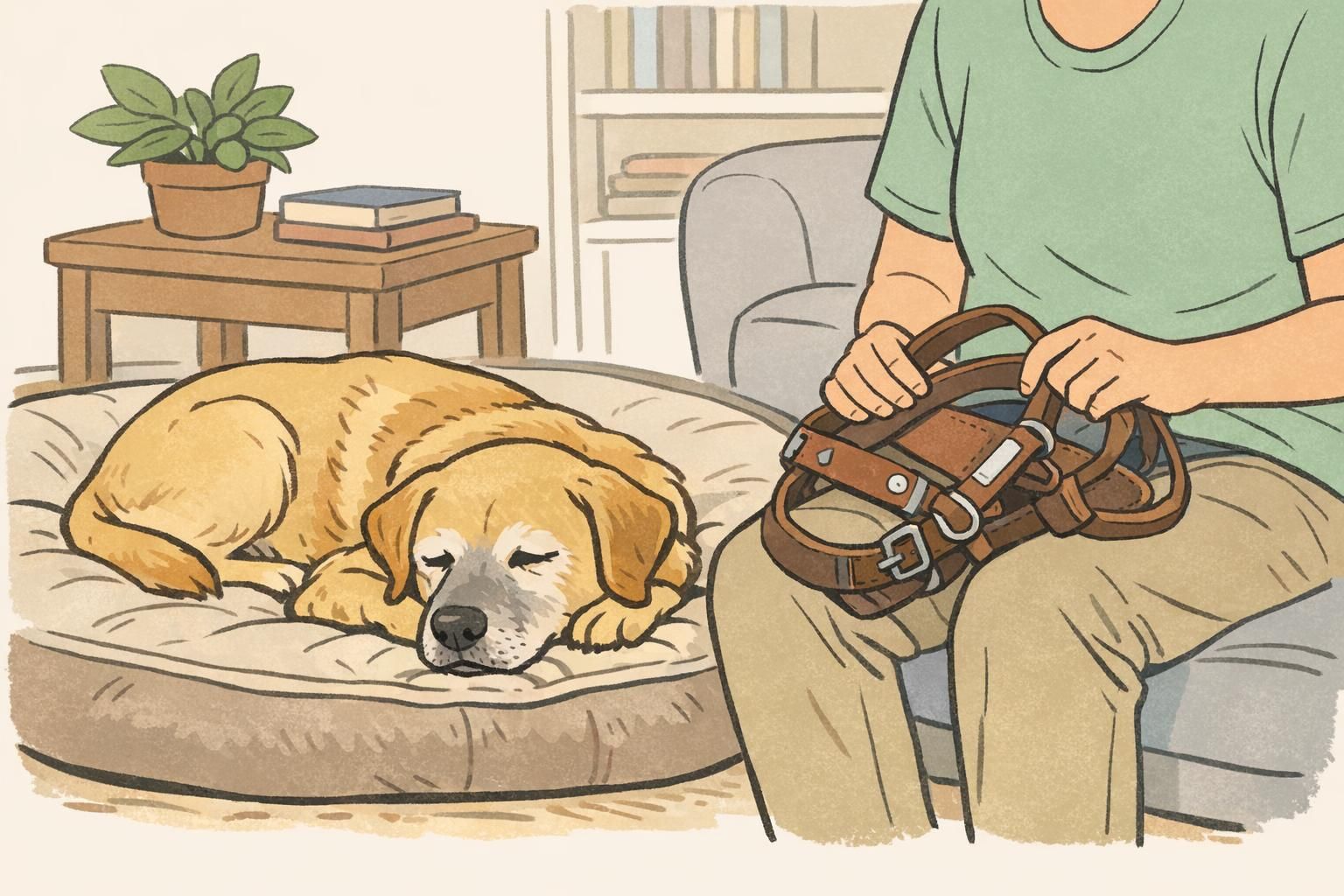
“ "Retirement was bittersweet. I was proud of my dog for everything we did, and I also had to grieve the end of our working life together." – Guide dog handler”
Many guide dog handlers say the hardest part of a normal day isn’t the route—it’s the conversation. Questions at a restaurant host stand, a rideshare driver who’s unsure, a receptionist who has never interacted with a working dog, or a stranger who tries to pet without asking can interrupt your focus and your dog’s concentration.
A calm, professional approach often helps. Keeping your words short and steady can set the tone: you’re not asking for special treatment—you’re navigating daily life with a working partner. Because rules and policies can vary by location and setting, it can also help to prepare for different types of environments, from small businesses to medical offices to transportation hubs.
Some handlers also choose to carry a simple, printed reference they can hand over instead of debating in the moment. That can reduce back-and-forth and keep interactions respectful, especially when you’re tired, in a hurry, or managing a busy environment.
Optional tools like ADA law handout cards for simple, polite access conversations can be a practical way to communicate quickly and keep the focus on moving forward.
Many handlers use a simple line like, “Please don’t pet—my dog is working.” Saying it calmly and continuing to move can help your dog stay focused.
Staying calm and brief is often most effective. If you have a handout or a prepared explanation, it can help keep the conversation factual and reduce stress in the moment.
Many handlers prefer to keep day-to-day interactions simple. One practical approach is using optional registration tools—like an ID card and a digital profile—so you can present consistent information when questions come up. It’s not about proving your life to strangers; it’s about reducing friction during errands, appointments, or routine conversations where someone wants clarity.
Having a printed ID card and a digital profile can also help you feel more organized when you’re juggling travel plans, housing paperwork, or multiple responsibilities. Some handlers describe it as “one less thing to explain from scratch.” The goal is convenience: quick identification and a consistent way to communicate your dog’s role when needed.
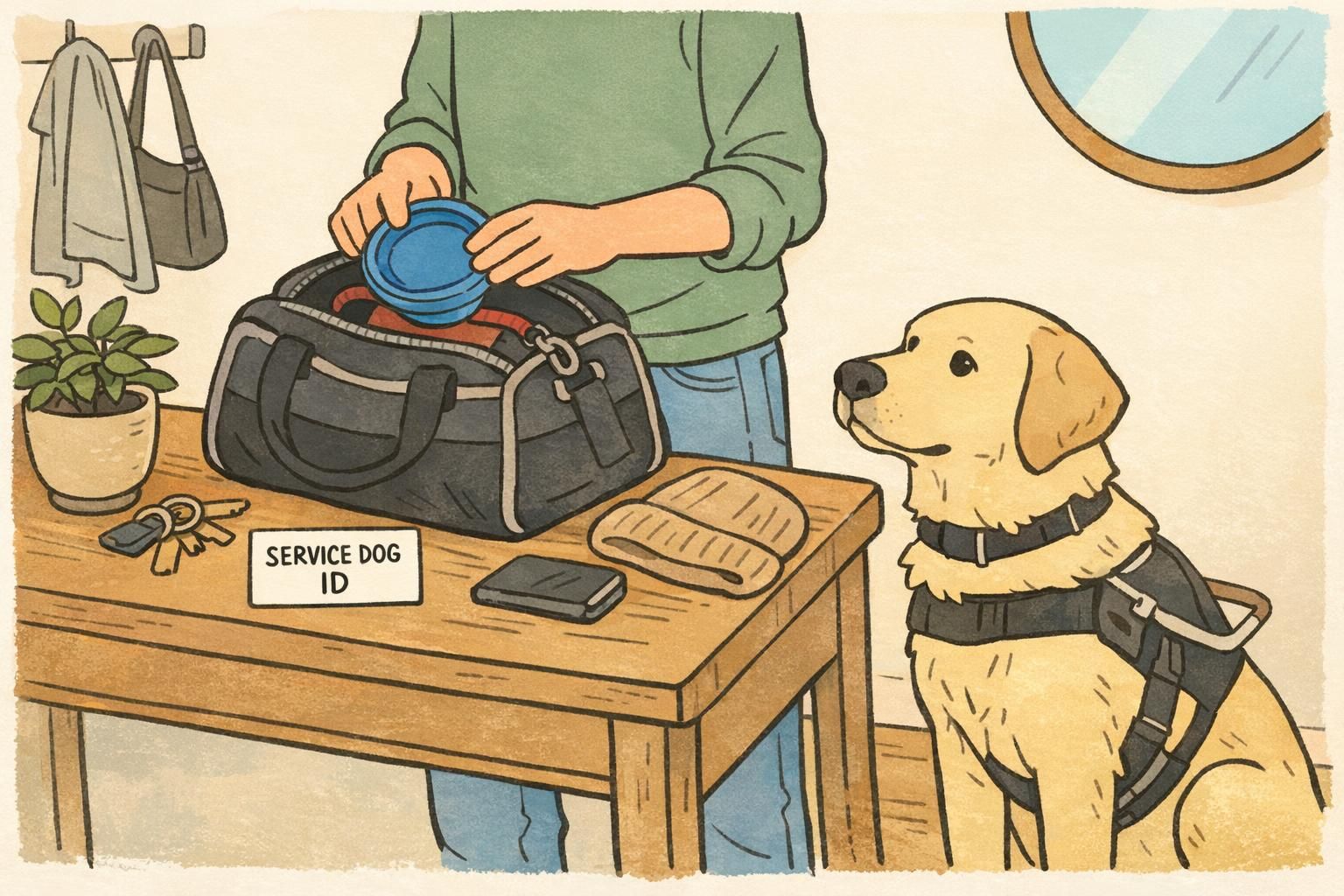
If you want a straightforward option that combines a printed card with online identification, consider a starter registration package for everyday identification.
Travel can be one of the most rewarding parts of life with a guide dog—and one of the most demanding. Busy terminals, unfamiliar routes, schedule changes, and tight spaces ask a lot from both handler and dog. The good news is that a solid plan can lower stress dramatically.
Many handlers plan around three essentials: comfort, timing, and communication. Comfort includes your dog’s gear, water, and a familiar routine. Timing includes building in extra minutes for bathroom breaks, unexpected detours, and decompression in quieter corners. Communication includes a calm, clear way to speak with staff when you need support finding an entrance, a relief area, or a less crowded path.
If you’d like a deeper overview, this guide on traveling with a service dog covers additional planning ideas that can make trips feel more predictable.
Some teams also prefer travel-specific identification tools for smoother conversations on the go. Options like a travel-ready service dog registration package can help you keep key information organized and ready during busy travel days.
Your trusted source for service animal registration. Get professional ID cards, digital profiles, and smart NFC tags to keep your service animal safe and recognized.
© National Animal Registry — All rights reserved.