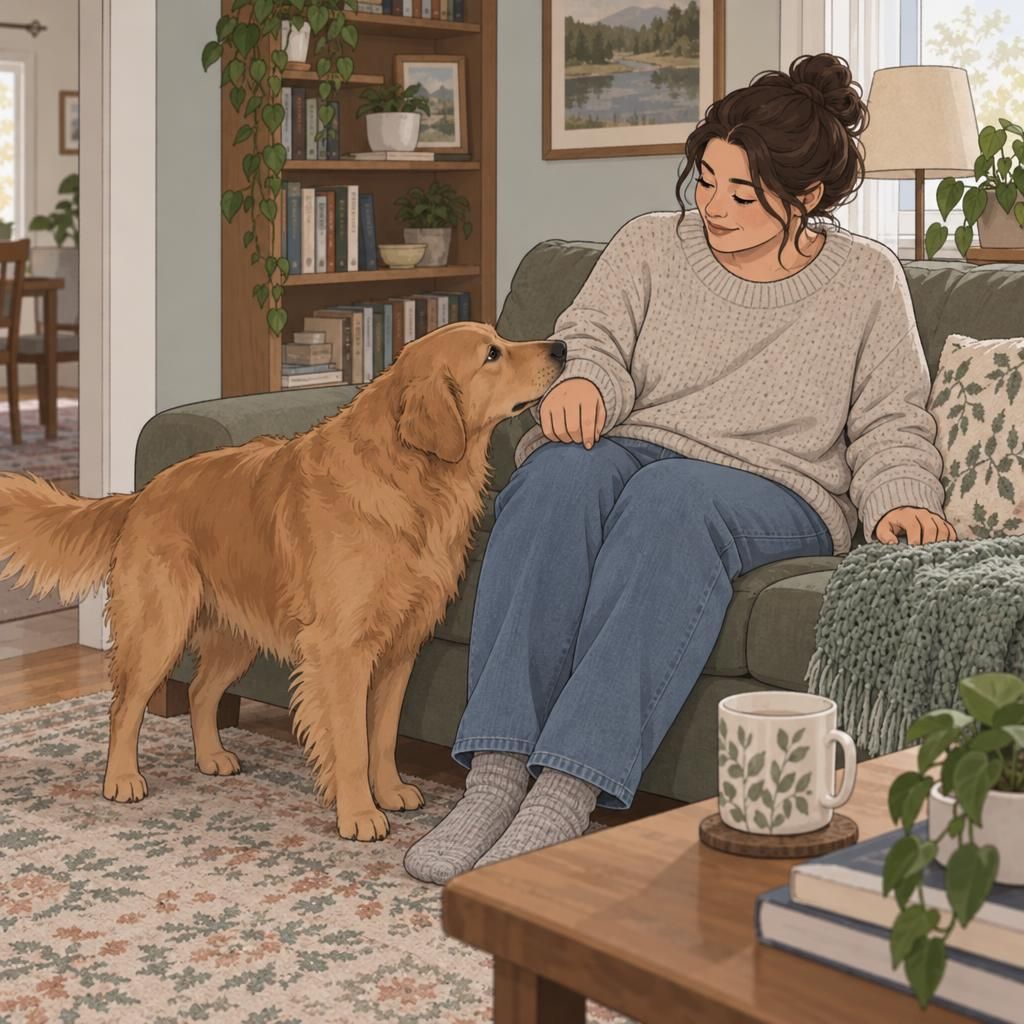
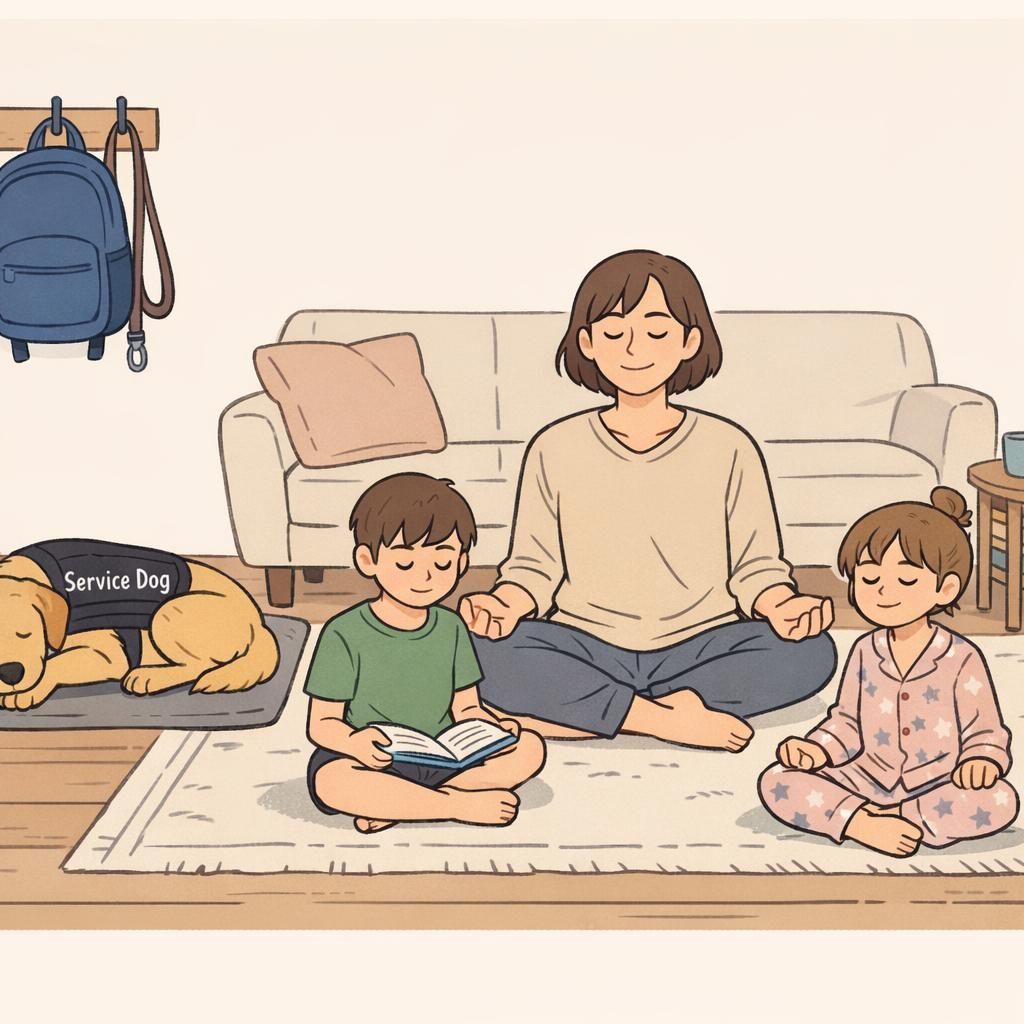
Some families measure time by school years, moves, and milestones. Others also remember the year a service dog arrived—and how daily life quietly reorganized around that partnership. It can feel like having a steady, capable teammate in the home: one who brings structure to mornings, calm to transitions, and confidence to moments that used to feel hard.
Growing up with a service dog is not a picture-perfect storyline. There are muddy paws, off days, training refreshers, and learning curves for everyone. Every handler-and-dog partnership looks different because every disability, household, and routine is different. What tends to be shared, though, is the way a working dog’s presence shapes family rhythms—how people communicate, how they plan, and how they show care.
A service dog (also called a service animal or assistance dog) is trained to perform specific behaviors that help a person with a disability. Those behaviors can include guiding, retrieving, bracing, alerting, interrupting a harmful pattern, creating space in crowds, or helping a handler stay oriented and regulated. The key is that the dog does trained work that supports the handler’s disability-related needs in daily life.
But what families experience day-to-day is more than a list of tasks. A service dog partnership is built through consistency and trust—things that show up in ordinary routines: the same cues used the same way, predictable rest times, and clear “on duty” versus “off duty” expectations. Over time, the dog learns the household’s patterns, and the household learns how to protect the dog’s focus.
Often, yes. Many dogs perform tasks at home—retrieving items, helping with balance, providing grounding pressure, or interrupting distress. Families typically use simple signals (like a vest, a mat, or a cue) to show when the dog should focus versus relax.
No. Tasks are individualized. Two dogs can both be service dogs while doing very different work based on the handler’s needs and daily environment.
Asia didn’t describe her early days with Lotus, her German Shepherd service dog, as a dramatic “before and after.” It was more like a slow return to herself. After trauma, everyday settings can feel unpredictable. A door closing too loudly, footsteps behind you, or a crowded aisle can spike the nervous system in seconds. In a household, that can lead to isolation—staying in one room, avoiding social plans, or bracing for the next wave of overwhelm.
Lotus helped turn safety into something tangible. With consistent training and a routine that didn’t change based on emotions, Lotus became a calm reference point. When Asia’s body tried to convince her that she wasn’t safe, Lotus’ steady presence helped her practice returning to the moment. Over time, that practice created space for connection—answering a family member’s question without snapping, joining a meal in the kitchen, or stepping outside for fresh air instead of shutting down.
“ "It wasn’t that everything got easy. It was that I stopped feeling alone in the hard parts."”
Parenting often comes down to energy management: who can get up first, who can carry the bags, who can handle the last-minute scramble. When a parent is living with MS and mobility challenges, “small” tasks—picking up dropped items, opening a heavy door, carrying something across the house—can drain energy that would otherwise go to family time.
That’s where Jaeger’s work changed the rhythm of the day. Mobility and retrieval tasks can reduce repeated bending, unnecessary steps, and the stress of constantly losing momentum. Some days, Jaeger retrieved a phone or keys before they became a 15-minute search. Other days, he helped with doors or brought a needed item so the handler didn’t have to choose between pain and getting it done. Organizations supporting people with MS have described how service dogs can assist with practical tasks like retrieving items and conserving energy—support that can translate into more capacity for daily routines and family life (source).
In family terms, the impact can be surprisingly specific: more patience at homework time, more ability to stand at the stove for a simple meal, more willingness to attend a school event because the day didn’t already consume every ounce of strength.
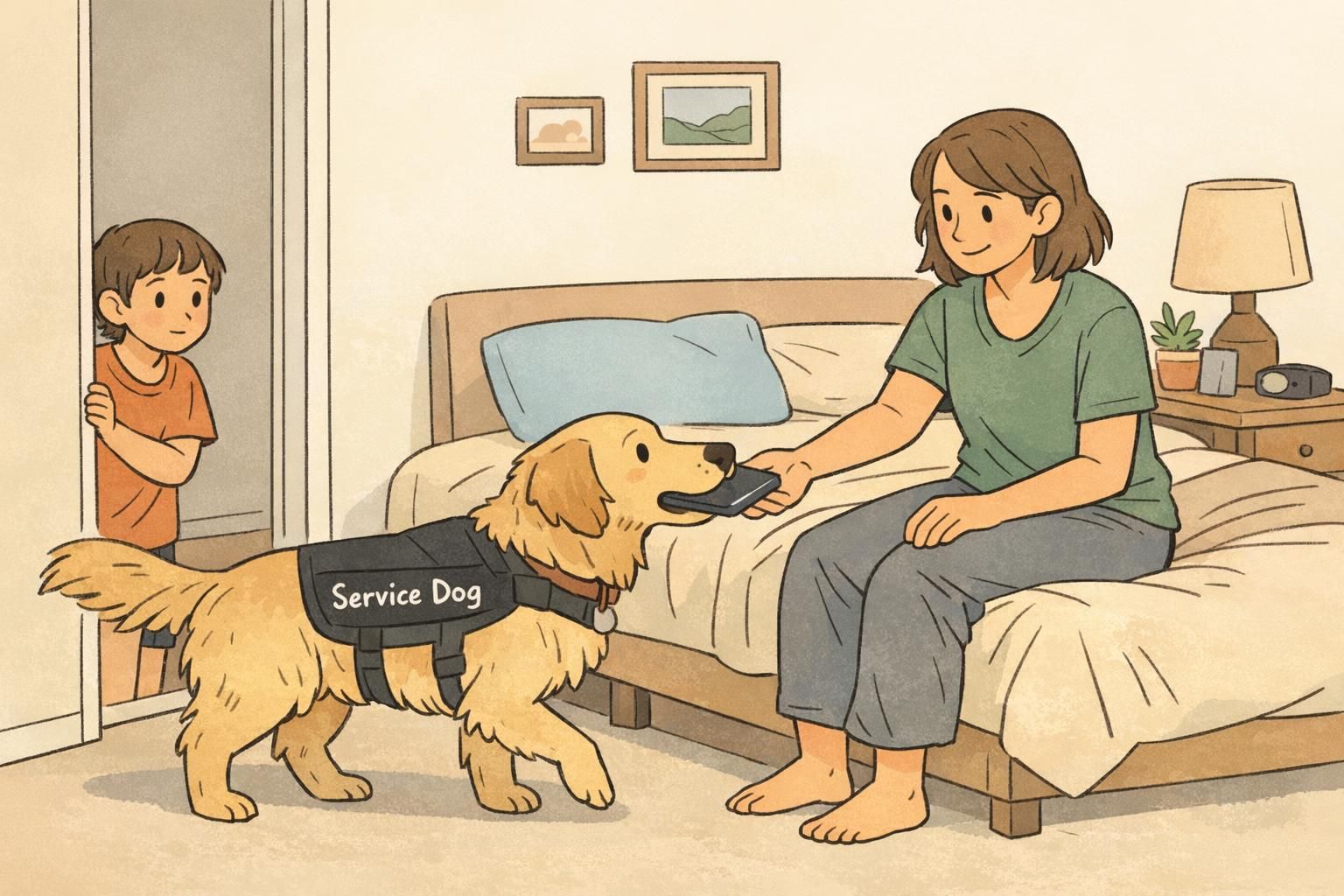
Like any skill, service behaviors are maintained through practice. Families often learn that reliability isn’t “set it and forget it.” It’s a few minutes here and there—reinforcing cues, rewarding calm behavior, and practicing in realistic situations so the dog stays confident and consistent.
Hannah used to plan her life around avoiding overwhelm: fewer errands, fewer spontaneous visits, fewer crowded places. Isolation can start as self-protection, but it often becomes a habit that shrinks the world. For Hannah, a service dog created a bridge back to daily life—not by forcing “big steps,” but by making small steps feel doable.
A reliable canine partner can support structure in ways that are hard to replicate. The dog needs a walk. The dog thrives on routine. The dog asks the handler to be present enough to give cues and notice needs. That structure can gently pull a person into healthier patterns: waking up at a consistent time, leaving the house for brief outings, and building positive experiences in public spaces.
“ "If I could do one calm trip with my dog, it was easier to believe I could do the next one too."”
Kids who grow up with a service dog often learn something deeper than “dogs can be helpful.” They learn that support can be practical and respectful. They learn that love includes boundaries. And they learn that a working dog is not a toy, a mascot, or a shared family project during work time.
In many homes, children become fluent in quiet routines: how to pass the dog without distracting them, how to ask the handler before interacting, and how to notice when the dog needs rest. Those lessons translate into empathy and communication skills that reach far beyond the dog.
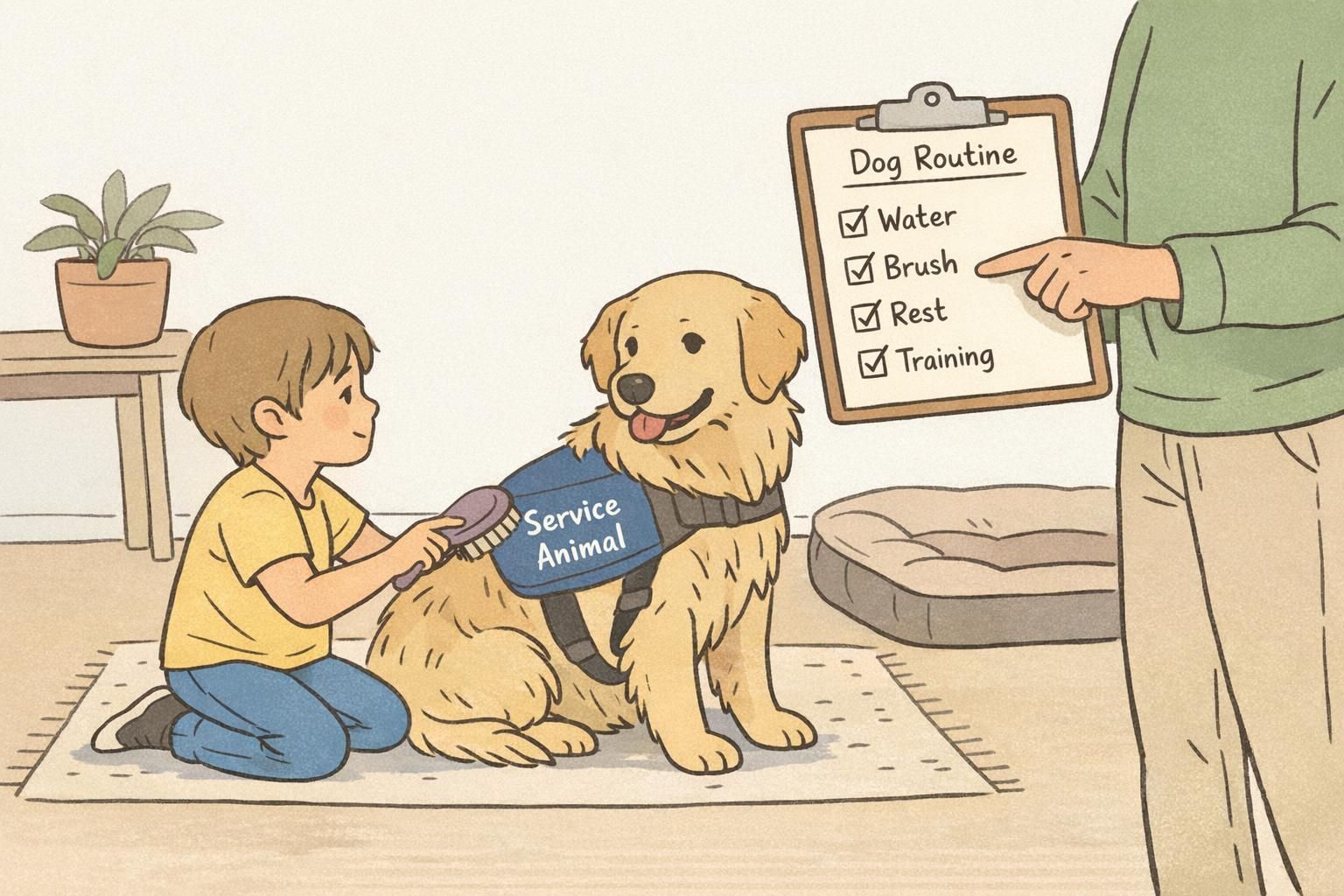
A service dog thrives when the household is predictable. That doesn’t mean silent or strict—it means clear. Clear cues, clear expectations, and clear boundaries reduce confusion for the dog and reduce conflict among humans. When everyone knows what to do, the handler doesn’t have to be the “referee” all day.
Give kids a simple script before friends arrive: the dog is working, we don’t pet or call to them, and we give the dog space. If the dog is off duty, the handler can invite a calm greeting.
Use a consistent, neutral correction: “The dog is working. Try again with a calm body.” Then redirect to a job the child can do—like holding the door, grabbing the brush, or helping with a checklist.
Families sometimes assume training is a phase that ends. In reality, training is part of the lifestyle—short refreshers that keep skills sharp, practice in new environments, and ongoing reinforcement of calm manners. The good news is that training doesn’t have to be intense to be effective. A few consistent minutes built into the day can protect the partnership long-term.
It also helps to keep the dog from becoming a “family pet project” during working time. The handler should remain the main communicator for task work and public behavior, while the rest of the family supports the same rules and celebrates progress without adding mixed signals.
“ "We stopped waiting for ‘perfect.’ We started noticing progress—and that changed everything."”
Public outings can feel like juggling: bags, schedules, children’s needs, and a working dog who deserves comfort and respect. A simple plan helps. When kids know what their role is, they’re less likely to grab the vest, talk to the dog, or accidentally create chaos right when the handler needs the dog focused.
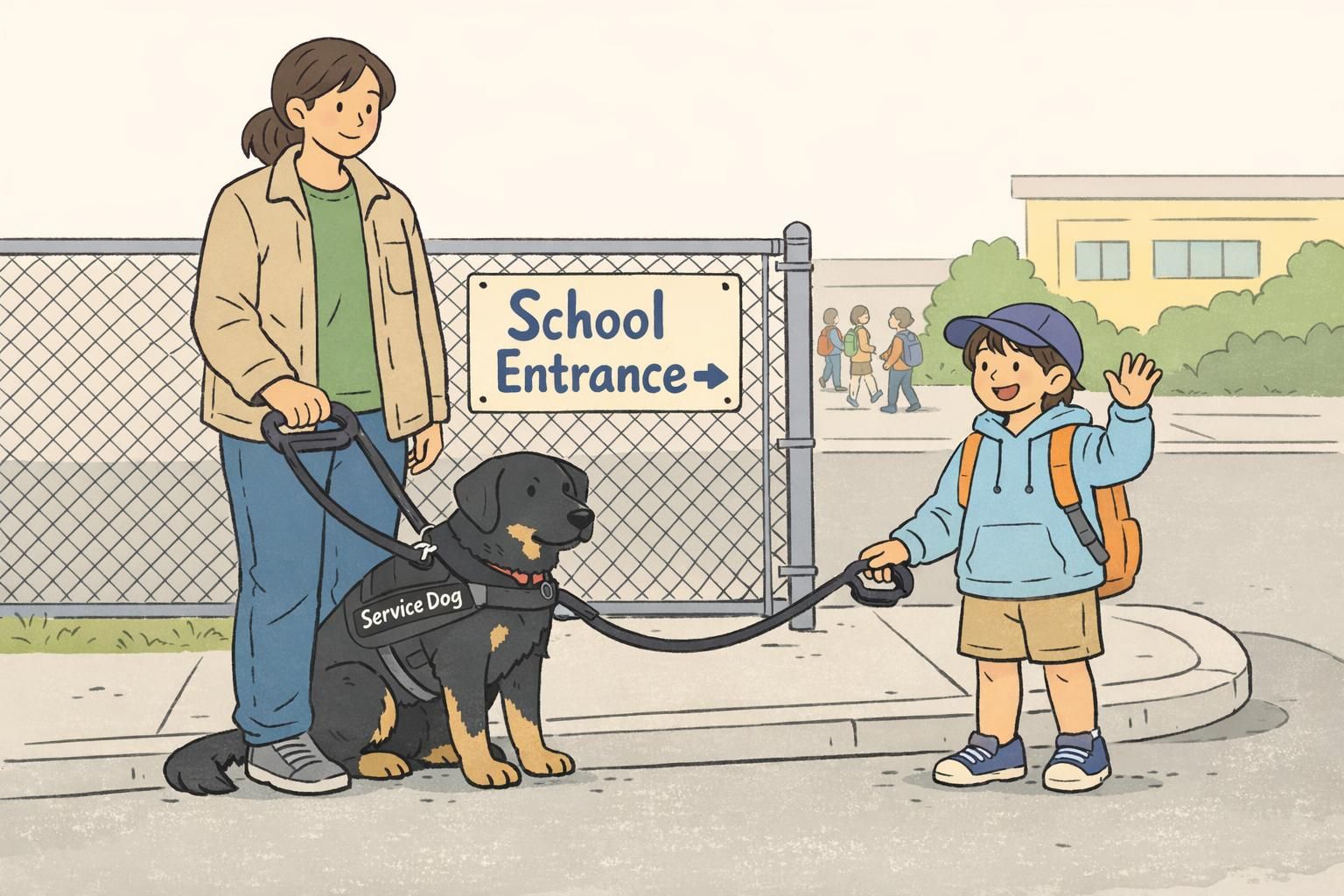
Questions from strangers happen, especially when children are present. A helpful approach is to keep answers short, kind, and consistent. Kids can learn one simple line they can repeat without over-explaining: “Please don’t pet—he’s working.”
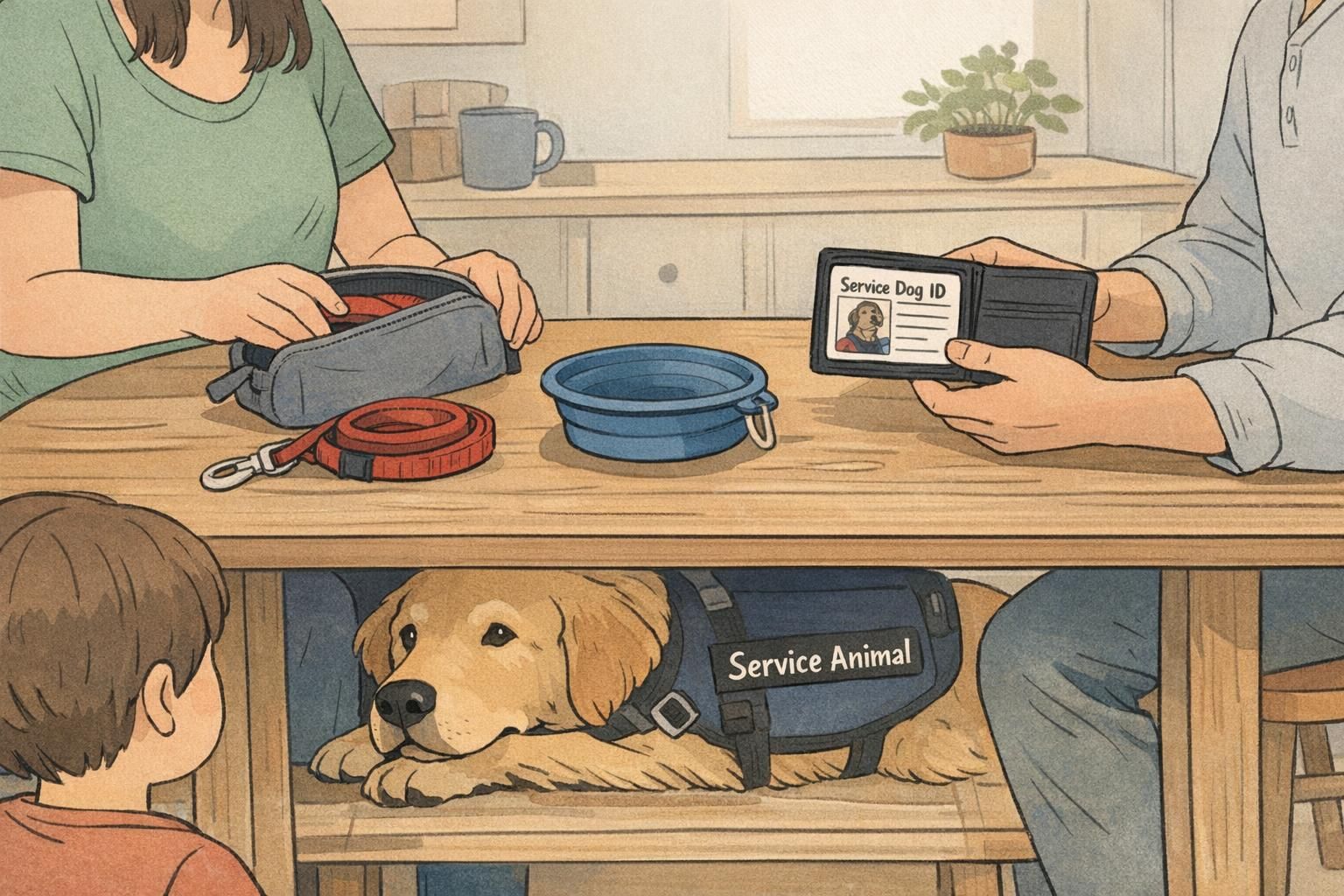
Even when a handler and dog are well-prepared, misunderstandings can happen in the real world—especially during travel, housing conversations, or busy public moments when people are quick to assume. Many handlers choose clear identification and consistent documentation as practical tools to help interactions feel smoother and more professional.
Having a simple, organized way to present your service dog’s information can reduce back-and-forth and help families feel more confident when they’re already managing kids, schedules, and health needs. If you’re looking for an easy way to keep those details together, consider a starter service dog registration package for everyday identification.
Awkward moments are part of life with a service dog: someone leans in to pet, a stranger asks personal questions, or a well-meaning person distracts the dog when the handler needs focus. The goal isn’t to “win” the interaction—it’s to protect the dog’s attention and keep the family calm.
Some families carry small information cards so they can explain boundaries without debating. Tools like ADA law handout cards for easy, professional explanations can be a simple way to keep interactions brief and respectful.
Travel adds variables—new places, different schedules, and less control over the environment. For families, the best travel days are usually the most predictable ones. That means packing the dog’s essentials, protecting key routines, and setting kid-friendly expectations about “working time” in airports, hotels, and relatives’ houses.
If you want a deeper overview of common travel scenarios, read traveling with a service dog. Many handlers also like to organize travel identification materials in one place, such as a travel-ready service dog registration package, to make on-the-go moments feel more streamlined.
Growing up with a service dog is a shared journey. Over time, families often notice that the dog’s impact shows up in the small stuff: smoother mornings, fewer meltdowns during transitions, more confidence leaving the house, and a stronger sense that challenges can be handled—together.
“ "Our kids didn’t just grow up with a dog. They grew up watching what steady support looks like."”
Your trusted source for service animal registration. Get professional ID cards, digital profiles, and smart NFC tags to keep your service animal safe and recognized.
© National Animal Registry — All rights reserved.