With a large service dog, “good gear” isn’t just about looking professional—it’s about physics. Bigger dogs generate more momentum, cover more ground with each stride, and can apply significant force during task work or sudden stops. The right equipment helps you guide that power safely, without relying on grip strength alone or putting stress on your dog’s joints.
Large-dog gear also has to hold up to longer workdays and more frequent transitions: in and out of cars, onto elevators, through narrow aisles, over slick floors, and across rough outdoor surfaces. When a buckle slips or a strap twists on a large dog, it can become a control issue quickly—so durability and stable fit matter as much as comfort.
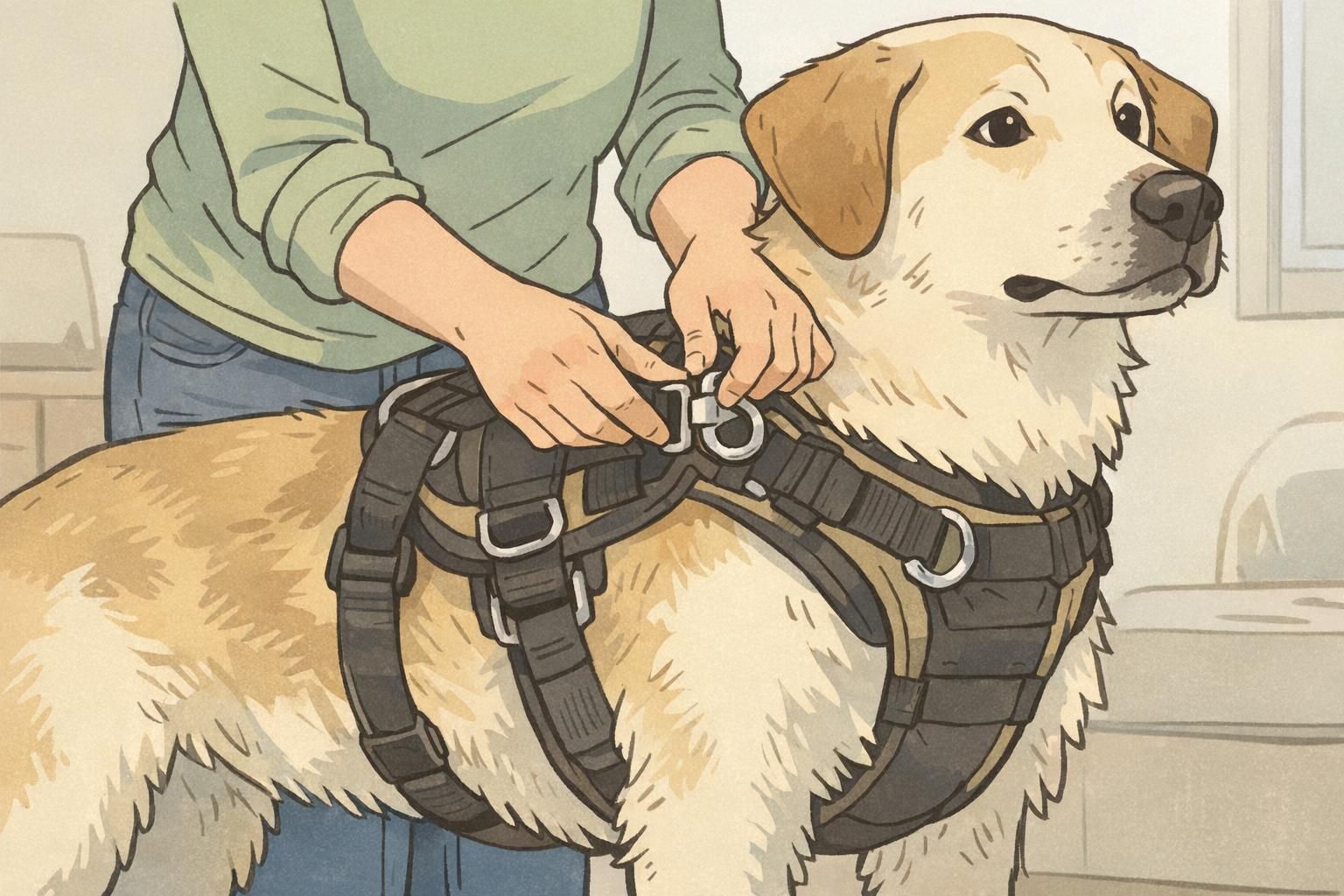
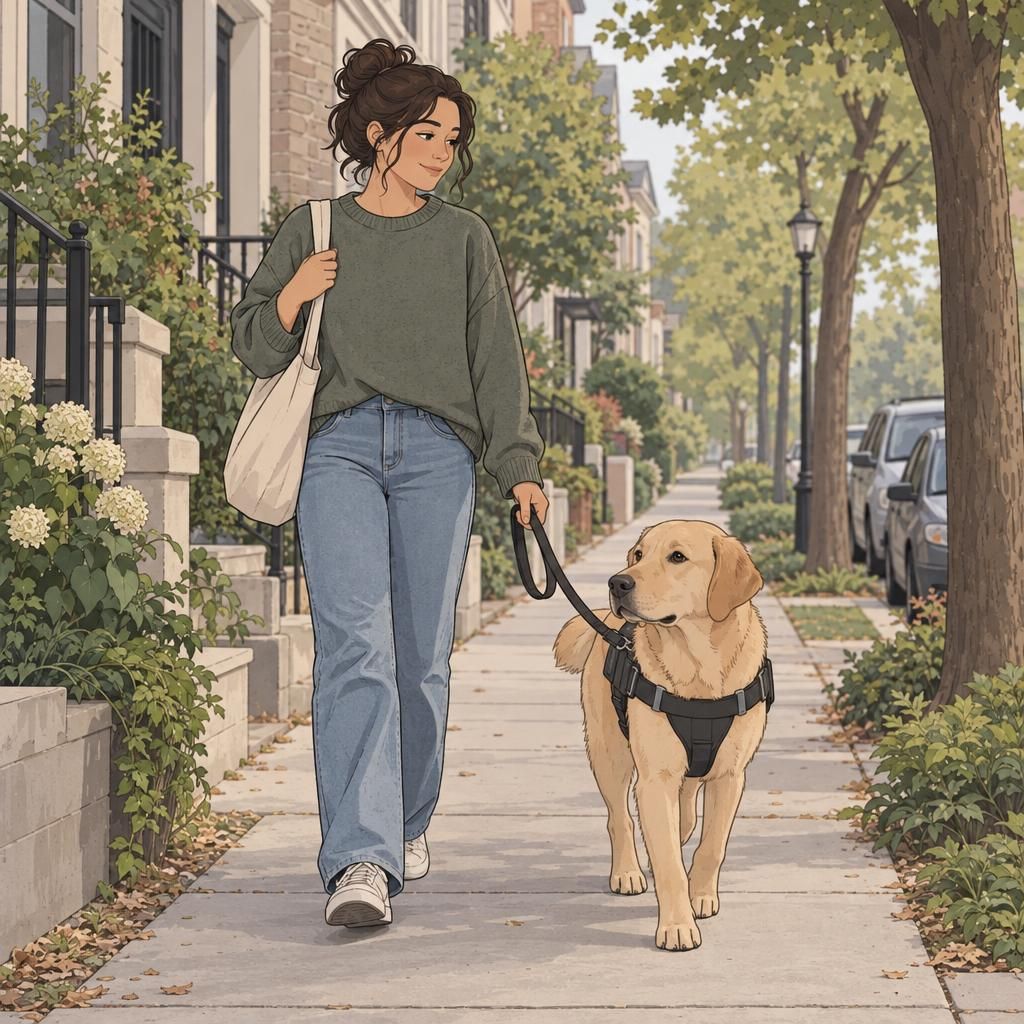
A sturdy harness is the foundation of many large service-dog setups. It spreads pressure more evenly than a collar, offers more stable control points, and can support task work where the dog needs to pull, guide, or maintain a consistent position. Purpose-built working harnesses also tend to resist twisting, shifting, and strap creep—issues that show up more often when you’re handling a powerful dog.
Specialized harness styles exist for different working needs, including mobility-focused options and other task-driven designs. The key is choosing a harness built for the job rather than a “one-size-fits-all” pet model. For an overview of service-animal supplies and why supportive harness options matter, see this source.
Large service dogs often benefit from a short, rigid or semi-rigid handle that’s easy to locate without looking. The handle should sit where it won’t torque the harness or pull it sideways when you apply light guidance. Look for heavy-duty hardware (metal D-rings, strong buckles, reinforced stitching) designed for large-breed force.
Many teams use both, depending on the situation. A back clip can feel smooth for steady heeling, while a front clip may help reduce pulling during training or high-distraction moments. The most important factor is a stable harness that doesn’t twist when clipped.
Watch your dog walk at a normal pace. If the shoulder looks shortened, the straps ride into the armpit, or your dog’s stride looks choppy, the harness may be limiting range of motion or sitting too far forward.
With a large service dog, the leash is more than a connector—it’s a comfort tool for your hand, wrist, or shoulder, and a safety tool in tight public spaces. Materials and hardware matter: a sturdy leash reduces sudden “snap” forces, and a reliable clasp helps prevent accidental drops during transitions like doors, elevators, or checkout lines.
For public access, many handlers prefer a shorter length that keeps the dog close and reduces tangles in crowded places. For training sessions, a longer line can be useful when practicing controlled distance skills in appropriate environments. Consider your typical spaces—narrow aisles, busy sidewalks, and public transit often reward simplicity and shorter slack.
Hands-free leashes worn at the waist or cross-body can reduce strain and keep your hands available for mobility aids, doors, or carrying items. Convertible leashes can switch between hands-free, standard, and tether modes, which is especially helpful when you need to secure your dog briefly while staying attentive to your surroundings.
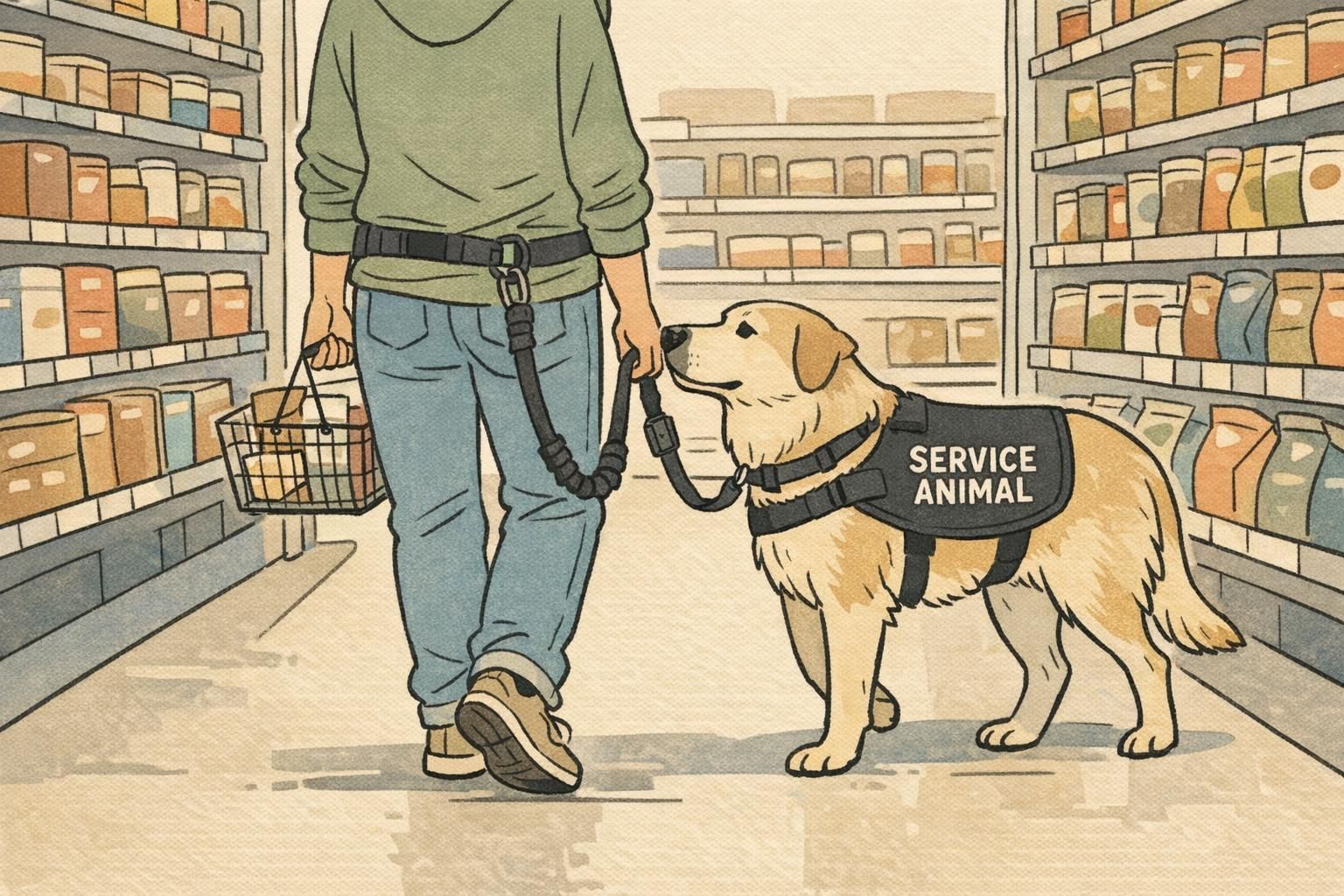
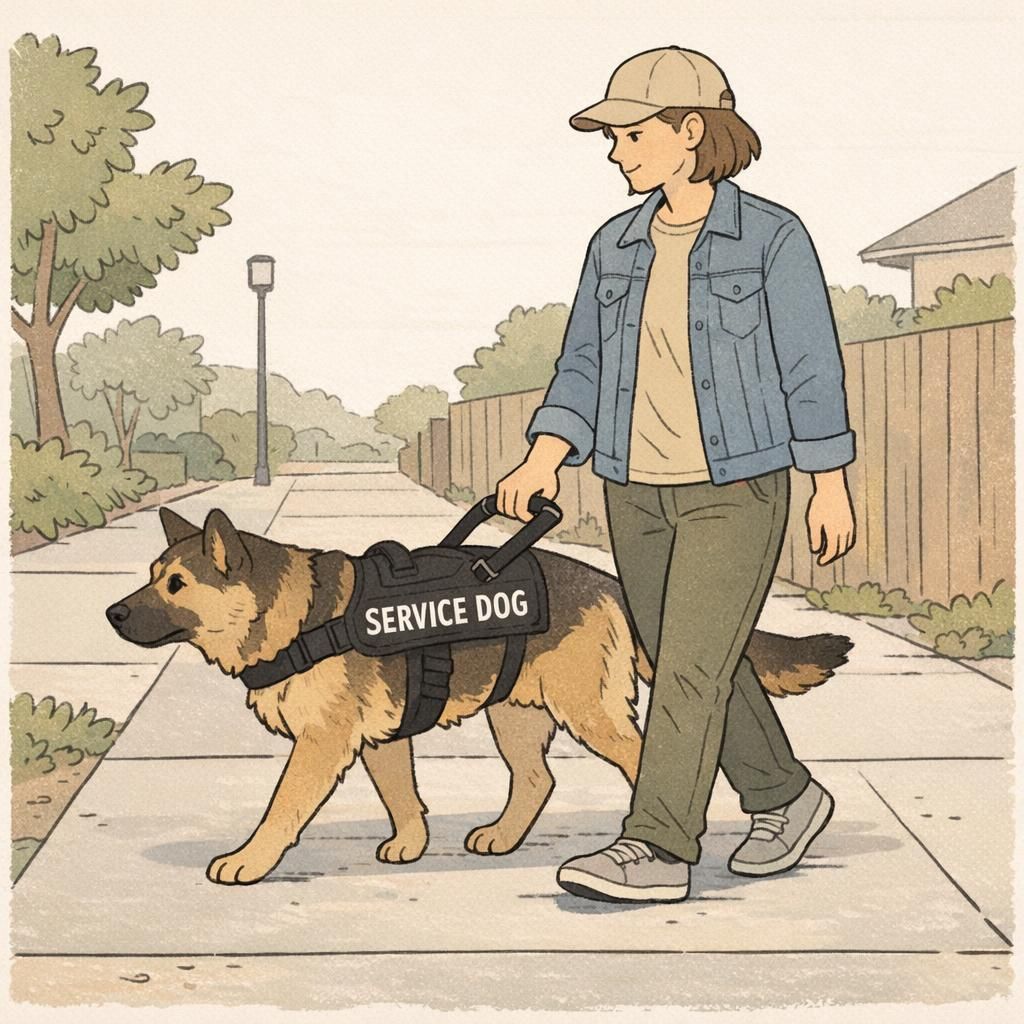
A vest can do two valuable things for a large service dog team: it signals “working mode” to the public, and it provides practical attachment points for small accessories (like a patch panel, a light bag, or a handle-compatible harness overlay). Just as important, consistent gear can support a consistent routine—many dogs learn that vest on means focused work, and vest off means downtime.
Requirements for vests and identification vary by location and situation. Many handlers still choose to carry identification materials because it can make everyday interactions smoother, especially in busy places where quick, calm communication matters. If you’d like a simple option that combines a physical card and online details, consider a customizable printed Service Dog ID with a matching digital profile.
Large service dogs cover more ground—and their paws take the brunt of it. Boots aren’t necessary for every outing, but they can be a major quality-of-life upgrade in harsh conditions. The goal is simple: protect the paw pads from heat, chemicals, cuts, and slips so your dog can work comfortably and confidently.
Measure paw width with your dog standing and weight-bearing—paws spread under pressure. Look for boots that secure above the wrist/ankle joint without tightening to the point of restricting movement. For many large dogs, a slightly taller boot with a stable closure stays put better than a short boot that slips with each stride.
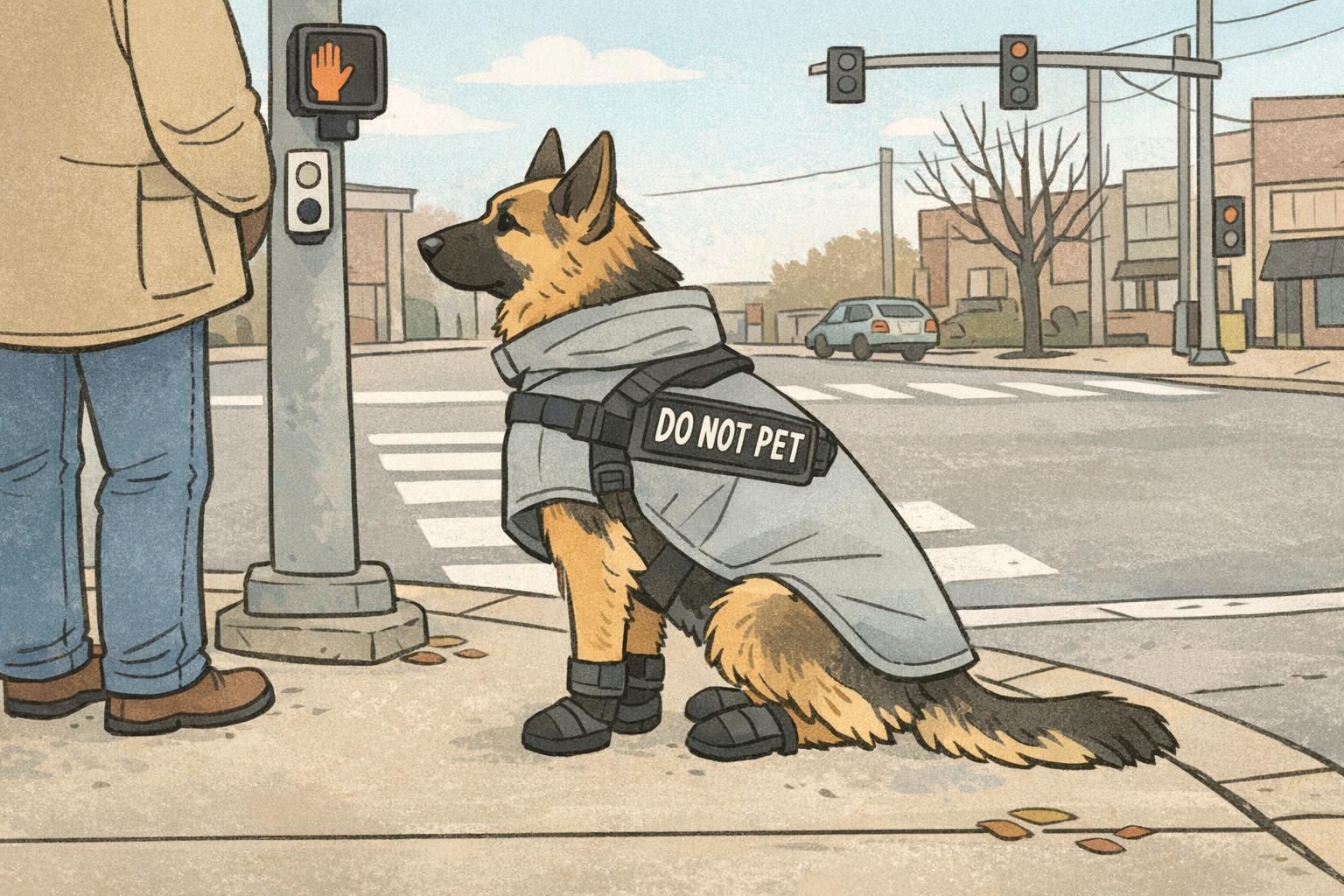
For rain, wind, and cold exposure, choose coats that allow full shoulder extension and don’t bunch under a harness. Easy on-off designs help when moving between warm indoor spaces and cold outdoor lines. Layering can be helpful: a light rain shell for wet days, and an insulating layer for cold, especially during long waits at crosswalks or transit stops.
A muzzle can be an important emergency tool—even for friendly, stable dogs. Pain, fear, and injury can change behavior in the moment, and a muzzle can protect veterinary staff, the public, and you while your dog gets the care they need. For large dogs in particular, planning ahead is a practical safety choice.
The key is making the muzzle comfortable and non-stressful through gradual practice at home. A well-fitted muzzle allows panting and taking treats (often called a “basket” style). Avoid using it only during stressful events; instead, pair it with calm routines and rewards so it becomes just another piece of gear.
“ "We trained a muzzle long before we ever needed it. When an injury happened, it reduced stress for everyone and helped the vet work quickly and safely." – Service dog handler”
The best task tools are the ones that quietly reduce effort in daily life. For large service dogs, task equipment should be portable, sturdy, and easy to use without creating awkward angles that strain the dog’s neck, mouth, or shoulders. When tools are thoughtfully chosen, they support reliability and make it easier to maintain consistent performance across different environments.
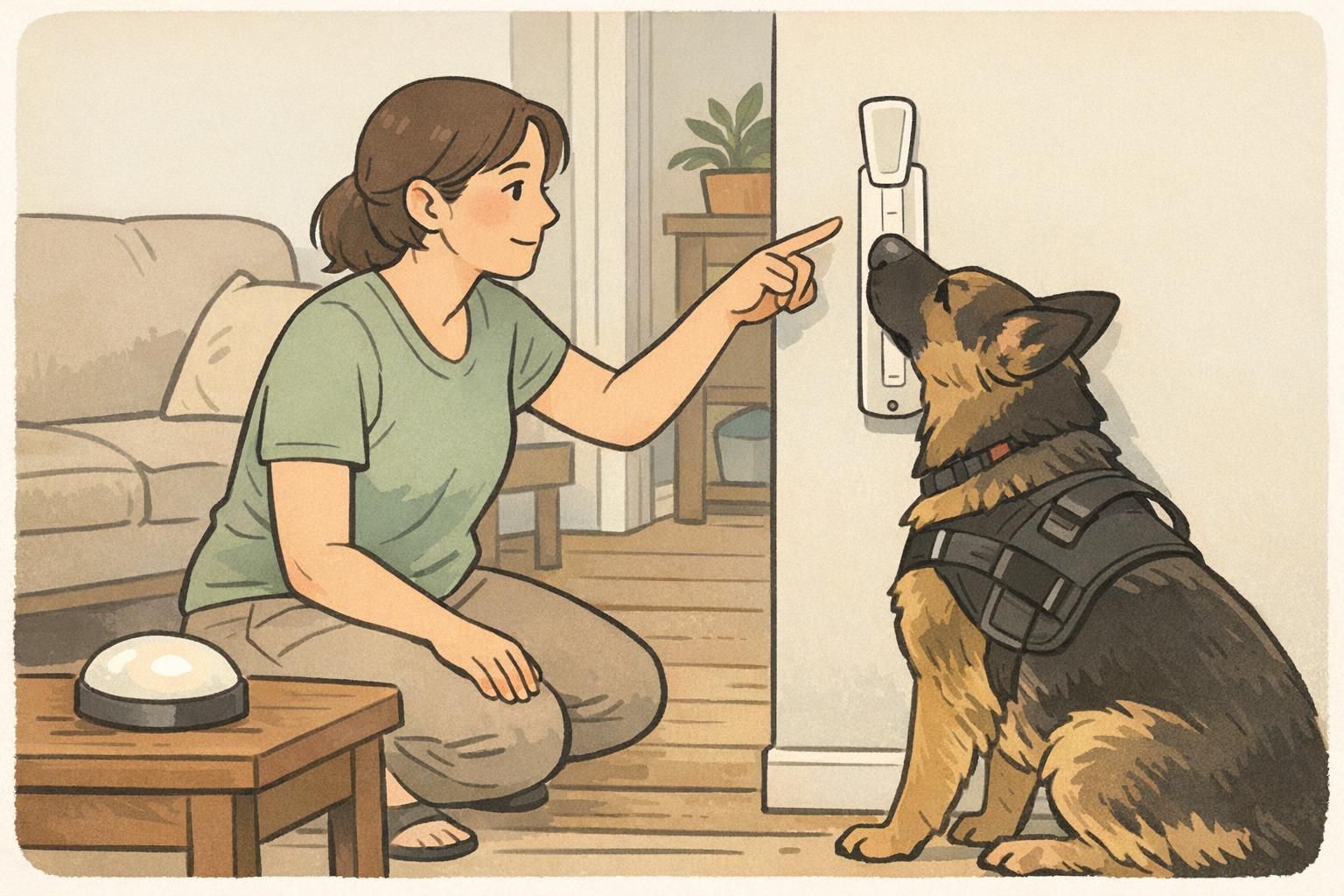
When introducing a new tool, aim for clean mechanics: stable footing, straight alignment, and gradual increases in difficulty. A large dog can generate a lot of torque during tug tasks, so keep tethers at a safe height and use smooth, controlled motions rather than sudden yanks.
Organization gear might not look “essential,” but it can make the difference between a smooth outing and a stressful one. With a large service dog, your hands may already be managing doors, a cart, a mobility aid, or personal items—so having predictable storage for training rewards and small supplies keeps your focus where it belongs.
Busy public environments can be unpredictable: a crowded entryway, a loud noise, a leash caught on a cart, or a moment of confusion during travel. While service dogs are trained for stability, it’s still smart to plan for peace of mind. Tracking tools and clear identification help you respond quickly if something unexpected happens.
Many handlers use GPS collars for broader coverage or Bluetooth trackers for close-range locating. Whatever you choose, pair it with current identification information that’s easy to access. If you like keeping key details organized in one place, a starter service dog registration package for everyday identification can be a convenient way to carry consistent information for day-to-day life.
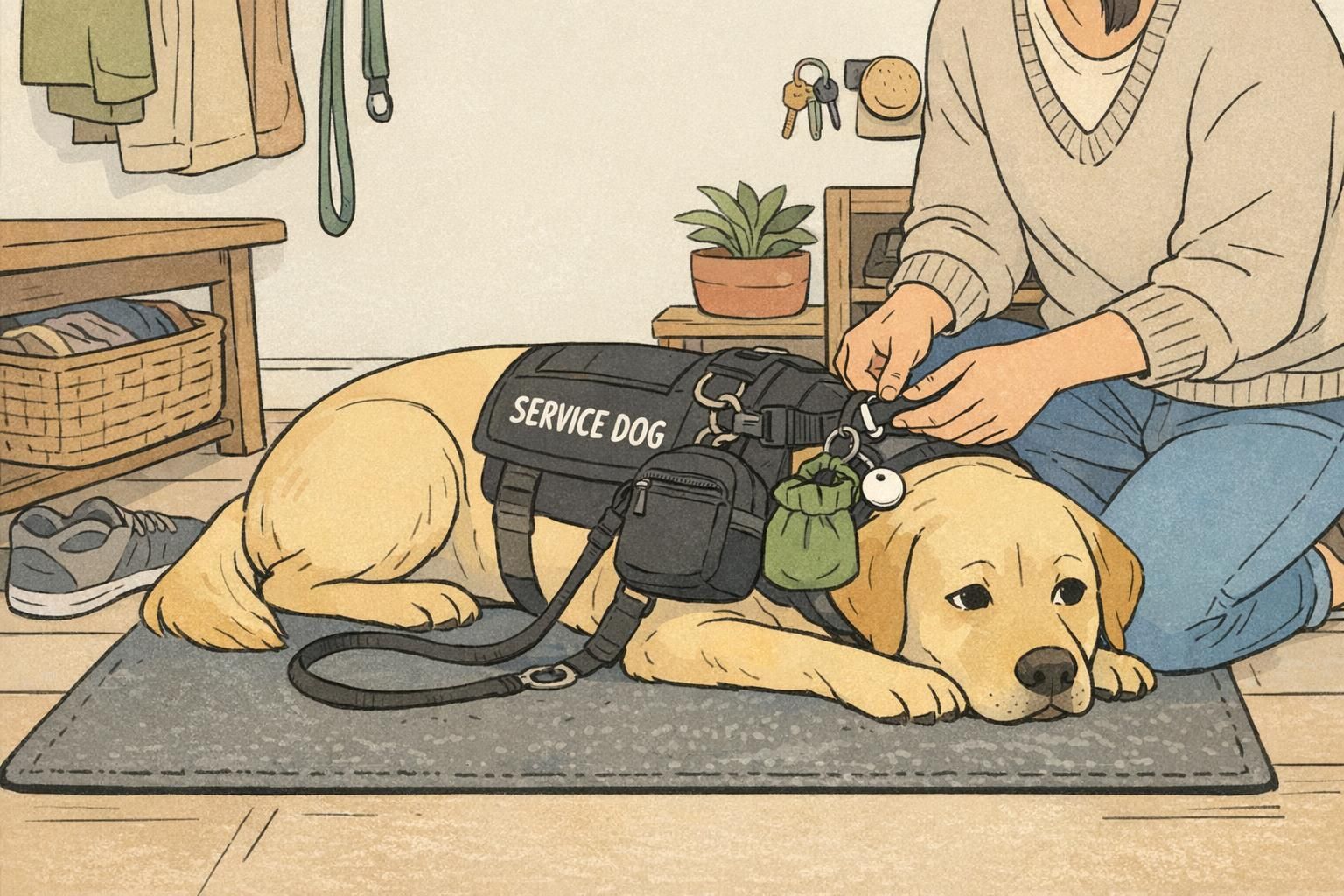
Fit issues show up faster on large dogs because small shifts become big friction points over long workdays. A harness that twists or rubs “a little” can turn into raw spots, sore shoulders, or avoidance behaviors. Measuring carefully and doing a short at-home trial can save time and keep your dog comfortable.
If your dog has a thick coat, measure with the coat fluffed naturally—not slicked down. Recheck fit when seasons change; many dogs gain or lose a bit of weight over the year. For long workdays, prioritize breathable materials and check high-friction areas during breaks to catch rubbing early.
Large service dogs often attract attention—sometimes positive, sometimes distracting. A calm, predictable communication plan can reduce friction and help you keep interactions short and professional. The goal isn’t to “win” conversations; it’s to maintain your dog’s focus and protect your energy.
Some handlers like carrying informational materials to make interactions smoother in stores, housing situations, or while traveling. If that would help your day-to-day routine, consider ADA law handout cards for simple, respectful communication.
“ "Having a calm script and a simple handout helped me avoid long conversations. My dog stays focused, and I get to move on with my day." – Service dog handler”
Travel adds extra variables: unfamiliar flooring, crowded terminals, long waits, tight seating areas, and quick transitions. A consistent gear setup can help your large service dog settle faster because the routine feels familiar—clip in, heel, tuck, rest. Planning your gear around those moments makes travel calmer and more predictable.
If you’re building a routine for trips, it can help to review practical tips for traveling with a service dog and keep your identification materials consistent and easy to access. For handlers who want a streamlined set of travel-friendly identification items, a travel-focused service dog registration package can be a convenient way to keep key details together.
Your trusted source for service animal registration. Get professional ID cards, digital profiles, and smart NFC tags to keep your service animal safe and recognized.
© National Animal Registry — All rights reserved.