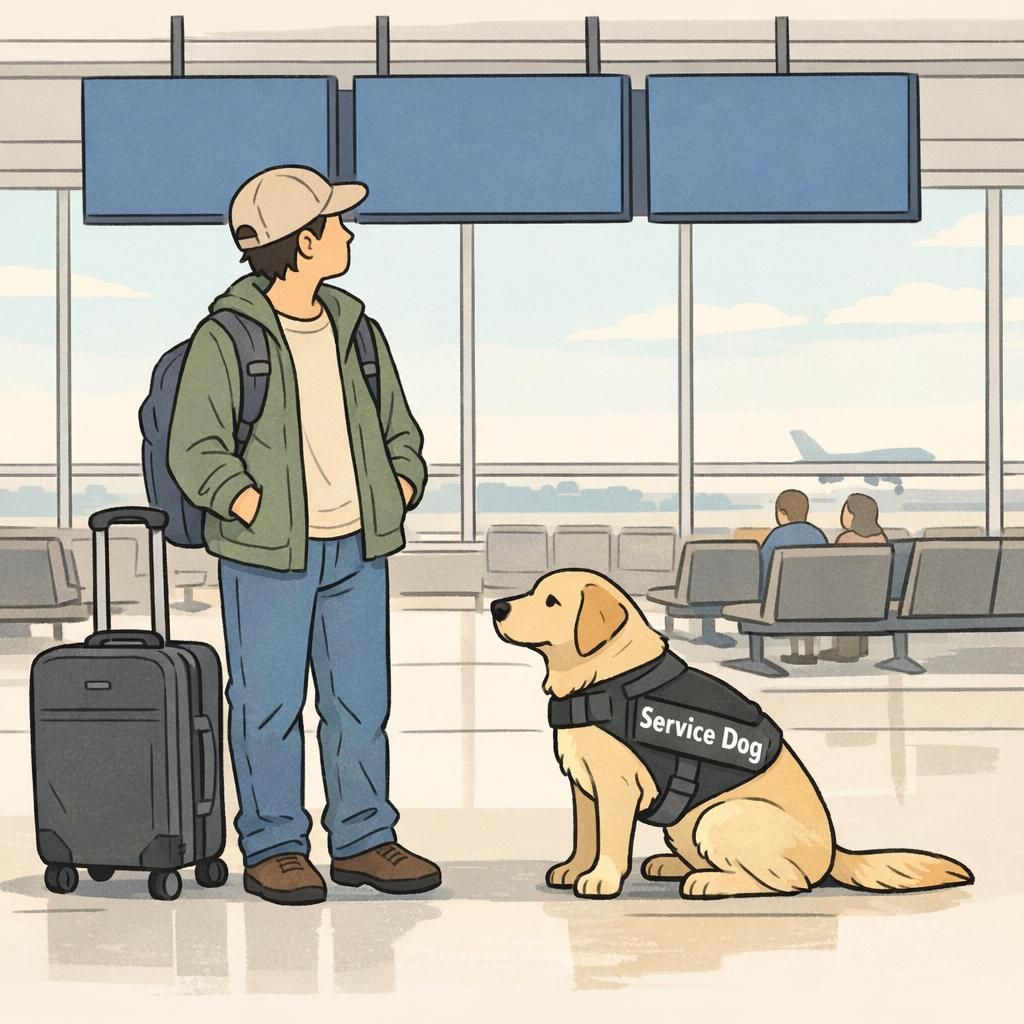
If you’ve never flown with a service dog (or it’s been a while), it helps to picture the day as a simple, repeatable sequence: arrive with extra time, check in, go through TSA, locate relief areas, wait at the gate, board, and then settle into your in-cabin routine.
Most of the experience is very normal—just with a few added moments where airport or airline staff may ask questions, confirm seating space, or guide you through a slightly different TSA screening flow. When you expect these touchpoints, it’s easier to stay calm and keep your dog calm, too.
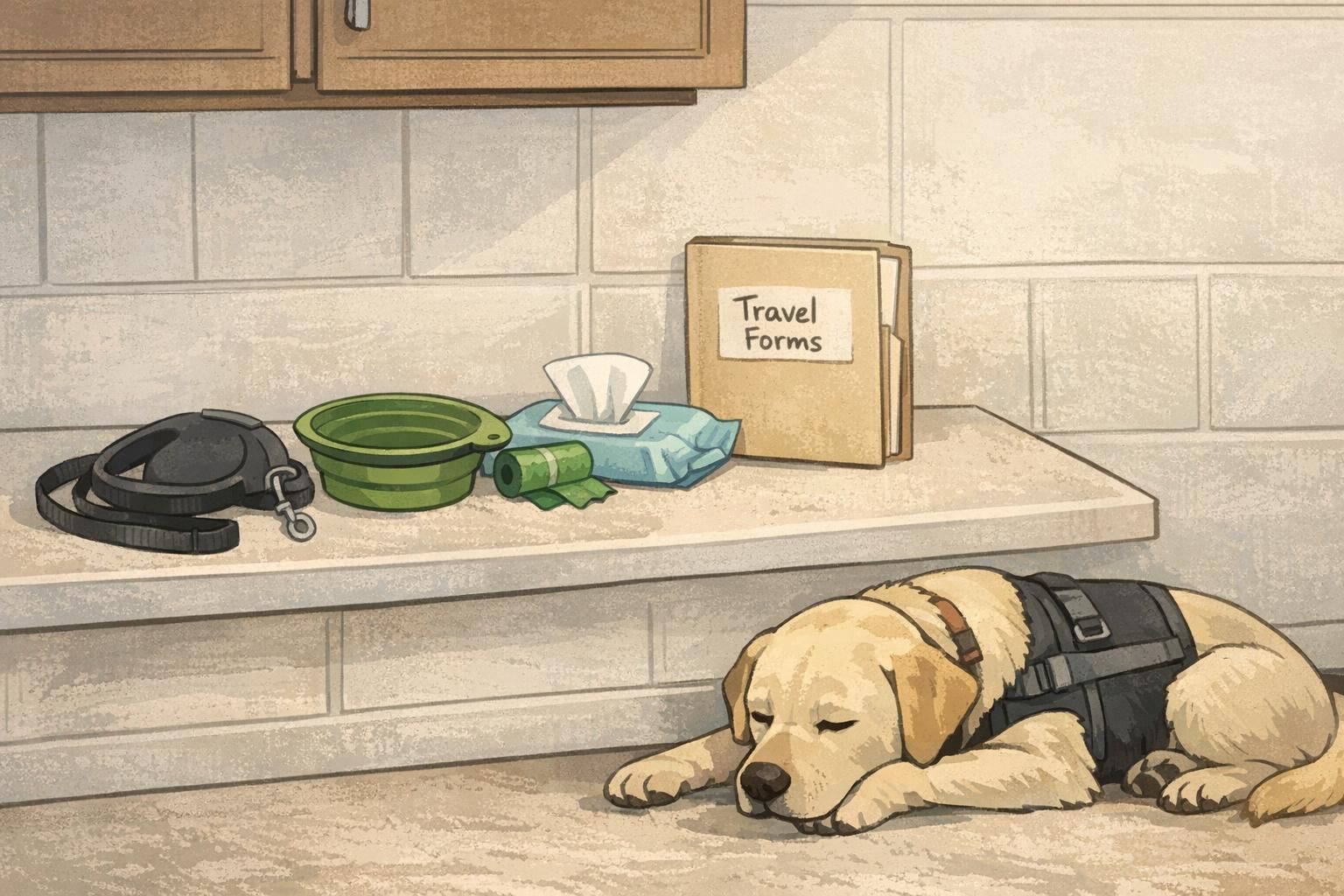
A smooth airport experience usually starts the day before. Many airlines prefer advance notice that you’re traveling with a service dog, especially if they need you to complete air-travel forms. Even when you can submit details at the airport, handling it early can prevent last-minute delays at check-in.
Also think realistically about space. Your dog should be able to rest on the floor in your seat area without blocking the aisle. If you’re traveling with a larger dog, it’s smart to plan seating early and choose a flight that gives you the best chance of comfortable foot space.
Many handlers aim for at least 2 hours for domestic flights and longer for international trips or busy airports. The goal is to avoid rushing through check-in, security, and a relief break.
Bring it, but consider feeding earlier than usual if your dog does better that way. Every dog is different—focus on comfort and predictability.
Airports are busy, high-contact environments: lots of staff handoffs, lots of curious strangers, and a steady pace. Clear, professional identification can make these interactions smoother by answering common questions quickly and helping your dog be recognized as working.
While requirements vary by setting, many handlers find it helpful to have a consistent set of identification tools—especially for travel days when you’re juggling bags, schedules, and lines. A visible vest or harness patch can reduce distractions from the public, and an ID card or digital profile can help keep your information organized in one place if questions come up.
If you want a streamlined, travel-friendly option, consider a travel-focused service dog ID kit so you can keep key details together and communicate confidently with staff.
“ "When I travel, I treat identification like any other travel tool—like having my boarding pass ready. It keeps conversations short and respectful so we can keep moving." – Frequent flyer and service dog handler”
Check-in may happen at the counter, a kiosk, or inside the airline app. If you’ve already added notes to your reservation and submitted any required forms, check-in can be quick. If not, the counter is often the easiest place to confirm everything at once.
Airline staff may ask questions to understand how your dog will be traveling in the cabin and whether you need any accommodations. Staying calm and answering clearly helps everyone move forward efficiently.
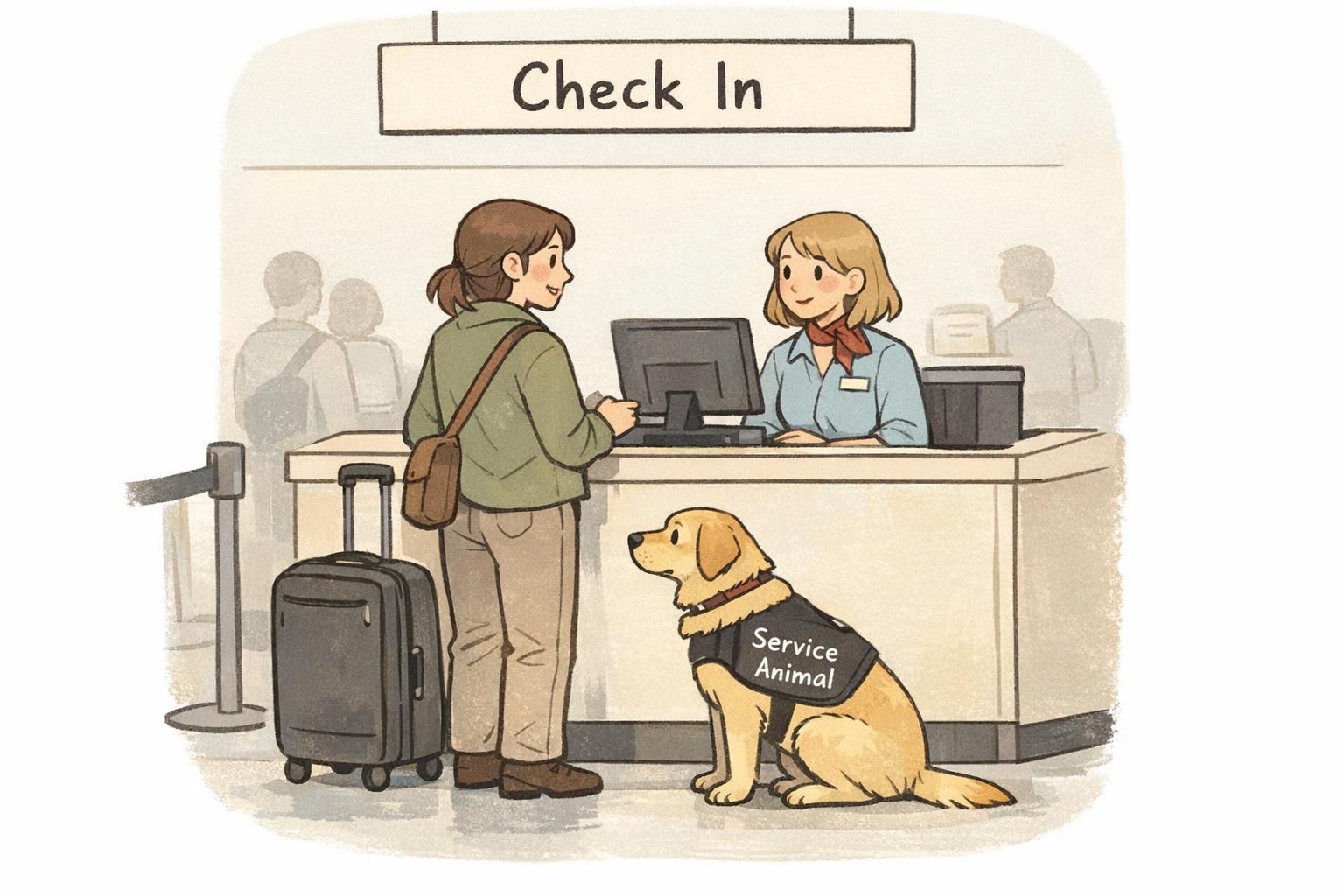
A short, calm script helps: “Hi, I’m traveling with my service dog today. We’re trained to remain under control and lie in my foot space. Can you confirm our seat assignment and note pre-boarding?”
TSA is usually the most intense part of the airport because it’s crowded, noisy, and full of stop-and-go movement. The key is to arrive early and approach screening with a plan: keep your dog leashed/tethered, follow officer instructions, and maintain control while you move through the process.
Before you reach the front of the line, clear your pockets, organize your bags, and keep treats accessible. This reduces the time you’re standing in a “busy” moment while also managing your dog.
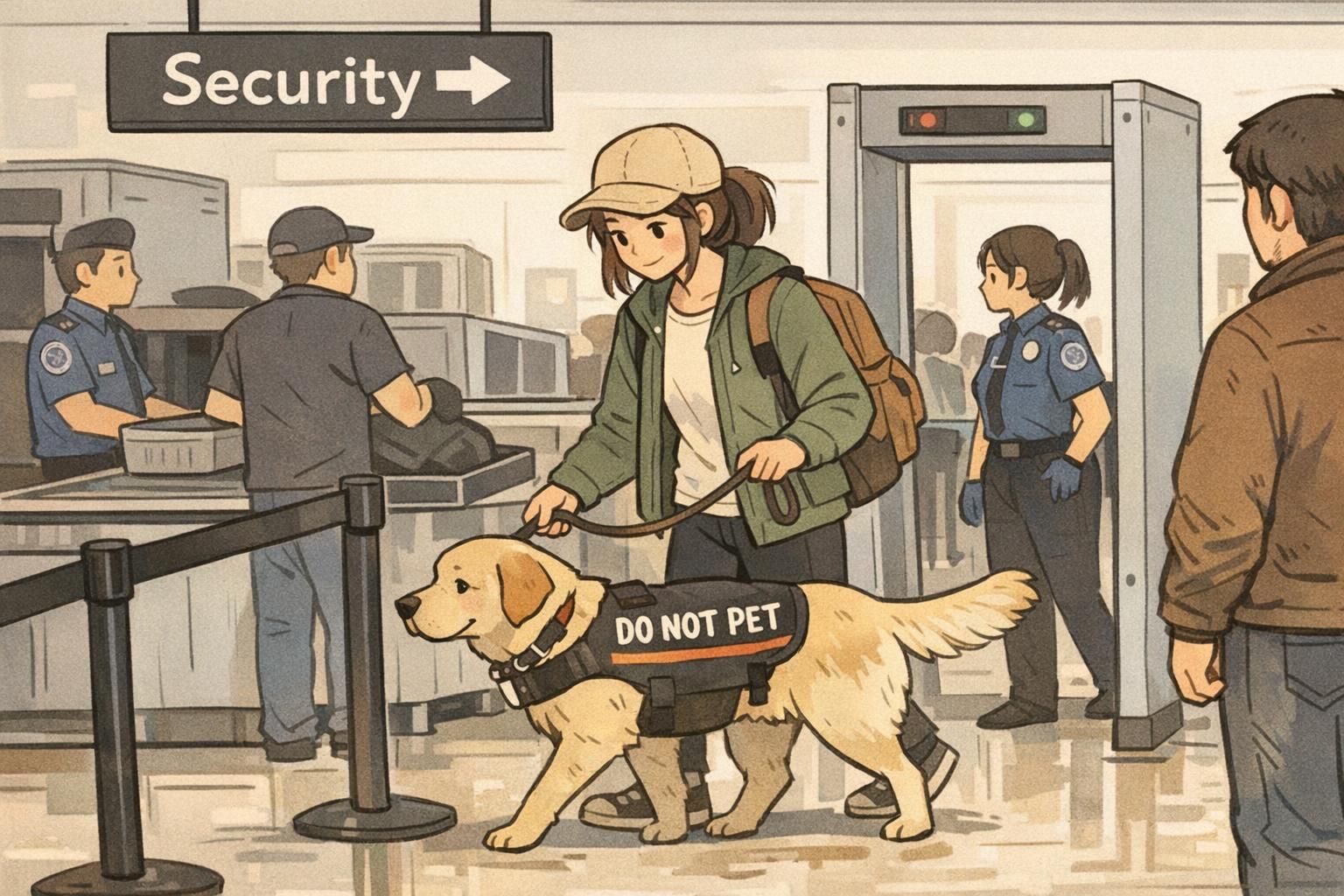
If you ever need a quick, polite way to clarify the basics, ADA law handout cards for quick, polite explanations can be helpful to keep conversations brief and respectful when questions come up in high-traffic areas.
Most U.S. airports provide designated animal relief areas. The best strategy is to locate the nearest one as soon as you arrive—before you truly need it. That simple step can prevent a stressful search later, especially during delays or gate changes.
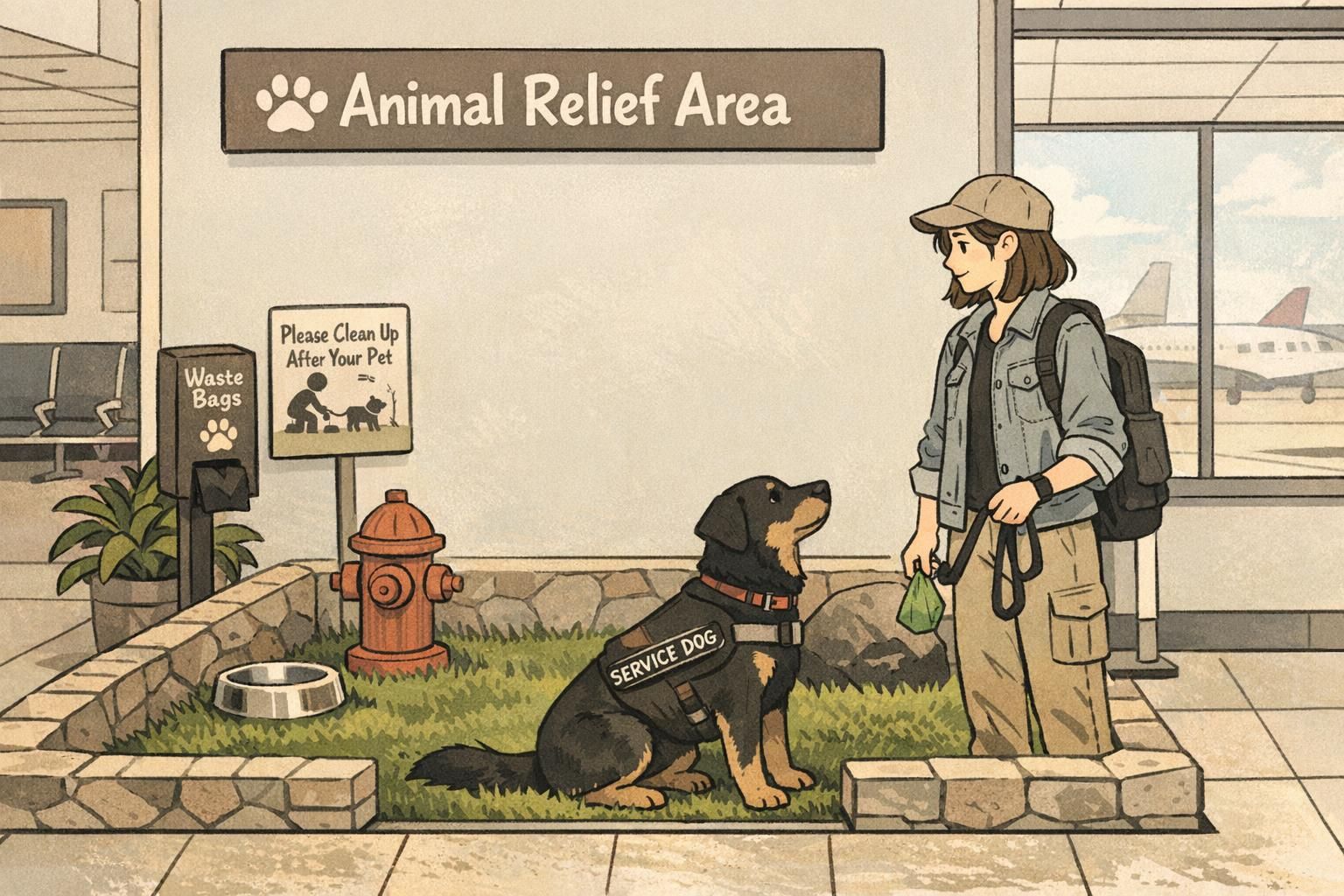
Once you’re at the gate, your main job is to help your dog conserve energy and stay settled. Choose a lower-traffic spot a little away from the main boarding lane if possible, and cue a calm down-stay or tucked sit beside you.
Many airlines offer pre-boarding for passengers who need extra time. If pre-boarding is available, it can help you get down the jet bridge without pressure and set up your foot space before the aisle fills with bags and people.
On board, the goal is simple: your service dog stays tethered, calm, and positioned safely in your foot space without blocking the aisle. Most dogs do best when the routine is predictable—board, tuck, settle, and stay quiet unless needed for tasking.
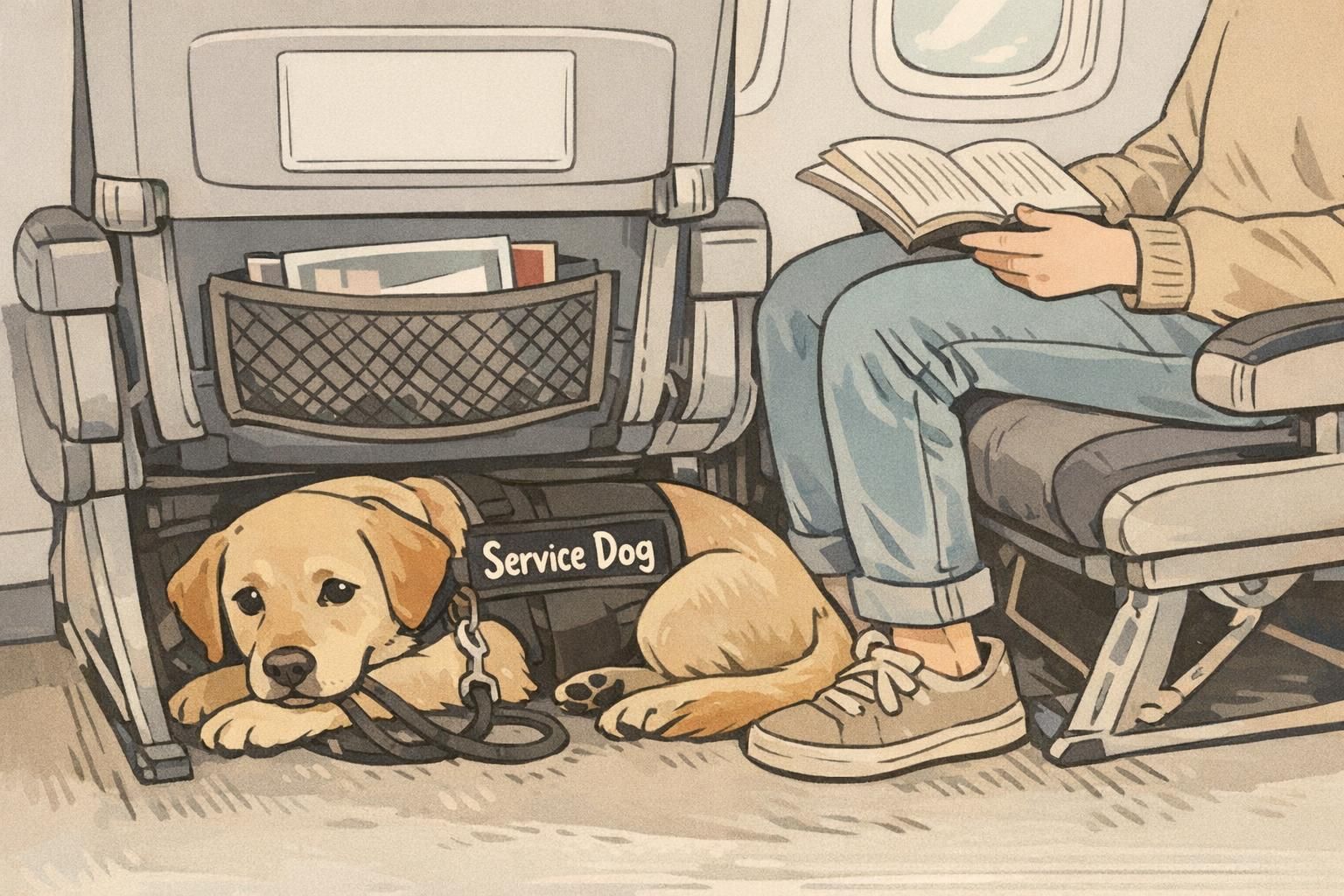
If they’re already aware, you may not need to. But a calm, brief heads-up can help: “Just letting you know my service dog will be tucked at my feet. We’re all set.”
Staying calm, keeping your dog close, and maintaining a neat tuck often solves most concerns. If needed, you can ask a flight attendant if there are seating options, but many situations de-escalate once people see your dog is quiet and under control.
Most airport trips go smoothly when the basics are handled: your dog remains under control, your information is organized, and you allow enough time. When problems happen, they tend to fall into a few predictable categories—meaning you can prevent many of them with simple planning.
For air travel, airlines can refuse transport in specific situations, such as if a service dog poses a direct threat, causes significant disruption, is too large to be accommodated, fails health or entry requirements, or when required DOT forms aren’t provided. At the same time, discomfort from other passengers alone is not a valid reason for denial. This is clearly outlined by the U.S. Department of Transportation (source).
“ "The busiest moments are where preparation pays off. When your dog can settle anywhere and you have your travel details organized, the airport becomes a series of simple steps instead of a big unknown." – Service dog handler”
Connections add two challenges: time and distance. Large airports can mean long walks between gates, crowded trains, and limited time for relief breaks. A realistic buffer helps you stay calm and keeps your dog from being pushed past their comfort zone.
International travel requires even earlier planning. Entry rules and documentation can differ by country, and some destinations have specific health steps or timelines. The best approach is to research your destination requirements early, confirm what your airline expects for your itinerary, and build a checklist you can follow without scrambling.
Many handlers prefer it. A longer layover can mean a calmer pace, time for relief, and fewer rushed moments in crowded spaces.
The most relaxing travel days are the ones that feel predictable. Use this checklist the night before and the day of travel so you’re not trying to remember details while managing lines, announcements, and a working dog.
If you’d like deeper planning tips, see a complete guide to traveling with a service dog for additional travel scenarios and preparation ideas.
Many handlers also like having clear, consistent identification ready for travel day. If that would help you, a customizable service dog ID card with a matching digital profile can make it easier to keep your information organized and reduce repeated conversations.
Your trusted source for service animal registration. Get professional ID cards, digital profiles, and smart NFC tags to keep your service animal safe and recognized.
© National Animal Registry — All rights reserved.