Finding housing can be stressful for anyone—but it can become especially complicated when you rely on an assistance animal and you see “no pets” policies everywhere. The Fair Housing Act (FHA) is a federal civil rights law designed to reduce housing discrimination, including discrimination based on disability. In practical terms, it helps ensure that a person with a disability has an equal opportunity to apply for, live in, and fully enjoy a home.
One of the FHA’s most important protections for assistance animal handlers is the concept of “reasonable accommodations.” If an animal helps with a disability-related need, a housing provider may need to make an exception to a rule—such as a no-pets policy, a breed restriction, or a pet limit—so the person has the same chance to use and enjoy their housing as a tenant without a disability.
FHA assistance animal protections are tied to two core ideas: (1) the person has a disability under the FHA standard, and (2) the person has a disability-related need for the animal. In everyday terms, a disability is a physical or mental impairment that substantially limits one or more major life activities. Major life activities can include things like walking, seeing, hearing, breathing, learning, concentrating, interacting with others, and other important daily functions.
The disability-related need piece matters just as much as the disability standard. The question is whether the animal does work, performs tasks, provides assistance, or offers therapeutic emotional support that helps with the person’s disability-related limitations. Housing providers should review requests individually, rather than using blanket assumptions about a diagnosis, a type of animal, or a specific disability.
No. Many disabilities are not obvious. FHA protection can still apply when a disability isn’t visible, as long as the person meets the disability standard and has a disability-related need for the animal.
Protections generally apply when there’s a disability and a disability-related need for the animal, and the request is reasonable under the circumstances. Housing providers should consider requests on a case-by-case basis.
“ "The most helpful mindset is to focus on function: how the animal supports a disability-related need in day-to-day housing life."”
In housing, the term “assistance animal” is used broadly. Under HUD guidance, an assistance animal is an animal that works, provides assistance, performs tasks, or provides therapeutic emotional support for an individual with a disability. For FHA housing purposes, an assistance animal is not treated as a pet.
Many people are familiar with two common categories:
It’s also important to know that housing rules can be broader than public-access rules in other settings. For example, public-access service animal rules under the ADA are often discussed in terms of trained service dogs (and sometimes miniature horses). FHA housing guidance uses the broader “assistance animal” concept, which can include emotional support animals as well. That difference is a major reason renters get mixed messages—two different laws can apply in different places.
The FHA applies to a wide range of housing types and housing-related transactions. Many renters encounter FHA protections in standard apartment rentals and single-family home rentals. FHA coverage can also come up in subsidized housing, condominiums with associations, group homes, and other residential settings where policies and shared spaces are managed by a housing provider.
Some emergency or temporary housing programs and shelters may also fall under fair housing rules, although how policies are applied can vary by program, local regulations, and operational realities. When you’re unsure, it’s reasonable to ask a provider which rules they follow and how they process assistance animal accommodations.
There are also common exceptions and special situations. For example, certain small owner-occupied properties or some private clubs and religious organizations in limited circumstances may be exempt from parts of the FHA. Even in those situations, state or local fair housing laws may still provide protections.
A reasonable accommodation is a practical adjustment to a rule, policy, practice, or service that may be necessary for a person with a disability to have an equal opportunity to use and enjoy a dwelling. For assistance animal handlers, this often means being allowed to live with the animal even when pets are not allowed.
In real life, reasonable accommodations for an assistance animal often include:
HUD explains that housing providers generally must make reasonable accommodations for assistance animals when there is a disability-related need, including making exceptions to no-pet policies and avoiding pet fees for assistance animals in those circumstances (source).
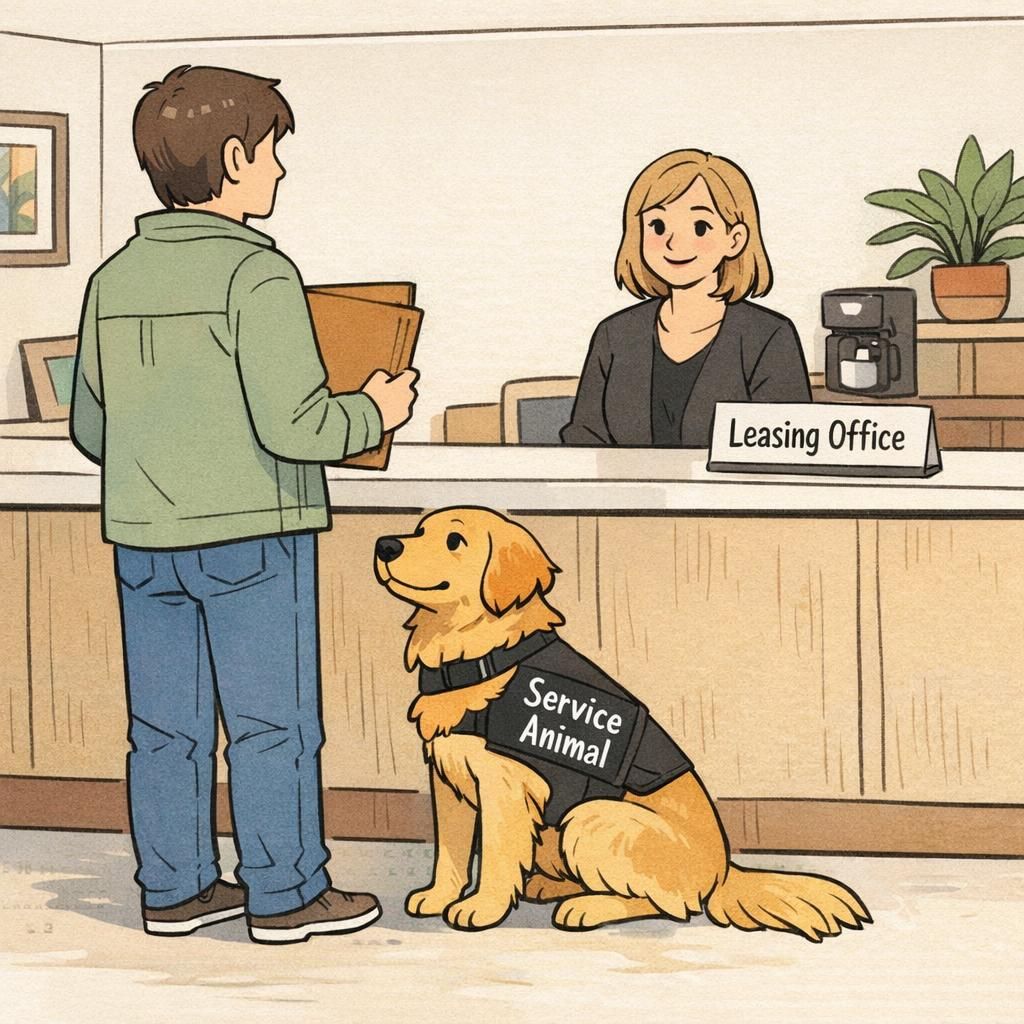
A clear, respectful request can prevent delays and confusion. You can request an accommodation at different points: when you apply, when you receive a lease, or even after you move in and your disability-related need arises or changes. The key is to communicate early enough that the housing provider can respond without last-minute pressure.
Housing providers sometimes ask follow-up questions, especially when the disability or the disability-related need for the animal is not obvious. In those situations, providers may ask for information that helps confirm two basics: that the person has a disability, and that the person has a disability-related need for the animal. When you respond, aim for clear, simple information that addresses those points without turning the process into a debate.
Many people prefer to request once they’re serious about a unit or at application time so expectations are clear. If you’re already a tenant, you can still request an accommodation when needed. The best timing depends on your situation and comfort level.
No. A calm, organized request is often the fastest path. If problems arise, you can escalate step-by-step while staying professional.
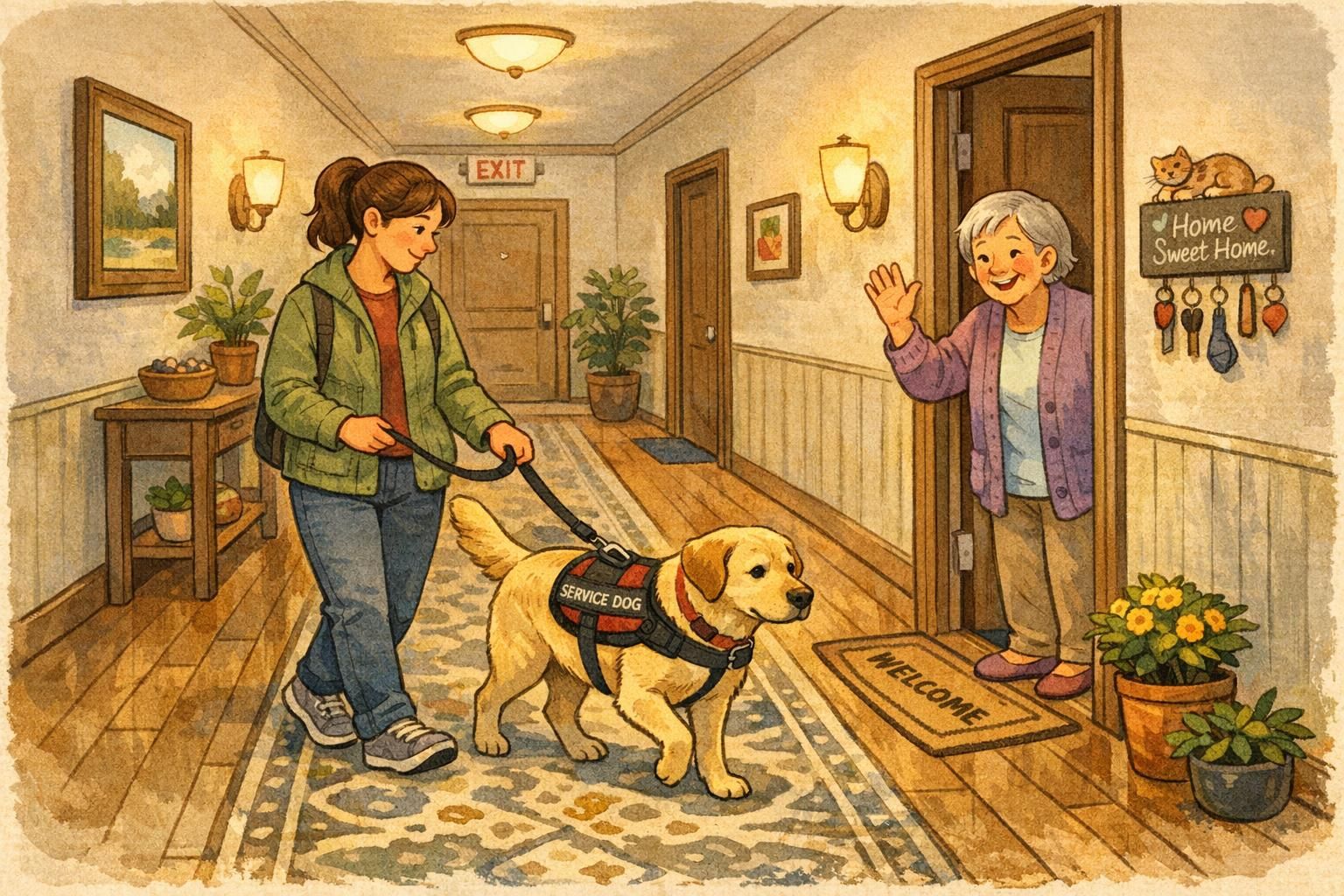
Even when the law is on your side, the day-to-day experience of renting can involve quick conversations with leasing agents, property managers, maintenance teams, and front-desk staff. Having your information organized can make those interactions smoother—especially when staff turnover is high or policies are enforced inconsistently.
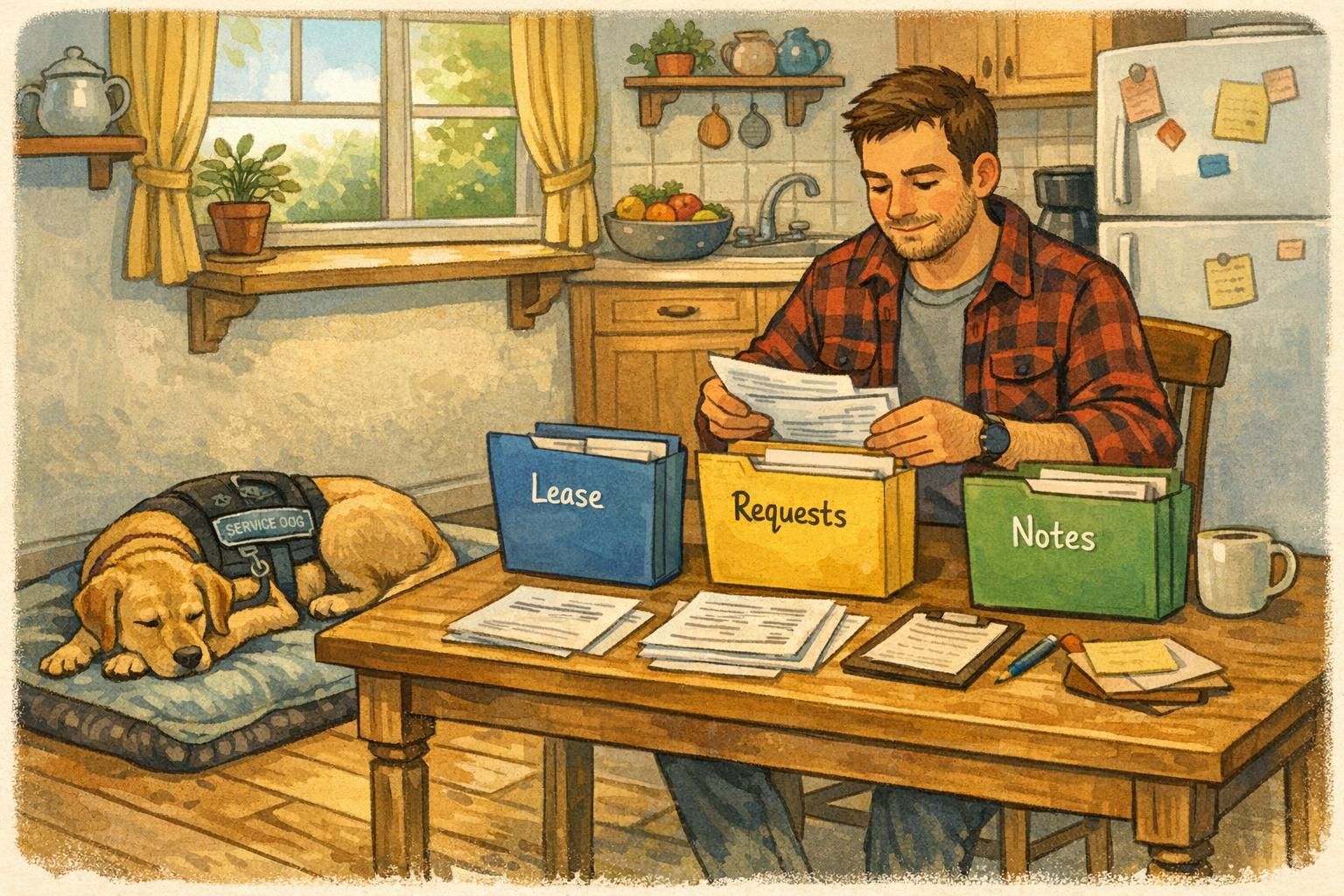
Many handlers find it helpful to keep a simple “housing folder” (digital or printed) that includes key items like your accommodation request email, any written responses, and a one-page summary of your assistance animal details. Clear, easy-to-understand identification can also reduce confusion in common areas and during routine interactions, such as when management changes or when you move to a new building.
For renters who want a convenient way to present assistance animal information clearly and consistently, National Animal Registry offers a housing-focused registration package with clear, ready-to-share identification. Many handlers appreciate having a consistent set of materials that’s easy to show and easy for housing staff to understand during everyday housing communication.
FHA accommodations are powerful, but they aren’t unlimited. A housing provider may deny an assistance animal request in certain situations, and a lawful review should be grounded in specific facts rather than assumptions.
Common legal limits discussed in fair housing guidance include situations where the request would create an undue financial and administrative burden, require a fundamental alteration of the housing provider’s operations, or where the specific animal poses a direct threat to the health or safety of others or would cause substantial physical damage to property that can’t be reduced or eliminated by another reasonable accommodation.
“ "A fair review looks at what’s real and specific—how the animal behaves and whether concerns can be solved with a workable plan."”
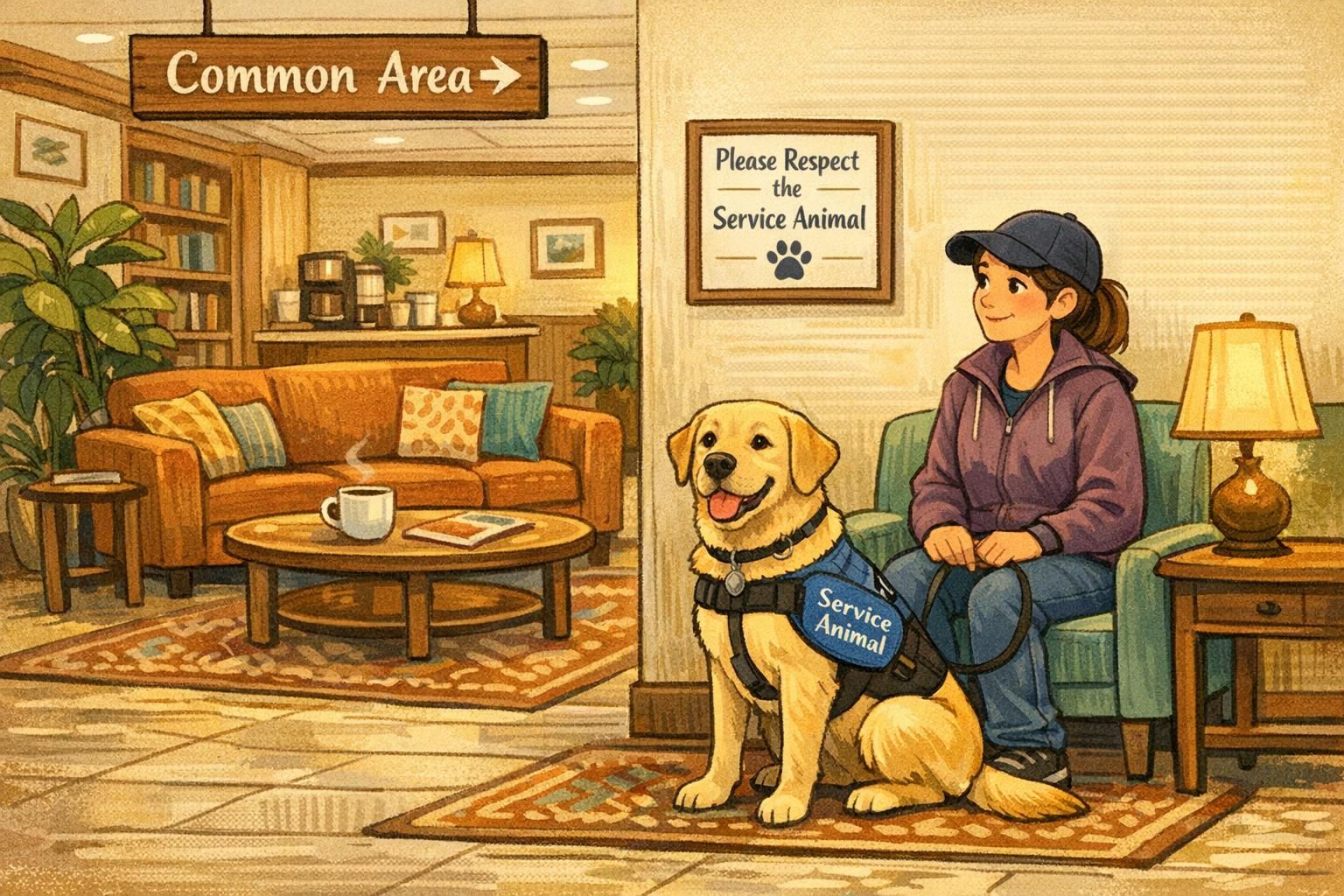
Living with an assistance animal in a shared housing community works best when rights and responsibilities are both taken seriously. The FHA framework is meant to support access while keeping housing safe and livable for everyone.
Practical neighbor-friendly habits can go a long way: use a leash when appropriate, plan quick and clean bathroom breaks, keep vaccination and grooming routines consistent, and respond promptly if a neighbor raises a concern. Protecting your rights and being a good neighbor can coexist—and often makes future interactions with management much easier.
A denial can feel personal, but many disputes are resolved through calm, organized follow-up. If your request is denied or delayed, you can take steps that keep the conversation professional while creating a clear record.
“ "When everything is documented and calm, it’s easier to correct misunderstandings—and easier to show what happened if you need outside help."”

It’s easy to assume the same assistance animal rules apply everywhere, but housing and travel are governed by different laws and policies. The FHA is focused on housing access and reasonable accommodations in residential settings. Travel situations—like flying, staying in hotels, or entering public spaces—may involve different standards, different documentation practices, and different expectations for behavior and access.
If you travel with a service dog, it helps to review travel-specific guidance so you’re prepared for airline processes, check-in conversations, and on-the-go etiquette. For more on that topic, see traveling with a service dog.
Your trusted source for service animal registration. Get professional ID cards, digital profiles, and smart NFC tags to keep your service animal safe and recognized.
© National Animal Registry — All rights reserved.