Most people don’t wake up one morning and decide to compare documents. It usually starts with a real-life moment—something practical and time-sensitive—where a question pops up fast: “What do I show?”
Maybe it’s the day you apply for a new apartment and the leasing agent asks what kind of animal you have. Maybe it’s a quick stop at the grocery store when someone points at your dog’s vest and wants a longer conversation than you have time for. Or it’s travel—where you’re juggling lines, policies, and multiple staff interactions in a short window.
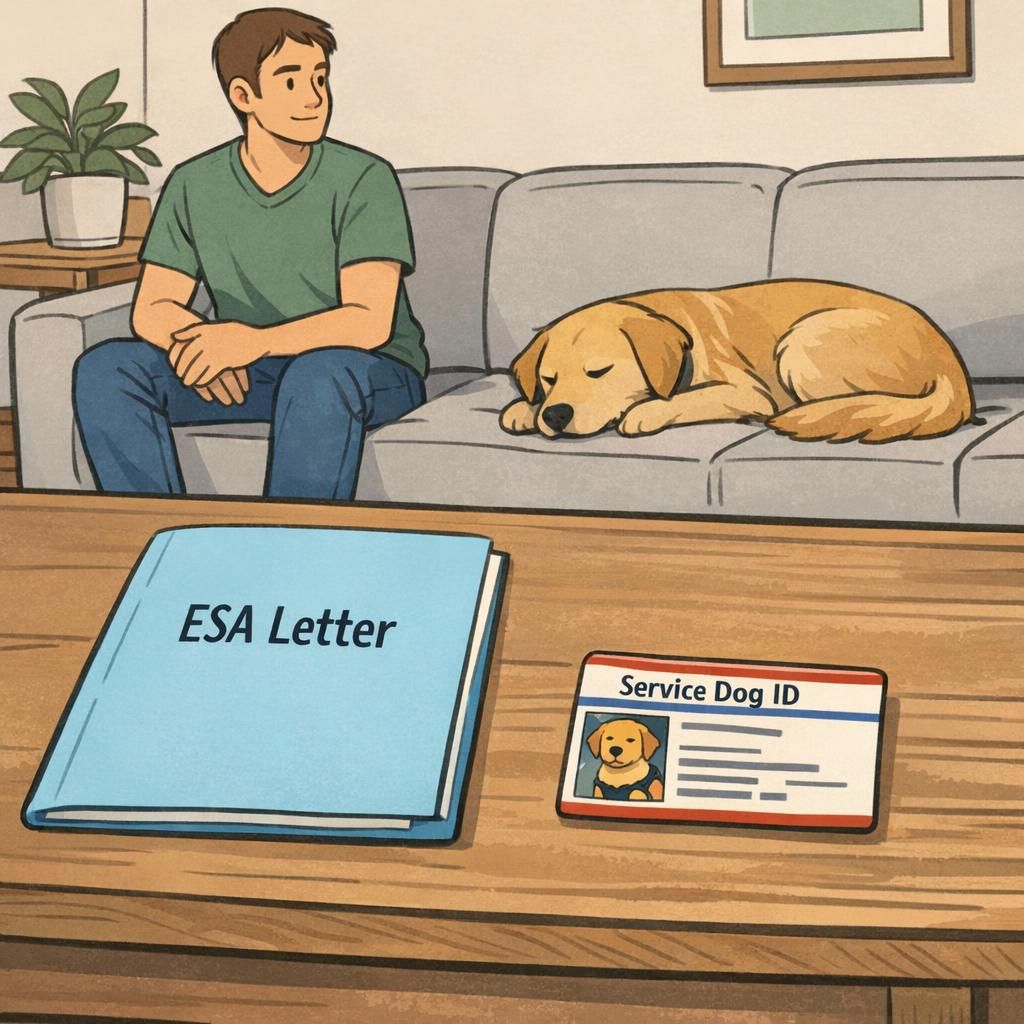
In those moments, owners often compare two tools: an ESA letter (commonly used to support housing-related accommodation requests) and a service dog ID (often used as a clear, consistent way to identify a working service dog during everyday interactions). They’re not “competing” documents as much as they are tools for different situations.

A new lease can feel like a fresh start—until you hit the part of the application where “pets” come up. For many owners with emotional support animals, that moment brings up a real concern: “If I explain this the wrong way, will it get complicated?”
In this story, the owner is moving into a mid-size apartment building with a busy leasing office. The dog is well-behaved and calm, but the building’s staff is juggling tours, renewals, and maintenance requests. The owner’s goal isn’t to win an argument; it’s to keep the process smooth.
Instead of waiting for confusion to happen, the owner chooses a calm, prepared approach. They share that they have an emotional support animal and that they’re requesting a reasonable accommodation. Then they provide their ESA letter as part of an organized set of paperwork—so the staff has something concrete to review and file.
Even when policies vary from one property to another, owners often report the same thing: organized paperwork reduces the “unknowns.” It signals that you’re taking the process seriously and trying to make the staff’s job easier, too.
“ "Having my paperwork organized changed the whole tone. It wasn’t a confrontation—it was a normal office request with a clear next step." – Renter and ESA owner”
Some owners also like to keep their animal-related information consistent across situations—especially if they move often or live in properties with frequent staff turnover. That’s where a housing-focused documentation set can feel reassuring, because it helps you keep key details in one place and present them professionally when questions come up.
If you’re building a more organized system for housing conversations, many owners choose a housing-focused registration package for clear, organized documentation to keep information consistent and easy to reference when needed.
Errands are supposed to be simple. But for a service dog handler, a quick stop can turn into an unexpected conversation—often with someone who’s trying to help but doesn’t know what to ask, or someone who is uncertain about policies.
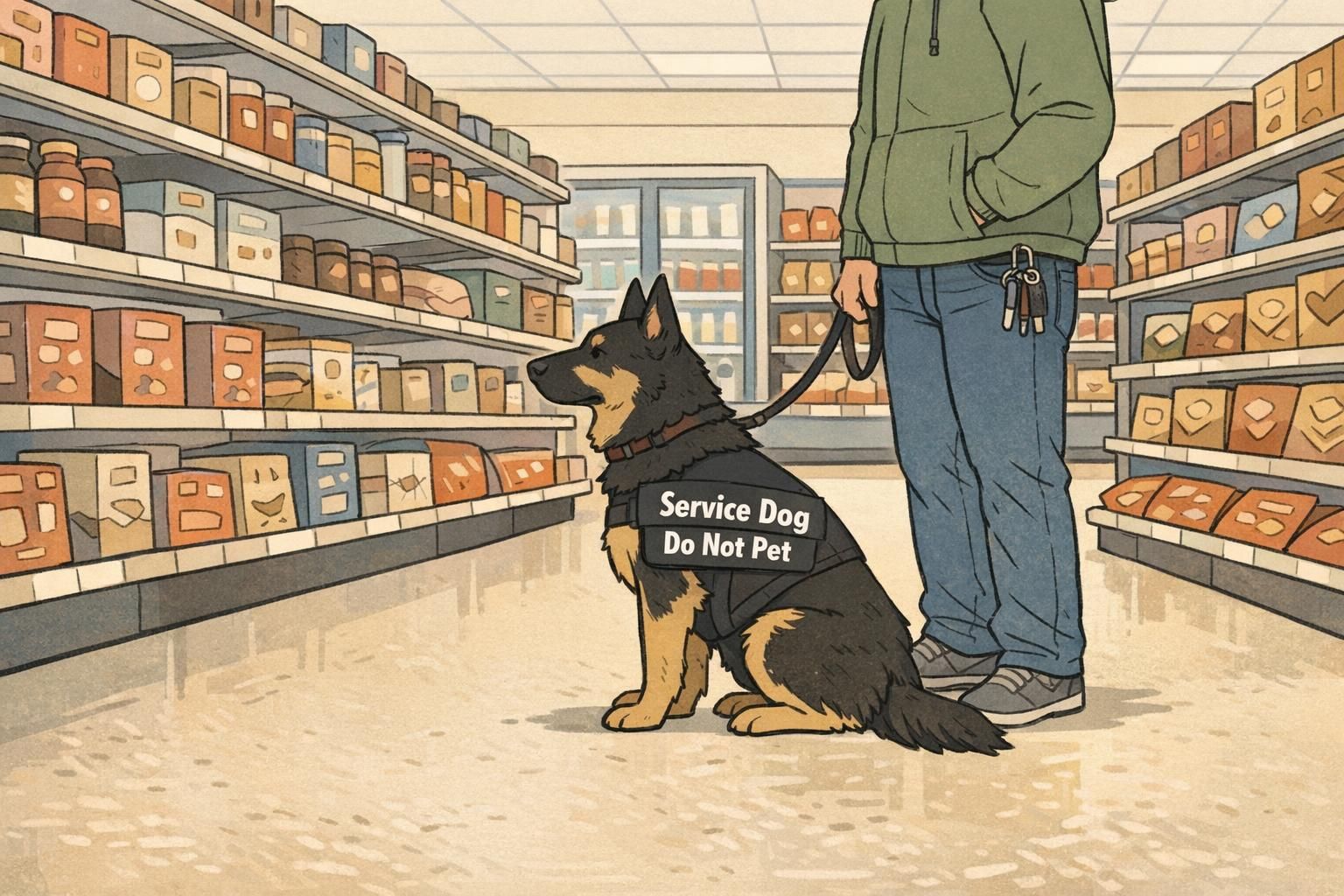
In this story, the handler is in a grocery store picking up a few items after work. The dog is focused, walking close, ignoring food and distractions. Near the produce section, a staff member approaches and asks a common question: “Is that a service dog?”
The handler’s goal is to keep it brief and respectful—because they’re managing their own day, their dog’s working focus, and the flow of the store. They answer calmly, and instead of letting the conversation stretch, they show a service dog ID as a quick, professional cue that the dog is working and that the handler is prepared.
For owners who like a consistent, professional way to present service dog information, a customizable printed service dog ID with a matching digital profile can be a practical option—especially when you want quick access to key details without turning a routine stop into a long discussion.
Owners often describe the difference in very simple terms: an ESA is primarily about emotional comfort and support, while a service dog is about trained tasks that help a person function day to day. That distinction tends to show up in where questions happen and what people expect to see.
In real life, owners don’t just want to be “right.” They want fewer awkward moments. They want smoother check-ins, fewer repeated questions, and less emotional energy spent educating strangers when they’re just trying to live their day.
Most owners find it best to keep conversations simple and private. You can be polite and clear without sharing sensitive details—especially in public settings where you’re focused on getting through your day.
Because settings are different. Housing, travel, and everyday public access each come with different policies, staff training levels, and expectations—so owners benefit from planning for the situations they face most.
Legal rules can feel complicated because they depend on the setting. A plain-English way owners often frame it is this: emotional support animals are commonly discussed in the context of housing accommodations, while service dogs are recognized more broadly in public access situations when they are trained to perform tasks for a person with a disability.
Under the Americans with Disabilities Act (ADA), service animals are defined by the work or tasks they are trained to perform. The ADA also explains that a specific ID card or a national certification system is not required under the ADA for service animals. You can read more directly here: source.
Because policies and expectations can vary by location and situation, owners often benefit from staying organized: knowing what applies to their daily routines, keeping key details accessible, and preparing a simple way to communicate with staff when questions come up.
If travel is part of your routine, it helps to think ahead about timelines, staff interactions, and what you want within easy reach. Many handlers find it useful to review planning ahead for travel with a service dog so they’re not making decisions under pressure.
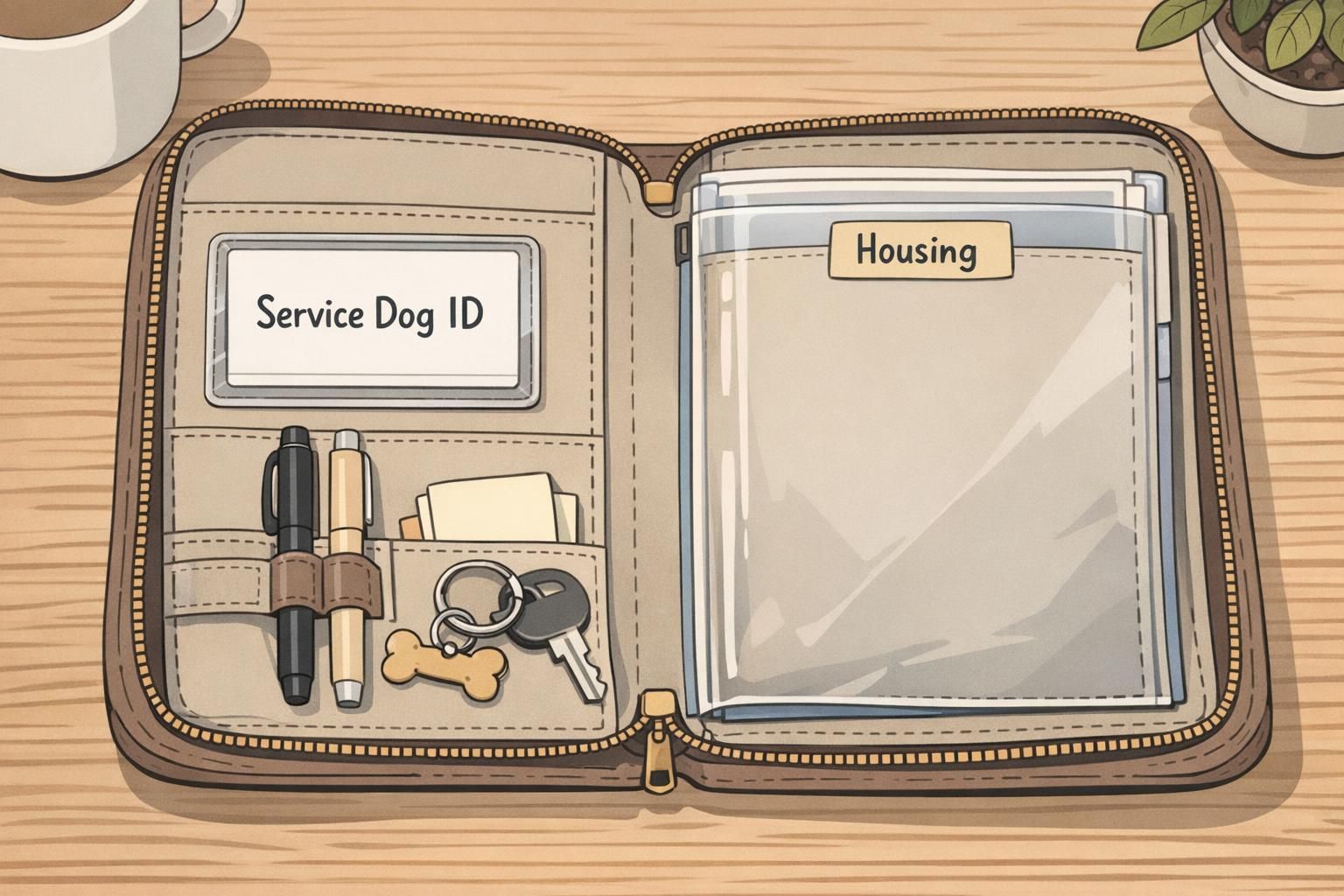
In everyday life, owners often aren’t looking for a “debate-proof” document. They want something simpler: a consistent way to present information that helps other people understand the situation quickly and behave respectfully.
That’s why optional tools like printed IDs, certificates, and digital profiles can be so useful. They help you keep key details in one place and show the same information consistently—whether you’re talking to a new building manager, a front-desk employee, a rideshare driver, or a venue staff member.
“ "The biggest benefit wasn’t showing a card—it was feeling prepared. I didn’t have to scramble for words." – Service dog handler”
If you’re building a simple, everyday system for identification, many handlers start with a starter registration package for everyday identification to keep the basics streamlined and easy to carry.
Travel has a way of compressing everything. You might interact with a shuttle driver, a check-in counter, TSA, a gate agent, and a flight attendant—sometimes within an hour. Even when everyone is courteous, the pace alone can be stressful.
In this story, the handler has an early flight and arrives with enough time, but not enough time for extended conversations. Their service dog is calm and practiced in busy spaces. Still, they prefer to have a consistent set of materials ready so they can respond quickly and confidently if questions come up.
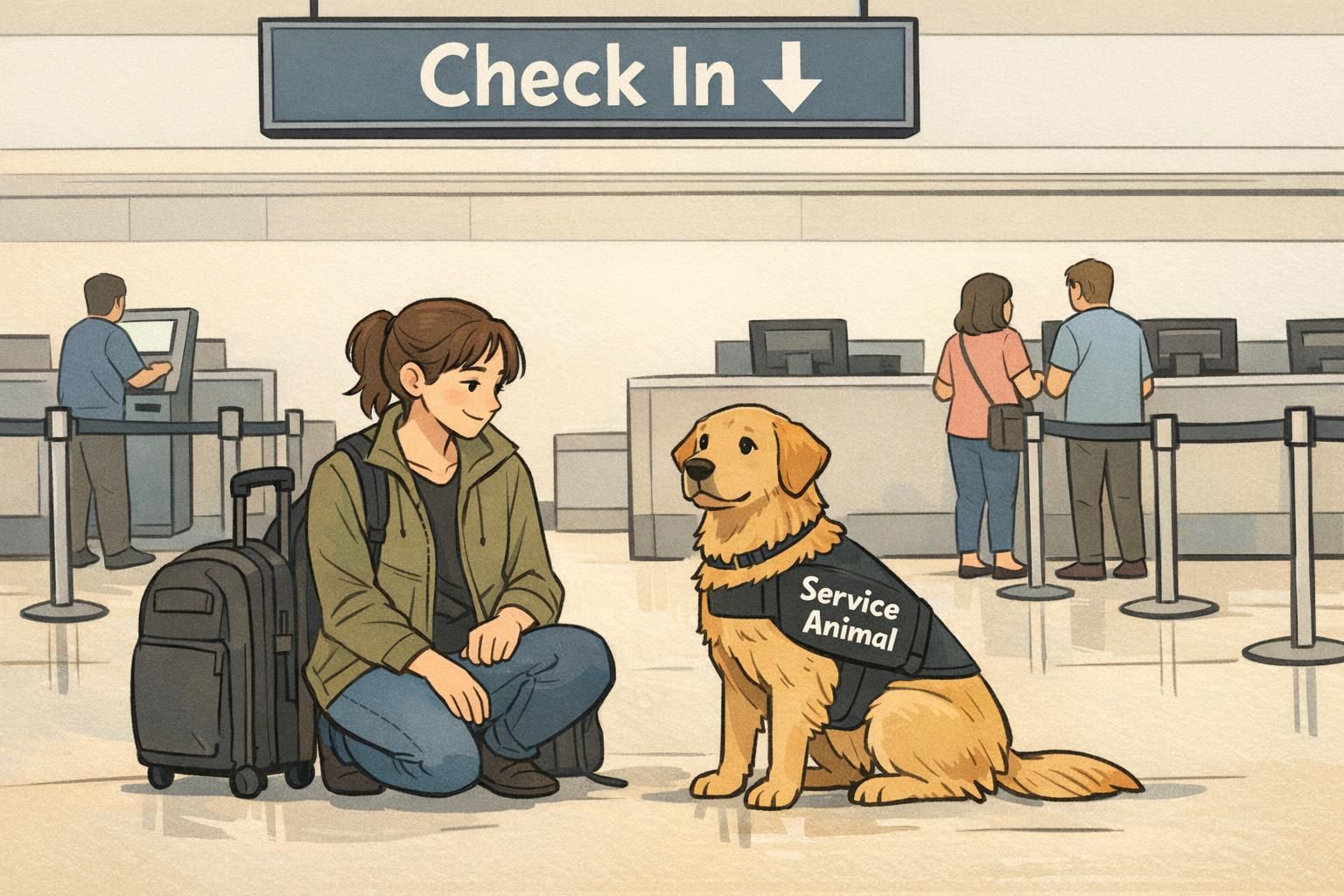
At check-in, they keep it simple: calm tone, short answers, and a quick way to present consistent information if needed. The benefit isn’t just what staff sees—it’s what the handler feels. Preparedness reduces the mental load when the environment is loud, crowded, and fast.
For handlers who want a more travel-focused set of materials, a travel-ready service dog registration package can help keep everything consistent and easy to access.
If you’re mapping out your next trip, many handlers also appreciate a step-by-step travel planning guide for handlers so they can plan around common pinch points like check-in timing and multiple staff touchpoints.
Owners often say the biggest difference-maker isn’t the moment someone asks a question—it’s how prepared you feel when it happens. The best “scripts” are short, respectful, and repeatable. They help you keep boundaries without escalating tension.
Many handlers use a short line like: “Thanks for asking—he’s working, so we’re going to keep moving.” Then they continue their errand without apologizing.
Owners often find it helps to stay calm and professional and present consistent information quickly. Having an easy-to-show reference, like an ID card or a short handout, can keep the exchange respectful and brief.
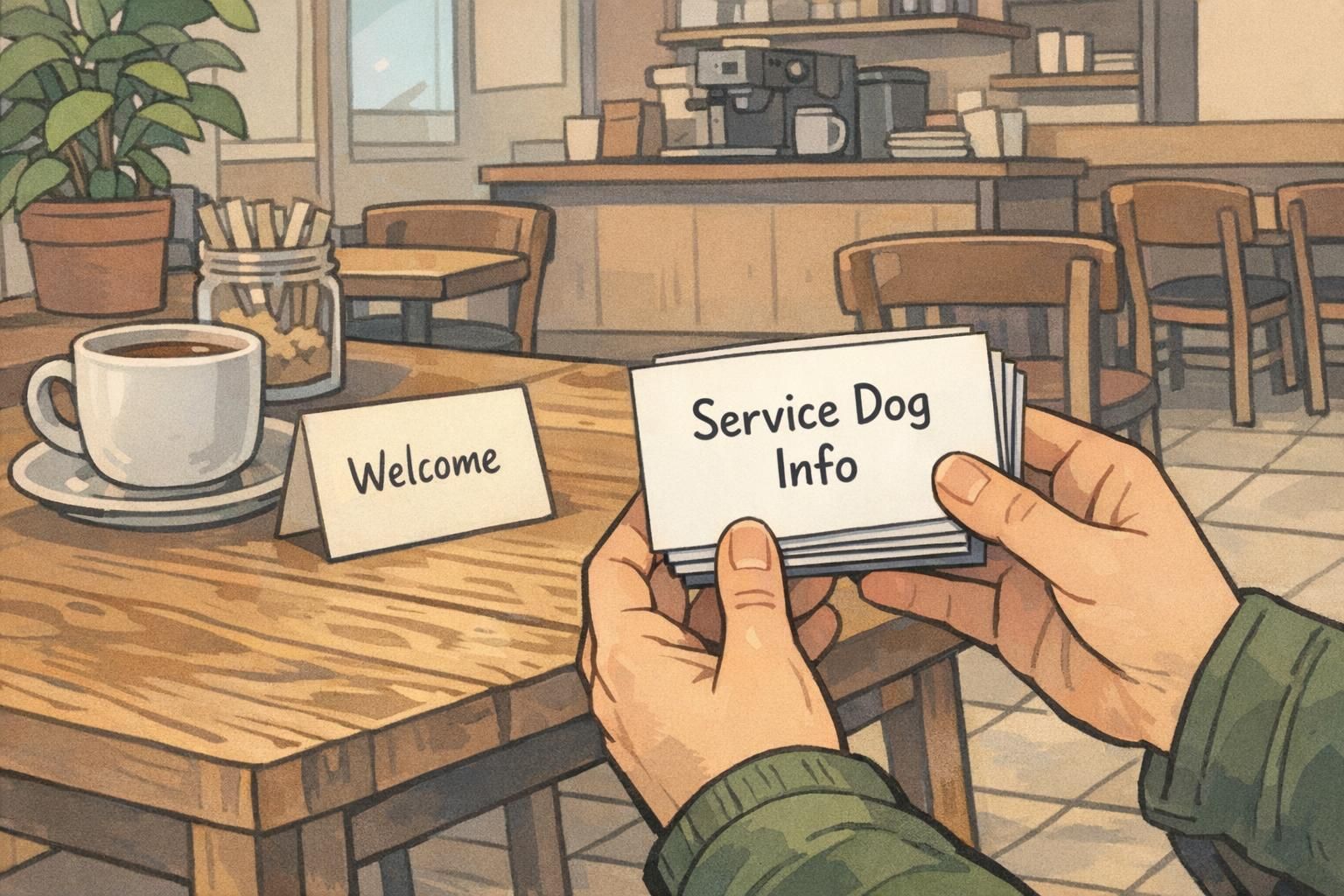
For owners who like having a quick, calm way to share basic service animal information without turning it into a debate, ADA handout cards for quick, calm conversations are a popular option—especially in settings where staff turnover is high and misunderstandings are common.
Most owners aren’t looking for “more paperwork.” They’re looking for fewer interruptions and smoother routines. The best choice usually depends on where your friction points happen most: housing conversations, everyday public interactions, or travel.
Yes. Many owners register because they prefer consistency and peace of mind. Being prepared is often about confidence, not just responding to challenges.
That’s common. Owners often start with a simple setup and add more tools if they move, travel more, or begin visiting new places more often.
For owners who want a comprehensive, streamlined setup that covers the widest range of everyday scenarios, an all-in-one service dog package for maximum preparedness can make it easier to stay consistent wherever life takes you.
“ "I didn’t get organized because I expected a problem. I got organized so a small question wouldn’t ruin my whole day." – Handler and dog owner”
Your trusted source for service animal registration. Get professional ID cards, digital profiles, and smart NFC tags to keep your service animal safe and recognized.
© National Animal Registry — All rights reserved.