A service dog team is exactly that—a team. The dog is trained to perform specific tasks that support a handler’s disability-related needs, and the handler provides the structure that makes those skills reliable in real life: clear cues, consistent routines, and thoughtful care.
From the outside, it can look like a well-behaved dog simply “going everywhere.” But on the inside, there’s an ongoing process of communication and problem-solving: the dog watches for direction (or for a trained alert), the handler manages the environment and timing, and both work together to navigate everyday life more safely and independently.
No two teams are identical. Daily routines vary based on the handler’s disability type, energy levels, work or school schedule, the dog’s age and experience, and even weather and season. Some teams rely heavily on mobility and item-retrieval tasks. Others prioritize medical alerts, guiding behaviors, or psychiatric support work such as interruption and grounding.
What stays consistent is the partnership: the dog isn’t “on duty” all day without support, and the handler isn’t “doing it alone” while the dog simply tags along. The goal is a steady rhythm—work, breaks, care, and connection—built around real-life needs.
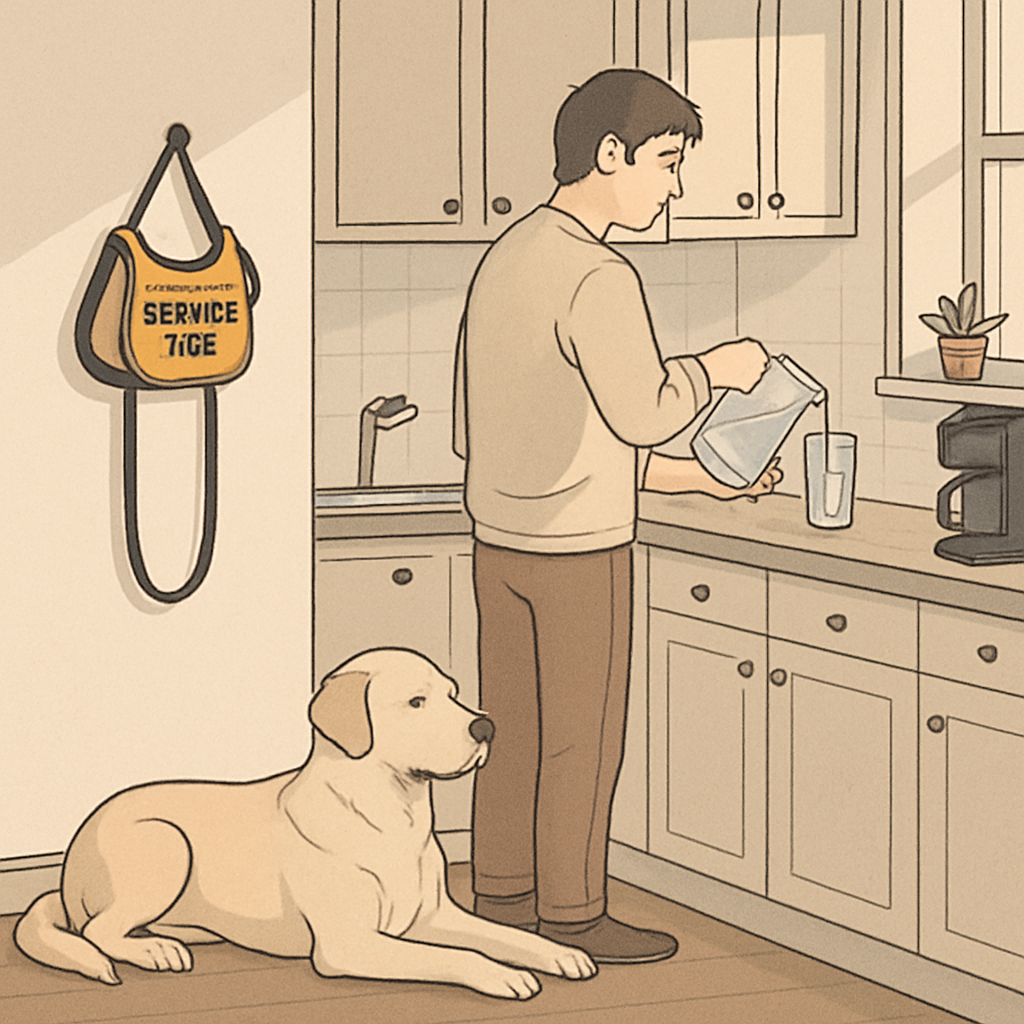
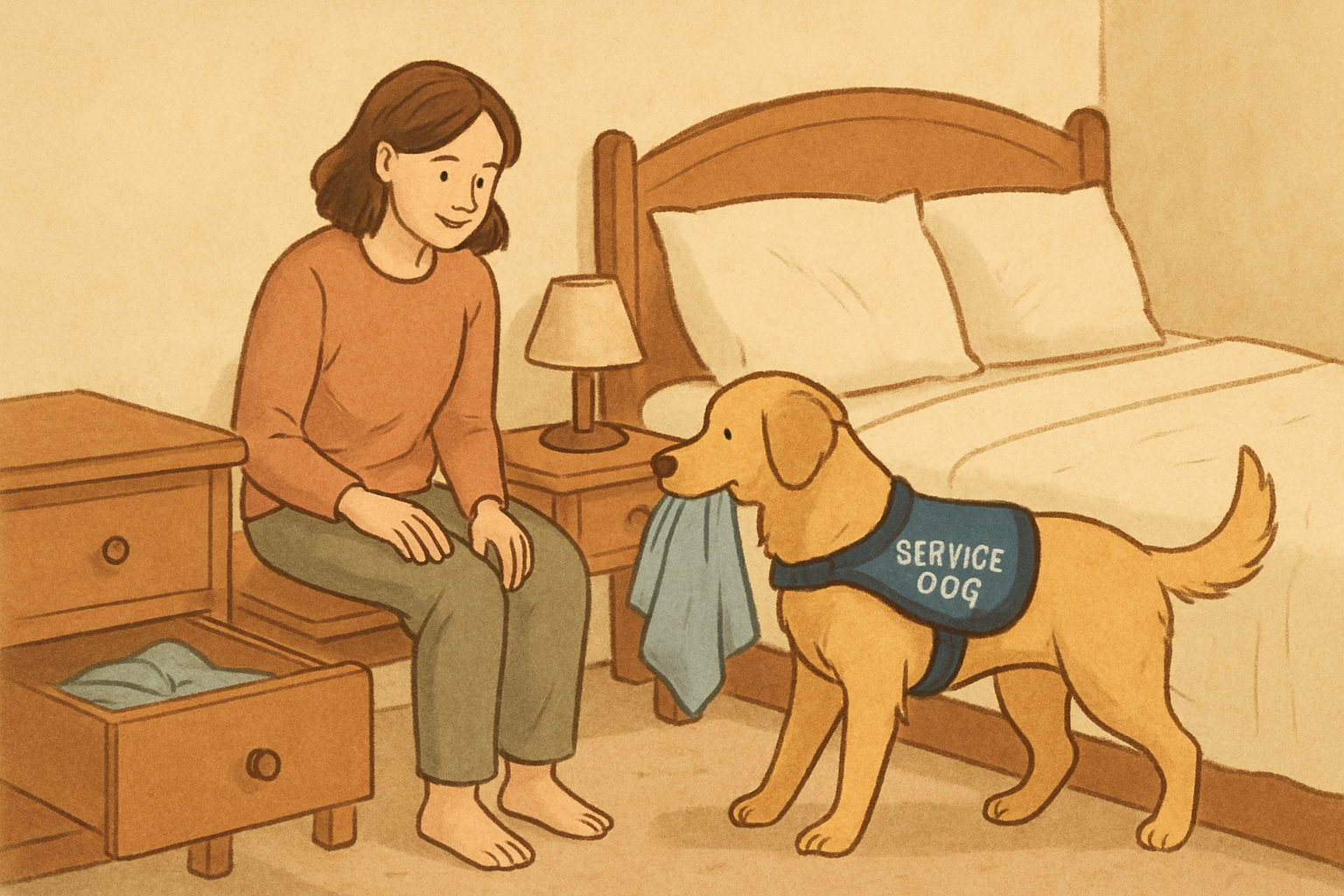
Most service dog teams start working long before they step outside. Mornings tend to be a blend of practical care (potty, food, water) and small task moments that set the handler up for the day. For some handlers, the first task is as simple as retrieving a phone, bringing medication, picking up dropped items, or helping with a light switch or door. For others, it’s medical-related support, steadying during transitions, or helping orient to the room.
The key is predictability. A calm morning routine helps the dog shift from sleep to focus, and it helps the handler move through “getting ready” with fewer surprises.
A day can easily run from morning to night for many teams, with task assistance woven into ordinary moments—retrieving items, helping navigate spaces, and supporting daily routines as needed. That day-long partnership is a common reality described by experienced programs and handlers alike, including this source.
Outings can take longer with a service dog—not because the dog is slow, but because the team is doing more planning up front. A smooth trip usually starts with basics: ensuring the dog has pottied, checking that gear is clean and fitted, packing water, and thinking through where the dog will settle in each location.
This is also where communication matters. Clear, consistent cues reduce friction. When the dog knows what “let’s go,” “wait,” “heel,” and “under” mean in your daily pattern, transitions become calmer and faster.
Many teams keep a small “go bag” ready by the door. It’s a simple habit that turns stressful scrambling into a routine you can repeat even on low-energy days.
“ "When we started treating ‘leaving the house’ like a checklist instead of a rush, our whole day got smoother. My dog settled faster, and I felt more in control." – Service dog handler”
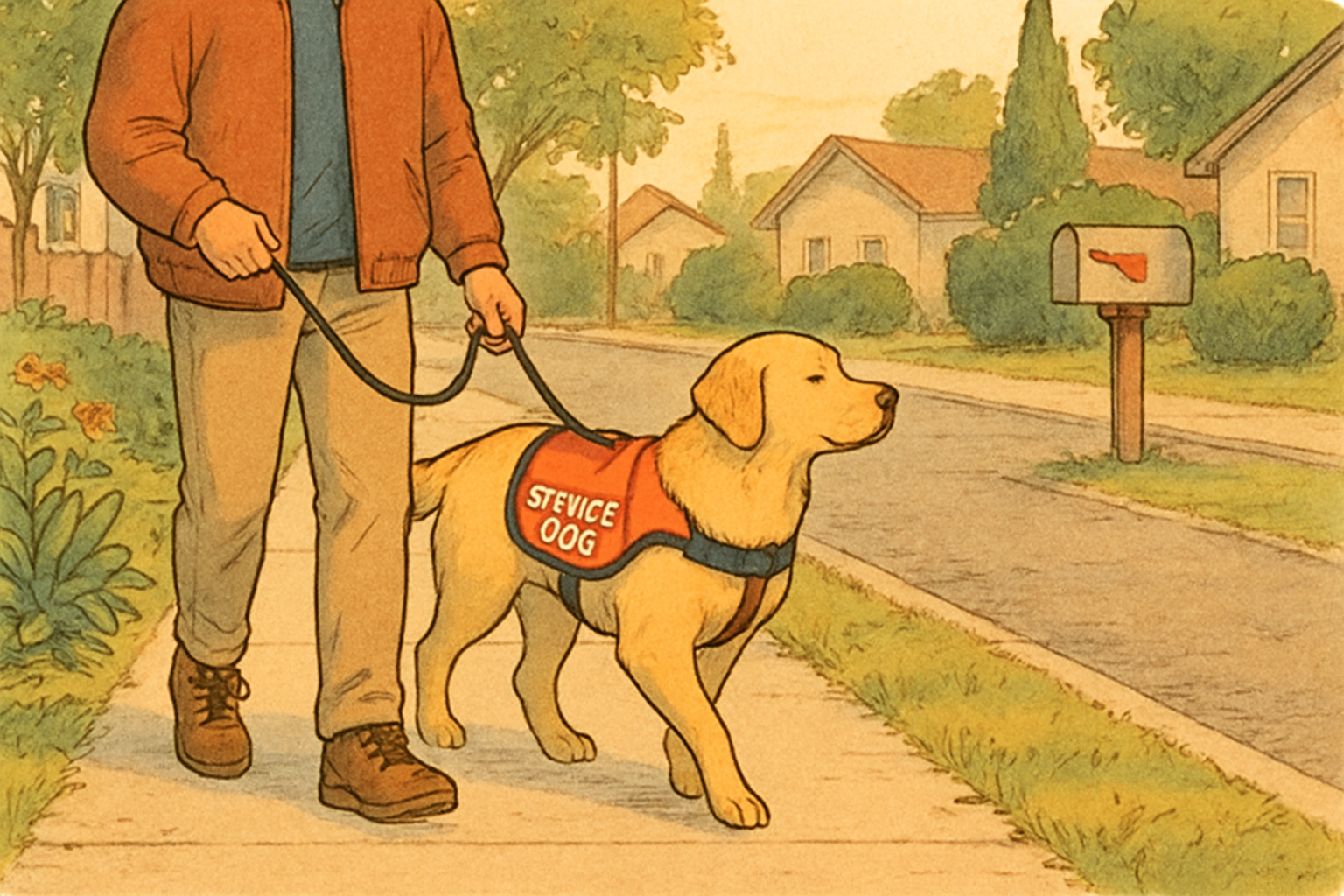
“Working” looks different depending on the team and the setting. In public, a service dog’s job is usually a combination of task work, calm behavior, and settling for stretches of time. That might happen at work, in a classroom, at a grocery store, in a medical appointment, or while running errands.
In many teams, the day naturally spans morning through evening, with task support integrated into real-life routines—like retrieving items, helping with navigation in busy environments, and other disability-related tasks that make everyday activities more accessible.
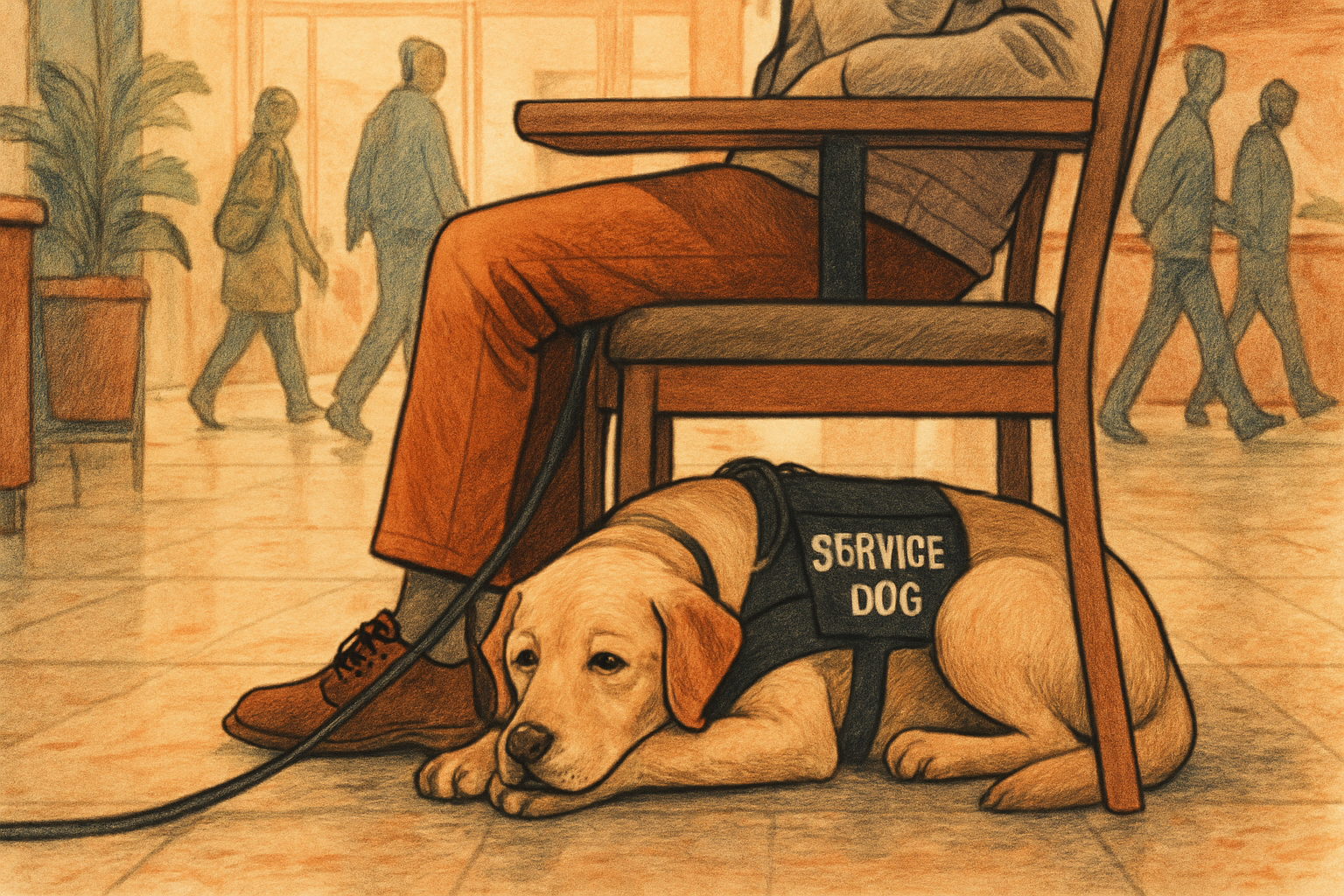
No. Helpful teams aim for safe, controlled, and predictable behavior—especially settling and ignoring distractions—but real life includes learning moments. Many handlers manage this with planning, brief practice, and choosing environments that support success.
Settling is the dog resting calmly in a designated spot (often under a chair or close beside the handler) without seeking attention, wandering, or becoming disruptive. It’s one of the most valuable public-life skills for a service dog.
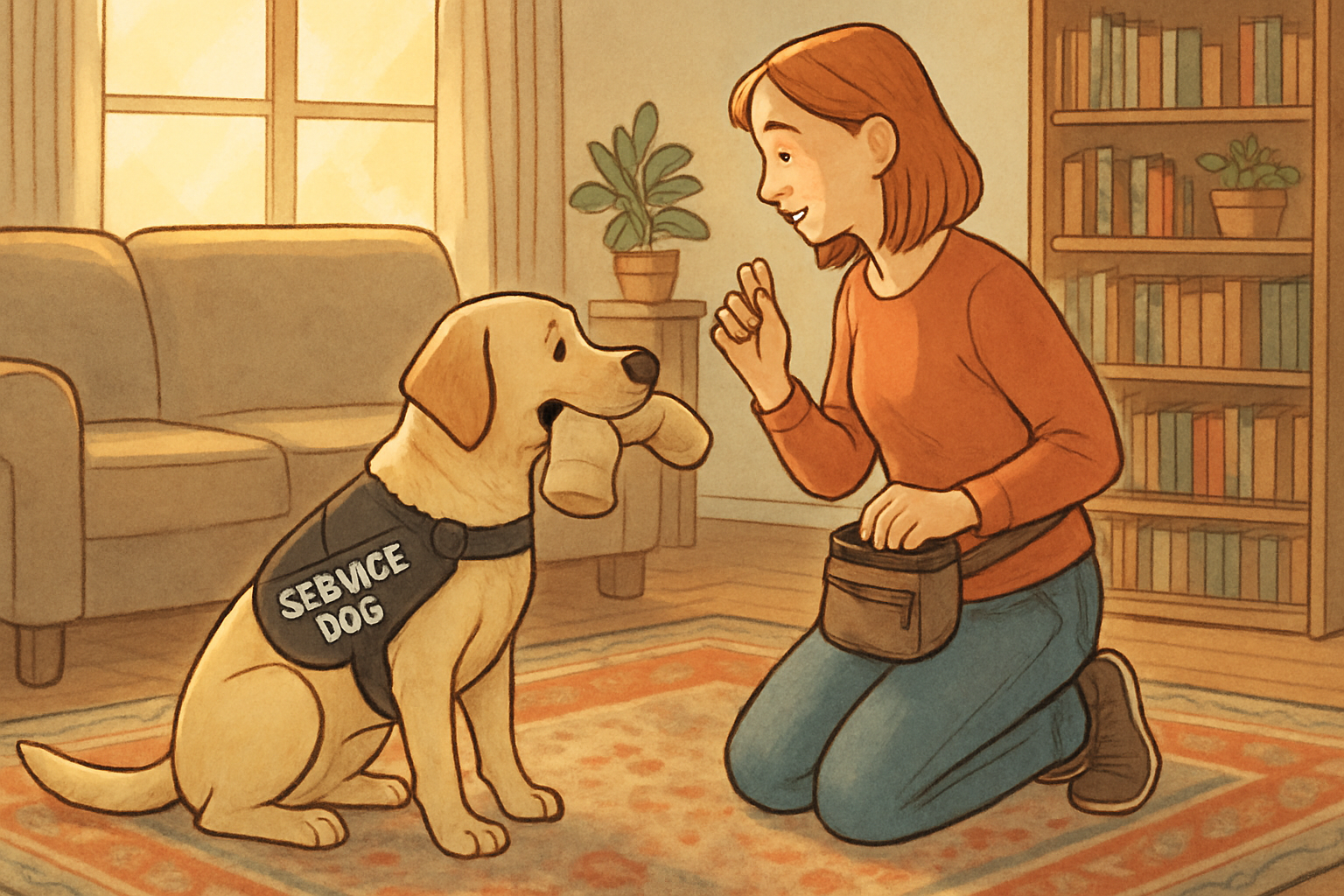
Even highly trained teams typically do some form of ongoing practice. Not necessarily long sessions—often just a few minutes at a time. Think of it as “micro-practice”: quick refreshers that keep communication sharp and reinforce the dog’s habits in the exact places you need them.
For many handlers, short training is also more realistic and sustainable. If energy or mobility is limited, you can still maintain strong skills by practicing one or two behaviors at a time, then rewarding and moving on.
Service work depends on comfort and health. The “behind-the-scenes” care is what makes public work possible—and helps your dog feel good doing it.
Daily nutrition supports steady energy and healthy weight, which can affect endurance and joint comfort. Hydration matters even more on busy days, especially in dry indoor environments or warm weather. Grooming isn’t just cosmetic; it helps prevent skin irritation, keeps shedding manageable, and supports clean, public-appropriate behavior.
“ "The better I got at basic care—nails, coat, hydration—the better my dog worked. Comfort shows up as focus." – Service dog handler”
Midday breaks are not a luxury; they’re part of responsible teamwork. Even confident dogs need opportunities to reset—especially after navigating busy spaces, tight schedules, or repeated settling.
A good break can include a potty opportunity, a drink of water, and a few minutes of decompression. For many dogs, a short “sniffy” moment (where they can safely explore and breathe) helps them return to work calmer and more focused.
It also helps to recognize early stress or fatigue signals. Dogs often communicate discomfort subtly at first—long before they melt down or refuse cues. If you can respond early, you protect your dog’s wellbeing and preserve public skills.
When the workday ends, most teams intentionally shift into off-duty life. Service dogs aren’t working 24/7, and downtime is a big part of keeping them happy, healthy, and enthusiastic about working.
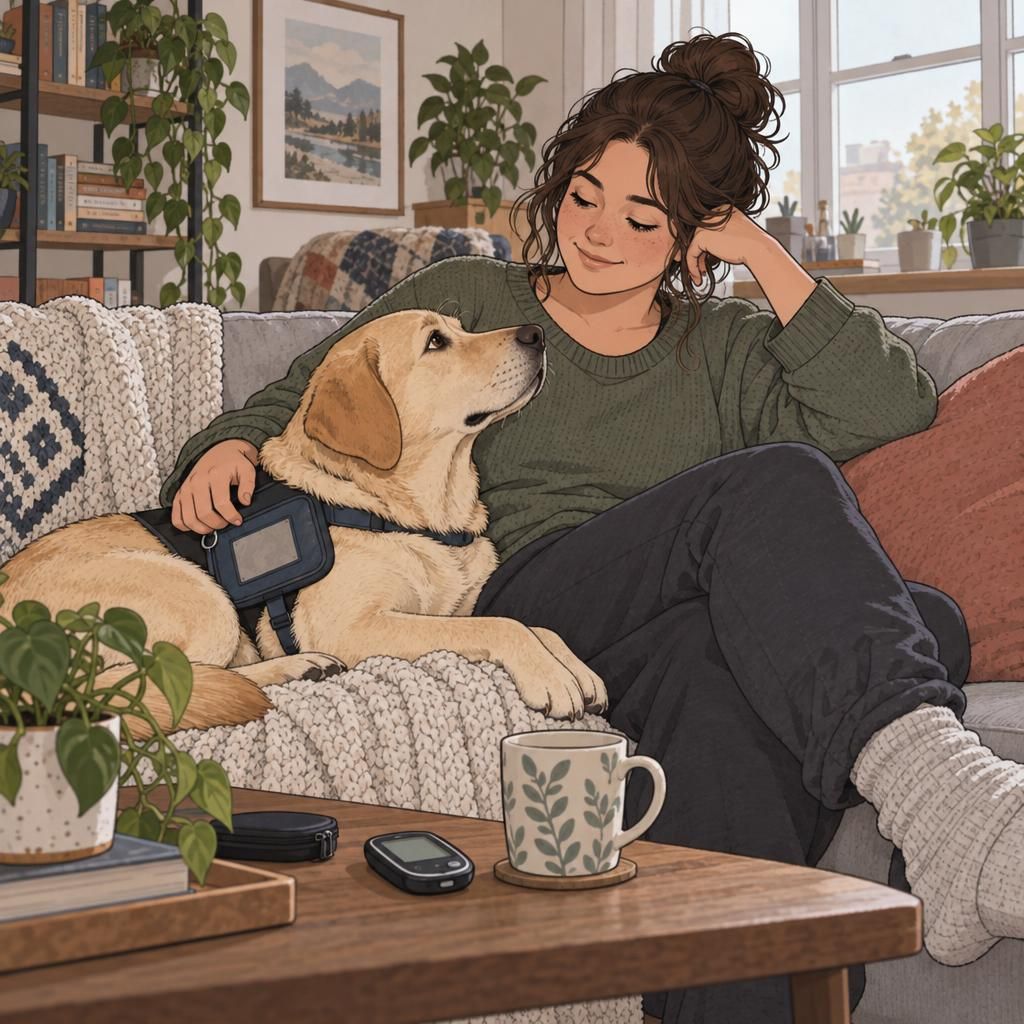
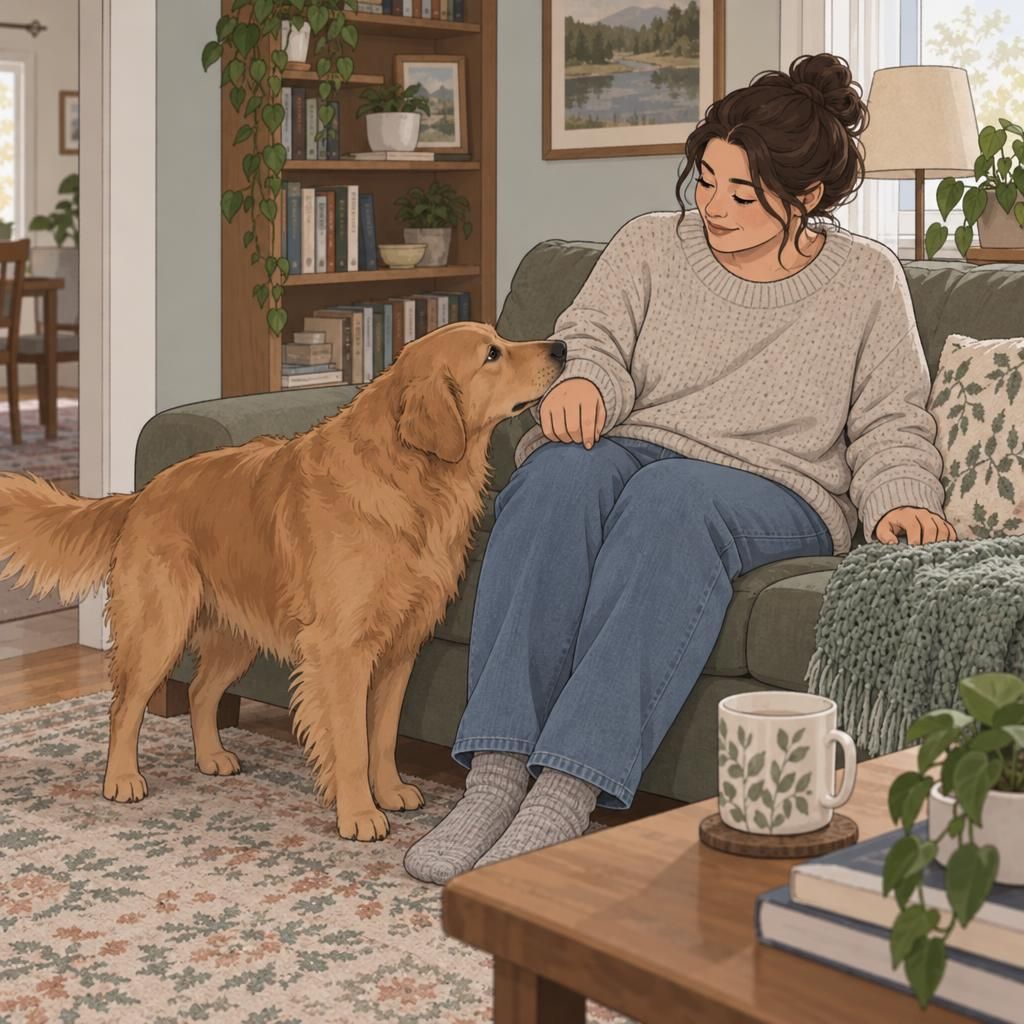
Evening often includes normal dog life: play, enrichment, a relaxed walk, cuddling on the couch, and plenty of rest. This is also a time many handlers do a brief “tune-up”—not a full training session, just a couple of easy reps that keep key skills fluent.
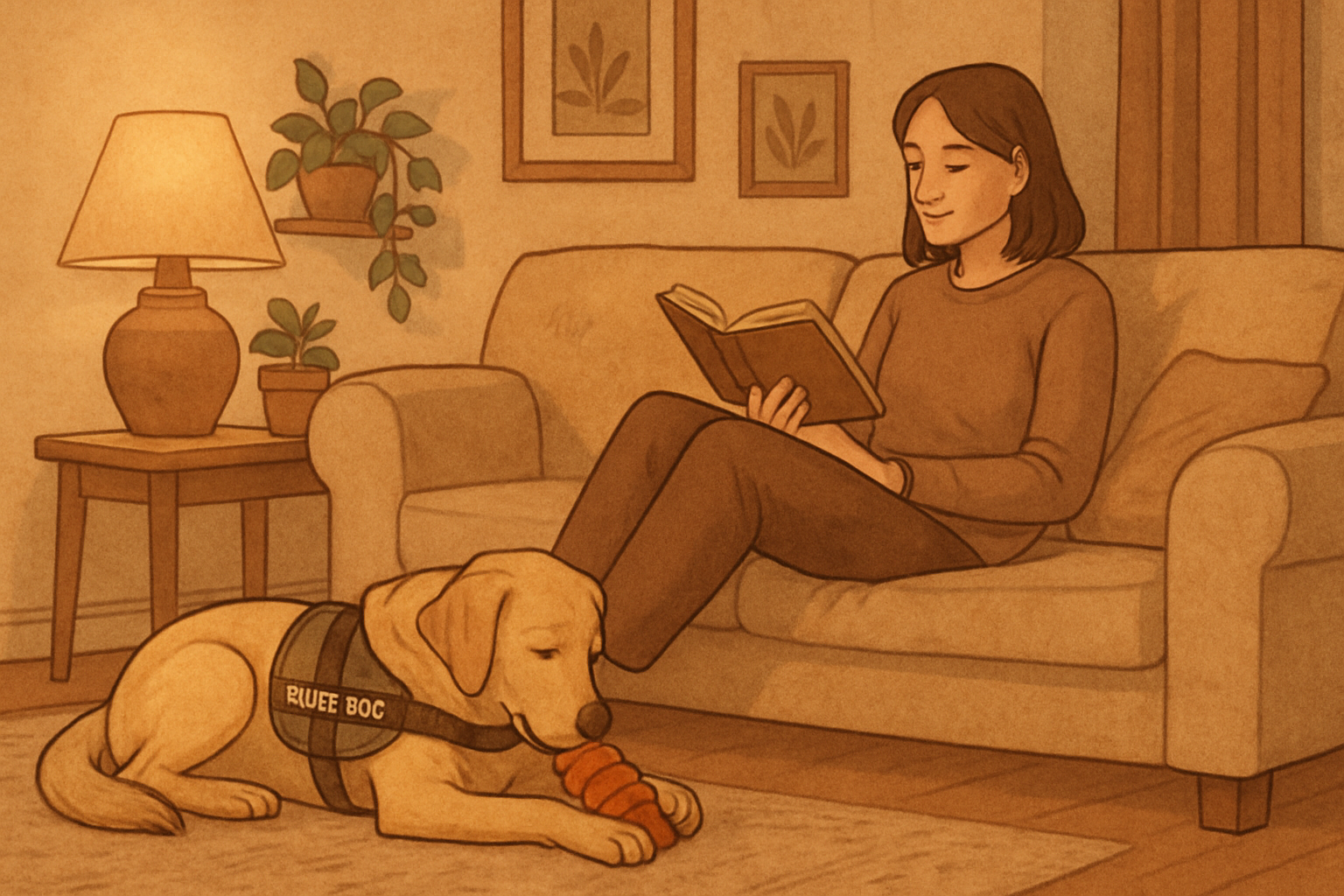
“ "Our evenings are when we feel most like a regular household. My dog gets to be a dog, and that balance makes public days easier for both of us." – Service dog handler”
Public access often comes with everyday conversations—some friendly, some awkward, and some based on misunderstandings. Having a calm plan helps you conserve energy and keeps your dog from being pulled into unwanted attention.
Many handlers find it easier to prepare a simple script they can repeat without feeling pressured to over-explain. Clear, respectful boundaries can reduce stress while still keeping interactions polite.
For quick, respectful communication in public spaces, some teams carry printed materials they can hand over without turning the moment into a debate. One option is ADA handout cards for quick, respectful public communication that help you keep interactions brief and calm.
Day-to-day life is smoother when key information is easy to access—especially during travel planning, housing conversations, or when you’re updating routines with new providers. Optional identification tools can help you stay organized and confident by keeping your dog’s details consistent in one place.
Many teams appreciate having an ID card and a digital profile available when they need to reference basic information quickly. The goal isn’t to make life more complicated—it’s to reduce friction, support clarity, and offer peace of mind in everyday situations.
If you want an organized, ready-to-use option, a starter registration package for everyday identification can be a convenient way to keep your team’s details in one consistent format.
Home days usually feel smoother because the environment is familiar: the dog knows where to settle, where the potty spot is, and what the daily rhythm looks like. Travel days—whether it’s a day trip, an overnight stay, or a longer journey—add variables that can drain both handler and dog.
The biggest differences are timing, potty planning, and settling in new environments. A dog who settles perfectly under your desk at home may need a little extra guidance settling in a new lobby, hotel room, or busy terminal.
If you’re preparing for a trip, it can help to read more about traveling with a service dog so you can anticipate common challenges and build a plan that fits your team.
Some teams also prefer to keep travel details organized in a single place—especially when routines change, schedules are tight, or you’re moving through multiple locations. If that sounds useful, a travel-friendly service dog registration package can support more confident travel preparation and smoother day-to-day coordination.
Your trusted source for service animal registration. Get professional ID cards, digital profiles, and smart NFC tags to keep your service animal safe and recognized.
© National Animal Registry — All rights reserved.