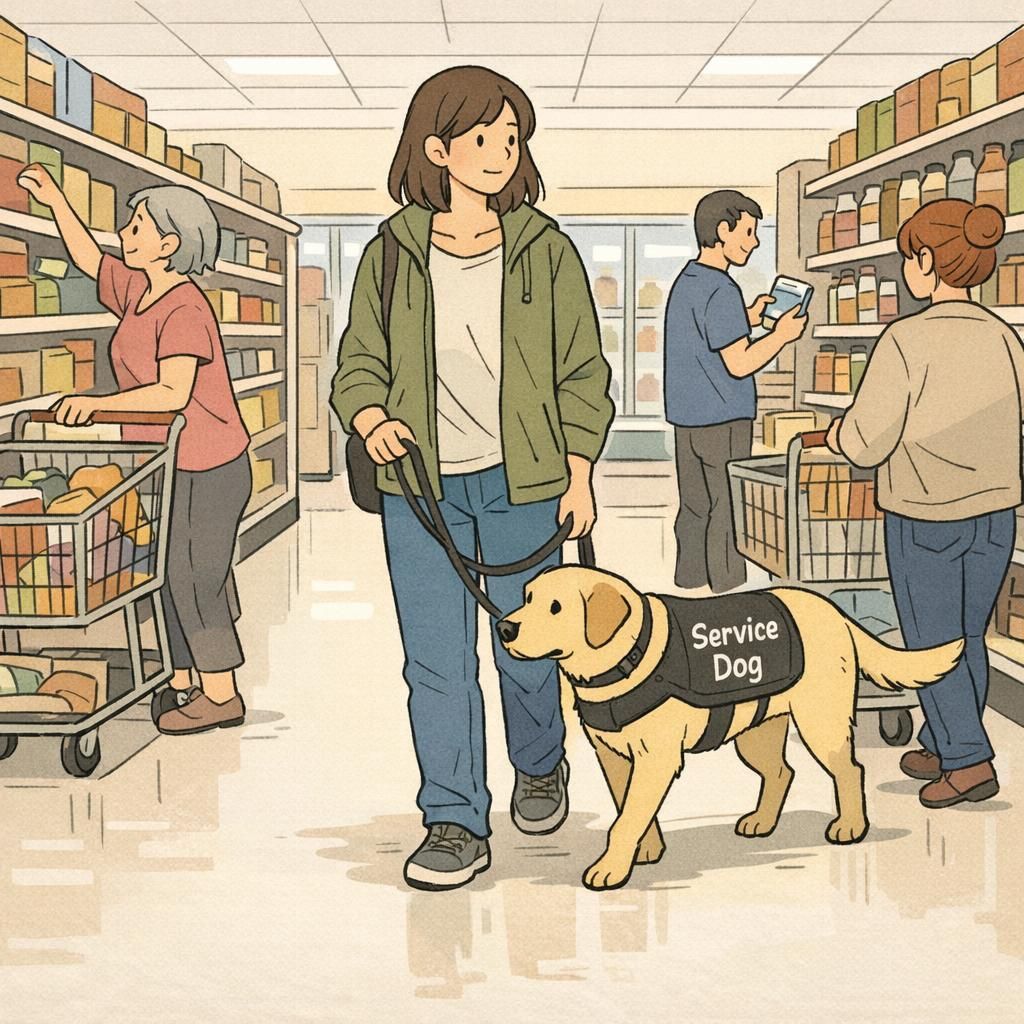
Most days with a service dog don’t look dramatic from the outside. They look like errands, commutes, school drop-offs, appointments, and quiet time at home—just with an exceptionally well-practiced teammate nearby. A service dog team is constantly doing small things to stay organized: choosing the easiest entrance, keeping a little extra space in line, locating a calm corner in a waiting room, and planning bathroom breaks so the dog can stay comfortable and focused.
Because the routine can look “ordinary,” misunderstandings happen. Some people assume the dog is a pet and try to interact. Others assume the handler is “faking” because their disability isn’t visible. And some businesses overcomplicate access by asking for things that aren’t necessary, turning a quick stop into a stressful conversation.
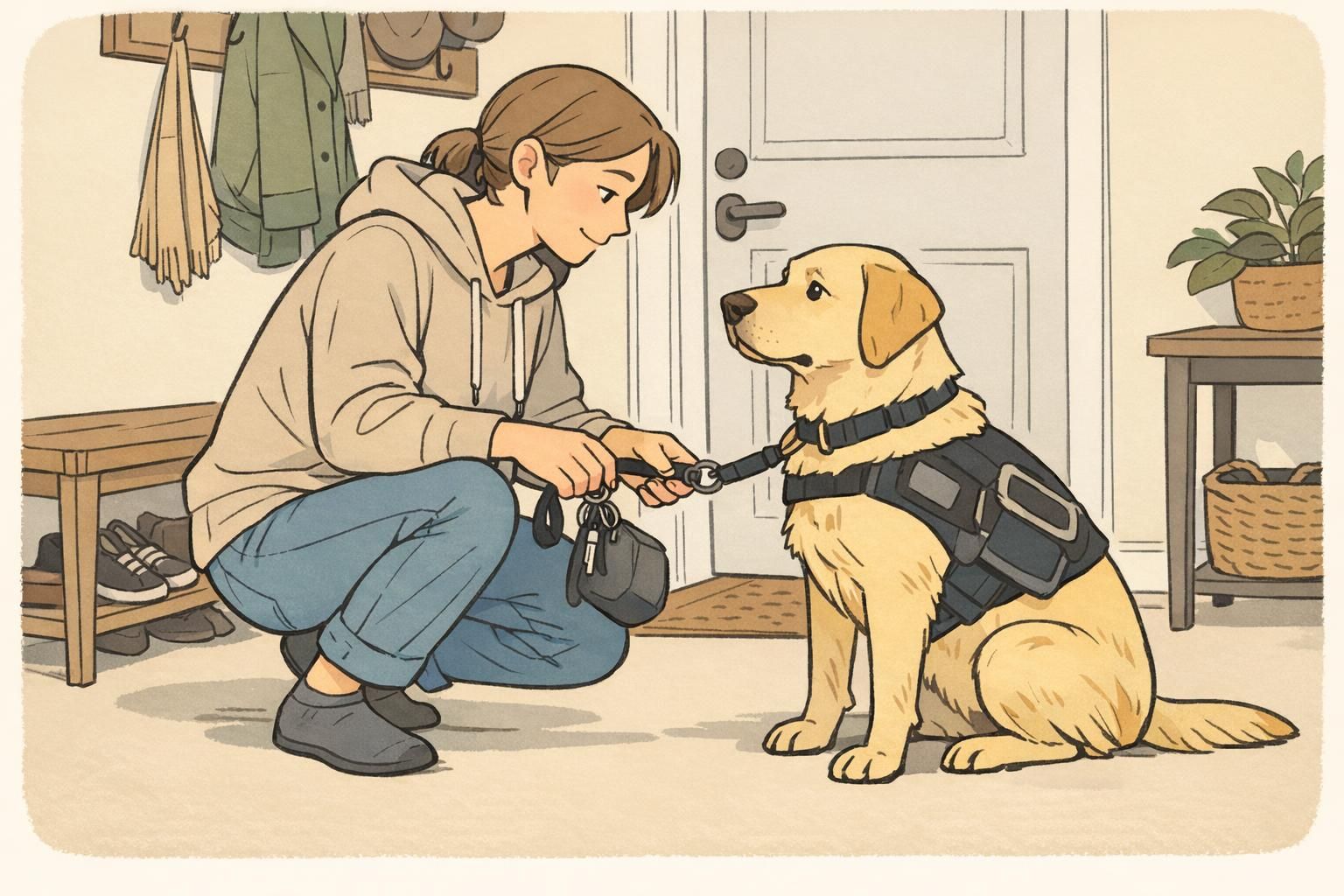
Service dogs, emotional support animals (ESAs), and therapy dogs can all be deeply meaningful—but they typically fill different roles in daily life. The most practical difference is this: a service dog is trained to perform specific tasks that mitigate a handler’s disability, and those tasks show up in everyday routines in real, functional ways.
An ESA provides comfort and emotional support, often in housing or personal settings. Therapy dogs usually visit facilities like schools, hospitals, or community programs to provide comfort to many people. These roles matter because when the public mixes them up, service dog teams may get challenged, questioned, or treated like they’re asking for “special treatment” instead of access that supports disability-related needs.
Because confusion can lead to awkward access conversations, unsafe distractions, and unfair assumptions about whether a working team belongs in a public space.
Yes. Many service dogs are also comforting companions. The key difference is that service work includes specific trained tasks that mitigate a disability during daily life.
Many people picture a service dog as a large breed guiding a handler who is blind. That is one important kind of service work, but it’s not the only one. In everyday life, service dogs may assist people with invisible disabilities—conditions that aren’t obvious while standing in a checkout line or waiting at a bus stop.
Psychiatric service dogs, medical alert dogs, autism service dogs, and mobility assistance dogs can perform tasks that look subtle to bystanders. A dog might pause and stare at the handler as an alert, gently nudge their leg to interrupt a spiral of panic, lead them out of a crowded aisle, retrieve a dropped item before the handler bends, or apply pressure to help the handler regulate. These small moments can be the difference between finishing an errand safely and having to leave early.
“ "From the outside, it just looks like my dog is sitting politely. But she’s watching me the whole time, ready to alert before I realize I’m in trouble." – Service dog handler”
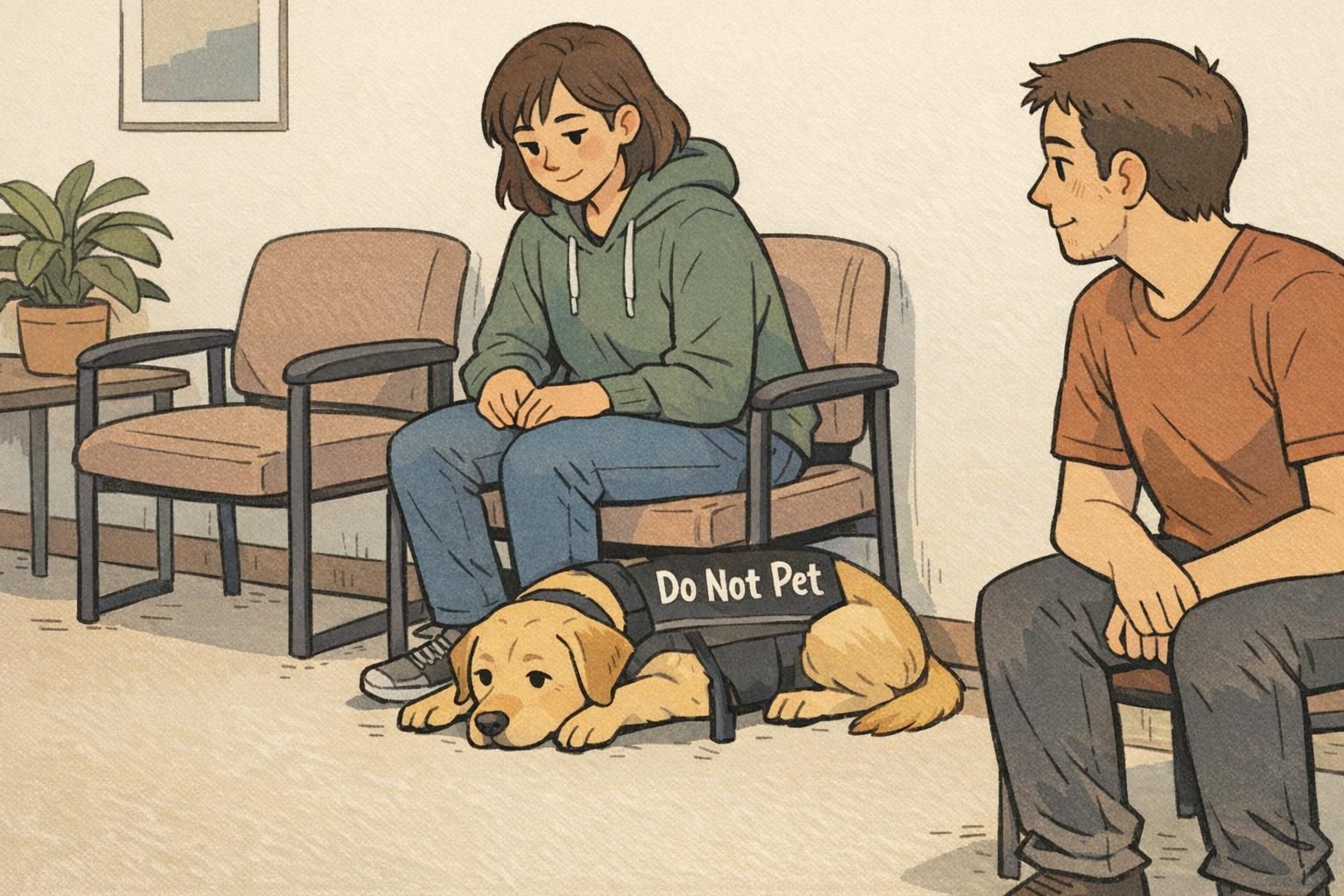
In real life, public interactions usually happen fast—at the front door of a business, at a host stand, or at a reception desk. This is where misunderstandings about vests, “papers,” or certification come up. People may assume every team must have a specific vest, an official tag, or documentation ready to present.
Under the ADA, service animals aren’t required to wear a vest or carry documentation, and public-facing questions are limited. When questions do come up, they’re generally meant to confirm that the dog is a service animal and that it’s trained to perform tasks related to a disability. Keeping these interactions brief and respectful helps everyone move on with their day. For a clear overview of common misconceptions and appropriate interactions, see this source.
That said, many teams choose to use identification tools anyway because they can reduce confusion and lower the emotional cost of repeated conversations. A visible cue can help a busy employee understand the situation quickly, and a simple handout can keep the exchange calm and professional—especially when the handler needs to prioritize their health and safety over extended explanations.
Some handlers keep a short, friendly info card ready for those moments when a quick explanation prevents a scene at the door or a long debate in a checkout line. Tools like ADA law handout cards for quick, low-conflict conversations can help set boundaries without turning the handler into a “teacher on demand.”
No. Many teams use optional identification to make daily life smoother. It can reduce repeated questions, help staff understand the situation quickly, and keep conversations short.
Because the whole point of a service dog is independence. Some handlers are managing symptoms in real time and need to conserve energy and protect privacy.
A reliable working dog is the result of balance: training, routine, and downtime. In daily life, many handlers clearly separate “working time” from “off-duty time,” even if the dog still behaves politely at home. Just like people, dogs need rest, play, exercise, and mental enrichment to stay steady and confident in busy environments.
On a long errand day, the handler may plan extra pauses: a quiet outdoor moment, water, a short decompression sniff, or a break in the car before going into the next stop. Those breaks aren’t a sign the dog is misbehaving—they’re part of maintaining good behavior and wellbeing. When the dog’s needs are met, the dog can perform tasks more consistently and handle stressful environments with more resilience.
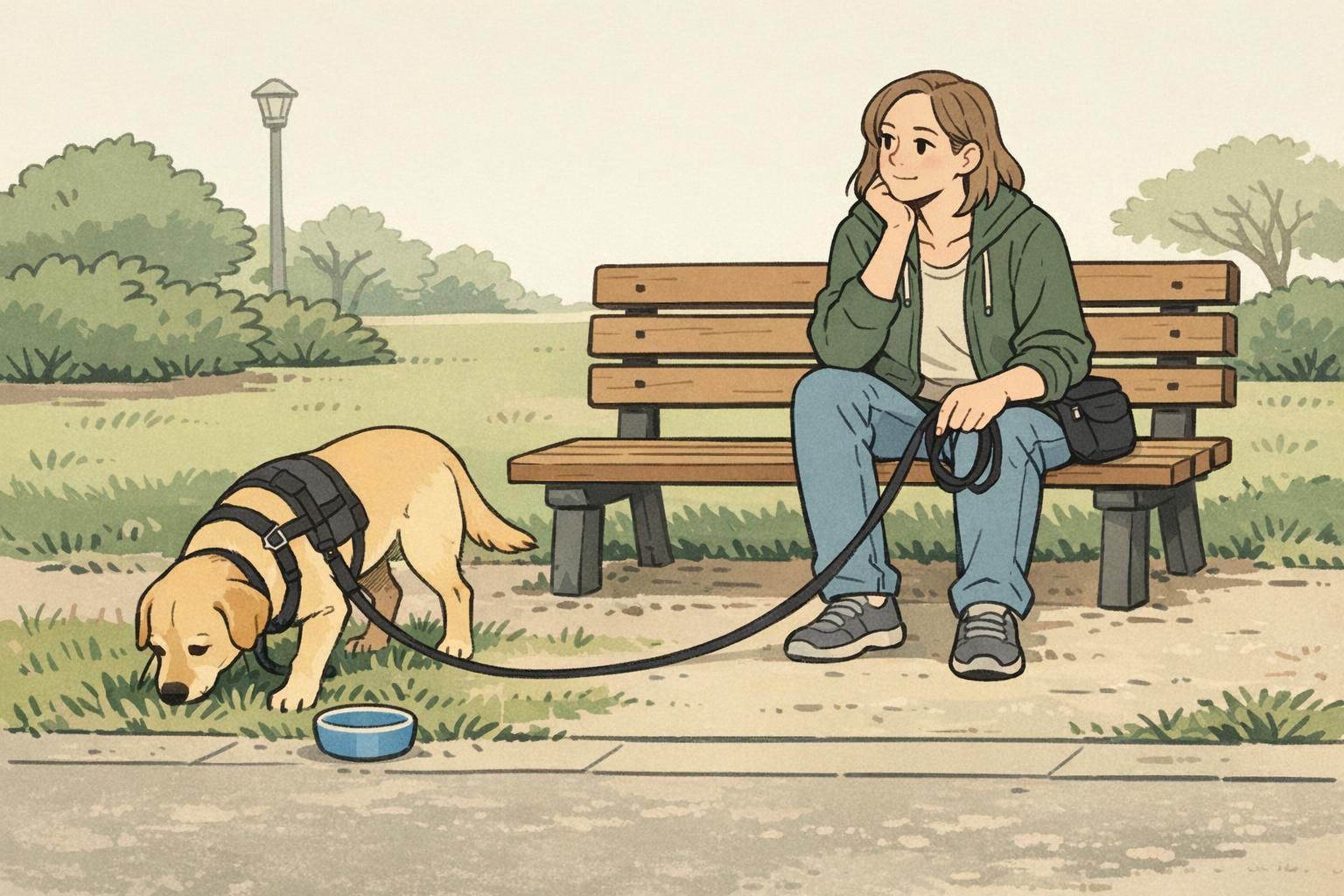
Most people who distract a service dog mean well. They love dogs, they’re curious, or they want to compliment the team. The problem is that distractions can interrupt tasking. Even a quick “Hi puppy!” or a hand reaching toward the dog’s face can break focus at the exact moment the handler needs support.
In daily life, the handler may be managing symptoms that aren’t obvious—dizziness, disorientation, panic, chronic pain, seizures, or cardiac events. A service dog may be actively monitoring, positioning, or preparing to alert. When the dog is pulled away by attention or food, the handler can be put at risk.
“ "The kindest thing you can do is ignore my dog. That’s how you help her help me." – Service dog handler”
Some handlers enjoy educating others. Many don’t—especially in the middle of routine errands when they’re tired, in pain, or managing anxiety. Even friendly questions can add up when they happen five times in one afternoon: “What’s wrong with you?” “Can I take a picture?” “Is that a real service dog?” “What does he do?”
Daily life with a service dog can involve constant micro-interruptions. That’s draining, and it can undermine the very independence the dog is meant to provide. The most respectful approach is to treat the team like anyone else in public: polite, brief, and focused on the shared environment rather than personal details.
A brief compliment is usually fine if it doesn’t attempt to engage the dog or slow the team down. The best compliments are quick and directed to the handler.
Use it as a teaching moment: “We don’t distract working dogs.” If you want to ask, ask the handler first—and be ready for a no.
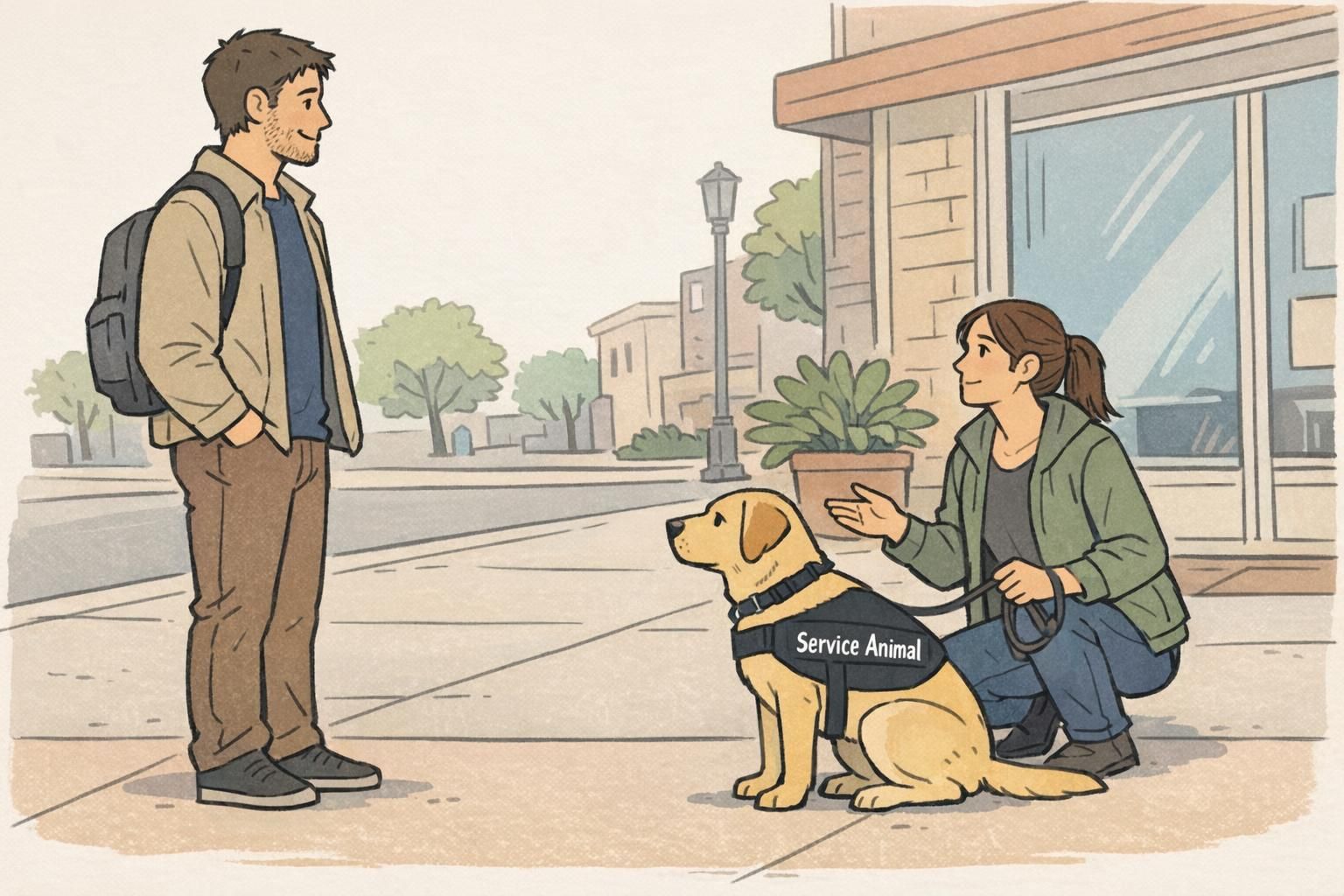
One of the most stressful parts of daily life with a service dog can be navigating inconsistent policies. Some staff members are well-trained and welcoming. Others have heard conflicting information, or they treat the dog like a pet exception rather than a disability accommodation.
In day-to-day situations—restaurants, stores, rideshares, and appointments—problems often start with preferences (“We don’t allow dogs”), fear (“What if someone has allergies?”), or assumptions (“Your dog is too small,” or “He doesn’t look like a service dog”). The most effective approach for both sides is to stay calm and stick to professional basics: the dog is trained to behave in public, the dog remains under control, and the team is there to access the same goods and services as everyone else.
Because daily errands move fast, many handlers choose optional identification tools that help them communicate quickly and consistently. A registration profile, an ID card, or a unique registration number can make routine interactions feel simpler—especially in places where staff turnover is high or policies are inconsistently understood.
These tools are often less about “proving” anything and more about streamlining: the handler can share the same clear information each time, reduce back-and-forth, and keep the focus on getting through the day safely. For many teams, it’s a confidence booster, too—one more way to feel prepared when a question comes at an inconvenient moment.
If you want a straightforward option designed for everyday use, a starter registration package for everyday identification can provide a consistent ID card and digital profile that’s easy to reference when you’re on the go.
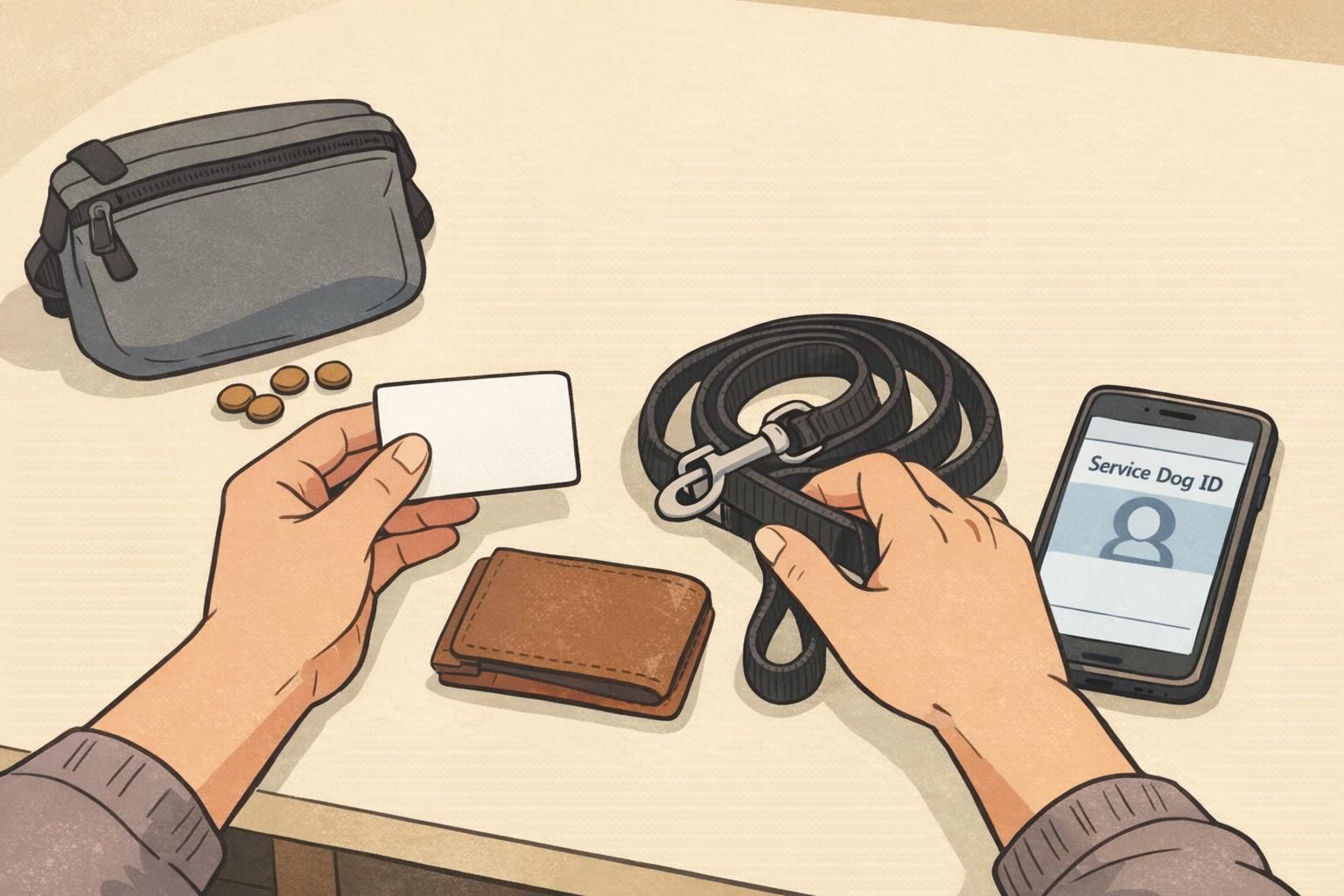
Fast, routine moments: checking in at a front desk, clarifying misunderstandings at an entrance, or keeping conversations short when the handler needs privacy.
Not necessarily. Many people like having consistent information available for travel planning, housing conversations, pet-sitter instructions, or emergency preparedness.
Planning ahead can make daily outings calmer for both handler and dog. The goal isn’t perfection—it’s reducing avoidable stress. A few minutes of preparation can prevent common problems like running out of water, getting stuck in a loud environment too long, or realizing you forgot the one item that helps your dog stay comfortable and focused.
If you’re building confidence for longer outings, it helps to learn from travel-specific experiences and expectations. This guide on traveling with a service dog can help you think through the logistics, timing, and common questions that come up when you’re away from your usual routine.
For frequent travelers or anyone who wants a more robust set of identification materials in one place, a travel-ready service dog registration package can help you keep key details organized and easy to access when you’re moving through unfamiliar environments.
The simplest way to support service dog teams is to treat them like any other person handling a busy day: respect their space, keep interactions brief, and don’t create extra obstacles. Most handlers aren’t looking for attention—they’re trying to safely get through ordinary tasks with the help of a highly trained partner.
Your trusted source for service animal registration. Get professional ID cards, digital profiles, and smart NFC tags to keep your service animal safe and recognized.
© National Animal Registry — All rights reserved.