
Everyday helpers (often called community helpers) are the people who provide essential services that keep daily life safe, healthy, and working the way we expect. They show up in big moments—like emergencies—and small ones—like delivering mail, keeping sidewalks clear, or helping someone find the right bus route.
For kids, learning who helpers are can make the world feel more understandable: “If I’m lost, I can look for a librarian,” or “If someone is hurt, a nurse can help.” For adults, noticing everyday helpers builds appreciation and can reduce stress by reminding us there are systems and people in place to support routines. For seniors, helper awareness supports confidence, independence, and safety—especially during appointments, travel, or unexpected situations.
Learning about community helpers also strengthens communication and safety skills across ages. Talking about helpers encourages practical vocabulary (job titles, tools, places) and helps people practice what to say when they need assistance. If you’d like a simple reference on how community helpers support learning and safety awareness, see this source.
Everyday helpers appear in nearly every setting: schools, hospitals, neighborhoods, stores, public transit, and parks. Their work often happens in the background, but it’s what makes daily life more predictable and supported.
It can help to think of helpers in categories. This makes it easier for kids learning new roles, for adults navigating busy schedules, and for seniors planning outings or appointments.
When you start noticing these roles, you also start noticing the “helper tools” that go with them—uniforms, name badges, vehicles, and workplace signs. Those small details can be reassuring: they help you orient quickly, find the right person, and understand what’s happening around you.
Use simple “place + job” pairings: “At the library, ask the librarian.” “At school, ask a teacher.” Then practice short scripts like, “Excuse me, I need help finding my adult.”
Try a direct, respectful opener: “Hi—could you point me to the right place for this?” Most helpers prefer a clear question so they can help quickly and move on with their work.
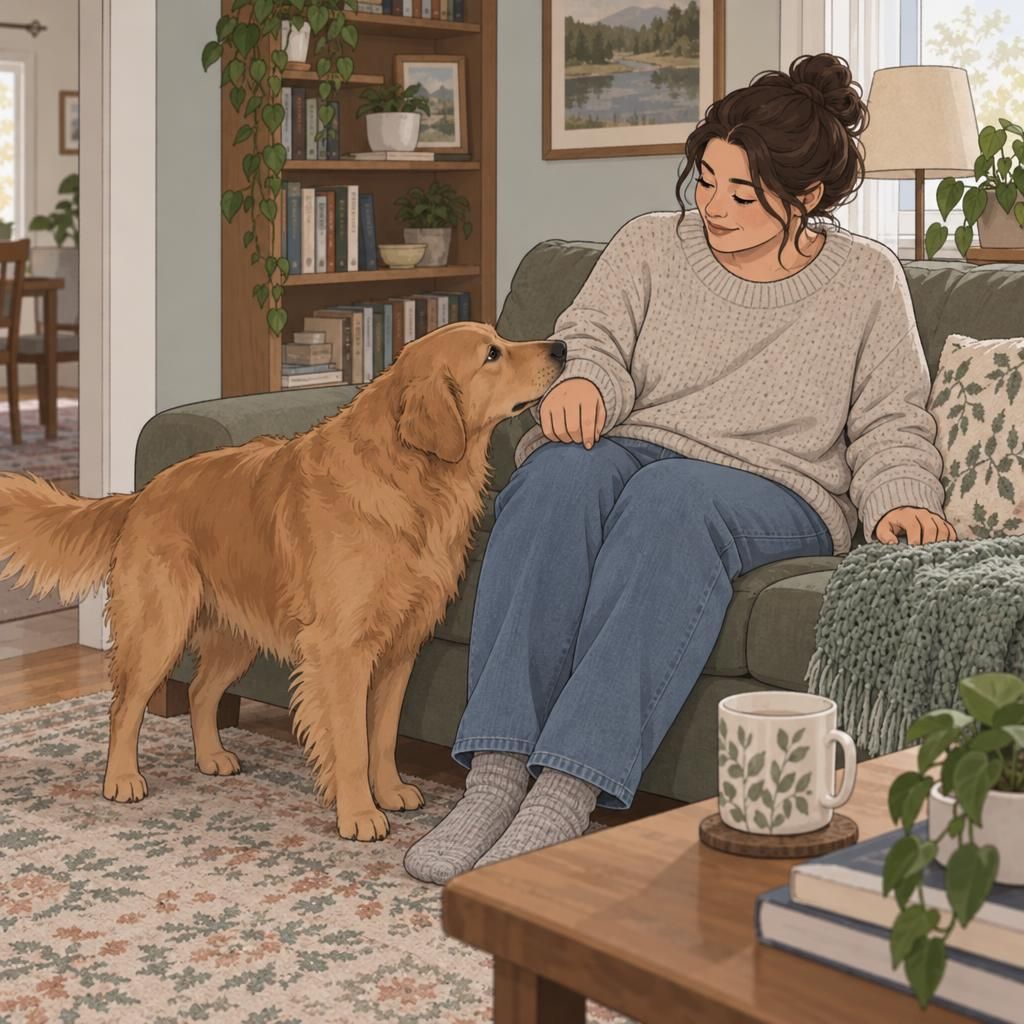
Everyday help doesn’t only come from people. Animals can also play meaningful support roles in daily life, especially dogs that are trained or well-suited to assist in specific ways. Understanding the differences helps everyone—kids, adults, and seniors—interact respectfully and set the right expectations in public spaces.
A service dog is an animal that performs disability-related tasks that help a person function more safely or independently. These tasks can include guiding, alerting, retrieving items, interrupting harmful behaviors, or assisting during medical episodes. The key idea is that the dog has a working role that directly supports the handler’s day-to-day life.
A support dog provides comfort and emotional support in appropriate settings. Some people use the term “support dog” when describing a dog that helps them feel calmer, more grounded, or more confident while navigating everyday situations. Depending on the environment, a support dog may be present during routines like reading time, structured visits, or supportive community settings.
A companion animal supports well-being through companionship. That might look like encouraging routine, reducing loneliness, or offering a sense of purpose. For many households—especially those with seniors or individuals living alone—companionship is a real, daily form of support.
A helpful community runs on small moments of courtesy. That’s true when we interact with everyday helpers like nurses or bus drivers—and it’s also true when we meet animal helpers and their handlers in public.
For many handlers, a service dog is doing important work in real time. Friendly distractions can cause the dog to miss a cue or break focus. The simplest etiquette is also the most respectful: give space, ask first, and follow directions.
“ "The best help from strangers is simple: a little space and a calm question. When my dog stays focused, my day goes smoothly." – Service dog handler”
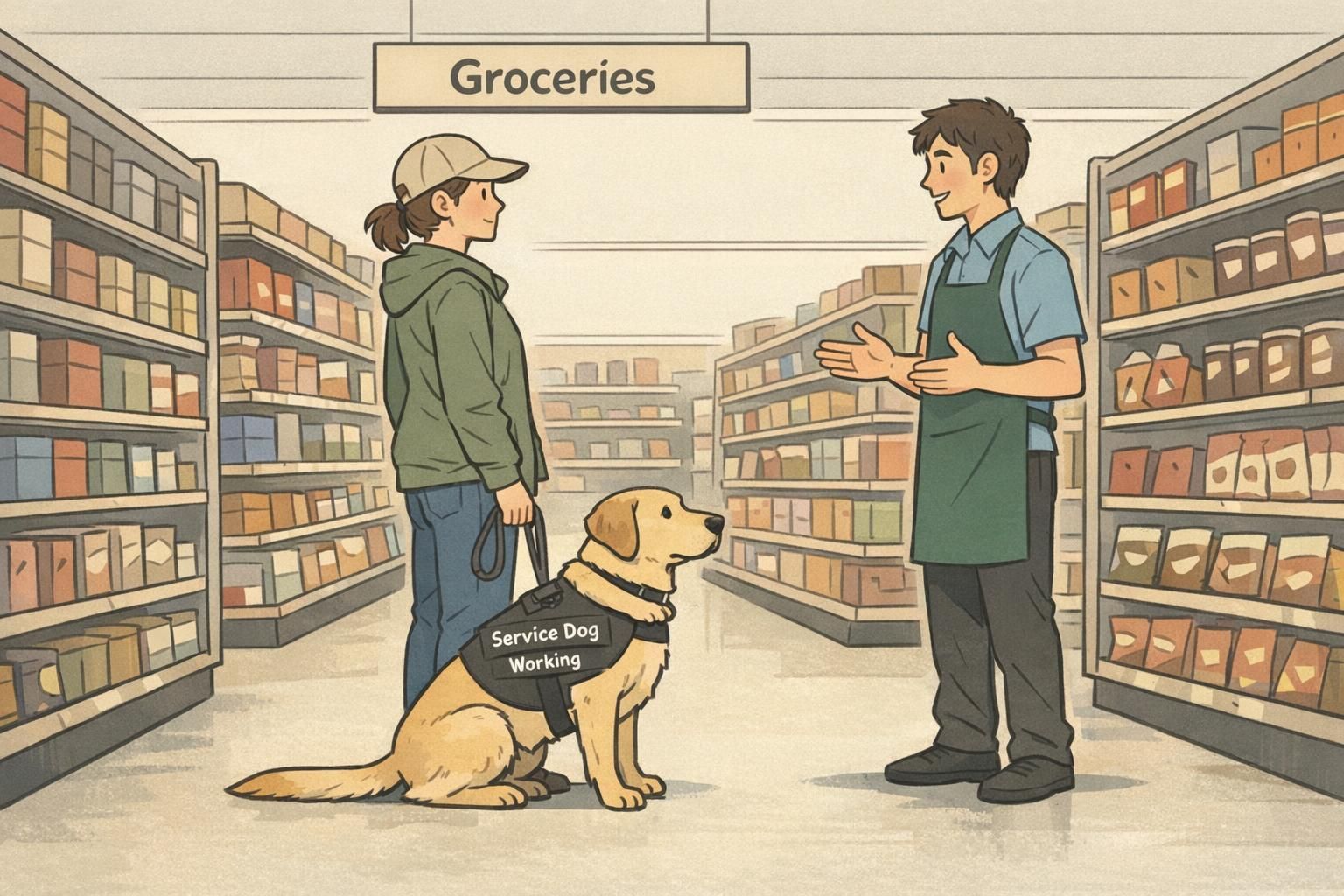
Try: “That dog is working. We can wave, but we don’t pet.” Then redirect: “Let’s tell the handler, ‘Have a nice day.’”
Respect it and move along. The dog may be working, the handler may be managing symptoms, or they may be in a hurry. A quick “Thanks anyway” is perfect.
In everyday life, people make quick judgments based on what they can see. Clear identification and portable information can reduce misunderstandings and keep conversations calm—especially in busy environments like stores, workplaces, appointments, and travel hubs.
Many handlers appreciate having consistent documentation available, even when it’s optional, because it helps them communicate the same message the same way every time. Instead of feeling put on the spot, they can point to a simple, professional reference and continue with their day.
Tools like registration, IDs, and certificates can be practical ways to organize details and present them clearly when questions come up. If you like the idea of having something you can show quickly and confidently, consider a customizable service dog ID card for everyday identification.
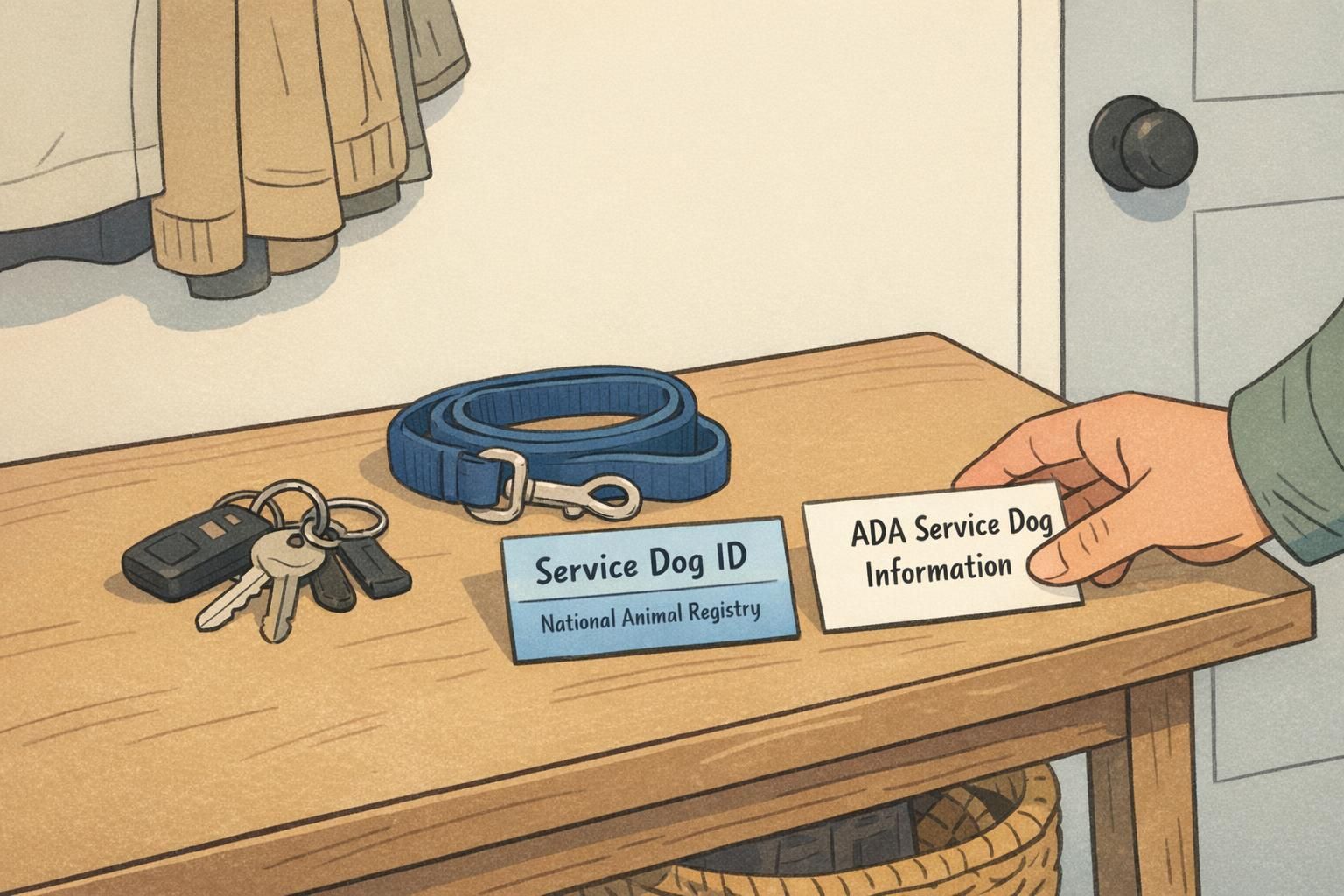
Even when you’re doing everything right, questions can happen—especially in places where staff turnover is high or where people don’t encounter service dogs often. The goal in these moments is not to “win” an argument. It’s to keep things respectful, quick, and low-stress.
Many handlers find it helpful to carry a concise, professional reference so they can respond politely without having to remember exact wording under pressure. A small handout can also support staff members who genuinely want to follow the right process but aren’t sure what to ask.
One option that fits easily into a wallet, bag, or caregiver folder is wallet-sized ADA law handout cards for easy, polite communication.
“ "I used to freeze when someone questioned us. Having a simple card helped me stay calm and keep moving—no confrontation needed." – Handler and parent”
Try a neutral script: “I understand you’re doing your job. We’re happy to keep this simple—here’s a quick reference.” Then return to your task.
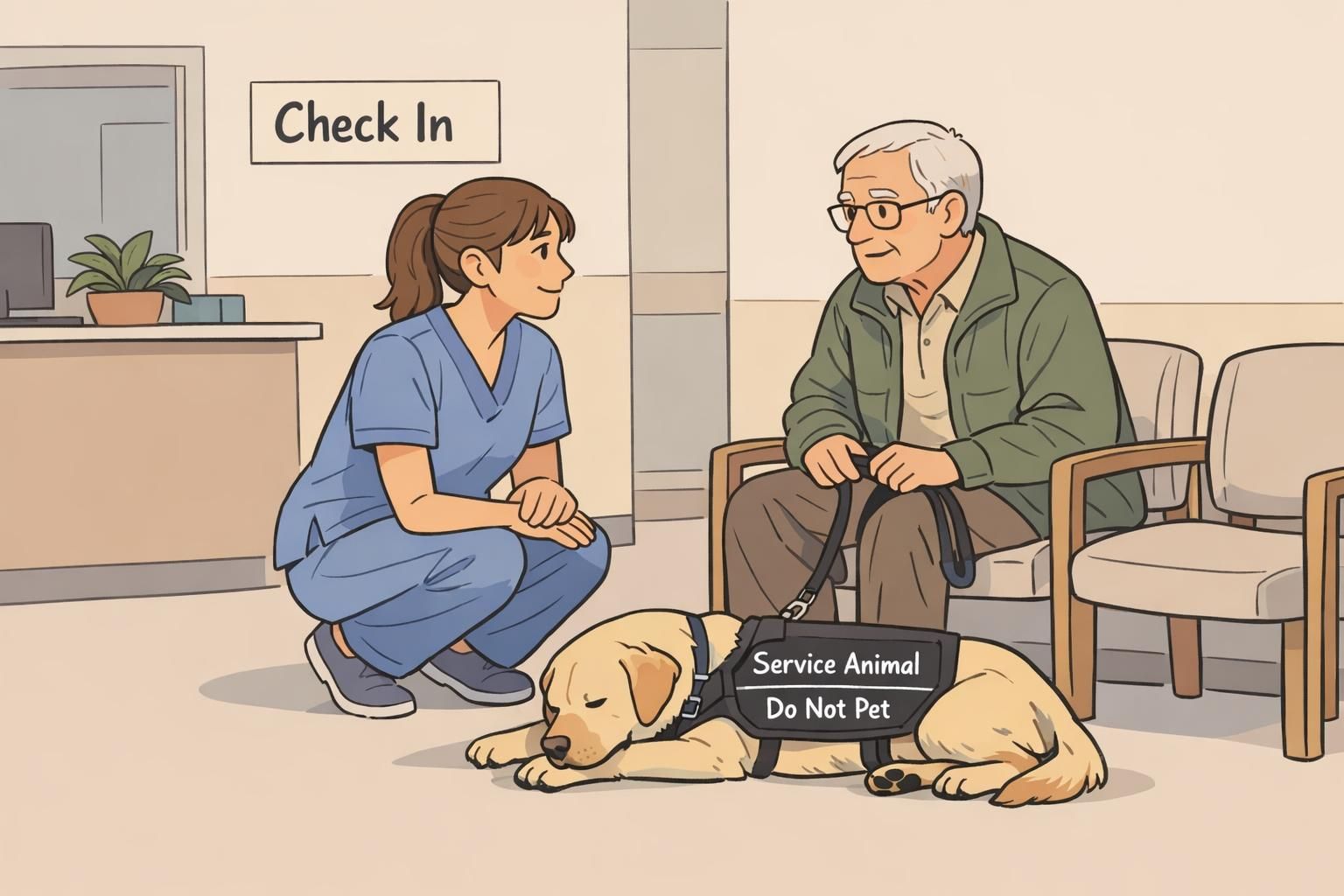
You can step in with a calm, practical approach: “I’m assisting today. We’re here for our appointment—thank you for giving us a little space to check in.”
Outings can be empowering—and a little tiring—especially in unfamiliar places. Planning ahead helps all ages feel more comfortable, from kids learning routines, to adults juggling schedules, to seniors who may need extra pacing or mobility support.
A service dog thrives on predictable rhythms: regular breaks, familiar cues, and a handler who can stay focused on the environment. When you plan your route and pack with intention, you reduce surprises for both of you.
If you want a deeper guide to routines, packing, and practical planning, this resource on planning travel with a service dog can help you think through common travel scenarios.
Some teams also like having travel-specific materials gathered in one place so they’re not scrambling the night before a trip. If that sounds useful, consider a travel-ready service dog registration package for more confident outings.
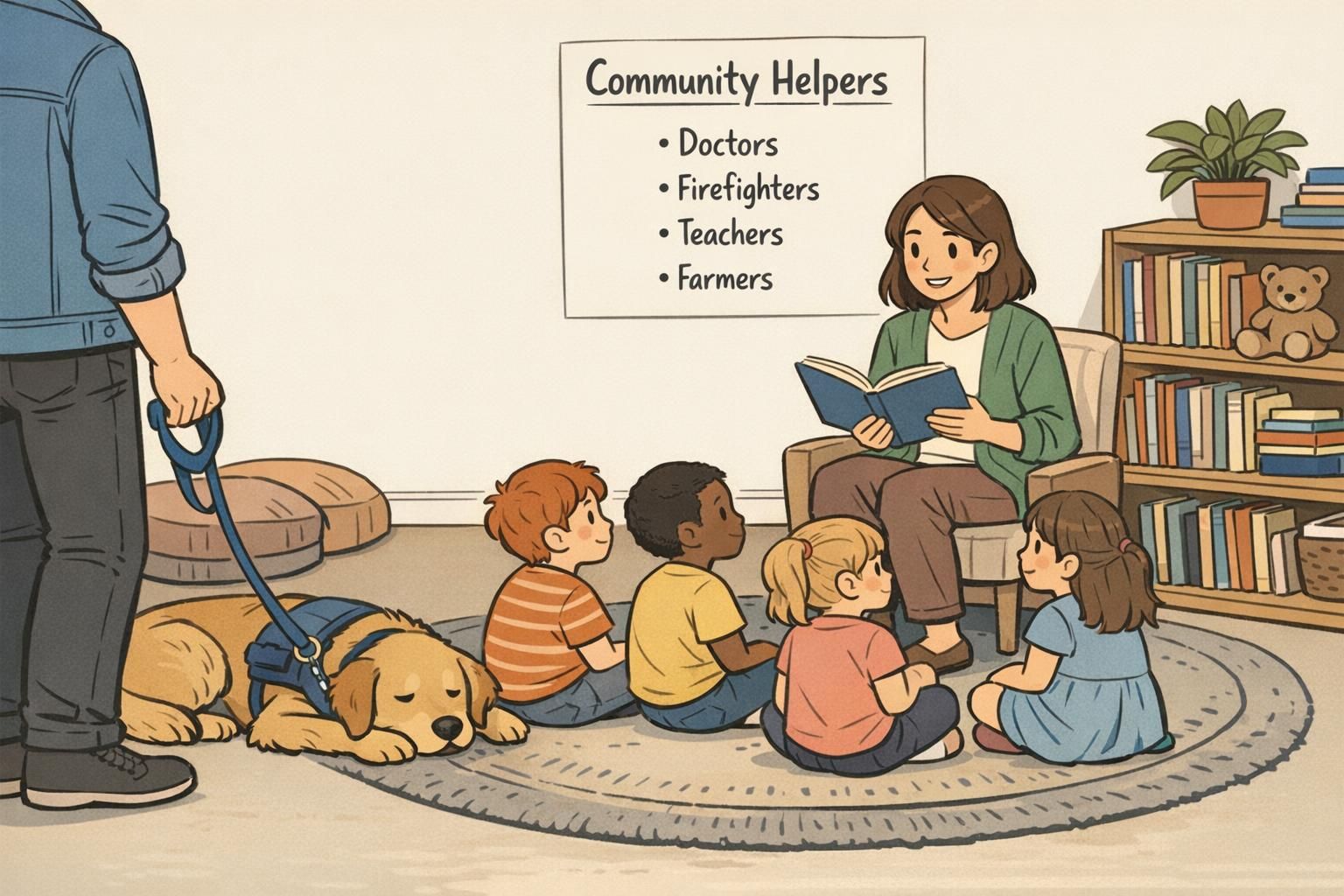
Learning about helpers sticks best when people can see, practice, and talk about what they’re learning. The same core activities can work across ages—you just adjust the complexity and the level of independence.
For young kids, the goal is recognition and safety: identifying a helper and practicing a simple request. For older kids and adults, it can be about understanding systems (who does what, when, and why). For seniors, it can support independence: rehearsing what to say at check-in, how to ask for directions, or how to request assistance calmly.
A “Helpers Day” can be especially effective in classrooms, therapy settings, or senior communities. Create small stations (a librarian corner, a “mail route,” a pretend grocery checkout), and include a station on animal helpers. The animal helper station can model respectful behavior: hands to self, ask before approaching, and give a working team space.
“ "When we practiced what to say at check-in and how to give a service dog space, outings became less stressful for everyone—kids included." – Teacher and caregiver”
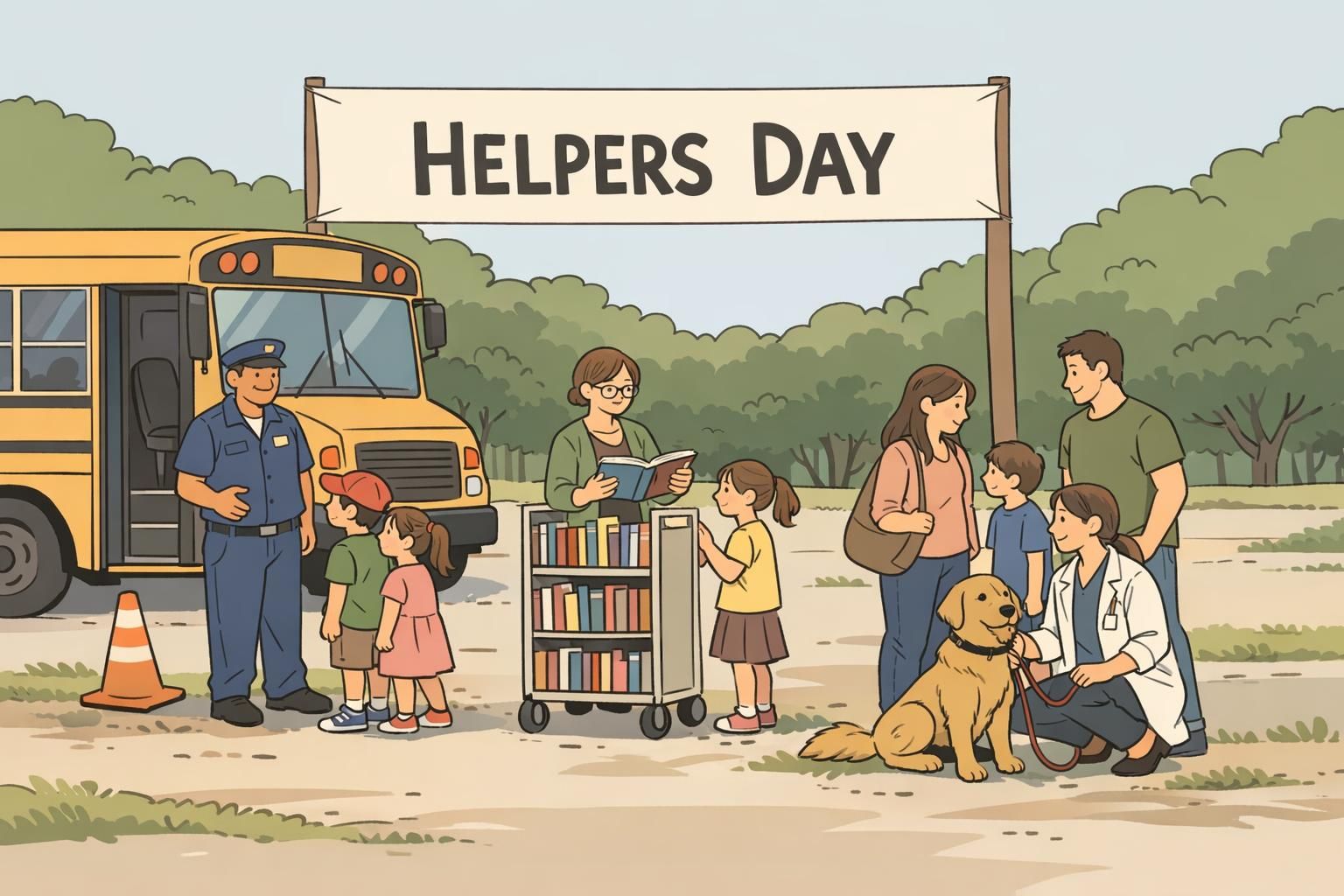
Frame it as kindness: “We give working dogs space so they can help their person.” Practice a simple routine: stop, look, ask an adult, and wave instead of petting.
Try scenario cards: “You’re at the pharmacy,” “You’re at a clinic,” “You’re at an airport.” Then practice one calm sentence to ask for help and one sentence to respond to questions.
A helper mindset is the habit of noticing support systems and interacting with them respectfully. It’s not only about emergencies. It’s about everyday moments: knowing who to ask, how to ask, and how to move through the world with more confidence.
When we recognize helpers—professional helpers and animal partners—we build a culture of respect. That respect shows up in small ways: giving a nurse time to finish instructions, letting a bus driver focus on the road, or not distracting a working service dog.
Your trusted source for service animal registration. Get professional ID cards, digital profiles, and smart NFC tags to keep your service animal safe and recognized.
© National Animal Registry — All rights reserved.