When people talk about service dogs, they often picture a calm, well-trained dog in public. But what truly defines a service dog isn’t a vest, a breed, or a “perfect” heel—it’s the work the dog is trained to do.
A service dog task is a trained action that directly helps reduce the impact of a person’s disability in daily life. In other words, the dog learns specific behaviors that help the handler function more safely, more independently, or with fewer symptoms. This is different from comfort, companionship, or general good behavior (like sitting politely or being friendly). Those qualities can be valuable, but they’re not the same as disability-mitigating tasks.
A helpful way to think about it: if the dog performs a trained behavior that addresses a disability-related limitation, that behavior is a task. This aligns with widely used public-facing definitions of service animals as dogs trained to do work or perform tasks related to a person’s disability (source).
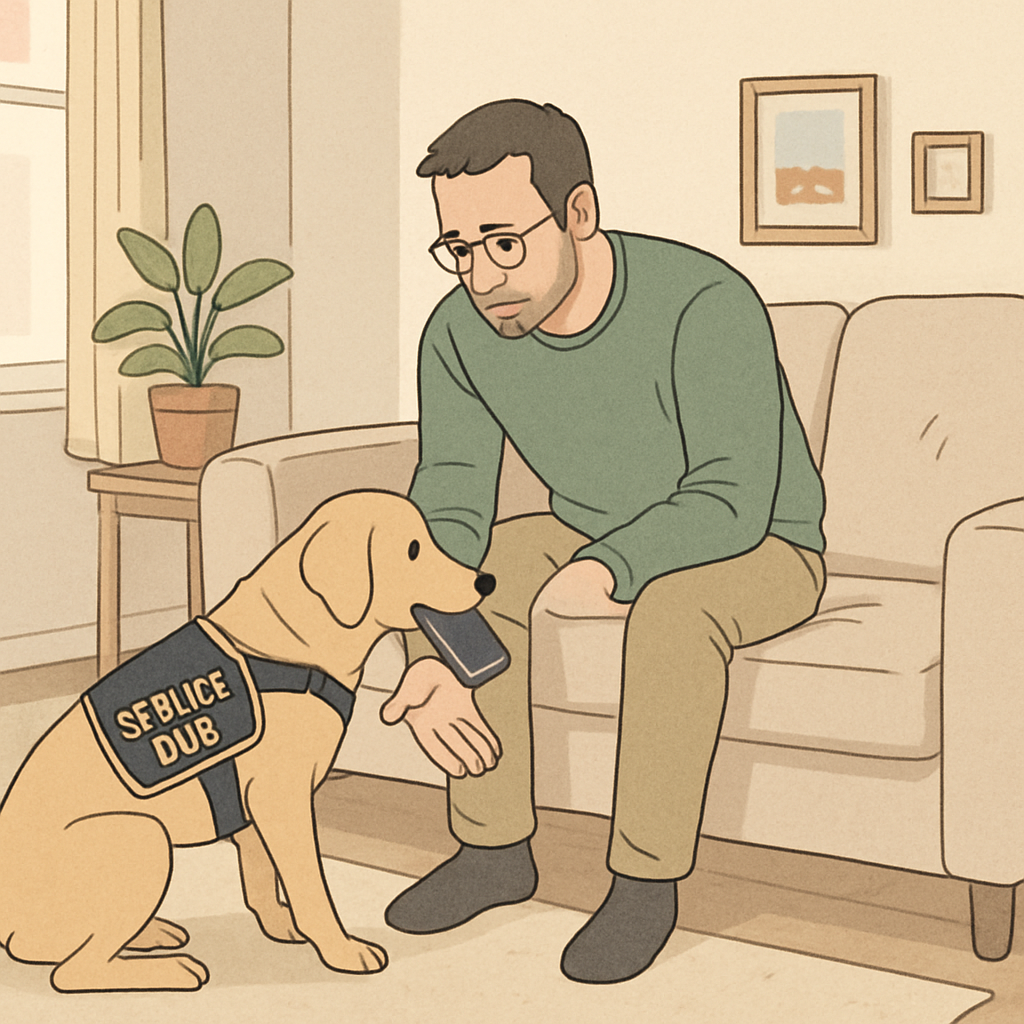
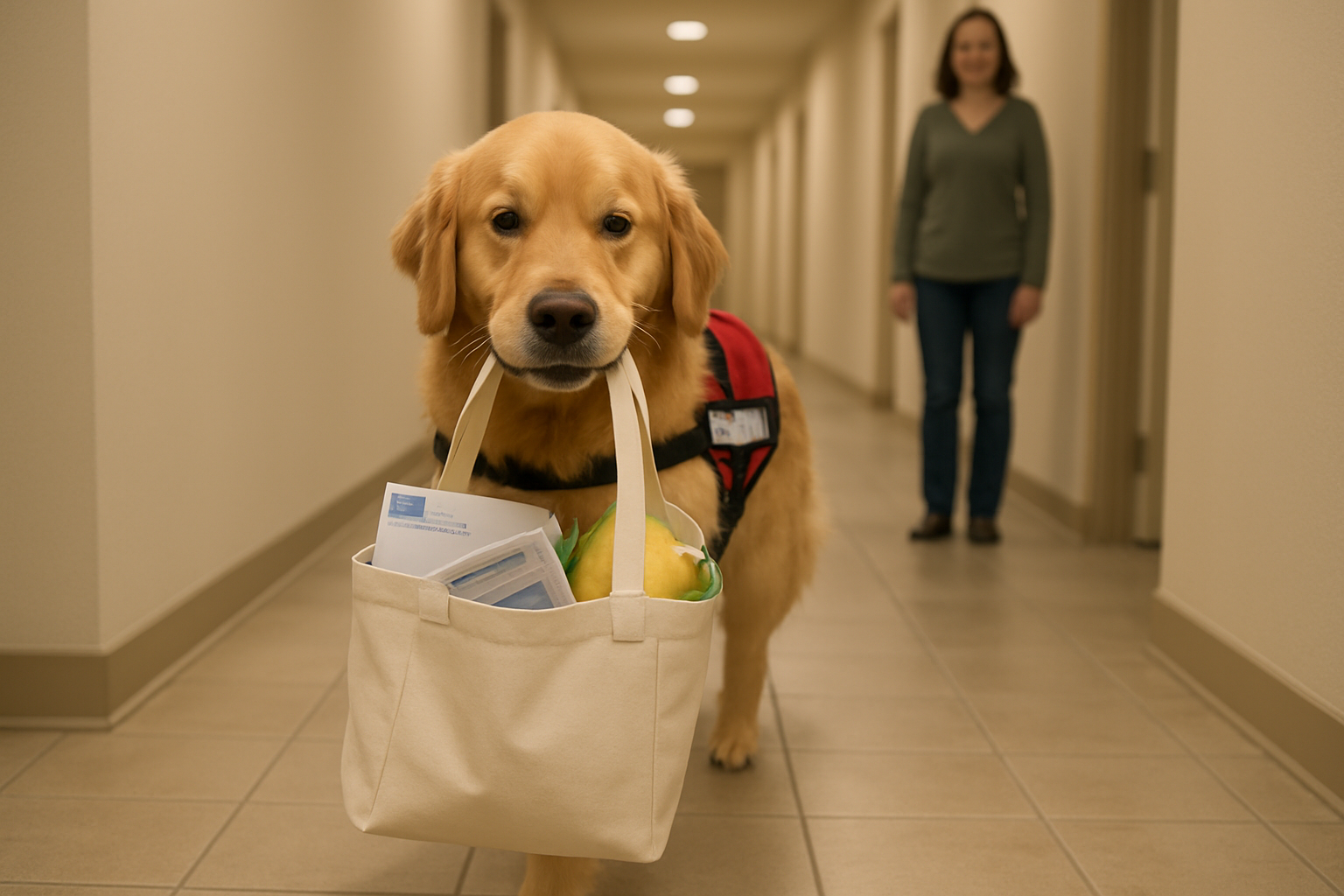
Retrieval tasks are some of the most common (and life-changing) skills service dogs learn. For handlers with limited reach, mobility challenges, chronic pain, fatigue, or balance concerns, bending down repeatedly can be difficult or unsafe. A dog trained to pick up and deliver items can turn dozens of small daily obstacles into smooth moments.
These tasks often start simple—“take,” “hold,” “give”—and then become more specific: retrieving a particular object by name, delivering it to hand, or placing it into a lap, basket, or bin. With practice, the dog can learn to retrieve gently (so items don’t get damaged) and persist if the first attempt fails.
“ "People notice the big moments, but retrieval is what saves my energy all day long. When I’m having a rough mobility day, it’s the difference between getting stuck and staying independent." – Service Dog Handler”
Some service dogs are trained to help with stability, safe movement, and transfers. These tasks can be especially helpful for people who experience weakness, joint instability, pain, or fatigue, or who have conditions that affect balance and coordination.
Mobility-related tasks are carefully trained to match the handler’s needs and the dog’s size, structure, and conditioning. The goal is steady, repeatable help—like positioning close on cue, moving at a controlled pace, or assisting during a stand or transfer routine. Many handlers work these tasks as part of a broader mobility plan that includes assistive devices and safe movement habits.

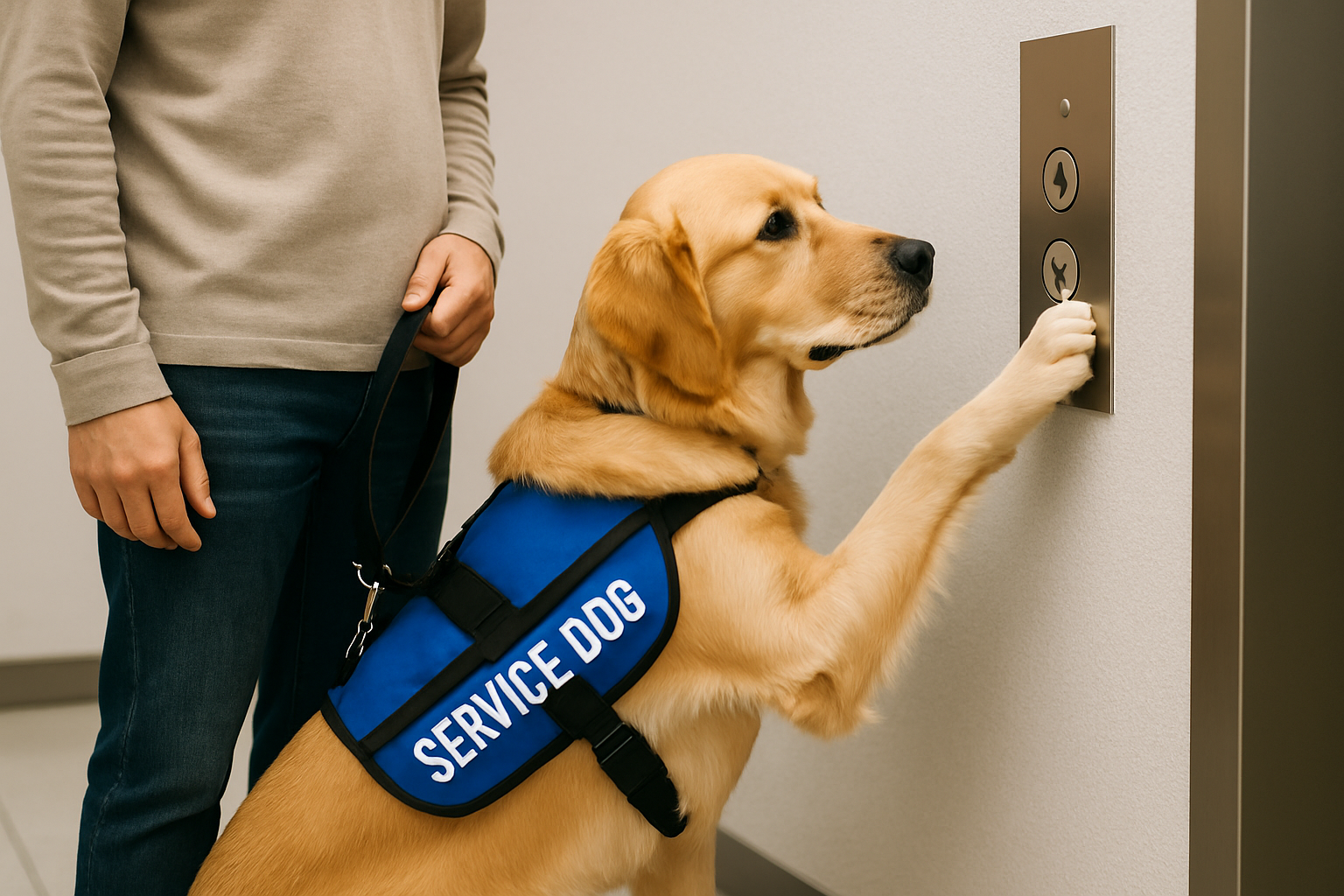
Home should be the place where daily routines feel easiest—but for many people with disabilities, small household actions can add up: opening heavy doors, bending to reach drawers, or repeatedly moving across a room to grab items.
Service dogs can be trained to operate parts of the home environment in ways that reduce strain and prevent falls. These tasks are practical and often blend seamlessly into the handler’s normal routine, helping conserve energy and making the home more accessible.
Some service dogs are trained to alert to or respond to medical events. For many handlers, these tasks bring peace of mind because the dog can respond quickly and consistently during moments when thinking clearly or moving safely might be hard.
Medical alert tasks may involve the dog recognizing a change and performing a trained signal—like nudging, pawing, or bringing a specific item—so the handler can take action early. Medical response tasks focus on what the dog does during or after an event: getting help, retrieving supplies, or supporting the handler until symptoms pass.
In public spaces, service dog tasks often focus on navigation, awareness, and safety. These skills can reduce the mental load of moving through busy environments—especially when a handler is managing a sensory disability, a vision or hearing disability, or a medical condition that makes disorientation more likely.
Guidance tasks can include leading around obstacles, finding an exit, or taking the handler to a specific destination on cue (like the car, a chair, or a family member). Hearing alert tasks support handlers who may not notice important sounds, helping them respond to real-world cues more confidently.
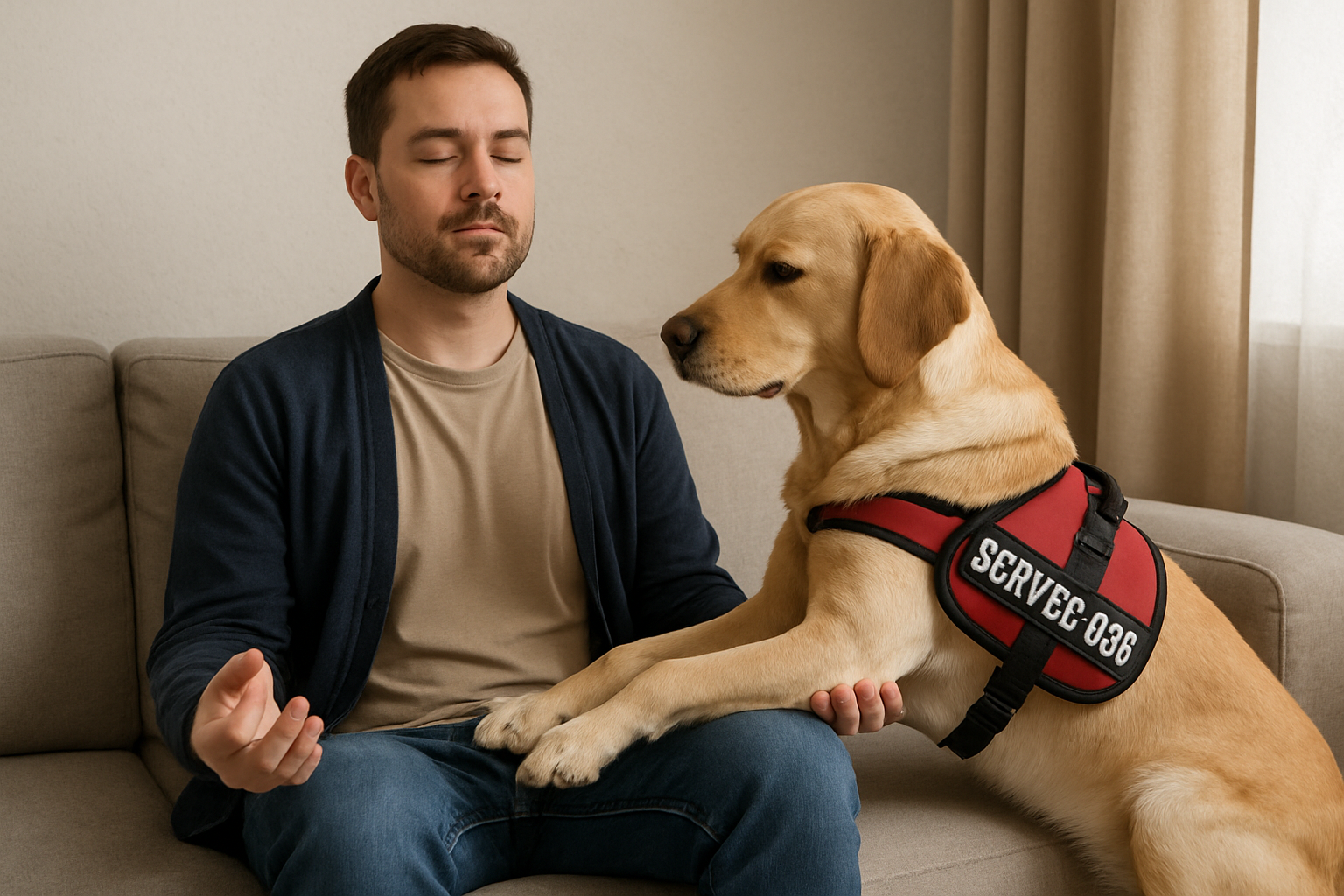
Psychiatric and sensory service dog tasks are sometimes misunderstood because they can look “invisible” from the outside. The key is the same as any other service dog task: the behavior is trained, and it directly helps mitigate a disability in daily life.
For PTSD, autism, and other psychiatric or sensory disabilities, tasks often focus on interruption, grounding, routine support, and safe navigation out of overwhelming situations. These skills can help a handler regain control during moments when symptoms interfere with communication, decision-making, or basic functioning.
“ "My dog doesn’t just ‘make me feel better.’ He does specific things we practiced—like guiding me to the exit and helping me ground—so I can finish errands and get home safely." – Service Dog Handler”
Service dog work is built in layers. Most teams start with foundational behaviors—focus, recall, loose-leash walking, and calm settling—then add task skills in small pieces. Over time, those pieces are “proofed,” meaning the dog learns to do them reliably even when the environment changes.
Training timelines vary widely. Some tasks are quick to teach but take time to make consistent everywhere. Others are complex and require careful repetition and real-life practice. Many teams spend months building reliability, especially if the dog is learning multiple tasks and also developing strong public-access manners.
Even when a handler knows their rights and their dog is well-trained, day-to-day life can include questions from housing staff, hotel desks, rideshares, or crowded venues. In real life, many people appreciate having clear, consistent information ready—especially during travel, medical appointments, or high-stress days.
That’s why many handlers choose to carry service dog identification and informational materials. While requirements and expectations can vary by location and situation, having a clear ID can reduce confusion, streamline conversations, and keep key details accessible when you need them.
For example, some teams prefer an ID that’s easy to show briefly, includes the dog’s role, and keeps handler and dog details organized in one place—like a customizable service dog ID card with an ADA reference.
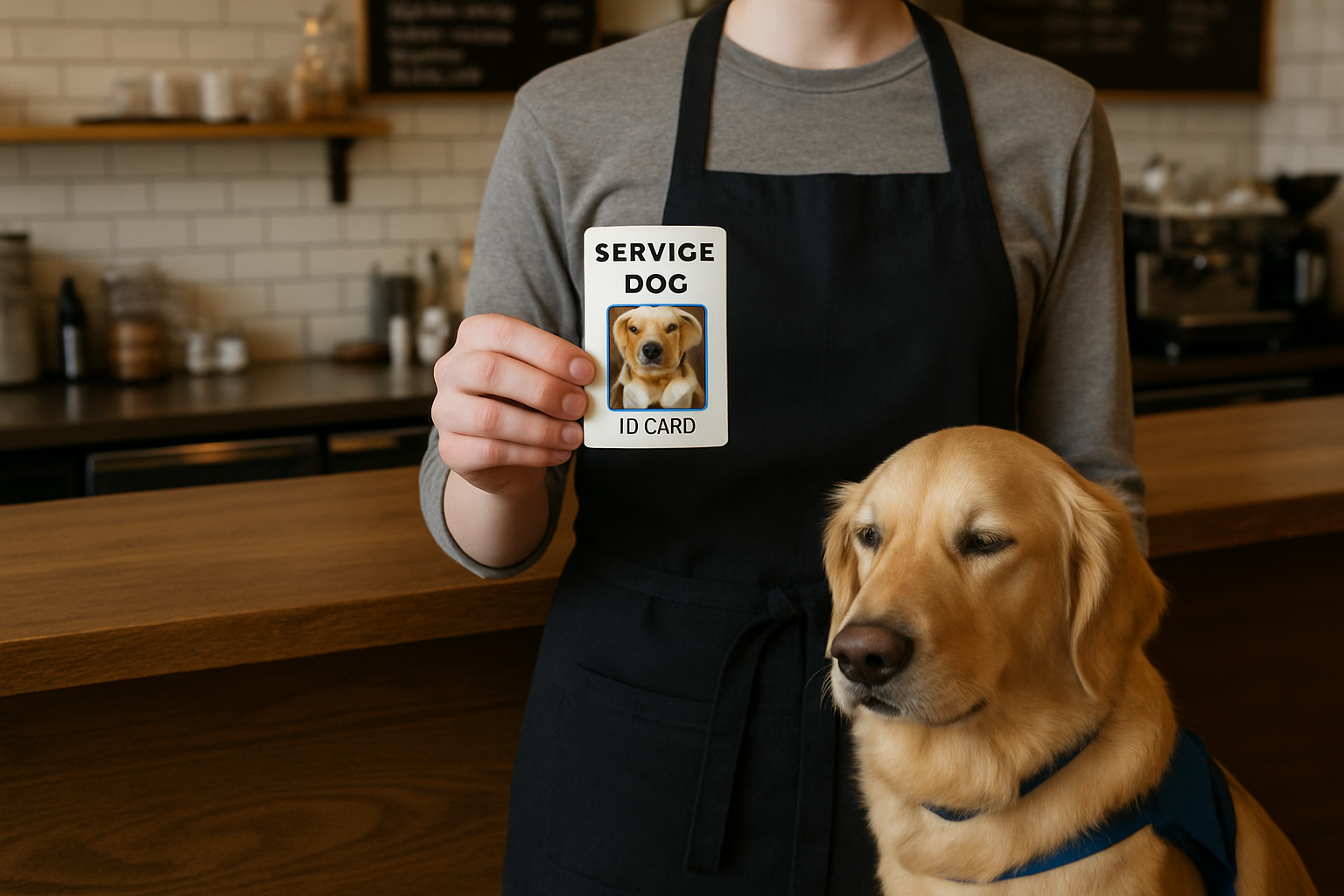
Being out with a service dog can be smooth—and it can also bring unexpected conversations. Planning a few simple phrases ahead of time helps you stay calm, set boundaries, and keep moving through your day.
Keep it short and factual. A simple approach is: “My dog is trained to [task 1] and [task 2] to help with my disability.” Examples include “retrieves dropped items and brings medication,” “alerts to medical changes and helps me get to a safe place,” or “interrupts escalating symptoms and guides me to exits.” You don’t have to share personal medical details to communicate what the dog is trained to do.
Build extra time into your schedule, bring familiar essentials (water, collapsible bowl, waste bags, a small towel), and plan a short decompression routine. Many teams also find it helpful to review travel tips in advance, such as traveling with a service dog.
Staying calm and prepared can help. Some handlers carry a short, clear informational handout to reduce back-and-forth and keep interactions respectful—like wallet-sized ADA law handout cards. You can also use simple boundary phrases such as, “My dog is working—thanks for giving us space,” or “I’m happy to answer what I can, but I need to continue on.”
Set your dog up for success with practice in gradually harder settings, reinforce calm settling, and take breaks before your dog is overwhelmed. Many teams also use consistent routines: a pre-entry focus cue, a settle cue for waiting, and a clear “all done” cue when leaving.
Your trusted source for service animal registration. Get professional ID cards, digital profiles, and smart NFC tags to keep your service animal safe and recognized.
© National Animal Registry — All rights reserved.