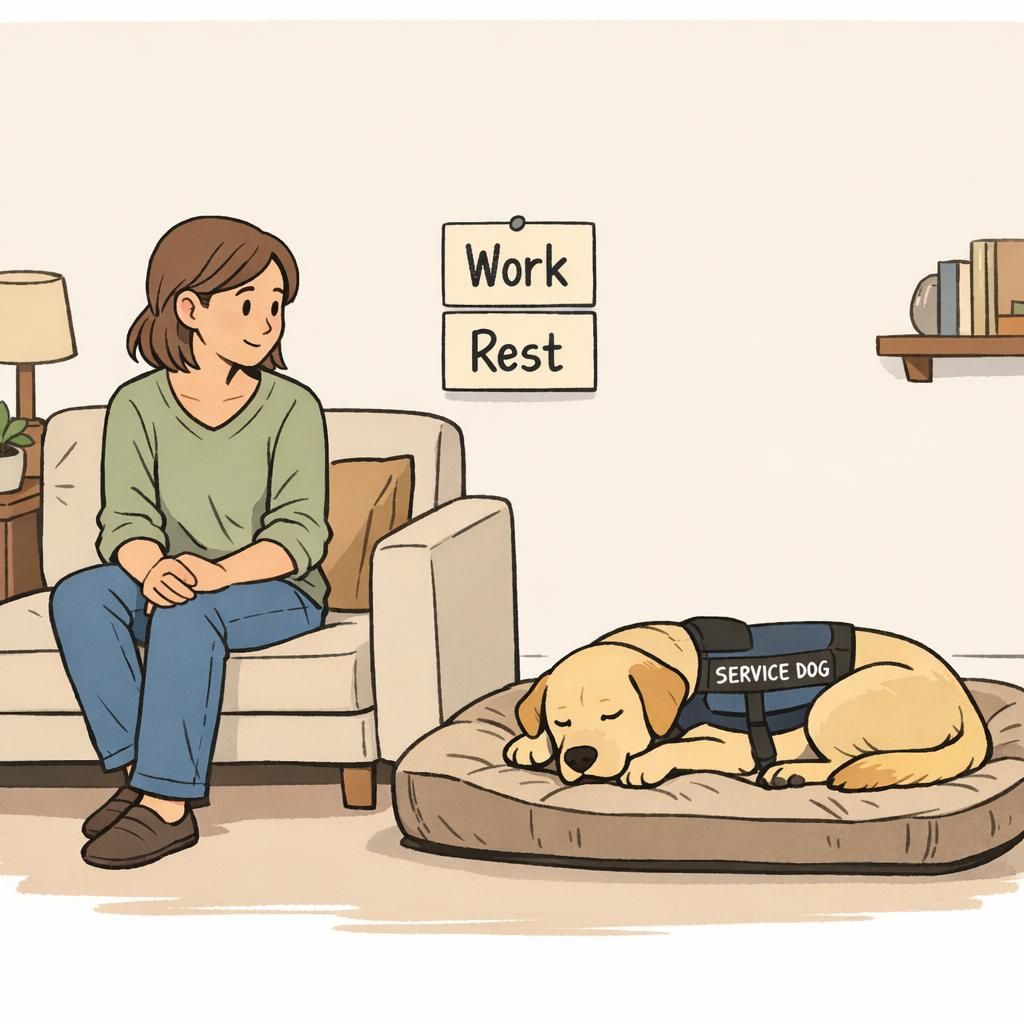
When handlers say “my service dog is off duty,” they’re usually describing a specific mode: the dog is not actively working, not expected to maintain tight public-access manners, and is allowed to relax like a dog. That doesn’t mean the partnership pauses—it means the team is protecting the dog’s energy and focus so that on-duty work stays reliable.
A clear on-duty/off-duty rhythm is one of the simplest ways to build a sustainable long-term routine. Service dogs often operate in stimulating environments—stores, offices, appointments, transportation, crowded sidewalks—and that constant attention can be tiring. Off-duty time gives the dog a chance to decompress, process, and reset.
This concept matters for handlers, too. Many Americans struggle to fully “clock out” mentally, especially with modern schedules, notifications, and shifting responsibilities. Intentional downtime becomes a practical form of maintenance for the whole team: calmer communication, more patience, and better consistency when it’s time to work.
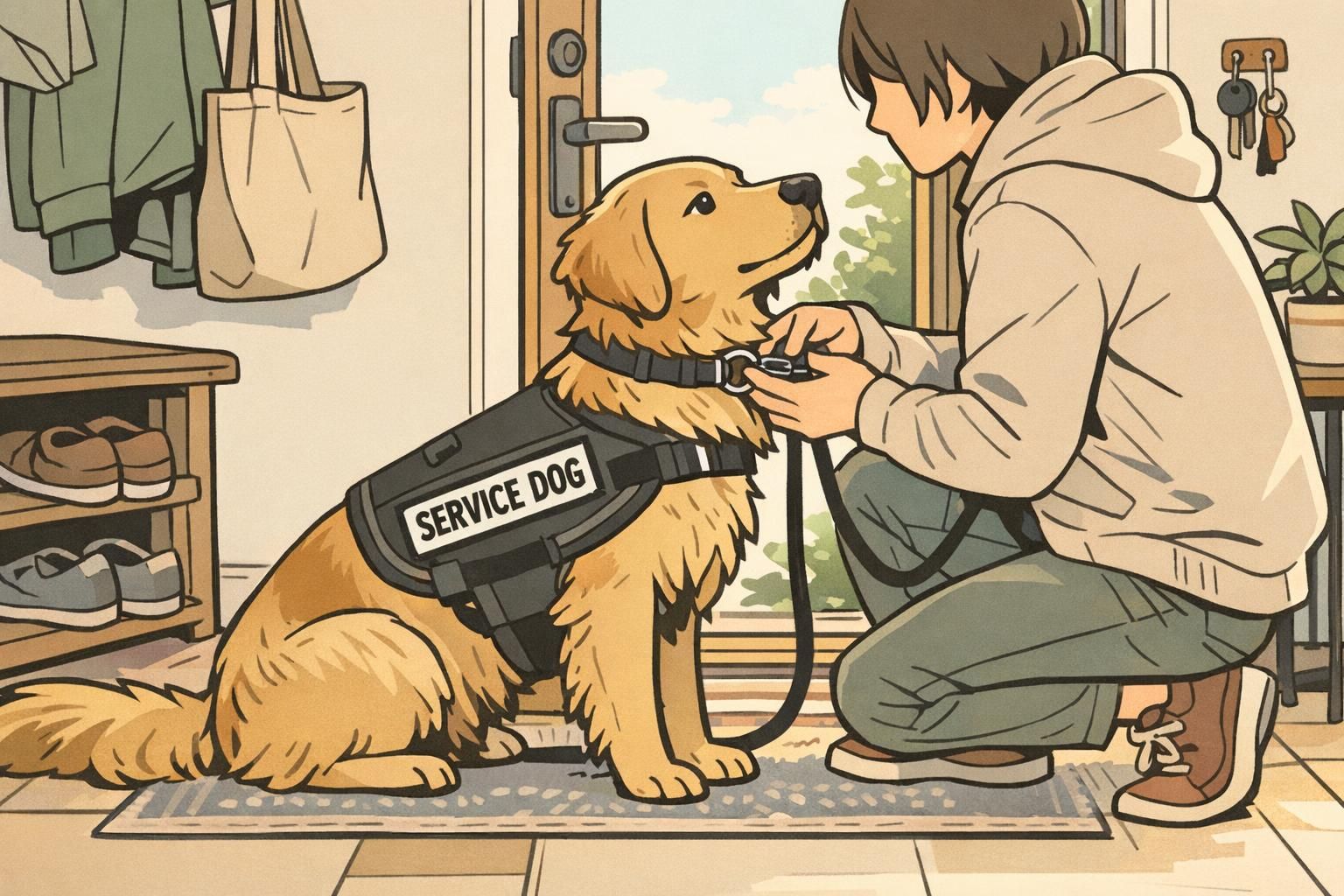
Every service dog team looks a little different, but most teams benefit from a shared definition of “on duty” and “off duty.” Clear expectations reduce confusion for the dog and make daily life easier for the handler—especially during busy weeks.
Many teams use gear (like a vest or harness) as part of the on-duty picture, but it’s not the only option. Some teams use a specific leash, a working collar, a treat pouch, or a consistent “work time” cue. Others rely primarily on verbal cues and structured routines. The goal is clarity, not perfection.
Service dogs can be incredibly dedicated. That dedication sometimes makes it easy to miss early signs of fatigue or stress—especially if you’re focused on getting through work, errands, or appointments. Noticing small changes early is one of the best ways to prevent burnout and protect long-term performance.
These signs don’t mean you’ve done anything wrong. They’re feedback. Often, the fix is straightforward: shorten a demanding outing, add a quiet decompression walk, build in a longer nap, or plan a lighter day after a heavy one.
“ "When I started treating decompression like part of the job, my dog’s focus improved—and I felt less stressed, too." – Service dog handler”
Long workdays can blur the line between “working” and “always working.” That’s especially true when your dog is with you for long hours, or when your schedule includes overtime, shifting responsibilities, or last-minute changes. Many U.S. professionals work beyond the classic 40-hour week, and burnout is widely reported—patterns that make recovery planning a realistic necessity, not a nice-to-have. (source)
For service dog teams, the goal is to prevent constant high-alert mode. Even when your dog is calm and well-trained, a long day of public exposure can be mentally demanding. Handlers who build recovery time into the day often see better task reliability and fewer stress behaviors over time.
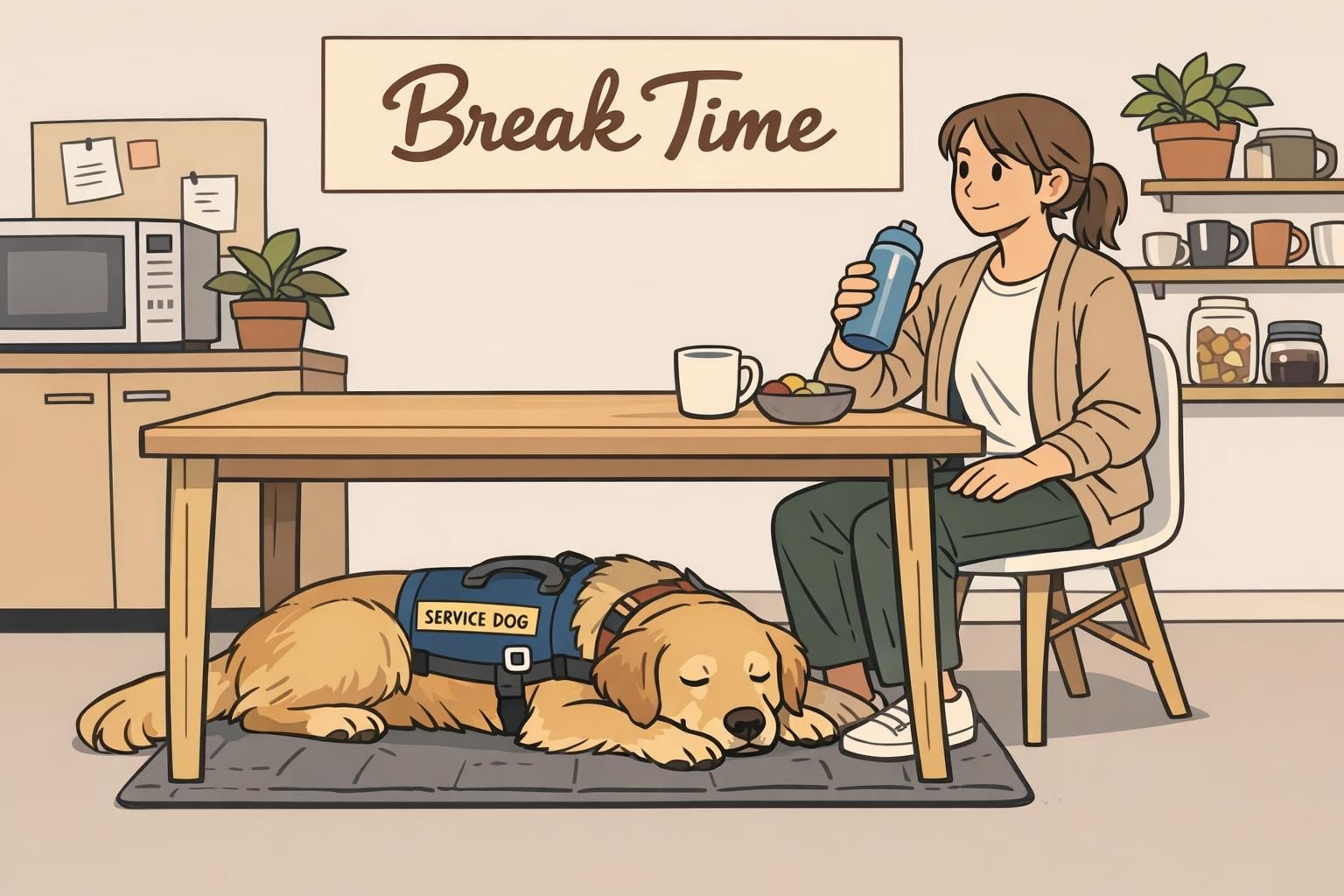
One challenge many teams face is “mode confusion”—a dog who isn’t sure whether they’re working, training, or relaxing. Clear, consistent transitions can reduce stress and make behavior more predictable, especially in public spaces.
For everyday interactions, practical identification can also help reduce friction. When people can quickly understand that your dog is part of a working team, it often prevents repetitive questions and allows you to move through your day with fewer interruptions. Many handlers like carrying a customizable Service Dog ID card as a simple, organized way to communicate the dog’s role when needed.
Home is where many service dogs do their best recovery. Off-duty time at home should feel safe, predictable, and pressure-free. Rest and play aren’t “wasted time”—they’re maintenance that supports steady behavior when it matters.
Match off-duty activity to your dog’s age and health. Younger dogs may need more structured outlets for energy, while older dogs may prefer shorter walks and longer rest blocks. If you notice persistent stiffness, panting, or reluctance to work, consider discussing workload and comfort with a qualified veterinarian.
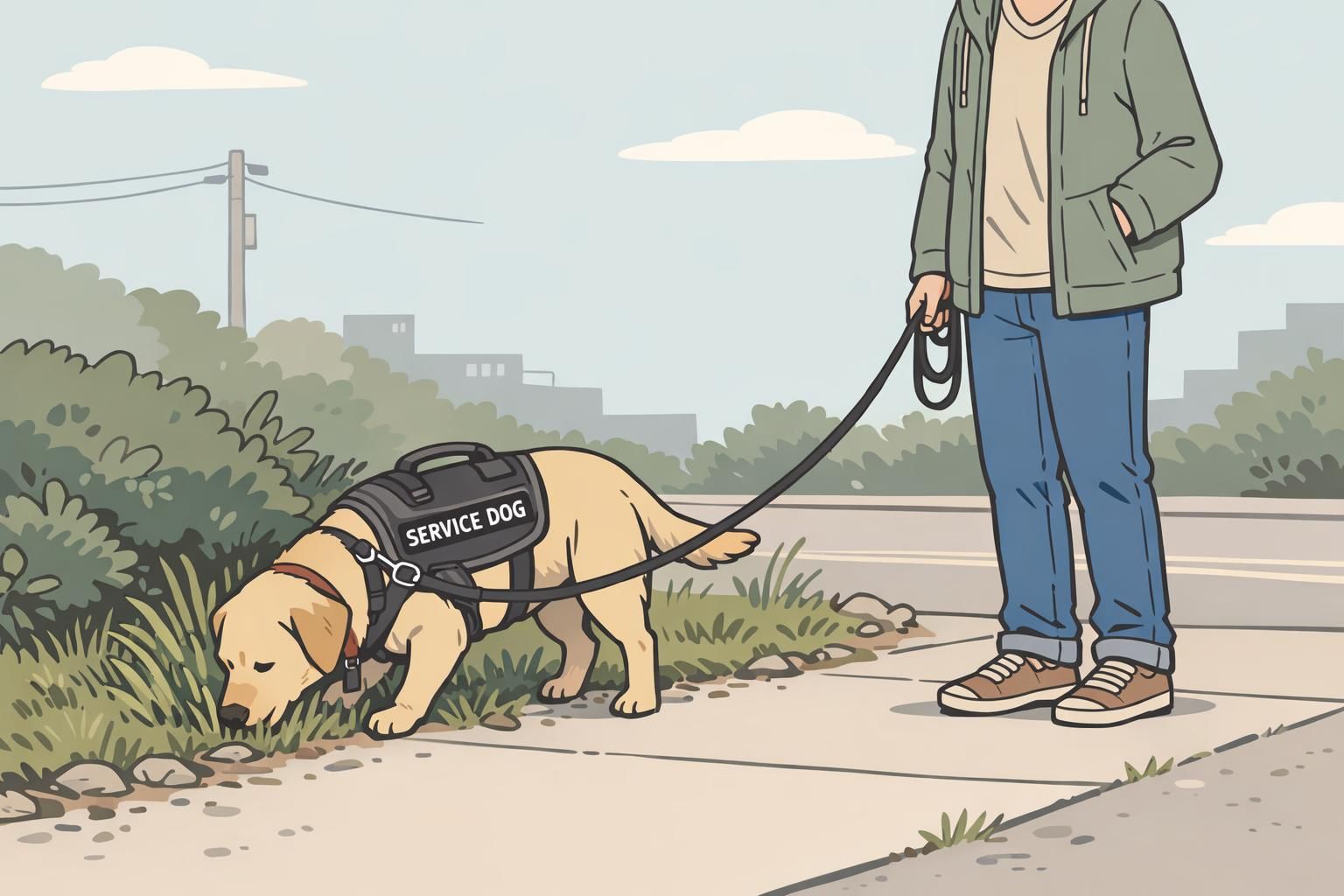
Service dog work is a team effort. When a handler is burned out, overloaded, or running on minimal sleep, it often shows up in the small moments: shorter patience, less consistent cues, and fewer opportunities for the dog to truly rest. Dogs are also sensitive to changes in routine and emotional tone, so handler stress can translate into dog stress.
“ "When I started protecting my own downtime, my dog settled faster and our communication felt smoother." – Working handler”
A little communication goes a long way—especially in workplaces, friend groups, and shared spaces where people may be curious or excited. The goal isn’t to lecture anyone. It’s to set simple boundaries that protect your dog’s focus and your own bandwidth.
In some situations, having a simple, professional reference can save time and energy—especially if you’re moving quickly or don’t want to repeat the same explanation. Many handlers keep ADA service dog law handout cards on hand so they can share clear information politely and keep the interaction brief.
If it works for your team, yes. Many handlers allow greetings only during clearly defined off-duty moments (for example, after a release cue). The key is consistency so your dog doesn’t start expecting attention while working.
You can frame it as “break rules,” not “no rules.” Off duty can still include polite behavior—just with less pressure and more freedom to relax.
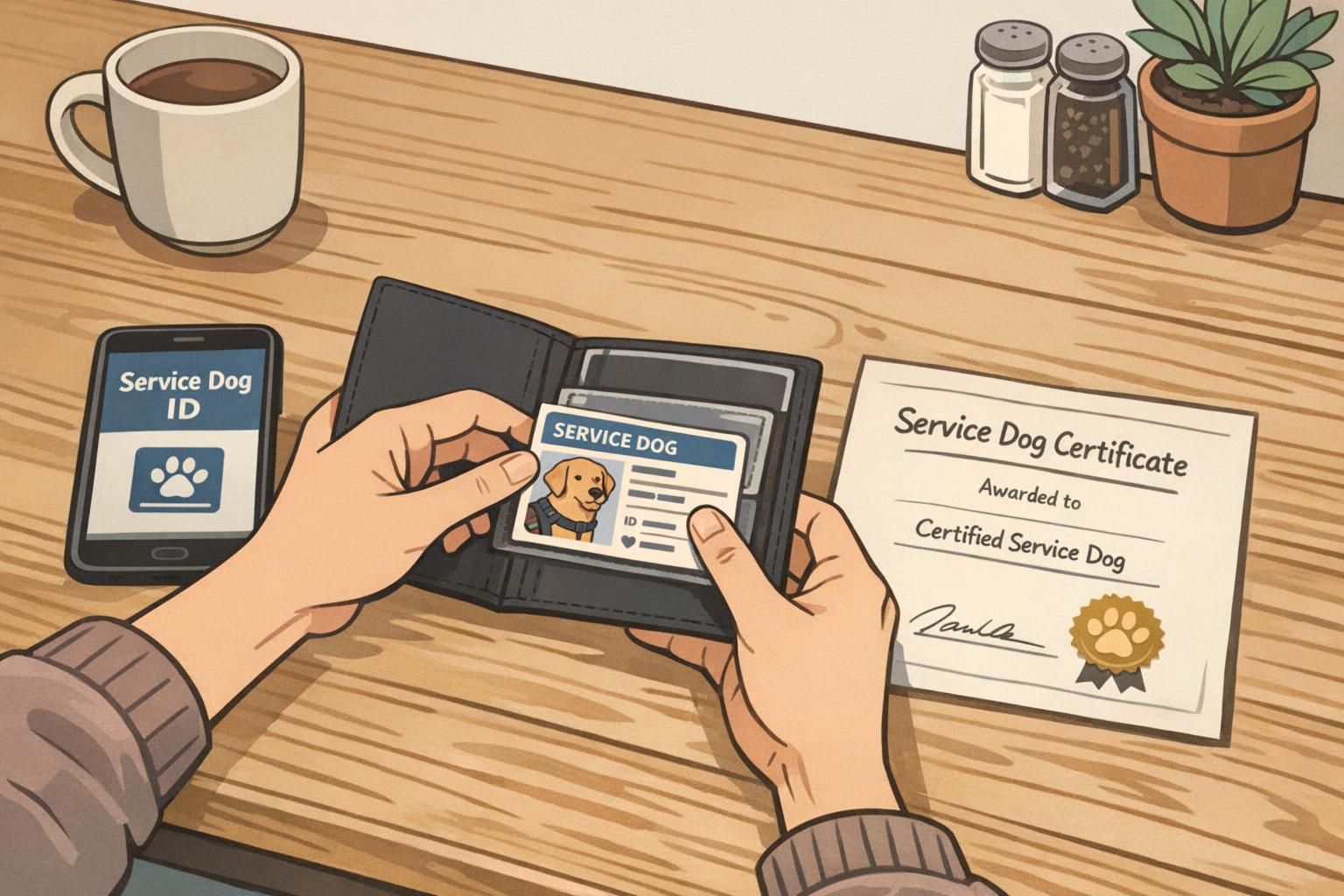
Travel days can quietly multiply your dog’s workload. New environments, new sounds, new smells, tighter schedules, and longer stretches of waiting all add up. The best travel plans treat off-duty time as a scheduled need—like food, water, and charging your phone.
If you’re preparing for a trip, it helps to think in blocks: identify the high-demand moments (check-in lines, security, busy sidewalks, crowded lobbies) and then schedule recovery around them. You can also review practical tips in this guide on traveling with a service dog.
Many teams find it reassuring to keep travel identification and materials together in one place. If you like having a single, organized set of tools for trips, a travel-ready service dog registration package can help you stay prepared and reduce last-minute stress.
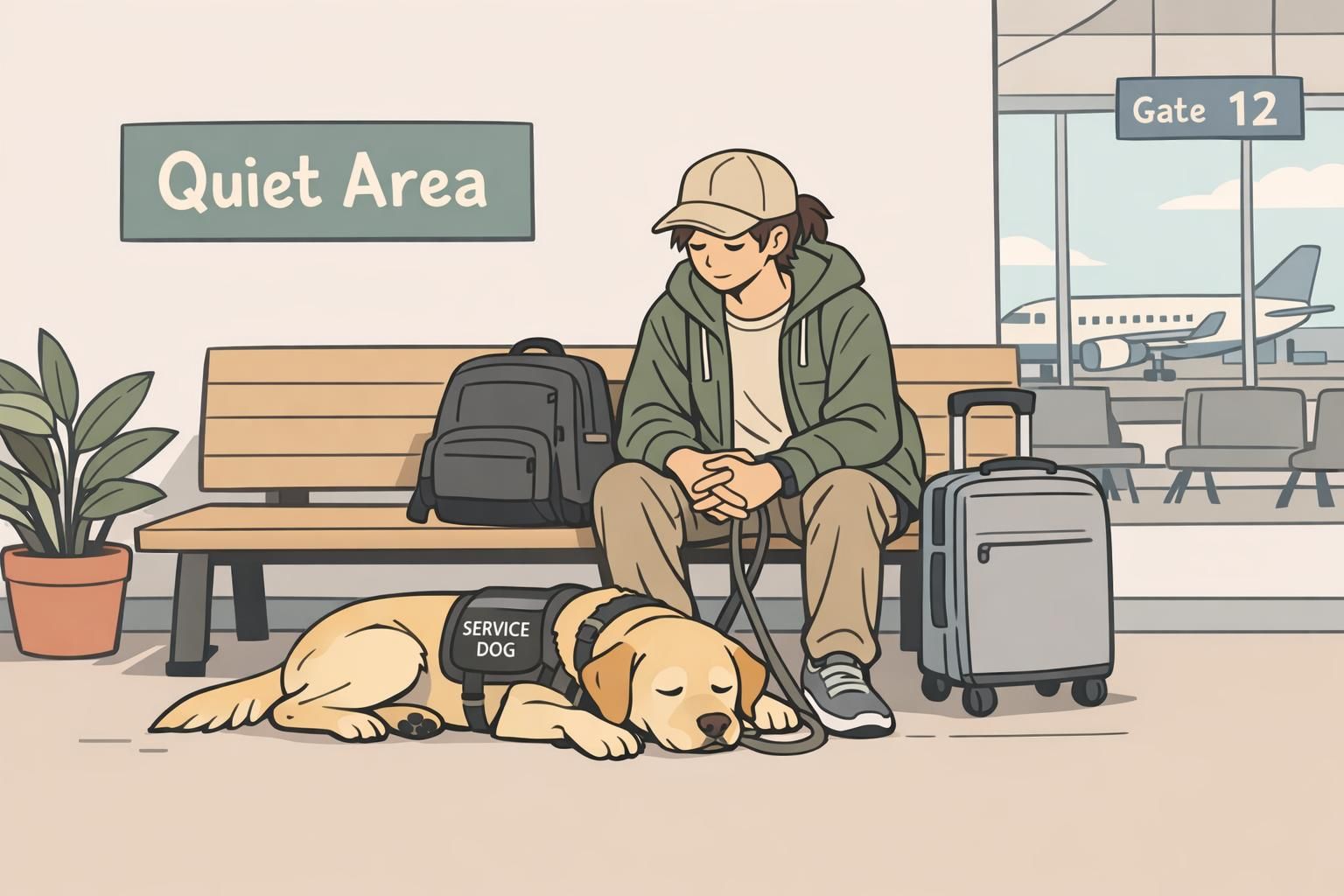
In everyday life, service dog teams often run into moments where clear, consistent identification makes things smoother: starting a new job, moving into housing, traveling, or navigating public settings where questions come up. Having your information organized can reduce friction and help you feel more confident during busy days.
Registration, IDs, and certificates are practical tools many handlers choose because they’re convenient. They can help you present your dog’s information consistently, keep key details easy to access, and reduce the mental load of explaining your situation repeatedly—especially when you’re tired or on a tight schedule.
For teams that want a simple starting point, many handlers choose a starter registration package for everyday identification to keep their information organized and ready when needed.
Balance is easier when you can picture it. Below is a sample week for a typical working handler (commute or hybrid/remote). Adjust it to your needs, your dog’s age and stamina, and the intensity of your daily environments. The goal isn’t to create a perfect schedule—it’s to build a rhythm your dog can count on.
If you’re currently feeling stretched thin, start small: add one true decompression walk, protect bedtime by 30 minutes, or build one predictable break into your workday. Tiny structure changes can protect your energy and your dog’s focus—and that’s what makes the partnership sustainable.
“ "The biggest difference for us was treating breaks like a planned part of working—not something we only do when things go wrong." – Service dog handler”
Your trusted source for service animal registration. Get professional ID cards, digital profiles, and smart NFC tags to keep your service animal safe and recognized.
© National Animal Registry — All rights reserved.