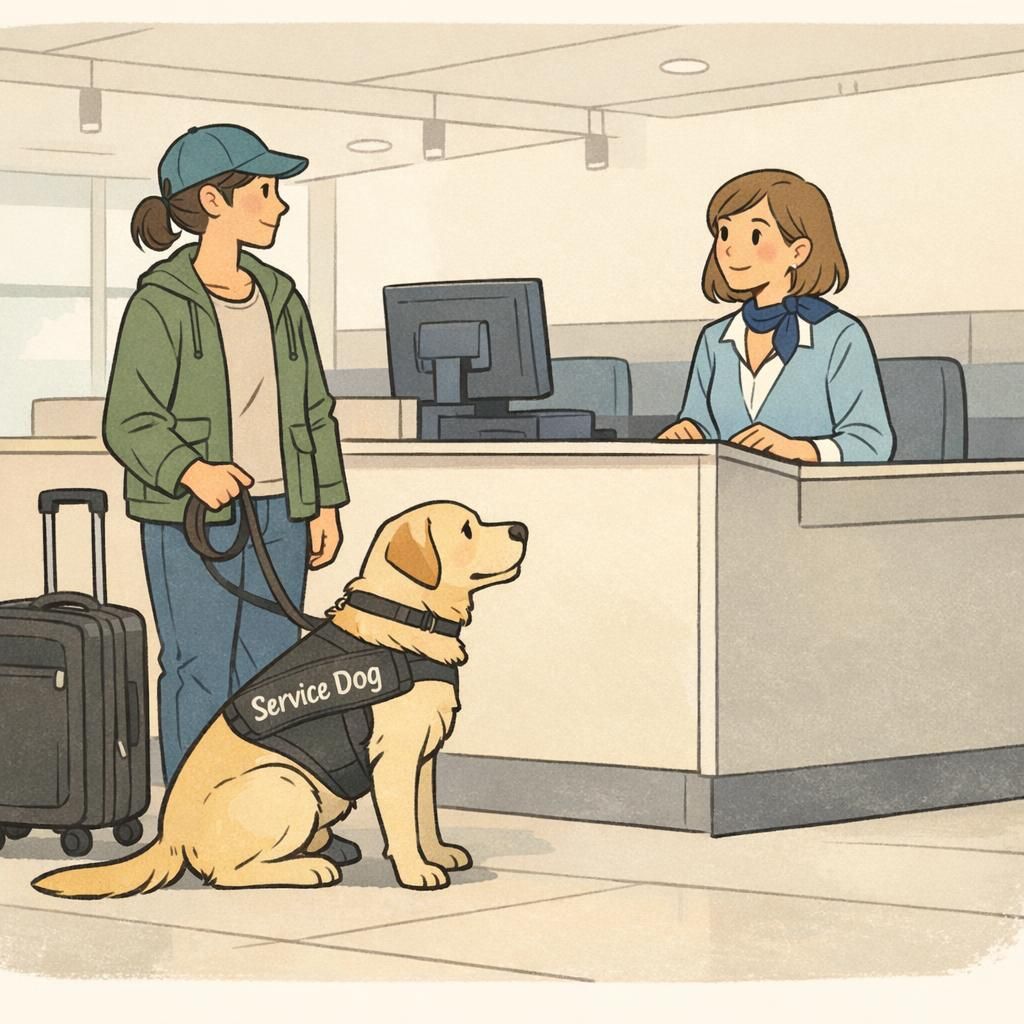
For U.S. air travel, airlines generally use the Air Carrier Access Act (ACAA) framework. In practical terms, a “service dog” is a dog that’s trained to do work or perform tasks for a person with a disability. The focus is not on a particular vest, registry, or brand of documentation—it’s on whether the dog can safely travel in a public cabin environment while assisting its handler.
So why the paperwork? Flying places a lot of people in a tight space for a long time. The forms exist so airlines can confirm a few consistent, safety-centered expectations: the dog is healthy enough to fly, vaccinated as required, housebroken, and under control. The goal is to reduce surprises at check-in and make boarding smoother for everyone.
It also helps to understand the air-travel distinction between service dogs and emotional support animals (ESAs). ESAs can be meaningful support in daily life, but airlines apply different rules in the air-travel context. If you’re flying with a service dog, the DOT forms are the standard way airlines document that your dog meets the service animal expectations for cabin travel.
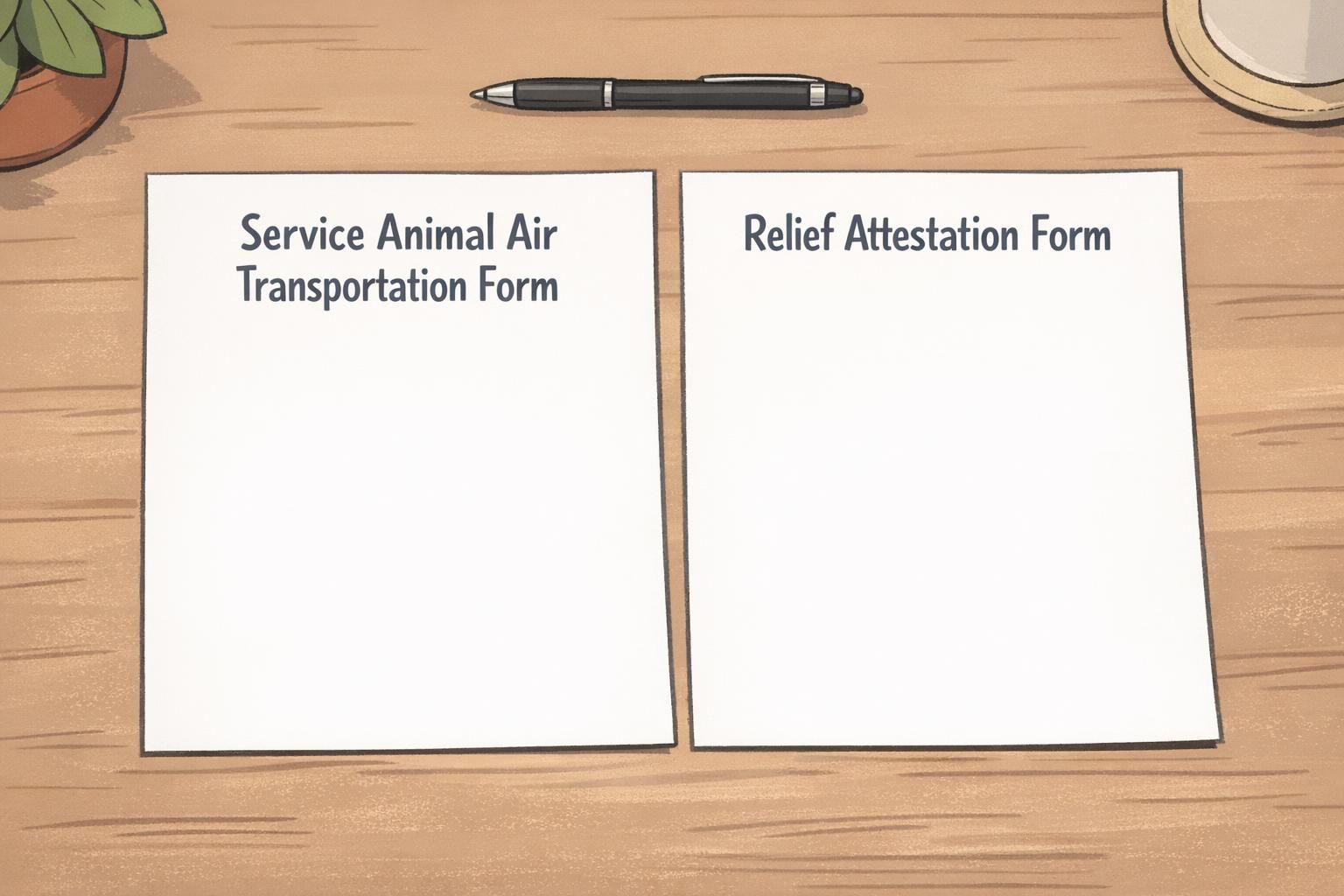
Most travelers will encounter two U.S. Department of Transportation (DOT) forms that airlines use for service dogs. The first is the DOT Service Animal Air Transportation Form, which airlines typically require for service dogs on flights. The second is the DOT Relief Attestation Form, which may be required for flights scheduled for 8 hours or more.
These forms help standardize what airlines ask for across U.S. carriers. Instead of each airline inventing a new checklist, the DOT forms create a consistent set of questions and acknowledgments, which reduces confusion at check-in, security transitions, and the gate. You can download the official forms and review the instructions at the DOT’s accessible page here: source.
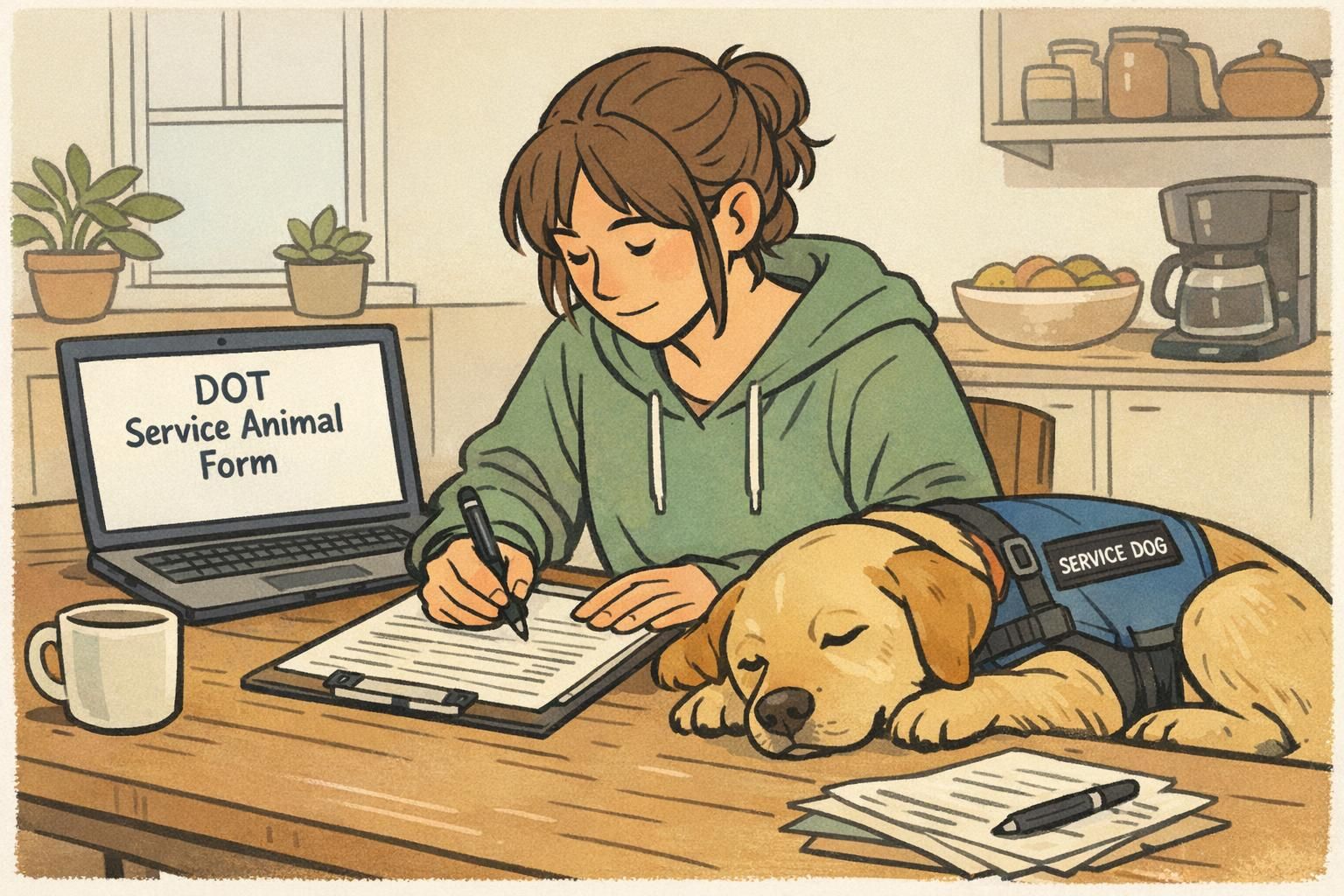
Think of the DOT Service Animal Air Transportation Form as a clear promise: “My dog is healthy enough to fly, is vaccinated as required, is trained to behave appropriately in public, and will remain under control.” It’s not meant to be intimidating—most people can complete it in one sitting.
Here are the areas that typically cause the most second-guessing, explained in plain language.
No. The form is designed to capture the assurances airlines need for safety and predictability. If you are the dog’s trainer, you can list your own name and contact information.
Air travel is a high-distraction environment. Only fly as a service dog team if your dog can reliably remain under control, behave calmly in public, and meet the form’s expectations for house training and non-disruptive behavior.
If your flight is scheduled for 8 hours or more, airlines may ask you to complete the Relief Attestation Form. This isn’t about judging your dog—it’s about planning for a long stretch of time in a cabin where relief options are limited.
Airlines typically look for one of two clear statements. Choose the option that is honest and practical for your dog and your itinerary.
Many airlines commonly expect forms to be submitted at least 48 hours before departure when possible. That window gives accessibility teams time to review your submission and helps you avoid last-minute pressure at the airport.
Submission methods vary, but the most common options are: an airline accessibility portal, an upload link provided after booking, email submission to an accessibility desk, or a web contact form.
Even when you submit online, having printed copies can be a lifesaver if your itinerary changes, a connection runs tight, or you’re asked to confirm details at a different counter than expected.
Most issues aren’t “big problems”—they’re small mismatches that slow down review. A few minutes of double-checking before you hit submit can prevent a stressful scramble on travel day.
“ "The biggest stress reducer was treating the forms like a mini project: I set aside 15 minutes, pulled up our booking details and vaccine record, and submitted everything at once." – Frequent service dog handler”
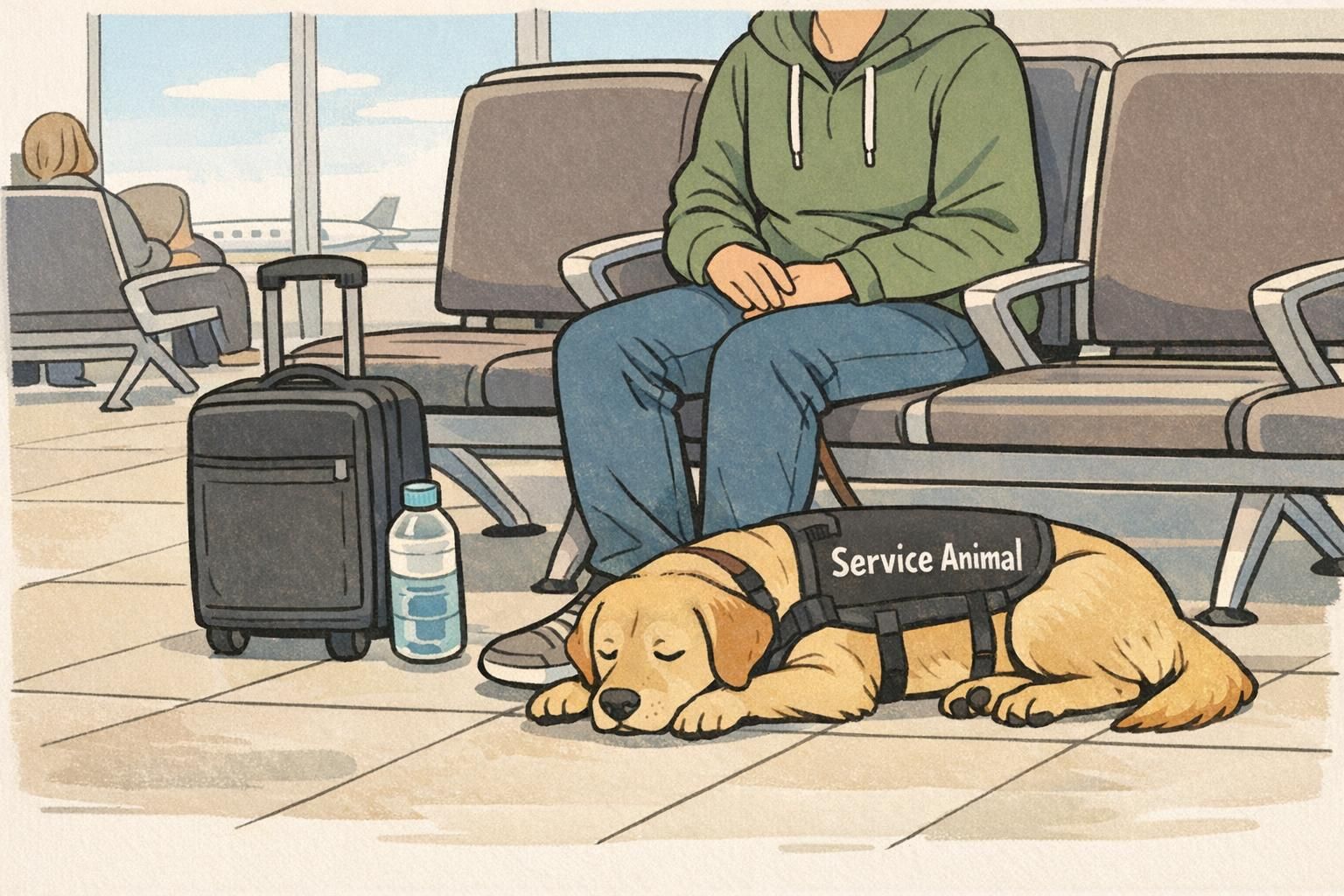
At the airport, airlines generally rely on the DOT forms to cover the documentation side of service dog travel. You typically won’t be required to buy a specific vest, present an ID card, show a “certification,” or demonstrate your dog’s task in public in order to fly.
That said, staff may still ask practical, safety-focused questions and may observe whether a dog is behaving appropriately in the terminal and boarding areas. Because airplanes are shared spaces, airlines can refuse transport if a situation presents a genuine safety issue or if severe disruption occurs. The best way to protect your travel plans is calm public behavior, reliable handler control, and a dog that is comfortable in busy environments.
Even when you’ve submitted everything online, a simple “travel document kit” can make busy travel days feel more predictable. The goal isn’t to add hoops—it’s to make it easier to communicate quickly when you’re tired, rushing, or navigating a crowded terminal.
Many handlers like having an optional, consistent ID and travel packet as a “grab-and-go” resource—particularly when interacting with multiple staff members across check-in, baggage, gate, and connections. If you want a streamlined option, consider a travel-ready service dog ID and document kit to keep key details in one place.
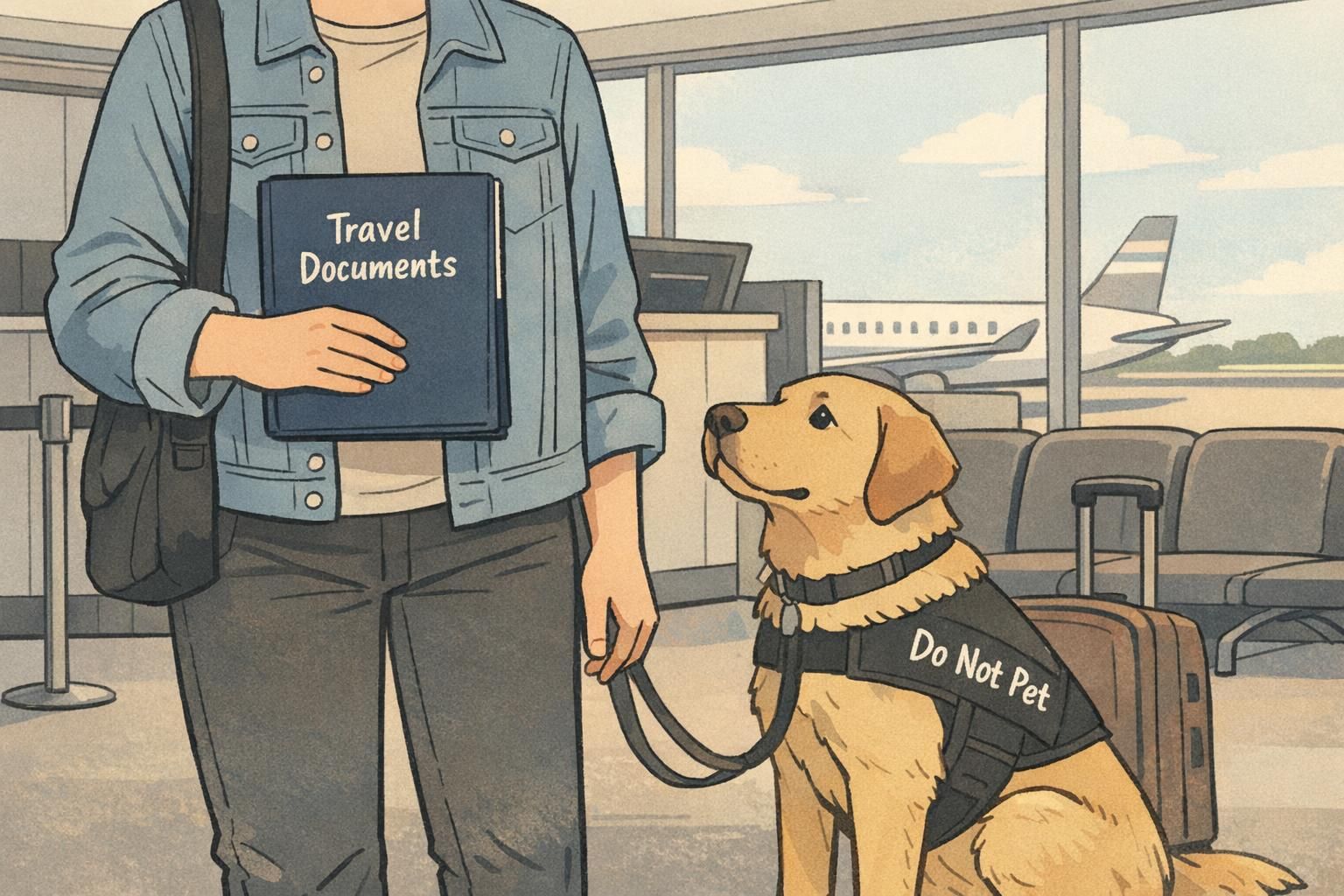
Airline-required DOT forms are one part of flying with a service dog. Separately, many handlers choose optional registration tools to stay organized and to communicate more smoothly during everyday interactions—especially in busy environments like airports, hotels, and rideshares.
National Animal Registry can support your routine with optional registration, a digital profile, and an ID card that helps keep your key information consistent and easy to access. For example, a customizable printed service dog ID card and matching digital profile can be a practical way to stay prepared, especially when you want a quick, professional way to identify your dog in high-traffic settings.
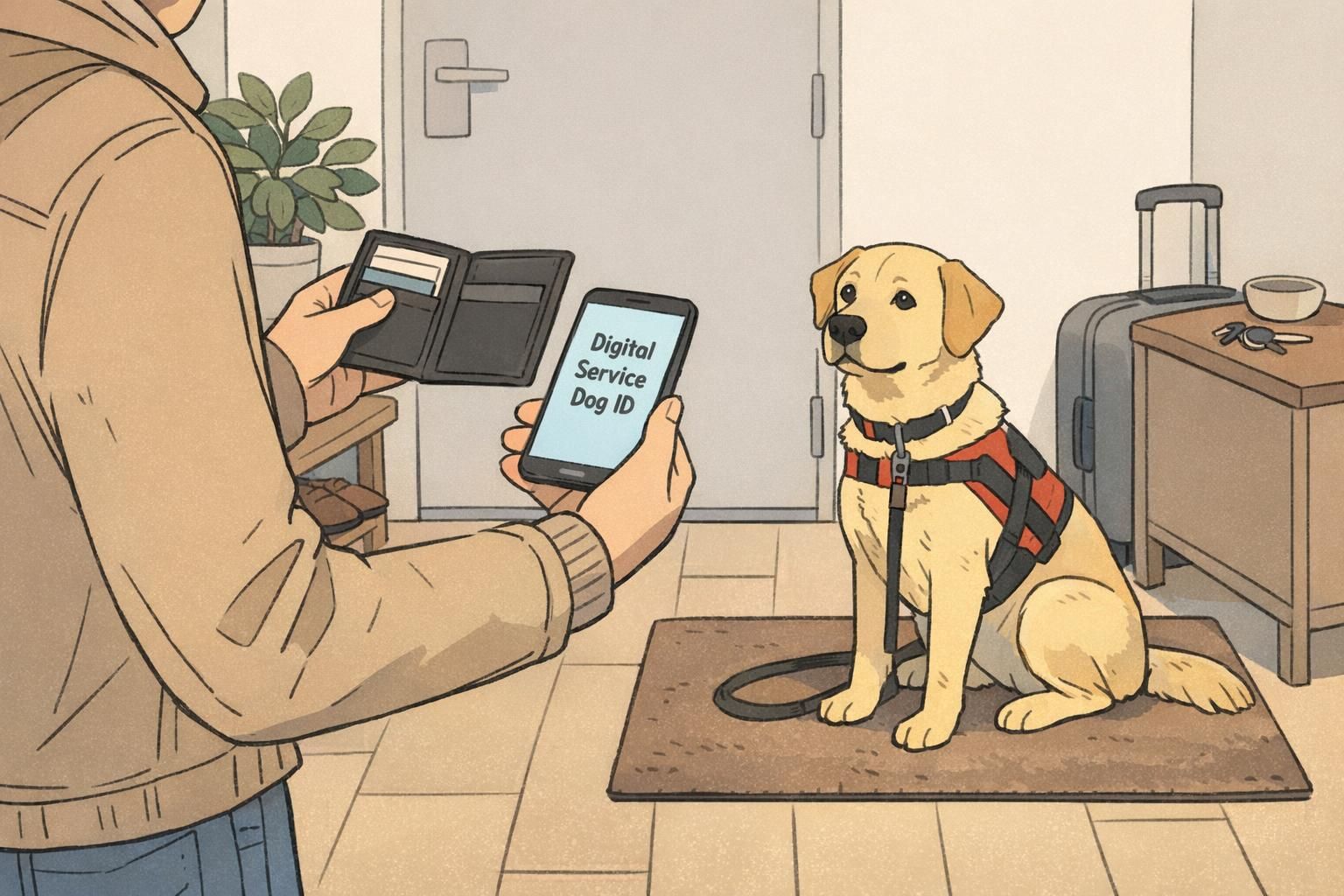
A simple timeline keeps this process manageable. Most of the stress comes from doing everything at once on travel day—so the best strategy is to handle the forms early and pack backups.
If anything changes—your flight time, your route, or your dog’s travel needs—contact the airline’s accessibility desk as early as you can. For more practical tips on planning a smooth trip, see traveling with a service dog.
Your trusted source for service animal registration. Get professional ID cards, digital profiles, and smart NFC tags to keep your service animal safe and recognized.
© National Animal Registry — All rights reserved.