What Ethical ESA Use Means (and Why It Matters)
Ethical emotional support animal (ESA) use is about matching the right kind of support to a real disability-related need—then communicating that support honestly and respectfully. An ESA isn’t “a pet you can take everywhere.” It’s an animal whose presence helps reduce the effects of a mental or emotional disability in daily life, typically in a home setting.
When people use the right terms, follow the right processes, and keep their animals well-cared-for and well-managed, it lowers conflict with housing providers, businesses, and neighbors. It also protects the credibility of people who truly rely on assistance animals to function safely and consistently.
Ethical ESA use means: (1) the animal supports a genuine disability-related need, (2) you represent the animal’s role accurately, and (3) you prioritize public comfort and animal welfare—especially in shared living environments.
- Need-based: The animal’s presence meaningfully helps with disability-related symptoms (not just preference or convenience).
- Truthful labeling: You call your animal what it is—an ESA, not a service animal—unless it actually meets the service animal definition.
- Respectful behavior: You plan ahead, communicate calmly, and prevent avoidable disruptions (noise, damage, hygiene issues).
- Animal-first care: You choose an animal that can thrive in your environment and commit to long-term responsibility.
ESA vs Service Animal vs Therapy Animal: Clear, Respectful Distinctions
These terms get mixed up often, and the confusion can create stress for handlers, businesses, and the public. Clear distinctions help everyone: people with disabilities get taken seriously, housing providers know what to do, and animal handlers avoid uncomfortable confrontations.
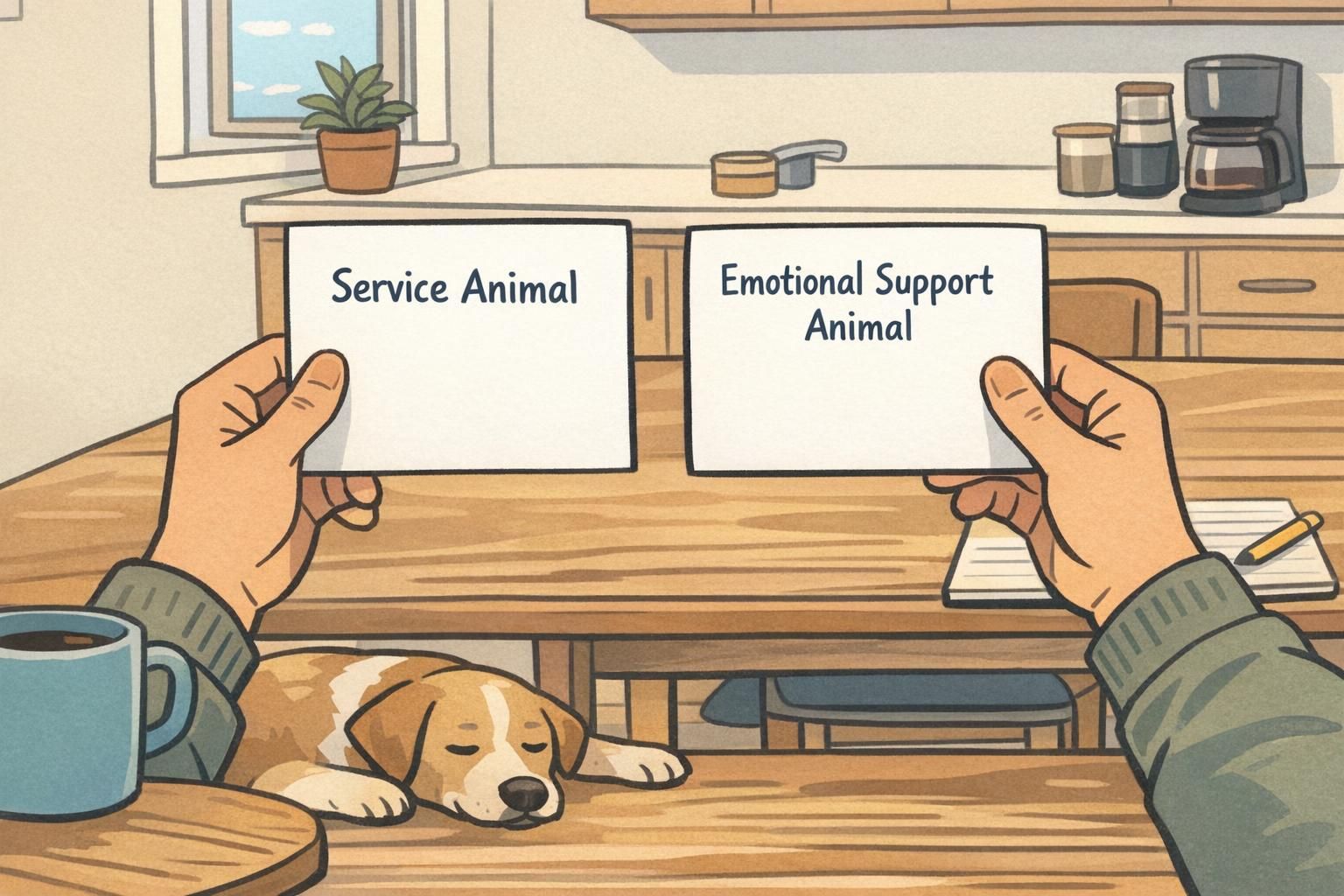
In everyday language, people may say “support animal” to mean many things. But in practical and legal contexts, the categories are different:
- Emotional Support Animal (ESA): Provides comfort or companionship that helps reduce symptoms of a disability. ESAs are commonly discussed in the context of housing accommodations. They are not automatically allowed in public places where pets aren’t permitted.
- Service Animal: Typically a dog trained to perform specific tasks directly related to a person’s disability (for example, guiding, alerting, retrieving, or interrupting certain symptoms). Public access rules for service animals are different than for ESAs.
- Therapy Animal: Works with a handler (often through a group, facility, or volunteer program) to provide comfort to other people in structured settings such as hospitals, schools, or senior living communities. Therapy animals are not the same as service animals.
It’s also important to know that comfort alone does not qualify an animal as a service animal under the ADA, and that public access rules differ. For a clear overview, see this ADA-focused explanation: source.
Using the correct term isn’t about “gatekeeping.” It’s about clarity. Accurate labels reduce conflict, protect access for legitimate teams, and help others respond appropriately.
Some animals provide emotional comfort and also perform trained tasks. In that case, the service animal role is what matters for public access conversations, because the task work is the key distinction.
Therapy animals are typically welcomed by invitation for visits or programs. They generally don’t have broad public access rights like service animals.
Choosing an ESA for the Right Reasons: Disability-Related Need and Realistic Expectations
An ESA can be life-changing when it supports a genuine disability-related need. For many people, an animal’s presence can reduce isolation, provide grounding during difficult moments, create daily structure, and encourage healthier routines. That’s real support—and it counts in daily functioning.
Ethical ESA ownership also means holding realistic expectations. An ESA is not a substitute for comprehensive care. It’s a support layer. Many people do best when an ESA is part of a broader plan that may include coping skills, community support, and other personal wellness strategies.
“ "My ESA doesn’t ‘fix’ my anxiety, but she changes my baseline. On rough days, I’m more likely to get out of bed, eat something, and stay connected to my routine." – ESA Owner”
- Ask yourself: Does my animal’s presence reduce symptoms that significantly impact my daily life?
- Be honest about motivation: Am I seeking support for an impairment, or am I mainly seeking convenience (like bypassing pet policies)?
- Plan for responsibility: Can I meet this animal’s needs consistently for years—exercise, enrichment, training basics, and veterinary care?
- Set boundaries: Even if your ESA helps deeply, you may still need to leave the animal home in many public settings.
Ethical ESA use starts before you ever request an accommodation: it starts with choosing the role for the right reasons and planning for responsible, stable ownership.
Animal Welfare Is Part of Ethics: Temperament, Environment, and the Duty of Care
Ethics aren’t only about what people say or request—ethics are also about how the animal lives. An ESA should be supported, safe, and set up to succeed in the environment you share. If the animal is chronically stressed, under-exercised, or overwhelmed by the home situation, that’s not good for the animal or for the people around you.
A good ESA match is about temperament as much as affection. Some animals love constant closeness and quiet routines. Others need more activity, space, or structured enrichment to stay calm. Choosing well helps prevent problems like excessive barking, destructive behavior, or reactivity—issues that can quickly strain housing relationships.
- Temperament and stress tolerance: Look for steady, recoverable reactions to normal household activity (door knocks, hallway noise, visitors).
- Basic manners: A reliable “settle,” polite leash behavior, and calm greetings reduce everyday friction—especially in shared buildings.
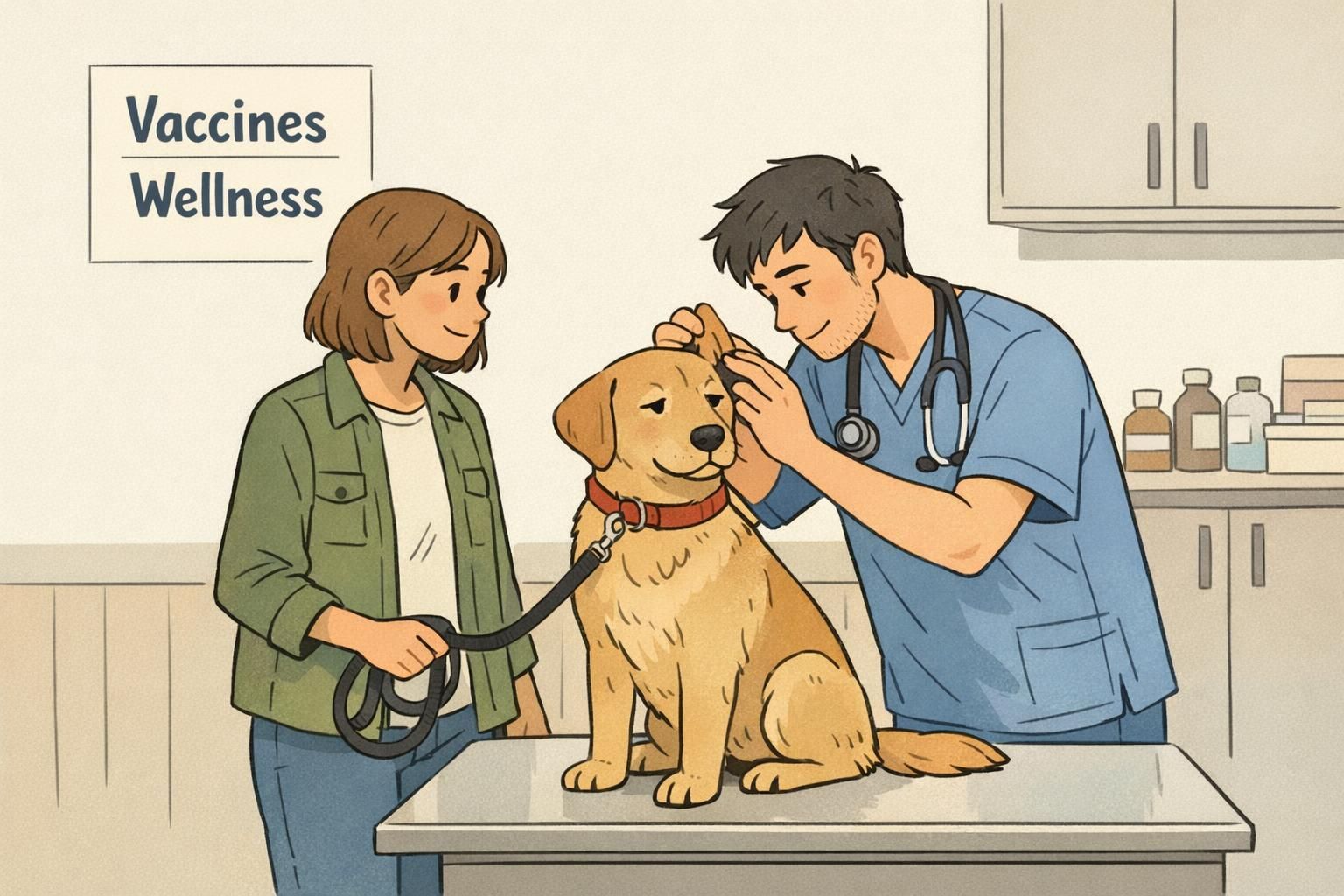
- Health and prevention: Routine vet care, parasite prevention, and vaccinations help protect your animal and those around you.
- Environment fit: Consider size, energy level, and noise sensitivity relative to your home (apartment vs. house, stairs, elevators, nearby parks).
- Long-term stability: Plan for life changes—work schedules, moves, travel, finances, and backup caretakers if you get sick or have an emergency.
An ethical ESA is not only supportive—it is supported. Your duty of care is part of what makes the arrangement fair to neighbors, housing providers, and the animal itself.
Housing Requests Done Right: Reasonable Accommodation with Respect for Everyone
Housing is where ESAs most often come up, and the best outcomes usually come from calm, organized communication. Ethical requests are clear, timely, and cooperative. They aim to solve practical concerns (where the animal will live, how noise will be handled, how cleanliness will be maintained) while respecting that housing providers also have responsibilities to the broader community.
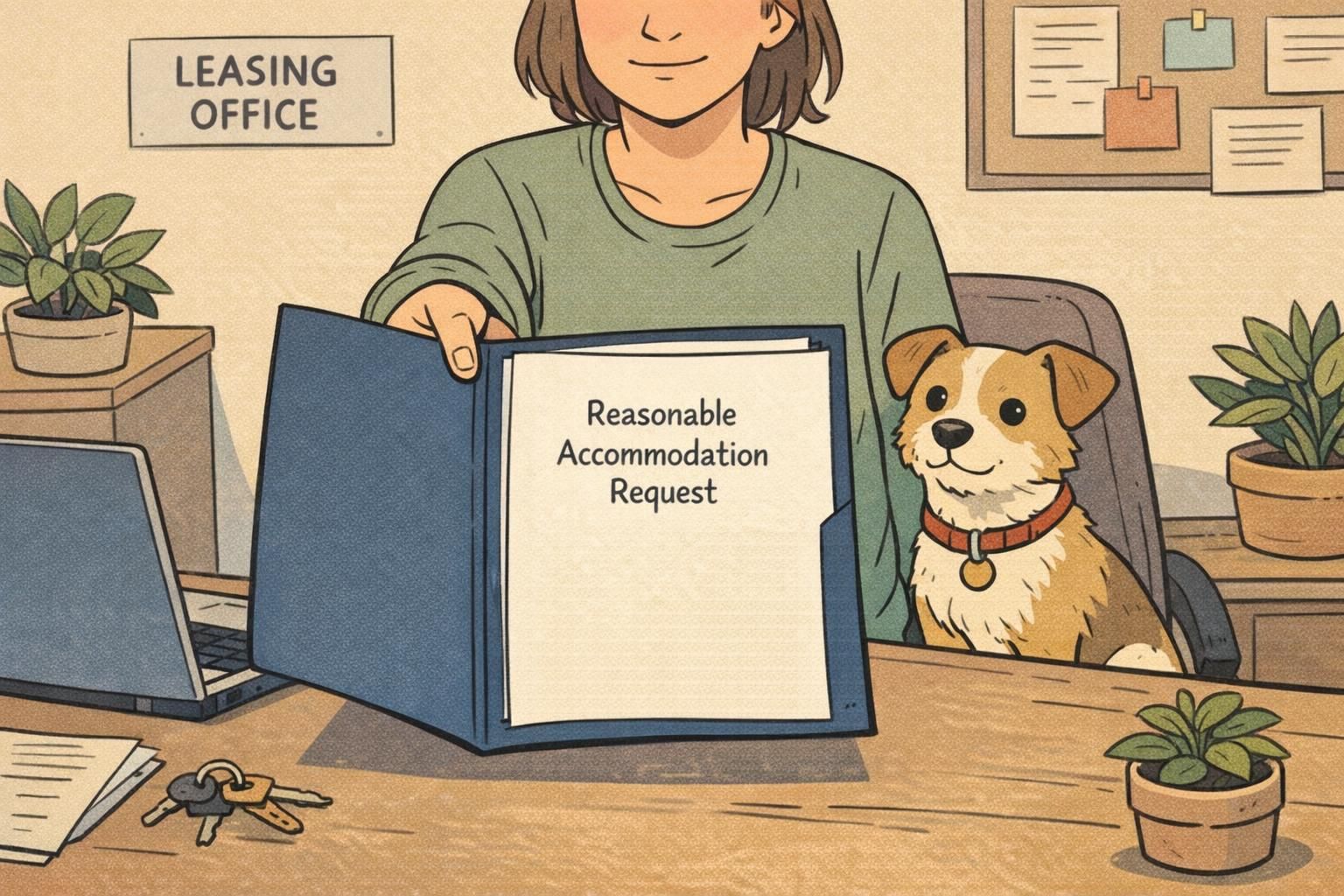
- Step 1: Review your lease and property policies so you understand the normal pet rules and where an accommodation request fits.
- Step 2: Request the accommodation early (ideally before move-in or as soon as the need arises). Last-minute requests can create avoidable tension.
- Step 3: Communicate clearly and respectfully. Keep your message simple: you’re requesting a reasonable accommodation for an ESA related to a disability.
- Step 4: Provide reliable documentation when appropriate and keep copies for your records. Organized paperwork helps reduce back-and-forth misunderstandings.
- Step 5: Be responsive. If the housing provider asks reasonable follow-up questions, answer promptly and professionally.
- Step 6: Prevent issues that commonly trigger conflict—noise complaints, damage, off-leash roaming, waste left behind, or aggressive behavior.
Ethical boundaries matter here, too. Most conflict happens when either side feels ignored or surprised. On the handler side, it’s important to address problems early—especially if the animal is barking for long periods, having accidents in common areas, or showing signs of stress that could lead to reactivity. On the provider side, decisions often focus on practical safety and property impacts.
A cooperative approach protects everyone: you, your animal, your neighbors, and the housing provider. Clear communication and consistent pet care are the fastest path to a stable arrangement.
Stay calm and stick to practical facts. Explain that you’re requesting a reasonable accommodation for an ESA and that you’re committed to preventing nuisance issues. Offering a plan for waste disposal, quiet hours, and basic manners can help lower tension.
Some situations may justify denial based on specific concerns such as a direct threat to others or a substantial risk of significant property damage. Ethical handling means taking those concerns seriously and exploring reasonable solutions when possible.
Public Spaces and Travel: Honest Representation and Low-Conflict Etiquette
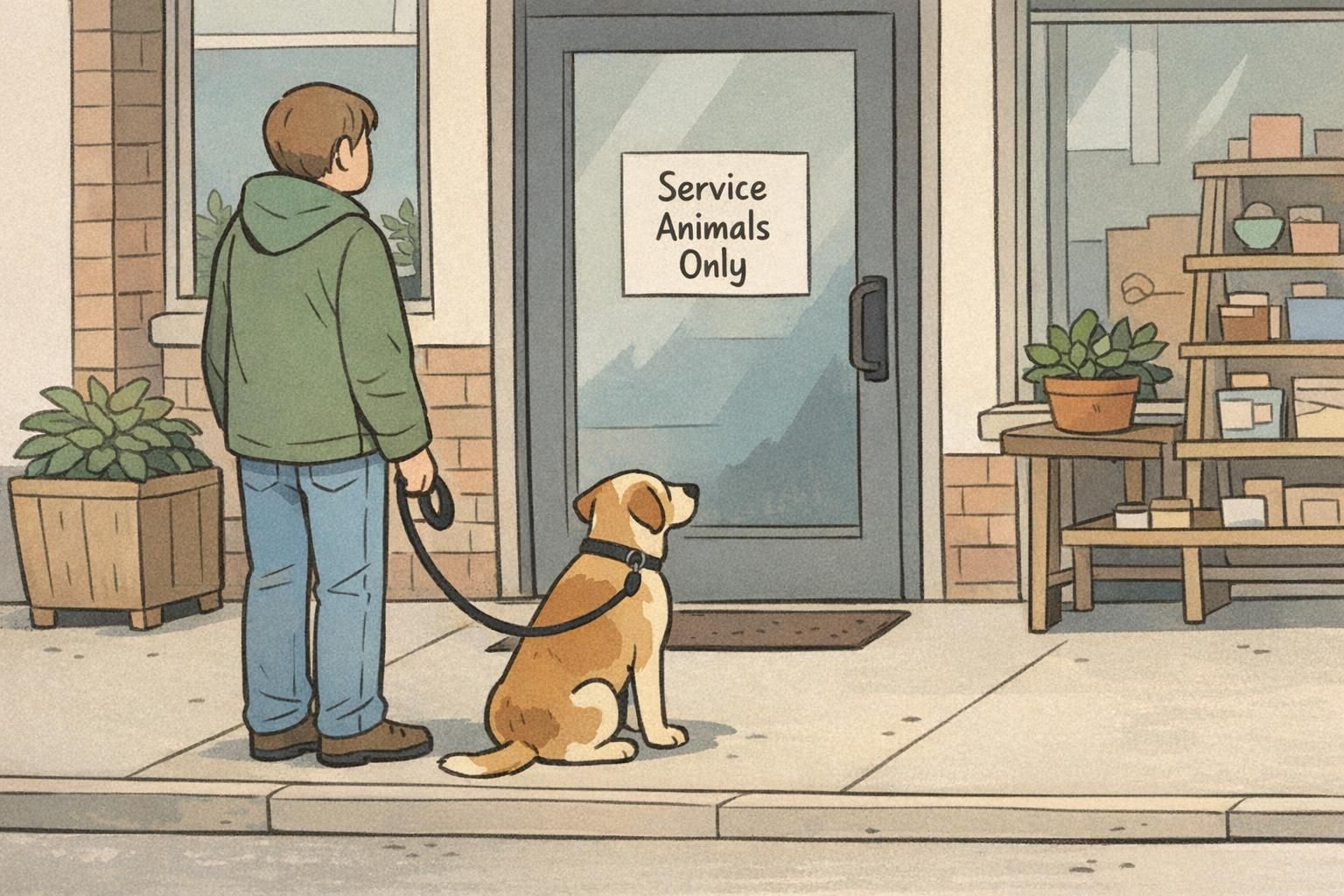
Ethical ESA use in public starts with an important reality: ESAs and service animals are treated differently in many public-access settings. That means a business that does not allow pets may still allow service animals while not allowing ESAs. When handlers try to “push” access that doesn’t apply, it tends to create conflict and skepticism that spills over onto others.
For travel, rules vary widely by company and location, so planning ahead matters. If you travel with a service animal or another type of assistance animal, preparation reduces stress at check-in, in crowded terminals, and during transitions. For planning ideas, see tips for smoother travel with an assistance animal.
- Assume pet rules apply unless you confirm otherwise. If a venue is “service animals only,” don’t argue—make a different plan.
- Keep distance and control: use a leash (where appropriate), avoid blocking walkways, and step aside to let others pass.
- Respect allergies and fear of dogs: not everyone is comfortable up close, even if your dog is friendly.
- Prioritize cleanliness: carry waste bags, wipes, and any supplies needed for accidents or shedding.
- Choose low-stress timing: quieter hours and less-crowded entrances can reduce overstimulation for your animal.
- Plan for your animal’s needs: potty breaks, water, a calm “settle” behavior, and a backup plan if your animal becomes overwhelmed.
Low-conflict etiquette is a form of advocacy. It shows the public what responsible handling looks like and helps keep shared spaces comfortable.
Misrepresentation Harms Everyone: How to Avoid Confusion and Protect Access
Misrepresenting an ESA as a service animal can create serious consequences. It can cause public backlash, increase suspicion toward legitimate service dog teams, and lead to conflict with staff who are trying to follow policies. In some states and situations, misrepresentation can also trigger legal trouble.
Just as importantly, misrepresentation tends to backfire in day-to-day life. If your animal behaves like a pet in a setting that expects a task-trained service animal—sniffing merchandise, vocalizing, or approaching strangers—it draws attention and complaints. Ethical handling avoids putting your animal in situations where it’s likely to fail.
- Use accurate language: “This is my emotional support animal” is clearer and more honest than calling an ESA a service dog.
- Avoid pressured conversations: If a business says “no pets,” accept it and move on rather than escalating the situation.
- Keep your animal well-managed: calm behavior and good hygiene reduce the chance that anyone feels unsafe or inconvenienced.
- Choose the right setting: if your animal is easily stressed, limit exposure to crowded or high-noise environments.
- Use practical tools for clarity: organized documentation and consistent identification can reduce misunderstandings without overstating rights.
“ "When people are upfront about what their animal is and isn’t, it changes the whole interaction. Most staff just want clarity and a calm, well-behaved animal." – Property Manager”
Ethical ESA use protects access in the long run by building trust. Clear labels, calm behavior, and respectful boundaries make it easier for everyone to do the right thing.
Practical Identification Tools That Support Ethical, Clear Communication
In real life, many misunderstandings happen in quick conversations: a leasing office meeting, a phone call with a travel provider, or a neighbor asking questions. Optional identification and documentation tools can make these moments smoother by keeping your information consistent and easy to reference.
These tools are especially helpful when you want to avoid repeating personal details or getting pulled into emotional debates. They can also support good organization—helping you keep key records and animal details in one place for housing conversations and travel planning.
If you’re looking for a streamlined way to present consistent information, consider a customizable ID card and digital profile for clear identification.
- Consistency: You present the same details each time, which reduces confusion.
- Organization: You can keep key animal info and records together for quick reference.
- Lower friction: A calm, professional presentation often makes conversations shorter and less stressful.
- Clear terminology: Using accurate labels helps you advocate for yourself without overstating public-access rights.
The goal of identification tools is clarity, not confrontation. Ethical use means pairing clear paperwork with accurate language and responsible handling.
Quick Ethical ESA Checklist
Ethical ESA use is mostly about everyday decisions: how you communicate, how you care for your animal, and how you respect shared spaces. Use this checklist as a quick “screenshot” guide.
- Honest labeling: I describe my animal accurately as an ESA (unless it is truly a service animal).
- Disability-related purpose: My ESA supports a genuine disability-related need and helps with daily functioning.
- Animal welfare: My animal’s needs are met (food, exercise, enrichment, rest, and routine veterinary care).
- Behavior basics: I actively prevent nuisance issues (excessive barking, jumping, roaming, reactivity).
- Hygiene and cleanliness: I clean up waste promptly and manage shedding/odors in shared spaces.
- Housing communication: I request accommodations calmly, early, and respectfully, and I respond promptly to reasonable follow-ups.
- Respect for others: I consider neighbors, allergies, fear of dogs, and building rules for shared areas.
- Public-space boundaries: I don’t pressure businesses for access that doesn’t apply to ESAs.
- Travel planning: I check policies ahead of time, plan potty breaks, and bring supplies for a smooth experience.
- Long-term stability: I have a backup plan for emergencies and changes in schedule, health, or housing.
Ethical ESA use is about stability, safety, and respect—for you, your animal, and the community around you.