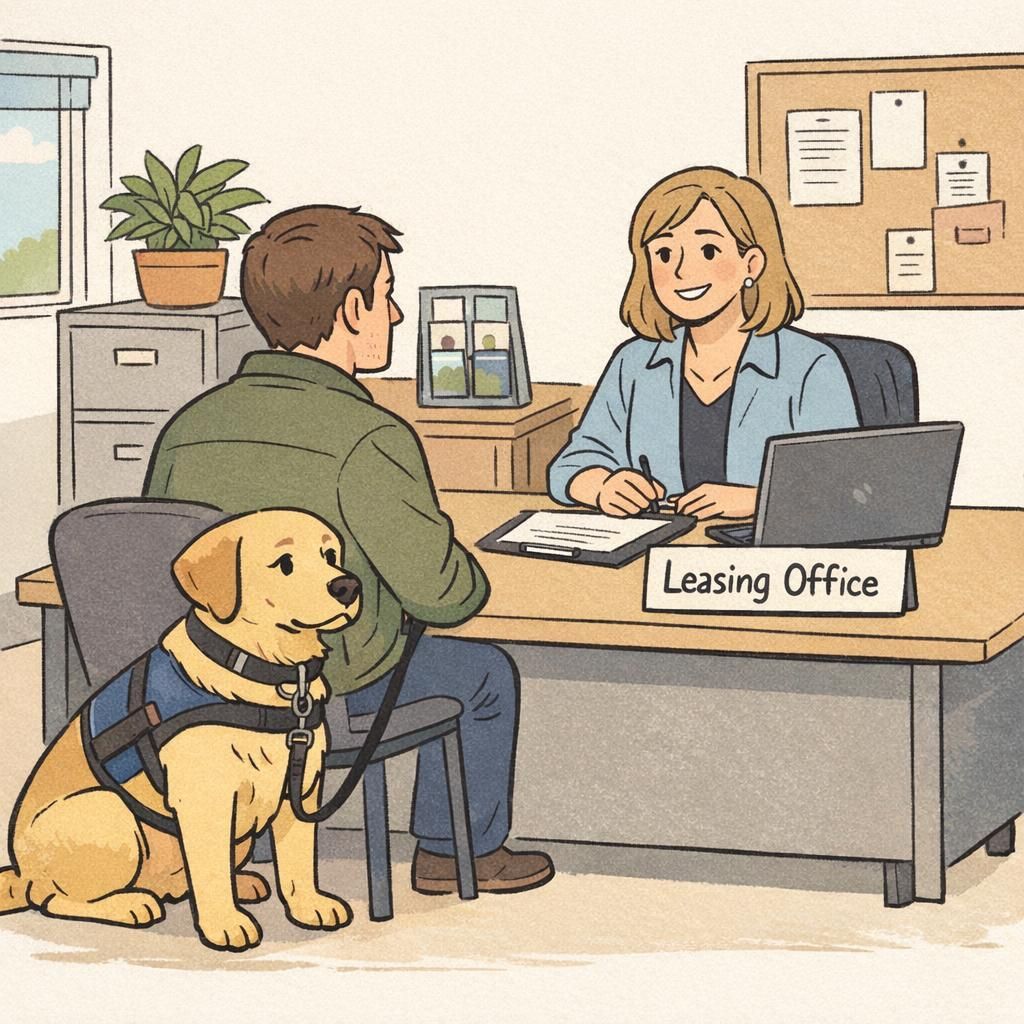
When you request an accommodation for an assistance animal, most landlords aren’t trying to pry—they’re trying to follow fair-housing rules correctly. Housing providers have a responsibility to consider reasonable accommodations for people with disabilities, while also managing safety, property conditions, and consistent processes for all residents.
Fair-housing rules aim to balance two important goals: (1) protecting renters from discrimination and unnecessary personal health disclosures, and (2) giving housing providers a clear, limited way to confirm that an accommodation request is disability-related. That’s why landlord questions must stay narrow, relevant to the request, and respectful in tone.
In housing, the most important umbrella term is “assistance animal.” This is commonly used to describe animals that do work, perform tasks, provide assistance, and/or provide therapeutic emotional support for a person with a disability.
Within that umbrella, you’ll often hear two specific terms:
A key housing point: under the Fair Housing Act (FHA) framework used by many housing providers, assistance animals are not treated as pets. That difference matters because “no-pet” rules and pet-related charges typically don’t apply in the same way when an animal is approved as an accommodation.
The starting question is simple: are your disability and your disability-related need for the animal obvious or already known? If they are, a landlord usually shouldn’t request additional information. If they are not obvious, the landlord may request information that helps them evaluate whether the accommodation is needed.
Federal housing guidance emphasizes that documentation requests should be limited and only used when the disability and/or the need for the animal is not apparent. It also emphasizes that information should be reliable and focused on the accommodation decision—not on collecting personal medical details. For the primary federal guidance on assistance animals in housing, see source.
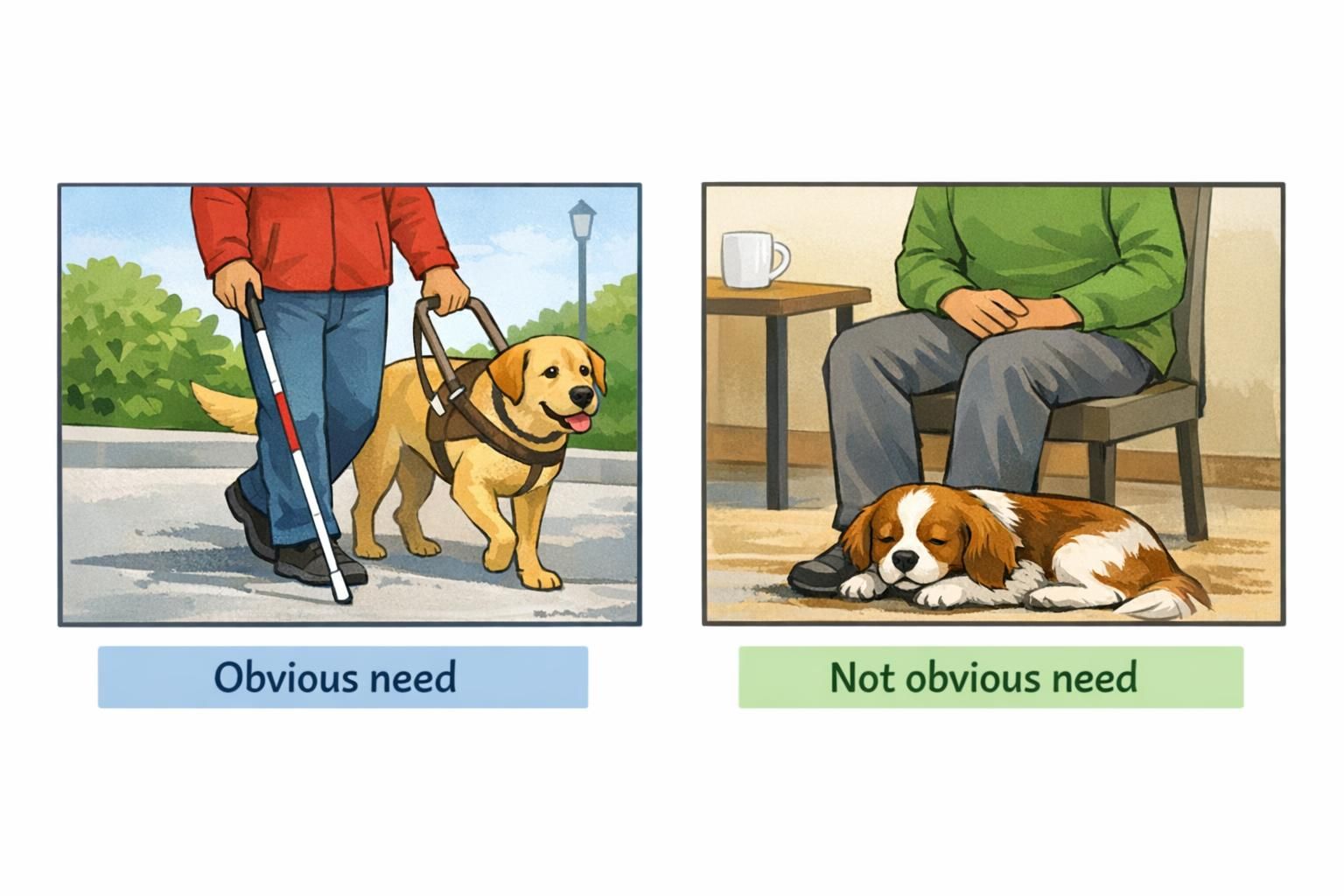
When a landlord is allowed to ask questions (because the disability and/or the need isn’t obvious), the scope is still narrow. In practice, the landlord is usually trying to confirm two things: that a disability exists (without digging into the diagnosis), and that the animal helps with disability-related needs.
What an appropriate request can look like in real life is often straightforward and calm. For example, a property manager might say: “Because your need for the animal isn’t obvious, can you provide information confirming you have a disability and that the animal provides disability-related assistance or support?”
For service dogs in housing, conversations often stay function-focused—especially when the reason for the dog isn’t immediately visible. Many renters find it helpful to describe their dog’s role in practical terms (what the dog helps them do day-to-day), without going into private medical details.
When you want an easy way to keep interactions calm and consistent, some handlers carry wallet-sized handout cards that help keep conversations calm and clear. These can be especially helpful during move-in, maintenance visits, or brief leasing-office conversations where you want to communicate clearly without turning it into a stressful discussion.
“ "I’m requesting a reasonable accommodation for my service dog. I have a disability, and my dog helps by performing disability-related tasks that support my daily functioning. I can share the basic role my dog plays, but I prefer not to discuss private medical details."”
Because an ESA’s role is often less visible, landlords commonly request documentation when the disability and/or need isn’t apparent. In that situation, landlords may ask for reliable information indicating (1) you have a disability and (2) the animal provides disability-related emotional support or assistance connected to that disability.
What that information includes can be simple. Many renters provide a brief written statement that confirms the disability-related need for the animal. Importantly, the request is not about demanding a diagnosis or detailed records—it’s about confirming the accommodation is disability-related.

Even when a landlord is allowed to request information, there are clear privacy boundaries. The purpose of the exchange is to evaluate an accommodation request with minimal necessary information—not to investigate your health or challenge you into oversharing.
Because assistance animals are considered an accommodation rather than a pet, pet-related charges typically don’t apply in the same way. That often means pet rent, pet deposits, and one-time pet fees are not charged specifically because you have an approved assistance animal.
Similarly, common pet restrictions—like breed, weight, or size limits—generally don’t apply automatically to an assistance animal accommodation. Housing providers usually need to consider the individual animal and the specific request, rather than relying on blanket pet rules.
Typically, pet rent and pet fees are not applied to an approved assistance animal accommodation. However, you can still be responsible for actual damage beyond ordinary wear and tear.
Assistance animals are generally considered individually as an accommodation rather than automatically subject to blanket pet restrictions, though behavior and safety concerns can still be addressed on an individual basis.
Approval as an assistance animal doesn’t mean “no rules.” Landlords can typically enforce reasonable, neutral rules that protect the property and other residents—so long as those rules are applied fairly and don’t single you out unnecessarily.
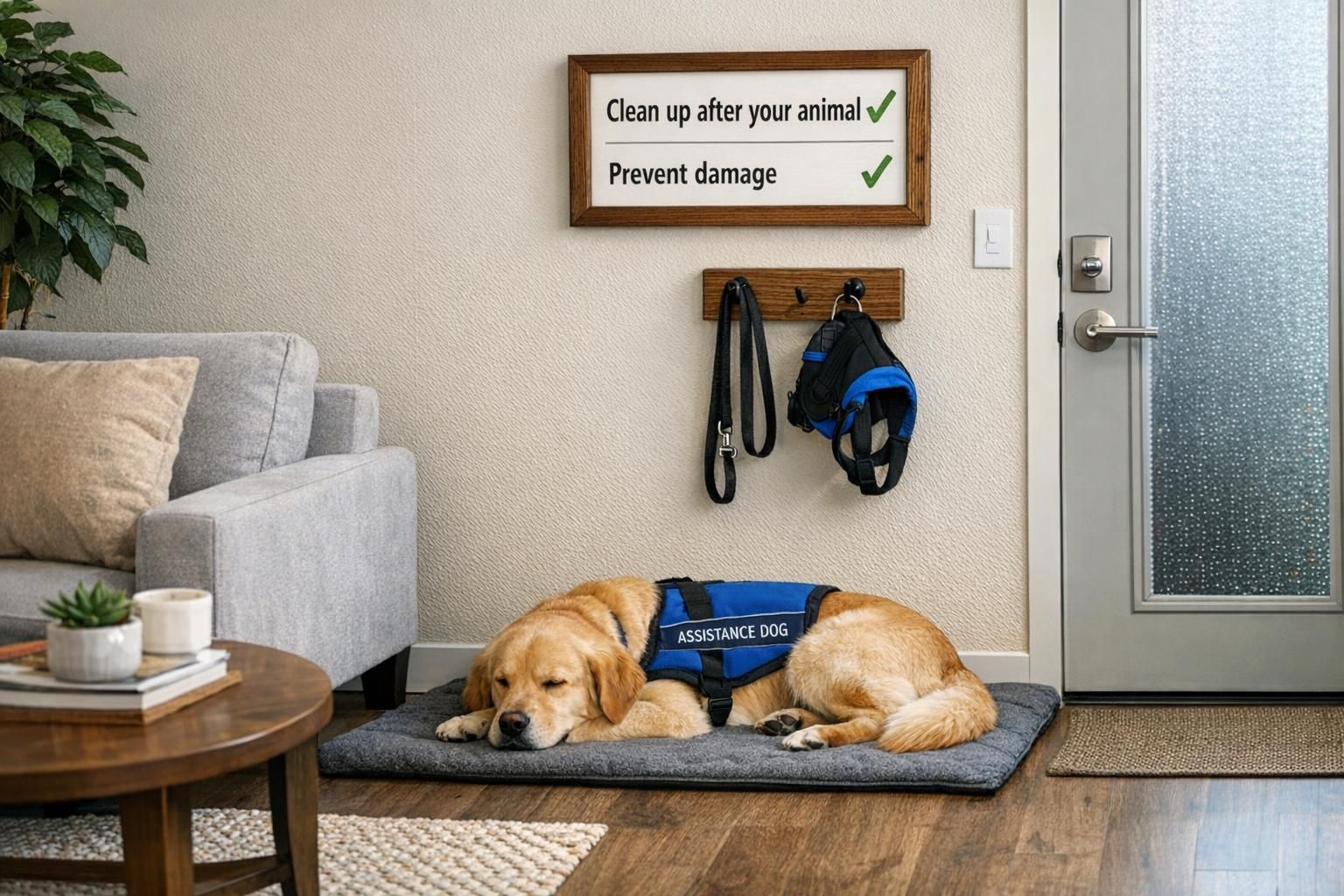
Most accommodation requests can be resolved with clear communication, but there are limited situations where a landlord may deny an assistance-animal request or withdraw an accommodation after approval. These are generally narrow and fact-specific, not based on assumptions.
A clear written request can prevent misunderstandings and reduce delays. You don’t need to write a long letter. In many cases, a brief email or letter that states what you are requesting and why it’s disability-related is enough to start the process.
“ "Hello, I’m requesting a reasonable accommodation to live with my assistance animal. I have a disability, and the animal provides disability-related support that helps me use and enjoy my housing. Please let me know what your next steps are and if you need any additional, relevant information to review my request."”

Even when you’ve followed the correct process, day-to-day housing interactions can involve multiple staff members—leasing agents, maintenance teams, or new managers—who weren’t part of the original conversation. Having consistent, professional-looking assistance-animal identification can help keep routine interactions smoother and more efficient.
Many handlers choose optional registration tools for clarity, organization, and confidence—especially during move-in, file updates, or when providing documents to a leasing office. If you prefer a housing-focused option, a housing-focused registration package for clear, everyday identification can help you keep your paperwork consistent and ready when you need it.
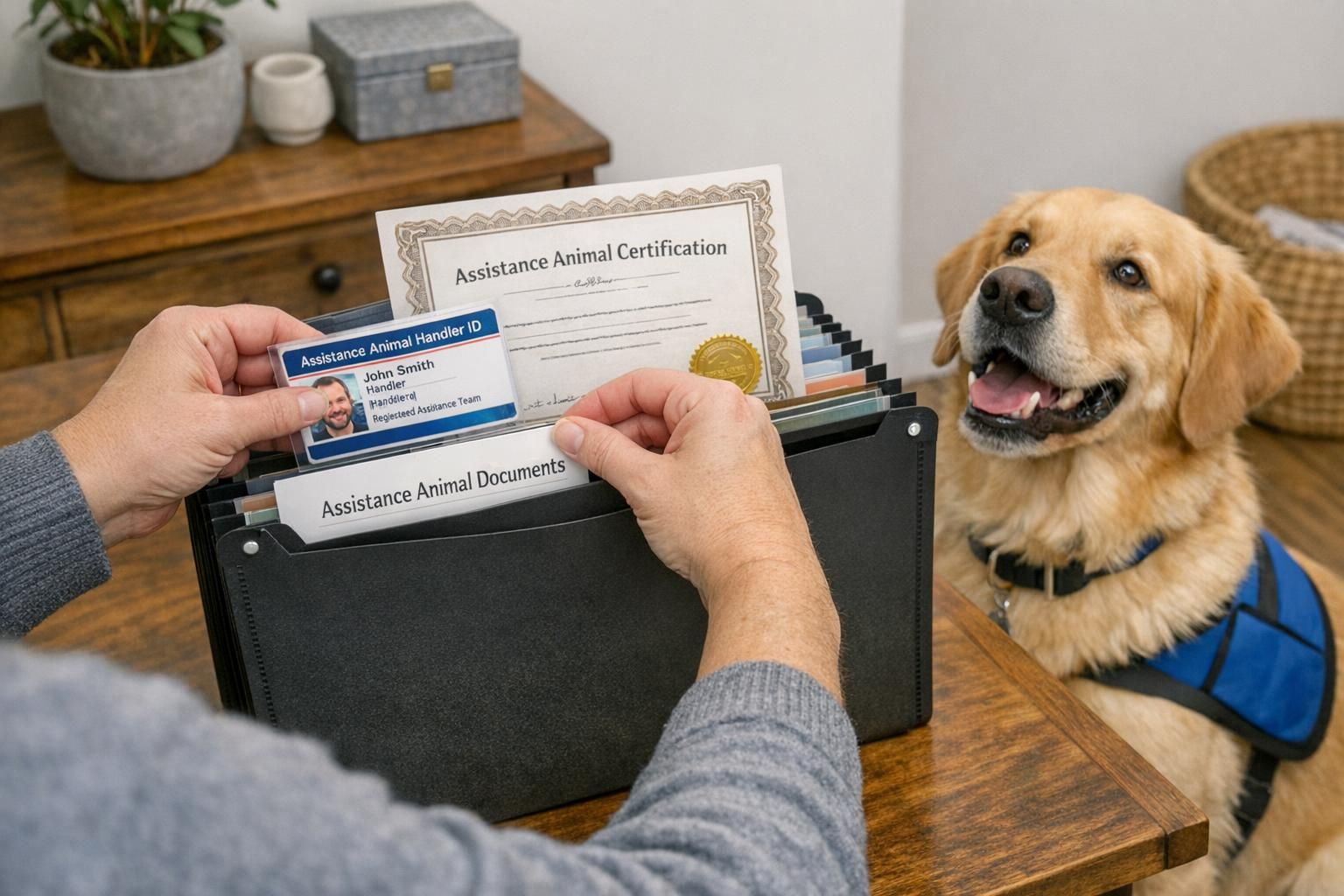
If something feels off—like repeated demands for private medical details, unexplained delays, or pet fees being applied after approval—start with a calm, organized response. Many issues resolve when everything is put in writing and the request is restated clearly.
Generally, landlords should not require your diagnosis. The process usually focuses on confirming a disability exists and that the animal helps with disability-related needs, without medical details.
Typically, pet rent and pet deposits/fees are not charged for an approved assistance animal accommodation. You can still be responsible for actual damage caused by the animal.
In housing, a vest is not usually a requirement for an accommodation. However, some handlers choose vests or ID tools because they can make everyday interactions smoother.
Blanket pet restrictions generally don’t automatically decide an assistance-animal request. Housing providers typically need to consider the individual animal and the specific circumstances, especially focusing on behavior and safety.
You can generally be held responsible for actual damage beyond normal wear and tear, just as you would be for any damage you or your guests cause.
Your trusted source for service animal registration. Get professional ID cards, digital profiles, and smart NFC tags to keep your service animal safe and recognized.
© National Animal Registry — All rights reserved.