When people say a dog is “hypoallergenic,” they usually mean the dog tends to shed less and may spread less dander than some other coat types. That can make day-to-day life more comfortable for allergy-sensitive handlers and family members—but it does not mean “allergy-free.” Dander (tiny flakes of skin), saliva, and outdoor allergens can still collect on fur and gear, and those particles can travel wherever your dog goes.
That’s where accessories matter. For a working service dog, gear isn’t just about looks—it supports public access manners, handler safety, and the dog’s comfort during long days. Choosing low-maintenance, wipeable accessories can help reduce how much hair and dander clings to equipment, limit odor buildup, and make it easier to keep your team feeling fresh before appointments, errands, and transit.
If allergies are part of your daily reality, the material your service dog wears and touches matters almost as much as the design. Hair and dander tend to get trapped in fuzzy textures, stitched grooves, and porous foam. Smooth, sealed, and wipeable surfaces are often easier to keep tidy—especially when you need a quick cleanup before walking into a clinic, store, or office.
Look for waterproof-coated fabrics, silicone components, and sealed nylon or TPU-style materials. These options typically resist odor and moisture, shed hair more easily, and can be disinfected without a long drying time. Waterproof, wipeable service dog gear options are widely available, which can be especially practical for handlers managing allergens day to day (source).
A simple cleaning routine keeps gear ready for public access without turning your week into a laundry marathon. Quick wipe-downs after each outing prevent buildup, and a deeper clean on a schedule helps control odor and allergens.
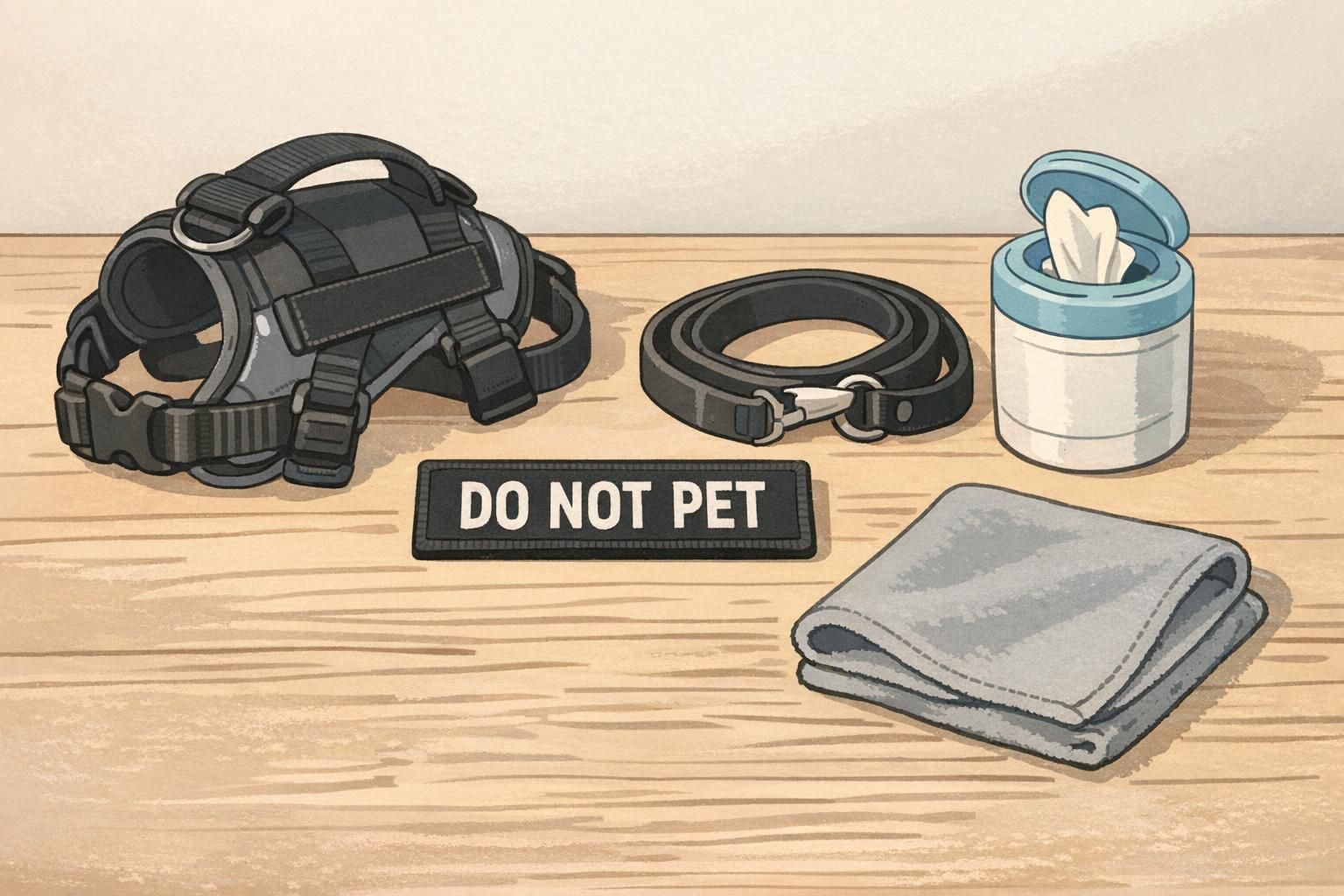
A service dog’s vest or harness does a lot at once: it helps communicate “working,” supports safe handling, and should allow free, confident movement. For allergy-aware teams, the best designs also stay neat with minimal effort. Think streamlined, breathable, and easy to wipe—so your dog can work comfortably and you can keep gear looking professional.
Focus first on fit. A vest or harness that shifts around can collect more hair and dirt, rub the coat, and lead to scratching. An adjustable, stable fit also helps your dog move smoothly through crowds and tight spaces without snagging.
When it comes to patches, clear communication beats clutter. Too many patches or oversized accessories can add bulk and create more surfaces that collect hair. Aim for one or two highly readable markers placed where the public naturally looks—typically the sides of the vest/harness and, if helpful, a small patch on the top panel.
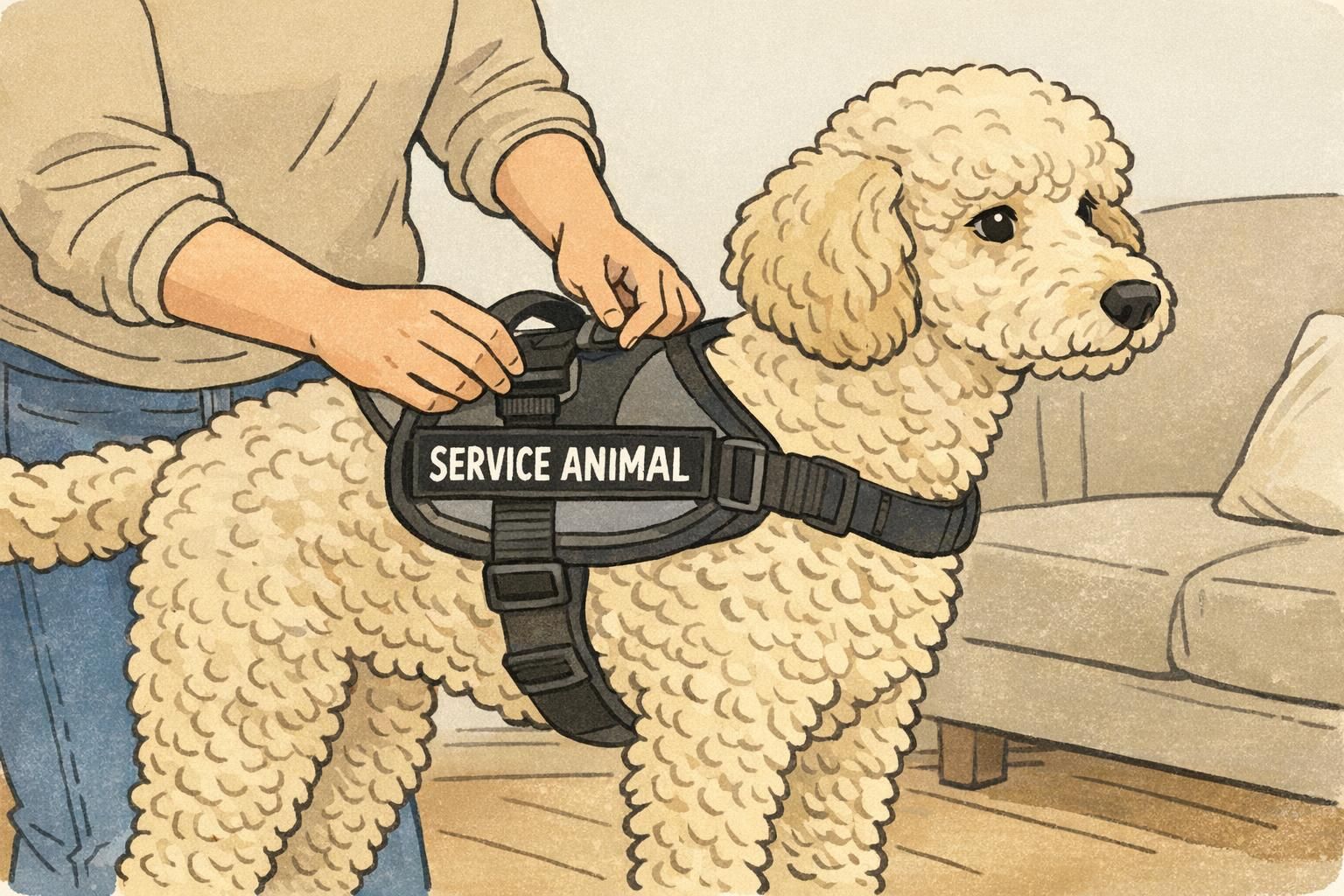
Distractions are more than an inconvenience for a service dog team—they can interfere with tasking and create stressful moments in public. Clear identification patches are a simple accessory that can reduce unnecessary interaction, which also helps minimize allergen transfer from strangers’ hands to your dog’s coat and gear.
The goal is consistent, polite messaging that’s easy to understand from a respectful distance. When people can quickly read that your dog is working, they’re more likely to give your team space—meaning fewer hands on the dog, fewer questions, and less lingering in close quarters.
“ "The clearest patch is the one people can read at a glance—before they reach out. Less interaction keeps my dog focused and helps me manage allergies by reducing random contact." – Service dog handler”
A leash is one of the most-handled items in your kit, so it’s worth prioritizing something that stays tidy and sanitizes easily. Waterproof, smooth leads can be wiped down in seconds—helpful after grocery carts, bus seats, elevator buttons, rainy sidewalks, or medical waiting rooms.
Many teams also benefit from a short traffic handle. In crowded areas, a traffic handle gives close control without wrapping excess leash around your hand (which can pick up hair and grime). For handlers who prefer flexibility, adjustable leads can switch between short and long lengths depending on the environment.
Even with a low-shedding or coated breed, grooming is a big part of keeping allergens manageable. Loose hair, dander, and outdoor particles can still cling to the coat—especially around the legs, chest, and face. A small, consistent grooming routine can reduce what ends up on your hands, clothes, car seats, and service dog gear.
Because coats vary (curly, wavy, corded, single coat, double coat), it helps to build a kit you can tailor. The best tools are the ones your dog tolerates well and that you can use regularly without turning it into a long session.
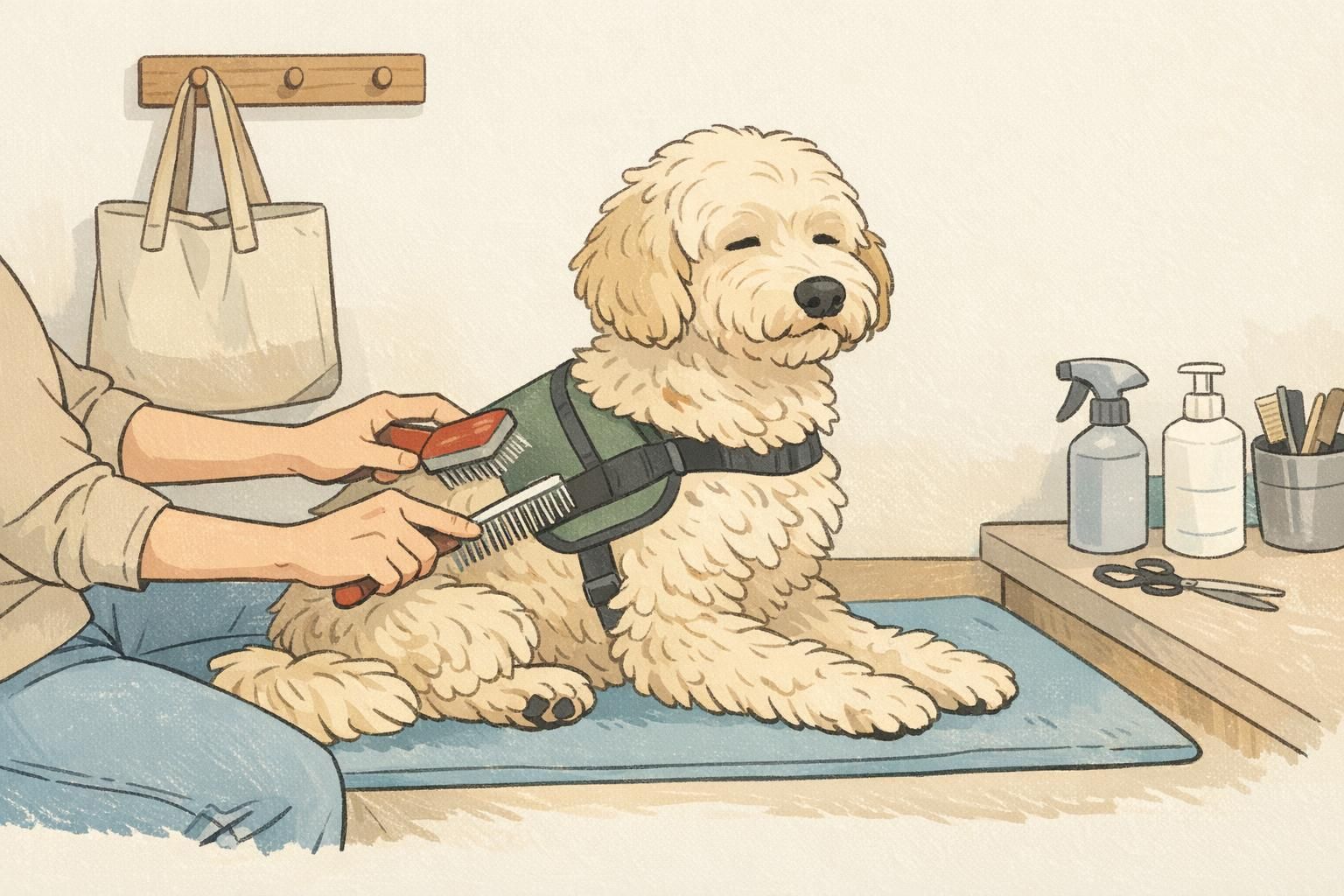
It depends on coat type and lifestyle, but many coated, low-shedding breeds do best with frequent light brushing and a consistent bath/trim schedule. The most helpful approach is regular maintenance that prevents mats and reduces buildup—rather than occasional, intensive sessions.
No. Grooming can reduce loose hair, dander, and outdoor particles, but it can’t remove all allergens. The goal is steady, practical reduction that keeps your dog comfortable and your routine manageable.
Clean indoor access is a big part of courteous public outings—especially in medical offices, cafes, and shared buildings. Paw and hygiene accessories help your team enter spaces with less tracked-in dirt, moisture, and environmental allergens.
Paw wipes are one of the simplest, most useful items to keep in your bag. A quick wipe of each paw (and a pass over lower legs) can remove a surprising amount of pollen and grime. In wet or icy conditions, paw balms can protect pads, and cleanable paw-wear can add traction while keeping paws drier.
Travel adds new surfaces, new allergens, and less control over your environment. A few smart accessories can help your service dog settle faster and help you keep allergens contained—whether you’re taking a quick ride share trip or packing for an overnight stay.
One of the most helpful ideas is creating a consistent “place” for your dog: a wipeable mat or washable cover that signals where to lie down. It can reduce stress for your dog and reduce how much dander and hair ends up on public floors, car upholstery, and hotel bedding.
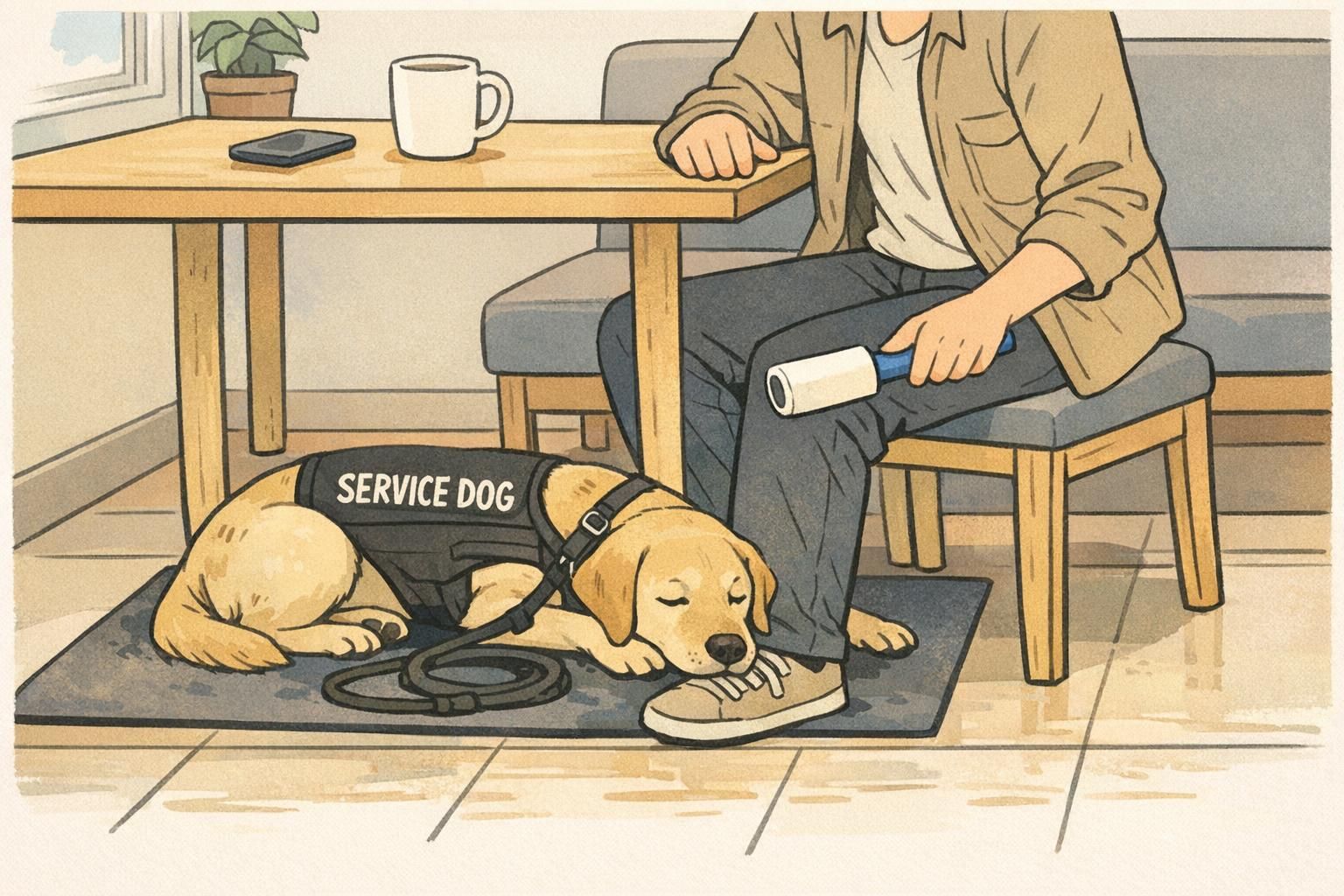
Even when your dog is impeccably trained and your gear is clear, everyday life can include questions—at stores, appointments, rides, and travel counters. If you’re trying to minimize lengthy conversations (and minimize close contact with crowds), having quick, calm communication tools can be a real relief.
Many handlers like carrying a small, easy-to-reference card or handout that summarizes the basics in a polite, professional way. It can help you advocate for your team without having to repeat yourself, and it keeps the interaction short and respectful—especially helpful when you’re focused on your health, your schedule, and your dog’s working focus.
A simple option is ADA law handout cards for quick, clear conversations. Handouts like these can reduce friction, support smoother access experiences, and help you stay composed in the moment.
“ "When I’m having a high-symptom day, I don’t want to stand close to strangers explaining everything. A small handout helps me keep it brief and move on." – Service dog handler”
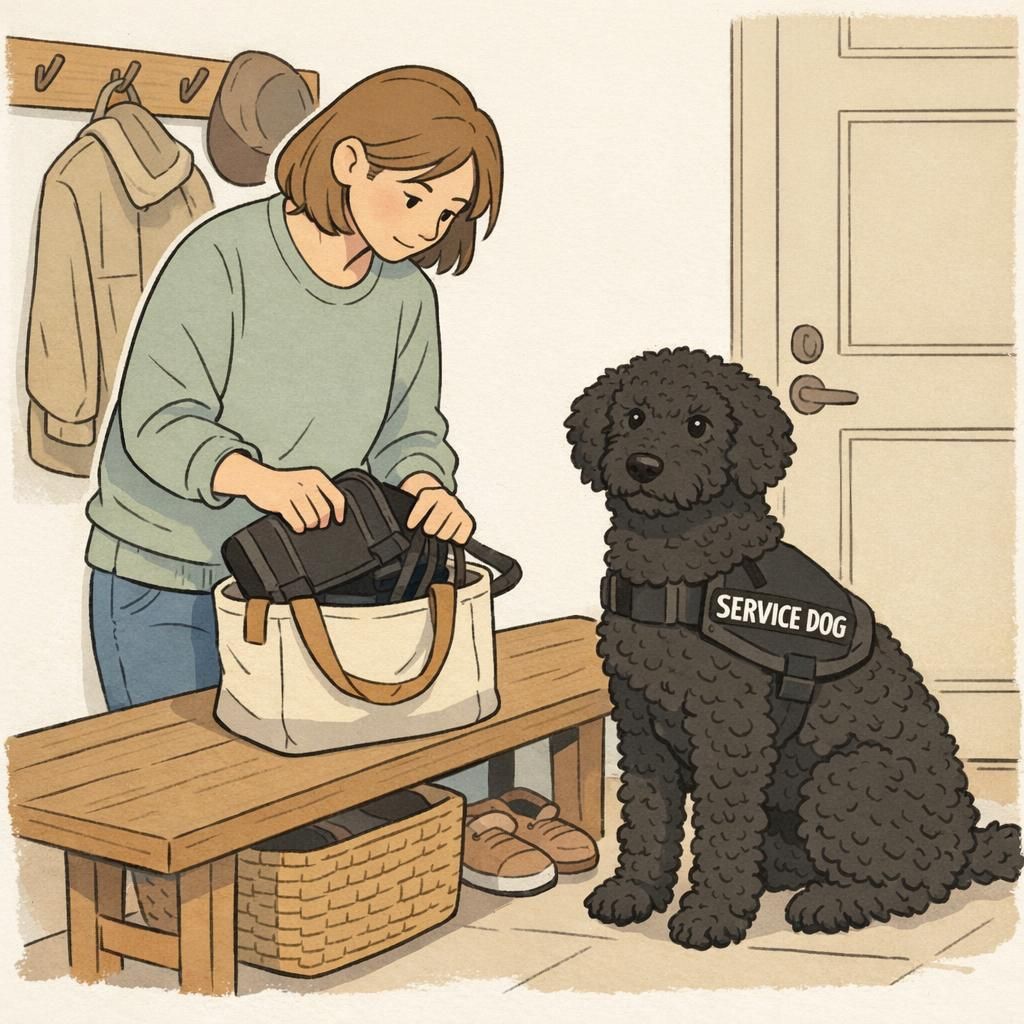
Service dog teams often build a “grab-and-go” kit that supports smoother outings: clean gear, wipes, a spare leash, and easy-to-access information. Many handlers also like keeping a service dog registration and ID available as an optional, practical accessory—especially when they want their information organized, consistent, and presentable.
Rules and expectations can vary by location and situation, but having an ID and digital profile can help you confidently share key details when you choose to, without adding stress to your day. For many teams, it’s simply about clarity and peace of mind: everything in one place, ready when needed.
If you’re building a streamlined, professional kit, consider a starter registration package with printed ID and a digital profile as part of your everyday carry setup.
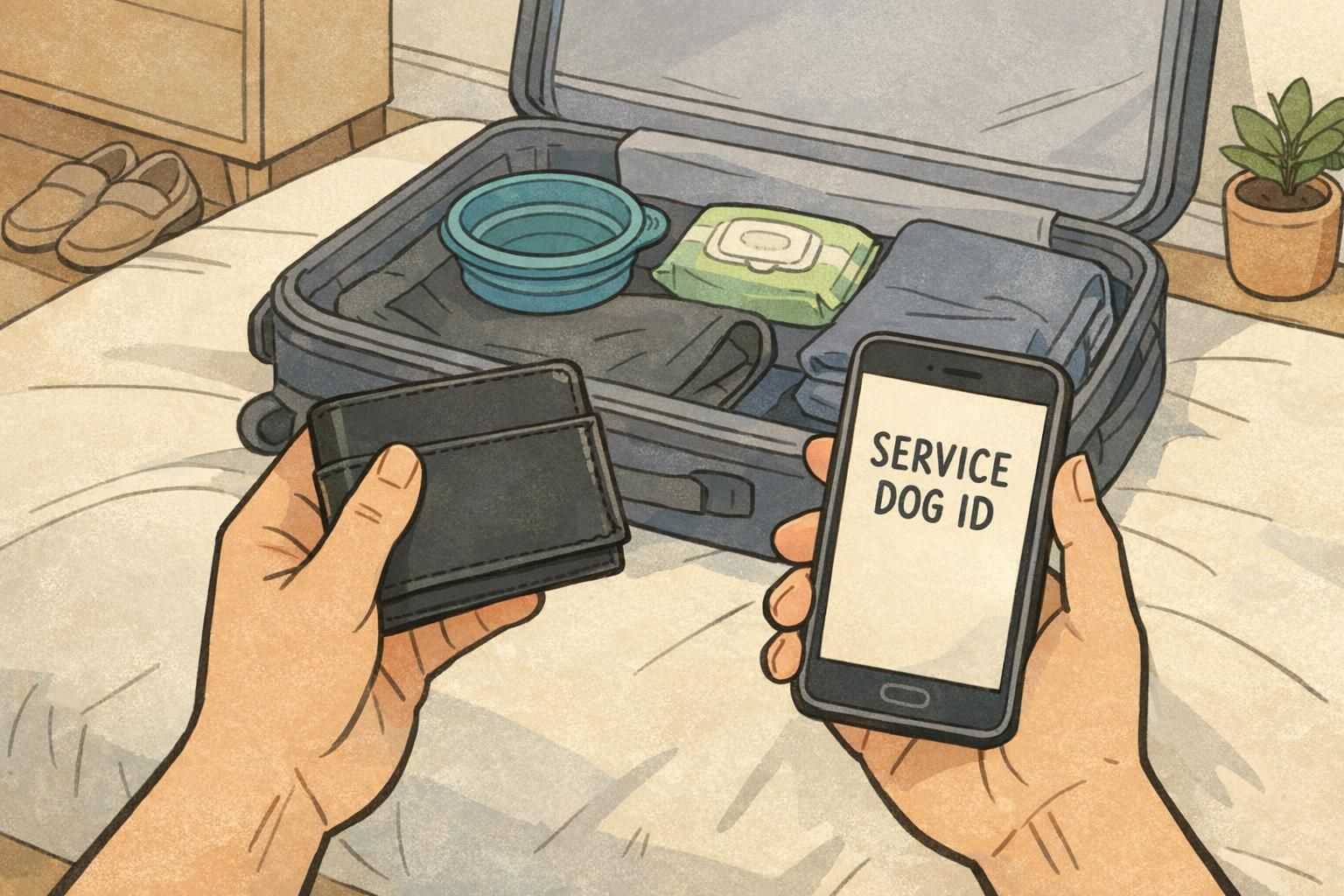
When you’re managing allergies, the best kit is the one you can maintain easily. Prioritize wipeable materials, simple organization, and backups for the items you touch most often. A small amount of preparation can prevent last-minute scrambling—and helps your service dog look and feel ready to work.
Your trusted source for service animal registration. Get professional ID cards, digital profiles, and smart NFC tags to keep your service animal safe and recognized.
© National Animal Registry — All rights reserved.