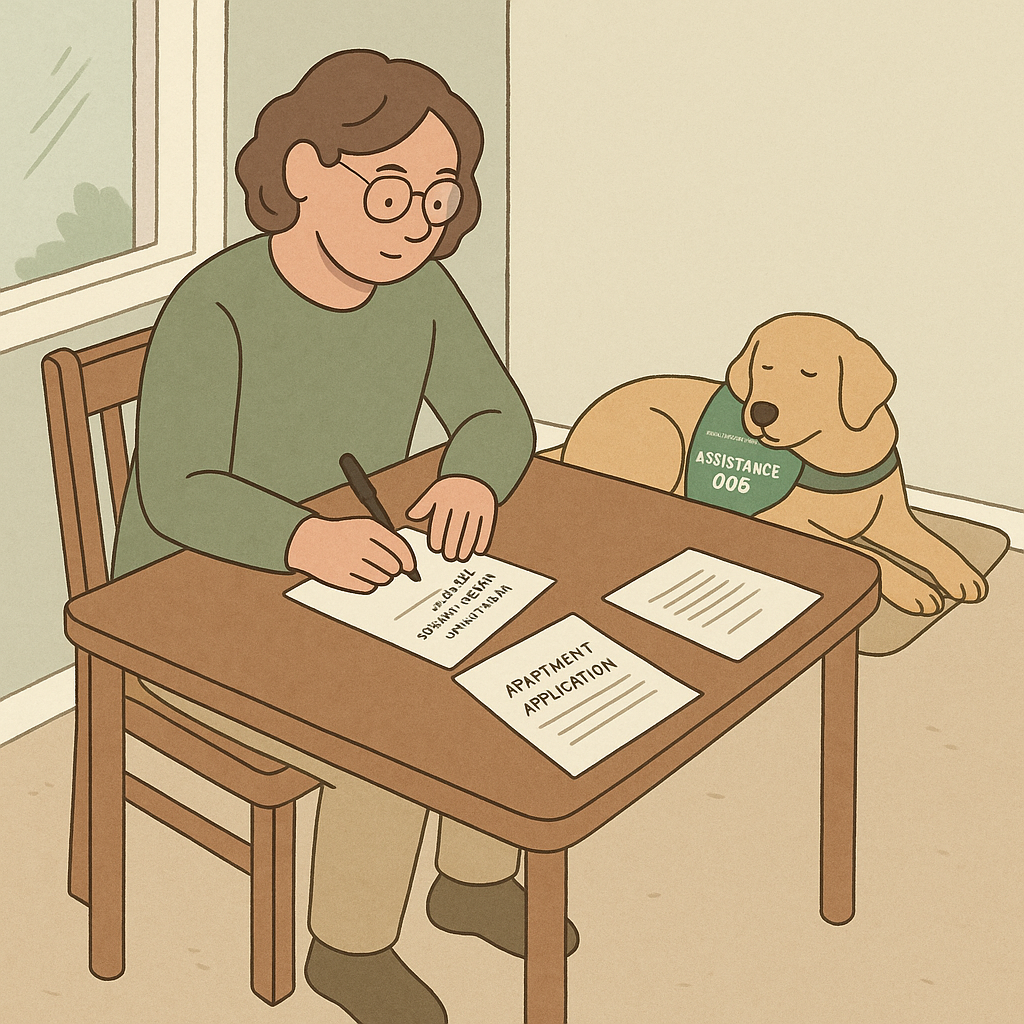
Housing disputes over service animals and emotional support animals (ESAs) rarely start because someone “just doesn’t like animals.” They usually start because two real needs collide: a housing provider’s rules designed to keep a property safe and manageable, and a resident’s disability-related need for an assistance animal.
If you’ve ever heard someone say, “But the building has a no-pet policy,” you’ve already met the heart of the problem. In fair housing law, assistance animals aren’t treated like typical pets—and that difference is exactly where misunderstandings, denials, and legal disputes begin.
This article breaks down why these conflicts happen, what the Fair Housing Act (FHA) generally requires, how denials are evaluated, and what real disputes can teach tenants and housing providers about preventing issues before they escalate.
In housing, the phrase “assistance animal” generally includes two main categories:
• Service animals (often dogs) that perform tasks or work related to a person’s disability.
• Emotional support animals (ESAs) that provide disability-related therapeutic benefit through companionship and support.
Many housing conflicts happen because people use the word “pet” as a catch-all. But in fair housing situations, an assistance animal request is typically an accommodation request tied to disability—not a request for permission to keep a pet.
Disputes often flare up when a resident requests an assistance animal and the property has:
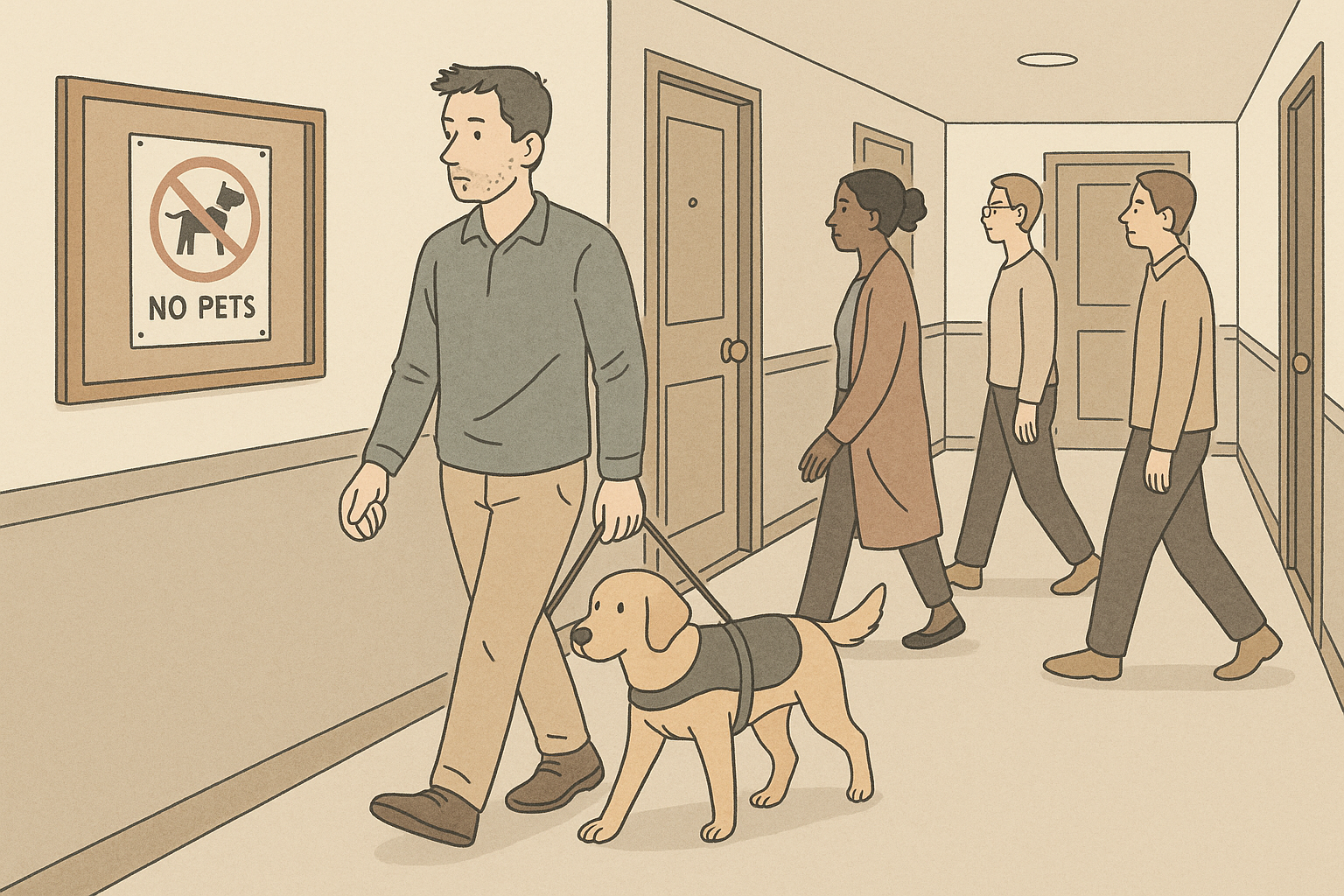
• A strict no-pet policy
• Pet rent or pet deposits
• Breed or size restrictions
• Rules limiting animals in elevators, common spaces, or certain units
From a housing provider’s point of view, these policies are meant to be consistent and fair. From a resident’s point of view, being told “no” can feel like being denied access to stable housing. That’s why assistance animal disputes can become emotional quickly—and why documenting the request and response matters so much.
Under the Fair Housing Act, many housing providers must make “reasonable accommodations” for people with disabilities. In everyday terms, a reasonable accommodation is a request to change or relax a rule, policy, practice, or service so a person with a disability can use and enjoy their home.
When the request involves an assistance animal, the usual idea is: “This animal helps with a disability-related need, so I’m asking to keep the animal even if the building’s pet rules would normally forbid it.” The FHA framework is why assistance animals (including ESAs) are typically addressed through accommodation rules and not treated as pets for housing policy purposes (source).
Who must comply? Generally, most housing providers and housing-related entities must follow FHA rules, though there are some limited exemptions depending on the type of housing and ownership.
What does a tenant generally need to show? Two things are commonly at the center of these requests:
1) The resident has a disability (as defined under fair housing law).
2) The resident has a disability-related need for the animal.
Why are assistance animals treated differently from typical pets? Because the purpose is different. A pet is typically optional. An assistance animal is requested as a support that helps a person live safely, function more independently, or reduce disability-related limitations in a home setting.
Not necessarily. A no-pets policy may need to be reasonably accommodated when a resident has a disability-related need for an assistance animal.
Housing disputes often focus on disability-related need and reasonable accommodation, not on whether an animal has formal training certificates. What matters is whether the request is legitimate and whether allowing the animal is reasonable in that specific housing context.
“ "Most disputes calm down once both sides stop debating the word ‘pet’ and start focusing on the actual accommodation request and what information is needed to evaluate it." – Fair housing advocate”
In real life, assistance animal requests are often denied for familiar reasons. Some of these reasons are understandable concerns—but not all are legally sufficient on their own.
Common landlord reasons for denial include:
• “We have a no-pet policy.”
• “Our insurance doesn’t allow that breed.”
• “Other tenants have allergies.”
• “We’re worried about damage.”
• “The dog is too big for this building.”
• “That breed is on a restricted list.”
What do HUD guidance and courts tend to emphasize? Individualized assessment. That means decisions should be based on the specific situation—not stereotypes, fear, or blanket rules.
For example, a housing provider generally can’t deny an accommodation simply because a dog is a certain breed or size, or because there’s a generalized fear of what might happen. The evaluation should focus on whether this specific animal poses a legitimate issue that can’t be mitigated.
That said, denial can be allowed in limited scenarios—typically when allowing the animal would create a direct threat to others’ health or safety that can’t be reduced with reasonable steps, or when it would cause an undue financial and administrative burden or fundamentally alter housing operations.
The practical takeaway: the strongest decisions—whether approval or denial—are usually the ones backed by facts, documentation, and a clear, consistent process.
One of the most instructive types of assistance animal dispute is the “breed ban” conflict—when a resident’s ESA or service dog is a breed that a building (or even a local law) restricts.
In Warren v. Delvista Towers, a tenant’s emotional support animal—a pit bull—set off a dispute involving a condo’s no-pets rule and a county breed ban. The accommodation request didn’t disappear just because the animal fell into a controversial category. Instead, the analysis turned on whether the requested accommodation could be reasonable in that setting and whether the specific dog posed a direct threat.
The important lesson from this kind of case is that “direct threat” is not supposed to be a label slapped on a breed. It’s a factual question: what is this animal’s actual behavior, history, and impact? Courts often allow deeper fact-finding when the record isn’t clear—because the decision can’t rest on assumption alone.
For residents, this highlights why calm, credible records matter (letters, communication logs, behavior history). For housing providers, it underscores why a documented, individualized process is safer than a reflexive denial.
Not every dispute is a close call. Some cases show what happens when residents come forward with credible information, a clear disability-related need, and a reasonable request.
In Elebari, residents with disabilities prevailed when the record supported the need for a companion dog and the accommodation was found reasonable. The broader message is straightforward: when a request is grounded in real need and the supporting information is consistent, that evidence can be decisive.
This doesn’t mean tenants must share private medical details or “prove” their disability in an intrusive way. But it does show that vague statements like “this is my support animal” may not carry the same weight as a clear explanation of disability-related need supported by reliable documentation when the disability or need isn’t obvious.
From a prevention standpoint, cases like this reward clarity. When both sides focus on the accommodation framework—rather than personal opinions about animals—there’s often a path to a workable yes.
“ "Once we provided a straightforward letter explaining why the animal mattered for daily functioning, the conversation changed. It became less about rules and more about solutions." – Tenant advocate”
Many people assume housing disputes stay private—an argument in an email thread, a tense phone call, maybe a notice on the door. But when an ESA is denied after a tenant offers medical documentation, the disagreement can escalate quickly.
HUD enforcement actions and charges (including examples from 2023 involving ESA denials) illustrate a reality that surprises both renters and landlords: a refusal can trigger an investigation, formal allegations, and pressure to change policies or settle.
Even when a housing provider believes they have a reason, the way the decision is made—and the way the provider communicates—can become part of the case. Did they ask for appropriate documentation? Did they ignore it? Did they apply a blanket rule without considering alternatives?
For residents, this is a reminder that keeping a paper trail matters. For housing providers, it’s a reminder that careful process isn’t just “red tape”—it can be the difference between a routine accommodation decision and an expensive, time-consuming dispute.
Some of the most common assistance animal conflicts aren’t about whether the animal is allowed—they’re about what happens after approval.
A housing provider can grant an accommodation and still enforce neutral health and safety rules that apply to everyone. Problems tend to arise when an animal:
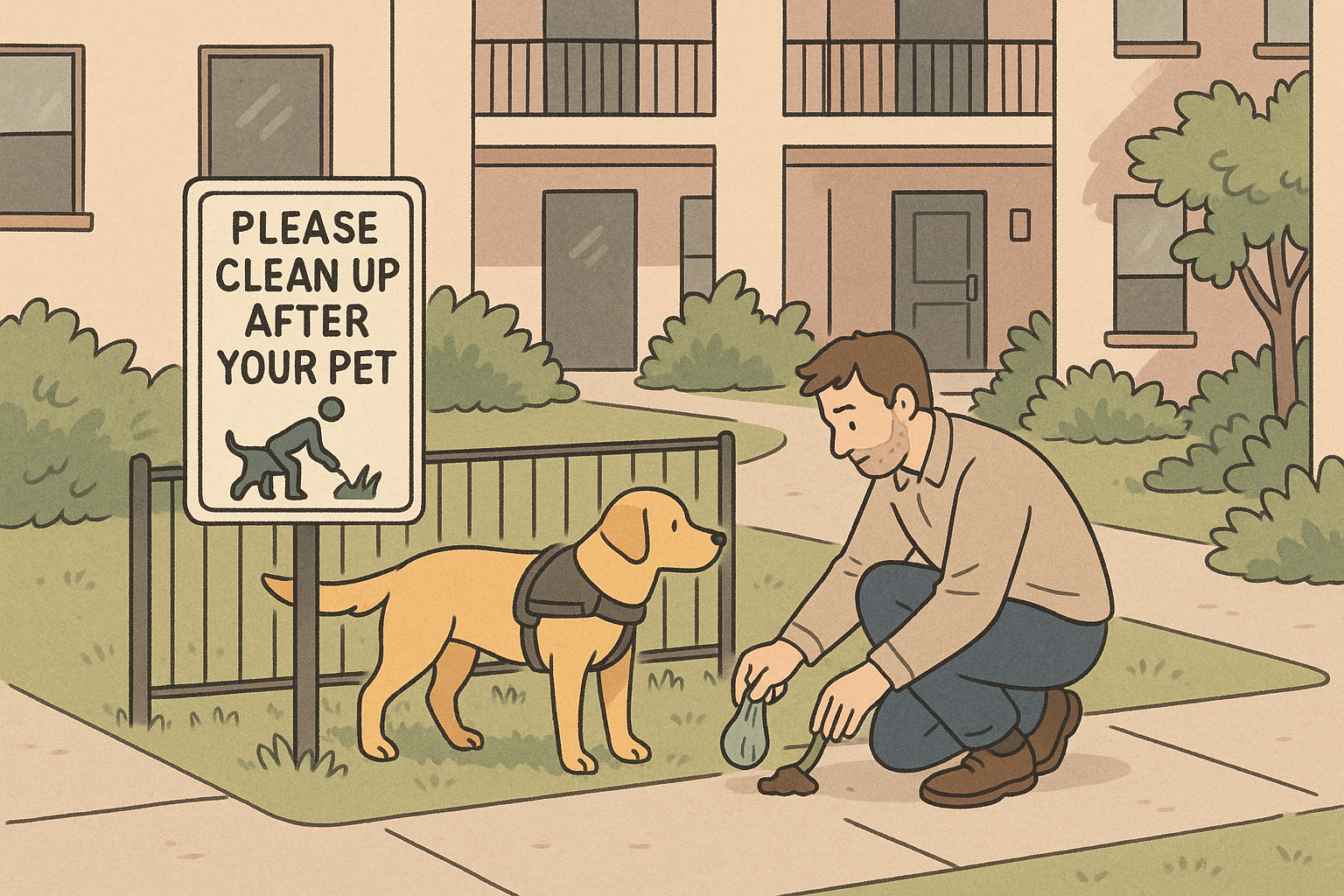
• Isn’t cleaned up after (waste issues)
• Is repeatedly off-leash in leash-required areas
• Causes persistent nuisance behavior (ongoing barking, lunging, damage)
• Creates real safety concerns (aggressive incidents, uncontrolled behavior)
In these situations, the eviction risk may stem from conduct and impact—not the animal’s mere presence. That distinction matters. It also means tenants can protect their housing by treating “approved” as “approved with responsibility.”
For housing providers, this is where consistency is essential: enforce the same cleanliness and safety rules you’d enforce in any other situation, document incidents, and focus on behavior-based standards rather than disability-based assumptions.
Documentation is where many disputes either get resolved quickly—or spiral.
In general, “reliable documentation” means information that reasonably supports:
• That the person has a disability (when it isn’t obvious), and
• That the animal provides disability-related support (when the need isn’t obvious)
A housing provider may request documentation when the disability and/or disability-related need for the animal is not readily apparent. But there’s a line between appropriate verification and excessive questioning.
What often crosses the line? Requests that are overly intrusive, unrelated to the accommodation question, or designed to discourage the resident. The goal isn’t to dig into private medical history. The goal is to confirm a legitimate accommodation request.
Practical tips for tenants: create a clear request package that makes it easy to say yes.
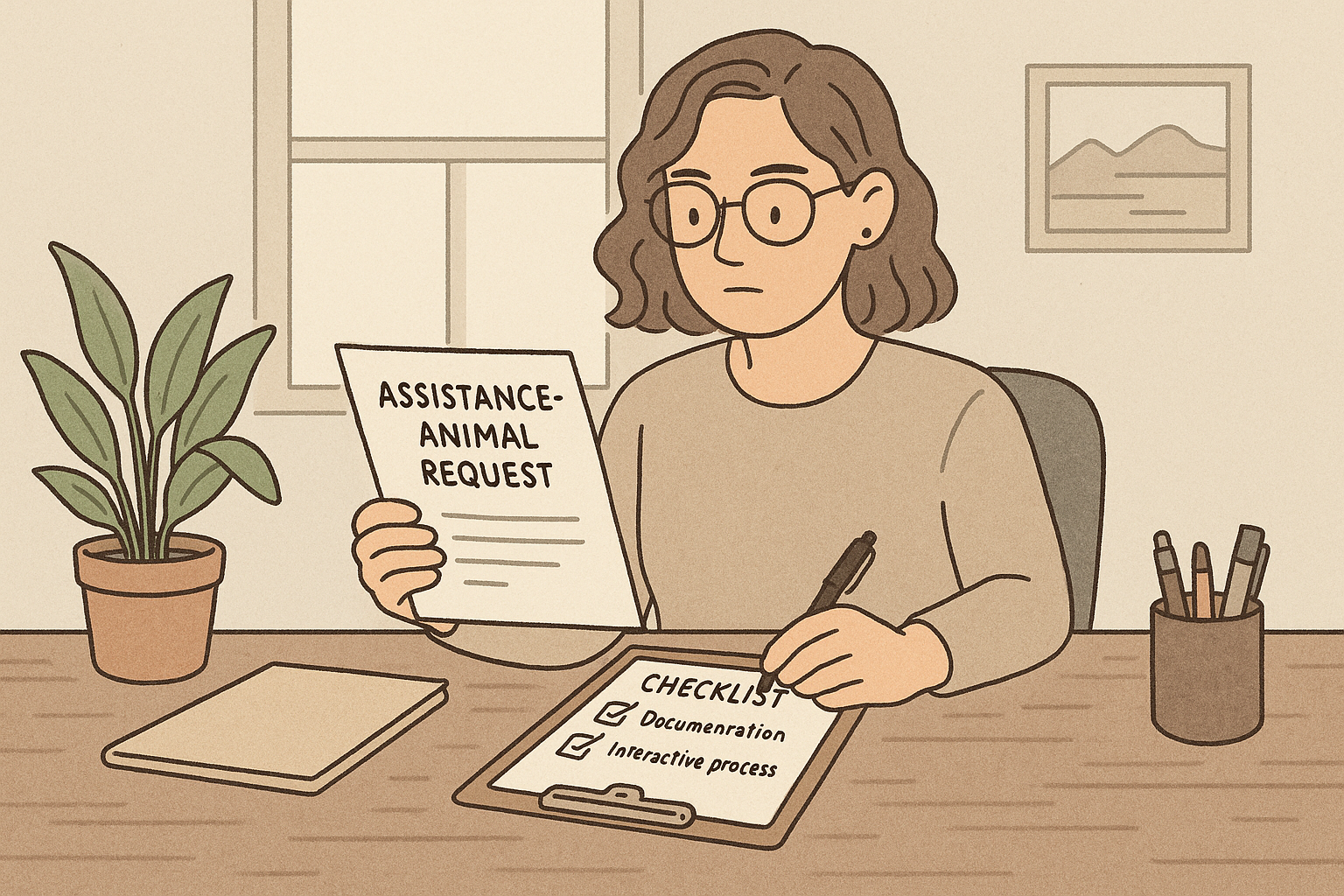
Practical tips for housing providers: use a consistent checklist and respond promptly. Many conflicts happen because of delays, vague “we’ll get back to you” responses, or shifting requirements.
Disputes are less likely when requirements are neutral and applied consistently (for example, asking all animal handlers for certain basic records). If requested, keep the focus on reasonable property health and safety—not on challenging the legitimacy of the disability.
Housing decisions are typically about the accommodation process and reliable documentation when needed. Some people still choose to carry an ID card to reduce confusion and help communicate that their animal is an assistance animal.
Because assistance animals are widely discussed online, renters and landlords both run into questionable “instant approval” websites. Common red flags include:
• “Certified in 5 minutes” promises
• Pay-for-letter mills that provide generic notes with no real provider relationship
• One-size-fits-all documents that don’t reflect an individual disability-related need
Misrepresenting an animal as an assistance animal can backfire badly. Depending on the situation and state law, it may lead to denial, eviction, or penalties.
At the same time, it’s equally important that housing providers avoid assuming fraud just because a request is unfamiliar, the animal is an uncommon breed, or the resident doesn’t fit a stereotype. Verification should be focused on the accommodation criteria—done consistently and respectfully.
A balanced, realistic approach protects everyone: residents with legitimate needs keep access to housing, and housing providers can screen out misuse without discriminating.
“ "A legitimate request doesn’t need hype. It needs clarity: what’s being requested, why it’s needed, and how the resident will comply with reasonable community rules." – Property management trainer”
Most assistance animal housing disputes can be prevented—or at least de-escalated—when both sides follow a simple, documented process.
For tenants/handlers:
1) Make the request in writing. Use the phrase “reasonable accommodation request.”
2) State what you’re asking for (permission to live with a service animal or ESA, and relief from pet rules/fees that conflict).
3) Provide credible documentation if the disability/need isn’t obvious.
4) Offer practical, reasonable conditions upfront (a waste cleanup plan, confirmation you’ll follow leash rules, etc.).
5) Document every step: emails, letters, dates, and summaries of phone calls.
6) If denied, ask for the reason in writing and consider fair housing resources or mediation.
For landlords/property managers/HOAs:
1) Acknowledge the request promptly.
2) Use a consistent checklist: what information is needed, and why.
3) Evaluate the request based on the individual situation (not stereotypes).
4) If there are concerns, discuss solutions (additional waste stations, designated relief areas, behavior expectations).
5) If denial is necessary, document the specific reasons and the steps taken to evaluate alternatives.
If conversations get tense, mediation can be a powerful middle ground before anyone heads toward a formal complaint or lawsuit. A written agreement that sets expectations—leash rules, quiet hours, cleanup requirements, and complaint handling—often prevents repeat conflict.
If you want a simple tool that helps reduce misunderstandings about service animal rules during day-to-day interactions, consider keeping rights-explainer handout cards on hand.

Keep everything in writing, ask what specific information is needed to make a decision, and request a timeline for response. If the delay continues, you may consider contacting local fair housing resources for guidance.
In many disputes, the accommodation is about allowing the animal—not about immunity from responsibility. Tenants are generally expected to follow neutral rules and may be responsible for actual damage caused.
Your trusted source for service animal registration. Get professional ID cards, digital profiles, and smart NFC tags to keep your service animal safe and recognized.
© National Animal Registry — All rights reserved.